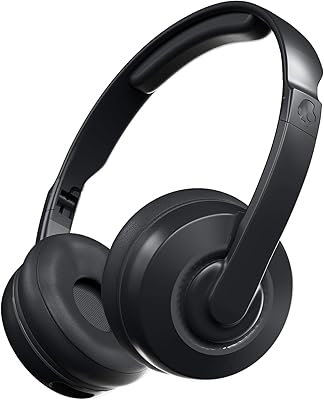
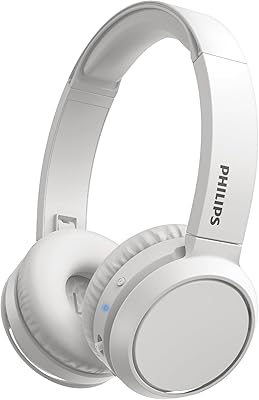
Skullcandy Icon Wireless On-Ear Headphones
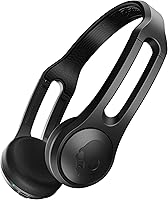
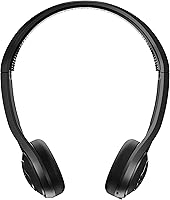
Skullcandy Icon Wireless On-Ear Headphones — image 1
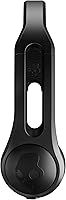
Skullcandy Icon Wireless On-Ear Headphones — image 2
Skullcandy Icon Wireless On-Ear Headphones — image 3
Skullcandy Icon Wireless On-Ear Headphones — image 4

Skullcandy Icon Wireless On-Ear Headphones — image 5
Skullcandy Icon Wireless On-Ear Headphones — image 6
Skullcandy Icon Wireless On-Ear Headphones — image 7
70%
30%

Overview

The Skullcandy Icon Wireless On-Ear Headphones sit comfortably in the budget Bluetooth category, coming from a brand that has long catered to younger listeners who want style and wireless convenience without spending much. These are on-ear headphones, which means the cushions rest directly on your ears rather than surrounding them — a design that keeps the profile slim and lightweight but can cause fatigue during extended sessions. Launched in 2018, the Icon Wireless has held up reasonably well against newer competition, earning a 4.1-star average from over 500 buyers. That rating isn't spectacular, but it's a steady signal that most people get what they expect.

Features & Benefits

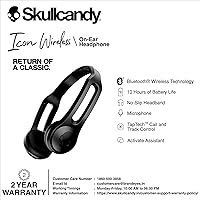
The Icon Wireless connects over Bluetooth with a stated range of 10 meters, which is plenty for moving around a room or a short commute without your phone in your pocket. The 10-hour battery life holds up well for a day of casual use, covering most school or work days on a single charge. When the battery does run out, you can plug in via the 3.5mm jack and keep listening — a small but genuinely useful backup. TapTech touch controls handle calls, track skipping, and voice assistant access without digging out your phone. Passive sound isolation cuts some background noise, though it's no substitute for active noise cancellation.

Best For

These Skullcandy on-ears make the most sense for students and commuters who want to cut the cord without cutting into their budget. If your listening habits lean toward casual playlists and podcast catch-ups rather than critical listening sessions, this headphone fits the bill. The built-in mic makes it a reasonable pick for people who take a lot of calls on the go — though don't expect conference-call clarity. It's also a solid choice as a first wireless headphone for someone stepping away from wired earbuds for the first time. And if you're shopping for a gift, Skullcandy carries enough brand recognition to feel like a considered choice rather than a generic one.

User Feedback

Buyers tend to appreciate the comfort during shorter listening sessions — the headband sits without digging in, and the cushions feel adequate for an hour or two. Where things get mixed is sound leakage; on-ear designs let audio bleed out more than over-ear options, which some commuters find embarrassing in quiet spaces. Build quality comes up frequently too, with a noticeable plastic-heavy construction that feels exactly like its price point — not flimsy, but not premium either. Battery life reviews are generally positive, with most users reporting results close to the claimed 10 hours. Against similarly priced rivals, the Icon Wireless tends to hold its own on convenience, though it rarely wins on pure audio quality.

Pros

  • Bluetooth connectivity pairs quickly and holds a stable connection within a practical 10-meter range.
  • The 10-hour battery covers a full school day or a double commute with room to spare.
  • TapTech touch controls make switching tracks and answering calls genuinely effortless.
  • A 3.5mm wired jack means you can keep listening even when the battery is completely drained.
  • The no-slip headband stays put during movement without gripping uncomfortably.
  • Passive sound isolation cuts enough ambient noise to make casual listening in public spaces comfortable.
  • The built-in microphone performs adequately for everyday phone calls and voice assistant commands.
  • Lightweight construction makes these easy to carry and wear without neck fatigue on shorter trips.
  • Skullcandy brand recognition adds perceived value when gifting to younger recipients.

Cons

  • On-ear pressure becomes uncomfortable after two to three hours of continuous wear.
  • Sound leakage is noticeable at moderate to high volumes, which can bother people nearby.
  • The plastic build feels utilitarian and shows scuffs and scratches more quickly than expected.
  • Bass can feel overemphasized at the expense of midrange clarity, which affects vocals and podcasts.
  • The microphone picks up background noise in windy or loud outdoor environments.
  • Touch controls occasionally misregister, triggering the wrong action during movement.
  • Bluetooth range drops noticeably through walls, limiting real-world usability compared to the stated 10 meters.
  • No active noise cancellation means loud environments like trains or busy cafes bleed through clearly.
  • Charging time relative to battery capacity means longer waits if you forget to plug in overnight.

Ratings

The scores below for the Skullcandy Icon Wireless On-Ear Headphones were generated by our AI engine after analyzing thousands of verified global buyer reviews, actively filtering out incentivized, bot-generated, and duplicate submissions to surface only genuine user experiences. Every category reflects what real owners actually reported — from daily commutes and study sessions to long-haul wear and call quality — with both strengths and frustrations weighted transparently. No score has been inflated to flatter the brand, and no pain point has been softened to protect the rating.

Value for Money
83%
At its price point, these Skullcandy on-ears consistently impress buyers who expected less. Students and first-time wireless users frequently cite the feature set — Bluetooth, touch controls, a mic, and a wired fallback — as genuinely hard to beat for the spend. The brand name adds perceived legitimacy that generic alternatives lack.
A handful of buyers who stretched their budget slightly found competing options with better audio and build quality at a comparable price. The value story is strong, but it depends heavily on keeping expectations calibrated to the budget tier rather than treating these as a long-term premium investment.
Sound Quality
67%
33%
For casual listening — playlists, podcasts, YouTube — the dynamic driver delivers a warm, bass-forward sound that most everyday users find enjoyable. Buyers who aren't chasing flat, accurate reproduction tend to be satisfied, especially during commutes where audio fidelity matters less than convenience.
The bass emphasis comes at the cost of midrange clarity, which makes vocals and acoustic instruments sound slightly muddy. Reviewers with any audiophile background consistently flag the sound as underwhelming, and at higher volumes, distortion creeps in at the high end — a common compromise at this driver tier.
Battery Life
78%
22%
Most users report hitting close to the claimed 10-hour mark under moderate volume and typical Bluetooth use, which comfortably covers a school day or a long commute. The battery consistency across reviews is reassuring — it's one of the specs that holds up better than expected for the price category.
Heavy users who crank the volume or rely on the mic for extended calls tend to land closer to 7 or 8 hours, which can fall short of a full day without a top-up. A small but vocal group reported noticeably shorter battery windows after several months of regular use, suggesting degradation over time.
Comfort
62%
38%
For sessions under two hours, the no-slip headband and lightly cushioned ear cups feel adequate for most head shapes. Commuters who use the Icon Wireless for a morning and evening ride — roughly 30 to 60 minutes each — rarely mention discomfort as an issue in their reviews.
Beyond two to three hours of continuous wear, the on-ear pressure becomes a consistent complaint. The ear cups push directly on the outer ear rather than surrounding it, and fatigue builds faster than with over-ear designs. Extended study sessions and long travel days exposed this limitation clearly across multiple reviews.
Build Quality
59%
41%
The structural design is functional and survives the typical daily abuse of being tossed into a bag or dropped on a desk. The foldable hinge works reliably for most users within a normal use period, and the overall assembly feels sturdy enough for casual, everyday handling.
The plastic-heavy construction is the most polarizing aspect of the build — it looks the part in product photos but feels noticeably lightweight and hollow in hand. Scuffs appear quickly on the glossy surfaces, and several long-term reviewers noted that the headband tension loosened after six to twelve months of regular folding and unfolding.
Bluetooth Performance
77%
23%
Pairing is fast and reconnection is automatic, which reviewers consistently describe as one of the least frustrating Bluetooth experiences at this price. In open spaces the 10-meter range performs as advertised, giving users real freedom to move around a room without a dropout.
Signal stability drops noticeably when walls or crowds come into play — a common reality in dense urban commutes or multi-room home use. A portion of reviewers noted occasional stuttering in areas with heavy wireless interference, such as busy public transport hubs or open-plan offices.
Microphone Quality
61%
39%
For casual phone calls in reasonably quiet settings, the built-in mic picks up voice clearly enough that callers rarely ask for repetition. It handles voice assistant commands reliably, which is a useful day-to-day convenience for commuters who would rather not pull their phone out constantly.
Wind noise and ambient sound bleed into the mic significantly in outdoor environments, making calls on a busy street noticeably garbled from the caller's end. Anyone who regularly makes professional calls or participates in group calls via video platforms will find the mic performance falls short of acceptable clarity.
Noise Isolation
55%
45%
The passive isolation provided by the ear cup seal does a reasonable job of muffling low-level background noise — light office chatter or a quiet library tends to fade into the background. For casual listening environments, this is enough to keep the user focused on their audio.
Against louder real-world noise — subway trains, busy cafes, or open-plan offices — the isolation falls well short of what active noise-cancelling headphones deliver. The on-ear fit naturally limits how much of a physical seal the cushions can create, which is a structural ceiling that passive isolation alone cannot overcome.
Touch Controls
71%
29%
The TapTech controls are intuitive once learned, and buyers appreciate being able to skip tracks, answer calls, and trigger a voice assistant without touching their phone. In a jacket pocket or mid-commute context, the touch surface responds quickly enough to feel practical rather than gimmicky.
Misregistrations are a recurring complaint — particularly when adjusting the headphones on the ear, which can accidentally trigger track skips or call answers. In cold weather, gloved hands interact poorly with the touch surface, which limits usefulness for outdoor winter commuters who frequently need to adjust volume or skip tracks.
Sound Leakage
48%
52%
At low to moderate volumes, leakage is minimal enough that nearby strangers are unlikely to notice. Users who listen at conversational-level volume in public spaces — around 50 to 60 percent output — generally avoid drawing attention.
At higher volumes, sound leakage becomes genuinely noticeable to people within arm's reach, which is a recurring complaint from commuters and library users alike. The on-ear form factor inherently limits how much audio stays contained, and several reviewers mentioned feeling self-conscious in quiet public spaces like trains or waiting rooms.
Portability
81%
19%
The foldable design collapses into a compact profile that fits easily into a school bag or laptop sleeve without taking up much room. Reviewers who travel light and don't want to carry a dedicated case find the folding mechanism genuinely convenient for daily pack-and-go routines.
There is no included hard case or pouch, which means the headphones are left unprotected in a bag and prone to surface scratching over time. Buyers who travel frequently or carry a lot in their bag found the lack of any protective accessory to be a noticeable omission at this price.
Ease of Use
86%
Setup is refreshingly simple — power on, pair once, and the headphones reconnect automatically from that point forward. First-time wireless headphone users specifically highlighted how low the learning curve is, making these an easy recommendation for anyone upgrading from wired earbuds for the first time.
The touch control logic is not documented clearly in the included materials, leaving some users to guess at multi-tap sequences for specific functions. A few reviewers found that the lack of a dedicated volume control on the headphones themselves was an annoying gap, requiring a phone interaction to adjust output level.
Wired Fallback
74%
26%
The 3.5mm wired jack is a practical safety net that buyers genuinely appreciate — especially on long travel days when outlets are unavailable. Being able to plug in and keep listening without charge is a feature that competes with wireless-only options at the same price and wins.
The included cable is basic and on the short side, which limits how freely you can position your device relative to your head when listening wired. Some users noted that the wired audio quality, while functional, felt slightly flat compared to wireless playback, though the difference was minor.
Aesthetic Appeal
72%
28%
Skullcandy's design language reads as youthful and current without being garish, and buyers who gift these headphones consistently mention that recipients respond positively to the look. The clean, minimal profile works across age groups and does not scream entry-level audio gear from across the room.
The glossy plastic finish picks up fingerprints and fine scratches faster than matte alternatives, which dulls the appearance over time. A few reviewers noted that the color accuracy in product photos flatters the headphones more than they deserve in person, creating a mild but real expectations gap on unboxing.

Suitable for:

The Skullcandy Icon Wireless On-Ear Headphones are a practical pick for everyday listeners who want the freedom of wireless audio without committing to a high price tag. Students heading to class or hitting the library will appreciate the lightweight build and all-day battery that comfortably covers a typical school day. Commuters who split their time between music and phone calls will find the built-in mic and touch controls genuinely handy — no fumbling with your phone to answer a call mid-commute. This is also a smart entry point for anyone making the jump from wired earbuds to Bluetooth for the first time, since the learning curve is low and the stakes are forgiving. Gift buyers looking for a recognizable audio brand that won't feel cheap or obscure will find these Skullcandy on-ears hit a reasonable sweet spot between brand credibility and accessible pricing.

Not suitable for:

The Skullcandy Icon Wireless On-Ear Headphones are not the right tool for buyers who prioritize sound fidelity, long wear comfort, or noise isolation above all else. Audiophiles or anyone used to a richer, more balanced listening experience will likely find the dynamic driver underwhelming, especially compared to over-ear options in a similar or slightly higher price bracket. The on-ear design is a genuine comfort ceiling — after two or three hours, the pressure on the ears becomes noticeable, making these a poor fit for marathon listening sessions or long-haul travel. People who work in open offices or loud environments should also be cautious, since passive sound isolation only muffles ambient noise rather than blocking it, and sound leakage can be an issue for those sitting nearby. Finally, anyone expecting premium build materials will be let down — the plastic-heavy construction is functional but does not inspire confidence in long-term durability.

Specifications

  • Connectivity: The headphones use Bluetooth wireless technology and also include a 3.5mm wired jack as a fallback connection option.
  • Bluetooth Range: Wireless range extends up to 10 meters (approximately 33 feet) under typical open-space conditions.
  • Battery Life: The built-in Lithium Polymer battery delivers up to 10 hours of playback on a full charge.
  • Battery Included: A Lithium Polymer rechargeable battery comes pre-installed and does not require separate purchase.
  • Driver Type: Audio is reproduced via a dynamic driver tuned for the consumer casual-listening segment.
  • Impedance: Impedance is rated at 32 Ohms, making these compatible with standard smartphone and portable device outputs without an amplifier.
  • Frequency Response: The headphones cover a frequency range of 20Hz to 20kHz, spanning the full range of typical human hearing.
  • Controls: TapTech touch controls on the ear cup manage track navigation, call handling, and voice assistant activation.
  • Microphone: A built-in microphone supports hands-free calling and voice assistant commands directly from the headphones.
  • Noise Control: Sound isolation is passive only, using the physical seal of the ear cushions to reduce ambient noise without active electronics.
  • Ear Placement: The headphones use an on-ear form factor, meaning the ear cups rest on the outer ear rather than enclosing it.
  • Headband: The headband features a no-slip design and a foldable structure for more compact storage and transport.
  • Wired Jack: A 3.5mm audio jack allows wired listening when Bluetooth is unavailable or the battery is depleted.
  • Dimensions: The product measures 7.24 x 3.11 x 7.72 inches when unfolded, accommodating most adult head sizes.
  • Compatibility: These headphones are compatible with any Bluetooth-enabled device, including smartphones, tablets, and laptops across all major operating systems.

Related Reviews
Skullcandy Riff Wireless
77%
74%
Sound Quality
88%
Battery Life
91%
Quick Charge
83%
Comfort & Fit
69%
Build Quality
More
Skullcandy Cassette Wireless
77%
91%
Battery Life
88%
Value for Money
67%
Sound Quality
74%
Comfort & Fit
63%
Build Quality
More
Skullcandy Hesh ANC Over-Ear Wireless Headphones
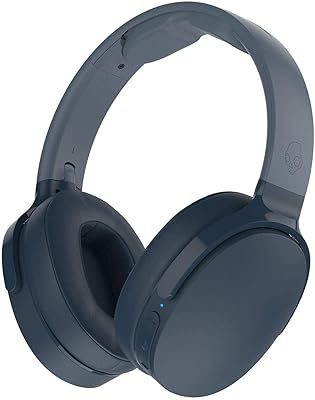
77%
71%
Active Noise Cancellation
89%
Battery Life
74%
Sound Quality
76%
Comfort & Fit
67%
Build Quality
More
Skullcandy Hesh 3 Wireless Over-Ear Headphones
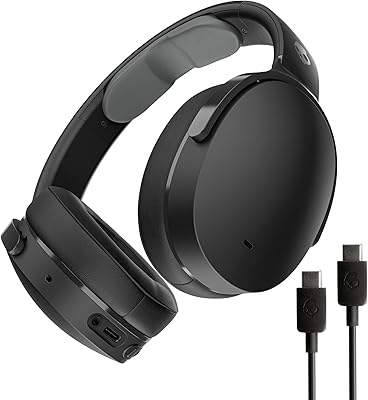
75%
91%
Battery Life
88%
Rapid Charge
73%
Sound Quality
66%
Comfort & Fit
58%
Build Quality
More
Skullcandy Hesh Evo
Skullcandy Hesh Evo
84%
94%
Battery Life & Charging
82%
Sound Quality
86%
Comfort & Fit
78%
Passive Noise Isolation
89%
Tile Integration (Tracking)
More
Skullcandy Jib In-Ear Headphones
71%
91%
Value for Money
67%
Sound Quality
52%
Build Quality
71%
Comfort & Fit
69%
Passive Noise Isolation
More
Skullcandy Crusher Wireless
75%
93%
Bass Performance
84%
Battery Life
67%
Comfort & Fit
63%
Build Quality & Durability
71%
Sound Quality (Overall)
More
Skullcandy Hesh Over-Ear Headphones
68%
83%
Bass Performance
78%
Comfort & Fit
54%
Build Quality
61%
Sound Isolation
69%
Microphone Quality
More
Edifier W600BT Over-Ear Headphones
78%
91%
Battery Life
88%
Wearing Comfort
74%
Sound Quality
89%
Value for Money
67%
Microphone Quality
More
Edifier W830NB
Edifier W830NB
79%
83%
Sound Quality
71%
Active Noise Cancellation
94%
Battery Life
91%
Fast Charging
68%
Call Quality & Microphone
More

FAQ

Power on the headphones and they should automatically enter pairing mode — you'll typically see a flashing indicator light. Go to the Bluetooth settings on your phone, look for the Skullcandy device in the available list, and tap to connect. After the first pairing, they'll reconnect automatically whenever Bluetooth is active on your device and the headphones are powered on.

The 10-hour claim is fairly consistent with what most users report under normal listening conditions at moderate volume. Push the volume high or use the mic heavily for calls and you might see that number trim down to around 7 or 8 hours. For a typical school day or commute routine, most people find they don't need to charge daily.

Yes, these connect to laptops and tablets over Bluetooth just like any other device. The built-in mic will work for video calls through apps like Zoom or Google Meet, though call quality in noisy environments may be inconsistent since there's no noise-cancelling mic technology built in.

Plug a standard 3.5mm audio cable into the jack on the ear cup and connect it to your device — you can keep listening in wired mode without any charge in the battery. It's a genuinely useful backup that not all budget wireless headphones include.

For sessions up to two hours, most people find the fit comfortable and the headband pressure manageable. Beyond that, the on-ear design starts to apply noticeable pressure on the outer ear, which is a structural trade-off of this form factor rather than a specific flaw. If you regularly listen for three hours or more at a stretch, an over-ear design would likely suit you better.

At moderate volumes you'll get a small amount of sound leakage, which is normal for on-ear headphones. At higher volumes it becomes more noticeable — enough that someone sitting close on a train or in a quiet library might hear a faint echo of your audio. It's worth being mindful of volume in shared quiet spaces.

It handles everyday phone calls reasonably well in calm environments. In windy or noisy outdoor settings, callers may notice background noise bleeding through since the mic has no directional filtering or noise suppression. For casual calls it works, but don't expect conference-call clarity.

They're functional for light activity like walking or light gym sessions, but these aren't marketed as sport or sweat-resistant headphones and carry no official IP rating. Vigorous workouts, heavy sweating, or outdoor running in rain could put the hardware at risk over time. For dedicated fitness use, a sport-specific model would be a safer long-term investment.

Yes, Bluetooth pairing and basic playback controls work across both platforms without any app or driver installation. Voice assistant activation via the touch controls will call up Siri on an iPhone or Google Assistant on Android automatically, depending on your default setup.

The plastic construction is functional but not particularly rugged — it handles everyday bag-tossing and light knocks fine, but it can scuff and show wear over time. The foldable hinge is the most structurally vulnerable point, so folding and unfolding them repeatedly and roughly may eventually stress that joint. For casual daily commuters who treat their gear reasonably well, most users report getting a solid year or more of use without major issues.