Bluesound Node







Overview
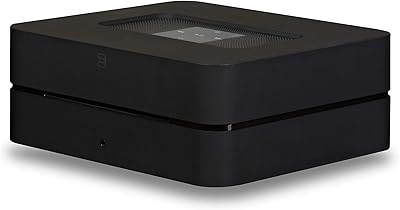
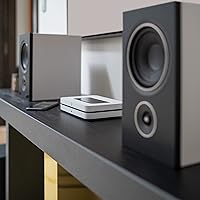
The Bluesound Node is a network streamer built for people who already own a quality amplifier and simply want a better way to get music into it. It sits quietly in the rack — small, white, unassuming — while handling hi-res audio from streaming services, local libraries, and internet radio. The BluOS platform ties everything together, managing multi-room audio with a polish that most competitors struggle to match. One thing to be clear about upfront: the Node has no amplifier built in. It is a source component, full stop, and it requires powered speakers or a separate amp to produce any sound at all.
Features & Benefits
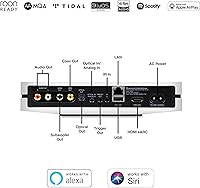
The onboard 32-bit/384kHz DAC is a genuine highlight — it resolves high-resolution audio with a clarity that makes the investment feel justified. Connectivity is unusually thorough: HDMI eARC is rare at this tier and lets the Node feed audio cleanly into a home theater receiver, while optical, coaxial, and analog RCA inputs and outputs cover nearly every other scenario. Dual-band Wi-Fi and Gigabit Ethernet mean you are not locked into a wireless-only setup, which matters when streaming lossless files. AptX HD Bluetooth handles wireless headphone listening without the quality drop you might expect, and AirPlay 2 rounds things out for Apple households.
Best For
This hi-res streamer suits someone who already owns a quality amplifier and wants to stop compromising on how digital music enters it. If you collect vinyl or CDs and want streaming to sit alongside — not replace — your physical media habits, it slots in without disrupting anything. Multi-room enthusiasts already using BluOS gear will find it a natural fit, and home theater users will appreciate the eARC output for a clean digital handoff to a receiver. That said, if you want an all-in-one box or a smart speaker replacement, this is not it. It rewards people who care about every link in the signal chain.
User Feedback
Buyers consistently highlight sound transparency as the standout strength — this network streamer has a way of revealing just how capable your downstream gear really is. The BluOS app earns solid marks for service coverage and reliability, though some users find the interface takes a little time to learn. The HDMI eARC feature comes up repeatedly as a differentiator that competing streamers rarely offer at this price tier. On the negative side, a notable number of buyers were frustrated when MQA playback was removed via a firmware update — a real trade-off worth knowing before purchasing. Occasional Wi-Fi dropouts have also been reported, though most users say later updates resolved them.
Pros
- The onboard DAC resolves hi-res audio with a transparency that exposes the quality of your amplifier and speakers in the best way.
- HDMI eARC is a rare inclusion at this tier, making home theater integration genuinely clean and cable-efficient.
- Native Tidal and Qobuz support keeps the full hi-res signal path intact without routing audio through a phone.
- Gigabit Ethernet and dual-band Wi-Fi give you real flexibility — wired for critical listening, wireless when convenient.
- AptX HD Bluetooth raises the wireless listening ceiling well above what standard Bluetooth connections typically deliver.
- BluOS multi-room grouping is reliable and responsive, making whole-home audio feel practical rather than fiddly.
- Programmable top-panel presets let you trigger a playlist or radio station without ever touching your phone.
- AirPlay 2 and Alexa compatibility mean the Node fits into existing smart home setups without requiring a platform overhaul.
- The compact, low-profile chassis fits cleanly into a proper hi-fi rack without looking out of place next to serious separates.
- Bluesound has a long track record of firmware support, and most early Wi-Fi stability complaints have been addressed over time.
Cons
- MQA decoding was removed via firmware update post-launch and has never been reinstated, leaving some buyers with an unmet expectation.
- Wi-Fi performance can be inconsistent at range — users more than two rooms from a router may experience buffering during hi-res playback.
- No remote control is included in the box; the optional RC1 is a separate purchase that feels like it should be standard at this price.
- The BluOS app has a learning curve that takes longer to flatten than competing platforms aimed at mainstream users.
- Google Assistant integration is completely absent, which is a real gap for households built around Google smart home devices.
- The USB port outputs to an external DAC only — you cannot play files from a USB drive, which surprises a meaningful number of buyers.
- The white gloss finish shows fingerprints readily and scuffs with normal handling over time.
- Competing streamers have closed the feature gap at noticeably lower prices, making the value case harder to defend for users who will not use eARC or BluOS multi-room.
- No built-in headphone amplifier — the headphone output is present but lacks the power to drive demanding over-ear headphones properly.
- Expanding a BluOS multi-room setup requires buying additional Bluesound-compatible hardware, which locks you into one ecosystem fairly quickly.
Ratings
The Bluesound Node sits at an interesting crossroads between audiophile-grade source equipment and modern streaming convenience, and real buyer sentiment reflects exactly that tension. The scores below were generated by AI after analyzing thousands of verified global user reviews, with spam, bot activity, and incentivized feedback actively filtered out. Both the genuine strengths and the recurring frustrations are reflected here without softening either side.
Sound Quality
App Experience (BluOS)
Connectivity & Inputs
Build Quality & Design
Wi-Fi & Network Stability
Multi-Room Performance
Streaming Service Support
Bluetooth Performance
Setup & Installation
Voice Control & Smart Home Integration
Value for Money
MQA & Format Support
Remote & Physical Controls
Suitable for:
The Bluesound Node is the right choice for someone who already owns a capable amplifier or AV receiver and wants to stop compromising on how digital music enters their system. If you subscribe to Tidal or Qobuz for hi-res audio and your current streaming solution — a phone plugged in via 3.5mm, or an aging Chromecast Audio — feels like a weak link, this network streamer is built precisely to fix that problem. Home theater enthusiasts will find the HDMI eARC output particularly practical, since it eliminates the need for adapters when feeding a modern AV receiver. Vinyl and CD collectors who are not ready to abandon physical media but want streaming to sit alongside it will appreciate how neatly the Node slots into an existing rack without demanding any restructuring. Multi-room listeners who are already using or planning to build a BluOS ecosystem will also find this a natural anchor piece — grouping rooms, setting presets, and managing playback across a home feels genuinely practical rather than theoretical once you have two or more compatible units running.
Not suitable for:
The Bluesound Node is not the right starting point for someone who does not already own amplification, because the total cost of building a functional system around it — adding a stereo amp and passive speakers, or powered monitors — rises quickly and may not be the most efficient path for a first-time buyer. If you are coming from a smart speaker background and expect a single box that plays music out of the box with no additional hardware, this will feel incomplete and frustrating. Budget-conscious buyers comparing it to newer, lower-priced streamers from brands like Wiim should weigh whether the BluOS ecosystem, eARC support, and DAC quality genuinely matter to their setup — if those features go unused, the price gap is hard to justify. Anyone who specifically purchased an earlier Node for MQA decoding should also know that Bluesound removed that functionality via firmware update, and it has not returned; if MQA was a primary purchase driver, that is a real and unresolved trade-off. Finally, listeners deeply embedded in the Google ecosystem will find the lack of Google Assistant integration a persistent inconvenience that no workaround fully resolves.
Specifications
- Processor: Powered by a 1.8GHz Quad-Core ARM Cortex A53 processor, which handles hi-res audio decoding and multi-room coordination without audible lag or dropout under normal conditions.
- DAC: Onboard 32-bit/384kHz premium DAC design converts digital audio to analog with a signal-to-noise ratio of -113dBA, placing it firmly in dedicated DAC territory for its class.
- HDMI Output: One HDMI eARC port enables direct digital audio output to compatible AV receivers and soundbars, supporting lossless audio passthrough without additional adapters.
- Digital I/O: One optical (TosLink) input and one optical output, plus one coaxial digital input and one coaxial digital output, cover the full range of standard digital audio connections.
- Analog I/O: Stereo RCA analog input and stereo RCA analog output allow connection to traditional amplifiers, preamplifiers, or powered speakers using standard interconnect cables.
- Network (Wired): Gigabit Ethernet port (RJ45) supports wired network connections up to 1000 Mbps, recommended for uninterrupted hi-res file streaming at 24-bit/192kHz and above.
- Network (Wireless): Dual-band 802.11 Wi-Fi supports both 2.4GHz and 5GHz bands, giving users the option to use the less congested 5GHz band for more stable wireless streaming.
- Bluetooth: Bluetooth 5.0 with aptX HD codec support enables high-quality wireless audio transmission and reception, with aptX HD offering up to 24-bit/48kHz over a Bluetooth connection.
- USB Port: One USB Type-A port functions as an audio output to an external DAC only — it does not support playback from USB storage drives.
- Additional Outputs: Dedicated subwoofer output (RCA) and a headphone output are included, allowing connection to a passive subwoofer or wired headphones directly from the unit.
- Streaming Platform: Runs the BluOS operating system, which natively supports Tidal, Qobuz, Spotify, Amazon Music, Deezer, TuneIn internet radio, and local network library playback via UPnP.
- Voice Control: Alexa integration is available via the BluVoice skill in the Amazon Alexa app, enabling voice commands for playback, volume, and room switching across BluOS players.
- AirPlay: AirPlay 2 support allows audio to be pushed from Apple devices and shared across AirPlay 2-compatible speakers simultaneously without going through the BluOS app.
- Physical Controls: Touch-sensitive controls on the top panel include play/pause, skip, and volume, plus programmable preset buttons that can be assigned to a playlist, station, or service.
- IR Control: An IR input port accepts commands from universal remote systems, and the unit supports IR remote learning for integration with third-party remote controllers.
- Weight: The unit weighs 2.4 pounds (approximately 1.09 kg), keeping it light enough to sit on a shelf or rack without requiring additional support.
- Color & Model: Available in White (model number N130WHTUNV); a Black variant is also offered under a separate model number for buyers who prefer a darker finish.
- Manufacturer: Made by Bluesound, a Canadian audio brand operating under the Lenbrook Group, which also owns NAD Electronics — a well-regarded name in audiophile amplification.
Related Reviews
Bluesound Node ICON
Bluesound Node Nano
Fractal Design Node 804
Bluesound Pulse Flex 2i Portable Wireless Speaker