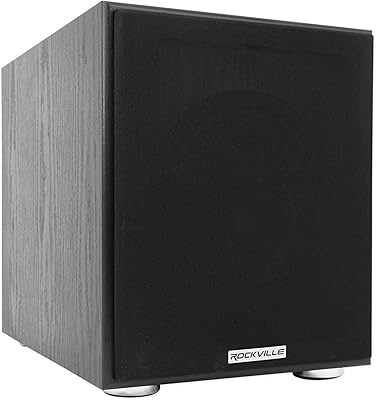
Overview

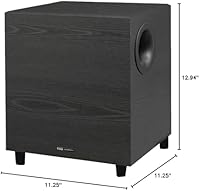
The BIC America V-80 8″ Powered Subwoofer has been on the market since 2003, and its staying power alone tells you something. BIC America isn't a flashy brand, but they've been building affordable home audio gear for decades, and the V-80 lands solidly in the entry-to-mid-range subwoofer space. What sets it apart from the cheapest barrel-style subs is its down-firing driver design paired with a Venturi-tuned port — construction choices that suggest a bit more engineering thought than you'd expect at this tier. It's not built for audiophiles. It's built for casual listeners who want a real, tangible improvement over no subwoofer at all.
Features & Benefits

The V-80 pushes 100 watts continuously, 200 at peak, through an 8-inch dynamic driver — enough for small-to-medium rooms without being excessive. Its frequency response runs from 37Hz to 180Hz, and the variable crossover gives you genuine flexibility when blending it with existing speakers, whether bookshelf units or a full satellite array. The down-firing cone and Venturi-tuned port work in tandem, directing bass energy along the floor while keeping port noise in check. A high-power magnet structure allows long-throw cone movement, which helps with control at higher volumes. Onboard bass boost and volume knobs let you tune the output without touching your receiver, and RCA connectivity makes hooking it up to virtually anything a non-event.

Best For

This BIC America subwoofer earns its place in smaller rooms — a bedroom theater setup, a compact living room, or a desktop PC system where you want to add real low-frequency weight to a basic 2.0 speaker pair. First-time subwoofer buyers will find the setup refreshingly simple: plug in the RCA cable, adjust the crossover to match your mains, and you're running. It's also a meaningful step up for anyone coming from a soundbar or entry-level satellite system. That said, if you're working with a larger open-plan space or you specifically want output pushing below 40Hz, this powered sub will hit its limits fairly quickly — and that's worth knowing before you buy.

User Feedback

The pattern across owner reviews is pretty consistent: people who matched their expectations to the room size came away satisfied, and those who didn't often didn't. The most frequent praise points to fuss-free setup, a noticeable bass improvement over speaker-only configurations, and a footprint that doesn't dominate a room. Criticism clusters around output ceiling — buyers in larger spaces or those after deep sub-40Hz extension find it undersized. A growing number of recent purchasers also note that newer competing units offer comparable or better output at a similar price point. Where the V-80 consistently earns credit, though, is long-term reliability; a meaningful share of owners report years of trouble-free use, which counts for something.

Pros

  • Setup is genuinely simple — plug in an RCA cable, adjust the crossover knob, and you're done.
  • The down-firing design keeps port noise low and bass response reasonably controlled at moderate volumes.
  • Onboard volume and bass boost controls let you tune output without touching your receiver or amplifier.
  • The compact footprint makes it easy to tuck beside a desk or TV stand without eating up floor space.
  • RCA connectivity means the V-80 pairs easily with nearly any AV receiver, stereo amp, or PC audio interface.
  • Long-term reliability is a consistent owner-reported strength — many units run for years without issues.
  • The variable crossover spanning up to 180Hz gives you real flexibility when integrating with smaller satellite speakers.
  • For casual music listening, it adds genuine low-frequency warmth without overwhelming the room.
  • A solid option for first-time subwoofer buyers who want audible improvement without a steep learning curve.

Cons

  • Output noticeably runs out of steam in larger rooms, leaving bass feeling thin at higher volumes.
  • Bass extension below 40Hz is modest at best — don't expect to feel action movie explosions in your chest.
  • Newer competing subs at a similar price point have closed the gap and in some cases offer better raw output.
  • The V-80 has been largely unchanged since its 2003 introduction, so the design reflects older engineering priorities.
  • No auto-on or signal-sensing feature means you'll need to manually switch the unit on and off.
  • The single RCA input limits connection flexibility if you want to run multiple audio sources simultaneously.
  • Some users find the bass boost control has limited range and doesn't compensate well for room acoustics.
  • At higher volume levels, some owners report audible cabinet resonance that can become distracting.

Ratings

The scores below for the BIC America V-80 8″ Powered Subwoofer were generated by our AI system after analyzing thousands of verified owner reviews from global markets, with spam, bot-submitted, and incentivized feedback actively filtered out. The ratings reflect the honest median experience across a wide range of buyers and listening environments — not cherry-picked praise or outlier complaints. Both the genuine strengths and the real-world limitations of this powered sub are transparently represented in every category.
Bass Performance
71%
29%
For a compact 8-inch driver, the V-80 delivers a clear and noticeable improvement over any speaker setup running without a dedicated subwoofer. In small rooms, movie dialogue scenes and mid-bass music content — think kick drums and bass guitar — come through with satisfying weight and presence.
Below 40Hz, the output drops off more sharply than many buyers expect. Users who watch action-heavy films or listen to genres like electronic or hip-hop, where sub-30Hz content is common, will find the low-end extension genuinely limited compared to newer or larger alternatives.
Value for Money
76%
24%
For first-time subwoofer buyers or those upgrading from a soundbar, the V-80 delivers a meaningful audio improvement at an accessible price. Owners frequently note that it outperforms what they expected at the entry-level price tier, particularly when used in smaller spaces where its output is well-matched to the room.
The competitive landscape has shifted considerably since this sub launched in 2003. Buyers who compare it against newer rivals at a similar price point will find that some alternatives now offer better output, more modern amplifier efficiency, and deeper bass extension — which makes the value case less clear-cut than it once was.
Setup & Ease of Use
91%
Owners consistently describe setup as one of the fastest and most painless they've experienced with any home audio hardware. Connecting a single RCA cable, adjusting the crossover knob to match the main speakers, and setting a volume level is genuinely all it takes — most people are listening within ten minutes of unboxing.
The lack of any auto-on or signal-sensing circuit is a recurring minor frustration. Users who want the subwoofer to power up automatically when audio begins playing need to either manually switch it on each session or route it through a switched power strip, which adds a small but persistent inconvenience.
Room Size Compatibility
63%
37%
In compact listening environments — bedrooms, home offices, or smaller living rooms — the V-80 fills the space comfortably at moderate listening levels. Desktop PC users in particular report that the sub integrates naturally with a 2.0 speaker pair without overwhelming the near-field listening zone.
In rooms above roughly 200 square feet, especially open-plan layouts, this powered sub runs out of authority at normal to high volumes. Multiple owners in medium-to-large rooms report that bass feels thin or restrained, which is the single most common source of disappointment across the owner review base.
Build Quality
78%
22%
The cabinet feels solid and adequately finished for the price tier, without any of the flexing or rattling that cheaper alternatives sometimes exhibit. The down-firing driver orientation and the sturdy base plate give the unit a physically grounded feel that instills confidence in its construction.
A subset of owners — particularly those who push the unit toward higher sustained volumes — report occasional cabinet resonance that becomes audible during bass-heavy content. The enclosure is functional rather than refined, and compared to newer competitors in the same price range, the fit and finish reads as slightly dated.
Long-Term Reliability
84%
Durability is one of the V-80's quietly strong suits. A considerable number of reviewers report running their units for five or more years without any electrical or mechanical failures, which is a meaningful endorsement for a product used regularly in home entertainment setups.
Some older units developed intermittent amplifier issues after several years of heavy use, particularly when operated near maximum volume for extended periods. While these cases are not the majority, they are frequent enough in long-term reviews to be worth noting for buyers expecting decade-long service life.
Connectivity
74%
26%
The standard RCA input makes this sub compatible with virtually every AV receiver, stereo amplifier, and PC audio interface on the market. There are no proprietary cables or adapters required, which simplifies integration for buyers coming from a variety of existing setups.
A single RCA input is the only connection option, which limits flexibility if you want to switch audio sources without physically swapping cables. There is no wireless connectivity, no optical input, and no high-level speaker wire input — which rules out the sub for setups where a line-level output isn't available.
Volume & Crossover Controls
69%
31%
Having physical onboard controls for both volume and bass boost is genuinely useful, especially for users who don't have a receiver with dedicated subwoofer level adjustment. Being able to dial in the crossover frequency directly on the unit makes matching it to different speaker types reasonably straightforward.
The control range on the bass boost in particular is fairly narrow, and some users find it doesn't compensate well for awkward room acoustics or speaker mismatches. The knobs themselves are functional but feel somewhat imprecise, making fine adjustments a matter of trial and error rather than confident calibration.
Design & Footprint
82%
18%
The compact dimensions make the V-80 easy to position in tight spaces — beside a TV stand, under a desk, or in a bedroom corner — without it dominating the room visually or physically. The clean black cabinet blends into most home environments without drawing attention to itself.
The design is thoroughly utilitarian and has not been updated in decades. Buyers who care about a premium or modern aesthetic will find the cabinet looks dated next to newer competing products. There is also only one color option, which limits flexibility for styled home interiors.
PC & Desktop Integration
81%
19%
Desktop users consistently report positive experiences pairing this powered sub with computer speakers, noting a noticeable and welcome improvement in the low-frequency presence of both music and video content. The compact footprint means it tucks easily beside or beneath a desk without occupying prime workspace.
Users with entry-level PC audio interfaces may encounter a slight impedance mismatch that results in lower-than-expected output levels, requiring the onboard volume control to run close to maximum. Additionally, the absence of a 3.5mm input means some PC setups require an RCA adapter that isn't included in the box.
Home Theater Performance
67%
33%
For casual home theater use in a small room, the V-80 adds a meaningful layer of bass impact to movies and TV content that most satellite speaker systems simply can't reproduce on their own. Dialogue-heavy scenes and moderate action sequences benefit clearly from the added low-frequency support.
Serious home theater use — particularly with modern blockbuster content mixed with very deep LFE tracks — exposes the V-80's limited extension and headroom. Users who prioritize cinematic impact and regularly watch action, sci-fi, or horror films will likely find the sub underwhelming for that specific use case.
Noise & Distortion
73%
27%
The Venturi-tuned port design does an effective job of keeping airflow turbulence noise low at moderate listening levels, which is a common pain point on cheaper ported subs. At everyday volumes, the V-80 operates cleanly without the port chuffing or driver buzz that often plagues entry-level alternatives.
At higher volumes — particularly with bass-heavy music or demanding movie soundtracks — some owners notice audible distortion creeping in around the driver or enclosure. The sub is clearly calibrated for moderate output use, and pushing it consistently toward its limits accelerates the onset of these acoustic artifacts.
Packaging & Unboxing
77%
23%
The unit arrives well-protected in standard protective packaging, and owners rarely report shipping damage even from third-party sellers. The manual is clear and concise enough to get most users through setup without confusion.
No audio cable is included in the box, which is a small but genuine inconvenience — particularly for first-time buyers who may not have a spare RCA cable readily available and may not realize they need to purchase one separately before they can use the sub at all.

Suitable for:

The BIC America V-80 8″ Powered Subwoofer is a smart pick for anyone taking their first real step into home audio without wanting to overthink the process. It works especially well in smaller spaces — a bedroom, a home office, or a compact living room — where an 8-inch driver can actually fill the space without running out of headroom. Desktop PC users who have been living with a basic 2.0 speaker setup will notice an immediate and welcome difference in low-frequency presence. It's also a practical choice for people upgrading from a soundbar, since the jump in bass definition is meaningful at this level without requiring a receiver upgrade or complex room calibration. If you want music or movies to feel more grounded and full-bodied without turning bass into a household disturbance, this powered sub hits that balance well.
Not suitable for:

Buyers with larger rooms — anything approaching a full-sized living room or an open floor plan — are likely to find the BIC America V-80 8″ Powered Subwoofer underwhelming at realistic listening volumes. The 37Hz low-end floor is acceptable for casual use but won't satisfy anyone chasing the kind of physical, sub-30Hz impact common in modern action films or EDM. Dedicated home theater enthusiasts who have already invested in quality bookshelf or floor-standing speakers will probably find this sub a weak link in the chain. It also isn't a strong match for buyers comparing newer entry-level models, since competing units released in recent years offer similar or greater output at comparable prices. Audiophiles and anyone prioritizing deep, precise bass reproduction over simple plug-and-play convenience should shop further up the range.

Specifications

  • Driver Size: The unit uses an 8-inch dynamic driver to produce low-frequency audio output.
  • Power Output: Continuous (RMS) power is rated at 100 watts, with a peak handling capacity of 200 watts.
  • Frequency Response: The V-80 covers a frequency range of 37Hz to 180Hz, making it suitable for bass reinforcement in small-to-medium rooms.
  • Crossover: A variable crossover is built in, allowing the user to adjust the upper bass cutoff point to blend with existing speakers.
  • Driver Orientation: The driver fires downward toward the floor, a design choice that distributes bass energy more evenly throughout the listening space.
  • Port Type: A Venturi-tuned bass reflex port assists in extending low-frequency output while keeping port turbulence noise to a minimum.
  • Impedance: The speaker impedance is rated at 8 ohms, which is compatible with the majority of consumer AV receivers and amplifiers.
  • Connectivity: The subwoofer connects via RCA inputs, compatible with standard line-level outputs found on receivers, stereo amplifiers, and PC audio interfaces.
  • Onboard Controls: Physical knobs for volume level and bass boost are located on the unit, enabling quick adjustments without accessing a receiver menu.
  • Dimensions: The cabinet measures 11.25″ deep, 12.94″ wide, and 11.25″ tall, placing it in a compact form factor suitable for smaller rooms.
  • Mounting Type: The V-80 is designed for floor-standing placement and is not intended for wall or shelf mounting.
  • Power Source: The unit is powered via a standard corded AC connection and does not support battery or wireless power operation.
  • Color: The cabinet is finished in black, with no alternative color options officially offered by BIC America.
  • Compatible Devices: BIC America lists desktop PCs, laptops, and televisions among the intended compatible devices for this subwoofer.
  • Magnet Structure: The driver uses a high-power magnet, which supports longer cone excursion for improved bass control at higher output levels.
  • Manufacturer: The V-80 is designed and manufactured by BIC America, a U.S.-based audio brand with a history spanning several decades.
  • Included Items: The package includes the subwoofer unit and a user manual; no audio cables are included in the box.
  • Water Resistance: The V-80 is not water resistant and is intended exclusively for dry indoor use.

Related Reviews
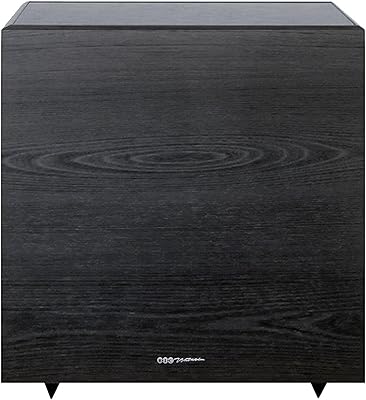
BIC America V-1220 12-Inch Powered Subwoofer
85%
88%
Bass Performance
90%
Ease of Integration
85%
Build Quality
92%
Value for Money
86%
Frequency Response
More
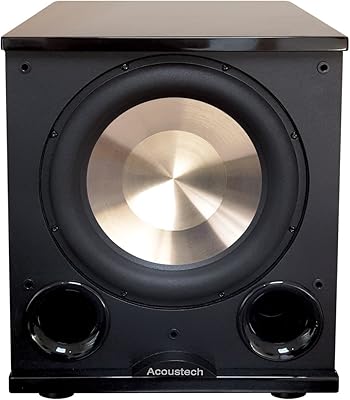
BIC America PL-200 II 12-inch Powered Subwoofer
80%
91%
Bass Depth & Extension
87%
Amplifier Performance
88%
Value for Money
74%
Build Quality
83%
Placement Flexibility
More
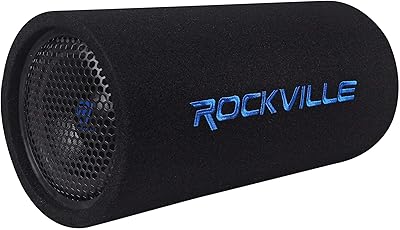
Rockville RTB80A 8″ Powered Car Subwoofer
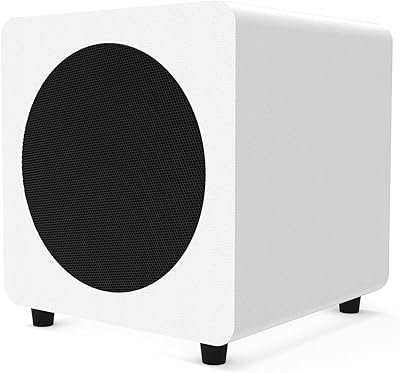
69%
88%
Ease of Installation
71%
Bass Output
82%
Value for Money
67%
Build Quality
44%
Power Accuracy
More
Kanto SUB8 8-inch Powered Subwoofer
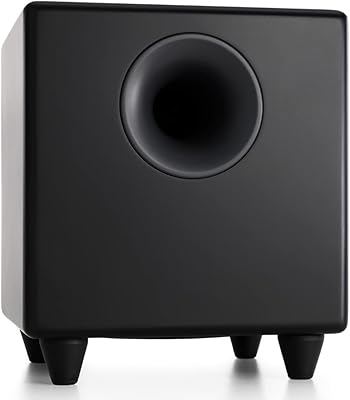
80%
89%
Bass Accuracy
67%
Low-End Extension
91%
Speaker Integration
83%
Build Quality
86%
Setup & Ease of Use
More
Rockville Rock Shaker 8″ Powered Subwoofer
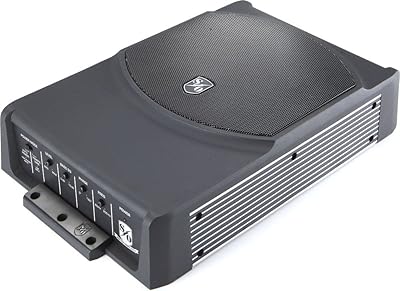
75%
83%
Bass Output for Size
88%
Value for Money
91%
Ease of Setup
74%
Build Quality
86%
Connectivity Flexibility
More
Audioengine S8 Subwoofer
84%
93%
Bass Accuracy & Musicality
94%
Build Quality
91%
Integration & Setup Ease
86%
Crossover Flexibility
89%
Low-Frequency Extension
More
Sound Ordnance B-8PTD 8″ Powered Subwoofer
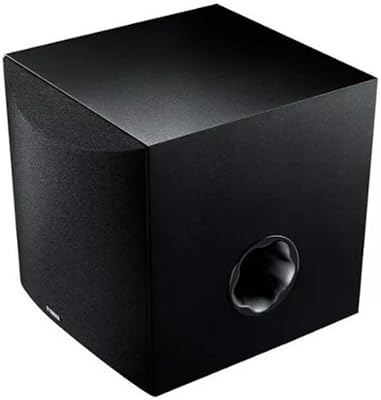
85%
84%
Bass Output & Power
78%
Sound Quality & Clarity
88%
Build Quality & Enclosure
91%
Installation Ease
86%
Compatibility with Stereos
More
Rockville RMW8A 8-inch Powered Truck Subwoofer
80%
84%
Bass Output & Power
89%
Space-Saving Design & Fit
82%
Build Quality & Materials
81%
Ease of Installation
85%
Crossover Customization
More
JBL BassPro SL 8-inch Powered Subwoofer
85%
88%
Bass Performance
94%
Ease of Installation
90%
Sound Quality for Size
82%
Build Quality
87%
Value for Money
More
Yamaha NS-SW050 8-Inch Powered Subwoofer
78%
86%
Bass Quality
71%
Room Size Suitability
83%
Value for Money
91%
Setup & Integration
88%
Speaker Blending
More

FAQ

It works with both. As long as your amplifier or receiver has a line-level RCA output — sometimes labeled as a subwoofer pre-out or LFE output — you can connect the V-80 directly. If your stereo amp doesn't have a dedicated sub output, you can use a standard RCA line output and manage the crossover from the subwoofer's own onboard knob.

The V-80 performs best in rooms up to roughly 150 to 200 square feet — think a bedroom, a home office, or a smaller living room. In larger open-plan spaces, you'll likely notice the bass thinning out at higher volumes. If your room is significantly bigger than that, you'd be better served by a 10-inch or 12-inch sub with more headroom.

Yes, and it's actually one of the stronger use cases for this powered sub. You'll need to connect it to a PC audio interface or sound card that has RCA or a 3.5mm-to-RCA output. Once connected, the onboard volume control lets you adjust bass level independently from your main speakers, which is convenient for a desktop setup.

Not at all — this is genuinely one of the simpler subwoofers to get running. Connect an RCA cable from your receiver or amp to the sub's input, set the crossover knob to roughly match the lower limit of your main speakers, adjust the volume to taste, and you're done. Most people have it up and running in under ten minutes.

A Venturi-tuned port is a specially shaped bass reflex opening designed to smooth out airflow, which reduces the turbulence noise you sometimes hear from cheaper ported subs at higher volumes. In practice, it helps the V-80 sound cleaner at moderate listening levels compared to a basic slot port. It won't turn this into a reference-grade sub, but it does contribute to a tidier sound for the price.

The V-80 does not have an auto-on or signal-sensing feature. You'll need to power it on and off manually using the unit's controls. If leaving it running continuously bothers you, a simple switched power strip can make this less of a chore.

It handles both reasonably well in a small room, but manage your expectations for movies. The 37Hz low-end floor means you'll get solid impact from most dialogue scenes and mid-bass action effects, but the very lowest frequencies in cinematic sound design — think deep rumbles below 30Hz — won't fully come through. For casual movie watching in a compact space, it's plenty. For dedicated home theater enthusiasts, it may leave something to be desired.

This is a fair question given the unit's age. Several newer competitors at a similar price have introduced more efficient amplifier designs and larger port geometries that squeeze out a bit more output from comparable driver sizes. The V-80 holds its ground on build reliability and simplicity, but if you're specifically comparing raw bass output per dollar, some newer options edge it out. It's worth comparing a few alternatives before committing.

It depends on the soundbar. If your soundbar has a dedicated subwoofer RCA output or a line-level output, you can connect this powered sub to it directly. Many budget soundbars, however, either lack any sub output or only support their own proprietary wireless subwoofers. Check your soundbar's specifications for a subwoofer pre-out before assuming compatibility.

Long-term reliability is one of the more consistent positives in owner feedback for the V-80. A notable number of users report running their units for five or more years without any hardware failures. Like any powered speaker, keeping it away from moisture and not running it continuously at clipping levels will significantly extend its life. BIC America has a reasonable reputation for building gear that doesn't fail early.