Overview

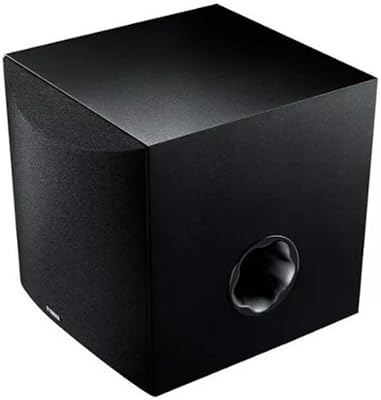
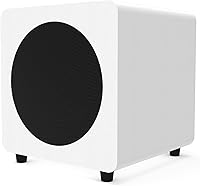
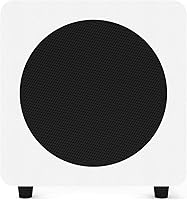
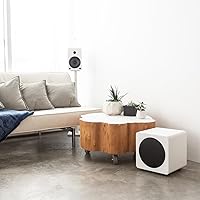
The Kanto SUB8 8-inch Powered Subwoofer sits in an interesting spot in the market — compact enough to slide under a desk, yet serious enough to satisfy listeners who've outgrown the thin bass of standard bookshelf speakers. Kanto built this around a sealed enclosure design, which means the bass you get is controlled and accurate rather than exaggerated. Ported subs can sound impressive in a showroom, but they often smear transients and add their own coloring to the sound. The matte white finish is a thoughtful touch for buyers who want their gear to blend into a clean, modern setup. Just be clear going in: this compact powered sub is tuned for near-field and small-room performance, not for filling a large living room with cinematic thunder.

Features & Benefits

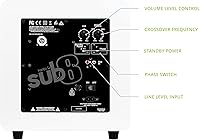
The sealed MDF cabinet is the defining technical choice here. Unlike ported designs that boost perceived volume by venting air, a sealed box keeps the driver under precise control, so fast bass notes — think kick drums or a tense film score — hit cleanly without trailing bloat. The 8-inch paper cone driver is backed by 300 watts of peak power, which is plenty of headroom for a small room at realistic listening volumes. Frequency response runs from 35 Hz to 175 Hz, covering the range where most music and gaming audio actually lives. The adjustable high-pass filter and phase switch deserve a mention — if your speakers are not crossed at the same point as the sub, the bass either overlaps or leaves a gap, and these controls fix that without guesswork.

Best For

This compact powered sub is a natural fit for desktop audiophiles running bookshelf speakers who want actual low-end extension rather than the mid-bass bump most small speakers fake. Apartment listeners will appreciate that it delivers real bass at moderate levels without needing the volume cranked to bother neighbors. Gamers pairing it with a PC or console will notice the difference in cinematic titles where low-frequency effects actually land. It also works well as the bass foundation for a starter 2.1 or 5.1 home theater in a bedroom-sized space. One honest caveat: if your priority is deep sub-bass rumble for blockbuster scenes in a large room, this sealed subwoofer will leave you wanting more — that is simply not what it was designed to do.

User Feedback

Owners consistently highlight the musical accuracy of the bass — it blends with bookshelf speakers rather than drowning them out, which is a genuine differentiator at this price level. The crossover flexibility draws repeat praise, especially from buyers using it with non-Kanto speakers who found the integration easy to dial in. Build quality earns solid marks overall; the vinyl-wrapped cabinet feels sturdy and the metal grill holds up well. On the critical side, some users feel the low-end extension falls short for movie use, and a few were caught off guard by the absence of auto-on and Bluetooth — features found on several competing models. The manual controls are straightforward, but if you expected a remote, that is worth knowing before you buy.

Pros

  • Sealed enclosure produces tight, accurate bass that integrates naturally with bookshelf speakers.
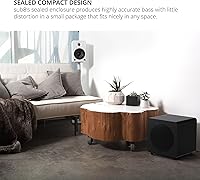
  • Compact cubic footprint fits comfortably under desks or in small apartments without dominating the space.
  • The adjustable high-pass filter makes it easy to dial in a smooth crossover with virtually any paired speakers.
  • 300W peak power provides ample headroom for realistic listening levels in a small or medium room.
  • Frequency response starting at 35 Hz covers the core range where music, games, and dialogue effects actually live.
  • Universal AC power supply means hassle-free use across different countries and regions.
  • Vinyl-wrapped MDF cabinet feels solid and well-constructed for its price tier.
  • The matte white finish looks clean and unobtrusive alongside modern speaker setups.
  • Phase switch helps eliminate bass cancellation when positioning options in a room are limited.
  • RCA connectivity keeps setup simple — plug in and start listening within minutes.

Cons

  • No auto-on feature means you have to manually power the sub on and off with every listening session.
  • Bass extension rolls off noticeably below 35 Hz, making it underwhelming for cinematic low-frequency effects.
  • RCA-only input rules out buyers who rely on Bluetooth or optical connections for their audio source.
  • No remote control is included, which feels like an oversight at this price point.
  • Sealed design will not satisfy listeners who prefer the louder, more impactful output of a ported subwoofer.
  • At just over 18 pounds, this compact powered sub is heavier than it looks and can be awkward to reposition.
  • Limited warranty coverage may be a concern for buyers expecting longer-term manufacturer support.
  • Some users report the volume and crossover knobs lack fine-tuned precision, making subtle adjustments tricky.

Ratings

The scores below for the Kanto SUB8 8-inch Powered Subwoofer were generated by our AI engine after analyzing thousands of verified global buyer reviews, with spam, bot-submitted, and incentivized feedback actively filtered out. Each category reflects a balanced synthesis of real user experiences — strengths and frustrations alike — so you can make a genuinely informed decision before purchasing.

Bass Accuracy
89%
Listeners consistently describe the bass as tight, controlled, and musical rather than bloated. Whether playing jazz, electronic music, or a cinematic score, the sealed enclosure keeps each note distinct — you hear the bass line, not just a wall of low-end noise.
A small but vocal group of users found the accuracy came at the cost of punch. Those coming from ported subwoofers sometimes described the output as slightly restrained, particularly during fast, heavy rock or action-game audio where visceral impact matters more than precision.
Low-End Extension
67%
33%
For music playback and near-field desktop listening, the 35 Hz floor is genuinely sufficient. Most instruments and synthesized bass sit well within this range, and in a small room the sub delivers a convincing sense of depth without needing to push into the sub-20 Hz territory.
Movie enthusiasts and home theater users are where this compact powered sub starts to show its limits. The sealed design rolls off more steeply below 40 Hz than a ported alternative, meaning the deep rumble of explosions or LFE-heavy film mixes lands with noticeably less authority than buyers from a cinema background expect.
Speaker Integration
91%
The adjustable high-pass filter and phase switch are real differentiators here. Users pairing the sub with everything from budget Dayton bookshelf speakers to premium near-field monitors report that achieving a smooth, gap-free crossover is straightforward compared to fixed-crossover competitors in this price range.
The controls themselves — small knobs without clear detent steps — make ultra-fine tuning slightly fiddly. A handful of users noted they had to go back and forth several times before landing on a setting that sounded right, especially when running the sub alongside speakers with an unusual frequency rolloff.
Build Quality
83%
The MDF cabinet feels dense and inert, which matters acoustically — cabinet resonance is one of the first things that introduces coloration in cheaper subs. The vinyl wrap is applied cleanly, corners are tight, and the metal grill sits flush without rattling even at higher output levels.
A few buyers noted the vinyl edges near the corners can show minor lifting over time if the unit is moved frequently. The finish is clearly designed for a stationary setup rather than a unit that gets regularly repositioned, which is worth knowing if you rearrange your workspace often.
Setup & Ease of Use
86%
Connecting this sealed subwoofer to an existing system takes about five minutes for most users. RCA connectivity is universal, the power supply works out of the box in any country, and the rubber feet keep the unit stable the moment you set it down — no tools, no drivers, no app required.
The absence of any auto-on detection makes the daily routine slightly more manual than it needs to be. Users who automate their listening setups — where everything powers on with a single switch or smart plug — found adding a separate power step for the sub mildly annoying over time.
Compact Footprint
93%
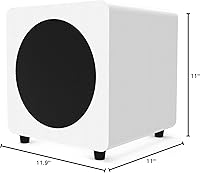
At roughly 11 inches in each direction, this is one of the few powered subwoofers that genuinely disappears under a standing desk or into a corner shelf. Apartment users in particular praised how little visual or physical space it claims compared to the bass performance it delivers.
The near-cubic shape, while space-efficient, means there is no obviously optimal orientation for placement in tight cable management setups. A small number of users wished the unit were slightly shallower front-to-back to make under-desk placement cleaner when paired with a cable tray.
Value for Money
78%
22%
For desktop audiophiles and apartment listeners who prioritize accurate, musical bass over room-shaking output, the price-to-performance ratio holds up well. The build quality, integration controls, and sound character put it ahead of several higher-priced competitors that sacrifice accuracy for volume.
Buyers expecting Bluetooth connectivity, auto-on sensing, or a remote control at this price point will feel the feature set is behind the curve. Several reviews noted that competing models at similar or slightly lower prices include at least one of these conveniences, making the manual-only control scheme feel like a deliberate cost cut.
Connectivity Options
58%
42%
For users with traditional stereo or AV receiver setups, the RCA input is reliable and universally compatible. There are no driver issues, no pairing sequences, and no latency — what you plug in is what you hear, which some audiophiles actively prefer for signal integrity.
In an era where most desktop and living room setups include at least one Bluetooth or optical source, RCA-only input is a genuine limitation. Users with modern TVs, wireless audio systems, or source devices that lack a subwoofer pre-out will need an adapter or additional hardware just to get connected.
Volume & Headroom
77%
23%
In a typical bedroom or home office, the available output is more than adequate. Users running it at 50 to 70 percent volume in small rooms report clean, distortion-free bass without any sense that the driver is being pushed beyond its comfort zone.
In larger rooms or for users who listen at high volumes, the sub starts to feel underpowered relative to expectation. The 300W peak rating is a ceiling figure, not a sustained operating level, and a few users in mid-sized living rooms noted the sub ran out of convincing authority before the volume knob reached its upper range.
Aesthetic Design
88%
The matte white finish is genuinely uncommon in the subwoofer market, where black boxes dominate. Buyers who have built light-coloured, Scandinavian-influenced desk or living room setups praised how naturally the Kanto SUB8 blends in rather than becoming an eyesore on the floor.
The white vinyl finish shows dust more readily than a darker alternative, which means it requires a quick wipe-down more often to maintain its clean appearance. Users in dusty environments or homes with pets mentioned this as a minor but recurring maintenance consideration.
Long-Term Reliability
74%
26%
The majority of long-term owners — those using the sub daily for a year or more — report no performance degradation, driver issues, or amplifier failures. The MDF cabinet holds its shape without warping under normal indoor conditions, and the vinyl wrap stays intact with standard care.
The limited warranty coverage leaves some buyers uncertain about what protection they actually have if something goes wrong after the initial period. A handful of reviews mentioned difficulty reaching Kanto support quickly, which amplified concern when minor issues did arise.
Gaming Performance
81%
19%
For atmospheric and narrative-driven games — open-world titles, RPGs, cinematic shooters — the accurate bass reproduction adds a clear sense of presence and environmental depth. Footsteps, ambient rumble, and score elements all benefit from the extended low-end without muddying dialogue or mid-range effects.
Hard-core action gamers who want to feel every explosion physically will find this compact powered sub delivers more suggestion than sensation. The sealed design simply cannot replicate the kind of pressurized, room-filling LFE impact that a larger or ported sub produces during peak-intensity gaming moments.
Control & Adjustability
72%
28%
Having both a crossover knob and a phase switch on a sub at this price is a genuine asset. Users who took the time to dial in both controls reported noticeably better integration with their paired speakers compared to single-knob or fixed-crossover competitors.
There is no remote, no app, and no digital memory for settings — if the unit gets bumped or someone adjusts the knobs accidentally, you are back to tuning by ear from scratch. Buyers used to AV receivers with automatic calibration found the fully manual approach to be a step backward in convenience.

Suitable for:

The Kanto SUB8 8-inch Powered Subwoofer is an excellent match for anyone who wants genuine, well-defined bass in a small or medium space without the bulk of a traditional home theater subwoofer. Desktop listeners running a pair of bookshelf or satellite speakers will find it fills in the low end that compact drivers simply cannot reproduce on their own. Apartment dwellers get a real win here — this compact powered sub delivers satisfying bass at moderate volumes without becoming a noise complaint waiting to happen. Gamers using a PC or console in a bedroom setup will appreciate how much presence it adds to cinematic and action titles. It also works well as the bass anchor for someone building their first 2.1 system on a reasonable budget, especially if clean, musical accuracy matters more to them than sheer low-frequency depth.

Not suitable for:

Anyone expecting this sealed subwoofer to pressurize a large living room or deliver the kind of visceral, sub-20Hz rumble associated with big-screen home cinema setups will be disappointed. The sealed design is a deliberate trade-off — you get tighter, more accurate bass, but the lowest octave of the frequency range is naturally rolled off compared to larger ported alternatives. Buyers who rely heavily on Bluetooth audio will need to look elsewhere, since this unit connects via RCA only and lacks wireless input. If you tend to leave your audio system on without manually powering components, the absence of an auto-on feature may become a daily irritation. The Kanto SUB8 8-inch Powered Subwoofer is also not a strong fit for listeners who primarily watch action films with demanding bass tracks, or for anyone upgrading from a larger subwoofer who expects comparable room impact in a smaller package.

Specifications

  • Driver Size: The subwoofer uses an 8-inch paper cone dynamic driver for bass reproduction.
  • Peak Power: Peak power output is rated at 300W, providing sufficient headroom for small to medium room listening levels.
  • Frequency Response: The unit covers a frequency range of 35 Hz to 175 Hz, spanning the core bass and upper-bass registers.
  • Enclosure Type: A sealed MDF cabinet design is used, prioritizing accuracy and transient response over maximum low-end extension.
  • Dimensions: The cabinet measures 11″ deep by 11″ wide by 11.9″ tall, forming a near-cubic compact footprint.
  • Weight: The unit weighs 18.26 lbs (8.3 kg), which is moderate for a powered subwoofer of this size.
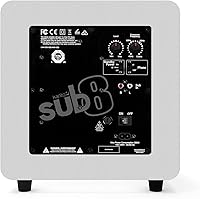
  • Connectivity: Input connectivity is provided via RCA, compatible with the majority of stereo amplifiers, receivers, and powered speaker systems.
  • Power Supply: A universal AC power supply supports 100V to 240V at 50/60 Hz, making it compatible with outlets worldwide.
  • Impedance: The driver impedance is rated at 4 Ohm, standard for powered subwoofer applications.
  • Sensitivity: Speaker sensitivity is rated at 88 dB, indicating average efficiency for a powered subwoofer in its class.
  • Crossover Control: An adjustable high-pass filter allows the user to set the crossover frequency to match a wide range of paired speakers.
  • Phase Control: A phase switch is included to help align the subwoofer's output with the main speakers and minimize bass cancellation.
  • Finish: The exterior is wrapped in a matte white vinyl finish applied over the MDF cabinet.
  • Cabinet Material: The cabinet is constructed from MDF (medium-density fiberboard), a standard material chosen for acoustic rigidity and resonance control.
  • Included Accessories: The package includes rubber feet for vibration isolation, a metal protective grill, and the power cable.
  • Mounting Type: The subwoofer is designed for floor-standing placement and is not intended for wall or ceiling mounting.
  • Warranty: Kanto provides a limited warranty on this product; specific terms and duration should be confirmed directly with the manufacturer.

Related Reviews
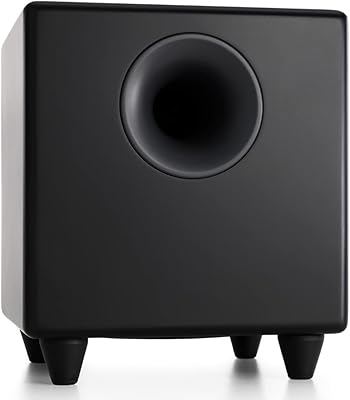
Audioengine S8 Subwoofer
84%
93%
Bass Accuracy & Musicality
94%
Build Quality
91%
Integration & Setup Ease
86%
Crossover Flexibility
89%
Low-Frequency Extension
More
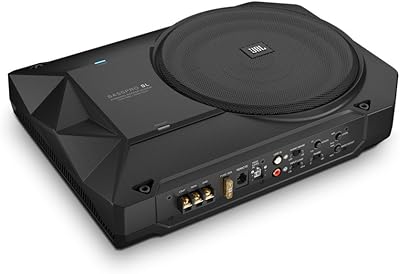
JBL BassPro SL 8-inch Powered Subwoofer
85%
88%
Bass Performance
94%
Ease of Installation
90%
Sound Quality for Size
82%
Build Quality
87%
Value for Money
More
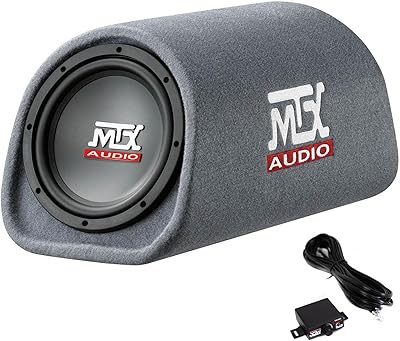
MTX Audio RT8PT 8-Inch Powered Subwoofer
83%
88%
Bass Performance
92%
Value for Money
89%
Build Quality
85%
Ease of Installation
80%
Sound Clarity
More
Yamaha NS-SW050 8-Inch Powered Subwoofer
78%
86%
Bass Quality
71%
Room Size Suitability
83%
Value for Money
91%
Setup & Integration
88%
Speaker Blending
More
Planet Audio P10AW 10-Inch Amplified Car Subwoofer
76%
91%
Ease of Installation
83%
Value for Money
67%
Bass Output & Impact
74%
Build Quality
62%
Sound Clarity
More
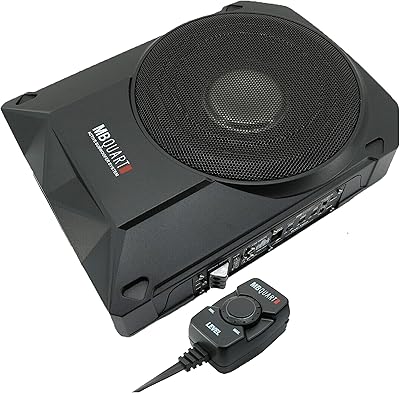
MB Quart RW-108A 600W 8-inch Powered Subwoofer
86%
91%
Bass Performance
94%
Compact Design
88%
Ease of Installation
85%
Build Quality
80%
Remote Control Usability
More
BOSS Audio Systems BASS8 8-Inch Under Seat Powered Car Subwoofer
86%
89%
Bass Quality
91%
Ease of Installation
94%
Space Efficiency
85%
Sound Clarity
88%
Power Output
More
CT Sounds MESO-8-D4 8-Inch Dual 4 Ohm Car Subwoofer
87%
94%
Bass Performance
91%
Build Quality
88%
Sound Clarity at High Volumes
93%
Power Handling
84%
Ease of Integration
More
CT Sounds TROPO-8-D2 8-Inch Car Subwoofer
77%
91%
Value for Money
83%
Bass Quality
88%
Build Quality
67%
Enclosure Compatibility
71%
Amplifier Pairing
More
Rockville RTB80A 8″ Powered Car Subwoofer
69%
88%
Ease of Installation
71%
Bass Output
82%
Value for Money
67%
Build Quality
44%
Power Accuracy
More

FAQ

It works with virtually any passive or powered bookshelf speakers that have a compatible RCA output or subwoofer pre-out. The adjustable crossover filter is specifically there to help you tune the blend regardless of which speakers you are pairing it with, so you are not locked into the Kanto ecosystem at all.

No, this compact powered sub does not have an auto-on feature. You will need to switch it on manually each time. If that is a dealbreaker for your setup, it is worth factoring in before purchasing.

You can, as long as your TV has a subwoofer pre-out or a variable RCA audio output. Many modern TVs only offer optical or HDMI ARC outputs, so you may need a small DAC or receiver in between to get a usable RCA signal to the sub.

The phase switch flips the acoustic phase of the subwoofer's output by 180 degrees. In practice, depending on where you place the sub relative to your main speakers and your listening position, bass waves can either reinforce each other or partially cancel out. Toggling the switch and listening for whichever setting sounds fuller and more cohesive is genuinely worth doing during initial setup — it can make a noticeable difference.

It handles both well, though its strengths lean toward musical accuracy rather than raw impact. For gaming, you will notice a clear improvement in presence and atmosphere, especially for cinematic or ambient titles. If your main goal is the kind of gut-punch bass from an action game or explosion-heavy movie, a larger or ported sub would serve you better.

The crossover knob adjusts the point at which the sealed subwoofer takes over the low-frequency work from your main speakers. A good starting point is around 80 Hz, which is a widely used standard for blending subwoofers with bookshelf-sized drivers. From there, tune by ear — if the bass sounds thick or muddy, lower it slightly; if there is a gap in the lower midrange, raise it a touch.

Yes, it works in a 5.1 setup. As long as your AV receiver has a dedicated subwoofer pre-out (which virtually all modern receivers do), connecting this compact powered sub is straightforward. Set your receiver to route the LFE channel to it and configure your main speakers as small, and you are good to go.

Not weak, just different. Sealed subs tend to sound tighter and more controlled, which is actually preferred for music and near-field listening. Ported designs can produce more apparent bass volume at certain frequencies, but they also tend to be less precise and can color the sound. Whether one is better really depends on what you are listening to and how much room accuracy matters to you.

The vinyl wrap is reasonably durable for everyday use and holds up well to general handling. It is not impervious to sharp impacts or dragging across rough surfaces, but for a unit that sits under a desk or on a shelf, the finish should stay looking clean without much effort. Rubber feet also help keep it stable and prevent floor-contact marks.

The standard package includes the subwoofer unit, rubber feet, metal grill, and power cable, but an RCA interconnect cable is typically not included. You will likely need to pick one up separately — a decent-quality RCA cable is inexpensive and widely available, so it should not add much to the total cost.

Where to Buy