Overview

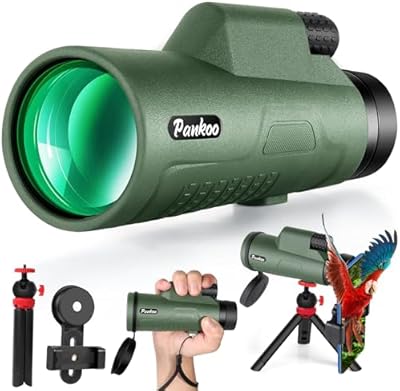
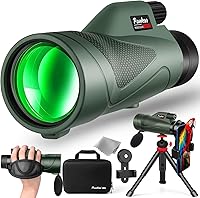
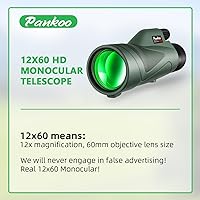
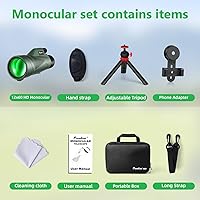
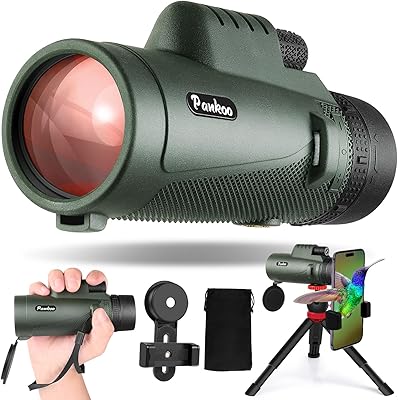
The Pankoo 12x60 Monocular sits in a comfortable sweet spot for outdoor enthusiasts who want real optical performance without committing to a bulky, expensive setup. At 12x magnification with a 60mm objective lens, it delivers a wide field of view — roughly 325 feet at a thousand yards — which makes scanning a treeline or following action across a stadium surprisingly natural. It weighs just 14 ounces and arrives wrapped in rubber armor that handles rough conditions well. The bundle includes a smartphone adapter, a mini tripod, and a hand strap, so you are not buying accessories separately. It reads as a practical, gift-worthy option for adults across a range of outdoor hobbies.

Features & Benefits

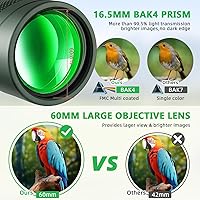
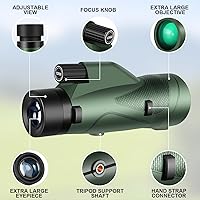
What makes this monocular perform above expectations for its price class starts with the glass itself. The BAK-4 prism paired with fully multi-coated lenses does a solid job reducing light loss and keeping colors true — you get bright, crisp images without that washed-out quality common to cheaper optics. The twist-up eyecup is a small but thoughtful detail; glasses wearers can dial in comfortable eye relief without removing their frames. The 6.5° field of view is wide enough that tracking a bird in flight or a cyclist mid-race does not feel like hunting through a keyhole. Manual focus gives you fine control, and the altazimuth-compatible base pairs well with the included tripod for steady long-range viewing.

Best For

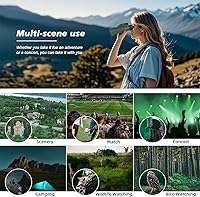
This handheld telescope hits its stride with users who need a single, packable optic rather than a specialized tool. Birdwatchers on day hikes will appreciate the combination of wide field of view and compact size — it slips into a pack without the bulk of a full spotting scope. Sports fans who want to bring more detail into a stadium experience will find it capable at that distance, too. Travelers looking to consolidate gear will value having one piece that covers wildlife, scenery, and cityscapes alike. It also works for casual evening sky observation, though it is not a substitute for dedicated astronomy equipment. As a practical outdoor gift, it is hard to argue with what comes included in the box.

User Feedback

Across more than 2,000 reviews and a 4.4-star average, the pattern is consistent: buyers are generally pleased with image quality for the price, often surprised by how bright and clear the view is compared to what they expected. The smartphone adapter is the most polarizing included accessory — it works, but getting your phone aligned and locked in takes trial and error, and not everyone has the patience for it. The bundled tripod is functional but will not impress anyone who has used a quality stand before; it is fine for casual stationary use. A handful of reviewers mention the focus wheel can feel finicky when contrast is low, like on overcast mornings. Durability concerns appear occasionally, not broadly, but are worth factoring in.

Pros

  • Image clarity consistently exceeds what buyers expect at this price tier.
  • The wide field of view makes tracking birds, athletes, and moving subjects noticeably easier.
  • At 14 ounces, this handheld telescope slips into a pack without adding meaningful weight.
  • Rubber-armored body handles outdoor knocks and light rain without babying.
  • Twist-up eyecup works well for glasses wearers and bare-eye users alike.
  • Everything you need to start using it arrives in the box — no extra purchases required.
  • Manual focus gives precise control once you get the feel for the wheel.
  • A 30-day money-back guarantee reduces the risk for first-time monocular buyers.
  • Versatile enough to cover birdwatching, travel, sports, and casual stargazing in one package.

Cons

  • At 12x magnification, shaky handheld views are the norm — bracing or tripod use is necessary.
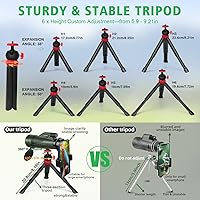
  • The bundled tripod feels flimsy and wobbles on anything other than a flat, stable surface.
  • Smartphone adapter alignment is fiddly and time-consuming, especially in fast-moving outdoor situations.
  • Focus wheel requires extra patience in low-contrast or flat-light conditions.
  • Some units show edge softness that becomes obvious when scanning wide scenes.
  • Rubber coating on the body has peeled or degraded on longer-term units reported by owners.
  • Image brightness drops noticeably at dawn and dusk compared to larger-objective competitors.
  • The carrying pouch offers minimal padding and is not reassuring for travel or trail use.
  • Not built to withstand the rigors of professional or heavy daily field use over multiple seasons.

Ratings

The scores below were generated by AI after analyzing thousands of verified global buyer reviews for the Pankoo 12x60 Monocular, with spam, bot-submitted, and incentivized feedback actively filtered out. The result is an honest, balanced picture of where this handheld telescope genuinely delivers and where real users have run into frustration. Both the strengths and the friction points are reflected transparently in every category score.

Optical Clarity
83%
Most buyers are genuinely impressed by how sharp and bright the view is, especially given the price tier. The BAK-4 prism and fully multi-coated lenses do a solid job controlling chromatic fringing, and users frequently mention that colors look natural rather than washed out when scanning landscapes or watching birds at distance.
A portion of reviewers notice softness toward the edges of the field, which becomes more apparent at maximum magnification. In very low light, the image can lose some of its crispness, which is a limitation inherent to the optics class rather than a defect.
Magnification Performance
79%
21%
Twelve times magnification is enough to pull in meaningful detail at sporting events, along a hiking trail, or across a marsh at dawn. Users who switch from standard binoculars often comment that the extra reach changes what they can realistically observe without moving closer to their subject.
High magnification means any hand tremor becomes visible in the image, and several users report needing to brace against a surface or use the tripod to get a stable view. This is a physics reality at 12x, not a flaw, but buyers expecting effortless handheld use may be caught off guard.
Build Quality
72%
28%
The rubber-armored exterior gives the scope a confident, grippy feel in hand, and at 14 ounces it sits comfortably between too light to feel substantial and too heavy for extended handheld use. Buyers who have taken it on day hikes report it handling knocks and rain exposure reasonably well.
Some longer-term owners flag that the rubber coating can begin to peel or feel sticky after extended outdoor use, and the focus wheel on certain units feels slightly loose out of the box. It is durable enough for casual field use but not built to the standard of professional optics.
Included Accessories
61%
39%
The fact that a smartphone adapter, mini tripod, and hand strap all come in the box is genuinely useful for buyers who want to start using the scope immediately. For casual digiscoping — snapping a quick photo of a bird or a distant landscape — the adapter does the job without needing a separate purchase.
The tripod is the weakest link in the bundle. It is lightweight to the point of feeling flimsy, and several users note it wobbles noticeably on uneven ground. The smartphone adapter requires real patience to align correctly, and buyers with larger phone cases often find the fit frustrating.
Smartphone Adapter Usability
57%
43%
Once dialed in, the adapter holds the phone steadily enough for still shots and short video clips, and users appreciate not having to hold the phone manually against the eyepiece. For casual wildlife photography shared on social media, the results are often better than expected.
Getting the alignment right is genuinely tedious, especially for first-time users. Multiple reviewers mention spending ten or more minutes trying to center the camera lens over the eyepiece, and in the field that delay often means missing the shot entirely.
Eyecup & Eye Relief
82%
18%
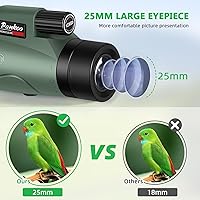
The twist-up eyecup is a standout feature for glasses wearers, who frequently single it out as the reason they chose this scope over competitors. It clicks into multiple positions rather than just two extremes, which means both bare-eye and spectacle users can find a setting that actually works.
The eyecup mechanism on some units feels less precise after repeated adjustment, with a slight wobble developing over time. A small number of buyers with very strong prescriptions still find the eye relief slightly short even at full extension.
Focus Mechanism
69%
31%
Manual focus gives users full control over the focal plane, and in good lighting conditions the wheel responds smoothly enough to track a moving bird or pan across a crowd. Once set for a specific distance, the focus tends to hold without drifting.
In low-contrast conditions — overcast skies, dense shade, or fog — hitting precise focus takes noticeably more effort. The wheel travel is fairly sensitive, which means small adjustments can overshoot the sharpest point, and a few reviewers describe this as fiddly during active outdoor use.
Field of View
86%
A 6.5-degree field of view is wider than many competing monoculars in this class, and users who do birdwatching or sports observation specifically appreciate how much easier it makes finding and tracking subjects without constantly re-centering. Scanning a treeline or following a raptor mid-flight feels natural rather than labored.
At the very edges of the field there is a degree of distortion that more experienced optical users will notice. It does not affect the usable center portion of the image meaningfully, but buyers coming from premium binoculars may find it distracting.
Portability & Size
91%
At under a pound and roughly the footprint of a water bottle, the Pankoo scope slides into a jacket pocket or the side pouch of a daypack without any real thought. Hikers and travelers consistently mention this as one of the primary reasons they chose a monocular over binoculars.
The included carrying pouch is basic and does not offer much padding against hard impacts. A small number of buyers mention they purchased a separate case for longer trips where the scope might take more serious jostling.
Value for Money
84%
For buyers entering the optics world or looking for a capable secondary scope, the price-to-performance ratio earns consistently positive comments. The image quality, combined with the included accessories, gives it a strong case against bare-bones alternatives sold at similar prices without any bundled extras.
Buyers who later move up to mid-tier brands with better glass sometimes describe this as a stepping stone rather than a long-term tool. At its price point the value is real, but it is honest to say the optical and build quality ceiling is visible.
Ease of Use
88%
New users repeatedly comment on how intuitive the scope is to pick up and use. There is no complicated setup, no app to configure, and the controls are straightforward enough that someone who has never used a monocular before can be looking at a subject within a minute of unboxing.
The learning curve for steady handheld use at full magnification is steeper than some beginners expect. A few buyers mention feeling disappointed before they realized bracing technique and tripod use were the solution, not a product defect.
Image Brightness
78%
22%
In standard daylight the image is bright and punchy, with users noting it holds up well even in partially shaded environments like forest edges or stadium overhangs. The fully multi-coated lens does a reasonable job maximizing the light coming through the 60mm objective.
As the sun drops and ambient light thins out, brightness falls off more noticeably than in scopes with larger objectives or better coatings. Dawn and dusk birdwatching — prime hours for many birders — expose this limitation most clearly.
Durability Over Time
67%
33%
Short to medium-term owners — those using the scope across one or two seasons of regular outdoor activity — report it holding up well without any significant degradation in optical performance. The rubber body protects the internals adequately under normal field conditions.
A subset of longer-term reviewers mention issues emerging after a year or more of use, including rubber separation, fogging inside the lens, and focus wheel loosening. These are not widespread complaints, but they suggest the scope is built for casual rather than heavy professional use.
Gifting Appeal
89%
The complete bundle, presentable packaging, and broad outdoor appeal make this a genuinely popular gift choice. Buyers shopping for outdoorsy adults — whether for a birthday or a holiday — appreciate having something useful and complete rather than an accessory that requires additional purchases.
For recipients who already own optics or have specific performance expectations, this scope may underwhelm. It is best suited as a gift for someone new to monoculars rather than an enthusiast who already knows what premium glass looks like.

Suitable for:

The Pankoo 12x60 Monocular is a strong match for casual outdoor enthusiasts who want real optical reach without the bulk or cost of a dedicated spotting scope. Birdwatchers heading out on day hikes will find the wide field of view genuinely useful for scanning and tracking subjects without constantly readjusting. Sports fans who want to pull in detail from the upper tiers of a stadium, or travelers who prefer carrying one compact optic over a pair of binoculars, will get clear, practical value from this scope. It is also a thoughtful gift choice for outdoorsy adults — the complete bundle means the recipient can use it immediately without sourcing accessories separately. Glasses wearers in particular benefit from the twist-up eyecup, which offers more usable adjustment than most competing options in this price range.

Not suitable for:

Buyers with serious optical expectations — experienced birders, wildlife photographers, or anyone who has used mid-tier European or Japanese glass — will likely find the Pankoo 12x60 Monocular underwhelming as a primary tool. At 12x magnification, handheld stability is a real constraint, and users who expect crisp, shake-free views without bracing technique or tripod support may feel frustrated rather than impressed. The included tripod, while useful for stationary observation, is not sturdy enough to satisfy anyone who needs rock-solid stability in windy or uneven terrain. The smartphone adapter works, but it demands patience and good lighting to produce shareable results — it is not a practical tool for anyone serious about digiscoping or wildlife photography. Anyone looking for a scope that will hold up through years of demanding field use, or perform reliably at dawn and dusk, should consider investing in a higher-grade option.

Specifications

  • Magnification: The scope delivers 12x magnification, bringing distant subjects significantly closer for clear observation at range.
  • Objective Lens: A 60mm objective lens gathers substantial light, supporting brighter and sharper images across a range of outdoor lighting conditions.
  • Field of View: The field of view spans 325 ft at 1000 yards, enabled by a 6.5-degree viewing angle that aids tracking of moving subjects.
  • Prism Type: BAK-4 prism glass is used internally to minimize light refraction loss and maintain image sharpness from edge to center.
  • Lens Coating: All optical surfaces are fully multi-coated (FMC) to reduce glare, suppress internal reflections, and preserve color accuracy.
  • Focus Type: Focusing is fully manual via a dedicated focus wheel, giving the user direct control over the focal plane at any distance.
  • Eyecup Design: The eyecup is twist-up style with multiple intermediate positions, accommodating both eyeglass wearers and bare-eye observers.
  • Body Material: The exterior is wrapped in rubber armor that provides a non-slip grip and offers basic protection against knocks and light moisture.
  • Weight: The scope weighs 14 oz (approximately 397 g), keeping it practical for extended handheld use or carrying in a pack.
  • Dimensions: Physical dimensions measure 6.81″ deep by 2.95″ wide by 3.74″ tall, making it compact enough to pocket or slip into a bag.
  • Mount Type: The base is altazimuth-compatible, allowing straightforward attachment to the included tripod or any standard altazimuth mount.
  • Tripod Included: A lightweight mini tripod is included in the box, suited for low-vibration stationary observation on flat, stable surfaces.
  • Smartphone Adapter: A universal quick-align smartphone holder is included, compatible with most smartphone models for basic digiscoping use.
  • Hand Strap: A wrist hand strap is included to secure the scope during active outdoor use and reduce the risk of accidental drops.
  • Compatible Devices: The included smartphone adapter is designed to fit a wide range of smartphone sizes without requiring model-specific accessories.
  • Warranty: Pankoo offers a 30-day money-back guarantee, allowing buyers to return the product if unsatisfied within that window.
  • Item Model: The manufacturer model number for this scope is 10010, useful for referencing parts or contacting support.
  • Availability: The product has been available since September 2020 and is not discontinued as of the most recent listing data.

Related Reviews
Pankoo 40x60 Monocular
73%
74%
Optical Clarity
68%
Magnification Performance
66%
Low-Light Performance
71%
Build Quality
78%
Waterproofing & Weather Resistance
More
Pankoo 16x52 Monocular
74%
74%
Optical Clarity
71%
Magnification Performance
52%
Low-Light Performance
77%
Build Quality & Durability
81%
Waterproofing & Fog Resistance
More
Pankoo 12x50 HD Monocular Telescope
84%
89%
Image Clarity
78%
Portability & Weight
85%
Build Quality
92%
Ease of Use
80%
Field of View
More
AYRAVIIO RM 12x60 Monocular Telescope
86%
90%
Optical Performance
85%
Ease of Use
88%
Portability
82%
Build Quality
91%
Image Clarity in Low Light
More
Celestron SkyMaster 12x60
87%
95%
Optical Clarity
92%
Low-Light Performance
90%
Magnification Accuracy
88%
Build Quality
87%
Durability
More
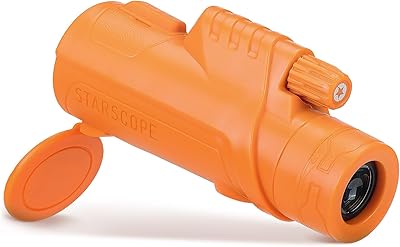
Starscope 10x42 Monocular
85%
88%
Optical Quality
91%
Ease of Use
94%
Portability & Weight
85%
Build Durability
70%
Smartphone Compatibility
More
Leica Monovid 8x20 Monocular
85%
92%
Image Clarity
89%
Portability & Size
87%
Durability & Build Quality
91%
Ease of Use
88%
Waterproofing & Fog Resistance
More
Celestron Nature 10x25 Monocular
85%
93%
Portability
88%
Optical Clarity
90%
Build Quality
85%
Ease of Use
91%
Waterproof & Fogproof Performance
More
OLIMT 8x25 Monocular Telescope
87%
91%
Optical Clarity
88%
Build Quality & Durability
93%
Portability & Weight
89%
Waterproof Performance
84%
Ease of Use
More
Belmeri 10-300x40 Monocular
80%
91%
Value for Money
88%
Portability & Size
84%
Image Quality at Moderate Zoom
77%
Zoom Magnification Performance
72%
Focus Precision
More

FAQ

Yes, it is a solid entry point. The wide field of view makes it easier to locate and track birds without constantly repositioning, and the manual focus is intuitive once you spend a few minutes getting used to it. It is not a professional birding scope, but for casual outings and day hikes it performs well above its price class.

You can use it handheld, but at 12x magnification any hand movement becomes visible in the image. Most users find they need to brace against a tree, fence, or railing to get a sharp, stable view. The included tripod helps for stationary observation, though it is lightweight and works best on a flat, calm surface.

Yes, and this is one area where it genuinely stands out. The twist-up eyecup adjusts to multiple intermediate positions rather than just fully up or fully down, which makes finding a comfortable eye relief distance much easier for spectacle wearers. Several glasses-wearing buyers specifically highlight this as a deciding factor.

The adapter clamps onto the eyepiece and holds your phone in place so the camera lens aligns with the scope. Getting that alignment right the first few times takes patience — it is not a one-click process. Once you have practiced it, it becomes quicker, but in fast-moving field situations it is not fast enough to catch spontaneous shots.

Casually, yes. It will show you craters on the moon clearly and let you pick out brighter planets and star clusters. That said, it is not designed for serious astronomy — the 60mm aperture limits how much light it can gather on faint deep-sky objects, and there is no equatorial tracking. For casual sky observation it is fun, but dedicated astronomers will want more aperture.

The rubber armor provides some protection against light rain and splashes, and most users find it holds up fine during normal outdoor use. However, it is not rated as waterproof or fog-proof, so submerging it or using it in heavy sustained rain is not advisable. If you plan on using it frequently in wet conditions, keep that limitation in mind.

The adapter is a universal clamp-style holder designed to accommodate a wide range of phone widths and sizes. Most standard and large-format smartphones fit without issue. Very thick protective cases can sometimes make alignment awkward, so you may find it easier to remove a bulky case before attaching your phone.

Use a soft lens cloth or a dedicated optical cleaning wipe — never paper towels or clothing fabric. For stubborn smudges, a small amount of lens cleaning solution applied to the cloth first works well. Blow away loose dust before wiping to avoid dragging particles across the coating.

Yes, this is a known limitation at this optics tier. When there is not much contrast in the scene — flat grey skies, dense fog, or dark shade — the manual focus wheel is harder to settle at the sharpest point. Focusing on a hard edge in the scene, like a tree branch or roofline, rather than a soft background area helps considerably.

The main trade-off is depth perception and stability — binoculars use both eyes, which makes for a more natural, comfortable viewing experience over long periods. This scope is lighter and more packable, and the smartphone adapter adds a capability binoculars cannot match as easily. For travelers and hikers who want to minimize what they carry, the monocular often wins on convenience. For extended birdwatching sessions where comfort matters, binoculars may be easier on the eyes.