

Overview

The Baseus Bass BH1 NC arrived in mid-2025 with a spec sheet that would make headphones costing three times as much nervous. Hi-Res and Hi-Res Wireless certifications, Bluetooth 6.0, and adaptive noise cancellation at this price point? That combination is genuinely unusual. It is worth noting, though, that the build is plastic — you can feel where corners were cut to keep costs down. Still, these Baseus headphones have already climbed to #145 in Over-Ear Headphones on Amazon, which suggests early buyers are responding positively. Just keep in mind this is a very new release, so long-term reliability data is still thin on the ground.

Features & Benefits

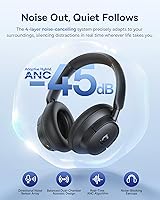
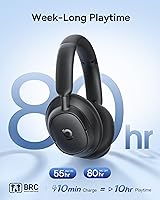
The standout feature here is the adaptive ANC system — a four-layer hybrid setup that adjusts to ambient noise in real time. The claimed attenuation figure is ambitious; real-world performance at this price tier typically lands somewhat below lab conditions, but it handles consistent noise like office hum or road drone well. Audio quality benefits from LDAC support and bio-cellulose drivers, which together produce a warmer, more detailed sound than you would expect — though LDAC only works over Android, so iPhone users will be capped at standard AAC. Battery life is genuinely impressive: you can go nearly a full week between charges with ANC enabled. The five-mic call setup, powered by AI noise filtering, rounds out a surprisingly complete package.

Best For

This over-ear ANC set makes the most sense for Android users on a budget who want to actually use LDAC rather than leave it sitting idle. Remote workers will appreciate the multi-mic call system — it is designed to isolate your voice even in a noisy cafe or open-plan office. Frequent travelers and commuters will find the battery life alone justifies the purchase; a quick ten-minute charge can carry you through a long meeting if you forgot to top up overnight. Bass-forward listeners will also feel at home here, since the low-end enhancement is baked in by default. If you are an iOS user or you prioritize premium build quality, though, you might want to look elsewhere.

User Feedback

Given that the Bass BH1 NC only hit the market in mid-2025, the review pool is still growing — so take early impressions with appropriate caution. That said, buyers have already been vocal about a few things. Comfort during long sessions gets consistent praise, with the memory foam earcups mentioned frequently. The ANC draws more mixed responses: most find it effective for steady background noise, though some note it does not fully silence sharp or unpredictable sounds. Call quality in noisy environments comes up positively in several reviews, which is encouraging. On the downside, a handful of users have flagged the plastic construction feeling less solid than the feature list implies, and app feedback remains too sparse to draw firm conclusions yet.

Pros

  • The Baseus Bass BH1 NC delivers an exceptional feature-to-price ratio that is hard to match at this tier.
  • Battery life is outstanding — you can realistically go several days of heavy use between charges with ANC on.
  • A ten-minute quick charge provides enough playback to cover a full commute, which is a genuinely practical lifesaver.
  • LDAC support gives Android users access to lossless-quality wireless audio that typically costs much more to unlock.
  • The five-mic array handles call clarity in moderately noisy environments better than most budget headphones manage.
  • Bluetooth 6.0 with multipoint connection makes switching between a laptop and phone reliable and largely hassle-free.
  • Memory foam earcups provide comfortable all-day wear without significant ear fatigue during long work sessions.
  • Adaptive ANC handles consistent background noise — office hum, road noise, cabin drone — effectively for the price.
  • The app-based EQ customization gives users real control over the bass-heavy default tuning.
  • Early sales rankings suggest strong buyer satisfaction for a headphone that only launched in mid-2025.

Cons

  • The all-plastic build feels noticeably budget when you first hold it, especially given the ambitious spec sheet.
  • LDAC is completely locked out on iOS devices, making a key selling point irrelevant for Apple users.
  • No carry case is included in the box, which is a frustrating omission for a travel-marketed product.
  • The ANC falls short on sharp or unpredictable sounds and does not compete with dedicated premium noise-cancelling headphones.
  • The companion app has stability issues and is not yet available in all regional app stores.
  • The default bass tuning is aggressive enough that neutral-sound listeners will need to spend time adjusting the EQ.
  • Clamping force runs tight out of the box and may cause discomfort for users with larger heads until the fit loosens naturally.
  • Long-term durability is an open question — there are no stress-point reinforcements, and the product is too new for multi-year reliability data.
  • The button layout has a learning curve, and accidental ANC mode changes when reaching for volume controls are a recurring complaint.
  • There is no 3.5mm audio jack, which removes the option of wired listening when battery runs out.

Ratings

The scores below reflect an AI-driven analysis of verified global user reviews for the Baseus Bass BH1 NC, with spam, bot activity, and incentivized feedback actively filtered out before any scoring took place. Given the product only launched in mid-2025, the review pool is still building — but the early signal is strong enough to draw meaningful conclusions across key categories. Both the genuine strengths and the real frustrations are reflected here without sugarcoating.

Value for Money
93%
This is where the Bass BH1 NC earns the most consistent praise. Buyers repeatedly express surprise at getting adaptive ANC, Hi-Res certification, LDAC support, and multipoint Bluetooth at this price tier — a combination that usually costs significantly more. For budget-conscious shoppers, the feature-to-cost ratio feels almost unfair in their favor.
A small subset of reviewers feel the value proposition weakens slightly if you are an iOS user, since LDAC — one of the headline features — does not function on Apple devices. Those buyers are effectively paying for a codec they cannot use, which nudges perceived value downward.
Active Noise Cancellation
71%
29%
For steady, predictable background noise — office HVAC systems, subway rumble, airplane cabin drone — early users report the ANC does a commendable job of pushing that hum into the background. The adaptive detection means it responds to changing environments rather than locking into a fixed filter, which commuters in particular find useful.
The marketed attenuation figure sets expectations that real-world performance does not always meet. Sharp, variable sounds like voices or sudden impacts come through noticeably. Users upgrading from mid-range Sony or Bose ANC headphones often note a clear gap in isolation depth, which is a fair and honest comparison to keep in mind.
Sound Quality
84%
The bio-cellulose drivers deliver a warmer, more textured sound than most plastic-bodied budget headphones manage. Android users streaming over LDAC frequently describe the detail retrieval as genuinely impressive for the price, with layered mids and a spatial quality that holds up even in busier tracks.
The SuperBass 2.0 tuning leans noticeably toward the low end, which some listeners find overpowering on bass-heavy genres. Audiophiles used to a flatter, more neutral profile will likely want to spend time in the EQ app adjusting. iOS users also lose access to LDAC entirely, leaving them with a competent but less distinguished audio experience.
Battery Life
96%
Battery performance is arguably the single most celebrated aspect among early buyers. Running ANC continuously, these Baseus headphones outlast most competing products at twice the price — users routinely describe going multiple days of heavy use between charges. The quick-charge capability, which adds hours of playback from a short top-up, gets called out repeatedly as genuinely useful for busy mornings.
A few users have noted that the stated maximum battery figure requires ANC to be fully disabled and volume kept moderate, so real-world mileage varies. There are also early questions about whether battery capacity will hold up after 12 to 18 months of regular charge cycles, though it is too early to draw conclusions on longevity.
Call Quality & Microphone
78%
22%
The five-mic array with AI-assisted noise filtering performs well above what buyers typically expect from headphones at this price. Remote workers using these during video calls in open-plan environments or coffee shops report that colleagues rarely notice background interference, which is the practical bar that matters most in daily use.
In very loud outdoor environments — busy streets, construction zones — the voice isolation starts to struggle, and callers on the other end occasionally report the voice sounding slightly processed or thin. The AI filtering can also clip the beginning of sentences in some conditions, which users on long conference calls find mildly disruptive.
Comfort & Fit
82%
18%
The memory foam earcups and padded headband get consistent praise from users who wear these for extended stretches. Multiple reviewers specifically mention using them through four- to six-hour work sessions without noticeable ear fatigue or hotspots on the top of the head, which is not a given for over-ear headphones in this price range.
The clamping force feels tighter than average out of the box, which some users with larger heads find uncomfortable until the headphones loosen up naturally over time. A handful of buyers also note the earcup padding retains warmth during longer sessions, making them less ideal for use in warm environments or during light physical activity.
Build Quality & Materials
62%
38%
The overall construction feels solid enough for daily commuting and desk use. The headband has a reasonable amount of flex, and the hinges feel secure under normal folding. Several users mention the headphones have survived being tossed into bags daily without visible damage after weeks of use.
The all-plastic construction is the most frequently cited disappointment relative to the spec sheet. Compared to how the product looks in marketing images, some buyers find the tactile feel underwhelming when it arrives. There are no rubberized accents or metal reinforcements at stress points, which raises reasonable questions about durability over a multi-year lifespan.
Bluetooth Connectivity
88%
Bluetooth 6.0 means connection is faster to establish and more stable at range than older versions, and users confirm that dropping audio mid-session is rare. The multipoint feature — connecting to a laptop and phone simultaneously — works reliably enough that remote workers have started relying on it to switch between calls and music without manual re-pairing.
A small number of users have reported occasional latency spikes when watching video content, particularly when connected via standard SBC rather than LDAC. Multipoint audio handoff between devices is not always instantaneous, and a few users note it occasionally requires a manual switch rather than happening automatically.
App & EQ Customization
67%
33%
The companion app gives users meaningful control over the sound signature, with EQ adjustments that make a noticeable difference — particularly useful for dialing back the bass emphasis that ships as the default tuning. ANC mode switching through the app is straightforward and responsive.
The app experience is functional but unpolished. Several early users report occasional connection drops between the app and the headphones, requiring a restart to resync. Feature depth is also limited compared to what established brands offer, and there have been early reports of the app not yet being available in all regional app stores.
Portability & Design
74%
26%
The over-ear ANC set folds flat for storage and fits reasonably well in a backpack pocket or carry-on bag. The Space Black colorway is understated and professional-looking, making it appropriate for office settings without looking overly casual or gamer-oriented.
There is no included hard case in the box — just the headphones, a USB-C cable, and documentation. For buyers who travel frequently, this is a genuine omission; the plastic frame does not inspire confidence when rattling around unprotected in a bag. A carry pouch at minimum would have been a welcome addition.
Quick Charge Performance
91%
The rapid charging capability is one of those features users only truly appreciate after they have needed it. Multiple reviewers describe the scenario of grabbing the headphones on the way out the door after a short charge and still having enough battery to cover a full workday commute and return trip with room to spare.
Quick charge only works with the included USB-C cable and compatible chargers — some users found that slower chargers did not replicate the promised charge speed, which caused brief confusion. Wireless charging is absent entirely, which some buyers in the premium-adjacent space have noted as a missing convenience.
LDAC & Hi-Res Audio
79%
21%
For Android users streaming lossless audio from services that support it, the LDAC implementation adds a genuine and perceptible layer of detail and spatial width compared to standard Bluetooth. The Hi-Res Wireless certification is not just a badge — listeners familiar with the standard can actually hear the difference on well-recorded material.
This feature is completely inaccessible on iOS, and that limitation is not always clearly communicated before purchase — a recurring frustration in early reviews. Even on Android, LDAC is more battery-intensive and not all streaming apps default to it, requiring manual configuration that less tech-savvy buyers may not realize they need to enable.
Controls & Usability
72%
28%
Physical button controls are reliable and easy to locate by touch without taking the headphones off. Users managing calls while commuting appreciate having tactile buttons rather than a touch surface that can misfire in rain or when adjusting earcup position mid-wear.
The button layout requires a short learning curve, and a few users report accidentally triggering ANC mode changes when reaching for the volume buttons. There is no touch control option for those who prefer it, and the button feedback is subtle enough that some users are not always sure a command registered until the audio cue plays.
Unboxing & Accessories
58%
42%
The packaging presentation is clean and straightforward. The included USB-C charging cable is a practical choice, and the headphones arrive with a protective film over the earcups that gives a decent first impression upon opening.
The accessory bundle is bare-bones — no carry case, no 3.5mm audio cable, and no airline adapter. For a product positioning itself against travel-focused headphones, the absence of even a basic soft pouch is a notable miss. Several reviewers mention immediately going to purchase a separate case after unboxing.

Suitable for:

The Baseus Bass BH1 NC is a strong fit for Android users who want genuinely capable wireless audio without spending flagship money — particularly those who will actually benefit from LDAC streaming through services like Tidal or Amazon Music HD. Remote workers juggling back-to-back video calls will find the multi-mic setup handles open-office or home background noise better than most headphones at this price. Commuters and frequent travelers who dread arriving somewhere with dead headphones will appreciate a battery that can last through several days of mixed ANC use without needing a wall outlet. Bass-forward listeners who find most budget headphones sound thin will feel right at home, since the low-end tuning is rich out of the box without requiring EQ tinkering. If your priority list reads: long battery, decent ANC, clear calls, and real audio quality — all without a premium price tag — these Baseus headphones check nearly every box.

Not suitable for:

The Baseus Bass BH1 NC is not the right pick for buyers who prioritize premium build quality or plan to use these headphones in demanding physical environments. The all-plastic construction is a practical compromise, not a selling point, and anyone accustomed to headphones with metal reinforcements or rubberized finishes may find the feel disappointing relative to the spec sheet. iOS users should think carefully before buying: LDAC — one of the headline audio features — is simply not available on Apple devices, which meaningfully narrows the sound quality advantage these headphones are supposed to offer. Audiophiles or critical listeners who prefer a neutral, flat sound signature will likely find the bass-forward tuning fatiguing over time, and the EQ app, while functional, is not polished enough to fully compensate. Anyone who needs serious ANC for genuinely loud environments — think loud factories, crowded airports at peak hours, or open construction zones — should set realistic expectations, since the noise isolation, while solid for steady background noise, does not match what dedicated premium ANC headphones deliver.

Specifications

  • Form Factor: Over-ear (circumaural) design with fully enclosing earcups for passive isolation alongside active noise cancellation.
  • Driver Size: 40mm dynamic drivers with bio-cellulose diaphragms tuned for enhanced bass response and detailed midrange clarity.
  • ANC Type: Real-Time Adaptive Hybrid ANC using a 4-layer processing system with a manufacturer-claimed maximum attenuation of -45dB.
  • Audio Codecs: Supports LDAC for high-resolution wireless audio on compatible Android devices, plus SBC and AAC for broader device compatibility.
  • Certifications: Holds both Hi-Res Audio and Hi-Res Audio Wireless certifications, confirming compliance with Japan Audio Society standards for high-fidelity playback.
  • Bluetooth Version: Bluetooth 6.0 for faster pairing, more stable connections at range, and improved interference handling compared to previous Bluetooth generations.
  • Multipoint: Supports simultaneous connection to two devices, allowing seamless switching between a phone and laptop without manual re-pairing.
  • Battery Life: Up to 80 hours of playback with ANC disabled, or approximately 55 hours with ANC running continuously under normal listening conditions.
  • Quick Charge: A 10-minute charge via USB-C delivers approximately 10 hours of playback, making it practical for users who frequently forget to charge overnight.
  • Microphones: Five-microphone array with AI-powered Environmental Noise Cancellation (ENC) and voice boost processing optimized for calls and voice assistants.
  • Charging Port: USB-C charging port; no 3.5mm headphone jack is present, so wired audio listening is not supported on this model.
  • App Support: Compatible with the Baseus companion app, which provides EQ customization, ANC mode controls, and firmware update management.
  • Materials: Primary construction uses plastic with memory foam padding on the earcups and a breathable fabric lining along the headband underside.
  • Weight: Weighs 14.4 oz (approximately 408g), which sits in the mid-range for over-ear headphones and is manageable for extended wear sessions.
  • Package Contents: Box includes the headphones, a USB-C charging cable, and a user manual; no carry case or 3.5mm audio cable is included.
  • Waterproofing: No official IP water or dust resistance rating is listed, so these headphones are not designed for use in rain or high-humidity environments.
  • Colors: Available in Space Black as the standard colorway at launch; no additional color variants were listed as of the product release date.
  • Wireless Charging: Wireless charging is not supported; the headphones must be charged via the included USB-C cable connected to a compatible power source.
  • Compatibility: Works with any Bluetooth-enabled device including Android, iOS, Windows, macOS, and Nintendo Switch, though LDAC is exclusive to Android.
  • Launch Date: First made available in July 2025, making this a recently released product with a still-developing base of long-term user reviews.

Related Reviews
Baseus Bass BP1 Pro
Baseus Bass BP1 Pro
85%
94%
Battery Life & Charging
92%
Value for Money
91%
Water & Sweat Resistance
89%
Audio Quality
88%
Companion App Experience
More
Blaupunkt EP1600X Digital Bass Processor
85%
91%
Bass Performance
88%
Ease of Installation
85%
Sound Clarity
80%
Build Quality
89%
Value for Money
More
AudioControl The EPICENTER Bass Restoration Processor
86%
93%
Bass Performance
88%
Ease of Use
82%
Installation Process
85%
Build Quality
91%
Remote Control Functionality
More
Baseus N1 4-Cam Kit
Baseus N1 4-Cam Kit
85%
88%
Video Quality
94%
Battery Life
90%
Installation Ease
84%
Build Quality
80%
Night Vision Performance
More
Hifonics BXIPRO3.0 Bass Enhancer
86%
88%
Bass Enhancement Quality
94%
Ease of Installation
85%
Remote Control Functionality
90%
Sound Clarity & Distortion Control
91%
Compatibility with Car Audio Systems
More
Rockville BASS Blaster 12 Subwoofer
84%
89%
Bass Performance
83%
Sound Customization
75%
LED Lighting Feature
90%
Build Quality
92%
Value for Money
More
Baseus N1 2-Cam Kit
Baseus N1 2-Cam Kit
86%
94%
Battery Life
88%
Video Clarity (Day & Night)
72%
Motion Detection Accuracy
85%
Ease of Installation
92%
Value for Money
More
Rockville Bass Blaster 10
77%
78%
Bass Performance
83%
Build Quality
76%
Amplifier & Power Delivery
81%
Tuning & Customization
87%
Connectivity & Compatibility
More
Soundcore Liberty 4 NC
88%
93%
Noise Cancellation
96%
Battery Endurance
88%
Audio Fidelity
94%
Value for Money
84%
Call Quality
More
eSynic ESY233 Portable Headphone Amplifier
81%
83%
Sound Quality Improvement
79%
Bass Boost Performance
77%
Build Quality
61%
Noise Floor & Hiss
86%
Battery Life
More

FAQ

No — LDAC is an Android-exclusive codec and Apple does not support it at the system level. If you pair these Baseus headphones with an iPhone, you will be using AAC instead, which is still decent quality but not the lossless-tier audio that LDAC offers. If you are an iOS user, that is worth factoring into your decision before buying.

It handles steady, consistent background noise — HVAC hum, engine drone, general office murmur — reasonably well for the price. Sharp or unpredictable sounds like raised voices or sudden impacts come through more noticeably. Think of it as solid budget-tier ANC rather than a challenger to Sony or Bose flagships; it will meaningfully reduce fatigue in noisy environments, just not eliminate sound entirely.

Yes, multipoint connection is supported, meaning you can stay connected to two devices simultaneously — say, your work laptop and your personal phone. Switching between them is generally reliable, though the handoff is not always instantaneous and occasionally requires a manual prompt rather than switching automatically.

The maximum figure applies with ANC turned off and at moderate volume, so real-world usage will land somewhere below that ceiling. With ANC running continuously, expect something closer to the 55-hour figure, which is still genuinely impressive for this price range. Most users find they can go several days of regular use between charges without any anxiety about running out.

Plug in via USB-C for about ten minutes and you get roughly ten hours of playback — enough to cover a full workday commute each way. It works best with a reasonably fast USB-C charger; a very slow or low-wattage charger may not replicate that speed. It is the kind of feature you will genuinely appreciate the first time you realize the headphones are flat twenty minutes before leaving the house.

For most users, yes. The memory foam earcups and padded headband hold up well through several hours of continuous use without significant pressure points. The clamping force is on the tighter side out of the box, which some people with larger heads find uncomfortable initially — but it tends to loosen up naturally with regular use over the first few weeks.

Early user feedback is encouraging here. The five-mic array with AI noise filtering does a solid job of isolating your voice in moderately noisy settings like a coffee shop or open-plan office. In genuinely loud outdoor environments — busy streets, construction nearby — callers may occasionally notice some voice processing artifacts or slight clipping at the start of sentences, but it outperforms what most headphones at this price deliver.

Yes, the Baseus app lets you adjust the EQ, switch ANC modes, and manage firmware updates. It is functional and the EQ adjustments make a real difference — especially if you want to dial back the default bass-heavy tuning. That said, the app is not as polished as what you get from established audio brands, and a small number of users have reported connectivity hiccups between the app and the headphones requiring a restart to fix.

The headphones do fold flat, which helps with packing. Unfortunately, no carry case is included in the box — not even a soft pouch — which is a genuine omission for a product that markets itself toward commuters and travelers. If you plan to travel with them regularly, picking up a universal headphone case separately is a practical move to protect the plastic frame.

No, there is no 3.5mm headphone jack on this over-ear ANC set, so wired listening is not an option. Once the battery is depleted, you are waiting for it to recharge. Given how fast the quick-charge fills it up, this is rarely a serious problem in practice, but it is worth knowing upfront if you are someone who likes the security of a wired fallback on long flights.