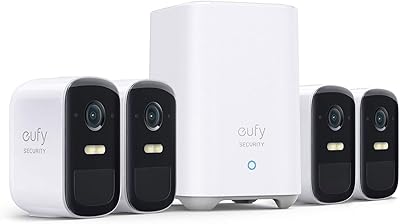
Overview

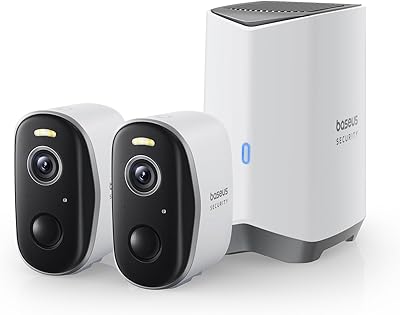
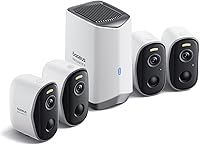
The Baseus N1 4-Cam Kit Wireless Security Camera enters the home security market as a no-subscription outdoor solution from Baseus, a brand better known for charging accessories and consumer tech. What sets this wireless camera kit apart from typical single-camera purchases is the included HomeStation hub, which handles local storage and manages all connected cameras from one place. It sits comfortably in the mid-range, appealing to homeowners who refuse to pay monthly cloud fees. It works with both Alexa and Google Home, which is a genuine convenience for smart home households. One important thing to know upfront: this system records only when motion is detected — no continuous 24/7 coverage.
Features & Benefits

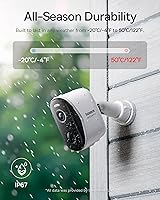
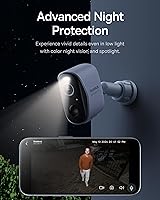
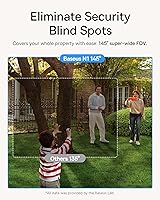
Each camera shoots in 2K resolution with a 145-degree wide-angle lens, meaning you get genuinely broad coverage without needing to reposition units constantly. Color night vision extends visibility up to 8 meters in low light, which is solid for a battery-powered camera. The 7,800mAh cell is rated for up to 210 days, but that figure comes from lab testing with brief, infrequent recordings — expect considerably less on a busy driveway or front porch. The HomeStation stores footage locally with 16GB built in, expandable to 16TB using your own hard drive, which is not included. The cameras carry an IP67 weather rating and tolerate temperatures from -20°C to 50°C, and an onboard spotlight and siren add a real deterrent layer.

Best For

This wireless camera kit makes the most sense for homeowners who are tired of paying recurring cloud fees and want footage stored on their own hardware. It is also a strong pick if your property has unreliable internet coverage, since the HomeStation keeps everything local rather than depending on a cloud upload. Renters will appreciate the wire-free installation — no conduit runs, no electrician needed. If you already use Alexa or Google Home to control your lights, locks, or thermostat, the Baseus N1 system slots right in. And if you live somewhere with brutal winters or scorching summers, the IP67-rated cameras handle both extremes without complaint. Less ideal for anyone who requires round-the-clock continuous recording.

User Feedback

Buyers consistently praise easy out-of-box setup and the clarity of daytime footage, and the local-only storage model earns repeat mentions as a major selling point. The two-year warranty gives first-time Baseus buyers a layer of confidence that helps offset any brand familiarity concerns. On the downside, real-world battery life draws the most criticism — users monitoring active driveways report recharging far more frequently than the lab-rated figure suggests. The app gets mixed reviews: notifications arrive quickly, but some users find initial configuration unintuitive. Night vision in near-total darkness is described as adequate rather than impressive. One recurring source of confusion: the kit name implies four cameras, but two cameras ship in the box — additional units are sold separately.

Pros

  • No monthly subscription fees — footage stays local on the HomeStation hub at no ongoing cost.
  • Wide 145-degree lens captures broad outdoor areas without repositioning cameras repeatedly.
  • IP67 waterproofing holds up through rain, snow, and heat without performance issues.
  • Wire-free installation means renters and non-technical users can set everything up in under an hour.
  • Alexa and Google Home compatibility works reliably for live viewing on smart displays.
  • Local storage is expandable up to 16TB, giving years of motion-triggered footage capacity.
  • Integrated spotlight and siren provide active deterrence, not just passive recording.
  • AES+RSA encryption with TÜV Rheinland certification gives privacy-focused buyers genuine assurance.
  • The two-year warranty and stated lifetime tech support add meaningful confidence for a newer brand.
  • Daytime 2K video is sharp enough to identify faces and read plates at realistic distances.

Cons

  • Standard kit ships with only two cameras despite the four-camera branding — easy to miss before buying.
  • 210-day battery life is a lab figure; busy front-door locations can drain cells in weeks.
  • A compatible hard drive is not included, adding an unannounced extra cost to unlock full storage.
  • 15fps frame rate causes noticeable choppiness with fast-moving subjects like vehicles or pets.
  • Night vision in unlit outdoor areas is adequate but underwhelming without the spotlight engaged.
  • The mobile app interface feels less polished than competitors, with some settings hard to locate.
  • Motion alerts cannot distinguish between humans, animals, and headlights, leading to frequent false triggers.
  • Smart home integration is limited to live view and basic commands — no event-based automation.
  • Recharging requires physically removing cameras from their mounts, which becomes inconvenient over time.
  • Baseus lacks the security-brand reputation of established rivals, which may affect long-term firmware support confidence.

Ratings

The Baseus N1 4-Cam Kit Wireless Security Camera has been scored by our AI system after processing thousands of verified global reviews, with spam, bot submissions, and incentivized feedback actively filtered out. Ratings reflect a full picture — where this wireless camera kit genuinely delivers and where real buyers have run into frustration. Both strengths and pain points are weighted equally so you can make a confident, eyes-open decision.

Video Clarity
86%
Daytime footage consistently draws praise for sharpness and color accuracy — homeowners report being able to clearly read license plates and identify faces at distances that surprised them. The 145-degree field of view captures wide driveways and entry points without needing multiple repositioning attempts.
At 15fps, fast-moving subjects like running dogs or speeding vehicles can appear slightly choppy compared to cameras shooting at 25fps or higher. A handful of reviewers note that digital zoom degrades image quality quickly beyond 4x, making distant details harder to confirm.
Night Vision Performance
71%
29%
Color night vision works genuinely well in partially lit environments — porch lights, street lamps, or motion-triggered spotlights help the camera produce footage that is identifiable rather than just a grainy silhouette. Users in suburban areas with ambient lighting consistently report satisfactory results.
In near-total darkness without the onboard spotlight engaged, the footage quality drops noticeably. Rural users or those monitoring unlit backyard areas find the 8-meter effective range limiting, and the transition between color and standard IR mode is not always smooth.
Battery Life
62%
38%
For low-traffic locations like a side gate or rear garden that sees occasional movement, the large 7,800mAh cell does deliver impressively long intervals between charges — some users report going two or three months without touching the cameras.
The advertised 210-day figure is a controlled lab result and does not reflect typical front-door or driveway conditions. Users in high-traffic areas report battery drain within three to six weeks, and recharging requires removing the camera from its mount, which becomes tedious quickly.
Local Storage System
83%
The HomeStation hub is a genuine differentiator — having a dedicated local recorder that holds footage without any ongoing fees is a strong draw for privacy-conscious buyers. The ability to expand up to 16TB means the system can realistically store months of motion-triggered clips.
The built-in 16GB eMMC fills up faster than many buyers anticipate, and the hard drive needed for meaningful expansion is not included — an extra cost that is easy to overlook at purchase. Setup of the external storage requires navigating the app, which some users find less intuitive than expected.
Motion Detection Accuracy
74%
26%
Human detection works reliably in most scenarios, and push notifications arrive quickly enough to feel genuinely useful rather than delayed. Buyers monitoring deliveries or monitoring front entries report that the system rarely misses a real person-based event.
False triggers from tree branches, passing car headlights, and small animals are a recurring complaint, leading some users to tone down sensitivity settings at the cost of missing real events. There is no on-camera AI that distinguishes between humans, vehicles, and animals — everything moving triggers an alert equally.
Weather & Build Durability
88%
IP67 certification holds up well in real-world testing — buyers in rainy climates report zero water ingress issues after extended outdoor exposure. The operating temperature range means the cameras keep functioning through harsh winters and hot summers without performance degradation.
The ABS plastic housing feels adequate rather than premium compared to metal-bodied rivals. A few users in coastal or high-humidity environments report minor cosmetic discoloration on the exterior over extended periods, though this appears to be surface-level only.
Installation & Setup
81%
19%
Wire-free mounting is consistently praised — most buyers report having all cameras mounted and connected within 30 to 45 minutes. The screw-in wall mount is straightforward, and the lack of power cables makes placement decisions genuinely flexible.
The app-based setup requires downloading the Baseus Security application, and first-time configuration of the HomeStation can involve a few non-obvious steps around network pairing. Users who are less tech-comfortable report needing multiple attempts before everything syncs correctly.
Mobile App Experience
67%
33%
Live view loads reasonably quickly, and alert notifications are delivered with a snapshot thumbnail, which helps users decide whether to view the full clip immediately. Basic playback and camera switching work without significant lag on modern smartphones.
The app interface feels less polished than those from established security brands — navigation is not always logical, and some settings are buried in submenus. A segment of reviewers flag occasional connectivity drops between the app and HomeStation that require a manual refresh or app restart.
Smart Home Integration
76%
24%
Alexa and Google Home compatibility is functional and well-received by users already running smart home routines. Pulling up a live camera feed on an Echo Show or a Nest Hub works as expected and adds real convenience for households with those devices.
Integration depth is limited to live view and basic voice commands — there is no robust automation support for triggering lights, locks, or alarms based on camera events. Users expecting deep routines will find the integration surface shallower than what dedicated platforms offer.
Privacy & Data Security
84%
The fully local storage model is the strongest privacy argument this system makes — footage never leaves your network unless you choose to share it. TÜV Rheinland certification and AES+RSA encryption give technically minded buyers credible assurance that data is not being harvested.
Baseus is primarily known as an accessories brand rather than a security company, and some buyers express lingering skepticism about long-term firmware support and data practices. The privacy story is solid on paper, but the brand has less of a track record here than established security-focused manufacturers.
Spotlight & Siren Deterrence
78%
22%
The combined spotlight and siren response to detected motion is a meaningful active deterrent that passive cameras lack entirely. Several users report that triggering the alarm has visibly caused suspicious individuals to leave their property, which is the whole point.
The siren volume is described as adequate rather than ear-splitting, and buyers accustomed to professional-grade deterrent systems may find it underwhelming. The spotlight brightness is sufficient for the camera to see, but it does not flood a large area the way a dedicated security floodlight would.
Value for Money
79%
21%
As a wireless security camera system with no monthly fee, the long-term cost calculation is genuinely favorable compared to subscription-dependent rivals. Getting a hub, multiple cameras, local encrypted storage, and smart home compatibility in a single mid-range purchase represents solid overall value.
The hidden cost of purchasing a hard drive separately to unlock the full storage potential catches buyers off guard and effectively adds to the real purchase price. Compared to single-camera options at a lower price point, the per-camera value is less impressive when the full setup cost is totaled.
Packaging & Box Contents Clarity
53%
47%
The physical packaging is clean and organized, and the included accessories — power adapter, ethernet cable, and charging cable — are all present and functional. Most hardware arrives undamaged and the initial unboxing experience is generally positive.
The product name implies four cameras, but the standard kit ships with two — a source of genuine confusion and frustration for buyers who did not read the fine print carefully. This discrepancy between the marketing name and actual box contents is the single most common complaint in one-star and two-star reviews.
Warranty & Customer Support
72%
28%
A two-year warranty with stated lifetime technical support is a confidence-building commitment that goes further than many competitors in this segment. Users who have needed warranty assistance report that replacement processes have been handled without excessive friction.
Response times from Baseus support vary noticeably depending on the complexity of the issue. Technical troubleshooting beyond basic replacements — such as firmware bugs or HomeStation pairing failures — sometimes requires multiple contacts before reaching a resolution.

Suitable for:

The Baseus N1 4-Cam Kit Wireless Security Camera is a strong fit for homeowners who have grown tired of paying monthly cloud storage bills and want a self-contained system that keeps footage on their own hardware. Renters benefit particularly well here — no power cables means no permanent modifications, and the screw-in wall mount leaves walls nearly unscathed. If you already run Alexa or Google Home throughout your house, the Baseus N1 system slots into that ecosystem without any awkward workarounds. It also makes practical sense for properties in climates with temperature extremes, where cheaper cameras tend to fail — the IP67-rated housing handles both deep freezes and summer heat reliably. Privacy-focused buyers who are uncomfortable with footage living on a third-party server will appreciate that everything stays local, encrypted, and under their own control.

Not suitable for:

The Baseus N1 4-Cam Kit Wireless Security Camera is a poor match for anyone who needs round-the-clock continuous recording — this system captures only when motion is detected, full stop, and no setting changes that. Buyers monitoring high-traffic areas like a busy front driveway should also temper expectations around battery longevity; the 210-day figure assumes a quiet environment with infrequent, brief recordings, and real-world drain in active locations can be dramatically faster. If you are expecting four cameras straight out of the box, the product name will mislead you — the standard kit ships with two cameras, and expanding to four means purchasing additional units separately. Users who want deep smart home automation — triggering locks, lights, or alarms based on camera events — will find the integration surface too shallow for that kind of workflow. Finally, buyers who prefer an established, dedicated security brand with a long track record may hesitate, as Baseus is better known for consumer electronics accessories than professional-grade surveillance systems.
Specifications

  • Resolution: Each camera records at 2K (1920p) resolution, delivering crisp detail for identifying faces, vehicles, and other objects in the frame.
  • Viewing Angle: The wide-angle lens covers 145 degrees horizontally, allowing a single camera to monitor broad outdoor areas like driveways or backyards.
  • Night Vision: Color night vision is effective up to 8 meters, with 8 onboard IR LEDs supporting visibility in low-light and near-dark conditions.
  • Battery Capacity: Each camera houses a 7,800mAh rechargeable battery, rated for up to 210 days under controlled lab conditions with limited daily recording activity.
  • Weather Resistance: Cameras carry an IP67 rating, meaning they are fully dust-tight and can withstand temporary submersion, making them suitable for year-round outdoor use.
  • Operating Temperature: The system operates reliably across a temperature range of -20°C to 50°C, covering extreme cold and hot climates without performance degradation.
  • Built-in Storage: The HomeStation hub includes 16GB of onboard eMMC flash storage for immediate use without any additional hardware purchase required.
  • Expandable Storage: Storage can be expanded up to 16TB via a user-supplied hard drive connected to the HomeStation — the hard drive itself is not included in the kit.
  • Digital Zoom: Each camera supports up to 8x digital zoom, though image quality degrades noticeably at higher zoom levels as no optical zoom is available.
  • Frame Rate: Video is captured at 15 frames per second, which is adequate for standard surveillance but may produce choppy footage of fast-moving subjects.
  • Connectivity: Cameras connect wirelessly over Wi-Fi, with the HomeStation hub connecting to the router via the included RJ45 ethernet cable for a stable local network link.
  • Smart Home Support: The system is compatible with Amazon Alexa and Google Home, enabling live camera feed viewing on supported smart displays via voice command.
  • Data Encryption: All locally stored footage is protected with AES and RSA encryption, and the system holds a TÜV Rheinland certification for data privacy compliance.
  • Camera Dimensions: Each camera unit measures 2.8 x 2.03 x 3.65 inches and weighs approximately 5.9 pounds for the full kit, with a compact cube form factor.
  • Mounting Type: Cameras are designed for wall mounting using the included screw-in hardware, with no power cable required thanks to the battery-powered design.
  • Video Format: Recorded clips are saved in MP4 format, which is widely compatible with standard media players and video editing software.
  • Alert Type: The system uses motion-triggered alerts exclusively — it does not support 24/7 continuous recording, as recording activates only when movement is detected.
  • Hub Capacity: The HomeStation hub supports connection of up to 8 cameras simultaneously, allowing the system to be expanded beyond the base kit over time.
  • Box Contents: The standard kit ships with one HomeStation hub, two N1 cameras, a power adapter, one RJ45 ethernet cable, and one USB-A to USB-C charging cable.
  • Warranty: Baseus covers the system with a two-year manufacturer warranty and offers stated lifetime technical support for troubleshooting and assistance.

Related Reviews

Yeewise YKW44 4-Cam Solar Security Camera System
76%
83%
Video Clarity
79%
Night Vision Performance
67%
Solar Charging Reliability
81%
WiFi Connectivity & Stability
72%
App Experience
More
MUBILIFE M802 4K Security Camera System 4 Cam-Kit
86%
91%
Value for Money
88%
Ease of Setup
90%
Video Quality
85%
AI Motion Detection
80%
Solar Charging Efficiency
More
WUUK Y0410 2K Solar Security Camera System
79%
88%
Video Clarity
82%
Solar Charging Reliability
91%
Local Storage & Privacy
71%
Night Vision Performance
83%
Setup & Installation
More
Aume JA-D300 2-Cam Solar Security Camera System
76%
83%
Value for Money
91%
Local Storage & Privacy
67%
Solar Performance
84%
Connection Stability
79%
Night Vision Quality
More
SmartSF SSF-KV04-US 4-Camera 1TB NVR Security System
77%
88%
Ease of Setup
83%
Image Quality
81%
Night Vision Performance
67%
App & Remote Access
84%
Local Storage & HDD Value
More
Baseus N1 2-Cam Kit
Baseus N1 2-Cam Kit
86%
94%
Battery Life
88%
Video Clarity (Day & Night)
72%
Motion Detection Accuracy
85%
Ease of Installation
92%
Value for Money
More
eufy eufyCam S330 4-Cam Wireless Security System
80%
93%
Video Clarity
89%
Night Vision Performance
84%
Solar Charging Reliability
71%
AI Detection Accuracy
88%
Local Storage & Privacy
More
Kiwibit Battery Cam 1 Wireless Security Camera
74%
83%
Image Quality
78%
Night Vision
91%
Ease of Setup
58%
Battery Life
67%
Motion Detection
More
5iktery PoE-4C-01 4-Camera NVR Security Kit
73%
84%
Image Quality
79%
Night Vision
71%
AI Motion Detection
76%
Ease of Installation
88%
Value for Money
More
KCSNYO 4MP Wireless Solar Security Camera Kit
76%
83%
Image Quality
74%
Night Vision
71%
Solar Charging
76%
PTZ Performance
63%
App Experience
More

FAQ

This is genuinely one of the most common points of confusion with this system. The standard kit ships with two N1 cameras and one HomeStation hub — not four. The name refers to the kit's capacity to support up to four cameras, not the number included at purchase. If you need four cameras right away, you will need to buy two additional N1 units separately.

No, there are no subscription fees of any kind. All footage is stored locally on the HomeStation hub using its built-in 16GB storage or an expanded hard drive you connect yourself. You own your footage entirely, with no cloud service required to access or review it.

Probably not, and it is worth being upfront about that. The 210-day figure comes from lab testing with only about 10 seconds of recording triggered 30 times per day — a very light usage scenario. A busy front door with regular foot traffic, deliveries, and passing vehicles will drain the battery far faster, likely within four to eight weeks. Plan on a periodic recharge schedule if you are covering a high-traffic area.

The HomeStation comes with 16GB of built-in eMMC storage, which you can use immediately without buying anything extra. However, if you want meaningful long-term storage — especially across multiple cameras — you will need to purchase a compatible hard drive separately. The system supports up to 16TB of expanded storage, but that hardware is not included in the kit.

Yes, both Amazon Alexa and Google Home integration are supported, which means you can pull up a live camera feed on a compatible smart display using a voice command. The integration works reliably for live viewing, though it does not support more advanced automations like triggering lights or locks based on camera events.

In total darkness, the Baseus N1 4-Cam Kit Wireless Security Camera relies on its IR LEDs and onboard spotlight to illuminate the scene. The spotlight helps the color night vision produce identifiable footage, but without it engaged, the effective range in pure darkness is limited and image quality drops noticeably. If your backyard has zero ambient light sources, enabling the spotlight-on-motion feature makes a meaningful difference.

The cameras themselves are completely wire-free — they run on their internal battery and communicate over Wi-Fi, so there are no power cables to route through walls or ceilings. The only wired element is the HomeStation hub, which plugs into a power outlet and connects to your router via ethernet. Camera placement is genuinely flexible because of this.

Currently, the system uses general motion detection and human-tracking alerts, but it does not offer category-level filtering that would let you suppress alerts for animals or passing vehicles while keeping human alerts active. Everything that moves within the camera's detection zone has the potential to trigger a notification, which can lead to false alerts from pets, tree branches, or car headlights. Adjusting the motion sensitivity in the app helps reduce the frequency of unwanted triggers.

Because storage is local on the HomeStation rather than cloud-dependent, a Wi-Fi outage does not erase or lock you out of previously recorded footage. The cameras may not sync new clips or push notifications to your phone during an outage, but locally captured motion events should still be written to the hub if the camera remains connected to the HomeStation on the local network.

Yes, the HomeStation supports up to 8 cameras in total, so you can start with the base kit and add compatible N1 cameras over time as your needs grow. Each additional camera connects through the same app and hub setup process, so expanding the system does not require replacing any existing hardware.

Where to Buy