Overview

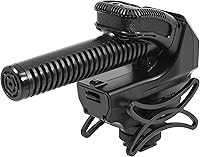
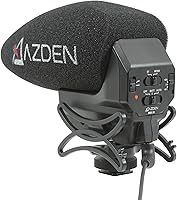
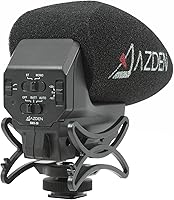
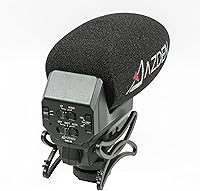
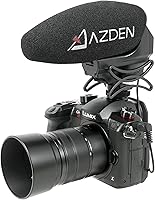
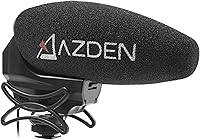
The Azden SMX-30 Stereo/Mono Video Microphone occupies an interesting spot in the on-camera mic market — capable enough for serious work, approachable enough for solo shooters who don't want to haul a full audio kit. It's built for people who move fast: travel filmmakers, one-person documentary crews, vloggers who shoot everything from quiet sit-down interviews to noisy street scenes. What sets this switchable video mic apart from cheaper options is the genuine flexibility of that stereo/mono switch, backed by a 10-year manufacturer warranty that signals Azden isn't treating this as a disposable product. Worth noting upfront: it runs on two AA batteries, so pack spares.
Features & Benefits

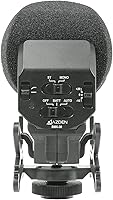
The stereo/mono switch is the centerpiece here. In stereo mode, two cardioid capsules spread at 120 degrees capture natural ambient width — useful for establishing shots or any scene where environmental sound adds context. Flip it to mono and the mic tightens into a super-cardioid pattern, pulling focus toward your subject. The three-position gain control (-10 dB, 0 dB, +20 dB) lets you handle both a hushed interview and a crowded event without touching the camera menu. A 120 Hz low-cut filter knocks out road rumble and air conditioning hiss, and the auto power mode means the mic wakes and sleeps with your camera — one less thing to forget.

Best For

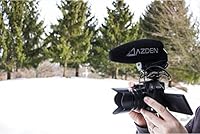
This on-camera microphone is a strong fit for content creators who are tired of fighting with built-in camera audio but aren't ready to commit to a full boom-and-recorder setup. Travel filmmakers will appreciate the compact form factor and the included windshield, which handles light outdoor breezes reasonably well. Interview-focused shooters benefit from the mono mode's tighter pickup — it's not a dedicated shotgun, but it brings more directional control than a fixed stereo mic. If your camera has a 3.5 mm input and you want meaningful audio control without adding weight or complexity to your kit, the SMX-30 is worth serious consideration.

User Feedback

With 32 ratings averaging 3.6 out of 5 stars, the response to this switchable video mic is genuinely mixed — and that's worth taking at face value rather than dismissing. Buyers consistently praise the versatility of the switch, the solid build for the price, and the fact that the kit includes a windshield, carrying pouch, and output cable out of the box. On the other side, some users flag self-noise levels that become noticeable in quiet recording environments, and a few find the battery compartment awkward to access quickly on a shoot. Those coming from a dedicated mono shotgun may find the directional tightness falls short of expectations, and with only 32 reviews, outlier ratings carry more weight than usual.

Pros

  • Switching between stereo and mono on the fly covers a wide range of shooting scenarios with a single mic
  • The three-position gain control reduces dependence on camera menu adjustments during fast-moving shoots
  • Auto power sync with the camera prevents accidentally draining batteries between sessions
  • The 10-year manufacturer warranty is unusually generous for a camera accessory at this price tier
  • Included accessories — windshield, carrying pouch, and output cable — mean no immediate add-on purchases
  • The shock-absorbing shoe mount measurably reduces handling noise compared to rigid mounts
  • Build quality feels solid and above average relative to what buyers pay
  • The low-cut filter at 120 Hz handles wind and HVAC rumble without heavy post-processing
  • Compact and lightweight enough to stay mounted without affecting camera balance on smaller bodies
  • Plug-and-play via standard 3.5 mm output keeps setup fast and compatible with most cameras

Cons

  • Self-noise becomes audible in quiet recording environments, limiting usefulness for controlled indoor audio
  • The battery compartment is awkward to access quickly, which matters when you need a fast swap on a shoot
  • Mono directional rejection does not match a dedicated shotgun mic, disappointing buyers who prioritize that use case
  • The stereo image, while functional, lacks the width and depth of a true stereo field recorder
  • With only 32 ratings, the overall score is easily skewed by a handful of outlier reviews
  • AA battery dependency adds recurring cost and a spare-battery habit that rechargeable-focused users find inconvenient
  • Stereo mode pickup width may feel underwhelming for shooters expecting broadcast-style spatial audio
  • Not well suited for cameras without a 3.5 mm input, requiring adapters that add potential interference points

Ratings

The Azden SMX-30 Stereo/Mono Video Microphone has been scored by our AI system after analyzing verified buyer reviews from global markets, with spam, bot-generated, and incentivized feedback actively filtered out before any scoring was applied. The result is a balanced set of category ratings that honestly reflect where this switchable video mic earns its stripes and where real-world users have run into friction. Both the genuine strengths and the recurring pain points are represented transparently below.
Versatility
83%
The ability to flip between stereo and mono on the same shoot is the single most praised feature among buyers. Travel filmmakers especially appreciate not having to choose between a stereo ambient mic and a more directional unit when packing light for a trip.
The versatility comes with a compromise: neither mode reaches the performance ceiling of a dedicated stereo or shotgun mic. Buyers who expected best-in-class results in both modes often found themselves wanting more from whichever mode they used most.
Audio Clarity
67%
33%
For outdoor interviews, event coverage, and vlogging in typical environments, the SMX-30 delivers clean, usable audio that is a clear step above built-in camera mics. The broad frequency response captures natural-sounding speech without obvious coloration.
Self-noise becomes a real issue in quiet, controlled settings. Users recording in treated rooms or trying to capture soft-spoken subjects noticed a background hiss that required noise reduction in post, which is not ideal for a mic at this tier.
Mono Shotgun Performance
61%
39%
In mono mode, the super-cardioid pattern tightens pickup noticeably and reduces side noise compared to the stereo setting, which works reasonably well for interviews in moderately noisy environments like offices or small event spaces.
Buyers who came from or compared it against dedicated shotgun mics were frequently disappointed by the off-axis rejection. It does not isolate a subject with the same authority as a purpose-built mono shotgun, and several reviewers flagged this directly.
Stereo Width & Quality
58%
42%
The 120-degree cardioid stereo arrangement captures a convincing sense of space for establishing shots and environmental recordings, which is more than most single-pattern on-camera mics can offer at all.
The stereo image is practical rather than immersive. Buyers expecting the kind of wide, enveloping stereo field you get from a dedicated stereo field recorder were often let down — the capsule arrangement is functional, not audiophile-grade.
Gain Control
84%
Having three discrete gain positions (-10 dB, 0 dB, +20 dB) directly on the mic body is genuinely useful in the field. Shooters praised being able to pad down for loud concerts or boost up for quiet documentary subjects without diving into camera menus mid-shoot.
Three fixed steps mean there is no fine-tuning between positions, which can leave some recordings either slightly too hot or slightly too quiet depending on the source. Users shooting in unpredictable environments occasionally wished for more granular control.
Low-Cut Filter
79%
21%
The 120 Hz high-pass filter earned consistent praise from outdoor and event shooters who found it noticeably reduced wind rumble, traffic noise, and HVAC hum without dulling the upper frequencies where speech clarity lives.
At 3 dB per octave, the rolloff is gentle, which means very strong low-frequency noise sources like heavy wind or proximity to bass-heavy speakers can still bleed through. It handles everyday conditions well but is not a substitute for proper wind protection in tough outdoor conditions.
Build Quality
76%
24%
Reviewers consistently described the housing as feeling solid and above average for the price segment. The mic does not rattle, flex, or feel hollow, and several long-term owners noted it held up well through regular travel and repeated mounting and dismounting.
The body is plastic rather than metal, and while it does not feel cheap, it does not inspire the same confidence as all-metal competitors. A few buyers reported wear on the switch mechanisms after extended use.
Ease of Setup
88%
Mounting, plugging in the included 3.5 mm cable, and powering on takes under two minutes. For solo shooters who need to be ready fast, the plug-and-play simplicity was one of the most appreciated aspects of this on-camera microphone.
The auto power mode, while convenient, occasionally confused users whose cameras did not trigger it as expected, leading to a handful of missed recordings. The manual power option is there as a fallback, but this requires remembering an extra step.
Battery Compartment
49%
51%
The AA battery format means replacements are available virtually anywhere in the world, which is a genuine advantage for traveling shooters who do not want to hunt for proprietary chargers in unfamiliar cities.
The physical battery compartment design drew repeated criticism. Multiple buyers found it awkward to open and close quickly, particularly with cold hands or in low light. On a fast-moving shoot, a mid-session battery swap can cost you precious time.
Included Accessories
81%
19%
Getting a foam windshield, output cable, and carrying pouch in the box was genuinely appreciated, especially by buyers who had previously purchased bare mics and then spent extra on accessories. It signals that Azden thought about real shooting scenarios.
The foam windshield is adequate for light breezes but will not satisfy shooters working regularly in outdoor or windy conditions, who will need to budget for a deadcat-style upgrade. The included cable is functional but not particularly long.
Shock Mount Effectiveness
73%
27%
The integrated shock-absorbing mount makes a noticeable difference for static or semi-static shooting, reducing the thudding and low-frequency vibration that plagues rigidly mounted mics when you touch or reposition the camera body.
Handheld or walking-and-shooting scenarios still produce handling noise that the mount cannot fully absorb. Users who primarily shoot handheld video found the shock isolation less effective than they had hoped for those use cases.
Value for Money
71%
29%
For buyers who genuinely need the stereo/mono flexibility and will use both modes regularly, the SMX-30 delivers a reasonable amount of capability for the investment, especially factoring in the included accessories and the unusually long 10-year warranty.
Buyers who only plan to use one mode — particularly mono — can find similarly priced dedicated options that outperform it in that specific use case. The value proposition depends heavily on how much the switching capability matters to your actual shooting workflow.
Warranty & Brand Support
86%
A 10-year manufacturer warranty from Azden Corporation is an outlier in this product category, where one or two years is the norm. It gave several buyers meaningful confidence in the purchase, particularly those who had experienced mic failures with cheaper brands.
The warranty applies to manufacturing defects, not physical damage, so users who are hard on gear should not treat it as unconditional coverage. Some buyers also noted that Azden's customer support responsiveness is difficult to evaluate given the small review sample.
Camera Compatibility
82%
18%
The standard 3.5 mm output and universal hot shoe mount means this mic fits the overwhelming majority of DSLR and mirrorless cameras without adapters or additional hardware, which buyers found refreshingly straightforward.
Cameras without a 3.5 mm mic input — a growing number of compact bodies — are simply not compatible without additional hardware, and the mic is not optimized for smartphone use without workarounds that can introduce their own audio issues.

Suitable for:

The Azden SMX-30 Stereo/Mono Video Microphone is a strong choice for solo video creators who need one mic to handle genuinely different shooting situations without carrying extra gear. Travel filmmakers will find the stereo mode useful for capturing environmental atmosphere on wide shots, while the mono switch delivers more focused pickup for sit-down interviews or talking-head content. Documentary-style shooters and vloggers who move between outdoor locations and indoor spaces will appreciate the low-cut filter and included windshield, which together handle everyday noise challenges without requiring post-production heroics. Content creators upgrading from built-in camera audio will notice an immediate and meaningful improvement, especially with the gain control giving them real input-level flexibility. Anyone shooting with a camera that has a 3.5 mm input and no desire to add an external recorder to their kit will find this on-camera microphone slots in simply and reliably.
Not suitable for:

The Azden SMX-30 Stereo/Mono Video Microphone is not the right call for shooters whose primary need is a dedicated, high-performance mono shotgun microphone. If tight directional rejection of off-axis noise is your main priority — think run-and-gun news gathering in chaotic environments or narrative film production where dialogue isolation is critical — a purpose-built shotgun will outperform it. The self-noise floor is noticeable enough that recording in very quiet, controlled environments like voiceover work or acoustic music capture will expose its limitations. Audiophiles or those expecting true wide-field stereo comparable to a dedicated stereo field recorder will likely find the capsule spread delivers practical rather than immersive results. The reliance on AA batteries is also a genuine friction point for photographers or videographers who have standardized on USB-C or proprietary rechargeable systems across their kit.
Specifications

  • Polar Pattern: Switchable between super-cardioid (mono) and dual cardioid at 120 degrees (stereo), giving shooters control over directional pickup without swapping mics.
  • Frequency Response: Captures audio across 40 Hz to 20 kHz, covering the full range of human speech and most ambient environmental sound.
  • Sensitivity: Rated at -36 dB at 1 kHz, which is appropriate for typical camera-mounted use in moderate sound environments.
  • Dynamic Range: 118 dB dynamic range provides substantial headroom, allowing the mic to handle both quiet dialogue and louder ambient scenes without distorting.
  • Signal-to-Noise Ratio: Measured at 82 dB at 1 kHz under 1 Pascal of sound pressure, indicating moderate self-noise that is noticeable in very quiet recording conditions.
  • Gain Control: Three-position switch offers -10 dB (pad for loud sources), 0 dB (neutral), and +20 dB (boost for quiet environments or distant subjects).
  • Low-Cut Filter: Selectable high-pass filter rolls off frequencies below 120 Hz at 3 dB per octave to reduce wind noise, handling rumble, and low-frequency hum.
  • Output Connection: Outputs via a 3.5 mm stereo mini plug, compatible with the standard microphone input found on most DSLR and mirrorless cameras.
  • Output Impedance: Output impedance is rated at 50 ohms, making it well matched to the typical microphone inputs on consumer and prosumer cameras.
  • Power Source: Requires two AA batteries; an auto power mode syncs the microphone on and off with the camera to conserve battery life between shots.
  • Dimensions: Measures 47 mm x 107 mm x 145 mm, a compact footprint that fits most camera hot shoes without significant overhang.
  • Weight: Weighs 145 g (5.6 oz) including batteries, light enough to mount on smaller mirrorless bodies without noticeably affecting balance.
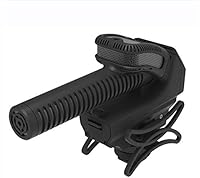
  • Shoe Mount: Integrated shock-absorbing camera shoe mount includes a 1/4-inch-20 thread for alternative mounting on a boom arm or tripod cold shoe.
  • Included Accessories: Ships with a foam windshield, a 3.5 mm output cable, and a soft carrying pouch for storage and transport.
  • Warranty: Covered by a 10-year manufacturer warranty from Azden Corporation, which is significantly longer than the industry standard for camera accessories.
  • Availability: First made available in January 2016 and has not been discontinued by the manufacturer as of the most recent product data.
  • Body Material: Housing is constructed from hard plastic with a foam windshield included; no metal body construction is specified for this model.
  • Compatibility: Designed for cameras with a standard 3.5 mm microphone input jack, covering the majority of consumer and prosumer DSLR and mirrorless cameras.

Related Reviews
Azden SMX-10 Stereo Condenser Microphone
74%
73%
Audio Quality
81%
Stereo Separation
93%
Ease of Setup
59%
Build Quality
61%
Wind Noise Rejection
More
Azden SMX-15 Shotgun Video Microphone
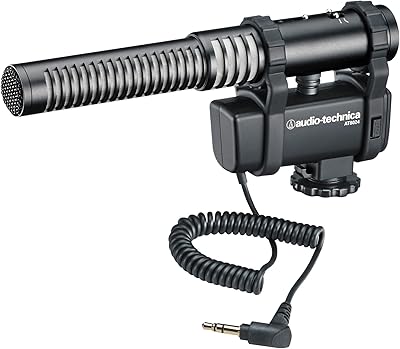
77%
83%
Audio Quality Improvement
78%
Gain Booster Effectiveness
93%
Ease of Setup
76%
Off-Axis Noise Rejection
81%
Low-Cut Filter Utility
More
Audio-Technica AT8024
84%
93%
Versatility of Modes
88%
Setup & Ease of Use
76%
Audio Clarity & Detail
82%
Build Quality & Durability
79%
Shock Mount Performance
More
Zoom Am7
Zoom Am7
84%
91%
Audio Clarity
94%
Stereo Versatility
89%
Physical Controls
82%
Build & Portability
58%
Case Compatibility
More
Sony ECM-XYST1M
Sony ECM-XYST1M
84%
94%
Ease of Use
88%
Audio Quality & Stereo Imaging
68%
Build Quality
97%
Battery & Power Management
84%
Value for Money
More
Azden SGM-1X Shotgun Microphone
72%
72%
Audio Quality
54%
Build Quality
79%
Value for Money
86%
Polar Pattern Versatility
53%
Durability
More
Fujifilm MIC-ST1 Stereo Shotgun Microphone
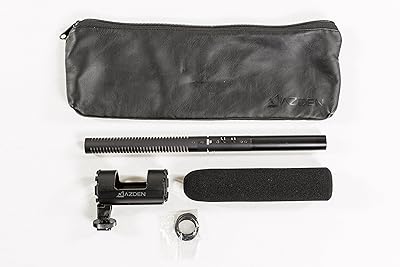
63%
71%
Audio Quality
44%
Camera Compatibility
88%
Ease of Setup
58%
Build Quality
53%
Value for Money
More
Azden EX-503L Lavalier Microphone
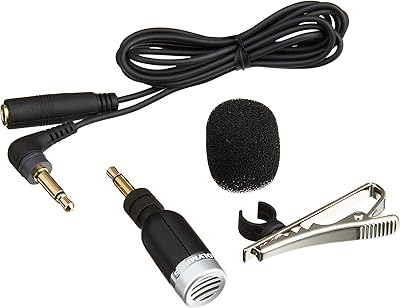
67%
61%
Audio Quality
54%
Build Quality
72%
Compatibility & Setup
58%
Value for Money
83%
Connector Security
More
Canon DM-E100
Canon DM-E100
87%
96%
Portability
94%
Ease of Use
82%
Audio Clarity
88%
Value for Money
84%
Wind Noise Reduction
More
Olympus ME52W Unidirectional Clip-On Microphone
74%
83%
Voice Clarity
57%
Build Quality
91%
Ease of Setup
86%
Value for Money
62%
Device Compatibility
More

FAQ

It works with any camera that has a standard 3.5 mm microphone input, which includes the vast majority of both mirrorless and DSLR bodies. As long as your camera has that input and a hot shoe, you should be good to go without any adapters.

Stereo mode is great when the environment itself is part of the story — think wide landscape shots, street scenes, or event coverage where you want the viewer to feel the space. Mono mode is better when you need to focus on a specific subject, like an interview or a presenter, and you want to reduce pickup of sounds coming from the sides. Most shooters end up using both on the same shoot depending on the scene.

It is something to be aware of. In a reasonably active indoor environment — a coffee shop, an office, or any space with some ambient sound — the self-noise blends in fine. In a very quiet, controlled room like a home studio or a sound-treated space, you may hear a faint hiss in the background, especially if you are recording someone speaking softly. It is not a dealbreaker for most video work, but it does mean this mic is not ideal for voiceover or acoustic music recording.

It always requires batteries to operate — this is an active mic with powered circuitry, so there is no passive mode. The good news is the auto power feature turns the mic on and off with your camera, which helps extend battery life and prevents you from accidentally draining them overnight. That said, carry spare AA batteries on any serious shoot; they are cheap and the peace of mind is worth it.

The foam windshield handles light breezes well and is a solid starting point for outdoor work. In moderate to strong wind conditions, you would want to upgrade to a deadcat-style furry windshield for better protection. For casual outdoor shooting or interviews in light wind, the included foam does its job without adding extra cost.

It genuinely helps. The integrated shock-absorbing mount reduces the kind of low-frequency thud you get from touching the camera body or adjusting your grip mid-shot. It is not going to eliminate every vibration if you are walking and shooting handheld, but for static or semi-static setups it makes a real difference compared to a rigid mount.

Not directly out of the box. Smartphones typically require a TRRS connector and have different input impedance characteristics compared to camera mic inputs. You would need a TRRS adapter and potentially an impedance-matching cable to make it work, and results can be inconsistent. This mic is really designed around cameras with dedicated 3.5 mm microphone inputs.

The gain control on the mic itself gives you a useful starting point — the -10 dB pad is handy for loud concerts or events, and the +20 dB boost helps in very quiet environments. That said, you will still want to set your camera input level to a sensible baseline. Think of the mic gain as a way to get the signal into a good range before it hits your camera, rather than a replacement for camera-level adjustment entirely.

The 10-year warranty comes directly from Azden Corporation and is one of the more unusually long coverage periods you will find in this product category. It is intended to cover manufacturing defects. It does not cover physical damage from drops or water exposure, so treat it as a confidence signal about build quality rather than an all-situations safety net. Register your purchase with Azden to make sure your warranty is on file.

The difference is substantial enough that most people who switch do not go back to the built-in mic for serious work. Built-in camera mics are omnidirectional, pick up lens motor noise, body handling noise, and everything around you equally. This mic gives you directional control, adjustable gain, a noise-reducing filter, and a much cleaner signal path. Even in mono mode, the improvement in focus and clarity over a built-in mic is immediately obvious.