Overview

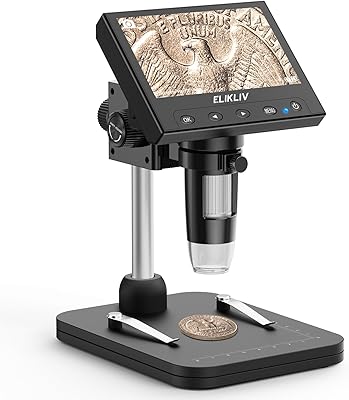
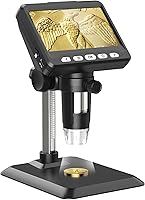
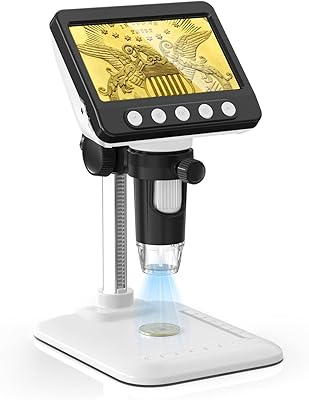
The Ashfly 366C 1000x Digital Coin Microscope is a compact, battery-powered magnifier built squarely for hobbyist collectors, not laboratory researchers. What sets it apart from old-school eyepiece microscopes is the built-in 4.3-inch screen, which lets you view magnified images directly without hunching over a lens. At this price point, you are working with a plastic body and consumer-grade optics, so keeping expectations grounded is wise. It connects to Windows and MacOS via USB if you want a larger display, but functions just fine as a standalone unit. Think of it as a capable entry-level tool for inspecting coins, jewelry, or stamps — practical and accessible, nothing more.
Features & Benefits

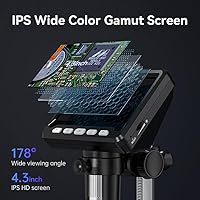
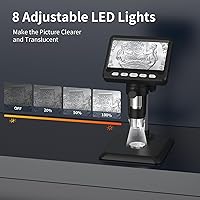
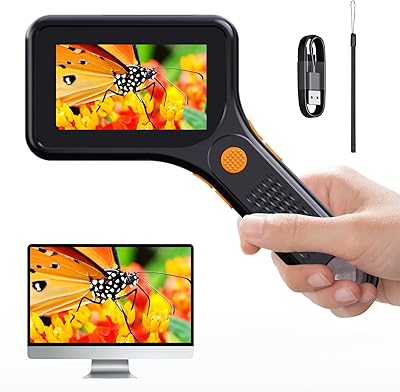
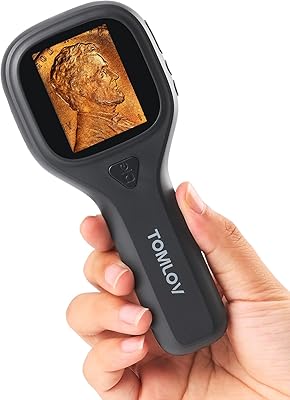
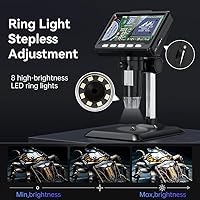
The magnification range runs from 50x to 1000x, but in practice, 100x to 400x is where you will get crisp, usable detail on coin surfaces. Push it toward the top of the dial and digital interpolation starts softening the image noticeably. The IPS screen delivers bright colors and solid contrast, comfortable for extended sessions without eye fatigue. Eight LEDs with stepless brightness control let you fine-tune lighting to bring out surface texture on coins or highlight inclusions in a gemstone. The battery charges in about two hours and holds up for roughly 3.5 hours of use. Remove the stand and this digital magnifier becomes fully handheld, which adds genuine flexibility for collectors on the go.

Best For

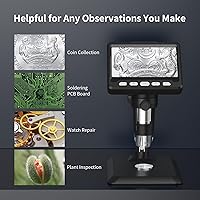
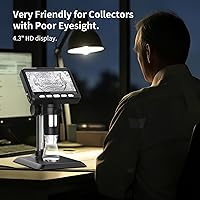
This coin microscope is a natural fit for coin collectors who want to inspect date marks, mint marks, or surface grades without squinting through a loupe. Jewelry hobbyists will appreciate the adjustable LED lighting for spotting hallmarks and evaluating stone settings. It also works well for beginners and younger users — the screen-based viewing experience is far less intimidating than traditional microscopes, making it a low-barrier entry point for curious kids or casual enthusiasts. Stamp collectors and anyone who occasionally needs a close look at insects, plants, or circuit boards will find it more than capable. If you already own professional grading equipment, this probably does not replace it, but as a first magnifier it covers a lot of ground.

User Feedback

Buyers generally respond well to screen clarity and setup ease — most describe it as working straight out of the box without fuss. Battery life gets solid marks too, with many users confirming the 3.5-hour estimate holds under normal use. Where opinions split is on build quality: the plastic construction feels lightweight, and some buyers expected something sturdier for detailed work. The 1000x ceiling also draws skepticism, as experienced users note image sharpness fades considerably at higher zoom levels. A handful mention minor issues with PC connection or SD card compatibility, though these appear isolated rather than systematic. Hobbyists who approach the Ashfly 366C with realistic expectations tend to walk away satisfied; those hoping for professional-grade results are the ones left wanting.

Pros

  • The 4.3-inch IPS screen makes shared viewing effortless — no more taking turns at an eyepiece.
  • Stepless LED brightness control is genuinely useful for revealing surface texture on coins and jewelry.
  • Works straight out of the box with no software installation or calibration required.
  • Battery charges in around two hours and holds up for a solid continuous session.
  • The detachable stand makes this coin microscope usable both at a desk and out in the field.
  • Built-in photo storage handles casual documentation without needing any accessories.
  • Compatible with both Windows and MacOS for larger-screen analysis when needed.
  • Magnification sweet spot between 100x and 400x delivers clear, practical detail for hobbyist inspection.
  • Lightweight at just over a pound, making it easy to pack for coin shows or flea markets.
  • Solid value for entry-level buyers stepping up from a basic handheld loupe.

Cons

  • Image sharpness drops noticeably above 400x, making the advertised 1000x largely unusable in practice.
  • All-plastic construction feels lightweight in a way that can undermine confidence during handling.
  • SD card is not included, so video recording requires an immediate extra purchase.
  • PC connection on MacOS involves troubleshooting that the included manual does not adequately explain.
  • Handheld stability at higher zoom levels is difficult to maintain — even slight movement blurs the image.
  • Built-in photo storage fills up quickly during active inspection sessions without an SD card inserted.
  • Some buyers report battery runtime shortening noticeably after several months of regular use.
  • Focus knob becomes hypersensitive at upper magnification ranges, making fine adjustments harder than expected.
  • Reflective coin surfaces can produce glare under full LED brightness, requiring manual dimming to compensate.
  • Certain SD card brands trigger compatibility issues that are not documented or addressed in the packaging.

Ratings

The ratings below for the Ashfly 366C 1000x Digital Coin Microscope were generated by our AI after analyzing verified buyer reviews from global markets, with spam, bot activity, and incentivized feedback actively filtered out. Scores reflect the honest consensus of real hobbyist users — not marketing claims — so both the strengths and the friction points are represented as accurately as possible.

Image Clarity at Practical Zoom
74%
26%
In the 100x to 350x range, most users report impressively sharp detail on coin surfaces — enough to clearly distinguish mint marks, hairline scratches, and die variations. For everyday hobbyist inspection, that usable window covers the majority of real-world tasks without complaint.
Push the zoom above 500x and the image softens quickly due to digital interpolation rather than true optical magnification. Buyers expecting surgical sharpness at the advertised 1000x ceiling regularly come away disappointed, which is worth knowing upfront.
Screen Quality
83%
The 4.3-inch IPS display earns consistent praise for vibrant color reproduction and comfortable brightness levels. Collectors appreciate being able to share a live view with others in the room — something a traditional eyepiece simply cannot do.
Outdoor or brightly lit environments can wash out the screen somewhat, limiting its usefulness at coin shows or swap meets unless you are working in a shaded spot. A few users also noted the screen develops minor glare under direct overhead lighting.
Lighting System
88%
The eight-LED ring with fully stepless brightness control is one of the standout practical features here. Being able to dial lighting up or down smoothly — rather than toggling between fixed levels — makes a real difference when you are trying to reveal surface texture on a proof coin or spot a faint hallmark on silver jewelry.
At maximum brightness, reflective coin surfaces like mirror-finish proofs can produce a slight glare that obscures fine detail. Some users work around this by dropping the LEDs to around 60–70%, but it does require experimentation to find the right balance per surface type.
Ease of Setup and Use
91%
Nearly every buyer mentions that this digital magnifier works right out of the box — no software installs, no calibration, no manual diving required just to get started. Even first-time users report feeling comfortable within minutes, which makes it a genuinely approachable tool for beginners and younger collectors.
The control layout, while simple, lacks labeling, so new users occasionally fumble between the focus knob and the brightness dial during their first few sessions. A clearer physical interface would eliminate that small but recurring confusion.
Build Quality and Materials
61%
39%
The unit feels reasonably assembled for its price tier, and the detachable stand holds its position reliably during use. Buyers who understand they are purchasing a plastic hobbyist tool — not a machined instrument — generally report satisfaction with how it holds up through regular use.
The all-plastic construction is noticeable, and a handful of users mention minor flex around the body under pressure. For someone accustomed to handling metal-bodied loupes or professional inspection tools, the lightweight feel can initially read as fragile, even if functionality holds up over time.
Battery Life
78%
22%
Most users confirm the roughly 3.5-hour battery estimate holds up in practice, which is enough for an extended session at a desk or a few hours at a coin show. The two-hour recharge time is also consistently described as convenient rather than frustrating.
A small segment of buyers report noticeably shorter runtime — closer to two to two-and-a-half hours — after a few months of use, suggesting some variability in battery longevity. For single-day events it is fine, but it is not the kind of battery life that inspires confidence on longer outings without a power source nearby.
Portability and Handheld Use
76%
24%
At just over a pound with a detachable stand, this coin microscope is genuinely portable in a way that traditional benchtop microscopes are not. Collectors who bring it to flea markets or storage unit searches appreciate having a battery-powered option that fits in a bag without fuss.
Handheld stability is harder to maintain at higher magnifications — any minor hand tremor gets amplified on screen, making crisp handheld shots above 200x tricky without bracing against a surface. A built-in image stabilization mode would go a long way toward fixing this.
Photo Capture Functionality
67%
33%
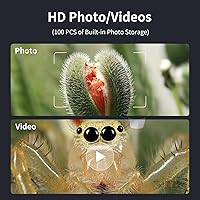
Built-in storage for around 100 photos means casual users can document finds on the spot without needing any accessories. For basic cataloging purposes — snapping a shot of a coin before a trade — it does the job without extra steps.
The onboard storage fills faster than expected during active sessions, and without an SD card (sold separately), there is no in-session overflow. Some buyers discovered this limitation at inconvenient moments, so it is worth budgeting for a compatible card from the start.
Video Recording
59%
41%
Video capability adds a useful dimension for documenting coin condition over time or recording unboxing and inspection sessions for resale listings. When paired with a reliable SD card, the footage quality is acceptable for hobbyist documentation purposes.
Video is entirely dependent on an SD card that is not included, and a few buyers report compatibility hiccups with certain card brands or formats. It is a minor friction point, but one worth flagging so buyers come prepared rather than discovering the gap after the fact.
PC Connectivity
64%
36%
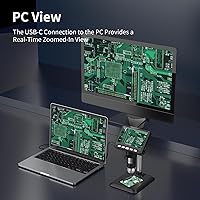
USB connectivity with both Windows and MacOS adds a useful desk-mode option, letting users view magnified images on a larger monitor — handy for detailed grading sessions where the 4.3-inch screen starts to feel limiting.
Several buyers report that PC connection requires some troubleshooting, particularly on MacOS, and the setup instructions in the manual are described as vague or incomplete. It works for most, but it is not quite the plug-and-play experience the product implies.
Value for Money
82%
18%
At this price tier, the combination of a built-in screen, adjustable LED lighting, rechargeable battery, and photo capability represents genuinely solid value for a hobbyist entry point. Buyers who were previously spending more on loupes or basic eyepiece scopes find this a satisfying upgrade.
Buyers who compare it against slightly pricier competitors with metal builds or better optical quality sometimes feel the gap in performance is noticeable enough to justify spending more. At this price, compromises are expected — the frustration arises when expectations are shaped by the marketing rather than the market tier.
Magnification Range Utility
69%
31%
The wide range from 50x through several hundred times magnification genuinely covers most practical coin and jewelry inspection tasks without needing to swap lenses or accessories. That versatility in a single unit is something collectors at this level actively appreciate.
The marketed 1000x figure repeatedly draws criticism once buyers experience how quickly image quality deteriorates in the upper zoom range. It functions more as a theoretical ceiling than a practical tool, and experienced collectors see through the number fairly quickly.
Focus Mechanism
77%
23%
The focus knob is smooth and responsive within the practical zoom range, allowing for precise adjustments when zeroing in on a specific coin feature. Most users adapt to its sensitivity within a short time and rarely mention it as a pain point.
At higher magnification settings, the focus becomes hypersensitive — even a slight turn shifts the focal plane dramatically, making it difficult to land on exactly the right depth. A dual-speed or finer-pitch focus mechanism would improve accuracy considerably at the upper end.
Suitability for Gifting or Introductory Use
87%
Parents and educators buying this for younger or first-time users consistently express satisfaction. The screen-based viewing experience removes the awkwardness of traditional eyepieces and keeps kids and beginners engaged rather than frustrated by alignment and focus challenges.
As a gift for a more experienced collector, it may land as underwhelming depending on what gear they already own. It shines brightest as a first microscope rather than a meaningful upgrade for someone with intermediate or advanced equipment.

Suitable for:

The Ashfly 366C 1000x Digital Coin Microscope is a strong match for hobbyist coin collectors who want to inspect mint marks, date details, and surface grades without hunching over a loupe for hours. Jewelry enthusiasts evaluating hallmarks, stone settings, or finish quality on pieces they are buying or selling will find the adjustable LED lighting particularly useful for that kind of close surface work. Beginners of any age benefit most here — the screen-based viewing experience is genuinely more approachable than a traditional eyepiece, and parents buying this as an educational tool for curious kids will appreciate how quickly children can get engaged without any complicated setup. Stamp collectors, occasional PCB inspectors, or anyone who just needs a reliable close-up view a few times a week will also get solid mileage out of this digital magnifier. If your goal is a capable, battery-powered inspection tool that works independently without a computer, this is a practical and affordable way to get started.
Not suitable for:

The Ashfly 366C 1000x Digital Coin Microscope is not the right choice for anyone expecting professional-grade optical performance or scientific-level magnification accuracy. Serious numismatists who rely on precise grading tools for high-value transactions will likely find the plastic build and digital zoom limitations frustrating compared to purpose-built grading equipment. The 1000x figure on the label is a theoretical ceiling — image quality deteriorates meaningfully above 400x or so, which makes this digital magnifier unsuitable for tasks that genuinely require sharp resolution at extreme magnification. Users hoping for a seamless PC viewing experience should also be cautious, as the USB connection — especially on MacOS — has produced enough setup friction among buyers to warrant a mention. And if you are shopping for someone who already owns a decent benchtop microscope or a quality optical loupe, this is unlikely to feel like an upgrade.
Specifications

  • Brand & Model: Manufactured by Ashfly under model number 366C.
  • Magnification: Adjustable magnification ranging from 50x to 1000x via a continuous focus knob.
  • Screen Size: Built-in 4.3-inch IPS display with 1080P resolution for direct on-device viewing.
  • Lighting: Eight built-in LED lights with stepless brightness adjustment from 0% to 100% using a side-mounted knob.
  • Battery: Integrated rechargeable lithium-ion battery with an approximately 2-hour charge time and up to 3.5 hours of continuous use.
  • Photo Storage: Built-in memory supports approximately 100 photos; expandable via an SD card, which is not included.
  • Video Recording: Video recording is supported when an SD card is inserted; not available using built-in memory alone.
  • PC Compatibility: Connects to Windows and MacOS computers via USB cable for larger-screen viewing and analysis.
  • Stand: Includes a detachable base stand that can be removed to allow fully handheld operation.
  • Dimensions: Unit measures 5 inches long by 5 inches wide by 5 inches tall.
  • Weight: Complete unit weighs approximately 1.06 pounds including the detachable stand.
  • Material: Body is constructed from plastic, contributing to its lightweight and portable form factor.
  • Color: Available in black only.
  • Angle of View: Real angle of view is 30 degrees.
  • Lens Type: Objective lens is described as a Plan type, designed to reduce curvature of field across the image.
  • Power Input: Charges via USB connection; no external power adapter is required during normal wireless operation.
  • Resolutions: Offers three selectable capture resolutions for both photo and video output.
  • Compatible Devices: Officially compatible with personal computers running Windows or MacOS operating systems.

Related Reviews
WKR Coin Microscope 1080P Digital Magnifier 50X-1000X
84%
93%
Image Quality
89%
Magnification Range
85%
Battery Life
90%
Portability
80%
Build Quality
More
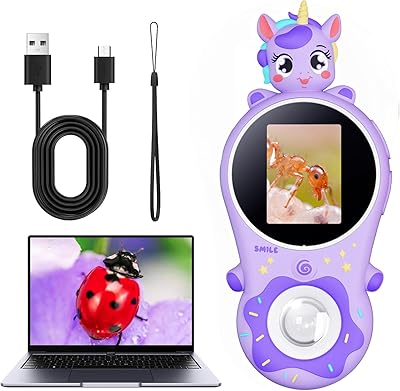
Ashfly inskam380 Pocket Digital Microscope
72%
91%
Portability
83%
Built-in Display
71%
Magnification Performance
63%
Image Sharpness
74%
Battery Life
More
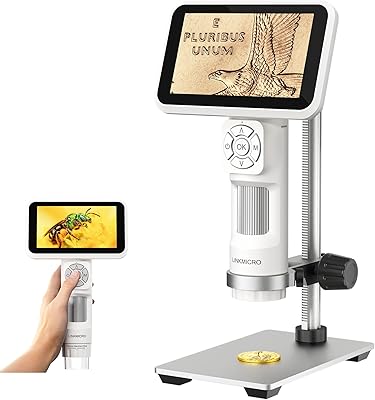
LINKMICRO LM115 Digital Coin Microscope
86%
88%
Performance & Magnification
85%
Build Quality & Durability
90%
Ease of Use & Setup
91%
Display Quality
89%
Illumination & LED Lights
More
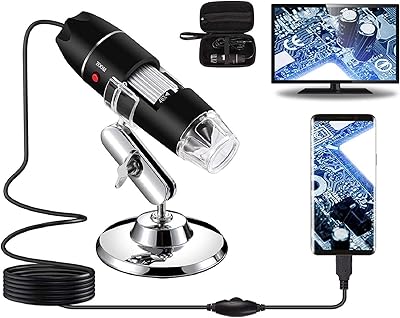
Bysameyee SA-00 USB Digital Microscope
76%
83%
Image Quality (Mid-Range Zoom)
51%
Maximum Zoom Performance
79%
Build Quality
88%
Ease of Setup
76%
LED Lighting System
More
Ashfly Digital Microscope for Kids 200X Magnification
82%
88%
Ease of Use for Kids
91%
Portability
78%
Image Quality
75%
Magnification Strength
67%
Screen Size
More
TOMLOV P10 Evo Handheld Digital Microscope
78%
93%
Portability
91%
Ease of Use
74%
Optical Clarity
82%
Display Quality
54%
Battery Life
More
PalliPartners 4.3-inch 1000X LCD Digital Microscope
79%
83%
Image Clarity (Mid-Range Zoom)
91%
Portability & Form Factor
88%
Built-in LCD Screen
79%
Battery Life
93%
Ease of Setup & Use
More
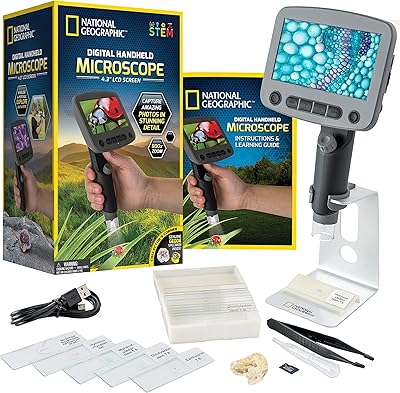
National Geographic Kids Digital Handheld Microscope
81%
88%
Ease of Use for Kids
83%
Image & Screen Quality
71%
Magnification Performance
79%
Battery Life
91%
Kit Completeness & Value
More
KEXWAXX KX-1000-CY Kids Pocket Digital Microscope
76%
91%
Ease of Setup
63%
Magnification Clarity
71%
Screen Quality
67%
Build Quality & Durability
78%
Battery Life
More
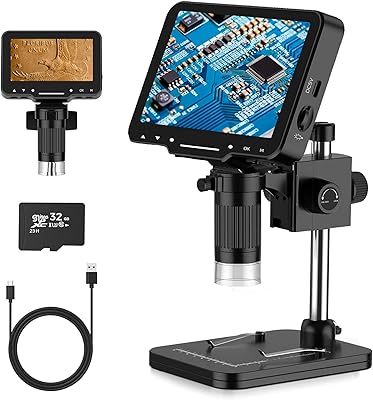
Elikliv EDM4B Coin Digital Microscope
75%
74%
Image Clarity
88%
Black Base Effectiveness
82%
LED Lighting Control
67%
Magnification Performance
79%
Standalone Screen Usability
More

FAQ

Honest answer: 1000x is the theoretical maximum, but you will not get sharp, usable images anywhere near that level. The practical sweet spot for clear detail is roughly 100x to 400x. Above that, digital interpolation kicks in and the image softens considerably. For coin and jewelry inspection, the lower end of the range is where this tool genuinely delivers.

It works completely on its own — the built-in 4.3-inch screen lets you view, capture, and adjust everything without connecting to a computer at all. The PC connection is an optional bonus for when you want a larger display, but it is not required for day-to-day use.

A standard Class 10 microSD card with an adapter, or a full-size SD card depending on the slot type, generally works well. Stick to mainstream brands like SanDisk or Samsung and keep the capacity at 32GB or below formatted to FAT32 for the most reliable compatibility. Some buyers have reported issues with higher-capacity or off-brand cards, so it is worth keeping that in mind.

You connect it via the included USB cable, and it should register as a camera or imaging device. That said, MacOS connection has generated more user friction than Windows — some buyers needed to adjust system privacy settings or install a driver. The included manual is sparse on this point, so consulting the product video linked on the listing page is a better starting resource.

It can help you do a preliminary visual check — spotting obvious scratches, cleaning marks, or die varieties — but it should not replace professional grading tools for serious submissions. Think of this digital magnifier as a useful first-pass inspection aid rather than a grading instrument. Experienced collectors tend to use it alongside, not instead of, their existing loupes or software.

For older children and teenagers, yes — it is straightforward to operate and the screen-based viewing makes it much less frustrating than traditional eyepiece microscopes. The plastic body keeps it lightweight and hard to damage in normal use. Younger children should have supervision, mainly to avoid dropping it or mishandling the focus knob rather than any safety concern.

Start at a lower magnification — around 100x to 200x — and use the focus knob slowly until the image sharpens. Set the LED brightness to around 50 to 70 percent rather than maximum, since full brightness on reflective surfaces creates glare that obscures fine detail. Resting the stand on a flat surface rather than holding it handheld will also make a noticeable difference in image stability.

Like any lithium-ion battery, yes — some users report noticeably shorter runtimes after several months of regular charging cycles. The initial 3.5-hour estimate is reasonably accurate when the unit is new, but long-term battery longevity is one of the more common concerns among buyers who use this digital magnifier frequently. Avoiding full drain cycles and not leaving it on the charger overnight can help extend battery lifespan.

Yes, and this is actually one of its better real-world use cases. The battery-powered operation and detachable stand mean you can bring it along without needing a power outlet. At 100x to 300x you can clearly evaluate hallmarks, prong integrity, and surface finish quality. Just be aware that handheld use at higher magnifications is tricky — bracing against a stable surface helps significantly.

The stand is fixed in height rather than adjustable, which works fine for most flat-surface inspection tasks but can be limiting if you need to accommodate thicker objects or unusual viewing angles. The workaround most users adopt is placing the object on a small platform or book to bring it up to the optimal focal distance, which is a minor inconvenience but not a dealbreaker for typical use.