Overview

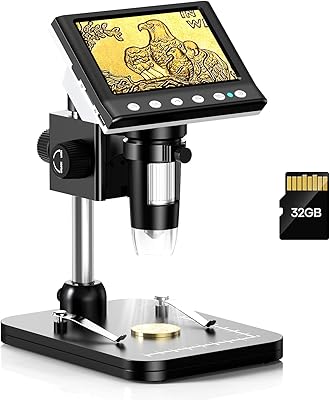
The Andonstar AD246S-M 7″ 3-Lens Digital Microscope sits in a practical sweet spot — capable enough for serious hobbyist work, yet accessible for home workshops. What genuinely sets it apart from most single-lens alternatives is the trio of interchangeable lenses, each purpose-built for a different discipline. A built-in 7-inch LCD means you can work untethered from a computer, while HDMI output lets you push the image to a larger monitor when your eyes need a break. The metal pro boom arm stand is a legitimately welcome inclusion at this price tier. That said, this is not lab-grade equipment — it is a well-rounded tool for casual to intermediate users who value versatility over clinical precision.
Features & Benefits

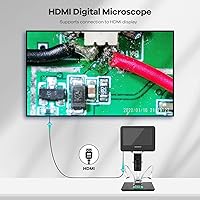
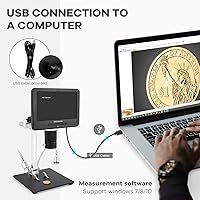
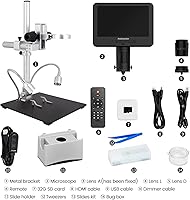
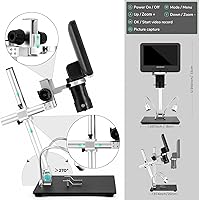
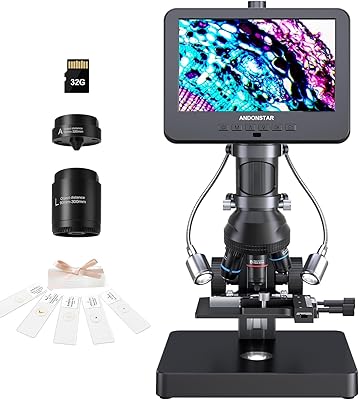
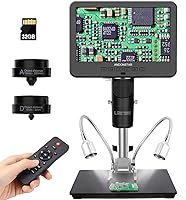
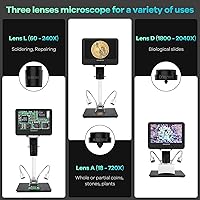
Three swappable lenses define the AD246S-M's core appeal: Lens L handles soldering and electronics repair, Lens A covers broader subjects like coins and plant specimens, and Lens D is calibrated for biological slides. The unit records in UHD 2160P and pushes that signal over HDMI to monitors up to 28 inches — a real comfort boost during extended repair sessions. The boom arm stand adjusts across multiple axes and is built from heat-resistant metal, so it holds steady near a soldering iron. Pair it with the Windows measurement software and you can calculate object dimensions or document work directly on a PC. LED lighting is consistent, and the focusing wheel allows fine-tuned object distance control.

Best For

This digital microscope makes the most sense for electronics repair hobbyists — people doing phone teardowns, PCB inspection, or fine soldering who need a stable magnified view without hunching over a loupe. Error coin collectors will appreciate Lens A's ability to capture a full coin surface with clarity. Students or home educators can get real use out of the biological slide setup, though it suits casual study better than rigorous academic work. If you have been weighing whether to buy separate tools for each task, the three-lens system is a sensible consolidation. Just know that swapping lenses takes a moment — it is a tradeoff worth accepting for the range you gain.

User Feedback

Across more than a thousand verified reviews, the three-lens scope holds a strong 4.5-star average — a reliable signal of consistent satisfaction. Most buyers highlight stand rigidity and quick out-of-box setup as standout positives. Image quality on the built-in screen earns solid marks, though several users note that HDMI output delivers noticeably sharper results on a larger display. The main frustration is the screw-based lens swap; with no quick-release mechanism, changing disciplines mid-session requires patience and a tool. The Windows measurement software works but draws mixed reactions — functional, yet the interface feels dated. A small share of units showed minor inconsistencies at arrival, though reports suggest Andonstar's support team handles these cases reasonably well.

Pros

  • Three purpose-specific lenses cover soldering, coin inspection, and biological slides in one unit.
  • The metal pro boom arm stand is sturdy, heat-resistant, and adjusts across multiple axes for comfortable positioning.
  • UHD 2160P video recording produces clear footage useful for documentation and later review.
  • HDMI output to a large monitor significantly sharpens the working image for detail-intensive tasks.
  • Out-of-box setup is straightforward — most users are up and running within minutes of unboxing.
  • The 7-inch built-in LCD means no laptop or external display is required for everyday use.
  • Windows measurement software adds practical utility for anyone who needs to log dimensions or areas.
  • LED illumination is consistent and well-diffused, reducing glare during close-up inspection work.
  • At this price tier, the combination of accessories — including biological slides — adds meaningful day-one value.
  • A 4.5-star average across more than 1,000 reviews reflects reliably positive real-world experience.

Cons

  • Changing lenses requires a screwdriver — there is no quick-release mechanism for fast task switching.
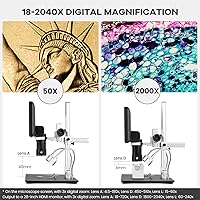
  • Maximum 2040x magnification only applies when using HDMI output with full digital zoom, not the built-in screen.
  • The Windows measurement software interface feels dated and lacks the polish of modern PC applications.
  • Lens D has a narrow focus range at high biological magnification, limiting flexibility with thicker slide preparations.
  • Plastic lens housings feel less premium than the metal stand and may concern buyers focused on long-term durability.
  • A small but consistent share of units arrives with minor quality inconsistencies, such as uneven LED brightness.
  • No Mac compatibility for the measurement software means Apple users lose the PC documentation features entirely.
  • The stand footprint — roughly 7 by 8 inches at the base — requires dedicated desk space that not all workshops have.

Ratings

The scores below reflect an AI-driven analysis of verified global buyer reviews for the Andonstar AD246S-M 7″ 3-Lens Digital Microscope, with spam, incentivized, and bot-flagged submissions actively filtered out before scoring. Each category captures the full spectrum of real user experience — strengths and frustrations alike — drawn from more than a thousand confirmed purchases worldwide. Nothing has been smoothed over: where buyers ran into consistent problems, the scores reflect that honestly.

Image Clarity
83%
Users doing PCB inspection and coin examination consistently praise the sharpness of the live feed, particularly when routed through HDMI to a larger external monitor. At mid-range magnification with Lens A or Lens L, fine surface details come through with enough clarity to identify component markings and coin die characteristics without straining.
The built-in 7-inch LCD screen, while convenient, delivers a noticeably softer image compared to the HDMI output — a gap that surprises some first-time users. Color accuracy on the internal display has drawn mixed feedback, with a handful of reviewers noting a slight warm cast under certain LED conditions.
Lens Versatility
88%
The three-lens system genuinely covers distinct disciplines — soldering repair, broad object inspection, and biological slides — without asking users to compromise on a single jack-of-all-trades optic. Hobbyists who do both electronics work and coin collecting report this is the primary reason they chose this scope over cheaper single-lens alternatives.
Lens D has a notably narrow focal sweet spot at its upper magnification range, which frustrates users working with thicker or uneven biological slide preparations. The plastic lens housings feel less refined than the metal stand they attach to, and a small number of buyers have raised concerns about long-term durability under frequent use.
Stand & Build Quality
91%
The metal pro boom arm stand earns some of the strongest praise in the entire review pool — it locks firmly in position during soldering sessions and does not drift when a user is working around it with iron and tweezers. The multi-axis adjustability means it accommodates both close-up repair work on a bench and slightly elevated coin photography setups without requiring any accessories.
A few users working in tighter workshop spaces have noted that the stand footprint, while manageable, requires a dedicated section of desk that not every hobbyist has readily available. Very fine positional adjustments occasionally need light re-tightening after extended use, though this appears to be a minor calibration habit rather than a structural flaw.
Ease of Setup
89%
The majority of buyers report being fully operational within fifteen to twenty minutes of opening the box, with intuitive cable routing and a focusing wheel that behaves predictably from the first use. The included accessories — slides, cables, and the stand — arrive clearly organized, and the initial lens installation requires no special tools beyond what is bundled.
The instruction manual draws consistent criticism for being brief and occasionally unclear, particularly for first-time microscope users attempting to configure the Windows software connection. Users who skip the manual and rely on trial and error tend to have a smoother experience than those who follow the documentation step by step.
Lens Swap Workflow
58%
42%
For users who commit to a single lens per session — which describes the majority of buyers — the swap process is a non-issue and the screw-based attachment holds the lens securely with no wobble during use. Buyers who rotate between coin collecting on weekends and electronics repair during weekdays report the swap takes under two minutes once they are familiar with it.
The lack of a tool-free quick-release mechanism is the single most cited frustration in the review pool, and it is a legitimate workflow complaint. Anyone who regularly switches between Lens L and Lens A mid-session — say, during a phone repair that requires examining both the board and extracted components — will find the interruption genuinely disruptive over time.
HDMI & Display Output
86%
Connecting the scope to a 24-inch or larger monitor is consistently described as the best way to use this device, with sharpness and color rendering both improving meaningfully over the internal screen. Reviewers who use it for extended soldering sessions specifically appreciate the ability to work with their eyes at a natural distance from a desktop monitor rather than hunching over the built-in display.
The HDMI output works well but the internal screen resolution does not fully match what the external display reveals, which can make the two feel like noticeably different products. A small number of users also report that HDMI signal handshake with certain older monitors required cycling the power before the image stabilized.
Magnification Performance
77%
23%
Within the realistic working range — up to around 180x on Lens A and 60x on Lens L directly on screen — the AD246S-M performs consistently well for the tasks it was designed for. Error coin collectors examining surface details and electronics hobbyists tracing fine solder joints both report the magnification is more than sufficient for their day-to-day needs.
The headline 2000x figure is achievable only under very specific conditions: Lens D, HDMI output to a large monitor, and maximum digital zoom engaged — and at that level, digital zoom degradation becomes visible. Buyers who purchase primarily chasing the top magnification number are more likely to feel let down than those who focus on the practical mid-range performance.
LED Lighting Quality
81%
19%
The integrated LED ring provides even, consistent illumination across the subject area, which is particularly appreciated during coin inspection where raking light can obscure surface detail. Most users find the default brightness level suitable for both soldering and slide work without needing any external supplemental lighting.
There is no brightness adjustment control on the unit, which frustrates users who work in varied ambient lighting conditions or who need softer illumination for reflective metal surfaces. A small subset of buyers received units with uneven LED brightness across the ring, suggesting minor quality-control variability in the lighting assembly.
Windows Software
61%
39%
The bundled measurement software is genuinely functional for its core tasks — calculating object dimensions, capturing still images, and recording video clips directly to a PC — and electronics professionals who need to document their repair work find it earns its place in the workflow. Installation is straightforward on most modern Windows systems.
The software interface looks and behaves like it was designed several years ago, with a layout that feels cluttered and unintuitive compared to modern applications. Mac users are entirely excluded from this feature, and even on Windows, some buyers report occasional stability issues when recording longer video sessions.
Value for Money
87%
Buyers who compare this three-lens scope against purchasing separate tools for soldering, coin examination, and basic biological study almost universally conclude that the consolidation justifies the price. The metal stand alone is consistently called out as something buyers expected to pay more for, making the overall package feel like a genuine deal for its tier.
Buyers who only need one magnification discipline — pure soldering, for example — may find that a focused single-lens alternative at a lower price point would serve them better without paying for lenses they will never swap in. The dated software also slightly undermines the overall value perception for users who intended to integrate PC documentation into their workflow.
Durability & Longevity
72%
28%
The metal boom arm stand shows no signs of wear or loosening in long-term use reports, and the core optical unit appears robust under normal hobbyist conditions. Users who have owned the scope for over a year report that image quality has not degraded noticeably with regular use.
The plastic lens housings remain the primary durability concern — they feel adequate during careful handling but raise questions about resistance to accidental drops or workshop grime over time. A recurring thread of minor quality-control variability in early-production units means some buyers have encountered cosmetic or functional inconsistencies that required follow-up with Andonstar support.
Out-of-Box Accessories
84%
The inclusion of prepared biological slides, cables, and the full stand assembly in the base package means buyers can explore all three lens disciplines on the first day without ordering anything extra. Coin collectors and biology students in particular appreciate not having to source starter specimens separately.
The biological slide samples included are basic and will be exhausted quickly by anyone genuinely interested in slide observation, meaning a follow-up purchase of additional slides is likely. The bundled storage solution for lenses not currently in use is minimal, and some users end up improvising their own lens storage to avoid scratches.
Ergonomics & Comfort
79%
21%
The boom arm stand's multi-directional adjustability translates directly into genuine comfort during extended sessions — repair technicians report being able to position the lens at a natural working height without adopting an awkward posture. Routing to an HDMI monitor further reduces eye and neck strain during work that spans more than thirty minutes.
For users limited to the built-in screen, viewing angle comfort is more constrained — the 7-inch display cannot be tilted independently of the stand, which forces some compromises in seating position. The focusing wheel, while precise, is positioned in a location that a few left-handed users found less natural to operate during fine adjustment.

Suitable for:

The Andonstar AD246S-M 7″ 3-Lens Digital Microscope is a strong match for electronics hobbyists and DIYers who regularly inspect PCBs, troubleshoot component failures, or do fine soldering work and need a stable, magnified view without straining their eyes. Error coin collectors and numismatists will find real value in the wide-field lens, which captures an entire coin surface with enough detail to spot die varieties and surface anomalies. Home educators and curious students can use the biological slide lens to bring science lessons to life without investing in dedicated classroom-grade equipment. Anyone who currently juggles multiple magnification tools for different hobbies should consider this three-lens scope as a practical consolidation — one desk footprint covering several disciplines. The built-in 7-inch screen means it works entirely standalone, but the HDMI output is a genuine bonus for anyone who prefers working on a larger monitor during long repair sessions.
Not suitable for:

The Andonstar AD246S-M 7″ 3-Lens Digital Microscope is not the right choice for professionals or researchers who need certified optical accuracy, repeatable calibration, or lab-grade image fidelity. The headline 2000x figure is only achievable by combining optical magnification with 3x digital zoom on a large external monitor — buyers expecting that level of detail from the built-in screen will be disappointed. Anyone who switches rapidly between tasks — say, going from soldering to slide inspection and back in a single session — will find the screw-based lens swap disruptive enough to affect their workflow. The Windows measurement software, while functional, is not polished enough for users who need a professional documentation environment. And if your primary use case is purely biological microscopy at high magnification, a dedicated compound microscope will outperform this scope in that single discipline without compromise.
Specifications

  • Brand & Model: Manufactured by Shenzhen Andonstar Technology Co., Ltd under the model designation AD246S-M.
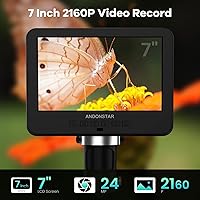
  • Display: Built-in 7-inch LCD screen provides a standalone viewing experience without requiring an external monitor or computer.
  • Video Resolution: Records footage at UHD 2160P, capturing fine surface detail useful for documentation and later review.
  • HDMI Output: Full HDMI output supports connection to external monitors up to 28 inches for a larger, sharper working image.
  • PC Compatibility: Compatible with Windows PCs via USB connection; Mac systems are not supported by the bundled measurement software.
  • Lenses Included: Ships with three interchangeable lenses — Lens L for soldering and repair, Lens A for coins and objects, and Lens D for biological slides.
  • Lens Material: All three lens housings are constructed from plastic, which keeps weight low but is less durable than metal alternatives.
  • Magnification Range: On-screen magnification spans 4.5x to 510x depending on the lens; HDMI output with 3x digital zoom reaches up to 2040x with Lens D.
  • Stand Type: Includes a metal pro boom arm stand with front-to-rear, left-to-right, and angle adjustability to suit a wide range of working positions.
  • Stand Dimensions: The boom arm stand measures 7 x 7.8 x 13 inches and is built from heat-resistant metal suitable for soldering environments.
  • Light Source: Integrated LED ring light delivers consistent, diffused illumination across the subject without harsh hotspots.
  • Focusing Mechanism: A manual focusing wheel controls sharpness while a separate bracket knob adjusts the working distance between lens and subject.
  • Product Dimensions: The full unit measures 12.99 inches long by 6.69 inches wide by 11.02 inches tall when assembled.
  • Item Weight: Complete assembled weight is 4.95 pounds, making it stable on a desk without being difficult to reposition.
  • Input Voltage: Rated at 240 volts; buyers in regions using 110–120V should verify power adapter compatibility before use.
  • Measurement Software: Bundled Windows software supports length measurement, area calculation, and photo and video capture directly from a connected PC.
  • Storage Format: Photos and video recordings can be saved to an inserted memory card or captured via the PC software when connected to a Windows computer.
  • Customer Rating: Holds a 4.5-out-of-5-star average based on more than 1,054 verified ratings on Amazon as of the time of writing.

Related Reviews
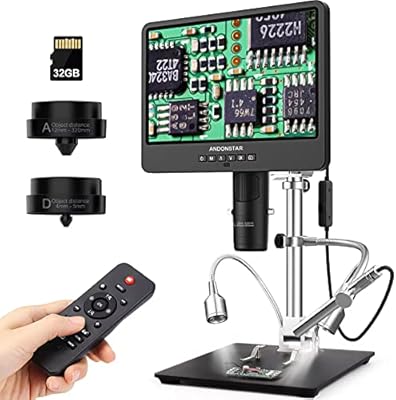
Andonstar AD249S-M 3 Lens HDMI Digital Microscope
85%
92%
Image Clarity
89%
Magnification Range
88%
Build Quality
85%
LED Lighting
78%
Stand Stability
More
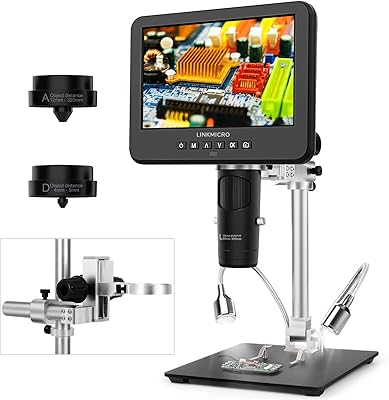
LINKMICRO LM246MS 3-Lens 7-Inch HDMI Digital Microscope
85%
88%
Image Quality
91%
Ease of Setup
85%
Build Quality
90%
Lens Versatility
74%
Display Size
More
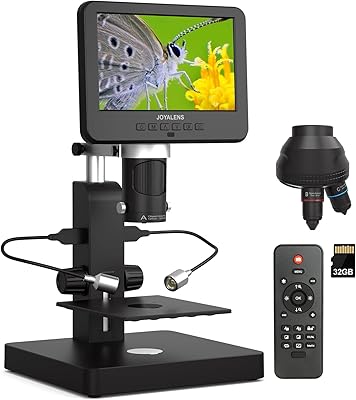
JOYALENS JL246PS 3-Lens Digital Microscope
77%
83%
Image & Screen Clarity
74%
Magnification Range
86%
Lighting System
57%
Build Quality
79%
Ease of Use
More
Andonstar AD246S-P HDMI Digital Microscope
83%
92%
Value for Money
89%
Image Quality
86%
Ease of Use
78%
Build Quality
90%
HDMI Connectivity
More
Andonstar AD266S 7-Inch 5-Lens Digital Microscope
74%
83%
Image Clarity
88%
Lens Versatility
81%
Build Quality
79%
Value for Money
76%
LCD Display
More
Andonstar AD203 Handheld Digital Microscope
83%
89%
Value for Money
93%
Portability & Ease of Use
82%
Magnification Quality
85%
Image & Video Quality
80%
Battery Life
More
Dcorn 4.3″ LCD Digital Microscope
82%
87%
Image Clarity
81%
Magnification Performance
85%
Ease of Use
92%
LED Lighting Effectiveness
78%
Build Quality
More
Hayve DM7 4.3″ Digital Microscope
78%
92%
Ease of Setup
88%
Display Quality
71%
Magnification Performance
84%
LED Lighting
58%
Build Quality
More
Andonstar AD210 10.1 Inch Digital Microscope
83%
91%
Image Quality & Magnification
82%
Usability & Ergonomics
95%
Display Clarity & Viewing Angle
88%
Value for Money
85%
Build Quality
More
UF-TOOLS 7 Inch LCD Digital Microscope
86%
88%
Image Quality
90%
Magnification Accuracy
87%
Portability
85%
Ease of Use
84%
Battery Life
More

FAQ

If soldering and PCB inspection are your only tasks, you will mostly use Lens L and may rarely touch the others. That said, having Lens A available for examining components or labeling at a broader zoom range is genuinely handy, and the lenses do not take up much storage space. It is not overkill — you just will not use every lens equally.

It requires a small screwdriver to loosen and tighten the mounting screws — there is no tool-free quick-release system. For most users who stick to one discipline per session, this is a minor inconvenience. If you regularly switch between tasks mid-session, the process will feel disruptive after a while.

It is technically accurate but requires specific conditions: you need to be using Lens D, connected via HDMI to a large external monitor, and have the 3x digital zoom enabled. On the built-in 7-inch screen, maximum practical magnification with Lens D is around 510x. The on-screen figure is still impressive for the price, but the headline number applies to the HDMI-plus-digital-zoom combination only.

The microscope itself will display and record on its own screen regardless of your computer, so standalone use is fully platform-independent. However, the bundled measurement and capture software only runs on Windows. Mac users will miss out on PC-based measurement tools unless they find a compatible third-party application.

Yes — the metal boom arm stand gets consistently positive feedback for holding its position once locked down. The heat-resistant construction is a deliberate design choice for soldering environments, and it performs well in that role. A few users have noted that very fine adjustments can require light re-tightening over time, but drift mid-session is not a common complaint.

With Lens L, the working distance is practical enough for hands-on soldering — you can maneuver a soldering iron and tweezers beneath the lens without the stand getting in the way. Andonstar does not publish a precise working distance figure, but real-world users consistently describe it as comfortable for standard PCB and phone repair work.

Yes, the package includes the microscope unit, the boom arm stand, all three lenses, biological slide samples, and the necessary cables. Most users report being fully set up within fifteen to twenty minutes of opening the box. The only thing you may want to add separately is a micro SD card if you plan to record video directly to local storage.

The built-in screen is perfectly usable for everyday work, but connecting to a larger HDMI monitor produces a noticeably sharper and more detailed image. Several experienced users recommend routing to a 24-inch or larger monitor as the primary working display if your setup allows it. The built-in screen is best treated as a convenient standalone option rather than the optimal viewing method.

It is functional for basic biological slide observation — plant cells, simple specimens, and introductory science work are all within reach. However, Lens D has a narrow focus range at its highest magnification, which limits flexibility with thicker or uneven slide preparations. For casual educational use or curiosity-driven exploration it works well; for rigorous scientific study, a dedicated compound microscope would be more appropriate.

Andonstar has a customer support team that handles warranty and defect claims, and the brand's responsiveness gets reasonable marks in user feedback. If something is wrong on arrival, contact Andonstar directly or open a claim through the retailer where you purchased. Given the small but real rate of quality-control variability reported by buyers, inspecting the unit carefully on first use and testing all three lenses immediately is a good habit.

Where to Buy