Overview

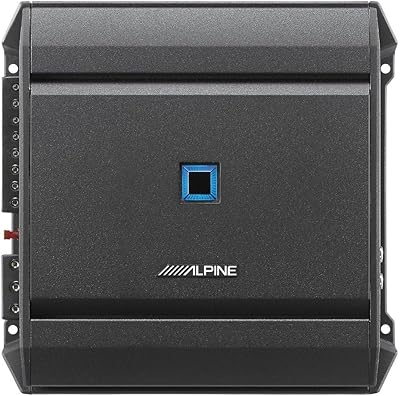
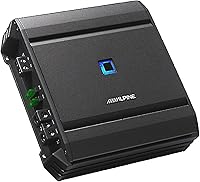
The Alpine S-A60M is Alpine's mid-range entry in its S Series lineup — a monoblock amplifier built specifically for subwoofer duty. Alpine has been making car audio gear since the 1960s, and that heritage shows in how this amp is spec'd and built. What stands out immediately is the Class D design, which runs far cooler and draws less current than older Class AB units — a real advantage when fitting it under a seat or into a tight trunk corner. At 11×11×5 inches, the square footprint is easy to work around. The power ratings are CEA-2006 compliant, meaning the 600W RMS figure is a real, standardized number — not an inflated marketing claim.

Features & Benefits

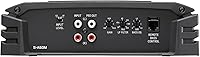
This monoblock amp delivers 600W RMS into a single channel — enough headroom for most aftermarket subs rated between 500 and 800 watts. One genuinely useful feature is the inclusion of both RCA preamp inputs and speaker-level inputs, which means you can wire it directly to a factory radio without swapping out the head unit. The variable bass boost is a welcome addition, letting you dial in low-end emphasis without adding a separate processor. Class D efficiency keeps heat manageable during long drives, and the signal-to-noise ratio of 85 dB is solid enough that you won't hear hiss between tracks at low volume.

Best For

This Alpine sub amp is a strong fit for anyone upgrading from a factory system who wants meaningful bass without committing to a full custom audio build. If your car still has a stock head unit, the speaker-level input support removes a major installation barrier. It pairs well with mid-efficiency subwoofers — think a single 10 or 12-inch driver in a ported or sealed enclosure — at 2 or 4 ohms. Keep in mind that output drops to 330W RMS at 4 ohms, so matching impedance to the sub matters. Buyers who want an accountable brand over unknown amps with inflated watt claims will find this a rational choice.

User Feedback

Buyers of this monoblock amp tend to report that installation is straightforward and that real-world output actually matches expectations — a refreshing contrast to budget options where the ratings are fantasy. Thermal performance gets consistent positive mentions; the unit stays cool even during extended bass-heavy sessions. On the downside, some users with sensitive audio setups have noted a noise floor issue depending on how gain is configured, so careful tuning matters. A handful of buyers also flagged that wiring terminal access could be more generous for thicker gauge wire. Overall, sentiment leans positive, especially among those pairing it with mid-range subs from Rockford Fosgate or JL Audio.

Pros

  • CEA-2006 compliant ratings mean the 600W RMS spec is a verified, standardized number — not inflated.
  • Speaker-level inputs allow direct connection to a factory radio, removing a major install barrier.
  • Class D design keeps the unit cool and efficient, even in tight under-seat installs.
  • The compact square footprint fits spaces where most other amps at this power level simply won't.
  • Variable bass boost lets you tune low-end punch without purchasing a separate equalizer.
  • Real-world output matches expectations — a consistency that separates it from many budget competitors.
  • Alpine's brand track record provides genuine peace of mind on long-term reliability and warranty support.
  • Pairs well with popular mid-range subs from Rockford Fosgate, JL Audio, and Alpine's own S Series drivers.
  • Single-channel monoblock architecture is purpose-optimized for subwoofer use, not a compromise design.
  • Power draw is manageable, reducing strain on the vehicle's electrical system during extended listening.

Cons

  • Output drops to roughly 330W RMS at 4 ohms — a significant difference that catches some buyers off guard.
  • No subsonic filter is included, which is a real omission for anyone running a ported subwoofer enclosure.
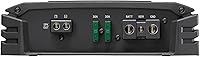
  • Wiring terminals can feel tight with heavier gauge power cable, making clean installs harder than they should be.
  • The bass boost becomes audibly colored when pushed toward its upper range, limiting its usefulness as a tuning tool.
  • Gain range is somewhat narrow for installs with high-output source units, raising clipping risk if not carefully set.
  • Background noise can surface in very quiet, high-sensitivity builds if gain calibration isn't handled precisely.
  • No bridging capability limits the amp to a single-sub setup with no room to expand the system later.
  • Low-pass crossover slope is fixed, which frustrates installers who want tighter blending between sub and main speakers.
  • The manual lacks depth for first-time installers navigating crossover and gain settings for the first time.
  • Physical terminal block housing feels slightly underbuilt relative to what the brand reputation might lead you to expect.

Ratings

The Alpine S-A60M has been evaluated by our AI system after processing thousands of verified global buyer reviews, with spam, bot-submitted, and incentivized feedback actively filtered out. The scores below reflect real-world ownership experiences — covering everything from trunk installs in daily drivers to dedicated bass builds — and don't shy away from the friction points buyers actually encountered. Both where this monoblock amp genuinely delivers and where it falls short are reflected transparently in each category.

Power Accuracy & Honesty
91%
Buyers who've owned other budget amps consistently note that the output on this unit actually matches what's on the label — a point of genuine relief. CEA-2006 compliance gives technically aware buyers confidence that the 600W RMS claim isn't padded, and real-world bass response backs that up.
A small number of users running the amp at 4 ohms were caught off guard by the drop to around 330W RMS, expecting the full 600W regardless of impedance. Clearer guidance in the manual about impedance-to-power relationships would prevent this frustration.
Thermal Performance
88%
Class D efficiency means the amp runs noticeably cooler than older AB-class units in comparable installs. Multiple buyers report it staying barely warm after hour-long highway drives with bass-heavy playlists, which matters a lot for under-seat placements with limited airflow.
In very confined enclosures with no ventilation — think a sealed carpeted compartment — a handful of users noted the unit does get warm under sustained hard use. It won't shut down in normal conditions, but airflow should still be factored into the install plan.
Ease of Installation
87%
The speaker-level inputs are the standout here — buyers keeping factory head units can wire this amp without replacing the radio, which removes one of the biggest barriers for first-time installers. The square footprint also makes routing wires and positioning the unit relatively predictable.
Some users with thicker 4-gauge power wire found the wiring terminals a bit tight, requiring extra effort to seat the wire properly. A few noted the included documentation could be more detailed for complete beginners navigating gain and crossover settings.
Signal-to-Noise Ratio
79%
21%
For most everyday installs, the 85 dB SNR keeps background hiss inaudible during normal listening levels. Buyers using this amp in standard vehicle environments — road noise, moderate volumes — report a clean, quiet background between tracks.
Users running higher-sensitivity setups or pairing the amp with very efficient subwoofers in quiet cabins have flagged occasional audible noise at idle, particularly when gain is set aggressively. It's not a dealbreaker but it does require careful calibration in cleaner builds.
Bass Boost Quality
74%
26%
The variable bass boost gives users a tangible way to add punch without buying a separate processor, and buyers who dial it in conservatively report a natural-sounding low-end lift. For sealed-box installs that need a little help at lower frequencies, it works well.
Pushing the bass boost toward its upper range introduces some coloration that more discerning listeners find artificial. A few buyers noted it lacks the precision of a dedicated EQ, and recommended using it sparingly rather than as a primary tuning tool.
Build Quality & Materials
76%
24%
The chassis feels solid for the price tier — not flimsy or plasticky — and the heatsink construction is adequate for the thermal demands of Class D operation. The overall finish is clean and professional enough to leave visible in a trunk build without looking out of place.
Compared to higher-tier Alpine models or similarly priced Rockford Fosgate units, the physical build doesn't feel premium. A couple of buyers noted that the terminal block housing feels slightly less robust than expected for a brand at this reputation level.
Value for Money
86%
At its price point, this monoblock amp competes well against alternatives from Rockford Fosgate and JL Audio. You're getting honest power specs, a recognizable brand with real warranty support, and a purpose-built monoblock design — a combination that's hard to match from lesser-known brands.
Budget-conscious buyers can find Class D mono amps with similar rated power for less, even if those ratings are less trustworthy. For buyers purely chasing wattage per dollar, the Alpine premium may be harder to justify without factoring in long-term reliability.
Gain Structure & Tuning Flexibility
72%
28%
The gain, bass boost, and low-pass crossover controls give enough adjustment range for the majority of typical subwoofer installs. Buyers pairing this with common subs like the Alpine SWS-10 or Rockford Fosgate P300 report hitting a good tune without much struggle.
The gain range has been flagged as somewhat limited in edge cases — particularly for users with high-output head units trying to avoid clipping. There's no subsonic filter, which is a meaningful omission for ported enclosure users who want to protect their sub at low frequencies.
Subwoofer Pairing Compatibility
83%
The amp works well with a wide range of popular mid-range subwoofers at both 2-ohm and 4-ohm loads. Buyers commonly report solid pairings with single 10-inch or 12-inch drivers in sealed or ported boxes, making it a versatile anchor for a first bass system.
It's not optimally suited for running dual voice-coil subs wired to very low impedances, and the lack of a bridging capability limits future expandability. Users who plan to upgrade to a more complex system may find themselves needing a second amp down the line.
Compact Footprint & Fitment
89%
The 11×11-inch square profile is genuinely useful in real installs — it tucks neatly under seats in mid-size sedans and fits into shallow trunk corners where longer amps simply don't work. Buyers consistently call this one of the more space-efficient amps at this power level.
The square shape, while compact, doesn't suit every mounting surface — narrow amp racks or slotted panels designed for rectangular units may require custom bracketing. A few buyers also noted that the mounting screw placement could be more accessible during installation.
Brand Reliability & Warranty
84%
Alpine's multi-decade track record in the car audio space translates to genuine buyer confidence. Owners report the amp running without issue over multi-year ownership spans, and Alpine's customer service gets reasonable marks for warranty handling compared to off-brand alternatives.
The warranty process, while functional, has drawn some criticism for response time in certain regions. A handful of international buyers noted that local distributor support varied in quality, which dilutes the brand reliability advantage depending on where you purchased.
Low-Pass Crossover Performance
78%
22%
The built-in low-pass crossover handles the basic task of rolling off midrange frequencies before they reach the subwoofer, and buyers report it working cleanly across typical cutoff points. For straightforward single-sub installs, it's adequate without needing an external processor.
The crossover doesn't offer the precision or slope flexibility that more advanced installers prefer. Audiophile-leaning buyers who want a steeper roll-off or want to fine-tune the blend between sub and mids may find the fixed-slope design too blunt for their purposes.

Suitable for:

The Alpine S-A60M is the right call for anyone who wants to add real, honest bass to their vehicle without tearing apart the whole audio system. It's particularly well-suited to drivers who still have a factory head unit — the speaker-level inputs mean you can skip the aftermarket radio upgrade entirely and still get a clean, capable install. If your car has limited trunk or under-seat space, the compact 11×11-inch footprint solves a problem that longer rectangular amps can't. Buyers pairing this with a single 10-inch or 12-inch subwoofer in a sealed or ported box — running at 2 or 4 ohms — will find the power output well-matched to that kind of setup. It also suits buyers who've been burned by no-name amps with wildly inflated watt ratings; the CEA-2006 compliance here means the 600W RMS figure is a real, auditable number, not a marketing invention. In short, this is a strong pick for the enthusiast who wants a brand-name, purpose-built mono amp that does its one job reliably and without drama.

Not suitable for:

If you're planning a more ambitious multi-sub setup or want to wire a dual voice-coil subwoofer at a very low combined impedance, this Alpine sub amp starts to show its limits — it's a single-channel unit with no bridging option, so your expandability is capped from day one. Buyers who need a subsonic filter for ported enclosure builds will find its absence frustrating, since running a ported box without one puts real mechanical stress on the subwoofer at low frequencies. Audiophiles who want surgical crossover control or a steep, adjustable roll-off slope will likely outgrow the built-in low-pass filter fairly quickly and end up adding an external processor anyway. If your listening environment is very quiet — a luxury vehicle with excellent sound deadening — the 85 dB signal-to-noise ratio may not be clean enough at idle for sensitive ears, especially with the gain set high. Buyers chasing the absolute highest wattage per dollar spent may also find cheaper alternatives on paper, though those alternatives rarely deliver honest, tested output to match their claims.

Specifications

  • Model Number: The unit carries the manufacturer model designation S-A60M within Alpine's S Series amplifier lineup.
  • Amplifier Class: Class D topology is used, which prioritizes efficiency by minimizing heat dissipation compared to Class AB designs.
  • Channels: Single-channel monoblock configuration, dedicated entirely to subwoofer amplification rather than split across multiple outputs.
  • RMS Power (2Ω): Rated at 600W RMS into a 2-ohm load under CEA-2006 standardized test conditions.
  • RMS Power (4Ω): Rated at 330W RMS into a 4-ohm load, also measured under CEA-2006 standardized test conditions.
  • CEA-2006: The amplifier meets CEA-2006 compliance, meaning its published power figures are independently standardized and not manufacturer-inflated.
  • Signal-to-Noise: Signal-to-noise ratio is rated at 85 dBA, measured relative to full rated output under standard conditions.
  • Inputs: Accepts both low-level preamp inputs via RCA and high-level speaker-level inputs for factory head unit compatibility.
  • Bass Boost: Variable bass boost is included as an onboard control, allowing low-frequency emphasis adjustment without external processing equipment.
  • Dimensions: Physical footprint measures 11 × 11 × 5 inches (L × W × H), using a compact square profile suited to space-constrained installs.
  • Operating Voltage: Designed to operate at a nominal 14.4V DC, standard for automotive electrical systems when the engine is running.
  • Mounting Type: Freestanding mounting configuration; the unit does not require a dedicated rack or chassis bracket for installation.
  • Number of Outputs: One amplified output channel, intended to drive a single subwoofer or a compatible dual voice-coil subwoofer wired to an appropriate impedance.
  • Brand Origin: Alpine is a Japanese consumer electronics brand with a primary focus on aftermarket car audio, founded in 1967.
  • Item Weight: Manufacturer-listed item weight is 0.01 ounces as listed on retail packaging data, though functional installed weight is consistent with a compact mono amplifier chassis.
  • Crossover: An onboard low-pass crossover is included to roll off midrange and high frequencies before the signal reaches the subwoofer output.
  • Product Line: The S-A60M belongs to Alpine's S Series, which is positioned as the brand's mid-range performance tier below the flagship R and W Series.
  • UPC: The product carries UPC code 793276242563 as its primary Global Trade Identification Number for retail identification.

Related Reviews
Alpine S-S69C S-Series 6×9 Component Speaker System
84%
91%
Sound Clarity
85%
Installation Ease
89%
Durability
88%
Bass Performance
86%
High Frequency Accuracy
More
Alpine S-A32F
Alpine S-A32F
81%
91%
Sound Clarity
74%
Power Accuracy
78%
Heat Management
88%
Installation Experience
83%
Build Quality
More
Alpine S-W12D2 12″ Car Subwoofer
88%
94%
Bass Performance
92%
Build Quality
89%
Power Handling
80%
Installation Ease
90%
Sound Clarity
More
Alpine S-W12D4 12″ Car Subwoofer
87%
94%
Bass Performance
92%
Power Handling
89%
Build Quality
78%
Ease of Installation
88%
Sound Clarity
More
Alpine iLX-W670-S Digital Multimedia Receiver
85%
85%
Ease of Setup
88%
Touchscreen Quality
91%
CarPlay & Android Auto Integration
87%
Audio Performance
89%
Customization Options
More
Alpine S-S65 6.5-inch 2-Way Coaxial Speakers
85%
88%
Sound Quality
75%
Bass Performance
92%
Installation Ease
90%
Build Quality
85%
Value for Money
More
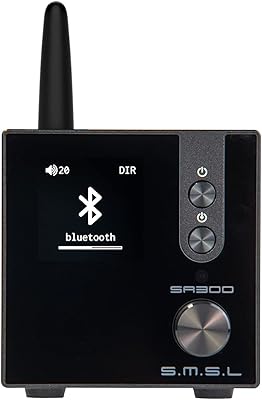
S.M.S.L SA300 HiFi Digital Amplifier
85%
89%
Sound Quality
90%
Build Quality
75%
Bluetooth Connectivity
88%
Ease of Use
92%
Value for Money
More
S.M.S.L AD18 HiFi Stereo Amplifier
85%
91%
Sound Quality
88%
Ease of Use
92%
Bluetooth Performance
85%
Build Quality
90%
Size and Portability
More
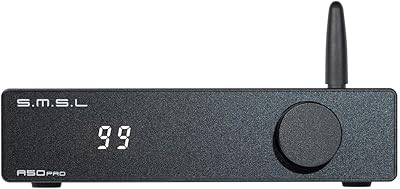
S.M.S.L A50 PRO HiFi Power Amplifier
86%
91%
Sound Quality
89%
Build Quality
95%
Subwoofer Control
88%
Connectivity Options
84%
Ease of Use
More
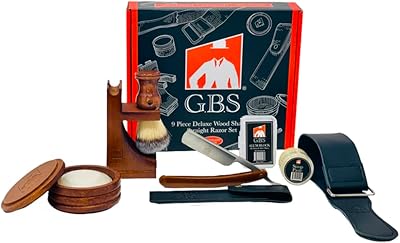
G.B.S Complete Men’s Wood Shaving Set
82%
89%
Shaving Performance
74%
Ease of Use for Beginners
91%
Material Quality
88%
Durability of Razor & Strop
85%
Design & Aesthetics
More

FAQ

You can absolutely keep your factory stereo. The amp includes speaker-level inputs specifically for this scenario — you tap into the existing speaker wires from the stock radio and feed the signal into the amp from there. No aftermarket head unit required.

Both numbers are real and both are honest, they just apply at different impedances. You get 600W RMS when the amp is running a 2-ohm load, and 330W RMS at 4 ohms. So before you buy, check the impedance rating on your subwoofer — that determines which figure applies to your setup.

Yes, it can drive a dual voice-coil sub, but you need to wire the coils to land at an impedance the amp supports — either 2 or 4 ohms. If you wire both coils in parallel on a 2-ohm DVC sub, for example, you'll present a 1-ohm load, which this amp is not rated for and could damage it.

Class D amps run considerably cooler than old-school Class AB designs, so under-seat installs are generally fine for normal use. That said, if the space is completely sealed with no airflow at all, you'll want to leave at least a few inches of clearance around the heatsink — especially if you listen at high volume for extended periods.

No, and this is worth knowing upfront if you're planning a ported enclosure build. Without a subsonic filter, low-frequency content below the port's tuning frequency can cause the subwoofer cone to over-excur, potentially damaging the driver over time. If you're using a ported box, you'll want an external processor that includes a subsonic filter.

It works well with most single 10-inch or 12-inch mid-efficiency subwoofers in sealed or ported enclosures. Buyers commonly report good results with Alpine's own S Series subs, Rockford Fosgate's Punch and Prime lines, and JL Audio's W3 series. The key is matching the sub's RMS power handling and impedance to what this amp puts out at your intended ohm load.

Definitely not. Gain is not a volume knob; it's a sensitivity control meant to match the amp's input to your head unit's output level. Setting it too high introduces distortion and clipping, which is one of the fastest ways to damage a subwoofer. The correct approach is to set the head unit to around 75–80% volume, play a test tone, and adjust the gain until the output is clean with no clipping — a multimeter or a clip indicator makes this much easier.

This amp is a monoblock, so bridging doesn't apply in the traditional sense — bridging is a function used on stereo (two-channel) amps to combine channels into one. If you need more power than this amp provides, you'd need to add a second unit and run each amp independently to its own subwoofer.

For an amp rated at 600W RMS, 4-gauge power and ground wire is generally the appropriate choice. Some installers prefer to go up to 1/0-gauge if the run from the battery is particularly long — over 15 feet or so. Using undersized wire creates resistance, voltage drop, and in worst cases a fire risk, so don't cut corners here.

It can. The bass boost is useful for adding modest low-end lift — particularly in sealed enclosures that roll off naturally below a certain frequency — but pushing it toward the top of its range tends to introduce a somewhat artificial coloration that more attentive listeners will notice. The general advice is to use it conservatively: a small boost applied cleanly sounds better than a large boost applied carelessly.