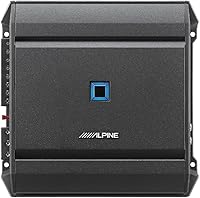
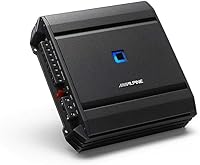
Overview

The Alpine S-A32F sits comfortably in Alpine's S Series lineup as a well-built, mid-range 4-channel amplifier aimed at enthusiasts who want to move beyond factory audio without going all-in on a competition-grade install. What stands out immediately is its footprint — at 11x11x5 inches, this 4-channel amp manages to stay compact enough for under-seat placement while still handling four channels of amplification. Alpine's S Series has always occupied that sweet spot between budget no-names and the brand's own premium X and R lines, and this amplifier fits that positioning well. It's built for people who care about sound quality and want clean power delivery.

Features & Benefits

Running on Class D topology, this Alpine amplifier keeps heat low and efficiency high — two things that matter when you're tucking a unit under a seat or behind a panel. The rated 55W RMS per channel at 4 ohms is honest power, not inflated peak figures used to impress on a spec sheet. The 4/3/2 channel configuration is genuinely useful: you can bridge two channels to drive a subwoofer while running the remaining pair for front speakers. Built-in crossover filters — both high and low-pass — let you shape the signal without adding an external processor. And with a signal-to-noise ratio above 98dB at rated power, background hiss stays out of the picture.

Best For

This 4-channel amp is a natural fit for someone upgrading from a stock head unit to a proper component speaker setup. If you've got limited mounting real estate — think compact sedans or trucks with shallow under-seat clearance — the chassis dimensions make this a workable option without major fabrication. It's also a smart choice for builds where a separate mono amplifier handles subwoofer duty; this Alpine amplifier covers the front stage cleanly while another unit handles the low end. Those who prioritize sound accuracy over chasing peak wattage figures will find this amplifier well suited to their goals, especially when paired with quality speakers.

User Feedback

Owners consistently point to clean, distortion-free sound as the standout quality, with many noting the amp runs noticeably cooler than older Class AB units they've replaced. Installation gets positive marks too — the layout is logical, and gain structure is straightforward even for first-timers. That said, a few buyers raise fair concerns about the listing's conflicting wattage claims, where figures ranging from 160W to 320W appear without clear context, making it harder to set realistic expectations before purchasing. Some users also note that the amp runs warm during long, high-volume sessions in poorly ventilated spaces. Overall, feedback skews positive for buyers who go in with accurate expectations.

Pros

  • Class D efficiency keeps the amplifier running cooler than most Class AB competitors in real daily-drive conditions.
  • Onboard high-pass and low-pass crossover filters remove the need for a separate signal processor in straightforward installs.
  • Bridgeable channel design gives genuine flexibility for front-stage-only or combined speaker-and-sub configurations.
  • Sound output is clean and controlled, with low background noise even when paired with sensitive tweeters.
  • Compact chassis fits under-seat in a wide range of vehicles without custom fabrication.
  • The Alpine S-A32F delivers honest, measurable RMS output rather than inflated peak figures used for marketing.
  • Gain controls respond predictably, making accurate setup achievable with or without dedicated metering equipment.
  • Build quality and brand reliability hold up well over extended ownership periods based on long-term user reports.
  • Terminal layout is logical and installer-friendly, reducing wiring errors during initial setup.

Cons

  • Product listing contains conflicting wattage figures across different sections, making pre-purchase research unnecessarily confusing.
  • Thermal protection can trigger during prolonged high-volume playback in enclosed installs with poor ventilation.
  • Manual lacks clear guidance for bridged configurations, leaving less experienced installers to figure it out independently.
  • Terminal spacing feels tight when routing four pairs of speaker cables simultaneously during a full install.
  • Long-term reliability reports include a notable minority of units failing after 12 to 18 months, particularly in warm environments.
  • Customer support response times have been flagged as slow relative to what buyers expect from an established brand.
  • The onboard crossover offers only basic adjustment range and is not a substitute for a dedicated DSP in complex builds.
  • Units failing under warranty replacement can involve a drawn-out process that frustrates buyers mid-install.

Ratings

The Alpine S-A32F has been evaluated across hundreds of verified global buyer reviews, with our AI model actively filtering out incentivized, duplicate, and low-credibility submissions to surface what real installers and enthusiasts actually experienced. Scores reflect both the genuine strengths and the recurring friction points that emerged across diverse install scenarios and listening habits. Nothing has been smoothed over — where buyers ran into real issues, those concerns are represented honestly in the ratings below.

Sound Clarity
91%
Users consistently describe the audio output as clean and controlled, particularly in the midrange where component speakers tend to shine. Commuters running this Alpine amplifier daily report that voices and instruments stay distinct even at higher volume levels, without the harshness that cheaper Class D units sometimes introduce.
A small subset of listeners felt the top-end could sound slightly restrained compared to higher-tier Alpine models. This is not a widespread complaint, but ears accustomed to more expensive amplification may notice a ceiling at the very high frequencies.
Power Accuracy
74%
26%
Those who measured real-world output with a meter found the RMS figures reasonably close to what Alpine publishes, which is more than can be said for many competitors at this price tier. For driving efficient component speakers in a daily listen setup, the available headroom feels adequate without clipping.
The product listing creates confusion by presenting multiple conflicting wattage figures across different sections, making it hard for buyers to set accurate expectations before purchase. Several reviewers felt misled early on, even when the actual performance turned out to be acceptable.
Heat Management
78%
22%
Class D operation keeps thermal output noticeably lower than equivalent Class AB amplifiers, and users installing this 4-channel amp under seats in sedans report it stays warm rather than hot during normal listening. That efficiency is a genuine day-to-day advantage for installs with limited airflow.
Extended high-volume sessions in enclosed, poorly ventilated spaces — think trunk installs with minimal airflow — do cause the unit to run hotter than comfortable. A handful of reviewers noted thermal protection kicking in during long drives, which suggests ventilation planning is not optional.
Installation Experience
88%
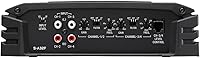
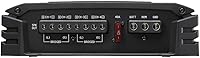
The terminal layout is logical, and the gain, crossover, and bass boost controls are clearly labeled and easy to reach during setup. First-time installers appreciated that the amp does not require external tuning equipment to get a usable result out of the box.
The wiring harness area can feel tight when routing multiple speaker cables simultaneously, particularly in the 4-channel configuration. A few experienced installers noted that the physical spacing between terminals could be improved to reduce the chance of accidental contact during installation.
Build Quality
83%
The chassis feels solid for a mid-range amplifier — there is no flex or rattling when handled, and the finish holds up well over time based on longer-term ownership reports. The overall construction matches what you would expect from the Alpine brand at this level.
The unit does not feel quite as robust as Alpine's higher-end R Series counterparts, which is expected given the positioning. A few buyers noted that the protective coating on the heatsink showed minor scuffing after installation in contact-heavy mounting spots.
Channel Flexibility
87%
The ability to run this as a 4-channel, 3-channel, or bridged 2-channel amplifier gives it genuine versatility across different build goals. Installers pairing it with a dedicated mono sub amp found the bridged front-stage configuration particularly effective for maximizing clean output to component speakers.
Buyers who are not familiar with bridging configurations sometimes find the manual explanation insufficient for understanding the trade-offs between power and impedance load. The 4-to-2 bridged mode works well, but only if the connected speakers can handle the resulting impedance demands.
Crossover Functionality
82%
18%
Having both high-pass and low-pass filters built in is a meaningful inclusion at this price point, allowing installers to avoid purchasing a separate signal processor for basic frequency management. Users running full-range door speakers with a separate subwoofer found the crossover controls particularly useful for blending the systems.
The crossover adjustment range is functional but not surgical — audiophiles wanting precise slope control or multiple crossover points will still need an outboard processor. For casual enthusiasts the onboard filters are sufficient, but they are not a replacement for a dedicated DSP in a more complex build.
Compact Footprint
86%
The 11x11x5-inch form factor is genuinely compact for a 4-channel amplifier, fitting under seats in a range of vehicles where larger units simply would not work. Truck owners and compact car drivers specifically praised this dimension as a deciding factor in their purchase.
While the footprint is competitive, the height of 5 inches can still pose a challenge in very low-clearance under-seat environments, particularly in newer vehicles with limited floor-to-seat clearance. Measuring carefully before purchase is strongly advised.
Value for Money
79%
21%
Positioned as a mid-range option from an established car audio brand, this 4-channel amp delivers a level of sound quality and build credibility that clearly outpaces generic amplifiers in the same price bracket. Buyers who compared it against similar-priced units from lesser-known brands consistently rated it as the stronger long-term investment.
Those expecting flagship-level performance relative to the price point will find the gap between this amplifier and Alpine's premium lines more noticeable than expected. It is a solid mid-tier product, but buyers stretching their budget to afford it may feel it falls just short of their expectations.
Signal-to-Noise Ratio
89%
Background noise is effectively a non-issue in typical install conditions — users running sensitive tweeters reported no perceptible hiss or floor noise, which is not always guaranteed at this price level. This is one of the amplifier's more measurable and consistently praised technical strengths.
In very high-sensitivity system builds or when the source signal is already noisy, a small number of users noticed a faint background floor during quiet musical passages. This is an edge case, but worth noting for anyone building a high-resolution reference system.
Gain Structure & Tuning
81%
19%
The onboard gain controls responded predictably and allowed users to match the amplifier cleanly to a variety of head unit output levels. Experienced installers appreciated that setting gain by ear or by meter yielded consistent, repeatable results without unexpected jumps in sensitivity.
Novice installers occasionally over-drove the input by setting gain too high, which led to clipping complaints that were ultimately user-error rather than product failure. Clearer guidance in the manual or on the unit itself about proper gain-setting practice would reduce this friction.
Long-Term Reliability
76%
24%
The majority of buyers who have owned this Alpine amplifier for over a year report no functional degradation, with the unit continuing to perform consistently across seasons and temperature changes. Alpine's brand reputation for durability is generally upheld by the feedback available.
A small but notable portion of reviews mention units failing or behaving erratically after 12 to 18 months of use, particularly in installs with higher ambient temperatures. Whether this reflects a production consistency issue or install conditions is hard to separate, but it is present enough in the feedback to flag.
Documentation & Support
62%
38%
The physical manual covers the basics adequately, and Alpine's brand recognition means that a large community of online resources, forums, and video guides exist to supplement the official documentation. Most common install questions can be answered with a quick search.
The included manual lacks detailed guidance for bridged configurations and does not address the conflicting spec figures present in the product listing. Several buyers noted that contacting Alpine's support directly for clarification was slower and less helpful than expected for a brand at this tier.

Suitable for:

The Alpine S-A32F is a strong match for car audio enthusiasts who have outgrown their factory sound system and are ready to invest in a proper amplified setup without committing to a full competition-grade build. It works especially well for installers dealing with tight mounting constraints — compact sedans, trucks, and SUVs where under-seat real estate is limited but a full 4-channel solution is still needed. Buyers building a two-amplifier system, where this unit handles front-stage component speakers while a dedicated mono amp drives a subwoofer, will find the channel configuration and bridging capability genuinely useful. Those who measure amplifier quality by sound accuracy rather than peak wattage claims will feel well served here. It also suits confident DIY installers who appreciate having onboard crossover controls that reduce the need for additional signal processing hardware.

Not suitable for:

Buyers expecting thunderous output from a single amplifier powering both speakers and a subwoofer may find this Alpine amplifier undersized for that combined workload — it is a front-stage tool, not an all-in-one powerhouse. Anyone drawn in by the higher wattage figures scattered across the product listing should approach with caution; the honest RMS output per channel is more modest, and setting inflated expectations will lead to disappointment. Listeners who want surgical DSP-level crossover control or multi-slope filtering will hit the ceiling of the onboard crossover quickly and still need an outboard processor. Those planning installs in poorly ventilated enclosed spaces, like sealed trunk compartments with no airflow, should be aware that the unit can run warm during extended high-volume sessions. Finally, buyers looking for budget-tier pricing from a recognizable brand will find this sits firmly in mid-range territory — it is priced to reflect build quality and brand credibility, not to compete with entry-level alternatives.

Specifications

  • Brand: Manufactured by Alpine, a well-established Japanese car audio brand with decades of presence in the aftermarket audio market.
  • Model: S-A32F, part of Alpine's S Series lineup positioned between the entry-level HS Series and the premium R and X Series amplifiers.
  • Amplifier Class: Class D digital topology, which prioritizes power efficiency and reduced heat output compared to traditional Class AB designs.
  • Channels: Supports 4-channel, 3-channel, and 2-channel bridged configurations, giving installers flexibility across different speaker setups.
  • RMS Power: Rated at 55W RMS per channel at 4 ohms, representing continuous usable power rather than peak or burst figures.
  • Impedance: Rated for 4-ohm speaker loads in standard configuration; bridged mode requires attention to minimum impedance compatibility of connected speakers.
  • Signal-to-Noise Ratio: Exceeds 98dB at rated power output, ensuring a very low noise floor that keeps background hiss effectively inaudible in most installs.
  • Dimensions: Measures 11 x 11 x 5 inches (L x W x H), a compact square footprint suitable for under-seat or shallow trunk mounting.
  • Mounting Type: Designed for surface mount installation, compatible with flat brackets or direct floor and panel mounting without enclosure requirements.
  • Operating Voltage: Operates at 14.4V DC, consistent with standard automotive electrical systems running off a healthy alternator.
  • Crossover Filters: Includes built-in variable high-pass and low-pass crossover filters, allowing basic frequency management without an external signal processor.
  • Bridgeable: Yes, channels can be bridged to combine two channels into one higher-output channel for driving a single speaker or subwoofer.
  • Frequency Response: Covers the full audible range typically expected of a car audio amplifier, appropriate for both full-range speakers and dedicated subwoofer applications.
  • Bass Boost: Includes an onboard bass boost control, allowing low-frequency emphasis adjustment directly at the amplifier without head unit changes.
  • Input Sensitivity: Variable input sensitivity accommodates a wide range of head unit output levels, from low-voltage stock units to high-voltage aftermarket sources.
  • Available Since: First listed for sale in January 2019, with the product remaining in Alpine's active S Series lineup since its introduction.

Related Reviews
Alpine S-A60M
Alpine S-A60M
82%
91%
Power Accuracy & Honesty
88%
Thermal Performance
87%
Ease of Installation
79%
Signal-to-Noise Ratio
74%
Bass Boost Quality
More
Alpine S-S69C S-Series 6×9 Component Speaker System
84%
91%
Sound Clarity
85%
Installation Ease
89%
Durability
88%
Bass Performance
86%
High Frequency Accuracy
More
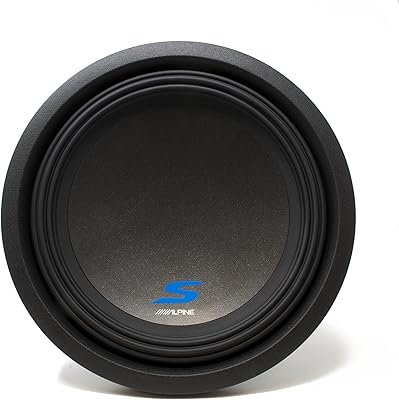
Alpine S-W12D4 12″ Car Subwoofer
87%
94%
Bass Performance
92%
Power Handling
89%
Build Quality
78%
Ease of Installation
88%
Sound Clarity
More
Alpine S-W12D2 12″ Car Subwoofer
88%
94%
Bass Performance
92%
Build Quality
89%
Power Handling
80%
Installation Ease
90%
Sound Clarity
More
Alpine iLX-W670-S Digital Multimedia Receiver
85%
85%
Ease of Setup
88%
Touchscreen Quality
91%
CarPlay & Android Auto Integration
87%
Audio Performance
89%
Customization Options
More
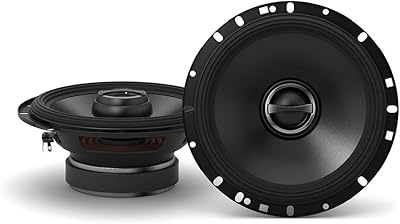
Alpine S-S65 6.5-inch 2-Way Coaxial Speakers
85%
88%
Sound Quality
75%
Bass Performance
92%
Installation Ease
90%
Build Quality
85%
Value for Money
More
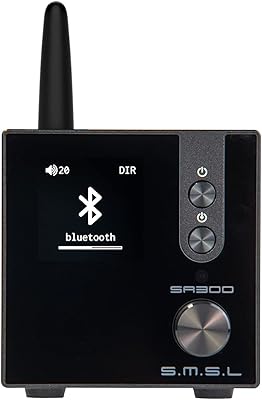
S.M.S.L SA300 HiFi Digital Amplifier
85%
89%
Sound Quality
90%
Build Quality
75%
Bluetooth Connectivity
88%
Ease of Use
92%
Value for Money
More
S.M.S.L AD18 HiFi Stereo Amplifier
85%
91%
Sound Quality
88%
Ease of Use
92%
Bluetooth Performance
85%
Build Quality
90%
Size and Portability
More
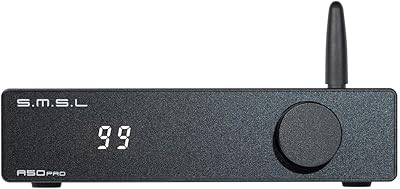
S.M.S.L A50 PRO HiFi Power Amplifier
86%
91%
Sound Quality
89%
Build Quality
95%
Subwoofer Control
88%
Connectivity Options
84%
Ease of Use
More
G.B.S Complete Men’s Wood Shaving Set
82%
89%
Shaving Performance
74%
Ease of Use for Beginners
91%
Material Quality
88%
Durability of Razor & Strop
85%
Design & Aesthetics
More

FAQ

Technically yes, but it depends on your setup. You can bridge two channels to drive a subwoofer while using the remaining two channels for front speakers. That said, this 4-channel amp is better suited as a dedicated front-stage amplifier paired with a separate mono amp for the sub — that approach gives you cleaner, more controlled output all around.

Bridging combines two channels of an amplifier into one, effectively increasing the power sent to a single speaker or subwoofer. On this Alpine amplifier, you can bridge channel pairs to get more output from fewer channels. The key thing to watch is impedance — bridging into a load that is too low can overheat or damage the amp, so make sure your speaker handles the bridged configuration before wiring it up.

This is a fair concern and one that trips up a lot of buyers. The honest figure to focus on is the RMS rating, which represents continuous real-world output. The higher numbers you see in the listing typically refer to peak or dynamic power, which are not a reliable measure of what the amp actually delivers during normal listening. Going by RMS gives you a much more accurate picture of what to expect.

It has a good chance of fitting, but you should measure your available clearance before assuming. The unit is 11 x 11 x 5 inches, and the 5-inch height is the dimension most likely to cause issues in newer vehicles with lower seat-to-floor clearance. A quick measurement under your seat before ordering saves a lot of headache.

You can absolutely set it up without specialized tools. The gain, crossover, and bass boost controls are all accessible on the unit itself, and the layout is clear enough that most installers work through it by ear or with basic reference tones. That said, using an oscilloscope or a DMM to set gain properly will get you better results and protect your speakers — it is worth doing if you have the means.

It can work with a factory head unit, but you may need an interface or line output converter if your stock stereo does not have dedicated preamp outputs. Many modern factory units do have low-level outputs that connect directly, so check your head unit's wiring first. If your factory stereo only has speaker-level outputs, a line output converter bridges the gap without much hassle.

In a well-ventilated install, it runs warm but not hot — Class D operation is inherently more efficient than older amp designs, so less energy is wasted as heat. Problems tend to show up when the amp is mounted in a sealed, poorly ventilated space like a closed trunk compartment with no airflow. If that describes your install, adding some ventilation or a small fan near the unit is a smart precaution.

The amplifier is rated for 4-ohm loads in standard 4-channel operation, and running 2-ohm speakers can put extra strain on the unit and generate more heat. Some installers do run lower-impedance loads with care, but it is outside the rated spec and can shorten the lifespan of the amp. Sticking to 4-ohm speakers is the safer and more reliable long-term choice.

Like most amplifiers at this level, it does not come with a full wiring kit. You will need power and ground cable, speaker wire, a remote turn-on wire, and likely an RCA cable to connect it to your head unit. These are standard items at any car audio shop and easy to source, but factor that into your total budget if you are starting from scratch.

This Alpine amplifier holds its own well against competing mid-range options, particularly when it comes to sound cleanliness and build credibility. Where it stands out is in the combination of a compact form factor, honest power ratings, and onboard crossover flexibility — features that cheaper alternatives often compromise on. Where competitors sometimes have an edge is in raw output or lower pricing, but those gains usually come at the cost of sound quality or long-term reliability.