Overview

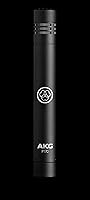
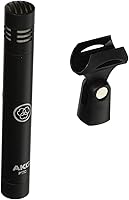
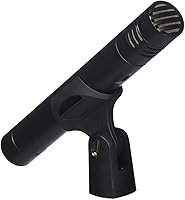
The AKG P170 is a small-diaphragm condenser microphone that has quietly built a loyal following among recording engineers and working musicians alike. Compact and unpretentious, it punches well above its price point with exceptional transient response and a cardioid polar pattern that keeps off-axis noise at bay. Whether you're tracking acoustic instruments in a home studio or miking a snare at a live venue, this mic holds its own without drama. Sturdy and lightweight at just over four ounces, it's easy to position and won't cause issues on a standard mic stand.

Features & Benefits

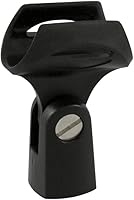
The mic ships with a switchable attenuation pad that lets it handle sound pressure levels up to 155 dB, which means even a snare cracking at full force won't cause clipping. The frequency response spans 20 Hz to 20 kHz, covering everything from the fundamental thump of a kick drum to the airy shimmer of a cymbal. Phantom power is required, but that's standard for any condenser. The included stand adapter is basic but functional, and the cardioid pattern does a solid job rejecting room reflections—handy if your recording space isn't treated.

Best For

This mic earns its keep on acoustic guitar and drum overheads — it's particularly well-suited to anything where you need sharp attack and honest high-end detail. Home studio producers on a budget will appreciate what they're getting for the price, and live sound engineers often keep a pair on-hand for instrument work. It's less ideal for vocals or bass-heavy sources, where a large-diaphragm mic typically gives better results. If you're recording a full acoustic band or building a versatile mic locker, having one or two of these on the shelf makes a lot of practical sense.

User Feedback

With over 6,000 ratings averaging 4.7 stars, buyers clearly like what they're hearing. The most consistent praise centers on clarity and detail at a price that doesn't require a second mortgage. Many users report being surprised by the build quality — the housing feels more premium than the cost suggests. On the critical side, some reviewers note the included accessories are minimal, and a few wish a shock mount was part of the package. There are also occasional mentions of handling noise being more noticeable than expected, though that's a common trait among small-diaphragm condensers in this price tier.

Pros

  • Captures acoustic instruments with remarkable clarity and detail for the price.
  • Handles up to 155 dB SPL without distortion, making it fearless on loud sources.
  • Compact pencil form factor allows precise placement in tight or awkward positions.
  • Solid all-metal housing holds up well to regular gigging and studio use.
  • Cardioid polar pattern rejects off-axis bleed effectively in live and rehearsal settings.
  • Works reliably with standard 48V phantom power across virtually any interface or mixer.
  • Long-term owners report consistent performance with no degradation over years of use.
  • Buying two units for stereo overhead work delivers surprisingly well-matched results.
  • A genuine value buy—recordings regularly sound professional enough for commercial release.

Cons

  • No shock mount included, so stand-borne rumble is a real problem without buying one separately.
  • Self-noise becomes noticeable when capturing very quiet or delicate sound sources.
  • The attenuation pad switch is small and fiddly, easy to mis-set in low-light environments.
  • Finish scratches and label wear appear relatively quickly under regular travel conditions.
  • Presence lift can turn harsh on already-bright instruments or in reflective rooms.
  • No carrying case or storage pouch included, which feels like an oversight at this price.
  • Sensitive to humidity and moisture—outdoor or variable-weather gigs carry some risk.
  • Unit-to-unit variation means critical stereo applications may require testing multiple pairs.
  • Inadequate phantom power from older or budget mixers can cause inconsistent performance.

Ratings

The AKG P170 has accumulated thousands of verified reviews from home studio producers, live sound engineers, and acoustic musicians worldwide, and our AI-driven analysis cuts through the noise by actively filtering out incentivized and bot-generated feedback to surface what real buyers actually experience. Scores reflect a balanced picture—standout strengths and genuine frustrations included—so you can make a confident, informed decision before purchasing.

Sound Clarity & Detail
93%
Buyers consistently describe the high-frequency reproduction as crisp and honest—acoustic guitar recordings capture finger noise, string attack, and body resonance with surprising precision. Engineers overhead-miking drum kits report that cymbal shimmer and snare crack translate clearly without harshness.
A small number of reviewers working in untreated rooms found that the mic's transparency actually worked against them, exposing room reflections and background hiss more than a colored or darker-sounding mic would have.
Transient Response
91%
The fast transient handling is one of the most frequently praised attributes—percussionists and acoustic guitarists note that picking attacks and drum hits feel immediate and lifelike in recordings. This is particularly valued by producers who don't want to rely heavily on post-processing to recover lost attack.
For users recording softer, sustained instruments like bowed strings, the hyper-accurate transients offer less obvious benefit, and a few reviewers felt the mic sounded slightly clinical compared to warmer large-diaphragm alternatives in those contexts.
Build Quality
84%
The all-metal housing feels reassuringly solid for the price bracket—gigging musicians who toss it into a mic bag and pull it out at venues report no rattles, dents, or contact issues after extended use. The compact form also makes physical positioning on tight drum kits or cramped stage setups much easier.
The finish can show scuffs and light scratching after regular travel use, and some buyers noted the labeling begins to wear with heavy handling over time. It feels built to last, but not quite at the level of boutique small-diaphragm condensers costing three times as much.
SPL Handling & Pad Performance
89%
The switchable attenuation pad performs exactly as advertised—users regularly place this mic inches from a snare or guitar amp and report clean, undistorted signal even at punishing volumes. Recording brass or loud acoustic percussion at close range is handled confidently without any sense of the mic straining.
The pad switch is small and recessed, making it fiddly to engage in low-light live environments. A handful of buyers also wished the switch position was more clearly visible or tactilely distinct, as accidentally leaving it engaged when miking quieter sources results in a noticeably thinner signal.
Value for Money
94%
This is arguably where the mic earns its strongest praise—most buyers describe a genuine sense of surprise that a microphone in this price range delivers recordings they'd comfortably use in a professional release. Home studio owners on tight budgets frequently call it one of the best investments in their signal chain.
A few users who stepped up from this mic to premium small-diaphragm options from Neumann or Schoeps noted the gap in low-level noise floor performance, suggesting the value proposition diminishes if your recordings demand studio-grade silence rather than just solid performance.
Noise Floor & Self-Noise
76%
24%
For loud acoustic sources—overheads, strummed guitar, hand percussion—the self-noise is low enough that most buyers never notice it. Engineers mixing rock or folk recordings report that the noise floor stays well below the musical content and causes no problems in a standard mix.
Users trying to capture very quiet sources—delicate fingerpicking, whispered vocals, or ambient room recordings—occasionally reported audible hiss, especially when applying significant gain at the preamp. It's not a deal-breaker for most applications, but the 16 dB self-noise spec does have real-world implications.
Polar Pattern Accuracy
82%
18%
The cardioid pattern does a reliable job of rejecting sound from the rear and sides, which users working in less-than-ideal acoustic spaces find genuinely useful. Placement on a guitar amp in a live band rehearsal showed good isolation from nearby bass cabs and drum kits in multiple reviewer accounts.
Off-axis coloration, while not severe, is noticeable when sources move toward the 90- or 120-degree null zone—some users felt the tonal character shifted more than expected compared to pricier alternatives with tighter, more consistent off-axis response.
Frequency Response Balance
81%
19%
The response curve has a gentle presence lift in the upper midrange that most instrument recordings benefit from—acoustic guitars sound forward and articulate rather than dull, and percussion recordings carry presence without needing EQ boosts in the mix.
That same presence lift can become a liability on already-bright sources or in bright-sounding rooms, occasionally producing a slightly edgy or fatiguing top end. A small number of reviewers using the mic on mandolin or banjo noted they had to dial back some high-mid frequencies in post.
Phantom Power Compatibility
88%
Standard 48V phantom power requirement means this mic works without issue across virtually every audio interface, mixer, or preamp a buyer might already own. Users switching between multiple interfaces report consistent behavior and no startup noise or power-related artifacts.
The phantom power dependency is a non-issue for studio use but occasionally catches live performers off-guard when using older or budget mixers that supply under-spec phantom power—a small number of users reported inconsistent performance tracing back to inadequate phantom voltage from their desk.
Included Accessories
58%
42%
The included stand adapter is functional and fits standard 5/8-inch threads without fuss, which is all most buyers need to get up and running immediately. For users who already have a mic pouch or clip from another microphone, the minimal packaging is not a concern.
The absence of a shock mount is the most common complaint in this category—buyers recording in environments with floor vibration or stand-borne rumble find they need to purchase one separately, adding unexpected cost. There is also no carrying case or pouch included, which feels like an omission at this price point.
Handling Noise
63%
37%
In stationary studio setups where the mic sits on a fixed stand and is rarely touched during a take, handling noise is essentially a non-issue. Most recording users never encounter it as a problem in normal tracking sessions.
Without a shock mount, vibrations transmitted through the stand are clearly audible in recordings, particularly in live environments with foot traffic or bass-heavy stage monitoring. Several reviewers explicitly wished for a rubber suspension mount in the box given how sensitive the mic is to mechanical noise.
Size & Ergonomics
87%
The pencil-style form factor makes placement in tight spots—inside a piano lid, between tom-toms, or angled under a guitar—far easier than bulkier large-diaphragm designs. Drummers and orchestral recorders particularly appreciate being able to get the capsule exactly where they want it without obstruction.
The compact body, while an advantage for placement, can make precise adjustment of the pad switch and the mic clip position feel fiddly, especially when wearing stage gloves or working in poor lighting during a live setup.
Durability Over Time
83%
Long-term owners—several with years of regular use—report that the mic continues to perform consistently with no degradation in sound or hardware reliability. The metal body shows cosmetic wear but no structural issues, and the XLR connector remains snug even after hundreds of plug cycles.
A small subset of buyers reported capsule sensitivity issues after exposure to humidity or moisture on outdoor stages, which is a known vulnerability for condenser microphones in general but worth noting for users who gig in variable weather conditions.
Stereo Pair Consistency
79%
21%
Buyers who purchased two units for overhead stereo miking or acoustic guitar X-Y configurations generally report acceptably matched responses—the tonal character between units is close enough that panning them hard left and right produces a believable stereo image without obvious imbalance.
Compared to purpose-matched stereo pairs from higher-end manufacturers, unit-to-unit variation is slightly more noticeable, and a few users doing critical classical or acoustic ensemble recordings found themselves wishing for tighter channel matching than individual retail units can guarantee.

Suitable for:

The AKG P170 is a strong choice for home studio producers and semi-professional recording engineers who need a reliable, detailed small-diaphragm condenser without spending a fortune. It performs exceptionally well on acoustic guitars, drum overheads, and hand percussion, where fast transient response and honest high-frequency reproduction make a real difference in the finished recording. Singer-songwriters who track their own acoustic performances will find it captures string attack and body resonance with a level of clarity that typically costs significantly more. Live sound engineers who need a compact instrument mic that can withstand high SPL environments—close-miking snares, brass, or loud acoustic sources—will also get solid mileage from it. Budget-conscious musicians building their first proper mic locker, or anyone who needs a workhorse instrument mic they can use across a wide variety of tracking sessions, will find this a practical and genuinely rewarding purchase.

Not suitable for:

Buyers hoping to use this primarily as a vocal microphone will likely be disappointed—the cardioid small-diaphragm design and presence lift that serve instruments well can come across as overly clinical or edgy on the human voice, and a large-diaphragm condenser is almost always the better tool for that job. The AKG P170 also lacks the ultra-low noise floor demanded by classical recording engineers, ambient sound designers, or anyone capturing very quiet acoustic sources where even subtle self-noise becomes audible. Without a shock mount in the box, users recording in environments with floor vibration or stage rumble will need to budget for additional accessories before the mic reaches its potential. Professionals working at the highest studio level who need channel-matched stereo pairs with laboratory-grade consistency will find better options at a higher price point. If your primary recording source is bass-heavy—kick drums, upright bass, baritone instruments—a large-diaphragm or dynamic mic will generally serve you better.

Specifications

  • Microphone Type: Small-diaphragm condenser microphone with a fixed cardioid polar pattern.
  • Frequency Response: Captures audio across a full 20 Hz to 20,000 Hz bandwidth for accurate instrument reproduction.
  • Polar Pattern: Cardioid, providing focused front pickup while rejecting sound from the rear and sides.
  • Max SPL: Handles sound pressure levels up to 155 dB SPL when the switchable attenuation pad is engaged.
  • Attenuation Pad: Switchable pad reduces the input signal to accommodate very high SPL recording environments.
  • Self-Noise: Equivalent noise level of 16 dB(A), suitable for loud instrument sources but not ultra-quiet recordings.
  • Signal-to-Noise: Signal-to-noise ratio of 75 dB, delivering clean output across standard instrument recording applications.
  • Sensitivity: Audio sensitivity rated at 75 dB, measured under standard reference conditions.
  • Power Requirement: Requires 48V phantom power supplied via the XLR connection from a compatible audio interface or mixer.
  • Connector: Standard 3-pin XLR output connector for universal compatibility with professional audio equipment.
  • Dimensions: Body measures 1.57″ x 1.57″ x 7.09″, offering a slim pencil-style profile for easy placement.
  • Weight: Weighs approximately 4.6 oz (130 g), making it lightweight enough for extended overhead positioning.
  • Body Material: All-metal construction provides structural rigidity and resistance to physical wear during regular use.
  • Color: Available in a matte black finish that minimizes light reflections in live stage environments.
  • Included Items: Package contains one P170 microphone body and one standard stand adapter for 5/8-inch threaded mic stands.
  • Shock Mount: No shock mount is included; one must be purchased separately for vibration-sensitive recording applications.
  • Connectivity: Wired XLR connection with no wireless, USB, or digital output options available.
  • Manufacturer: Designed and manufactured by AKG Pro Audio, a professional audio brand headquartered in Vienna, Austria.
  • Warranty: Covered by a limited manufacturer warranty applicable only when purchased from AKG Authorized North American Dealers.
  • Availability: First made available on July 30, 2014, and confirmed as not discontinued by the manufacturer.

Related Reviews
AKG K52 Headphones
AKG K52 Headphones
84%
89%
Sound Clarity
78%
Bass Accuracy
85%
Midrange Balance
82%
High-Frequency Detail
91%
Comfort
More
AKG K361 Studio Headphones
85%
91%
Sound Quality
84%
Comfort & Fit
90%
Noise Isolation
88%
Build Quality
86%
Portability
More
AKG C1000S Condenser Microphone
85%
89%
Sound Quality
91%
Polar Pattern Flexibility
85%
Portability & Design
88%
Build Quality
83%
Ease of Use
More
AKG K371
AKG K371
89%
94%
Sub-Bass Extension
91%
Midrange Accuracy
88%
High-Frequency Detail
83%
Passive Noise Isolation
86%
Long-Term Comfort
More
AKG K812PRO Audiophile Headphones
85%
96%
Sound Quality
85%
Comfort for Extended Use
89%
Build Quality
94%
Soundstage & Imaging
60%
Noise Isolation
More
AKG K702 Over-Ear Headphones
83%
92%
Sound Quality
90%
Comfort for Long Sessions
85%
Build Quality
60%
Noise Isolation
91%
Frequency Response
More
AKG K72 Over-Ear Headphones
84%
88%
Sound Quality
91%
Comfort for Long Listening
85%
Noise Isolation
67%
Build Quality
92%
Value for Money
More
AKG C214
AKG C214
87%
92%
Vocal Clarity
89%
Acoustic Instrument Capture
94%
Build Durability
91%
High-Volume Handling
93%
Value for Money
More
AKG K553 MKII Studio Headphones
87%
92%
Sound Quality
85%
Comfort for Long Sessions
87%
Build Quality
94%
Noise Isolation
80%
Portability
More
AKG D5
AKG D5
89%
94%
Feedback Rejection
91%
Vocal Clarity
96%
Build Durability
87%
Handling Noise
93%
Value for Money
More

FAQ

Yes, it requires 48V phantom power, which is standard on virtually all modern audio interfaces, mixers, and preamps. If your interface has a phantom power switch, just flip it on before plugging in and you are good to go. Older or very budget mixers sometimes supply under-spec voltage, so if the mic seems quieter than expected, that is worth checking first.

Technically you can point it at a voice, but it is not optimized for that purpose. The small-diaphragm design and the slight presence lift in the upper midrange that works beautifully on acoustic guitars can sound clinical or edgy on vocals. For voice work, a large-diaphragm condenser is almost always a better fit.

The pad reduces the signal level entering the capsule, which prevents distortion when the mic is placed very close to an extremely loud source. You would engage it when close-miking a snare drum, a loud guitar amp, or brass instruments—basically any situation where the sound pressure could overload the mic without it. For quieter sources like acoustic fingerpicking, leave the pad off.

It is genuinely one of the more popular budget-friendly overhead options available, and for good reason. The fast transient response catches cymbal hits and snare crack with clarity, and the cardioid pattern helps manage bleed from other parts of the kit. Buying two units and positioning them in an X-Y or spaced pair configuration delivers solid stereo overhead recordings.

If you are recording in a controlled studio environment on a solid stand away from floor traffic, the included clip will often be sufficient. However, if you are on a stage with bass-heavy monitoring, foot traffic, or any stand vibration, a shock mount makes a noticeable difference. It is not included in the box, so budget for one separately if your recording space is not particularly isolated.

Acoustic guitar is arguably its strongest application. Position it roughly six to twelve inches from the 12th fret area, angled slightly toward the sound hole, and it captures string attack, fret noise, and body resonance with impressive detail. The presence lift adds a natural forwardness to the guitar that sits well in a mix without needing much EQ.

Yes, and many buyers do exactly that for overhead recording or acoustic instrument stereo miking. Since these are sold as individual units rather than a factory-matched pair, there will be minor unit-to-unit variation in sensitivity and tonal character. For home studio use the difference is barely perceptible, but professional classical recording engineers who need extremely tight channel matching might prefer a purpose-matched pair from a higher-end manufacturer.

Absolutely—this mic was practically made for that kind of setup. Any interface with a standard XLR input and 48V phantom power will run it without issue, and the Focusrite Scarlett range is one of the most common pairings mentioned by buyers. Just make sure phantom power is enabled on the interface before connecting.

The all-metal body holds up well to the everyday wear of gigging life—tossing it into a mic bag, loading it into a van, pulling it out at a venue. Long-term owners report no structural failures or connector issues even after years of regular use. The finish does pick up scuffs over time, and the printed labeling can wear with heavy handling, but neither affects performance.

Like any condenser microphone, it has real limitations in high-humidity or wet conditions because moisture can affect the capsule. For typical indoor studio and live venue use you will never encounter an issue, but using it at outdoor festivals, in rain-prone environments, or anywhere with significant temperature swings carries some risk. If you regularly gig outdoors in variable weather, a dynamic mic is a safer long-term investment for those specific situations.