Overview

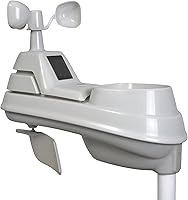
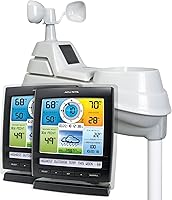
The AcuRite Iris 01078 Wireless Weather Station occupies a comfortable spot in the mid-range market — capable enough to satisfy serious weather watchers, approachable enough for everyday home use. What sets it apart from a basic thermometer is the included 5-in-1 outdoor sensor paired with two color displays right out of the box, so you can check conditions from the kitchen and the bedroom without any extra purchases. The wireless connection reaches up to 330 feet, and the displays run on corded power with AA battery backup for outages. There is no Wi-Fi, no app, no cloud — and for many buyers, that simplicity is exactly the point.
Features & Benefits

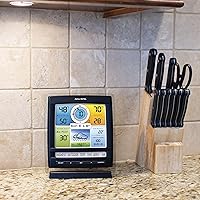
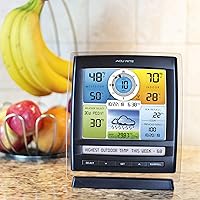
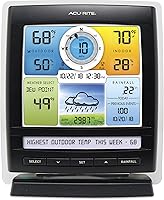
The single outdoor sensor handles five measurements at once — temperature, humidity, wind speed, wind direction, and rainfall — updating every 18 to 36 seconds depending on the reading. Both displays are illuminated color screens with an adjustable dimmer, wall-mountable or freestanding, which proves genuinely useful in rooms with varying light levels. The scrolling Weather Ticker adds depth by showing feels-like temperature, heat index, wind chill, and even the current moon phase. What impresses most is the self-calibrating forecast engine, which generates 12-to-24-hour local predictions without pulling data from the internet. The rain gauge resolves down to 0.01 inches, and the 16-point wind compass delivers noticeably more precise directional readings than the 8-point dials found on cheaper units.

Best For

This home weather monitor earns its place in a fairly specific set of households. Gardeners and outdoor enthusiasts who need hyperlocal microclimate data — not a city-wide forecast from a phone app — will appreciate how much more relevant the readings feel. It is also a solid pick for anyone who wants weather visibility in two separate rooms without hunting down compatible add-on displays. Rural and suburban homes benefit most, since a nearby official weather station is rarely representative of what is actually happening in your yard. Because there is zero app setup or account creation required, the AcuRite dual-display unit also makes an easy, thoughtful gift for anyone who wants reliable data without a steep learning curve.

User Feedback

Buyers consistently highlight the dual-display convenience and the readability of the color screens as standout strengths, especially compared to single-display rivals at similar price points. Rain and wind accuracy also earn regular praise. On the flip side, a notable share of owners report that wireless signal weakens noticeably through thick walls or homes with metal framing — sensor placement matters more than the spec sheet implies. Battery drain tends to accelerate in colder climates, which is worth planning for before winter. A smaller group has run into sync issues after power cuts, requiring a manual reset to restore the display connection. Overall, setup is described as manageable, but thoughtful outdoor sensor positioning pays real dividends.

Pros

  • Two color displays are included in the box — no need to purchase add-on screens for a second room.
  • The 5-in-1 sensor covers temperature, humidity, wind speed, wind direction, and rainfall from a single outdoor unit.
  • Self-calibrating forecasts generate 12-to-24-hour outlooks without any internet connection required.
  • The 16-point wind compass delivers more precise directional data than the basic 8-point dials on budget alternatives.
  • Rain gauge resolves down to 0.01 inches, making it genuinely useful for gardeners tracking precise precipitation.
  • Both displays support wall-mounting or freestanding tabletop use, giving real flexibility in where you place them.
  • Battery backup on the displays keeps readings visible during power outages.
  • The scrolling Weather Ticker adds contextual data — heat index, wind chill, moon phase — without cluttering the main screen.
  • Setup is straightforward enough for non-technical users; no accounts, no apps, and no Wi-Fi credentials to enter.
  • Temperature accuracy holds to within 2°F across a wide operating range, making readings dependable in most climates.

Cons

  • No Wi-Fi or app support means you cannot check readings remotely when away from home.
  • Wireless signal degrades noticeably through thick walls, metal framing, or long distances, limiting sensor placement options.
  • Battery drain accelerates in cold climates, requiring more frequent replacement during winter months.
  • Occasional display sync failures after power interruptions require a manual reset to restore the connection.
  • No solar charging on the outdoor sensor means the batteries are the only power source in the field.
  • Historical data logging is not available — once a reading scrolls past, there is no way to retrieve it digitally.
  • The unit does not integrate with smart-home platforms or community weather networks like Weather Underground.
  • Outdoor sensor placement requires real thought upfront; a poor location compounds range and accuracy issues simultaneously.
  • No lightning detection is included, which some buyers at this price tier might reasonably expect.
  • The corded display power requirement limits where you can position the indoor units without an accessible outlet nearby.

Ratings

The scores below reflect an AI-driven analysis of verified global buyer reviews for the AcuRite Iris 01078 Wireless Weather Station, with spam, bot-generated feedback, and incentivized posts actively filtered out before scoring. Each category is weighted against real-world usage patterns drawn from thousands of confirmed purchases across diverse climates and home types. Both the genuine strengths and the recurring frustrations are captured transparently — nothing is softened to make the product look better than it actually performs.

Sensor Accuracy
83%
Buyers who rely on this home weather monitor for gardening schedules or outdoor activity planning consistently praise the rain and wind readings as noticeably more trustworthy than cheaper single-sensor rivals. The 0.01-inch rain resolution impresses gardeners tracking irrigation needs, and the +/- 2°F temperature tolerance holds up well across seasonal swings.
A portion of users note that temperature readings can drift slightly if the sensor is mounted in a spot with reflected heat from nearby walls or paving. Accuracy is solid within its stated tolerances, but placement mistakes amplify errors in ways that frustrate buyers who did not research mounting location beforehand.
Dual Display Value
88%
Getting two full color displays in one package is the feature buyers mention most often as the reason they chose this unit over competitors. Being able to glance at outdoor conditions from the kitchen and a bedroom without purchasing add-ons feels like a genuine convenience win, especially for larger homes.
The displays are corded, which limits where you can realistically position them without running cables to an outlet. A handful of users expected the second display to be wireless and battery-operated, and were surprised to find both units tethered to power.
Wireless Connectivity
67%
33%
For homes with standard wood-frame construction, the 433 MHz signal holds up reliably across typical indoor distances, and most buyers report consistent syncing between the outdoor sensor and both displays during normal operation. The setup process for pairing the sensor is described as quick and uncomplicated.
Thick walls, brick, concrete, or metal framing can dramatically reduce the effective range below the advertised 330-foot ceiling. Users in older or heavily insulated homes report frustrating signal dropouts that require repositioning the sensor closer to the house than originally planned, undermining the flexibility of wireless placement.
Ease of Setup
81%
19%
The initial pairing process between the outdoor sensor and both displays is genuinely approachable for non-technical buyers, and the included mounting hardware covers most standard installation scenarios. Buyers consistently describe getting the unit up and running within 20 to 30 minutes.
The part that trips people up is not the electronics — it is figuring out where to mount the outdoor sensor for accurate readings. Poor placement choices made during setup tend to surface as persistent accuracy complaints weeks later, suggesting the manual could do more to guide sensor positioning.
Display Readability
86%
The color screens draw consistent praise for clarity, especially from buyers who had previously owned monochrome or backlit LCD stations. The adjustable dimmer is a practical touch that users in bedrooms appreciate, allowing them to keep readings visible overnight without the screen becoming a light source.
A few buyers with aging eyesight note that the scrolling Weather Ticker moves at a pace that can be hard to follow from across a room. The display size is adequate but not large, and in bright ambient light some users find the color contrast less crisp than expected.
Forecast Reliability
71%
29%
The self-calibrating forecast engine earns genuine appreciation from users who want a rough 12-to-24-hour outlook without depending on an internet connection or phone app. For planning outdoor chores or deciding whether to water the garden, the directional forecast — rain likely, clearing expected — proves useful in practice.
It is not a precision meteorological tool, and buyers who benchmark it against professional forecasts find it misses on timing and intensity more often than they would like. The forecast is most reliable when conditions are stable; rapidly changing weather patterns expose the limits of a sensor-only prediction model.
Build Quality
73%
27%
The outdoor sensor feels solid enough for year-round use, and the metal and plastic construction holds up well through normal rain and wind exposure. Buyers in moderate climates rarely report durability problems within the first year or two of use.
Some long-term owners describe the sensor housing showing wear — UV fading, minor cracking around mounting points — after two or three years of direct sun exposure. The indoor displays feel slightly lightweight relative to the price, giving a few buyers the impression that the fit and finish lags a step behind the feature set.
Battery Performance
62%
38%
In mild-to-moderate climates, the outdoor sensor battery life comfortably reaches AcuRite's stated two-year estimate, which means most buyers go a long time between battery changes. Using lithium cells as recommended keeps the sensor running reliably through cold spells.
Cold climate users are the consistent outlier here — battery drain accelerates significantly below freezing, with some northern buyers reporting replacement cycles measured in months rather than years during winter. This is a known limitation of battery-powered outdoor sensors, but it catches unprepared buyers off guard.
Wind Direction Precision
82%
18%
The 16-point compass rose is a meaningful upgrade over the 8-point systems found on many competitors at this price, and buyers who track prevailing wind patterns for gardening or outdoor fire pits notice the difference in day-to-day usefulness. Updates every 36 seconds keep the readings feeling current.
Buyers expecting the kind of continuous, smooth directional sweep seen on professional anemometers will find the 16-point system limiting during rapidly shifting or gusty conditions. In turbulent weather, the direction reading can lag slightly behind real-time gusts, which matters more to some users than others.
Smart Home Integration
19%
81%
For buyers who specifically want a standalone device that operates entirely off the grid with no accounts, no subscriptions, and no dependency on a router or cloud service, the complete absence of connectivity is a feature rather than a flaw. It works the day you unbox it and keeps working regardless of network outages.
There is zero integration with any smart-home ecosystem, home automation platform, or community weather network like Weather Underground. Buyers who assumed Wi-Fi or app support was standard at this price point frequently express post-purchase regret, making this the single most common source of one-star reviews for the unit.
Value for Money
74%
26%
The combination of two displays, a comprehensive 5-in-1 sensor, and a self-calibrating forecast engine represents genuine functional density for a standalone weather station. Buyers who compare it against single-display competitors at similar prices generally feel the dual-display inclusion justifies the cost.
The lack of Wi-Fi connectivity is increasingly hard to justify at this price tier as competing brands have begun offering app-connected stations at comparable or lower prices. Buyers who discover this limitation after purchase tend to feel the value proposition weakens, particularly given how central app access has become in consumer electronics.
Rain Gauge Performance
84%
The tipping-bucket gauge is one of the consistently praised components, with gardeners and outdoor enthusiasts regularly citing its 0.01-inch resolution as a practical tool for tracking actual precipitation in their yard versus relying on regional weather reports. Accuracy holds well when the gauge is kept clean.
Debris accumulation — leaves, insects, dirt — can clog the funnel and skew readings over time, requiring periodic maintenance that some buyers do not anticipate. In areas with heavy tree coverage or dusty conditions, cleaning frequency increases and the accuracy advantage erodes if the gauge is neglected for extended periods.
Long-Term Reliability
66%
34%
Many buyers report years of trouble-free operation with no sensor replacements or display failures, particularly in temperate climates where the hardware is not stressed by extreme conditions. The brand has a long track record in the home weather category, and replacement parts are generally accessible.
A recurring pattern in longer-term reviews involves sensor connectivity degrading gradually, with the outdoor unit occasionally losing sync after power interruptions or battery swaps. This is not universal, but it appears frequently enough to suggest that some units develop communication stability issues over multi-year use.
Instruction Clarity
69%
31%
The manual covers the core setup steps clearly enough that most buyers complete installation without needing external help, and the display interface is intuitive once the unit is running. AcuRite's online support resources fill in gaps for buyers who run into edge cases.
The guidance around optimal outdoor sensor placement is notably thin given how much it affects long-term accuracy and connectivity. Several buyers wish the instructions were more explicit about what to avoid — south-facing walls, paved surfaces, HVAC exhausts — rather than leaving placement decisions entirely to the buyer's judgment.

Suitable for:

The AcuRite Iris 01078 Wireless Weather Station is an excellent fit for homeowners who want genuine, yard-specific weather data rather than relying on a city-wide forecast from a phone app. Gardeners tracking rainfall totals, hobbyist meteorologists, and outdoor enthusiasts planning activities around wind and temperature will all find the 5-in-1 sensor coverage genuinely useful day-to-day. The dual-display setup is a real practical advantage for larger homes — families who want to check outdoor conditions from the kitchen and a bedroom simultaneously get that without paying extra. Rural and suburban households benefit most, since local microclimates can diverge significantly from the nearest official reporting station. It also suits buyers who actively distrust app-dependent devices; there is no account to create, no Wi-Fi to configure, and no subscription lurking in the background. For someone who values a clean, self-contained instrument that just works, this home weather monitor delivers reliably.
Not suitable for:

The AcuRite Iris 01078 Wireless Weather Station will frustrate buyers who expect smart-home integration or the ability to check readings remotely on a phone. There is no Wi-Fi, no companion app, and no way to log historical data digitally — if those features matter to you, this unit is simply the wrong category of device. Tech-forward users who want to pipe sensor readings into home automation platforms or upload data to community weather networks should look at Wi-Fi-enabled alternatives. Buyers living in heavily constructed homes with thick concrete walls or metal framing should also proceed cautiously, as the 330-foot wireless range is a best-case figure that can shrink considerably in challenging building materials. Anyone placing the outdoor sensor at extreme distances or through multiple floors may find connectivity inconsistent over time. Finally, people in very cold climates should factor in accelerated battery consumption during winter months, which adds a small but real maintenance overhead.
Specifications

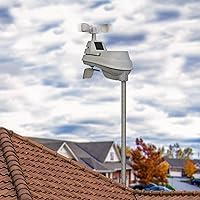
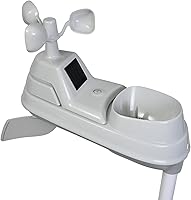
  • Sensor Type: The outdoor unit is a 5-in-1 wireless sensor measuring temperature, humidity, wind speed, wind direction, and rainfall from a single housing.
  • Wireless Range: The sensor communicates with the displays over 433 MHz at a maximum range of 330 ft (100 m), though real-world range varies by building materials.
  • Temperature Range: The outdoor sensor operates across a wide range of -40 to 158°F (-40 to 70°C), covering virtually all residential climates.
  • Temperature Accuracy: Outdoor temperature readings are accurate to within +/- 2°F under normal operating conditions.
  • Humidity Accuracy: Relative humidity accuracy is +/- 3% RH in the 20–80% range, widening slightly to +/- 5% at the extremes of 1–10% and 90–100% RH.
  • Wind Speed: Wind speed is measured from 0 to 99 mph (0 to 159 km/h) and updates every 18 seconds.
  • Wind Direction: A 16-point compass provides wind direction readings, updating every 36 seconds alongside temperature and humidity data.
  • Rain Gauge: The tipping-bucket rain gauge resolves rainfall to a minimum of 0.01 inches (0.25 mm) per measurement, with an accuracy of +/- 0.05 inches per inch of rain.
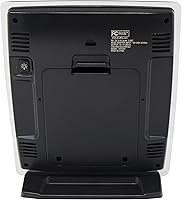
  • Displays: Two illuminated color LCD screens are included; each can stand upright on a tabletop or be wall-mounted using the included hardware.
  • Display Power: The indoor displays run on corded electric power with optional AA battery backup to maintain readings during power outages.
  • Battery Requirement: 4 AA alkaline or lithium batteries are required for the outdoor sensor; lithium batteries are recommended for use in temperatures below -4°F (-20°C).
  • Update Intervals: Wind speed refreshes every 18 seconds; wind direction, temperature, and humidity readings update every 36 seconds.
  • Forecast Engine: A self-calibrating algorithm generates localized 12-to-24-hour weather forecasts without requiring an internet connection or Wi-Fi.
  • Dimensions: The outdoor sensor unit measures 10.8″ H x 5.6″ W x 13.8″ D and ships with mounting hardware for post or surface installation.
  • Connectivity: The system uses 433 MHz radio frequency only; there is no Wi-Fi, Bluetooth, or app connectivity of any kind.
  • Solar Power: The outdoor sensor does not include a solar panel and relies entirely on AA batteries for power.
  • Display Features: Both displays include an adjustable brightness dimmer and a scrolling Weather Ticker showing heat index, wind chill, moon phase, and comfort level.
  • Materials: The product housing is constructed from a combination of metal and plastic, balancing durability with manageable weight for outdoor mounting.
  • Item Weight: The complete package weighs approximately 2.2 lbs (1 kg), making installation and repositioning straightforward for most users.
  • Warranty: AcuRite manufactures this unit under the Chaney Instruments brand and typically covers manufacturing defects under a standard limited warranty; buyers should confirm current terms directly with AcuRite.

Related Reviews

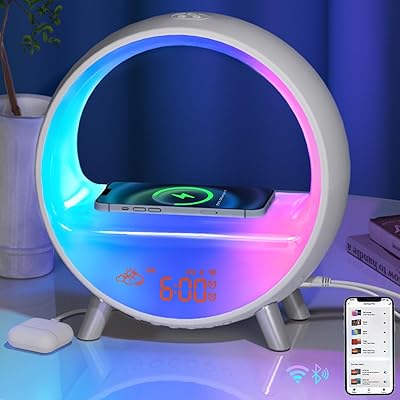
MOMILLA Smart Sunrise Alarm Clock
74%
88%
Sunrise Wake Simulation
83%
Sunset Sleep Aid
79%
White Noise Quality
72%
Wireless Charging Performance
67%
App & Smart Controls
More
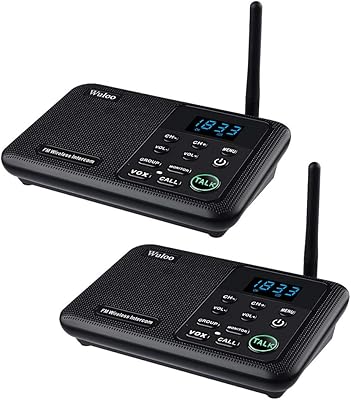
Wuloo WL888 Wireless Intercom System 2 Stations
82%
89%
Long-Range Performance
91%
Ease of Use
84%
Sound Quality
87%
Setup and Installation
82%
Build Quality
More
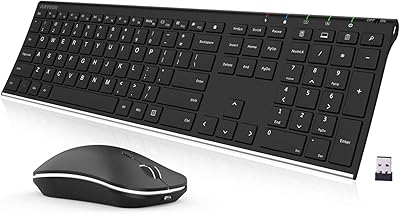
Arteck HW192 Wireless Keyboard and Mouse Combo
78%
78%
Build Quality
72%
Typing Experience
63%
Mouse Comfort & Ergonomics
81%
Battery Life
69%
Wireless Connectivity
More
RØDE Wireless GO II
RØDE Wireless GO II
84%
92%
Audio Clarity
86%
Signal Reliability
97%
Internal Backup Recording
94%
Portability & Weight
91%
Setup Speed & Ease of Use
More
3Dconnexion SpaceMouse Wireless Bluetooth 3D Mouse
81%
91%
3D Navigation Performance
74%
Bluetooth Connectivity
83%
Battery Life
62%
Ease of Setup
71%
Value for Money
More
Logitech Wireless Touchpad
84%
80%
Performance
85%
Ease of Use
88%
Wireless Connectivity
83%
Build Quality
82%
Ergonomics
More
Yoto Wireless Kids Bluetooth Over-Ear Headphones
80%
93%
Hearing Safety
91%
Battery Life
87%
Comfort & Fit
66%
Build Quality
88%
Bluetooth Pairing
More
Skullcandy Crusher Wireless
75%
93%
Bass Performance
84%
Battery Life
67%
Comfort & Fit
63%
Build Quality & Durability
71%
Sound Quality (Overall)
More
Philips TAT1108 Wireless Earbuds
85%
88%
Sound Quality
91%
Call Clarity
86%
Battery Life
90%
Comfort & Fit
82%
Water Resistance
More
TONEMAC H2 Wireless Headphones
84%
94%
Battery Life
88%
Sound Quality
76%
Comfort
85%
Ease of Use
80%
Build Quality
More

FAQ

No, it does not. The AcuRite Iris 01078 Wireless Weather Station is a fully standalone device with no Wi-Fi, Bluetooth, or app support. All data is displayed locally on the two included screens. If remote access or smartphone integration is a priority for you, you would need to look at a Wi-Fi-enabled model instead.
The rated wireless range is up to 330 feet in open air, but that figure assumes minimal obstructions. In practice, thick concrete walls, brick construction, or metal framing can reduce effective range considerably. Most users in standard wood-frame homes find placement within 100 to 150 feet works reliably, but it is worth testing a few locations before committing to a permanent mount.

Batteries are not included. The outdoor sensor requires 4 AA batteries, and AcuRite recommends lithium batteries if you live somewhere that gets below -4°F in winter, since alkaline cells lose capacity in extreme cold. The indoor displays run on corded power, though they also accept AA batteries as a backup during outages.

The unit ships with two displays, and it is not designed to add a third screen. The two included displays cover two rooms out of the box, which satisfies most households, but if you need coverage in a third location you would likely need a different system or a second standalone unit.

The rain gauge measures down to 0.01 inches of rainfall and is accurate to within 0.05 inches per inch of rain, which is quite precise for a home unit. Like all tipping-bucket gauges, it can become less accurate if debris like leaves, dirt, or spider webs collect inside the funnel. A quick rinse and inspection a few times a year keeps it reading correctly.

Placement matters more than most people expect. You want the sensor away from paved surfaces, air conditioning vents, and direct south-facing walls that absorb heat, as all of these create artificial temperature spikes. A shaded spot with good airflow, ideally on a post or fence at least 5 feet off the ground, gives you the most representative readings for your yard.

The indoor displays switch to AA battery backup automatically, so your readings stay visible during an outage. A small number of users have reported that the displays occasionally lose sync with the outdoor sensor after power is restored and need a manual reset to reconnect, so keep that in mind if you live somewhere with frequent interruptions.

Yes, the sensor is built for permanent outdoor installation across a wide temperature range from -40 to 158°F. It handles rain, humidity, and typical seasonal exposure well. That said, positioning it under a slight overhang or eave can extend its lifespan by reducing direct UV and heavy rain exposure on the housing over years of use.

Unfortunately, no. The unit displays real-time readings and tracks daily highs and lows, but there is no internal memory, SD card slot, or data export capability. Once a reading scrolls past, it is gone. If you want to build a historical weather record or analyze trends over time, you would need a Wi-Fi station that can upload to a data-logging service.

Most buyers describe setup as quite manageable, even without technical experience. The displays pair with the outdoor sensor through a straightforward channel-matching process described in the manual, and mounting hardware is included. The trickiest part tends to be deciding where to place the outdoor sensor for accurate readings rather than anything mechanical. No special tools are required beyond a basic screwdriver for mounting.