Overview

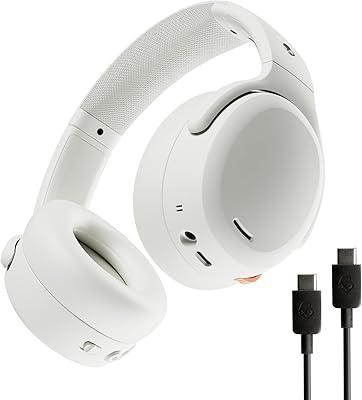
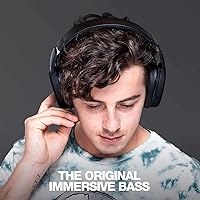
The Skullcandy Crusher Wireless has been around since 2016, and the fact that it still sells consistently says something real about what it gets right. This isn't a headphone built for audiophiles chasing flat frequency response — it's built around a feeling. The defining feature is an adjustable bass slider that physically vibrates the ear cups, turning low-end frequencies into something you sense rather than just hear. It folds flat, comes with a carrying case, and handles daily life without much fuss. Just go in knowing it's tuned for fun and immersion, not clinical accuracy.

Features & Benefits

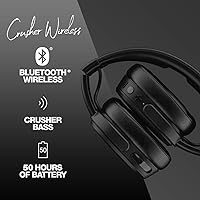
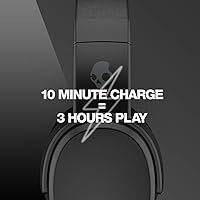
The hardware setup is unusual — beyond standard 40mm drivers, two additional bass drivers create the haptic vibration effect. Battery life is legitimately impressive: up to 50 hours with the bass slider off, though expect closer to 40 in real-world use with it engaged. A rapid charge feature gets you roughly 7 hours from just 10 minutes of charging, which is genuinely useful when you forget to plug in overnight. Charging is via USB-C, a wired AUX fallback is included, and these Skullcandy headphones fold into a fabric carrying case. Built-in Tile tracking is a thoughtful addition for anyone who misplaces gear regularly.

Best For

This bass-vibrating headset is an easy pick for anyone who listens to hip-hop, EDM, or action-heavy movies and wants the low end to physically land. Long battery life and a foldable form factor make it practical for commuters and frequent travelers. Casual listeners who want solid wireless performance without spending flagship money will find it hits a comfortable sweet spot. Gamers chasing thumping bass without an external amp will appreciate the intensity. That said, it's not ideal for gym regulars needing real sweat resistance, and if active noise cancellation is on your must-have list, the Crusher Wireless isn't the answer.

User Feedback

Owners consistently praise the bass intensity — the slider feels novel and most people enjoy dialing it to taste. On the downside, extended listening sessions expose comfort issues: the faux leather cushions trap heat and pressure builds noticeably past the two-hour mark. Bluetooth holds up within roughly 10 meters but struggles through walls. Several buyers flag hinge and headband durability as a concern with heavy daily use over months. The microphone handles phone calls acceptably but falls short for streaming or recording. Overall sentiment leans positive among bass-focused listeners, with frustration concentrated among those who expected active noise cancellation or audiophile-grade balance.

Pros

  • The adjustable bass slider physically vibrates the ear cups — a genuinely distinctive feature at this price.
  • Battery life is exceptional for casual listeners, lasting multiple days between charges with the bass slider at moderate levels.
  • Rapid charge recovers roughly 7 hours of playback from just 10 minutes plugged in.
  • USB-C charging means one less proprietary cable to track down.
  • The Crusher Wireless folds flat and includes a carrying case, making it genuinely travel-friendly.
  • Built-in Tile tracking is a useful safety net for anyone who regularly misplaces their gear.
  • Physical button controls are tactile and easy to use one-handed without looking.
  • A backup 3.5mm AUX cable is included, so wired fallback is always available.
  • Proven model with years of real-world owner feedback — no surprise first-generation issues.

Cons

  • Running the bass slider at high intensity drains battery significantly faster than the advertised maximum.
  • Faux leather ear cups trap heat and cause pressure discomfort during sessions longer than two hours.
  • Bluetooth 4.1 is aging — range drops noticeably through walls and competing devices.
  • Hinge and headband connection points show durability wear after several months of heavy daily use.
  • No active noise cancellation, which rivals now commonly offer at this price tier.
  • Microphone quality is too poor for video calls or any content where audio clarity matters.
  • No companion app means EQ customization is limited entirely to the physical bass slider.
  • At 9.7 ounces, these Skullcandy headphones feel noticeably heavy during longer outdoor or travel use.
  • The included carrying case is fabric, offering minimal protection if the headphones end up under heavier bag contents.

Ratings

The scores below for the Skullcandy Crusher Wireless were generated by our AI system after analyzing thousands of verified buyer reviews from global markets, with spam, bot activity, and incentivized feedback actively filtered out. Each category reflects the honest distribution of real user sentiment — strengths and frustrations weighted equally. Where opinions split sharply, the score lands in the middle, not the optimistic end.

Bass Performance
93%
The haptic bass slider is the single most praised feature across all user feedback. Listeners who play hip-hop, trap, or watch action films describe the low-end vibration as genuinely immersive — something closer to a subwoofer experience than a typical headphone. At mid-slider settings, the effect is rich without being overwhelming.
At maximum slider intensity, some users report listening fatigue within 30 to 45 minutes, describing the vibration as physically tiring on extended sessions. Those accustomed to balanced or reference-tuned headphones often find the bass dominance muddies mids and vocals noticeably.
Battery Life
84%
With the bass slider off or at low settings, real-world battery life is exceptional for the price tier — most commuters report going several days between charges without anxiety. The rapid-charge feature is a genuine convenience, recovering hours of playback from a short plug-in during a morning routine.
Running the bass slider at high intensity cuts battery life meaningfully, and the 50-hour headline figure only applies when the slider is fully disengaged. Several users were caught off guard by this, expecting full battery performance regardless of bass settings.
Comfort & Fit
67%
33%
Out of the box, the faux leather cushions feel soft and the clamping force is moderate enough for most head sizes. Casual listeners using these for an hour or two during a commute or work session generally report no complaints about fit or pressure.
Past the two-hour mark, heat buildup under the ear cups becomes a recurring complaint — particularly in warmer environments or during exercise. A subset of users also reports gradual pressure soreness at the headband contact point during longer listening sessions.
Build Quality & Durability
63%
37%
The overall construction feels solid at first handling — the plastic is thick enough, the hinges click satisfyingly, and the headband has a reasonable amount of flex. For casual daily use within the first year, most buyers have no complaints about structural integrity.
Durability concerns surface consistently in longer-term reviews. The hinge mechanism and headband connection points are the most cited failure areas after six to twelve months of daily use. It holds up for casual users but may not withstand heavy-handed or rough daily handling over time.
Sound Quality (Overall)
71%
29%
For listeners who enjoy a V-shaped or bass-forward sound signature, the Crusher Wireless delivers an entertaining and engaging listen. With the slider at moderate levels, the soundstage feels wide enough for casual music and movie watching, and the 40mm drivers handle mids and highs adequately.
Audiophiles and anyone coming from flat-response or studio-tuned headphones will find the audio profile too colored for critical listening. Vocals can feel recessed, and the high frequencies lack the detail and air that more neutral competitors offer at a similar price point.
Wireless Connectivity
76%
24%
Day-to-day Bluetooth pairing is fast and reliable for most users. Connecting to a phone within the same room or across a typical open-plan office space produces stable, uninterrupted audio with no significant latency for music or video content.
The Bluetooth 4.1 spec shows its age when walls or obstacles are introduced — practical range drops noticeably below the stated 10 meters in real home environments. Users who move between rooms while listening report occasional dropouts that more modern Bluetooth implementations handle better.
Microphone Quality
54%
46%
The inline microphone is functional for phone calls and brief voice messages. Callers on the other end report that voice comes through intelligibly in quiet environments, making it workable for occasional calls during a commute or at a desk.
Background noise handling is poor, and any wind or ambient sound easily bleeds into the microphone signal. For video calls, remote meetings, or any content creation use, the mic quality falls well short — it is strictly a basic call mic, nothing more.
Portability & Travel Design
82%
18%
The flat-fold mechanism is well-executed and reduces the headphone footprint significantly for bag storage. The included fabric case offers genuine protection for everyday carry, and the overall package is compact enough to drop into a backpack without much planning.
The case is fabric rather than hard-shell, so it offers limited protection against being crushed under heavier items in a packed bag. At 9.7 ounces, these Skullcandy headphones are not the lightest option for all-day travel, and some users find the weight noticeable on longer journeys.
Value for Money
79%
21%
Within its niche — bass-heavy wireless headphones for everyday casual listening — the Crusher Wireless offers a distinctive experience that genuinely costs more to replicate with separate gear. The haptic bass feature alone differentiates it from generic competitors at the same price tier.
Buyers expecting all-around performance comparable to more balanced competitors at similar prices may feel the trade-offs are too steep. The lack of active noise cancellation and aging Bluetooth version are features rivals now include at this price bracket, which affects perceived value for some shoppers.
Controls & Usability
78%
22%
Physical button controls are tactile and easy to operate without looking, which matters on a commute or during a run. Volume, track skip, and call management all work reliably, and the button placement is intuitive enough to learn within a day or two of use.
There is no companion app beyond Tile integration, meaning EQ adjustments are limited to the physical bass slider only. Users who want granular sound customization or firmware updates will find the control ecosystem notably basic compared to more connected competitors.
Noise Isolation
66%
34%
Passive isolation from the over-ear faux leather cushions does a reasonable job of dampening moderate ambient noise — office chatter, public transit hum, and background coffee shop noise are reduced enough to focus on music without cranking the volume.
There is no active noise cancellation, so louder environments like airplane cabins or busy city streets bleed through noticeably. Users who travel frequently or work in loud spaces will find the passive isolation insufficient and may need to compensate with higher volume levels.
Charging & Power Convenience
86%
USB-C charging is a practical inclusion that means one less proprietary cable to manage. The rapid-charge feature earns repeated mentions in positive reviews from users who rely on quick top-ups before heading out — 10 minutes recovering several hours of listening is genuinely appreciated.
The charging time from flat to full sits around 3 hours, which is not unusually long but worth noting for heavy users. There is no wireless charging option, which is increasingly expected at this price point from competing headphone brands.
Tile Integration
72%
28%
The built-in Tile tracking is a niche but legitimate benefit for anyone who regularly misplaces gear around the house or travels with multiple bags. Users who already use Tile for keys or wallets find the integration straightforward and genuinely useful as a last-resort locator.
Tile functionality requires app registration and relies on the broader Tile network, which is thinner than Bluetooth tracking alternatives in many regions. For users not already in the Tile ecosystem, setup adds friction, and the feature feels redundant next to native phone-based Bluetooth finding tools.

Suitable for:

The Skullcandy Crusher Wireless was built for a specific kind of listener, and if you fit that profile, it delivers in ways most headphones at this price simply cannot. If you gravitate toward bass-heavy genres — hip-hop, trap, EDM, or hard rock — and you want to physically feel the low end rather than just hear it, the haptic slider is a genuinely unique experience worth trying. Commuters and daily travelers will appreciate the foldable design, included carrying case, and a battery that comfortably outlasts most multi-day trips without needing a charge. Casual gamers who want rumbling, cinematic bass without investing in a surround-sound setup will find this headset punches well above what the price suggests. It also suits anyone who tends to misplace gear, since the built-in Tile integration is a practical safety net. If your listening sessions are typically under two hours and you are not chasing studio-grade accuracy, these headphones hit a sweet spot of fun, convenience, and affordability.

Not suitable for:

If flat frequency response, vocal clarity, or detailed instrument separation matter to you, the Skullcandy Crusher Wireless is not the right tool — it is tuned for impact and immersion, and the bass-forward profile colors everything it plays. Buyers who need active noise cancellation for airplane travel, open offices, or loud urban commutes should look elsewhere, as the passive isolation here is only adequate for moderate ambient noise. Gym users and outdoor runners will also want to reconsider: there is no meaningful sweat or water resistance rating beyond basic splash tolerance, and this is not a headphone you want soaked. Anyone planning to use the microphone for video calls, podcasting, or streaming will be disappointed — the inline mic handles voice calls adequately but little beyond that. Long listening sessions of three or more hours are also where comfort complaints cluster, so if you wear headphones for extended work or study blocks, the faux leather ear cups may become noticeably uncomfortable. Finally, if you want a headset with a modern Bluetooth stack, multi-device pairing, or a companion app for EQ control, the hardware and software ecosystem here will feel dated.

Specifications

  • Driver Config: Dual 40mm full-range dynamic drivers paired with two additional dedicated bass haptic drivers for physical low-end vibration.
  • Frequency Response: Covers 20 Hz to 20 kHz, spanning the full range of human hearing with emphasis on sub-bass reproduction.
  • Impedance: Rated at 32 Ohm, making these headphones easy to drive directly from a smartphone or tablet without an external amplifier.
  • Battery Life: Up to 50 hours of playback with the bass slider off; real-world use with bass engaged typically yields closer to 40 hours.
  • Rapid Charge: A 10-minute charge via USB-C delivers approximately 7 hours of additional playback, useful for quick top-ups before travel.
  • Charging Port: USB-C charging port is used for power input, with a full charge from empty taking approximately 3 hours.
  • Bluetooth Version: Bluetooth 4.1 is used for wireless audio transmission, with a practical range of approximately 10 meters in open environments.
  • Wired Fallback: A 3.5mm AUX input accepts the included backup cable for wired listening when Bluetooth is unavailable or battery is depleted.
  • Ear Cup Style: Over-ear design with faux leather cushioned ear cups and a padded headband for passive noise isolation and extended wear comfort.
  • Weight: The headphones weigh 9.7 ounces, which is moderate for an over-ear wireless headphone in this category.
  • Dimensions: Overall product dimensions measure 7 x 6.88 x 3.54 inches when unfolded, folding down significantly smaller for storage.
  • Carrying Case: A fabric carrying case is included in the box, providing basic scratch and impact protection during travel or daily carry.
  • Microphone: A built-in inline microphone supports hands-free calling and basic voice interaction with compatible smartphones and devices.
  • Controls: Physical button controls on the ear cup handle volume adjustment, track skip, track repeat, and call answer or rejection.
  • Tile Tracking: Built-in Tile location technology is embedded in the headphones and can be activated by registering the product in the Tile smartphone app.
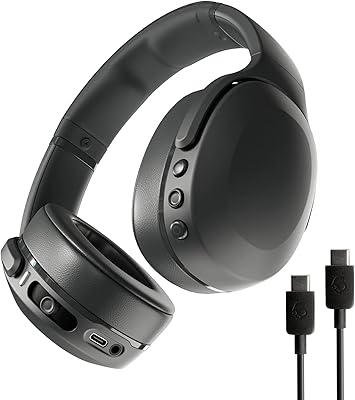
  • Included Items: Box contents include the headphones, a fabric carrying case, a USB-C charging cable, a backup 3.5mm AUX cable, and a quick-start guide.
  • Materials: Headphone construction uses a combination of plastic, faux leather for the ear cushions, and silicone for accent and padding components.
  • Warranty: Skullcandy includes a 1-year limited warranty covering manufacturing defects for purchases made within the USA.
  • Compatibility: Works with any Bluetooth-enabled device including iOS and Android smartphones, tablets, laptops, and gaming consoles with Bluetooth support.
  • Water Resistance: Listed as waterproof in product specs, though real-world protection is limited to basic splash resistance and not suitable for immersion or heavy sweat exposure.

Related Reviews
Skullcandy Crusher Evo Wireless Headphones
86%
89%
Sound Quality
93%
Bass Performance
91%
Battery Life
72%
Comfort for Extended Use
85%
Build Quality
More
Skullcandy Crusher ANC 2 Wireless Headphones
87%
89%
Sound Quality
92%
Bass Performance
88%
Noise Cancellation
94%
Battery Life
85%
Build Quality
More
Skullcandy Grind Wireless Earbuds
85%
92%
Battery Life
85%
Sound Quality
87%
Build Quality & Durability
70%
Comfort & Fit
90%
Water Resistance
More
Skullcandy Mod Wireless Earbuds
85%
87%
Sound Quality
91%
Battery Life
83%
Build Quality
80%
Comfort & Fit
75%
Connectivity & Pairing
More
Skullcandy Smokin’ Buds Wireless Earbuds
84%
88%
Sound Quality
91%
Battery Life
85%
Comfort & Fit
89%
Ease of Use
72%
Connectivity
More
Skullcandy Riff Wireless
77%
74%
Sound Quality
88%
Battery Life
91%
Quick Charge
83%
Comfort & Fit
69%
Build Quality
More
Skullcandy Terrain Portable Bluetooth Speaker
77%
88%
Waterproofing Reliability
79%
Bass & Low-End Performance
67%
Overall Volume & Loudness
83%
Battery Life
91%
Portability & Form Factor
More
Skullcandy Icon Wireless On-Ear Headphones
83%
88%
Value for Money
85%
Sound Quality
91%
Battery Life
67%
Comfort & Fit
93%
Portability
More
Skullcandy PLYR Wireless Gaming Headset
85%
88%
Audio Quality
91%
Battery Life
85%
Comfort During Long Sessions
93%
Wireless Connectivity
80%
Build Quality
More
Skullcandy Dime Evo Wireless Earbuds
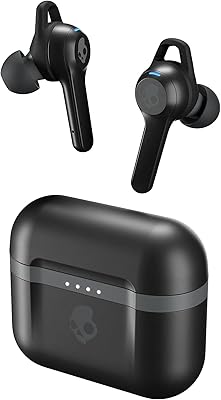
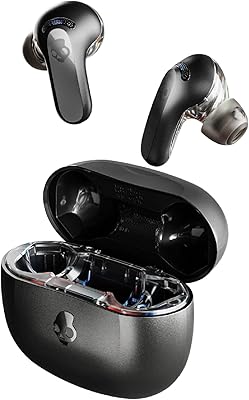
85%
88%
Sound Quality
94%
Battery Life
84%
Fit and Comfort
90%
Water Resistance
82%
Ease of Use
More

FAQ

It genuinely vibrates. The Skullcandy Crusher Wireless has dedicated haptic bass drivers inside the ear cups that physically pulse with the low-end frequencies in your music. You can dial the intensity using a slider on the ear cup — turn it down and it sounds like a normal headphone, crank it up and you will feel the bass as much as hear it. Whether you love it or find it fatiguing depends entirely on your personal preference.

That depends heavily on the bass slider setting. The 50-hour figure is accurate only when the bass slider is completely off or at minimum. With the slider at a moderate to high setting — which is how most people use these — expect somewhere in the range of 35 to 42 hours. Still very solid for daily use, just do not assume you will hit the headline number in normal listening conditions.

Yes, a 3.5mm AUX cable is included in the box specifically for this scenario. Plug it into the 3.5mm jack on the ear cup and the headphones work passively without any battery required. Keep in mind the bass haptic feature does not function in wired mode — that requires power.

For sessions under two hours, most people find them comfortable enough. Beyond that, the faux leather ear cups start to trap heat and the clamping pressure becomes more noticeable, particularly at the headband contact point. If you regularly wear headphones for three or more hours at a stretch, comfort may become an issue and you might want to factor that into your decision.

In an open room with no obstacles, 10 meters is about right. The connection stays stable in typical home or office use as long as your phone and the headset are in the same room. Move into a separate room through a wall or two and you may start getting dropouts. The Bluetooth 4.1 spec is older than what newer models use, and it shows in environments with a lot of wireless interference.

It is fine for a phone call where clarity expectations are modest, but it struggles in anything more demanding. Background noise bleeds in easily, and on video calls the audio quality is noticeably below dedicated headset microphones. If you regularly take important meetings or do any recording, the mic on this bass-vibrating headset will let you down.

They work wirelessly with any device that has Bluetooth support — so newer PlayStation and Xbox controllers with Bluetooth will pair fine, as will a PC or laptop. Older console setups that rely solely on USB or proprietary wireless dongles will not work without a Bluetooth adapter. The 3.5mm wired connection works with any standard controller headphone jack regardless.

You register the headphones in the Tile app on your phone, and from there you can ring them, see their last known location on a map, or use the broader Tile network to help locate them if lost. It works best for finding them around your home or if you left them at a location recently. If you frequently misplace gear, it is a genuinely useful feature. If you are not already in the Tile ecosystem it adds some setup, and it is less capable in areas where few Tile users are present.

With gentle to moderate daily use, most owners get through the first year without structural issues. The areas to watch are the hinge mechanism where the ear cup folds and the headband connection point — these are where wear and stress fractures tend to show up in longer-term owner reports. If you are rough with gear or use them several hours every single day, the build quality may not match your expectations past the one-year mark.

No, the Crusher Wireless does not have a dedicated sound customization app. The only adjustment available is the physical bass slider on the ear cup. If you want EQ control beyond that, you would need to use a third-party equalizer app on your phone. For most casual listeners the slider offers enough range, but those who want precise sound tuning will find the lack of app support limiting.

Where to Buy

B&H Photo-Video-Audio
In stock $98.99
Newegg.com
In stock $102.30
Dressinn.com
In stock $76.99
Back Market
In stock $88.00