Overview

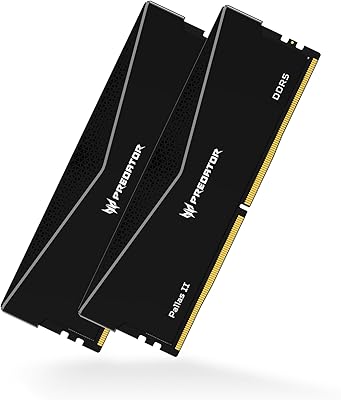
The Acer Predator Pallas II 32GB DDR5 RAM landed in October 2024, positioning itself as a mid-to-high-tier option for desktop builders who want genuine DDR5 performance without stretching to flagship territory. It ships as a 16GBx2 dual-channel kit, which is the configuration most gaming builds actually benefit from — two sticks running in tandem rather than a single module. The listed manufacturer is Biwin, an OEM supplier that produces memory for several brands; that is fairly standard industry practice and not a red flag on its own. Just be clear going in: this is a desktop-only UDIMM kit, with no laptop or server application whatsoever.
Features & Benefits

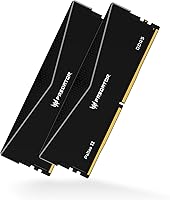
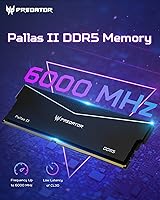
Running at 6000MHz with CL32 latency, this DDR5 memory kit hits a sweet spot that builders targeting Intel 13th/14th gen or AMD Ryzen 7000 platforms have largely settled on — fast enough to push real bandwidth gains, tight enough to stay stable without extreme voltages. DDR5's split 32-bit subchannel architecture gives it a structural bandwidth advantage over DDR4 that actually shows up in memory-hungry workloads. Intel XMP 3.0 and AMD EXPO profiles mean you enable rated speeds in BIOS with a single toggle — no manual timing work required. On-die ECC and integrated power management are DDR5 standard features, not proprietary extras. Voltage holds at 1.35V with thermals rated to 85°C, a useful margin for compact or dense builds.

Best For

This Predator Pallas II kit is a natural fit for gaming desktop builders on Intel or AMD DDR5 platforms who want rated speeds without manual timing adjustments. The one-click XMP/EXPO setup makes it particularly approachable for anyone making their first DDR5 upgrade and wary of BIOS tinkering. It also suits Ryzen 7000 builds where memory bandwidth directly impacts integrated graphics performance or high-refresh-rate gaming. Where it falls short: if you need 64GB or more from a single kit, you will need to look elsewhere. It is also not a substitute for workstation memory with validated enterprise ECC — the on-die ECC here is a consumer DDR5 standard, not professional-grade error correction.

User Feedback

With a 4.4 out of 5 rating across around 128 reviews, the Pallas II 32GB earns cautious optimism — the score is encouraging, but the sample size is still too small to draw firm conclusions. Buyers who weigh in positively tend to mention easy XMP activation, stable day-to-day operation, and clean aesthetics that hold up in a windowed case. On the critical side, a handful of users flag compatibility hiccups with certain motherboards or BIOS versions — a friction point common to DDR5 kits broadly, but worth cross-checking against your specific board before purchasing. Sitting at #89 in Computer Memory on Amazon suggests solid early traction for a product that has been available less than a year.

Pros

  • 6000MHz at CL32 is a well-regarded frequency-latency balance for both Intel and AMD DDR5 platforms.
  • XMP 3.0 and AMD EXPO support means rated speeds activate in BIOS without any manual tuning.
  • The dual-channel 16GBx2 configuration puts both sticks to work immediately in any dual-slot build.
  • 32GB total capacity comfortably handles modern gaming plus background tasks without feeling cramped.
  • Voltage sits at a conservative 1.35V, which is easy on your system and leaves headroom for stability.
  • Early buyers consistently report smooth XMP activation with minimal compatibility friction on mainstream boards.
  • The Predator Pallas II kit holds a strong 4.4-star rating, a good early signal for a product under a year old.
  • Thermal rating up to 85°C gives builders confidence in tighter cases where airflow is constrained.
  • Certified across CE, FCC, RoHS, and other major regional standards, covering most global markets.
  • Competitive pricing relative to better-known memory brands makes this a practical choice for budget-conscious enthusiasts.

Cons

  • Only 128 ratings so far — not enough data to confidently predict behavior across diverse motherboard and BIOS combinations.
  • Biwin is the actual manufacturer behind the Predator branding, which may matter to buyers who prioritize brand transparency.
  • Some users report compatibility hiccups with specific motherboards, a recurring DDR5 industry issue worth researching for your board.
  • The hand-selected IC claim is a marketing assertion with no independent verification — do not factor it heavily into your decision.
  • Desktop UDIMM only; there is no variant for laptops, small form factor workstations, or servers.
  • 32GB is the maximum single-kit capacity available, which limits scalability for memory-intensive professional workloads.
  • As a relatively new release, long-term reliability data simply does not exist yet — early adopters assume some risk.
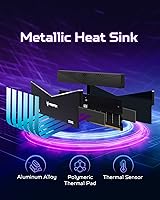
  • No mention of a heat spreader with active cooling features, which could be a concern in extremely thermal-dense builds.
  • The warranty and support experience via Acer's Predator line for memory products is less established than dedicated RAM brands.

Ratings

The scores below were generated by our AI engine after analyzing verified global user reviews for the Acer Predator Pallas II 32GB DDR5 RAM, actively filtering out incentivized, duplicate, and bot-flagged submissions to surface honest signal. With a review base still under 200 ratings, we have weighted feedback conservatively — reflecting both what buyers genuinely praise and where real friction exists. Strengths and shortcomings are represented with equal weight so you can make a fully informed call.

Ease of Setup
91%
Buyers consistently flag how painless the initial setup is — plug in both sticks, enable XMP 3.0 or EXPO in BIOS, and the kit runs at its rated 6000MHz without any further configuration. For first-time DDR5 upgraders, this one-click experience removes a significant barrier that has historically scared people away from faster memory.
A small but notable portion of users encountered boards that did not display the XMP profile automatically, requiring a manual BIOS update before the option appeared. This is more of a motherboard firmware issue than a kit flaw, but it adds an unexpected step for less experienced builders.
Stability & Reliability
86%
The majority of users report rock-solid day-to-day stability once XMP is enabled, with no unexpected crashes or blue screens during extended gaming sessions or sustained workloads. The conservative 1.35V operating voltage appears to contribute to consistent long-term behavior across most mainstream platforms.
There are scattered reports of instability on certain B650 motherboards at the full 6000MHz profile, with some users having to dial back to 5600MHz for a stable daily driver. These cases appear minority-level, but they are real and worth cross-referencing against your specific board.
Performance at Rated Speed
83%
At 6000MHz CL32, this DDR5 memory kit delivers bandwidth numbers that meaningfully benefit Ryzen 7000 builds — particularly those using integrated graphics — and provides a healthy uplift in memory-sensitive gaming scenarios compared to slower DDR5 profiles. Benchmarks from community testers place it competitively within its speed tier.
Buyers chasing the absolute best latency profile for competitive gaming will find that CL32 at 6000MHz is not the tightest available at this frequency — kits with CL30 or better do exist, though often at a higher cost. For most users the difference is marginal, but it is a real trade-off.
Motherboard Compatibility
74%
26%
On mainstream Intel Z790 and AMD X670E boards from major manufacturers, compatibility is largely trouble-free once BIOS is updated. The dual XMP 3.0 and EXPO profile support means the kit does not favor one platform over the other, which is a practical advantage for builders who are not locked into a single ecosystem.
DDR5 compatibility remains a known industry-wide challenge, and this kit is not immune — some users on budget B650 boards report the system defaulting to JEDEC speeds or refusing to post at 6000MHz without specific BIOS tweaks. Always verify your motherboard's QVL before purchasing any DDR5 kit.
Value for Money
81%
19%
Compared to flagship DDR5 kits from Corsair or G.Skill at similar speeds, the Pallas II 32GB sits at a noticeably lower price point while delivering near-equivalent real-world gaming performance. For builders who want 6000MHz DDR5 without paying a brand premium, the value proposition is genuinely strong.
The value argument weakens slightly when you factor in that the manufacturer is Biwin rather than a more recognized memory fabricator — some buyers feel the pricing should reflect a larger discount given that context. Competition in the budget-to-mid DDR5 space is fierce, and alternatives from TeamGroup or Kingston Fury are worth comparing directly.
Build & Physical Quality
77%
23%
The black aluminum heat spreader has a clean, understated look that fits well in builds without RGB theming, and the finish quality feels appropriate for the price bracket. Several buyers specifically noted the sticks look more premium in person than the product photos suggest.
The heat spreader design is functional rather than distinctive — there is no RGB lighting and the aesthetic is unlikely to impress in a showcase build. Buyers who want illuminated RAM will need to look elsewhere, as this kit makes no concessions toward visual flair.
Thermal Management
79%
21%
Running at 1.35V with a rated thermal ceiling of 85°C, the Pallas II 32GB stays cool under extended load in well-ventilated mid-tower cases. Builders putting this inside compact or dense ITX builds report no thermal throttling issues during normal gaming sessions.
Without active cooling or an elaborate heat spreader design, sustained heavy workloads in poorly ventilated cases could push temperatures higher than desirable. The kit is not designed with extreme overclocking scenarios in mind, so pushing beyond the rated XMP profile may introduce thermal headroom concerns.
XMP & EXPO Profile Accuracy
84%
Users who enable the XMP 3.0 or EXPO profile report that the kit reliably hits its advertised 6000MHz speed rather than settling for a lower fallback frequency, which is not always a given with DDR5 kits in this tier. The profile behavior is consistent across multiple BIOS revisions on tested platforms.
A handful of users on AMD platforms note that the EXPO profile took a BIOS update or two to appear correctly, which delayed their initial setup experience. This is a BIOS maturity issue as much as anything, but it has caused genuine frustration for buyers who expected immediate out-of-box rated performance.
Overclocking Headroom
63%
37%
Some enthusiast users have reported being able to tighten sub-timings slightly beyond the XMP defaults, extracting modest additional performance without voltage increases. For light manual tuners, there is a bit of room to experiment.
This is not a kit marketed toward hardcore overclocking, and the results reflect that — serious frequency pushes beyond 6000MHz are inconsistent and not reliably achievable across all units. The hand-selected IC marketing claim is difficult to verify independently, and overclocking outcomes vary enough between individual kits to temper expectations.
Packaging & Unboxing
72%
28%
The packaging is protective and practical — modules arrive securely seated in a rigid plastic tray that guards against shipping damage. Nothing about the unboxing feels cheap or afterthought-level for a gaming-branded product.
The packaging is functional but not memorable — there is no premium unboxing experience, and the box design feels generic relative to what Corsair Dominator or G.Skill Trident delivers at comparable price points. For buyers who value the ritual of a premium unbox, this one is decidedly understated.
Documentation & Support Resources
58%
42%
The included documentation covers the basic installation steps adequately for users who are already familiar with desktop builds, and Acer's Predator support page provides some online resources for common DDR5 setup questions.
Buyers who hit compatibility issues report that Acer's memory-specific support is less developed than what dedicated RAM brands like Corsair or Kingston offer — response times and troubleshooting depth have drawn criticism in early user feedback. For a brand newer to the standalone memory market, the support infrastructure has room to mature.
Brand Confidence
67%
33%
Acer Predator carries genuine gaming credibility from its monitor and laptop lines, and that brand recognition provides a level of buyer reassurance that a generic white-label kit would not. Most buyers approach the purchase with reasonable confidence based on the Predator sub-brand reputation.
The Biwin OEM manufacturing origin is a layer of transparency that some buyers feel Acer could be more upfront about, and the relatively short track record in the standalone memory segment means there is less long-term reliability data to draw on compared to established RAM specialists.
Review Maturity
61%
39%
With 128 ratings and a 4.4-star average as of early 2025, the early signal is genuinely positive and the ranking at #89 in Computer Memory on Amazon shows real commercial traction for a kit that has only been available since October 2024.
128 ratings is simply not enough to draw statistically robust conclusions about failure rates, long-term stability, or edge-case compatibility issues — one bad batch or a cluster of returns could meaningfully shift the average. Buyers should revisit the rating picture in six to twelve months for a more complete picture.

Suitable for:

The Acer Predator Pallas II 32GB DDR5 RAM is built for desktop PC builders and gamers who want a capable DDR5 kit without having to pay a premium for a marquee brand name. If you are putting together an Intel 13th or 14th gen system, or a Ryzen 7000 build where memory bandwidth directly feeds into gaming or rendering performance, this dual-channel 6000MHz kit hits the frequency sweet spot that most enthusiast platforms are optimized for. It is also a strong fit for first-time DDR5 upgraders who want rated speeds without touching manual timings — the XMP 3.0 and EXPO profiles mean you enable performance in BIOS with a single toggle. Builders working with Ryzen 7000 integrated graphics will see a particularly noticeable lift from faster memory bandwidth. If you want 32GB of DDR5 at a competitive price point with solid real-world stability reports, this kit is worth serious consideration.
Not suitable for:

The Acer Predator Pallas II 32GB DDR5 RAM is a desktop-only UDIMM kit, so laptop users and anyone building on a server or workstation platform should look elsewhere from the start. If your workflow demands 64GB or more from a single kit — video editing, 3D rendering, large virtual machines — the 32GB ceiling here will not meet your needs. Users who require professionally validated ECC memory for data-integrity-critical applications should understand that the on-die ECC in this kit is a standard DDR5 consumer spec, not a substitute for registered or fully buffered workstation memory. It is also worth noting that the review base is still relatively young and lean, which means buyers with less common motherboard or BIOS configurations carry a slightly higher risk of early compatibility friction. If you need a proven, long-track-record kit with thousands of user data points behind it, this one may benefit from another six to twelve months of real-world seasoning.

Specifications

  • Kit Capacity: This kit ships as two 16GB modules for a total of 32GB in a dual-channel configuration.
  • Memory Type: DDR5 UDIMM, designed exclusively for desktop motherboards that support DDR5 slots.
  • Speed Rating: Rated at 6000MHz (PC5-48000) under the XMP 3.0 or EXPO profile.
  • Latency Timing: The primary latency is CL32, which represents a balanced trade-off between frequency and response time on DDR5.
  • Operating Voltage: Runs at 1.35V at rated speed, staying within a conservative range for long-term component stability.
  • Subchannel Architecture: Each DDR5 module features two independent 32-bit subchannels, improving internal bandwidth efficiency compared to DDR4.
  • Overclocking Profiles: Supports both Intel XMP 3.0 and AMD EXPO, allowing one-click activation of rated speeds directly in BIOS.
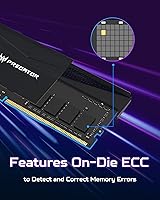
  • Error Correction: Includes on-die ECC as part of the DDR5 specification standard, providing basic in-module error detection and correction.
  • Power Management: Each module integrates a Power Management Integrated Circuit (PMIC) for more efficient and stable voltage regulation than DDR4.
  • Operating Temperature: Rated for operation between 0°C and 85°C, with a non-operating storage range of -55°C to 100°C.
  • Module Dimensions: Each stick measures 5.51 x 1.81 x 0.35 inches, a standard DDR5 DIMM profile that fits most full-size and mid-tower heatsink clearances.
  • Module Weight: The kit weighs approximately 6.9 ounces total, consistent with a standard dual-module DDR5 package.
  • Manufacturer: Produced by Biwin under the Acer Predator brand, a common OEM arrangement in the consumer memory market.
  • Certifications: Carries CE, FCC, RoHS, VCCI, RCM, and BSMI certifications, covering regulatory compliance across major global markets.
  • Form Factor: Standard unbuffered DIMM (UDIMM) form factor — not compatible with laptops, servers, or ECC-registered workstation platforms.
  • Platform Support: Compatible with Intel 600 and 700 series DDR5 motherboards and AMD X670, B650, and related Ryzen 7000 series platforms.
  • Availability Date: First listed for sale in October 2024, making it one of the more recent DDR5 kit releases in the mid-tier segment.
  • Market Ranking: Holds a Best Sellers Rank of #89 in the Computer Memory category on Amazon, reflecting moderate early commercial traction.

Related Reviews
Acer Predator Pallas II 64GB DDR5 RAM
80%
88%
Plug-and-Play Setup
91%
Stability at Rated Speed
74%
Performance Value
86%
Capacity Practicality
76%
Motherboard Compatibility
More
Acer Predator Vesta II 32GB DDR5 RAM Kit
82%
91%
Out-of-Box Performance
88%
AMD EXPO Compatibility
87%
Memory Speed & Latency Balance
83%
Thermal Management
79%
RGB Lighting Quality
More
DATO 32GB DDR5 4800MHz Desktop RAM
71%
74%
Value for Money
88%
Installation Ease
79%
System Stability
71%
Memory Speed
63%
Latency Performance
More
A-Tech 32GB DDR5 5600MHz RAM
87%
93%
Performance
91%
Ease of Installation
89%
Reliability
78%
Compatibility
94%
Gaming Performance
More
Crucial 32GB DDR5 SODIMM Laptop RAM
83%
88%
Platform Compatibility
91%
Installation Experience
71%
Real-World Performance Gains
83%
Value for Money
93%
Long-Term Reliability
More
Acclamator DDR5 32GB 4800MHz Desktop RAM Kit
75%
88%
Value for Money
91%
Installation Ease
86%
System Stability
74%
Compatibility
41%
Overclocking Headroom
More
Corsair Vengeance DDR5 32GB 7200MHz RAM
78%
93%
Rated Speed Accuracy
89%
Stability & Reliability
61%
Value for Money
91%
XMP & Overclocking Support
88%
Build Quality & Feel
More
Crucial 32GB DDR5-5600MHz SODIMM Kit (CT2K16G56C46S5)
90%
94%
Multitasking Performance
97%
Ease of Installation
92%
Value for Money
89%
Compatibility
86%
Gaming Stability
More
Corsair Vengeance SODIMM DDR5 32GB Laptop RAM
80%
93%
Installation Ease
89%
Speed Detection & XMP
84%
Real-World Performance
76%
Platform Compatibility
67%
Latency & Timings
More
OLOy Blade DDR5-6400 32GB Desktop RAM
80%
88%
Rated Speed Performance
79%
Latency & Timings
86%
Value for Money
71%
Motherboard Compatibility
83%
Overclocking Headroom
More

FAQ

It will not run at 6000MHz automatically — out of the box, DDR5 defaults to a slower JEDEC speed (typically 4800MHz). To hit the rated speed, you just need to go into your BIOS, find the XMP or EXPO option, and enable it. It is a single toggle, no manual timing adjustments needed. Most mainstream Intel and AMD motherboards handle this without any fuss.

Yes, as long as your motherboard has DDR5 slots and supports AMD EXPO profiles, this DDR5 memory kit should work well. The 6000MHz speed is actually considered a sweet spot for Ryzen 7000 platforms, where the memory controller and Infinity Fabric ratio align most efficiently. Just make sure your board's BIOS is up to date before installing.

No. This is a desktop UDIMM form factor, which is physically different from the SO-DIMM modules laptops use. It will not fit a laptop memory slot under any circumstances.

Biwin is an established OEM memory manufacturer that produces modules for a number of consumer brands — having your RAM made by an OEM is standard practice across the industry, including among well-known names. It does not automatically signal lower quality, but if IC provenance matters a great deal to you, it is worth knowing that Acer does not fabricate these in-house.

No, DDR5 and DDR4 are not cross-compatible. The physical notch position is different, and DDR5 motherboards use a different voltage and signaling standard. If your board only supports DDR4, you would need a new DDR5-capable motherboard to use this kit.

For pure gaming, 32GB is more than sufficient for virtually every title available today, and it gives you plenty of headroom for background apps, streaming, and a browser full of tabs running simultaneously. If you are also doing video editing, running virtual machines, or working with large datasets on the same machine, you might eventually want more — but for a gaming-first build, 32GB is a well-judged amount.

You would need to contact Acer Predator support to initiate a warranty claim. It is worth saving your purchase receipt and packaging. One practical tip: test each stick individually in the recommended primary DIMM slot to confirm whether the issue is with one module or a compatibility problem with your board, as that information will help support diagnose the issue faster.

Technically possible in some cases, but it is generally not recommended. Mixing RAM kits from different manufacturers and speed bins can cause instability, prevent XMP profiles from loading correctly, or force the system to run all sticks at a lower JEDEC speed. If you know you will want 64GB, it is safer to plan for a matched 64GB kit from the start.

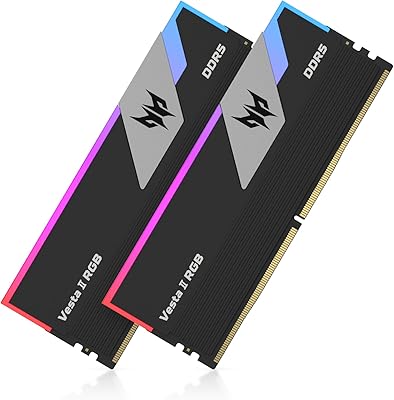
Based on the available product specifications and listing details, this kit does not appear to feature RGB lighting. It is described as a black-finish module without mention of onboard LEDs, so if visual lighting effects are important to your build aesthetic, you may want to verify this against current product images before purchasing.

They are quite different. The on-die ECC in this kit is a standard DDR5 feature built into the memory die itself — it corrects single-bit errors internally before data ever leaves the module, improving everyday stability. It is not the same as registered ECC (RDIMM) used in servers and workstations, which offers a higher level of validated error correction for mission-critical environments. For gaming and consumer desktop use, on-die ECC is a useful background reliability feature, but it is not a substitute for professional-grade ECC memory.