Overview

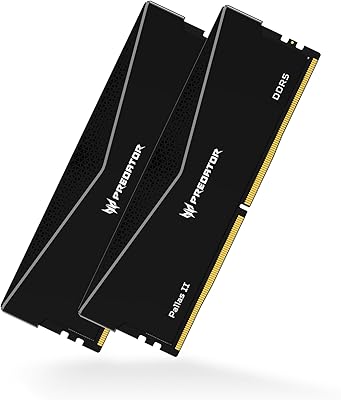
The Acer Predator Pallas II 64GB DDR5 RAM arrived in mid-2025 as one of the more ambitious high-capacity kits targeting enthusiasts building on Intel or AMD DDR5 platforms. A 2x32GB configuration immediately sets it apart from the typical 2x16GB kits dominating the DDR5 market — this is workstation-level capacity in a gaming-branded package. Acer's Predator line has built a reputation among performance PC builders over the years, and this memory upgrade carries that weight into a competitive segment. It sits firmly in the premium tier, so if budget is your primary concern, that reality is worth acknowledging before anything else.
Features & Benefits

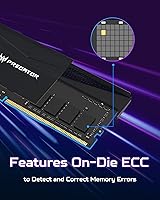
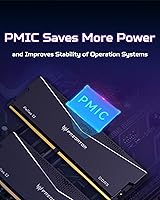
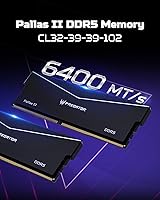
Running at 6400MHz with CL32 latency, the Pallas II 64GB hits a practical sweet spot for DDR5 — fast enough to push bandwidth-hungry applications, without the instability that can come from chasing ultra-tight timings at extreme frequencies. DDR5's dual independent 32-bit subchannels do real work here, improving parallel data throughput in tasks like video encoding and large file processing. Both Intel XMP 3.0 and AMD EXPO are supported, meaning most modern motherboards detect and apply the rated profile automatically. On-die ECC quietly corrects minor memory errors in the background, and an integrated Power Management IC keeps voltage delivery stable during sustained heavy workloads.

Best For

This DDR5 kit makes the most sense for builders on Intel Core Ultra or AMD Ryzen 7000 and 9000 series platforms who want meaningful capacity without assembling a four-DIMM setup. Content creators and streamers running multiple applications simultaneously — Premiere Pro alongside OBS, or a 3D render in the background — will appreciate having 64GB available without micromanaging memory allocation. Hardcore gamers chasing maximum frame rates will see real but not dramatic gains at this tier. Where the Pallas II 64GB truly stands out is for users prioritizing long-session stability today with genuine overclocking flexibility available down the road.

User Feedback

Across 131 ratings averaging 4.4 out of 5, this memory upgrade has landed well with most buyers. The most consistent praise centers on easy XMP detection during first boot, with stable operation at the advertised 6400MHz requiring no manual BIOS tuning. A smaller segment of users flagged occasional BIOS compatibility friction on certain older motherboard firmware versions — a known caveat with high-speed DDR5 kits broadly. Physical build quality draws few complaints; the understated black heatspreader fits most cases without clearance concerns. Some enthusiasts report modest overclocking headroom beyond rated speeds, though results vary. Critically, no widespread failures have surfaced, which at this tier is the baseline any serious buyer should expect.

Pros

  • 64GB in a two-stick configuration keeps both DIMM slots free for a clean, upgrade-friendly build.
  • Plug-and-play XMP 3.0 and AMD EXPO support means most modern boards detect the rated 6400MHz profile on first boot.
  • On-die ECC corrects minor memory errors passively — useful for long rendering sessions or heavy multitasking.
  • Hand-selected ICs from original manufacturers provide a more consistent baseline for stability than binned commodity modules.
  • The integrated PMIC handles voltage regulation internally, reducing stress on motherboard power delivery under sustained loads.
  • Most buyers report stable operation at the advertised speed with no manual BIOS intervention required.
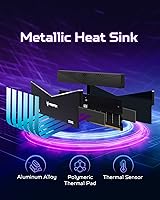
  • The understated black heatspreader fits a wide range of case aesthetics without dominating the visual theme.
  • DDR5 dual 32-bit subchannels give this DDR5 kit a bandwidth advantage in memory-intensive creative workloads.
  • A 4.4 out of 5 average across over 100 real-world ratings suggests broad satisfaction, not just early-adopter enthusiasm.
  • Operating temperature range up to 85°C and a full set of international certifications point to a well-validated product.

Cons

  • Pure gamers are unlikely to notice a real-world difference versus a well-tuned 32GB DDR5 kit at this frequency.
  • Some users on older motherboard firmware reported needing a BIOS update before XMP profiles were recognized reliably.
  • Overclocking headroom beyond rated speeds exists but is inconsistent — results vary by board and chip sample.
  • At the premium tier, value depends heavily on whether your workload actually uses the full 64GB capacity.
  • Manufactured by Biwin under the Acer Predator brand, which may give pause to buyers unfamiliar with the ODM relationship.
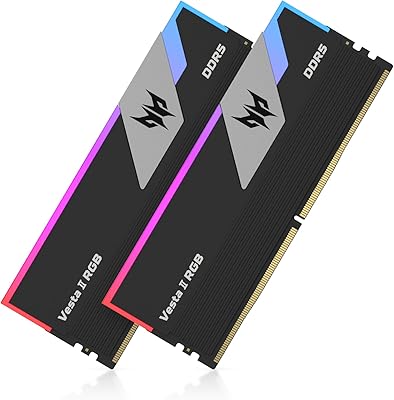
  • No RGB lighting option for those building aesthetically themed systems where memory visibility matters.
  • As a mid-2025 launch product, long-term reliability data is still accumulating compared to more established DDR5 kits.
  • Taller heatspreader design may cause clearance issues with large tower CPU coolers on smaller ATX boards.

Ratings

The Acer Predator Pallas II 64GB DDR5 RAM scores below are generated by our AI engine after analyzing verified buyer reviews from global markets, with spam, bot-submitted, and incentivized feedback actively filtered out. This DDR5 kit earns strong marks in several key areas but also shows real limitations that informed buyers should weigh carefully. Both the genuine strengths and the recurring frustrations from actual users are reflected transparently in every category.
Plug-and-Play Setup
88%
The vast majority of buyers report that enabling XMP 3.0 or AMD EXPO in the BIOS is all it takes to hit the rated 6400MHz — no manual timing adjustments needed. For enthusiasts who want performance out of the box without spending hours in BIOS menus, this DDR5 kit delivers a genuinely low-friction installation experience.
A smaller but vocal group of users encountered BIOS version-related issues where the XMP profile was not detected until firmware was updated. On a handful of older DDR5 motherboards, achieving the rated speed required manual intervention that undercuts the plug-and-play promise.
Stability at Rated Speed
91%
Once running at 6400MHz, the Pallas II 64GB holds steady through extended workloads — long video renders, overnight batch processing, and multi-hour gaming sessions have all been cited positively by buyers. The combination of hand-selected ICs and an integrated PMIC appears to contribute meaningfully to this consistency.
A small number of users reported occasional instability in memory-intensive scenarios at 6400MHz on certain AMD platforms, requiring a slight speed reduction to 6000MHz for rock-solid operation. These cases are not widespread but are worth noting for buyers on edge-case motherboard configurations.
Performance Value
74%
26%
For content creators and multi-tasking power users, the jump to 64GB at 6400MHz with DDR5 bandwidth delivers tangible gains over standard 32GB DDR5 configurations, particularly in Premiere Pro, DaVinci Resolve, and large Blender scenes where memory headroom directly affects render queue depth.
Pure gamers will struggle to justify the price premium over a well-tuned 32GB kit — real-world frame rate differences in gaming are minimal at this frequency tier. The value equation is heavily dependent on workload, and buyers who game exclusively are likely overpaying for capacity they will rarely use.
Capacity Practicality
86%
Fitting 64GB into just two DIMM slots is a genuine advantage for builders who want maximum capacity while keeping the remaining slots available or running a cleaner two-stick configuration. For workstation-adjacent use cases, having 64GB as a baseline with room to double later is a sound long-term strategy.
Most consumer applications — including modern AAA games — do not yet saturate 64GB, meaning many buyers will see this capacity go largely untapped in day-to-day use. The practical ceiling for gaming-only builds remains well below what this memory upgrade offers.
Motherboard Compatibility
76%
24%
Intel Core Ultra and AMD Ryzen 7000 and 9000 series platforms handle this DDR5 kit well in the majority of tested configurations. The dual-protocol support for both XMP 3.0 and AMD EXPO gives it broader platform reach than single-standard kits.
Higher-capacity 32GB single-rank modules can be more demanding on a motherboard's memory controller than standard 16GB sticks, and not every DDR5 board handles them equally well at 6400MHz. Some users on specific Asus and MSI boards needed BIOS beta firmware to achieve stable operation at full speed.
Overclocking Headroom
63%
37%
A subset of enthusiast buyers reports modest gains beyond 6400MHz — reaching 6600MHz or slightly beyond with relaxed secondary timings on strong Intel Ultra platforms. The IC quality provides at least some room to experiment for those willing to invest time in tuning.
Overclocking results are inconsistent enough that they should not be a purchase motivator. The kit is clearly optimized for stable rated-speed operation rather than frequency chasing, and buyers expecting significant headroom beyond the spec sheet are likely to be underwhelmed.
Build & Physical Quality
83%
The black aluminum heatspreader feels substantial without being over-engineered, and the overall fit and finish matches what buyers expect at this price tier. Multiple reviewers noted that the modules seated firmly with no flex or wobble, which inspires confidence during installation.
The lack of RGB means this kit is invisible as a visual component in a windowed build, which is a deliberate design choice but one that frustrates buyers who factor aesthetics into their premium purchase. The heatspreader height may also cause clearance tension with very large air coolers.
Thermal Management
81%
19%
DDR5 modules with on-module PMIC run warmer than DDR4 by nature, and this memory upgrade manages that heat adequately under typical desktop operating conditions. Buyers running demanding workloads over extended sessions report no thermal throttling or heat-related instability.
In tight ITX cases with limited airflow, the heatspreader alone may not be sufficient for extreme sustained loads, and active case airflow directed at the DIMMs becomes more important. This is a general DDR5 concern rather than a Pallas II-specific flaw, but it is worth planning for.
Error Correction (On-Die ECC)
85%
On-die ECC operating silently in the background is genuinely useful for anyone running long computational workloads, large data sets, or memory-intensive creative pipelines. It adds a layer of data integrity assurance that most consumer DDR4 kits never offered.
On-die ECC is not the same as full ECC memory used in server platforms and does not expose error-correcting status to the operating system in most consumer configurations. Users expecting server-grade memory reliability should understand this distinction before purchasing.
Brand Credibility
77%
23%
The Acer Predator brand carries real weight in the performance PC space, and for buyers who have had positive experiences with Predator monitors or laptops, that familiarity transfers some trust to the memory line. Warranty support runs through Acer's established consumer channels.
The Biwin ODM relationship is not prominently disclosed, and some buyers who discover this post-purchase feel the branding obscures the manufacturing origin. This does not affect actual performance but does affect perceived transparency for buyers who research the supply chain.
Documentation & Packaging
71%
29%
The retail packaging is clean and appropriate for a premium product, protecting both modules securely during shipping. Basic installation guidance is included, and XMP and EXPO setup is intuitive enough that most users do not need to consult external resources.
There is no detailed technical documentation included in the box for enthusiasts who want to understand secondary timings or safe voltage limits for overclocking. Buyers who want to push beyond rated specs are left to rely on community forums rather than official guidance.
Long-Term Reliability
72%
28%
Among buyers who have run this DDR5 kit continuously for several months, the dominant experience is stable and uneventful operation — the clearest positive indicator for memory reliability. No widespread failure patterns have emerged in the review pool to date.
As a mid-2025 product, the long-term reliability data simply does not yet exist at the scale of more established DDR5 kits with multi-year track records. Buyers making a longevity-based purchase decision are working with limited historical data.
Dual-Channel Bandwidth
87%
DDR5 dual 32-bit subchannel architecture means each physical module is effectively operating as two narrower channels internally, and at 6400MHz this translates to strong aggregate bandwidth for tasks like high-resolution video encoding or large-asset game streaming pipelines.
The bandwidth advantage is most visible in synthetic benchmarks and specific professional workloads. In everyday productivity or web browsing contexts, users are unlikely to perceive any difference compared to slower DDR5 kits running at 5600MHz.

Suitable for:

The Acer Predator Pallas II 64GB DDR5 RAM is purpose-built for builders who have outgrown entry-level DDR5 configurations and need both capacity and speed in a single dual-DIMM kit. Content creators working in video editing, 3D rendering, or large-scale photo processing will find 64GB of high-bandwidth memory genuinely useful — not just as headroom, but as active working space when multiple demanding applications run concurrently. Streamers who game and encode simultaneously, or developers running multiple virtual machines, are similarly well-served here. The XMP 3.0 and AMD EXPO support make it a natural fit for enthusiasts on Intel Core Ultra or AMD Ryzen 7000 and 9000 series platforms who want rated performance without manual tuning. Those planning to stay on their current kit for several years — and possibly explore light overclocking later — will appreciate that this DDR5 kit was built with stability and IC quality as a baseline, not an afterthought.

Not suitable for:

Buyers assembling a purely gaming-focused rig on a tight budget should think carefully before committing to the Acer Predator Pallas II 64GB DDR5 RAM, because most game engines today do not meaningfully scale beyond 32GB of system memory. If your workload sits squarely in gaming with no creative or productivity work on the side, a faster-clocked 32GB kit at a lower price point will likely deliver equivalent in-game performance. Users on older DDR4 platforms cannot use this kit at all, and those on entry-level DDR5 motherboards with limited XMP support may not see the full 6400MHz profile recognized correctly without a BIOS update. Buyers expecting extreme overclocking results beyond the rated speed should temper expectations — this memory upgrade is built for stable operation rather than chasing frequency records on the leaderboard. Finally, anyone who needs four DIMMs for a quad-channel workstation platform will find this kit architecturally incompatible with that use case.

Specifications

  • Capacity: This kit provides 64GB of total memory across two 32GB DDR5 UDIMM modules.
  • Memory Type: The modules use DDR5 UDIMM technology, compatible with desktop platforms only.
  • Speed: The kit is rated to operate at 6400MHz under the XMP 3.0 or AMD EXPO profile.
  • Latency: CL32 primary latency is specified at the rated 6400MHz frequency.
  • Voltage: Operating voltage is 1.35V, managed internally by an on-module Power Management IC.
  • Standard: The kit meets the PC5-51200 specification, reflecting its 6400MHz DDR5 classification.
  • Subchannels: Each DDR5 module features two independent 32-bit subchannels, increasing effective memory bandwidth.
  • Error Correction: On-die ECC is built into each module, passively detecting and correcting single-bit memory errors.
  • XMP Support: Intel XMP 3.0 is supported, enabling one-click speed profile activation on compatible Intel motherboards.
  • EXPO Support: AMD EXPO compatibility allows automatic 6400MHz profile loading on supported AMD DDR5 motherboards.
  • Form Factor: Standard DIMM form factor designed to fit full-size desktop ATX, mATX, and ITX DDR5 motherboards.
  • Operating Temp: Modules are rated to operate reliably between 0°C and 85°C.
  • Storage Temp: Non-operating storage temperature tolerance spans from -55°C to 100°C.
  • Manufacturer: These modules are manufactured by Biwin under the Acer Predator brand.
  • Weight: The complete kit package weighs 8.1 ounces including both modules and packaging.
  • Color: Both modules feature a black heatspreader finish with no RGB lighting.
  • Certifications: The kit carries CE, FCC, RoHS, VCCI, RCM, and BSMI regulatory certifications.
  • Package Contents: The retail package includes two 32GB DDR5 modules configured as a matched dual-channel pair.

Related Reviews
Acer Predator Pallas II DDR5 RAM 32GB (16GBx2) 6000MHz CL32
89%
92%
Performance
94%
Speed
87%
Setup and Installation
90%
Overclocking Support
91%
Compatibility with Intel Platforms
More
Acer Predator Vesta II 32GB DDR5 RAM Kit
82%
91%
Out-of-Box Performance
88%
AMD EXPO Compatibility
87%
Memory Speed & Latency Balance
83%
Thermal Management
79%
RGB Lighting Quality
More
Crucial 64GB DDR5 5600MHz SODIMM Laptop Memory Kit (CT2K32G56C46S5)
89%
94%
System Responsiveness
97%
Multitasking Capacity
91%
Installation Ease
86%
Thermal Management
78%
Value for Money
More
A-Tech 64GB DDR5 4800MHz Desktop RAM Kit
74%
83%
Value for Money
88%
Installation Ease
74%
Compatibility
91%
System Stability
78%
Performance at Rated Speed
More
Crucial 64GB DDR5 RAM 5600MHz Desktop Memory
90%
92%
Performance
88%
Installation Ease
91%
Compatibility with Intel Platforms
89%
Compatibility with AMD Platforms
90%
Multitasking Capability
More
OLOy Blade 6000 64GB DDR5 RAM Kit
82%
92%
Value for Money
89%
Setup & Installation
83%
Performance
74%
Compatibility
78%
Build Quality
More
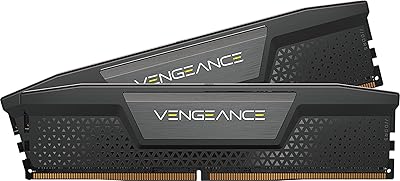
Corsair Vengeance DDR5 64GB 6000MHz Desktop RAM
83%
93%
Performance at Rated Speed
91%
XMP Setup & Ease of Use
94%
Stability & Reliability
67%
Platform Compatibility
62%
Value for Money
More
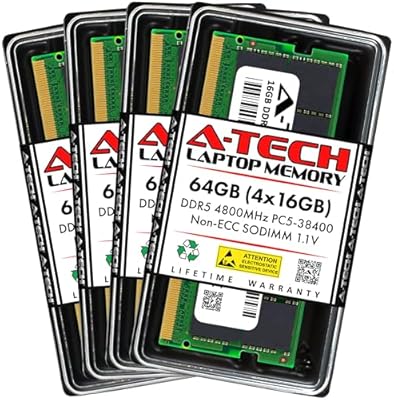
A-Tech 64GB DDR5 SODIMM Laptop RAM Kit
79%
88%
Value for Money
71%
Compatibility
91%
Installation Experience
89%
System Stability
74%
Performance at 4800MHz
More
Corsair Vengeance DDR5 64GB Desktop Memory
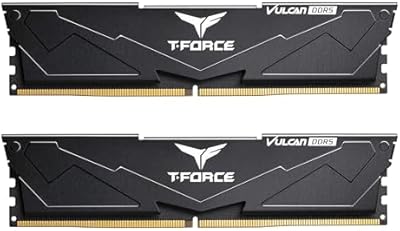
81%
93%
Stability & Reliability
88%
XMP Setup Experience
81%
Real-World Performance
67%
Value for Money
79%
Compatibility
More
Kingston Fury Beast 64GB (2x32GB) DDR5 6400MT/s RAM
88%
91%
Performance
95%
Ease of Installation
88%
Overclocking Potential
82%
RGB Aesthetics
89%
Stability During Gaming
More

FAQ

Yes, the Pallas II 64GB includes AMD EXPO support, so any EXPO-compatible motherboard should automatically detect and apply the 6400MHz profile. That said, it is always worth confirming your specific motherboard supports EXPO on its QVL list, especially with higher-capacity 32GB single-stick modules.

For most users on XMP 3.0 or EXPO-capable boards, enabling the XMP or EXPO profile in the BIOS memory settings is all that is required. The board reads the embedded profile from the module and applies the correct speed, timings, and voltage automatically. A few users have noted that a BIOS update was needed on older firmware versions before the profile was recognized correctly.

For pure gaming, 64GB is more than most titles will ever use today, so the raw capacity itself will not push frame rates higher. Where this memory upgrade makes more sense is for users who also stream, run background tasks, or do creative work alongside gaming. If gaming is your only workload, a fast 32GB kit is likely the more cost-efficient path.

Technically yes, but it is not recommended. Running a single DDR5 module bypasses dual-channel operation, which significantly reduces memory bandwidth and can hurt system performance. For best results, install both sticks from day one in the correct paired DIMM slots as specified by your motherboard manual.

Biwin is a Chinese memory and storage manufacturer that produces components for multiple branded products. They are not a household name in enthusiast circles, but this arrangement is common in the memory industry. Acer Predator's quality control and warranty service cover the final product, so the ODM relationship should not be a significant concern for most buyers.

No, it does not. The heatspreader is a clean matte black design with no RGB or addressable lighting elements. If a lit build is important to you, this kit will not contribute to that aesthetic, though it is unlikely to clash with it either.

Possibly, depending on your specific cooler and motherboard layout. The heatspreader has a moderate profile, but very large tower coolers with wide bases can sometimes overhang the first DIMM slot. It is worth checking your cooler manufacturer's clearance specifications against the module height before purchasing.

Some users have reported limited additional overclocking headroom, but results vary considerably depending on the motherboard, CPU memory controller, and specific IC sample. The kit is designed for stable operation at its rated speed rather than pushing frequency records, so treat any overclocking beyond 6400MHz as an experiment rather than a guarantee.

Intel 12th Gen Alder Lake does support DDR5 in principle, but achieving 6400MHz on that platform is significantly harder due to the memory controller limitations of those early DDR5 CPUs. This DDR5 kit is much better suited to Intel 13th Gen Raptor Lake and later, or Intel Core Ultra platforms where the memory controller handles high-frequency DDR5 more reliably.

Acer Predator memory typically carries a limited lifetime warranty, but warranty terms can vary by region, so it is worth verifying the specific coverage offered in your country at the time of purchase. Support is handled through Acer's official channels rather than the ODM manufacturer, which means you deal with the Predator brand for any replacement or troubleshooting needs.