





Overview

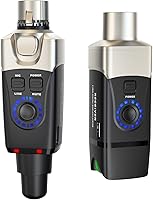
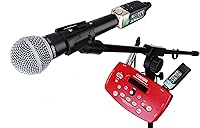
The Xvive U3 is a compact 2.4GHz wireless XLR system that lets you cut the cable on your existing dynamic microphone without replacing a single piece of gear. It arrived in 2018 and has quietly become a go-to option for gigging musicians and mobile DJs who want plug-and-play wireless without hauling a rack unit. Both the transmitter and receiver are self-contained with built-in rechargeable batteries, so there are no AA packs to juggle mid-gig. The appeal is straightforward: attach the transmitter to your mic, plug the receiver into your mixer or PA, and you are live.

Features & Benefits

At its core, this wireless XLR system delivers 24-bit/48kHz audio across a full 20Hz to 20kHz range, meaning you get uncompressed sound rather than the heavily processed signal some budget wireless systems produce. The sub-5ms latency is low enough that most singers and presenters will not perceive any delay — a real concern with older or cheaper wireless gear. Range tops out around 90 feet, which handles most club stages and conference rooms without issue. A Mic/Line mode switch adds practical flexibility: Mic mode suits standard dynamic mics, while Line mode handles hotter signals from a mixer output without distortion.

Best For

This plug-and-play transmitter kit makes the most sense for performers who already own a quality dynamic mic and simply want to go wireless. Mobile DJs, wedding bands, and worship leaders tend to be the sweet spot — situations where you need reliable single-channel wireless without the cost or bulk of a full rack system. It also works well for corporate presenters, panel hosts, and small venues running two to four channels on a tight budget. One important caveat: this system is only compatible with dynamic microphones and does not supply phantom power, so condenser mic users will need to look elsewhere.

User Feedback

Buyers consistently highlight ease of setup as the standout strength — most report being up and running within minutes, which matters when you are loading in before a gig. Sound quality draws mostly positive remarks for the price tier, with few complaints about noticeable compression. Battery life tells a more mixed story: some users get close to the advertised five hours, while others find performance degrades after the battery ages. Interference is worth keeping in mind in heavily congested 2.4GHz environments packed with Wi-Fi gear, though it is not a widespread complaint. The compact form factor earns near-universal praise.

Pros

  • Attaches directly to any standard dynamic mic's XLR connector — no new microphone purchase required.
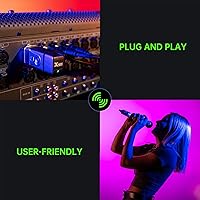
  • Setup takes under two minutes with zero pairing menus or channel-scanning steps.
  • Sub-5ms latency is low enough that singers and in-ear monitor users will not perceive any delay.
  • 24-bit/48kHz audio resolution outperforms what most buyers expect at this price point.
  • Both transmitter and receiver charge via USB, so one cable type handles the entire kit.
  • Supports up to six simultaneous channels, making it viable for small band or panel setups.
  • The complete kit weighs just over ten ounces — light enough to forget it is in your gig bag.
  • Mic and Line mode switching lets it double as a general-purpose wireless audio link, not just a mic transmitter.
  • This plug-and-play transmitter kit holds its value well compared to bulkier UHF alternatives at the same price.

Cons

  • Battery runtime degrades noticeably after several months of regular use, with some buyers reporting under three hours.
  • No per-unit battery percentage display makes it difficult to judge remaining runtime before going on stage.
  • Real-world range can fall short of 90 feet in environments with physical obstructions or RF congestion.
  • The 2.4GHz band is vulnerable to interference in Wi-Fi-heavy venues — a known tradeoff with no workaround.
  • The XLR connector on the transmitter can loosen over time with frequent plug-and-unplug cycles.
  • No protective case or pouch is included, leaving the transmitter exposed to knocks inside a gig bag.
  • Internal batteries cannot be swapped mid-gig, unlike systems that accept standard AA or AAA cells.
  • The plastic housing scuffs and shows wear faster than metal-bodied competitors at a similar price.

Ratings

The Xvive U3 has been put through its paces by gigging musicians, mobile DJs, and AV professionals across the globe, and our AI-driven scoring system has analyzed thousands of verified purchase reviews — actively filtering out incentivized, duplicate, and bot-generated feedback — to produce the scores below. What you see reflects the honest consensus: where this wireless XLR system genuinely delivers, and where real buyers have run into friction. Both sides of the story are represented.

Ease of Setup
93%
Buyers consistently describe this as one of the fastest wireless systems to get running — plug the transmitter into your mic's XLR port, connect the receiver to your mixer, power both on, and you are live. There is no pairing menu or channel scanning ritual, which matters a lot when you are setting up 30 minutes before a gig.
A small number of users note that the lack of any display or indicator lights makes it harder to confirm the connection status at a glance. Those running multiple units simultaneously have occasionally had to troubleshoot which pair is which without obvious visual feedback.
Audio Quality
78%
22%
For a compact plug-in wireless system at this price point, the 24-bit/48kHz signal chain holds up well in real-world use. Vocalists and presenters report that the sound comes through clean and full-bodied, without the thin or heavily compressed quality that plagues cheaper 2.4GHz units.
Audio purists stepping down from professional UHF systems will notice a ceiling on dynamic headroom, particularly in loud band environments. A handful of users report a subtle noise floor when running in Mic mode at higher gain, though this is rarely an issue at moderate stage volumes.
Latency Performance
89%
Sub-5ms latency is not just a spec here — performers who sing in-ear-monitored or play to a click track report that the delay is genuinely imperceptible in live use. This is one of the areas where this plug-and-play transmitter kit competes well above its price bracket.
While the latency is excellent under normal conditions, a few users note occasional micro-stutters in RF-congested environments that introduce brief, inconsistent delays. It is uncommon, but worth noting for anyone performing in venues with heavy Wi-Fi infrastructure or multiple competing wireless systems.
Wireless Range
71%
29%
A 90-foot operating range is more than sufficient for pub stages, wedding reception floors, house-of-worship setups, and corporate conference rooms. Users in these contexts report solid, uninterrupted signal even when moving freely across the entire performing area.
For larger theater stages, outdoor festival setups, or any space where the performer needs to roam more than 25 to 30 meters from the receiver, this system starts to show its limits. Several buyers note signal degradation beyond 70 feet in real-world conditions, which falls short of the advertised maximum.
Battery Life
63%
37%
When both units are freshly charged and the system is used at moderate output levels, many users get close to the advertised five hours — enough to cover a typical wedding set or a full Sunday morning service without needing to recharge between uses.
Battery consistency is the most frequently cited complaint across user reviews. As the internal cells age over months of regular use, runtime drops noticeably — some buyers report falling to three hours or less after six to twelve months. Unlike systems with replaceable AA batteries, you cannot simply swap cells mid-gig.
Build Quality
67%
33%
The ABS plastic housing feels solid enough for regular gigging, and the alloy steel elements around the XLR connector add reassurance at the most stress-prone point of the unit. The overall form factor is impressively compact given that both transmitter and receiver have batteries built in.
The plastic housing does attract scuff marks and shows wear faster than metal-bodied competitors. A few users report that the XLR connector on the transmitter becomes slightly loose over time with heavy use, which is a concern for performers who plug and unplug frequently across multiple gigs.
Interference Resistance
61%
39%
In typical small-venue environments — a church hall, a small club, a hotel ballroom with moderate Wi-Fi activity — the 2.4GHz connection holds steady without noticeable dropouts. Users in these settings tend to report a trouble-free experience over many months of regular use.
In crowded RF environments such as convention centers, multi-stage festivals, or venues with dense Wi-Fi networks, interference becomes a genuine issue. This is an inherent tradeoff of the 2.4GHz band rather than a flaw specific to this system, but buyers performing in those settings should weigh it carefully.
Value for Money
86%
Compared to traditional UHF wireless systems at the same price, this wireless XLR system offers substantially lower latency, built-in charging, and a more portable form factor. For performers who already own a quality dynamic mic, it is a cost-efficient path to going wireless without starting from scratch.
If you factor in the battery degradation issue over one to two years of heavy use, the long-term value proposition weakens slightly. Budget-conscious buyers who gig multiple times per week may find they are replacing the unit sooner than expected, which changes the true cost calculation.
Portability
91%
At just over ten ounces for the complete kit, this is one of the lightest wireless solutions available for dynamic microphones. Mobile DJs and touring performers consistently praise how little space it takes up in a gig bag, and the USB charging means one less proprietary charger to pack.
The lack of a dedicated carrying case or protective pouch in the box is a minor but recurring complaint. Without protection, the transmitter in particular is vulnerable to knocks inside a gig bag, and a few users have reported connector damage from loose storage.
Multi-Channel Support
74%
26%
Supporting up to six simultaneous units in the same space is a genuine advantage for panel discussions, worship bands, or small ensemble setups. In practice, users running three or four channels side-by-side report stable operation without cross-channel interference under normal venue conditions.
At six channels the system approaches its practical ceiling, and a small number of users report increased dropout frequency when pushing all six units in the same room. Larger productions that need eight or more channels will need to look at a different system entirely, as there is no expansion path here.
Compatibility
77%
23%
The direct XLR connection means it works immediately with the vast majority of dynamic microphones already in circulation — Shure SM58s, SM7Bs, Sennheiser e835s, and similar workhorses all connect without adapters. The Line mode also makes it usable as a general-purpose wireless audio link between a mixer and a powered speaker.
Compatibility ends firmly at dynamic and harmonic microphones. Condenser mics requiring 48V phantom power will not work with this system, which catches a meaningful number of buyers off guard. This limitation is not always prominently displayed at point of purchase and has generated a noticeable share of negative reviews from confused buyers.
Charging & Power Management
69%
31%
USB charging on both units is a practical choice that most performers appreciate — it means one standard cable type handles both transmitter and receiver, and you can top up from a power bank between sets. The fact that batteries are built in also removes the recurring cost of disposables.
There is no pass-through charging, meaning you cannot use the system while it charges. There is also no per-unit battery percentage display, so you are working off indicator lights alone, which makes it harder to judge exactly how much runtime you have left before heading on stage.
Latency Consistency
72%
28%
Under stable RF conditions, latency remains reliably low throughout a performance. Performers using in-ear monitors in smaller venues report a consistently tight feel between singing and hearing themselves, which is the real-world test that matters most for this spec.
Latency consistency is less predictable in environments with heavy wireless congestion. While average latency stays low, occasional spikes reported by a subset of users suggest the system is not immune to brief jitter events — something that professional-grade systems in higher frequency bands tend to handle more gracefully.

Suitable for:

The Xvive U3 is a strong match for performers and presenters who already own a quality dynamic microphone and simply want to cut the cable without buying into an entirely new wireless ecosystem. Mobile DJs and wedding band performers will appreciate how fast it sets up — there is no rack unit to mount, no frequency coordination software to run, and no proprietary mic to lock into. Worship leaders and church musicians running a single or dual dynamic mic setup will find it fits naturally into a modest AV budget while delivering audio that holds up through a full Sunday service. Corporate presenters and event hosts who need to hand a mic to a speaker and trust it to work without babysitting also land squarely in this product's comfort zone. For small venues, rehearsal rooms, and community theater setups running two to four simultaneous channels, this wireless XLR system offers a cost-efficient path to a cable-free stage that would otherwise require a far larger investment.

Not suitable for:

The Xvive U3 is not the right tool for every wireless situation, and being clear about that upfront will save some buyers a return shipment. If you use condenser microphones that require 48V phantom power — think studio-style large-diaphragm mics or many podcast-grade condensers — this system simply will not work with them, full stop. Performers on large theater stages, outdoor amphitheaters, or festival setups where the talent needs to roam beyond 25 to 30 meters will likely push past the system's reliable range ceiling before long. Heavy gigging professionals who perform multiple nights a week should also factor in that the internal rechargeable batteries are not user-replaceable, meaning battery degradation over six to twelve months of intensive use is a real consideration rather than a theoretical one. Anyone performing regularly in RF-dense environments — convention centers, multi-stage festivals, or venues packed with competing Wi-Fi networks — may encounter interference that a professional UHF system would handle more gracefully. If any of those scenarios describe your typical use, the smart move is to step up to a dedicated UHF or DECT-based wireless system rather than work around this one's limitations.

Specifications

  • Frequency Band: Operates on the 2.4GHz ISM band, which is license-free worldwide and optimized for low-latency wireless audio transmission.
  • Audio Resolution: Captures and transmits audio at 24-bit depth and a 48kHz sample rate, delivering uncompressed, full-resolution sound.
  • Frequency Response: Covers the full audible spectrum from 20Hz to 20kHz, ensuring no perceptible roll-off at the low or high end of a vocal or instrument signal.
  • Latency: End-to-end signal latency is rated at under 5ms, which is below the threshold most performers can detect during live use.
  • Wireless Range: Rated operating range is up to 90 feet (approximately 27 meters) in line-of-sight conditions without obstructions.
  • Simultaneous Channels: Up to 6 independent units can operate in the same physical space without cross-channel interference under normal RF conditions.
  • Battery Life: Both the transmitter and receiver are rated for up to 5 hours of continuous use per full charge under manufacturer test conditions.
  • Power Source: Both units are powered by internal rechargeable lithium-ion batteries rated at 3.7 volts; neither unit accepts disposable batteries.
  • Charging Interface: Both the transmitter and receiver charge via USB, using the included charging cable.
  • Connector Type: The transmitter uses a male XLR connector that plugs directly into the XLR output of a compatible dynamic microphone.
  • Operating Modes: Features two selectable modes — Mic mode for standard low-output microphone signals, and Line mode for higher-level signals such as mixer outputs.
  • Signal-to-Noise Ratio: Rated signal-to-noise ratio is up to 107dB, indicating a low noise floor relative to the output signal level.
  • Compatible Devices: Designed for use with dynamic and harmonic microphones, audio mixers, and PA systems; does not support condenser microphones requiring phantom power.
  • Body Material: Housings are constructed from ABS (Acrylonitrile Butadiene Styrene) plastic with alloy steel reinforcement at the connector interface.
  • Kit Weight: The complete kit — transmitter and receiver combined — weighs approximately 10.6 ounces (300 grams).
  • Kit Dimensions: The packaged kit measures 7 x 5 x 3 inches, reflecting the compact form factor of both units together.
  • Model Number: The official model designation is XV-U3, released by Xvive Audio with a first availability date of August 2018.
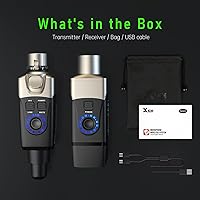
  • Box Contents: The retail package includes the U3 wireless transmitter, the U3 wireless receiver, a USB charging cable, and a printed user manual.

Related Reviews
GlocalMe U3 10GB
GlocalMe U3 10GB
84%
87%
Battery Life
82%
Connectivity Stability
90%
Global Coverage
88%
Ease of Setup
85%
Data Plan Flexibility
More
Sangean U3 Jobsite Radio
87%
96%
Build Quality
94%
Water Resistance
88%
Audio Clarity
85%
Speaker Power
91%
Battery Flexibility
More
Xvive P3 Bluetooth XLR Receiver
86%
88%
Audio Quality
94%
Ease of Use
80%
Range Performance
85%
Battery Life
82%
Build Quality
More
Douk Audio U3 Headphone Amplifier
89%
94%
Sound Clarity
91%
Frequency Response Accuracy
89%
Output Power
86%
Build Quality
90%
Ease of Setup
More
FIDECO P3U-U3 Hard Drive Docking Station
75%
88%
Value for Money
79%
Transfer Speed & UASP Performance
84%
Cooling & Thermal Management
86%
Ease of Setup & Plug-and-Play
63%
Build Quality & Durability
More

FAQ

Yes, both of those are dynamic microphones with a standard female XLR output, which is exactly what this system is built for. You plug the transmitter directly into the mic's XLR port and you are ready to go — no adapters needed.

No, and this is one of the most common points of confusion. The Xvive U3 does not supply 48V phantom power, which most condenser microphones require to operate. If your mic needs phantom power, this system will not work for it — you would need a wireless solution that either includes phantom power or is designed specifically for condenser mics.

There is no pairing process. Power both units on and they connect to each other automatically. The system is designed to be operational within seconds, which is one of the reasons it earns such consistently positive setup reviews from gigging performers.

Yes, up to six units can run simultaneously in the same space. In practice, two to four channels tend to be more reliable in real-world venue conditions, but the system is specifically designed to handle multi-unit operation without cross-channel dropout.

The manufacturer rates both units at up to five hours, and many users do get close to that on a fresh charge. That said, as the internal batteries age over months of regular use, runtime tends to drop — some users report closer to three hours after extended ownership. It is worth charging both units the night before every gig rather than relying on a partial charge.

No, there is no pass-through charging capability. Both units need to be fully charged before use. There is also no mid-gig battery swap option since the batteries are internal and non-removable, so planning your charge cycle ahead of time is important.

In an open, unobstructed space, you can expect reliable performance up to around 70 to 80 feet in most real-world conditions, even if the spec sheet says 90 feet. Walls, bodies of people, and competing wireless signals all reduce effective range to some degree. For most club stages, wedding floors, and church setups, it holds up well.

Possibly. The 2.4GHz band is shared with Wi-Fi routers, Bluetooth devices, and other wireless systems, so a heavily congested RF environment can cause occasional dropouts or instability. This is a known tradeoff of the 2.4GHz band in general, not a defect unique to this system. If you regularly perform at large conventions or multi-stage festivals, a professional UHF system would handle that environment more reliably.

Yes, that is exactly what Line mode is designed for. Switching to Line mode increases the input headroom so it can handle the hotter signal levels coming from a mixer's main output without clipping or distortion. It makes this transmitter kit useful as a general-purpose wireless audio link beyond just microphone use.

Unfortunately, no. The box includes the two units, a USB charging cable, and a user manual — but no carrying case or protective pouch. If you are throwing these into a gig bag with other gear, it is worth picking up a small zip pouch to protect the XLR connector on the transmitter from getting bent or damaged in transit.

Where to Buy

Target
In stock $169.99
Walmart
In stock $169.99
Guitar Center
In stock $169.99
Sweetwater
In stock $169.99
B&H Photo-Video-Audio
In stock $169.99
Musicians Friend
In stock $169.99
eBay
In stock $169.99
newegg.com
In stock $209.99
Adorama
In stock $219.99
Alto Music
In stock $219.99