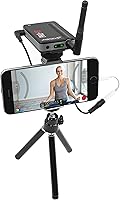
Overview

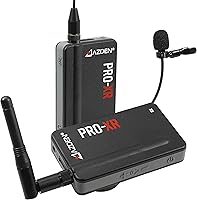
The Azden PRO-XR Wireless Microphone System is Azden's answer to a real problem that solo shooters and run-and-gun videographers face constantly: wireless audio that holds up when the environment fights back. Azden has been building pro-audio gear for decades, so this isn't a brand chasing trends — it's a company that understands what field recordists actually need. This 2.4GHz rig operates on the license-free ISM band, which means no frequency coordination headaches, and it brings signal redundancy technology that puts it in a different class from the budget clip-ons flooding the market. For the investment required, buyers are getting a system built around professional reliability.

Features & Benefits

What separates this wireless mic system from similarly priced competitors comes down to a few key engineering decisions. The dual-channel redundancy means the system is simultaneously transmitting on two channels — if one gets hit with interference, the other picks up instantly, with no audible glitch. Transmitter output power is adjustable across three settings (20, 50, and 100 mW), letting you dial up range when shooting across a large event space, or drop down to preserve battery on a long interview day. Latency sits at just 4.5ms, keeping audio sync tight in post. The external antenna design and up to 500-foot range are genuinely useful numbers — though real-world results will vary based on obstacles and RF congestion.

Best For

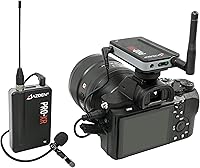
This 2.4GHz rig makes the most sense for solo documentary filmmakers and event videographers who are operating without a sound crew and can't afford a dropout ruining an unretakeable moment. It's a particularly good fit for shooters working in hotels, conference centers, or wedding venues — exactly the kind of Wi-Fi-saturated spaces where cheaper systems fall apart. If you're running a mirrorless or DSLR setup and want a clean, camera-mounted wireless solution without routing cables, this wireless mic system handles that well. Journalists doing quick field interviews will appreciate the fast pairing and the receiver's all-day battery endurance. It also suits anyone stepping up from basic consumer-grade wireless who wants professional signal stability without the complexity of licensed UHF systems.

User Feedback

Across verified buyer accounts, the pattern that stands out most is how the Azden PRO-XR performs in real-world RF chaos — shooters at packed conventions and wedding receptions consistently report cleaner, more reliable audio than they experienced with previous systems at comparable price points. Battery life draws consistent praise, with many users confirming the receiver holds up across a full shooting day without reaching for a cable. On the downside, a recurring concern involves the transmitter's clip and build quality, which some feel doesn't quite match a system marketed at professional users. A handful of buyers also note that the output power controls take some experimentation to dial in initially, though most report getting comfortable with the setup fairly quickly.

Pros

  • Dual-channel signal redundancy actively prevents audio dropouts in Wi-Fi-saturated shooting environments.
  • The receiver battery lasts through a full shooting day, with many users confirming the rated figures hold up in practice.
  • Adjustable transmitter output power gives real flexibility to trade range for battery life depending on the shoot.
  • At 4.5ms latency, audio stays locked to video without any noticeable sync drift in post-production.
  • The license-free 2.4GHz ISM band means no frequency coordination paperwork or legal restrictions across regions.
  • Up to 500-foot range with an external antenna outperforms most compact clip-on competitors in open environments.
  • Broad frequency response on the mic input covers the full voice range cleanly without noticeable coloration.
  • Works natively with digital cameras and mobile devices, making it versatile across different production setups.
  • USB charging on both units keeps the power workflow simple and cable-kit-friendly for traveling creators.
  • Azden's established reputation in pro-audio gives buyers reasonable confidence in long-term product support.

Cons

  • The transmitter clip and overall build quality feel underwhelming relative to what the system costs.
  • Single-channel design makes it a non-starter for productions that need to mic more than one subject at once.
  • Real-world range drops noticeably with walls, crowds, or obstacles between the transmitter and receiver.
  • The output power controls have a learning curve that can frustrate users during their first few shoots.
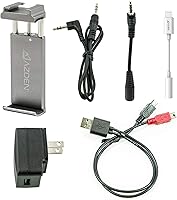
  • The included accessories have drawn criticism for feeling like afterthoughts rather than part of a complete kit.
  • Heavier and bulkier than ultra-compact 2.4GHz rivals, which matters when traveling light is a priority.
  • Initial pairing can occasionally require a second attempt, which is a minor but recurring complaint in the field.
  • Only one channel limits flexibility if interference on that channel cannot be resolved by redundancy alone.

Ratings

The scores below reflect an AI-driven analysis of verified global buyer reviews for the Azden PRO-XR Wireless Microphone System, with spam, bot-generated, and incentivized feedback actively filtered out before processing. Every category captures what real users praised and where they ran into friction — nothing is smoothed over to flatter the product. The result is an honest, balanced scorecard built to help you decide whether this 2.4GHz rig fits your specific workflow.

Signal Reliability
88%
Event videographers and wedding shooters consistently report that the dual-channel redundancy delivers on its core promise — audio stays clean even in hotel ballrooms and conference venues packed with competing Wi-Fi networks. For solo operators who cannot stop a take to fix a dropout, this kind of passive protection is genuinely reassuring in the field.
A small but vocal group of users report occasional brief interruptions when shooting in extremely dense RF environments, suggesting the redundancy system handles typical interference well but is not completely dropout-proof under worst-case conditions. Managing expectations around this is important for high-stakes, unretakeable recording situations.
Audio Quality
83%
The 384 kbps bit rate and 86 dB signal-to-noise ratio translate to noticeably cleaner voice recordings than most competitors at this price tier, particularly for interview-style and presenter content. Buyers upgrading from consumer-grade clip-ons frequently comment on the improved clarity and reduced background hiss on their finished videos.
A handful of more critical users — particularly those with experience on higher-end UHF systems — note that the audio floor, while respectable, does not quite reach the pristine quality of flagship wireless rigs. For broadcast or cinema-level post-production work, the 86 dB SNR may leave some users wanting a bit more headroom.
Battery Life
91%
The receiver's approximately 20-hour battery life is one of the most consistently praised aspects of this wireless mic system across all buyer segments. Journalists and documentary shooters covering full-day events confirm that both units regularly make it through demanding shoot days without needing a mid-session recharge.
Battery endurance on the transmitter drops noticeably when running at higher output power — from around 14 hours at the default 20 mW setting down to roughly 10 hours at 100 mW. Users who regularly max out the output power for long-range work should factor in mid-day charging or carry a backup power bank.
Interference Resistance
86%
Shooting in Wi-Fi-saturated environments is precisely where this 2.4GHz rig separates itself from budget competition. Users at trade shows, corporate events, and busy wedding receptions report that the system holds a stable connection in conditions that routinely cause single-channel 2.4GHz systems to stutter or cut out entirely.
The 2.4GHz band is inherently more crowded than UHF frequencies, and while the redundancy system mitigates most interference, it cannot eliminate the fundamental physics of the band. A small number of users in unusually congested urban environments report that even this system showed occasional instability under extreme RF load.
Operating Range
74%
26%
The external antenna design gives this wireless mic system a genuine range advantage over the ultra-compact clip-on rivals that use internal antennas. For outdoor shoots, open-plan event spaces, and large stage setups, users find the practical range comfortably exceeds what smaller competing systems can sustain.
The rated 500-foot maximum is a line-of-sight figure that most real-world shooters will never see in practice. Indoors, with walls and crowds in the way, effective range drops significantly — users in multi-room or obstructed environments consistently report usable range well below the headline spec, which can catch buyers off guard.
Build Quality
61%
39%
The overall form factor is compact enough for camera hotshoe mounting without adding excessive bulk, and the unit feels solid enough for everyday professional handling. Most users report no functional failures related to build over months of regular use.
The transmitter clip and overall physical construction are the most frequently criticized aspect of this rig, with multiple buyers describing the feel as inconsistent with the system's pricing and audio performance. The clip in particular draws complaints about durability and secure attachment to clothing, which is a real concern during active shoots.
Ease of Setup
77%
23%
For experienced audio users, initial pairing is quick and the system gets up and running without a complicated menu-diving process. Journalists and event shooters who value fast deployment appreciate that the transmitter and receiver can be paired and operational within minutes of unboxing on a new shoot day.
First-time wireless mic users and those coming from simpler plug-and-play systems report a noticeable learning curve around the output power settings, which are not immediately intuitive. A few buyers also mention occasional pairing hiccups that required power cycling both units to resolve, which is a minor but real friction point.
Latency Performance
93%
At 4.5ms end-to-end latency, this wireless mic system is essentially imperceptible in a real-world video production workflow. Users consistently confirm that audio syncs cleanly to their footage without needing manual offset correction in editing software, which is one less thing to troubleshoot during post-production.
There is very little to criticize here from a technical standpoint. The only minor note is that users mixing this system's output with other audio sources in a complex production setup should verify total chain latency, but for standard single-camera workflows this is not a practical concern.
Value for Money
72%
28%
For buyers who genuinely need the signal redundancy and extended range, the pricing makes reasonable sense against what competing professional-grade wireless systems cost. Users who do a lot of event work in challenging RF environments tend to feel the investment is justified by how reliably the system performs where cheaper alternatives fall apart.
For shooters with simpler needs — small indoor spaces, controlled studio environments, or tight budgets — the premium over basic 2.4GHz systems is harder to justify when the advanced features rarely come into play. The build quality concerns also make the value equation feel less comfortable for buyers expecting premium materials to match the premium price.
Camera Compatibility
81%
19%
The USB connectivity works cleanly with a wide range of current DSLR and mirrorless bodies, and content creators shooting on both cameras and mobile devices appreciate not needing separate adapters or accessories for different parts of their kit. Most major camera ecosystems are supported without issues.
USB audio input support varies by camera model and manufacturer, and a subset of users discovered after purchase that their specific body required an adapter or did not natively support USB audio input at all. Verifying your exact camera model's USB audio compatibility before buying is a step that Azden's product documentation does not make especially prominent.
Transmitter Portability
78%
22%
The transmitter is small enough that talent can clip it to a lapel or belt without it becoming a distraction on camera, and the omnidirectional microphone's forgiving pickup pattern means precise mic placement is less critical than with directional alternatives. This makes it practical for interview subjects who are not experienced with wearing a mic.
The clip's reliability concerns mean some users add their own gaffer tape or a third-party clip as a backup when the transmitter absolutely cannot shift position mid-shoot. The unit is not as discreet as the smallest competing transmitters on the market, which can matter when miking talent in close-up or fashion-forward video contexts.
Frequency Response
84%
The microphone input's 60 Hz to 20 kHz response captures the full intelligibility range of spoken voice with natural-sounding low-end warmth, and the auxiliary input's extended 30 Hz floor makes it versatile for connecting external sources like instrument feeds or broadcast-quality lavalier mics from other manufacturers.
The omnidirectional pattern, while forgiving, picks up ambient room noise equally from all directions, which can be a limitation in noisy environments where a tighter pickup pattern would be preferable. Users shooting in acoustically challenging spaces like kitchens, warehouses, or outdoor windy settings may find the mic picks up more environmental noise than expected.
Power Management
82%
18%
USB 5V charging on both units is a genuinely practical choice for traveling creators who already carry multi-port USB chargers and power banks in their kit. The ability to top up both units from a single laptop or power bank between shoots reduces the accessory burden for shooters on the move.
The absence of a clear battery level indicator beyond basic LED status lights makes it harder to monitor exact remaining charge at a glance during a busy shoot. Some users report being caught off guard by a transmitter dying earlier than expected at higher output power settings because the visual feedback was insufficient to prompt a timely recharge.

Suitable for:

The Azden PRO-XR Wireless Microphone System is built for the kind of shooter who cannot afford to lose a take — solo documentary filmmakers, event videographers, and run-and-gun content creators who are working without a dedicated sound operator watching the meters. If you regularly shoot in environments packed with competing Wi-Fi signals, like hotel ballrooms, conference halls, or wedding venues, the dual-channel redundancy technology addresses a pain point that cheaper systems simply cannot. Journalists and interview-format creators will find the combination of fast setup, long receiver battery life, and reliable signal lock genuinely valuable across full shooting days. It is also a strong upgrade path for anyone who has outgrown a basic consumer clip-on system but wants to stay on the license-free 2.4GHz band rather than navigating the added complexity of UHF frequency coordination. If your camera rig is a mirrorless or DSLR body and you want professional-grade wireless audio without a cable running to your talent, this system is purpose-built for exactly that workflow.

Not suitable for:

The Azden PRO-XR Wireless Microphone System is not the right call for buyers whose primary concern is physical ruggedness or a premium-feeling transmitter build — recurring feedback points to hardware fit and finish that feels mismatched with the system's price point and audio performance. Shooters who need multi-channel capability to mic several subjects simultaneously will hit a hard wall here, as this is a single-channel system and cannot be expanded in that direction. It is also not ideal for studio recording environments or fixed broadcast setups where a UHF or digital hybrid system with deeper channel management would be more appropriate. If you are shooting primarily indoors at short distances and budget is a significant constraint, there are simpler, less expensive 2.4GHz systems that may cover your needs without the investment this rig requires. Finally, buyers expecting plug-and-play simplicity out of the box should know that dialing in the output power settings takes some hands-on experimentation before it becomes second nature.

Specifications

  • Operating Frequency: The system transmits on the 2.4GHz ISM band, which is license-free and usable worldwide without frequency coordination permits.
  • Signal Redundancy: Proprietary dual-channel transmission technology monitors both channels simultaneously and switches automatically to avoid dropouts caused by interference.
  • Output Power: Transmitter output power is user-selectable across three levels: 20 mW, 50 mW, and 100 mW, with 20 mW set as the factory default.
  • Maximum Range: The system supports a rated operating range of up to 500 feet, achieved with the external antenna design under clear line-of-sight conditions.
  • Latency: End-to-end audio latency is 4.5ms, keeping audio and video sync tight enough for direct-to-camera recording without manual offset correction in post.
  • Bit Rate: Audio is transmitted at 384 kbps, delivering broadcast-quality digital audio well above the threshold for professional video production use.
  • Signal-to-Noise Ratio: The system achieves a signal-to-noise ratio of 86 dB, providing a clean audio floor suitable for voice recording in controlled and semi-controlled environments.
  • Dynamic Range: Dynamic range measures 90 dB on the microphone input and 87 dB on the line input, accommodating a wide variety of source levels without clipping.
  • Frequency Response: The microphone input covers 60 Hz to 20 kHz, while the auxiliary input extends the low end further, spanning 30 Hz to 20 kHz.
  • Polar Pattern: The included microphone uses an omnidirectional polar pattern, capturing sound evenly from all directions and making positioning less critical during interviews or presentations.
  • Receiver Battery: The receiver is rated for approximately 20 hours of continuous operation on a full charge from its built-in lithium-ion polymer battery.
  • Transmitter Battery: Transmitter battery life is approximately 14 hours at 20 mW, 12 hours at 50 mW, and 10 hours at 100 mW output power.
  • Battery Type: Both units use a built-in lithium-ion polymer cell rated at 3.7V with a capacity of 1200 mAh (4.44 Wh).
  • Power Supply: Both the transmitter and receiver charge via USB at 5V, compatible with standard USB power banks, wall adapters, and computer ports.
  • Antenna Design: The system uses an external antenna configuration rather than an internal antenna, contributing to its extended range performance compared to fully enclosed compact rivals.
  • Channels: This is a single-channel system; it supports one transmitter-receiver pair and cannot be expanded to simultaneously mic multiple independent sources.
  • Connectivity: The receiver connects to cameras and mobile devices via USB, making it compatible with a wide range of current digital camera bodies and smartphones.
  • Compatible Devices: The system is designed for use with digital cameras including DSLR and mirrorless bodies, as well as mobile devices with appropriate connectivity.
  • Item Model: The unit is manufactured by Azden under the model designation PRO-XR, identifiable by UPC 095528701102.

Related Reviews
Azden WMS-PRO Wireless Microphone System
70%
83%
Value for Money
67%
Audio Quality
88%
Ease of Setup
62%
Signal Reliability
57%
Build Quality
More
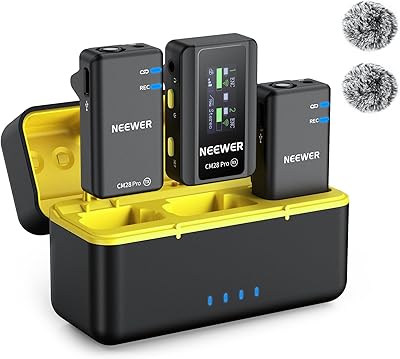
Neewer CM28 Pro Wireless Lavalier Microphone System
79%
88%
Audio Clarity
91%
Standalone Recording
67%
Wireless Range & Stability
86%
Battery Life
83%
Charging Case Design
More
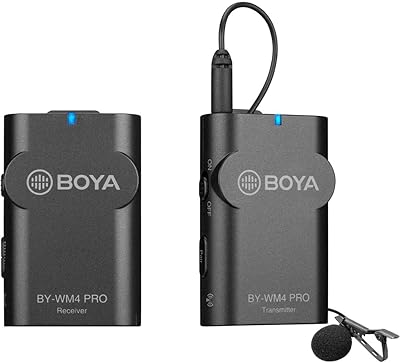
BOYA BY-WM4 Pro K2 Wireless Lavalier Microphone
65%
58%
Audio Quality
54%
Wireless Stability
83%
Ease of Setup
67%
Value for Money
51%
Build Quality
More
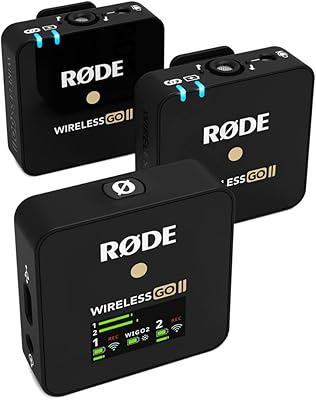
RØDE Wireless GO II
RØDE Wireless GO II
84%
92%
Audio Clarity
86%
Signal Reliability
97%
Internal Backup Recording
94%
Portability & Weight
91%
Setup Speed & Ease of Use
More
Bose S1 Pro+ Portable PA Speaker
81%
91%
Sound Quality
63%
Battery Life
89%
Portability
88%
Ease of Setup
82%
Wireless Performance
More
Shure BLX1288/CVL Wireless Microphone System
85%
92%
Audio Quality
88%
Ease of Setup
90%
Battery Life
85%
Range/Signal Strength
87%
Build Quality
More
NEEWER KM15 Wireless Lavalier Microphone System
87%
89%
Sound Quality
92%
Ease of Use
87%
Battery Life
83%
Build Quality
90%
Portability
More
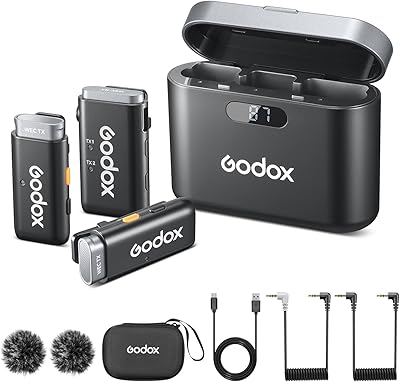
Shure BLX288/B58 Dual-Channel Wireless Microphone System
81%
91%
RF Performance
84%
Audio Quality
88%
Build Quality
82%
Battery Life
86%
Ease of Setup
More
Sennheiser AVX Digital Wireless Microphone System
81%
94%
Ease of Setup
89%
Audio Quality
91%
Interference Resistance
83%
Build & Portability
72%
Receiver Fit & Compatibility
More
Xvive U3
Xvive U3
76%
93%
Ease of Setup
78%
Audio Quality
89%
Latency Performance
71%
Wireless Range
63%
Battery Life
More

FAQ

The signal redundancy technology on the Azden PRO-XR Wireless Microphone System is a genuine engineering feature, not a branding claim. It transmits on two channels simultaneously and automatically favors whichever one has the cleaner signal at any given moment. In practice, shooters at busy events with dense Wi-Fi environments report noticeably fewer dropouts compared to single-channel 2.4GHz systems. It is not dropout-proof in extreme conditions, but it is a meaningful step up from standard budget wireless rigs.

Yes, the receiver connects via USB and is designed specifically for use with digital camera bodies, including current mirrorless and DSLR systems from major manufacturers. That said, it is always worth confirming that your specific camera body accepts audio input via USB rather than a dedicated 3.5mm mic jack, as connectivity can vary by model and generation. Check your camera manual or manufacturer site if you are unsure.

Honestly, 500 feet is a best-case figure measured under ideal, open line-of-sight conditions. In real-world shooting — indoors, around crowds, or with walls between the transmitter and receiver — you should expect that number to drop considerably. For most event and interview work, you will likely operate well within a range where performance is solid, but do not plan a shoot that depends on 400-foot wireless runs through a building.

No license is required. The system operates on the 2.4GHz ISM band, which is an unlicensed frequency range approved for use in the US and most countries worldwide. Unlike traditional UHF wireless systems, which can require frequency coordination and sometimes licensing depending on the region, this 2.4GHz rig is legal to operate out of the box almost anywhere you travel.

Both units charge via standard USB 5V, so yes, a power bank works perfectly for topping up on location between shoots. Charge times are not officially specified by Azden, but given the 1200 mAh battery capacity, a full charge from a standard USB adapter typically takes around two hours. The USB charging setup is one of the more practical design choices on this wireless mic system for traveling creators.

Not directly. This is a single-channel system, meaning one transmitter pairs to one receiver. If you need to simultaneously capture two independent sources — say, an interviewer and a subject — you would need two complete kits. Even then, running two units in close proximity on the same 2.4GHz band can introduce its own interference challenges, so this rig is fundamentally designed around single-subject recording.

It is a battery-versus-range trade-off you can tune to your shoot. If you are doing a sit-down interview in a small room, dropping to 20 mW preserves battery and reduces the system's RF footprint. If you are shooting a subject moving around a large outdoor space, bumping up to 100 mW extends your usable range. Most users find 20 mW covers the majority of their work, which is why Azden sets it as the default.

This is a genuine weak point that comes up consistently in buyer feedback. The audio performance and signal reliability are well-regarded, but the transmitter's physical construction — particularly the clip mechanism — feels underwhelming compared to what the overall system costs. It is workable for professional use, but if you are rough on your gear or need something that feels tank-built, manage those expectations going in.

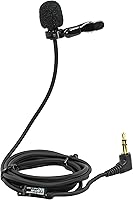
The system includes a microphone — it ships as a complete wireless kit rather than just the transmitter and receiver hardware. The included mic uses an omnidirectional polar pattern, which picks up sound from all directions and is well-suited for spoken word, interviews, and general presenter-style recording. That said, the transmitter also has an auxiliary input if you want to connect a different external mic source.

Initial pairing is straightforward for most users, but the output power controls do take some hands-on experimentation to feel comfortable with. Buyers who have used other wireless systems will adapt quickly. Those coming from a basic plug-and-play consumer clip-on might spend a shoot or two getting familiar with the power settings before it becomes instinctive. It is not a complicated system by professional standards, but it rewards users who take 20 minutes to read the manual before their first shoot.

Where to Buy