Overview

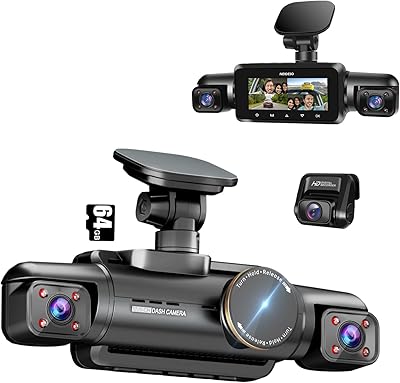
The ZYEIPO Z700 4-Channel 360° Dash Cam is one of the more practical multi-angle options at this price point, covering front, rear, and interior simultaneously from a single unit. ZYEIPO isn't a household name like Vantrue or Nextbase, but the Z700 fills a real gap for drivers who want all-around vehicle coverage without buying and wiring multiple cameras. It ships with a 128GB card included, which is a genuine convenience most competitors skip entirely. That said, this isn't the right pick for buyers chasing flagship video quality or expecting a fully wireless parking solution right out of the box.
Features & Benefits

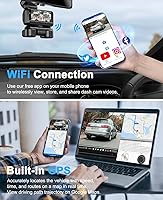
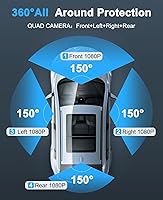
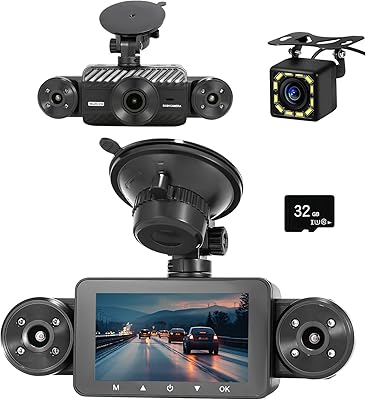
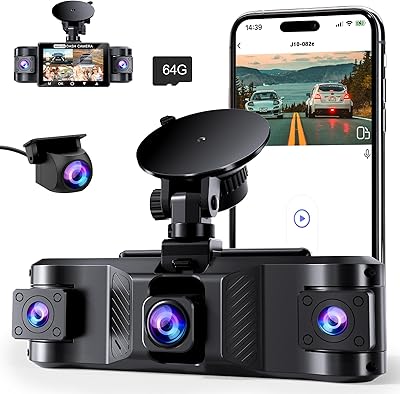
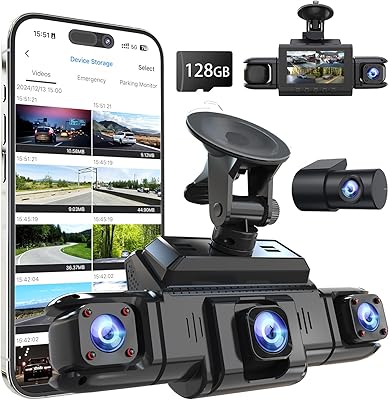
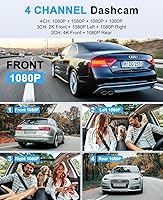
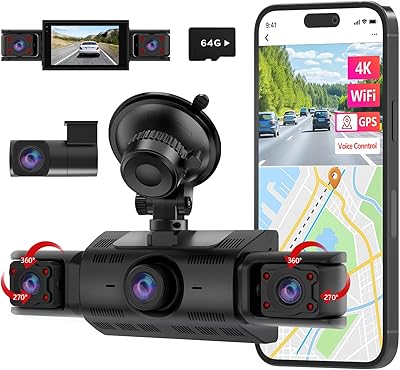
Each of the four lenses covers 150 degrees and can be physically repositioned, which is what makes true all-around coverage achievable rather than just advertised. The Z700 offers three recording modes: the top setting runs 4K on the front channel paired with 1080P on the others, while the quad-channel mode drops everything to 1080P to stretch storage further — a real trade-off worth understanding before you choose. Built-in GPS logs speed and route, playable afterward in Google Maps via the companion app, which also handles Wi-Fi video access on iOS and Android. Night recording uses 8 IR lamps across a 6-lens array — decent for the front view, though all four channels simultaneously in low light can produce uneven results.

Best For

This 4-channel dash cam is a natural fit for rideshare and delivery drivers who need documented coverage of what happens inside and outside the vehicle at the same time. Urban drivers dealing with dense traffic will appreciate having rear and side angles covered without juggling multiple devices. The built-in GPS is a solid bonus for anyone who wants route history without a standalone tracker. And if complicated setups have kept you away from dash cams before, the plug-and-play install with storage already included lowers that barrier considerably. Fleet managers covering a handful of vehicles on a tight budget will also find the per-unit value of this multi-channel car camera reasonable.

User Feedback

With 63 ratings and a 4.0-star average, the Z700 sits in moderately positive territory — respectable, but not enough volume to draw firm conclusions. Buyers consistently praise daytime image clarity and how straightforward the initial setup is, with the app drawing particular compliments for being genuinely usable rather than a frustrating afterthought. The recurring criticism worth flagging: parking mode sounds compelling until you realize it requires a separately purchased hardwire kit that isn't included in the box. Night vision across all four channels simultaneously gets mixed remarks — the front camera holds up well, but interior and rear performance in darkness is less consistent. A handful of reviewers also suggest upgrading the bundled card for longer-term reliability.

Pros

  • Covers front, rear, and interior from a single device — no need to buy or wire multiple cameras.
  • Comes with a 128GB card in the box, saving you an immediate extra purchase most rivals require.
  • Four independently adjustable lenses make it genuinely possible to eliminate blind spots when positioned carefully.
  • Built-in GPS logs speed and route data tied directly to video footage, reviewable on Google Maps.
  • The Wi-Fi app works reliably on both iOS and Android for wireless video browsing and downloads.
  • Three recording modes let you trade resolution for longer storage life depending on your actual driving needs.
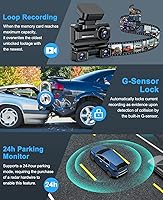
  • G-sensor automatically locks collision footage so it cannot be overwritten during standard loop recording.
  • Installation is straightforward enough that most buyers report having it running without professional help.
  • The 3.18-inch IPS screen is large enough for on-dash playback without squinting at a postage-stamp display.
  • Competitive value for all-around vehicle coverage compared to buying separate front, rear, and interior cameras.

Cons

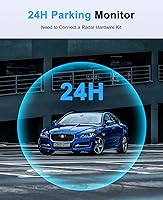
  • Parking mode requires a separately purchased hardwire kit — this is not mentioned clearly enough at point of sale.
  • 4K resolution applies to the front channel only; running all four channels drops everything to 1080P.
  • Night vision quality across all four channels simultaneously is inconsistent, with interior and rear lenses underperforming.
  • ZYEIPO has limited brand track record compared to established names, raising questions about long-term firmware support.
  • Only 63 reviews available, making it difficult to assess durability and reliability over extended ownership.
  • The bundled 128GB card quality has drawn skepticism from some buyers, who suggest upgrading it sooner rather than later.
  • Loop recording segments are fixed at 3 minutes, which offers less flexibility than cameras with adjustable clip lengths.
  • The companion app, while functional, lacks the refinement and feature depth of apps from more established dash cam brands.
  • At nearly 2 pounds, the unit is on the heavier side for a windshield-mounted device, which could affect suction cup stability over time.

Ratings

The scores below reflect an AI-assisted analysis of verified global user reviews for the ZYEIPO Z700 4-Channel 360° Dash Cam, with spam, bot activity, and incentivized feedback actively filtered out to ensure accuracy. Each category is scored based on patterns across real ownership experiences, capturing both what buyers genuinely appreciate and where the camera consistently falls short. Nothing is glossed over — the strengths and the frustrations are weighted equally.

Video Quality (Daytime)
83%
In daylight conditions, the front channel delivers sharp, detailed footage that holds up well for license plate identification and incident documentation during a normal commute. Buyers who primarily drive during the day consistently report being satisfied with the clarity across all four channels, even in the 1080P quad mode.
The gap between the front channel and the secondary channels is noticeable when you review footage side by side — the rear and interior cameras look softer, especially at the edges of the 150-degree frame. For buyers expecting uniform 4K-level sharpness across all four views, the reality is a step down.
Night Vision Performance
61%
39%
The front-facing channel benefits most from the IR lamp array, producing usable footage on unlit roads where many single-lens budget cameras simply smear into noise. Rideshare drivers who pick up passengers at night generally find the interior IR illumination adequate for basic cabin documentation.
Running all four channels simultaneously after dark exposes a real weakness — the rear lens and secondary interior angle noticeably struggle, producing grainy or washed-out frames in challenging low-light conditions. Buyers who drive exclusively at night and need reliable rear footage will find this a persistent frustration.
Multi-Channel Coverage
88%
The ability to record front, rear, and cabin simultaneously from a single device is the Z700's clearest strength, and buyers who switched from running separate cameras consistently highlight the cable and clutter reduction. The adjustable lens positioning is genuinely flexible, letting you dial in coverage angles rather than accepting a fixed field.
Achieving true 360-degree coverage requires careful initial positioning, and buyers who install it without taking time to adjust each lens often find blind spots remaining along the sides. The physical adjustment mechanism, while functional, can feel slightly stiff and fiddly during first-time setup.
GPS Accuracy
79%
21%
The built-in GPS locks onto a signal reliably under open-sky conditions and records speed and route data that syncs cleanly with Google Maps through the companion software — a feature that saves rideshare drivers and fleet operators from needing a separate tracker. Most buyers found the location logging accurate enough for insurance and incident reporting purposes.
Signal acquisition in dense urban canyons or covered parking structures can be sluggish, and a handful of users noted occasional GPS dropout during longer trips that created gaps in route logs. It is solid for typical use, but not at the precision level of a dedicated GPS device.
Wi-Fi App Experience
74%
26%
The companion app earns above-average marks for usability — connecting to the camera over Wi-Fi is straightforward, and the video preview feature works without forcing you to download clips first, which buyers appreciate during quick roadside checks. Both iOS and Android users report a reasonably smooth experience for day-to-day clip management.
The app lacks the polish and stability of software from more established brands, with occasional connection drops and a UI that feels less refined under the hood. Advanced features like fine-tuning GPS playback or managing event folders can feel unintuitive until you spend time learning the layout.
Ease of Installation
86%
The suction cup mount and straightforward cable routing mean most buyers have the camera recording within 20 to 30 minutes without any special tools or professional help. Having the 128GB card already inside the unit when it arrives removes what is usually the first frustrating step for new dash cam owners.
Routing the power cable cleanly along the headliner and A-pillar trim still takes some patience, and the included cable length may be tight in larger trucks or SUVs with longer cabin runs. Users who want parking mode face an entirely separate installation task involving the fuse box.
Parking Mode
48%
52%
When properly set up with a hardwire kit, the time-delay parking surveillance does function as described, recording low-frame-rate footage when the vehicle is stationary without draining the battery aggressively. Buyers who went through the full hardwire setup generally report that the 24-hour coverage itself works reliably once configured.
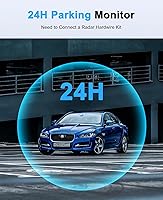
The hardwire kit required to enable parking mode is not included in the box, which catches a meaningful number of buyers off guard given how prominently parking surveillance is marketed on the listing. The added cost and wiring complexity essentially make this an optional paid upgrade rather than a ready-to-use feature.
Build & Hardware Quality
69%
31%
The unit feels reasonably solid for its price tier, and the 3.18-inch IPS screen is a step above the dim, low-contrast displays common on cheaper dash cams — on-device playback is actually usable in direct sunlight. The lens housings hold their adjusted positions without obvious wobble once set.
At 1.83 pounds, the camera is heavier than most windshield-mounted units, which places meaningful stress on the suction cup over time, particularly in vehicles that experience temperature swings between cold nights and hot afternoon sun. A few buyers flagged the suction mount loosening after several weeks in summer heat.
Loop Recording Reliability
81%
19%
The 3-minute loop recording cycle runs consistently in the background without requiring any user management, and the G-sensor event locking works as intended — buyers dealing with minor parking lot scrapes report that the relevant footage was protected and accessible in the event folder without manual intervention.
The fixed 3-minute segment length offers no customization, which some experienced dash cam users find limiting compared to cameras that allow 1, 3, or 5-minute clip options. A very dense accumulation of G-sensor-locked files over time requires periodic manual cleanup to avoid filling the card with protected footage.
Value for Money
77%
23%
For buyers who specifically need multi-channel interior and exterior coverage, the per-dollar value of this 4-channel dash cam is genuinely difficult to replicate by purchasing separate front, rear, and interior cameras individually. The included 128GB card sweetens the proposition further at this price point.
Buyers who compare it directly against single or dual-channel cameras from more established brands at a similar price point may feel the video quality trade-off is harder to justify. And once you factor in the separately purchased hardwire kit for parking mode, the total cost of ownership creeps noticeably higher than the sticker price suggests.
Included Storage
67%
33%
Shipping with a 128GB card already inside is a practical convenience that most competing dash cams skip entirely, and it genuinely means you can mount the camera and start recording on your first drive without any additional purchases for basic use.
The bundled card's long-term durability under the constant high-temperature, high-write-cycle demands of daily dash cam use is a recurring concern among buyers, with several recommending an early replacement with an endurance-rated card from a recognized brand. It works out of the box, but may not hold up over a full year of daily driving.
G-Sensor Sensitivity
72%
28%
The G-sensor triggers reliably on genuine impact events like hard braking or a collision, and the automatic event file locking gives drivers real peace of mind knowing critical footage will not be cycled out before they can retrieve it. Rideshare drivers in city traffic find this particularly reassuring.
At its default sensitivity setting, the G-sensor can be tripped by rough road surfaces, speed bumps, or aggressive lane changes, filling the event folder with false-positive locked clips that require manual deletion. Fine-tuning sensitivity through the menu helps, but requires some trial and error to find the right threshold for your driving style.
Brand Reliability & Support
58%
42%
ZYEIPO markets itself as responsive to customer support inquiries, and a subset of buyers report positive experiences getting help with setup questions or replacement parts through their listed support channels. For straightforward installation and basic use, the post-purchase experience appears adequate.
ZYEIPO lacks the established track record of brands like Vantrue, Thinkware, or BlackVue, and buyers have limited historical data to gauge long-term firmware support or warranty follow-through. With only 63 reviews available at time of analysis, it is genuinely too early to draw confident conclusions about the brand's reliability over a multi-year ownership horizon.

Suitable for:

The ZYEIPO Z700 4-Channel 360° Dash Cam makes the most sense for rideshare and delivery drivers who need a single device documenting both the road and the passenger cabin at the same time — that combination of interior and exterior coverage from one unit is genuinely hard to match at this price. Urban commuters who frequently navigate dense traffic will find real value in having rear and side angles covered without mounting multiple cameras and running separate power cables. The built-in GPS is a practical bonus for anyone who wants speed and route data tied to their footage without paying extra for a dedicated tracker. Fleet managers handling a small number of vehicles on a limited budget should also take a close look, since the cost-per-vehicle for all-around coverage here is hard to argue with. And if you've avoided dash cams in the past because the setup felt complicated, the fact that a 128GB card is already included removes at least one barrier to getting started immediately.
Not suitable for:

Buyers who prioritize maximum video quality across every channel simultaneously will likely walk away disappointed by the Z700, because true 4K recording is reserved for the front lens only — the other channels top out at 1080P, and the quad-channel mode brings everything down further to distribute storage load. Drivers who rely heavily on parking surveillance should know upfront that the 24-hour parking mode advertised on the box requires a hardwire kit sold separately, which adds both cost and installation complexity that isn't obvious at purchase. Anyone accustomed to the polish of established dash cam brands like Vantrue or Thinkware may find the ZYEIPO ecosystem — app, firmware, and long-term support — less mature and reassuring. Low-light-focused buyers, such as those who drive primarily at night across all camera angles, should temper expectations, since multi-channel IR performance after dark is inconsistent based on available user reports. With only 63 ratings on record, there simply isn't enough long-term ownership data yet to confidently recommend this multi-channel car camera to anyone whose needs are mission-critical.

Specifications

  • Model: The Z700 is manufactured by ZYEIPO and carries the official model designation Z700.
  • Channels: Records across 4 simultaneous channels covering the front, rear, and two interior angles.
  • Max Resolution: The front channel captures video at up to 2160p (4K); secondary channels record at up to 1080P depending on the selected mode.
  • Recording Modes: Three modes are available: 4K+1080P, 1440P+1080P+1080P, and quad 1080P, allowing you to balance image quality against available storage.
  • Field of View: Each of the four lenses offers a 150-degree field of view, and all channels can be physically repositioned to optimize coverage.
  • Display: Features a 3.18-inch IPS screen for on-device playback and menu navigation.
  • Night Vision: Low-light recording is supported by 8 infrared lamps and a 6-lens optical array for light balance across channels.
  • GPS: Built-in GPS records vehicle speed and route data, which can be reviewed on Google Maps using the companion GPS Player software.
  • Connectivity: Connects wirelessly via built-in Wi-Fi to iOS and Android devices through a companion app, and also supports USB data transfer.
  • Loop Recording: Footage is recorded in continuous 3-minute segments, with the oldest files overwritten automatically once the card is full.
  • G-Sensor: A built-in G-sensor detects sudden impacts or collisions and automatically locks the relevant footage to prevent it from being overwritten.
  • Parking Mode: Supports 24-hour time-delay parking surveillance, but this feature requires a separate hardwire kit (ASIN: B0D4MHJ5T4) that is not included in the box.
  • Included Storage: Ships with a 128GB Micro-SD card included; the camera supports cards up to 256GB.
  • Mount Type: Attaches to the windshield via a suction cup mount, identified by ZYEIPO as the Suction Cup Mount for Z700.
  • App Support: The companion mobile app is compatible with both iOS and Android devices for wireless video viewing, downloading, and sharing.
  • Item Weight: The unit weighs 1.83 pounds, which is worth factoring in when assessing suction cup long-term hold on your windshield.
  • Power Input: Powered via USB connection, typically routed through the vehicle's 12V or USB port using the included cabling.
  • Max Storage: Supports Micro-SD cards up to 256GB, giving you the option to extend recording capacity beyond the included 128GB card.

Related Reviews
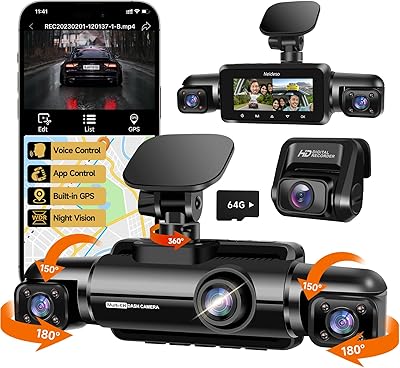
Neideso N300 4-Channel Dash Cam
73%
83%
Video Quality (Daytime)
61%
Night Vision Performance
58%
App & Wi-Fi Experience
88%
Coverage & Camera Configuration
79%
GPS Accuracy
More
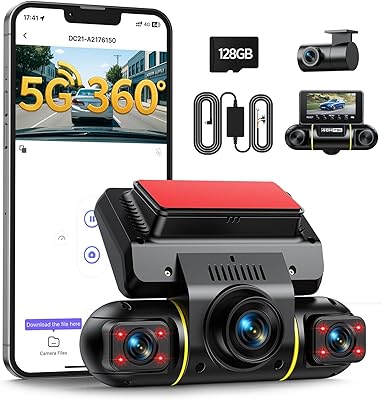
LAMTTO DC21B 4-Channel Dash Cam
77%
91%
Camera Coverage
78%
Video Clarity
74%
Night Vision Performance
67%
WiFi & App Experience
83%
Parking Mode & Hardwire Kit
More
IIWEY N5
IIWEY N5
74%
83%
Video Quality (Daytime)
67%
Night Vision & Low-Light Performance
89%
Coverage & Field of View
61%
Installation & Setup
69%
App & WiFi Connectivity
More
WHFNRU W6 4-Channel 360° Dash Cam
68%
83%
Front Video Quality
76%
Night Vision
87%
Multi-Camera Coverage
44%
G-Sensor Reliability
79%
Value for Money
More
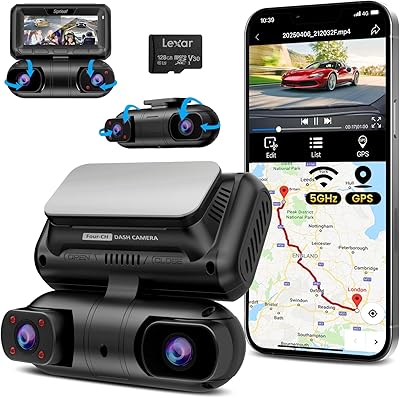
Ciascy 4K Backup Camera 4 Channel 360 Dash Cam with 10.36″ Quad Split Touch Screen
84%
91%
Image Quality
88%
Ease of Installation
90%
Durability and Weather Resistance
87%
Night Vision Performance
92%
Display Quality
More
RexingUSA R4 4-Channel Dash Cam
72%
93%
Coverage & Channel Count
76%
Video Quality
69%
Night Vision
78%
Wi-Fi & App Experience
82%
GPS Accuracy
More
ZMOPO D435 4-Channel Dash Cam
77%
83%
Video Clarity
78%
Night Vision
89%
Coverage & Angles
74%
App & Wi-Fi Performance
61%
Parking Mode
More
Tehclife S10 4-Channel Dash Cam
73%
83%
Front Camera Clarity
58%
Side & Rear Resolution
71%
Night Vision Performance
62%
Parking Mode Reliability
67%
App & WiFi Experience
More
ZMOPO C4 4-Channel Dash Cam
75%
88%
Value for Money
91%
Coverage & Angles
76%
Daytime Video Quality
58%
Exterior Night Vision
79%
Interior Night Vision
More
Sprleaf D88 Mini 4-Channel Dash Cam
76%
88%
Camera Coverage
76%
Video Quality
81%
Night Vision
54%
Parking Mode
83%
Installation Ease
More

FAQ

All four channels record simultaneously — that's the core appeal of the Z700. What you're choosing between the three recording modes is how resolution is distributed across those channels, not which ones are active. In the top mode, the front gets 4K while the others run at 1080P. Drop to quad mode and everything records at 1080P, which stretches your storage further.

The included card is functional and gets you recording immediately, which is genuinely useful. That said, a handful of owners have flagged concerns about its long-term reliability under the heat cycles and constant write loads that dash cams demand. If you're planning to use this camera daily and long-term, swapping in a name-brand endurance-rated Micro-SD card — Samsung, SanDisk, or similar — is worth doing sooner rather than later.

Unfortunately, no. The 24-hour parking mode requires a hardwire kit that taps directly into your vehicle's fuse box to maintain low-level power after you turn off the ignition. That kit is sold separately by ZYEIPO (ASIN: B0D4MHJ5T4) and is not included with the camera. If parking surveillance is a key reason you're buying this, factor that additional purchase and installation step into your decision upfront.

The front channel performs reasonably well in low light thanks to the IR lamp array. However, running all four channels in darkness simultaneously tends to produce uneven results — the interior and rear lenses generally underperform compared to the front in low-light conditions. If you drive mostly at night and rear or interior footage quality after dark is critical for you, it's worth managing expectations before buying.

Most buyers report getting the camera up and running without professional help. The suction cup mount keeps physical installation simple, and the initial setup through the app is fairly intuitive. The main complexity comes if you also want parking mode, which requires hardwiring into the fuse box — that's a step where some people prefer a professional installer.

The GPS is built directly into the camera and records your speed and location data alongside the video footage automatically. You review that data afterward using the companion GPS Player software, which overlays your route on Google Maps. There is no subscription required — it works as a standalone feature without any ongoing fees.

Yes, the app lets you stream and preview footage wirelessly from the camera to your phone without having to download the files first. You can also download clips you want to keep or share directly from the app to your device. It works on both iPhone and Android and is generally considered one of the more user-friendly aspects of this camera based on buyer feedback.

With the included 128GB card, you can store a significant amount of footage — rough estimates in quad 1080P mode would give you somewhere between 10 to 14 hours depending on compression, though exact capacity varies by mode and scene complexity. Once the card is full, the oldest unlocked clips are overwritten automatically in 3-minute segments. Locked event files from G-sensor triggers are protected from overwriting.

The product listing specifically mentions trucks as a compatible vehicle service type, so larger vehicles are supported. The adjustable lenses are actually an advantage here, since you can angle the channels to account for a higher driving position or a longer vehicle body. Just make sure your windshield provides a clear mounting surface and the cable routing works with your cab layout.

Footage that gets locked by the G-sensor during a collision or event is stored in a separate protected folder and will not be overwritten by the standard loop recording process. Normal unflagged clips will continue to be deleted to free space, but those locked files stay put. The one caveat is that if you accumulate a very large number of locked events over time without clearing old ones manually, they will eventually consume available space and require manual management.