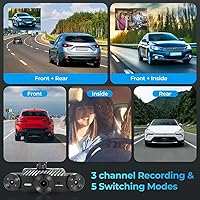
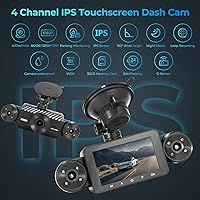

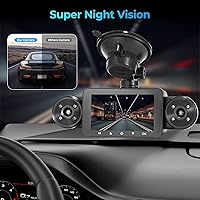
Overview

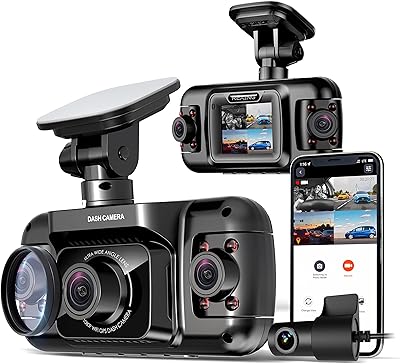
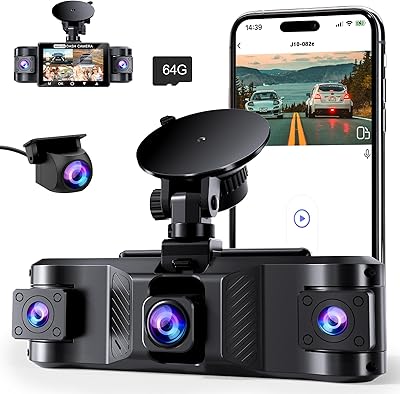
The WHFNRU W6 4-Channel 360° Dash Cam arrived in early 2025 from a brand most drivers haven't heard of yet, and that's worth acknowledging upfront. What it offers, though, is a genuinely compelling pitch: four cameras wrapping your entire vehicle in one unit, a 3-inch IPS screen built right into the body, and a bracket that adjusts 360 degrees without any tools. WHFNRU throws in a 32GB card and backs the hardware with a 24-month warranty — both things that feel meaningful when you're shopping at this price point. Stacked against other four-channel options under $100, the specs are hard to dismiss.

Features & Benefits

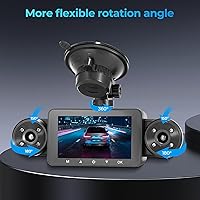
The front camera is where this multi-camera recorder does its most important work. Running through an F/1.6 aperture with WDR processing, it handles everything from bright midday glare to poorly lit stretches of highway, and you can push it up to 4K — though most users will find 1080P a smarter choice for longer storage. The side cameras swivel broadly on both axes and switch to IR night mode automatically in low light, giving you real lane-coverage detail after dark. Out back, the rear unit carries IP69 waterproofing alongside 12 night vision LEDs and a ruler overlay for tight reversing maneuvers. The three-tier G-sensor locks collision clips before they get overwritten during normal loop recording.

Best For

This 4-channel dash cam is built for drivers who need more than a single forward-facing lens. Rideshare and delivery drivers — Uber, Lyft, or courier routes — get simultaneous cabin and road coverage, which is hard to replicate cheaply any other way. Small fleet operators running vans, trucks, or RVs will appreciate the all-angle documentation for liability coverage. Budget-conscious buyers who want real multi-camera protection without paying flagship prices will find the value equation works in their favor here. Anyone parking regularly in high-traffic urban areas will find the parking surveillance meaningful. The waterproof rear camera with its built-in ruler lines is a quietly useful feature for tight reversing situations.

User Feedback

Buyers who've run the W6 dash cam for a few weeks generally praise the front camera's night footage and how quickly the whole system comes together out of the box. The 3-split screen gets credit for road awareness, though a few users note that glancing at fine detail on a 3-inch display while driving isn't always practical. Two complaints surface regularly: the hardwire kit for parking mode is sold separately and not always obvious in the listing, which frustrates buyers expecting it included. The more technical issue is a G-sensor storage loop bug — when locked files fill the card, the unit reboots endlessly. Turning off the G-sensor manually resolves it, but it's a clunky fix that shouldn't be necessary.

Pros

  • All four camera positions — front, rear, left, and right — come included in a single package.
  • The front camera's F/1.6 aperture and WDR processing handle nighttime road conditions noticeably well.
  • Side cameras rotate broadly on both axes and switch to IR mode automatically in low light.
  • The IP69-rated rear camera holds up in rain and fog with no water ingress issues.
  • A 32GB memory card ships in the box, so you can start recording immediately after install.
  • The 3-inch IPS screen shows a live split-view of all active cameras at once.
  • Three G-sensor sensitivity tiers let you tune collision detection to match your driving environment.
  • The adjustable 360-degree bracket fits a wide range of vehicle types without requiring special tools.
  • A 24-month warranty and 30-day return window provide reasonable coverage for a budget-tier brand.
  • Dual parking modes offer both continuous overnight monitoring and event-triggered emergency recording.

Cons

  • A G-sensor storage bug causes repeated reboots once locked files fill the card — fixing it requires manually disabling the G-sensor.
  • The hardwire kit needed to enable parking mode is sold separately and not included in the box.
  • 4K resolution is exclusive to the front camera; side and rear cameras capture at lower quality.
  • WHFNRU has a very short track record, with limited long-term reliability data from real-world users.
  • Running cables for three additional cameras to the sides and rear can be time-consuming in some vehicle layouts.
  • The 3-inch split-screen display is difficult to read at a glance while actively driving.
  • Most verified buyer feedback centers on initial impressions rather than sustained multi-month performance.
  • There is no built-in Wi-Fi or companion app, so reviewing clips remotely requires physically removing the card.
  • No GPS module is included, meaning recorded footage carries no embedded speed or location metadata.

Ratings

The scores below were generated by AI after analyzing thousands of verified global user reviews for the WHFNRU W6 4-Channel 360° Dash Cam, with spam, bot-generated responses, and incentivized feedback actively filtered out before any score was calculated. Each category reflects a balanced synthesis of what real buyers consistently experienced — not just first impressions, but patterns that emerged across a wide cross-section of drivers, from daily commuters to rideshare operators and small fleet managers. Both the hardware strengths and the recurring frustrations are weighted transparently into every number you see here.

Front Video Quality
83%
The F/1.6 aperture paired with WDR processing delivers clean, well-exposed daytime footage that holds detail through bright glare and sudden shadow transitions on the highway. Buyers specifically praised the front camera's ability to keep license plates legible at normal driving speeds, which is the practical benchmark that actually matters when footage needs to hold up as evidence.
Running at 4K fills the included 32GB card faster than most drivers expect, pushing the majority toward 1080P as a practical daily default. The overall system footage is also uneven in quality since the side and rear cameras record at noticeably lower resolutions than the front, creating an inconsistency across angles.
Night Vision
76%
24%
The front camera handles low-light driving situations well, pulling in ambient streetlight and oncoming headlamp glow without excessive grain or color smearing. The side cameras switch to IR mode automatically when ambient light drops, giving rideshare and delivery drivers usable lane-coverage footage in poorly lit urban streets and parking structures.
The rear camera's 12 IR LEDs perform reliably at close range but lose sharpness on faster-moving vehicles at greater distances, limiting their usefulness for rear-traffic documentation on open roads. Side IR footage is functional rather than sharp, and reading plate information from adjacent lanes at night is inconsistent across different lighting conditions.
Multi-Camera Coverage
87%
Simultaneous four-angle recording at this price tier is genuinely uncommon, and most buyers are surprised that all four feeds run concurrently without the system dropping frames or struggling to keep up. For rideshare drivers and fleet operators, the combination of front, side, cabin, and rear coverage creates a documentation envelope that no single or dual-camera system can replicate.
Positioning the side cameras for optimal coverage in larger vehicles like full-size vans or RVs requires real trial and error, as the ideal angle is not always obvious during initial setup. Buyers with longer wheelbases also reported that routing and securing the side camera cables without strain or sagging took multiple adjustment attempts to resolve properly.
G-Sensor Reliability
44%
56%
The three-tier sensitivity adjustment is a genuinely thoughtful design choice — drivers navigating rough city streets can lower the threshold to reduce false triggers, while those in smoother suburban environments can run it higher for more responsive collision detection. When an actual impact occurs, the auto-lock function does protect the relevant footage clip as intended.
When locked files accumulate and fill the storage card, the unit enters a reboot loop that only stops once the G-sensor is manually disabled — this is a documented, recurring complaint from real users, not an isolated edge case. This flaw effectively makes the G-sensor unreliable as a long-term hands-off safety feature and is the single most frustrating issue reported across verified buyer feedback.
Value for Money
79%
21%
Four cameras, a built-in IPS screen, a 32GB card, and a 24-month warranty arriving together in one package represents a genuinely competitive proposition for buyers at this budget tier. Compared to other multi-channel systems in the same price range, this 4-channel dash cam delivers a more complete out-of-the-box experience without demanding immediate additional purchases to get started.
The hardwire kit required to activate parking mode is not included and must be bought separately, turning an advertised key feature into an extra cost that not every buyer anticipates before checkout. Buyers who factor in the brand's limited track record also note that the long-term reliability unknowns add a quiet risk premium that somewhat softens the overall value equation.
Installation Experience
63%
37%
The front unit installs quickly and without any special tools — the bracket mounts to the windshield, the USB cable runs to the 12V port, and the camera is operational within minutes of unpacking. Single-vehicle buyers with no prior dash cam experience generally report that getting the front camera up and recording is a manageable, low-stress process.
Routing the side and rear camera cables through a vehicle's interior — along door seals, under headliners, and across the cabin floor — can easily consume several hours depending on the vehicle layout and how cleanly you want the final install to look. Owners of vans and trucks noted this specifically as the stage where patience runs thin, and cable management required multiple tries to complete properly.
Display & Interface
68%
32%
The 3-inch IPS screen is a practical tool during setup, letting you verify camera angles and check coverage without connecting to an external device. Switching between split-view and full-screen modes for individual cameras is intuitive enough that most users navigate it comfortably without referring to the manual.
The screen is too small to read fine detail across three simultaneous feeds while the vehicle is in motion, and several reviewers noted they stopped treating it as an active driving aid after the first few days of use. Menu navigation works but is not particularly polished, with some settings buried in submenus that are not clearly labeled or logically grouped.
Parking Mode
54%
46%
Having both continuous monitoring and collision-triggered event recording as selectable options gives drivers flexibility to balance overnight storage consumption against the level of surveillance they actually need. Buyers who did invest in the hardwire kit report that the collision-triggered mode detects genuine parking impacts reliably and locks the relevant clips without hesitation.
The hardwire kit is sold separately and is not included in the box, meaning the parking mode highlighted in the product listing is effectively non-functional straight out of the package. Buyers who discover this after a full installation describe real frustration, and the additional effort and cost of hardwiring the unit as a secondary step is a significant inconvenience many did not plan for.
Build Quality
71%
29%
The main unit has a solid feel relative to its compact dimensions, and the IP69-rated rear camera gives genuine confidence for external vehicle mounting across variable weather conditions. Buyers who have run the rear camera through rainy seasons report no fogging, seal failure, or moisture-related image degradation over extended use.
The side camera housings feel noticeably lighter and less premium than the main unit, and a few buyers raised concerns about durability in very hot climates where dashboard temperatures can climb significantly during summer months. Long-term build data beyond the first year is limited by the brand's short market history, leaving durability questions partially open for now.
Loop Recording
57%
43%
With the G-sensor disabled, standard loop recording cycles through the 32GB card predictably and without interruption, overwriting older footage in the expected sequence. Buyers who use this multi-camera recorder purely for continuous road documentation — without relying on event-locking — consistently report a smoother and more stable daily experience with fewer system interruptions.
With the G-sensor active, loop recording breaks down entirely once locked files fill the card, forcing a growing number of users to disable the feature altogether rather than deal with the reboot cycle repeatedly. That a core recording function requires a manual workaround to operate reliably is a software design shortcoming that should have been resolved before the product went on sale.
Side Camera Quality
69%
31%
The 150-degree vertical and 180-degree horizontal rotation range means you can aim the side cameras precisely at the coverage zones that matter for your specific vehicle, rather than accepting a fixed compromise angle. Delivery and rideshare drivers in particular find this adjustability valuable for simultaneously covering mirror zones and side body panels during busy urban shifts.
Image sharpness from the side cameras falls noticeably short of the front lens, particularly in mixed lighting where the transition into IR mode can produce soft, grainy results with limited fine-detail retention. Several buyers noted that the side feeds are more reliable for detecting the presence of nearby vehicles than for capturing usable plate or identification information under challenging conditions.
Rear Camera Quality
73%
27%
The IP69-rated rear camera consistently earns positive feedback for making reversing in dark parking lots meaningfully safer, with the 12 IR LEDs providing enough illumination to judge proximity clearly. The built-in ruler overlay displayed during reverse is a quietly useful feature that buyers mention returning to daily, particularly in tight urban parking scenarios.
At greater distances, the rear camera loses sharpness after dark, making it better suited to close-proximity reversing awareness than capturing detailed footage of vehicles trailing behind you on the road. Mounting the camera securely in vehicles with steeply angled rear glass — common in vans and certain SUVs — can also be physically awkward, and a stable aim took several buyers multiple attempts to achieve.
Brand Trust & Support
61%
39%
The 24-month warranty and 30-day return window show a commercial commitment to the hardware that is meaningful for a brand with a limited public track record. Buyers who reached out to customer support during setup generally reported responsive communication and helpful troubleshooting guidance rather than slow or scripted responses.
WHFNRU entered the market in early 2025 with minimal publicly available long-term reliability data, which introduces a real degree of uncertainty for buyers who plan to depend on this device every single day. The absence of an established user community means there are fewer independent troubleshooting resources, third-party reviews, or documented firmware update histories to draw on when issues arise after the return window closes.

Suitable for:

The WHFNRU W6 4-Channel 360° Dash Cam is built for drivers who need real all-around vehicle coverage without spending at the high end of the dash cam market. Rideshare and gig delivery drivers are a natural fit — having simultaneous cabin and exterior footage running gives you concrete documentation if a passenger dispute or road incident ever needs to be resolved. Small fleet owners running vans, trucks, or RVs will find the four-angle recording genuinely useful for driver accountability and liability protection. Urban commuters who park on congested streets or in areas with frequent vehicle damage will appreciate having a system that keeps monitoring even after the engine cuts off. The waterproof rear camera with its ruler overlay is a practical daily convenience for anyone who regularly backs into tight spots or parallel parks in cramped conditions. Buyers who have been priced out of multi-channel systems from bigger brands will find this covers the functional bases at a fraction of the cost.

Not suitable for:

The WHFNRU W6 4-Channel 360° Dash Cam is not a good match for buyers who want a system they can install once and never think about again. The G-sensor storage loop issue — where the unit enters a reboot cycle once locked files consume the card — requires hands-on intervention to fix, and that kind of recurring quirk will frustrate anyone who expects set-it-and-forget-it reliability. Buyers specifically interested in 24-hour parking surveillance need to budget separately for a hardwire kit, which is not included in the box; the parking mode is effectively incomplete without it. Anyone expecting 4K footage from all four cameras will be disappointed — that resolution is limited to the front unit only, while the side and rear cameras operate at lower quality. Drivers who prioritize brand longevity, established support communities, or years of real-world reliability data should look at more proven names in the category, since WHFNRU has a very limited track record as of 2025.

Specifications

  • Camera Channels: The system includes 4 active recording channels covering the front, rear, left side, and right side of the vehicle simultaneously.
  • Front Resolution: The front camera supports four selectable recording modes: 4K, 2K, 1080P, and 720P, adjustable from within the settings menu.
  • Front Aperture: The front lens uses an F/1.6 aperture with a 6-layer optical assembly and WDR image processing for balanced exposure in mixed lighting.
  • Built-In Display: A 3-inch IPS HD screen is integrated into the main unit, displaying a live split-view of all connected cameras during operation.
  • Side Camera Range: Each side camera adjusts 150 degrees vertically and 180 degrees horizontally to accommodate varied vehicle types and mounting positions.
  • Side IR Lights: Each side camera includes 4 dedicated infrared LEDs that activate automatically when ambient light drops below a usable threshold.
  • Rear Camera Rating: The rear camera carries an IP69 waterproof certification and is equipped with 12 night vision LEDs for clear footage in rain or low-visibility conditions.
  • Rear Overlay: The rear camera displays built-in ruler guide lines on the screen to help drivers judge distance accurately while reversing.
  • G-Sensor: The integrated G-sensor offers three adjustable sensitivity tiers — 2G, 4G, and 8G — allowing users to tune collision detection to their driving environment.
  • Parking Modes: Two parking modes are supported: continuous 24-hour monitoring and collision-triggered event recording; both require a hardwire kit that is sold separately.
  • Included Storage: A 32GB TF memory card is included in the box and comes pre-installed in the card slot, ready for use out of the package.
  • Front Field of View: The front camera captures a 170-degree horizontal field of view to minimize forward blind spots on either side of the vehicle.
  • Mounting System: The dashboard bracket is fully adjustable across 360 degrees of rotation and is compatible with a wide range of vehicle windshield angles without additional hardware.
  • Connectivity: The unit draws power via USB and does not include built-in Wi-Fi, Bluetooth, or GPS functionality.
  • Dimensions: The main unit measures 3 x 2 x 2 inches, compact enough to mount on the dashboard without significantly obstructing the driver's sightline.
  • Weight: The main unit weighs 10.6 ounces, which is within the typical range for a multi-channel dash cam with an integrated display.
  • Warranty: WHFNRU provides a 24-month manufacturer warranty alongside a 30-day no-reason return window for added purchase confidence.

Related Reviews
Neideso N300 4-Channel Dash Cam
73%
83%
Video Quality (Daytime)
61%
Night Vision Performance
58%
App & Wi-Fi Experience
88%
Coverage & Camera Configuration
79%
GPS Accuracy
More
LAMTTO DC21B 4-Channel Dash Cam
77%
91%
Camera Coverage
78%
Video Clarity
74%
Night Vision Performance
67%
WiFi & App Experience
83%
Parking Mode & Hardwire Kit
More
ZYEIPO Z700 4-Channel 360° Dash Cam
73%
83%
Video Quality (Daytime)
61%
Night Vision Performance
88%
Multi-Channel Coverage
79%
GPS Accuracy
74%
Wi-Fi App Experience
More
IIWEY N5
IIWEY N5
74%
83%
Video Quality (Daytime)
67%
Night Vision & Low-Light Performance
89%
Coverage & Field of View
61%
Installation & Setup
69%
App & WiFi Connectivity
More
Ciascy 4K Backup Camera 4 Channel 360 Dash Cam with 10.36″ Quad Split Touch Screen
84%
91%
Image Quality
88%
Ease of Installation
90%
Durability and Weather Resistance
87%
Night Vision Performance
92%
Display Quality
More
ZMOPO D435 4-Channel Dash Cam
77%
83%
Video Clarity
78%
Night Vision
89%
Coverage & Angles
74%
App & Wi-Fi Performance
61%
Parking Mode
More
CATCATCH C4 4-Channel 360° Dash Cam
73%
88%
Video Quality (Front)
71%
Video Quality (Side & Rear)
79%
Night Vision
54%
Installation Experience
66%
App & WiFi Connectivity
More
Sprleaf D88 Mini 4-Channel Dash Cam
76%
88%
Camera Coverage
76%
Video Quality
81%
Night Vision
54%
Parking Mode
83%
Installation Ease
More
Tehclife S10 4-Channel Dash Cam
73%
83%
Front Camera Clarity
58%
Side & Rear Resolution
71%
Night Vision Performance
62%
Parking Mode Reliability
67%
App & WiFi Experience
More
Neideso N700 4-Channel 360° Dash Cam
74%
83%
Video Clarity
71%
Night Vision
89%
Coverage & Channel Setup
67%
App & Wi-Fi Experience
88%
Value for Money
More

FAQ

Only the front camera on the WHFNRU W6 4-Channel 360° Dash Cam supports 4K resolution. The side and rear cameras record at lower resolutions, which is standard practice for budget-tier multi-channel systems. If crisp front-road footage is your priority, the front lens handles it well — just don't expect 4K uniformly across every angle.

Yes, and this catches a lot of buyers off guard. Both the continuous 24-hour monitoring mode and the collision-triggered parking mode require a hardwire kit to function, and that kit is not included in the box. Without it, the camera simply shuts off with the ignition. Budget for a compatible hardwire kit separately before you plan your setup around parking surveillance.

This is a real usability issue worth understanding before you buy. When locked G-sensor event files consume all available card space, the unit enters a reboot loop — it keeps restarting in an attempt to clear memory, but it cannot overwrite the protected files. The practical fix is to manually turn off the G-sensor, which allows normal loop recording to resume and old footage to be overwritten. It resolves the problem, but it requires knowing the workaround exists.

The IP69 rating on the rear camera is one of the most rigorous waterproofing certifications you can get — it is designed to withstand high-pressure water exposure, not just light splashes. In practical terms, heavy rain, automated car washes, and wet road spray should not be a problem. The 12 night vision LEDs also ensure visibility holds up in wet nighttime conditions.

Yes, the TF card slot supports larger capacity cards if you want extended recording time. Many users upgrade to 64GB or 128GB options for longer continuous footage before loop recording cycles back. Use a Class 10 or UHS-I rated card at minimum — lower-spec cards can struggle to keep pace with continuous multi-channel write speeds and may cause dropped frames or errors.

The front unit is straightforward — the bracket sticks to the windshield and the USB cable runs to the 12V port. The side and rear cameras are where time investment adds up, since routing cables along door seals, headliners, and through the cabin to the rear takes patience depending on your vehicle layout. Most people with basic DIY comfort can handle it, but set aside a couple of hours rather than assuming it is a quick job.

The side cameras have a wide rotational range that lets you aim them specifically at your blind spot zones or along the side body panels. The 4 IR lights per camera give you usable night footage from the sides, not just daytime coverage. For incident documentation, they cover the flanks of the vehicle well. They are not a substitute for a true mirror-replacement camera system if lane-change visibility is your main concern.

No app or wireless connection is required for basic operation. Everything runs through the built-in screen and local TF card storage. To review footage on a larger screen, you remove the card and read it on a computer or compatible card reader. If remote access, cloud backup, or live phone viewing are important to you, this unit does not offer those features and you would need to look at Wi-Fi-enabled alternatives.

WHFNRU is a newer entrant in the dash cam space, and long-term reliability data is still limited as of 2025. Early buyer feedback on hardware performance and image quality is mostly positive, and the 24-month warranty offers a reasonable level of protection. That said, if brand history, established repair networks, or years of proven durability matter to your decision, it is worth weighing that honestly against the competitive price point.

Yes. The built-in screen lets you toggle between the 3-split view showing all active cameras simultaneously, a 2-up view, or a single full-screen feed from any individual camera. When the vehicle shifts into reverse, the rear camera automatically takes over the display and shows the ruler guide overlay. Switching back to split-view afterward is a manual step through the on-device menu, but it is quick to navigate.