
Overview

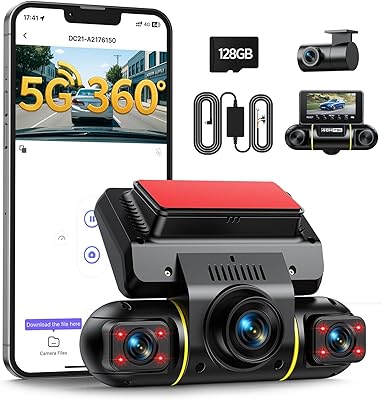
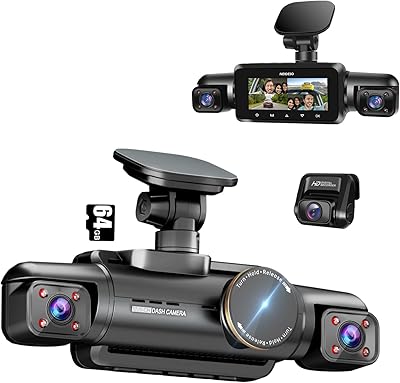
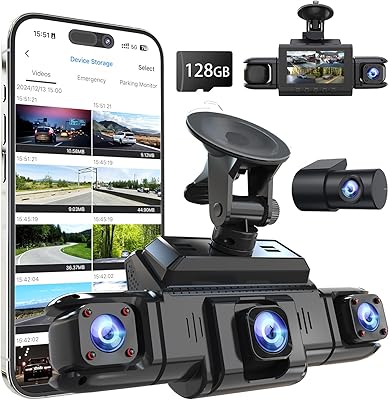
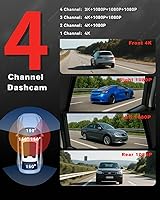
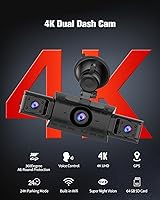
The CATCATCH C4 4-Channel 360° Dash Cam enters a crowded market with a clear pitch: four-camera surround coverage at a price multi-channel systems rarely reach. It captures 4K UHD footage up front while three additional 1080P channels cover the sides and rear simultaneously — four discrete views, not a single wraparound image, worth clarifying upfront. The brand is genuinely new, having launched in mid-2025 with a modest review count, so approach early ratings with measured expectations. That said, the package includes a free 64GB SD card, which removes one of the usual first-purchase headaches and adds real day-one convenience.

Features & Benefits

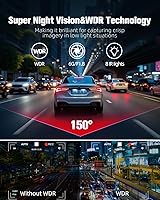
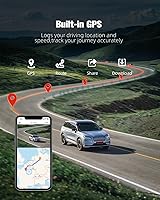
The front camera is where this quad-channel dash cam puts its best foot forward. A wide F1.8 aperture paired with a six-glass lens pulls in enough light to resolve license plates in poorly lit parking structures — an advantage you notice most on night drives. Wide Dynamic Range processing keeps the image from blowing out when oncoming headlights flood the frame. The infrared interior camera is a genuine plus for rideshare drivers needing cabin footage in complete darkness. GPS quietly logs speed and route in the background, which can matter enormously when contesting a ticket. The adjustable G-Sensor locks collision footage without constantly firing on speed bumps, a practical refinement many cheaper systems skip.

Best For

This four-way dash cam makes the most sense for a specific kind of driver. Rideshare and delivery workers benefit most directly — the interior IR camera documents every passenger interaction, something a standard front-rear setup simply cannot offer. Drivers who have dealt with disputed insurance claims will value having four corroborating angles rather than one. Small fleet owners get a cost-effective way to monitor vehicle use without dedicated telematics hardware. It also suits buyers who prefer a ready-to-run kit: the included SD card means you are recording on the first drive. Comfort with smartphone apps helps, since GPS review and remote video access both depend on phone pairing.

User Feedback

Early buyers generally praise the video clarity and overall value, though the feedback pool is still thin given the recent launch. Cable management draws the most consistent criticism — routing wires for four cameras through headliners and door pillars is genuinely time-consuming, and some buyers underestimated the installation effort involved. Night vision earns mostly positive remarks. A recurring frustration is the initial app pairing, which a handful of users describe as temperamental before it stabilizes. The 3-inch display gets favorable mentions for in-car footage review while parked. A small number of buyers in hot climates flag heat monitoring as something to watch, though serious thermal failures remain rare in reports so far.

Pros

  • Four simultaneous camera channels cover front, sides, and rear — a rare feature at this price tier.
  • The 4K front camera resolves license plates clearly even in low-light conditions thanks to the wide F1.8 aperture.
  • An infrared interior camera records cabin activity in total darkness, a practical must-have for rideshare drivers.
  • Built-in GPS passively logs speed and route data, creating timestamped evidence useful for insurance or legal disputes.
  • The G-Sensor sensitivity is adjustable, reducing the constant false-alarm lockouts that frustrate drivers on rough roads.
  • A free 64GB endurance SD card is included, so the system is genuinely ready to record on the first drive.
  • 5GHz WiFi transfers footage to a smartphone noticeably faster than older single-band dash cam apps.
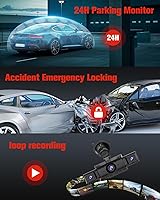
  • The 24-hour parking mode extends protection when the vehicle is unattended, not just while driving.
  • The 3-inch onboard display allows quick footage review without needing a phone or laptop nearby.
  • Loop recording automatically manages storage by overwriting older clips while preserving any locked event files.

Cons

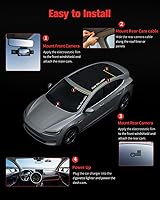
  • Routing wires for four cameras is a time-intensive installation that will frustrate less experienced buyers.
  • The brand launched in mid-2025 with under 100 reviews, making long-term reliability genuinely difficult to assess yet.
  • App pairing has been reported as inconsistent during initial setup, requiring patience before it stabilizes.
  • Side and rear channels record at 1080P rather than 4K, which is a noticeable resolution drop from the front camera.
  • Thermal performance in hot climates is an open question — sustained summer heat testing data is not yet available.
  • The suction cup mount is less secure than adhesive or hardwire mounts for drivers on rough or vibration-heavy roads.
  • Four-channel systems generate large file sizes quickly, and the 64GB card fills up faster than single-cam users might expect.
  • The manufacturer claims around TS file format reliability and heat dissipation remain unverified by independent testing.

Ratings

The scores below were generated by our AI rating engine after analyzing verified global user reviews for the CATCATCH C4 4-Channel 360° Dash Cam, with active filtering applied to remove incentivized, bot-generated, and duplicate submissions. The result is an honest snapshot of real ownership experiences — strengths and frustrations weighted equally, so you can make an informed decision without wading through cherry-picked praise.

Video Quality (Front)
88%
Drivers consistently note that the 4K front camera resolves license plates even in dim parking structures and at highway speeds, which is the primary job of any dash cam. The F1.8 aperture and WDR combination handles the kind of harsh backlit situations — morning sun glare, tunnel exits — that flatten cheaper cameras into useless white blobs.
A handful of users note mild color fringing along high-contrast edges in direct sunlight, a limitation of the wide-angle lens geometry rather than the sensor itself. Footage can also look slightly over-sharpened in post-processing, which some find artificial compared to flagship brand outputs.
Video Quality (Side & Rear)
71%
29%
For a system at this price tier, recording 1080P simultaneously across three additional channels is a genuine achievement that most buyers find more than adequate for insurance documentation purposes. Side footage in particular has drawn praise for capturing lane-change incidents cleanly during daytime driving.
The resolution gap between the 4K front and the 1080P side and rear cameras is noticeable when you play back footage side by side — fine detail like distant plate numbers on the rear channel is often unreadable. Low-light performance on the side cameras trails the front noticeably, which matters for parking lot incidents at night.
Night Vision
79%
21%
The infrared cabin camera is a standout performer for rideshare drivers — it records passenger compartment activity in complete darkness without producing any distracting glow. Front exterior night footage benefits visibly from WDR processing, keeping headlight halos from washing out the surrounding road scene.
Exterior side and rear cameras lack the same IR or WDR enhancement as the front, so nighttime footage from those channels can appear noticeably grainy and underexposed in poorly lit residential streets. A few users in dense urban environments report that sodium-vapor street lighting still creates an orange cast the WDR does not fully correct.
Installation Experience
54%
46%
The suction cup windshield mount attaches and adjusts in minutes, and the main unit itself is compact enough to tuck behind a rearview mirror without blocking much of the sightline. For drivers willing to invest the time, the included installation tool aids with tucking cables behind trim panels.
Routing four separate camera cables cleanly through a vehicle interior is a genuinely time-consuming task that has frustrated a significant portion of buyers, particularly those who expected something closer to a plug-and-play experience. Several reviewers on larger trucks report that the cable lengths are borderline insufficient for rear camera runs without extensions.
App & WiFi Connectivity
66%
34%
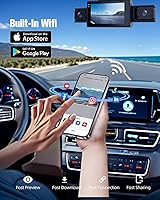
When the 5GHz pairing works, video transfers to a smartphone noticeably faster than older single-band dash cam apps, and the ability to review GPS-tagged footage remotely without pulling the SD card is a meaningful convenience for daily users. The app interface is organized clearly enough that most users find what they need within a few sessions.
Initial pairing frustrates a recurring subset of users, with the WiFi connection dropping or failing to appear during first setup — a problem that often resolves itself but leaves a poor first impression. App stability on older Android devices has drawn specific complaints, with occasional crashes during video playback of multi-channel files.
GPS Accuracy
81%
19%
Route and speed logging work reliably in open-sky conditions, and several buyers report successfully using GPS-tagged footage to contest traffic citations by demonstrating their actual speed at a documented location. The one-tap privacy disable is a thoughtful inclusion for drivers who do not want location data stored continuously.
GPS signal acquisition takes longer in dense urban canyons or covered parking structures, and a few users note speed readings lag by one to two seconds — not a dealbreaker for most cases, but potentially relevant in precise legal disputes. There is currently no desktop software bundled for reviewing GPS overlays outside the mobile app.
G-Sensor Performance
76%
24%
The adjustable sensitivity is one of the more practical design decisions in this system — drivers on rough or pothole-heavy roads can dial it back to stop unnecessary event file lockouts that would otherwise fill their locked folder within days. When calibrated correctly, impact detection during actual collisions is reported as reliable and immediate.
Out of the box, the default sensitivity sits too high for many roads, leading new users to find their storage clogged with locked files from speed bumps before they discover the adjustment setting. A small number of users report the opposite problem — sensitivity set low enough to avoid false alarms occasionally missing softer real impacts.
Parking Mode
72%
28%
The 24-hour parking surveillance adds a layer of protection most drivers with dedicated parking spots or street parking genuinely appreciate, particularly for detecting low-speed lot scrapes that are over before a driver-triggered recording would begin. Motion-triggered clips are compact and easy to locate in the folder structure.
Without a hardwire kit featuring a low-voltage cutoff — which is not included in the box — using parking mode regularly carries a real risk of draining the car battery over multiple days, a concern that several buyers flagged only after experiencing it firsthand. The system does not alert the driver when parking mode clips are recorded, so reviewing them requires proactively checking the device.
Build Quality
73%
27%
The main unit feels solid for a camera in this price bracket, with a matte plastic finish that does not attract fingerprints and a display bezel that does not flex under normal handling. Button travel is firm and tactile, which makes menu navigation manageable without looking directly at the unit.
The side camera housings feel noticeably lighter and less substantial than the main unit, giving an impression of cost-cutting on the peripheral components. A couple of users in hot-climate states report minor housing discoloration after several months on a sun-exposed windshield, though no structural failures have been reported in the current review pool.
Heat Management
63%
37%
The manufacturer's claimed heat-dissipation design appears adequate for temperate climate driving, with most users in moderate climates reporting no shutdowns or overheating warnings after months of daily use. The TS file format, if it performs as advertised, does reduce the consequences of a thermal shutdown by preserving in-progress footage.
Users in consistently hot climates — particularly in the southern United States and similar regions — report that the unit occasionally throttles or displays temperature warnings during long summer drives with the windshield in direct sun. These remain anecdotal at this stage given the product's brief track record, but they represent a meaningful concern for buyers in hot regions.
Value for Money
86%
Four simultaneous recording channels, built-in GPS, 5GHz WiFi, an infrared cabin camera, and a free 64GB SD card bundled into a single mid-range purchase is a combination that would cost considerably more from established brands — and that gap is the core reason this system has attracted mostly positive early sentiment. For rideshare drivers especially, the all-in value is difficult to match at this price point.
The value calculation changes somewhat for buyers who only need front-and-rear coverage, since they are effectively paying for two channels they will not use. Long-term value also depends on brand support and firmware reliability, both of which remain unproven for a product with less than a year on the market.
Loop Recording
82%
18%
The automatic loop recording works reliably in practice — old footage overwrites cleanly without affecting locked event files, and the choice of 1, 3, or 5-minute segment lengths gives users practical control over how granularly they can locate a specific incident in their timeline. Most users set it and forget it without issues.
On a 64GB card with all four channels active, storage fills faster than single-camera users expect, and some buyers find themselves needing to offload footage more often than anticipated if they also use parking mode. Segment navigation through four simultaneous channels is manageable but slower than searching footage from a two-channel system.
Display Usability
68%
32%
The 3-inch onscreen display is genuinely useful for quick roadside footage review without needing to pair a phone — a convenience that becomes particularly valuable after an accident when retrieving evidence quickly matters. Menu text is readable at arm's length for most users without squinting.
Viewing multi-channel footage simultaneously on a 3-inch screen means each feed is quite small, making it difficult to assess fine details without transferring clips to a larger screen. Touchscreen responsiveness has drawn lukewarm feedback, with some users preferring the physical buttons for navigating menus in cold weather with gloves on.
Brand Reliability
58%
42%
Early buyer experiences are predominantly positive, and the manufacturer has responded to some app-related complaints with update pushes — a sign of at least some active post-launch support. The inclusion of a proper user manual with installation guidance reflects more care than some no-name competitors in this tier.
With under 100 reviews and a launch date of mid-2025, there is simply not enough track record to confidently assess long-term durability, warranty follow-through, or firmware development trajectory. Buyers who prioritize brand assurance and proven after-sales support should treat this as an acknowledged risk before purchasing.

Suitable for:

The CATCATCH C4 4-Channel 360° Dash Cam was clearly designed with rideshare and gig-economy drivers in mind — anyone who regularly carries strangers in their vehicle will find the infrared interior camera alone worth the investment. Beyond that niche, it makes strong practical sense for drivers who have previously dealt with insurance disputes or been on the losing end of a he-said-she-said accident claim, since four simultaneous camera angles produce a level of corroborating evidence a single front cam simply cannot match. Small business owners running a handful of service vehicles will appreciate the GPS route logging and collision event locking without needing to invest in dedicated fleet telematics. Tech-comfortable buyers who enjoy managing footage through a smartphone app rather than fumbling with an SD card reader will find the 5GHz WiFi transfer genuinely convenient. Finally, drivers who want a complete, ready-to-record kit without sourcing additional accessories will value the included 64GB card that lets the system work straight out of the box.

Not suitable for:

The CATCATCH C4 4-Channel 360° Dash Cam is a harder sell for buyers who want a plug-and-forget installation with minimal fuss. Running cables for four cameras through headliners, door pillars, and across a windshield is a meaningful undertaking, and drivers who are not comfortable with that kind of DIY work — or who drive a leased vehicle where interior modification is restricted — should think carefully before committing. The brand is also genuinely new with a limited track record, which matters if you rely on long-term manufacturer support, firmware updates, or warranty service. Buyers who only need front-and-rear coverage and have no interest in side or cabin recording are paying for channels they will never use, and a focused two-channel system would likely serve them better and install faster. Anyone living in a consistently hot climate should also be aware that thermal performance under sustained summer heat remains an open question given how recently this product launched.

Specifications

  • Front Resolution: The front camera records at 4K UHD, delivering high-detail footage suitable for capturing license plates and road signage in most lighting conditions.
  • Side & Rear Res.: The three additional channels — left, right, and rear — each record at 1080P Full HD simultaneously with the front camera.
  • Camera Channels: The system uses four independent camera modules to provide discrete coverage of the front, rear, driver-side, and passenger-side of the vehicle.
  • Field of View: Each lens covers a 150-degree wide-angle field of view, designed to minimize blind zones around the vehicle.
  • Aperture: The front camera uses an F1.8 aperture paired with a six-glass lens construction to improve light capture in low-visibility conditions.
  • Display: A built-in 3″ screen on the main unit allows direct footage playback and menu navigation without requiring a smartphone.
  • WiFi: The unit includes 5GHz dual-band WiFi, enabling faster wireless video transfer to the companion app on iOS and Android devices.
  • GPS: Built-in GPS records speed and geographic route data alongside video, storing this information as metadata reviewable through the app or compatible software.
  • Included Storage: A 64GB endurance-grade SD card is included in the box; the slot supports cards up to 256GB for extended recording capacity.
  • Parking Mode: A 24-hour parking surveillance mode activates motion or impact detection when the vehicle is stationary and the engine is off.
  • G-Sensor: An adjustable-sensitivity G-Sensor detects sudden impacts and automatically locks a 20-second clip of pre- and post-event footage from deletion by loop recording.
  • Night Vision: The interior camera uses infrared IR LEDs for cabin recording in complete darkness, while the front exterior camera relies on WDR processing to handle extreme lighting contrast.
  • File Format: Video is saved in both MP4 and TS (Transport Stream) formats; the TS format is intended to protect footage integrity during unexpected power interruptions.
  • Dimensions: The main unit measures 3.07 x 1.69 x 1.69 inches, making it compact enough to sit behind a rearview mirror without significantly obstructing the driver's sightline.
  • Weight: The main camera unit weighs 4.8 ounces, light enough that the suction cup mount handles it without requiring adhesive reinforcement under normal conditions.
  • Mounting Type: The system ships with a suction cup windshield mount, which allows repositioning without leaving permanent marks on the glass.
  • Compatible Vehicles: The manufacturer lists compatibility with cars, trucks, and ATVs, though four-camera cable routing will be significantly more involved on larger or open-cab vehicles.
  • Power Input: The unit is powered via the included car charger, which draws power from the vehicle's 12V accessory or cigarette lighter socket.
  • App Availability: The companion app is available free of charge on both Android and iOS, and the manufacturer states that no paid subscription or VIP activation is required for full functionality.
  • Brand & Model: Manufactured under the CATCATCH brand by Pikidox, with model designation C4, first listed on the market in May 2025.

Related Reviews
ZMOPO C4 4-Channel Dash Cam
75%
88%
Value for Money
91%
Coverage & Angles
76%
Daytime Video Quality
58%
Exterior Night Vision
79%
Interior Night Vision
More
LAMTTO DC21B 4-Channel Dash Cam
77%
91%
Camera Coverage
78%
Video Clarity
74%
Night Vision Performance
67%
WiFi & App Experience
83%
Parking Mode & Hardwire Kit
More
Neideso N300 4-Channel Dash Cam
73%
83%
Video Quality (Daytime)
61%
Night Vision Performance
58%
App & Wi-Fi Experience
88%
Coverage & Camera Configuration
79%
GPS Accuracy
More
ZYEIPO Z700 4-Channel 360° Dash Cam
73%
83%
Video Quality (Daytime)
61%
Night Vision Performance
88%
Multi-Channel Coverage
79%
GPS Accuracy
74%
Wi-Fi App Experience
More
WHFNRU W6 4-Channel 360° Dash Cam
68%
83%
Front Video Quality
76%
Night Vision
87%
Multi-Camera Coverage
44%
G-Sensor Reliability
79%
Value for Money
More
IIWEY N5
IIWEY N5
74%
83%
Video Quality (Daytime)
67%
Night Vision & Low-Light Performance
89%
Coverage & Field of View
61%
Installation & Setup
69%
App & WiFi Connectivity
More
Ciascy 4K Backup Camera 4 Channel 360 Dash Cam with 10.36″ Quad Split Touch Screen
84%
91%
Image Quality
88%
Ease of Installation
90%
Durability and Weather Resistance
87%
Night Vision Performance
92%
Display Quality
More
RexingUSA R4 4-Channel Dash Cam
72%
93%
Coverage & Channel Count
76%
Video Quality
69%
Night Vision
78%
Wi-Fi & App Experience
82%
GPS Accuracy
More
ZMOPO D435 4-Channel Dash Cam
77%
83%
Video Clarity
78%
Night Vision
89%
Coverage & Angles
74%
App & Wi-Fi Performance
61%
Parking Mode
More
Tehclife S10 4-Channel Dash Cam
73%
83%
Front Camera Clarity
58%
Side & Rear Resolution
71%
Night Vision Performance
62%
Parking Mode Reliability
67%
App & WiFi Experience
More

FAQ

Yes, all four channels record simultaneously — front at 4K, and the left, right, and rear cameras each at 1080P. It is worth clarifying that these are four separate camera views, not a single stitched panoramic image. You will see four independent video feeds, which is how most multi-channel dash cams in this category work.

Yes. The interior camera uses infrared LEDs, so it records in complete darkness without producing any visible light that might disturb or alert passengers. The image will appear in black and white under IR illumination, which is standard for this type of cabin camera.

Honestly, it is more involved than a standard front-only dash cam. You will need to route cables from the main unit to cameras positioned at the rear and both sides, which typically means tucking wires along headliners, A-pillars, and door seals. Plan for at least one to two hours if you have not done this type of installation before. A professional car audio installer can do it cleanly if you prefer.

GPS-logged speed and route data can be useful supporting evidence, but its legal weight varies depending on your jurisdiction and the specifics of the situation. The video footage itself — especially from four angles — tends to carry more weight. Think of the GPS data as a useful supplement rather than a standalone proof.

You can use cards up to 256GB, which gives you significantly more recording time before loop recording kicks in and begins overwriting older footage. The included 64GB card is a solid starting point, but if you use parking mode frequently or leave the system running all day, a larger card is worth considering.

The manufacturer lists cars, trucks, and ATVs as compatible vehicles. The main consideration with larger vehicles is cable length — routing wires to a rear camera on a full-size truck or SUV may require extension cables not included in the box. Check the cable lengths before assuming they will reach your specific vehicle configuration.

Parking mode uses the camera's motion and impact detection to start recording when the vehicle is parked and the engine is off. The main concern with any parking mode is battery drain — this unit does not include a hardwire kit with a low-voltage cutoff in the box, so if you plan to use parking mode regularly, investing in a proper hardwire kit is strongly recommended to protect your car battery.

The manufacturer claims the TS file format writes data directly to the SD card in real time, which is intended to preserve the last recorded seconds even if power is cut abruptly. This is a manufacturer assertion, and independently verified results on new hardware are limited, but the TS format is a recognized approach to reducing footage loss during power failures.

The companion app is free, and the manufacturer explicitly states that VIP or paid features should not be activated. Basic functions including video preview, download, and sharing are included at no cost. It is worth checking current app store reviews for the latest stability feedback since app quality for newer dash cam brands can vary.

Yes, the G-Sensor sensitivity is adjustable, which is one of this system's practical advantages over fixed-sensitivity competitors. If you drive on roads with lots of potholes or speed bumps, lowering the sensitivity reduces unnecessary file locking that would otherwise eat into your available storage. Access the setting through the onboard menu or the app.