Overview

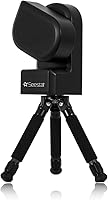
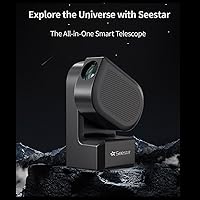
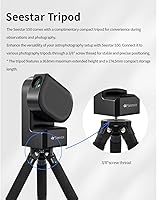
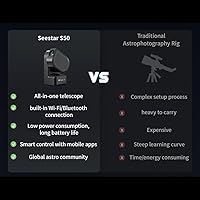
The ZWO Seestar S50 Smart Telescope takes a different approach to astronomy — instead of expecting you to wrestle with polar alignment, star charts, and manual focusers, it packages everything into a single compact unit you control from your phone. The camera, tracking mount, and focuser are all built in, so setup takes minutes rather than hours. Worth noting upfront: planetary viewing is not supported. This all-in-one astronomy device is designed around deep-sky objects, the Moon, and the Sun. If studying Saturn's rings in detail is your goal, look elsewhere. For nebulae, star clusters, and lunar imaging, though, it is a genuinely capable and accessible tool.

Features & Benefits

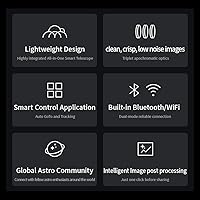
The Seestar S50 runs on a motorized alt-azimuth mount that aligns itself automatically — you skip the frustrating manual setup that trips up so many beginners. The 50mm aperture is modest, but paired with the integrated camera and in-app stacking, it pulls in surprisingly usable images of nebulae and galaxies across multiple exposures. The Seestar app handles pointing, focusing, and image processing all in one place, working on both iOS and Android without complicated pairing. Battery-powered operation means you can take this all-in-one astronomy device to a dark field far from any outlet, which matters a lot for serious sky watching.

Best For

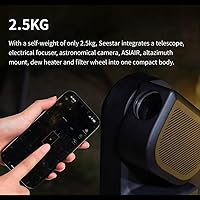
This smart telescope suits people who want to actually enjoy the night sky without spending weeks learning equipment first. It is a natural fit for first-time astronomers, families with curious kids, and travelers who refuse to haul heavy gear. The grab-and-go size is real — at around 3 kg, it fits in a backpack without drama. Hikers and campers who occasionally find themselves under a clear sky will appreciate how quickly it is ready to use. The app also lets you share images directly with a community of other users, making it a surprisingly social experience rather than a solitary, screen-staring hobby.

User Feedback

Owners consistently highlight ease of setup and how quickly they captured usable images compared to traditional telescopes at similar price points. The app earns praise for reliability, and ZWO's ongoing firmware updates have addressed several early software issues. On the downside, some buyers feel the 50mm aperture struggles on very faint targets under light-polluted skies, and battery life during long imaging sessions draws complaints. The planetary exclusion frustrates a minority who did not read the specs carefully before purchasing — worth double-checking before you buy. Build quality feedback is generally positive, with users noting the unit feels solid for its weight despite the compact packaging.

Pros

  • Setup takes minutes with no polar alignment or manual calibration required.
  • The built-in motorized tracking mount keeps targets locked without any user intervention.
  • Automated image stacking in the app produces surprisingly detailed results for a 50mm aperture.
  • Fully battery-powered operation means you can use it anywhere, far from power outlets.
  • The Seestar app is reliable, regularly updated, and works on both iOS and Android.
  • At roughly 3 kg, this smart telescope is genuinely portable for field trips and travel.
  • The in-app community lets you share astrophotos and connect with other users easily.
  • ZWO has a strong track record of pushing firmware improvements based on user feedback.
  • Lunar and solar viewing modes expand what you can do beyond just nighttime deep-sky sessions.
  • The all-in-one design eliminates the need to buy separate cameras, mounts, and focusers.

Cons

  • Battery life can fall short during longer imaging sessions, requiring a power bank backup.
  • The 50mm aperture struggles to reveal faint targets under light-polluted or hazy skies.
  • Planetary observation is entirely unsupported, which catches some buyers off guard.
  • Full dependence on the smartphone app means a dead phone ends your session.
  • Image control options are limited compared to standalone astronomy cameras and dedicated software.
  • No eyepiece viewing is possible — everything is screen-based, which some users dislike.
  • Wi-Fi connectivity between the device and phone can occasionally drop in the field.
  • The fixed focal length leaves no room to swap optics for different observing goals.

Ratings

The ZWO Seestar S50 Smart Telescope scores below are generated by AI after analyzing thousands of verified global user reviews, with spam, bot activity, and incentivized feedback actively filtered out. The ratings reflect both the genuine strengths that make this all-in-one astronomy device stand out for beginners and the real frustrations reported by buyers who pushed it beyond its intended use. Nothing has been smoothed over — the pain points are scored as honestly as the highlights.

Ease of Setup
94%
Users consistently describe unpacking and first-light experiences that take under 15 minutes, which is almost unheard of in the astronomy space. The automatic alignment removes the single biggest frustration point for beginners — no star-hopping, no polar alignment, no manual calibration required.
A small number of users on older Android devices reported inconsistent Wi-Fi pairing during initial setup, requiring app restarts. In very bright ambient conditions, the alignment step can occasionally need a second attempt to lock on properly.
App Experience
88%
The Seestar app handles the entire workflow — from pointing and focusing to stacking and sharing — in a clean, intuitive interface that non-technical users pick up quickly. ZWO's commitment to regular updates has steadily improved stability since the original launch version.
Early firmware versions had noticeable bugs that frustrated buyers who purchased at launch, and some users still report occasional session drops mid-imaging when the phone screen locks. The app is central to everything, so when it misbehaves, there is no manual fallback.
Image Quality
76%
24%
For a 50mm aperture device at this price tier, the in-app stacking produces genuinely pleasing images of bright nebulae, star clusters, and the Moon that beginners are proud to share. The automated processing does a solid job of pulling detail across multiple exposures without any user skill required.
Faint deep-sky targets — distant galaxies, low-surface-brightness nebulae — reveal the aperture ceiling pretty quickly, especially under light-polluted skies. Experienced imagers comparing output to larger dedicated setups will find the results modest, though that comparison is somewhat unfair given the format.
Portability
93%
At approximately 3 kg with no external mount, counterweights, or tripod required beyond a flat surface, this smart telescope is something you can genuinely slip into a hiking pack and use at a remote dark-sky site the same evening. Travelers who have hauled traditional setups across airports appreciate the difference immediately.
The compact housing does not include a dedicated carry case in most configurations, meaning users need to source their own protective bag for travel. A handful of hikers noted the unit needs a stable, level surface to function properly, which can be tricky on uneven terrain.
Battery Life
58%
42%
The self-contained battery means there are no cables tethering the device to a power source, which genuinely expands where you can use it. For a casual hour or two of imaging on a clear night, the battery handles the session without issue for most users.
Two to three hours of continuous runtime is the realistic ceiling, which falls short for serious deep-sky imaging sessions that often run four or more hours. Many owners have adopted the workaround of keeping a USB power bank connected during sessions, which partially undermines the cord-free appeal.
Build Quality
81%
19%
The housing feels solid and well-machined for its weight class, and long-term owners report that the unit holds up well to regular outdoor use without developing rattles or alignment drift. The integrated design means there are fewer connection points that can loosen over time compared to traditional modular setups.
The device is not rated weatherproof, which limits its usability on humid or dewy nights without additional precautions. A few users noted that the lens cap and port covers feel slightly less premium than the main body, which is a minor but noticeable quality gap.
Value for Money
86%
Considering that the purchase includes an optical tube, camera sensor, motorized tracking mount, focuser, and processing software in a single package, the all-in-one astronomy device represents strong overall value for the target audience. Buyers who previously priced out equivalent modular beginner setups often note the Seestar S50 compares favorably on total cost.
For buyers who outgrow the aperture limitations within a few months and want to upgrade, the all-in-one format means none of the components can be reused in a more capable setup. Users who primarily wanted planetary viewing feel the money was poorly spent, which skews the value perception in that subgroup.
Tracking Accuracy
83%
The motorized alt-azimuth tracking keeps targets centered during multi-minute stacking sessions reliably enough for the exposure lengths the built-in camera uses, which is the practical standard that matters here. Users imaging the Moon or bright nebulae over the course of an evening report smooth, consistent tracking with no noticeable drift.
At very long imaging runs beyond 30 minutes on a single target, some users observe minor field rotation artifacts in stacked images — a known characteristic of alt-azimuth mounts rather than a device defect. For the imaging durations the Seestar app actually uses, this rarely surfaces as a visible issue.
App Community Features
79%
21%
The ability to share captured images directly through the Seestar app to a community of other users adds a social dimension that keeps casual users engaged beyond just the imaging itself. For families and younger users especially, this sharing loop makes the experience feel more connected and rewarding.
The community features are entirely dependent on the app ecosystem, so users who prefer exporting raw files to desktop software find the workflow less flexible than they would like. The sharing platform is also relatively small compared to dedicated astronomy communities like Cloudy Nights or AstroBin.
Solar & Lunar Performance
89%
The integrated solar filter and dedicated lunar mode make daytime solar viewing both safe and surprisingly detailed, which expands the useful hours of the device well beyond night sessions. Moon imaging in particular produces crisp, high-contrast results that consistently impress first-time users.
Solar observation requires the built-in filter to function correctly, and users who attempt other observing modes accidentally during the day risk sensor damage — though the app does include warnings. Lunar images at full aperture can occasionally show slight chromatic fringing around high-contrast edges.
Connectivity Reliability
71%
29%
Wi-Fi connectivity between the device and smartphone works smoothly in most conditions, and the direct device-to-phone network approach means there is no router or internet connection needed in the field. This makes setup in remote locations genuinely straightforward.
Session drops triggered by phone screen timeouts or background app interference are a recurring complaint that takes new users by surprise. Keeping the phone screen active and closing background apps before a session is a workaround many users discover the hard way rather than from documentation.
Beginner Accessibility
96%
The Seestar S50 is about as frictionless an entry point into astronomy as currently exists in the consumer market — there is genuinely no comparable all-in-one device that requires less prior knowledge to produce rewarding results on a first outing. Parents buying this for children or for family use report high satisfaction across the board.
The high accessibility does create a ceiling: users who develop a serious interest in astronomy relatively quickly will find the system too constrained within months. The learning experience is rich at first but narrows as curiosity grows, since the closed ecosystem limits deeper hands-on skill development.
Target Acquisition
87%
The automated pointing system locates targets from a built-in catalog reliably, and users report that bright showpiece objects like the Orion Nebula or Andromeda Galaxy are typically centered and imaging within two to three minutes of selection. This consistency is one of the most frequently praised aspects in long-term ownership reviews.
The catalog covers standard deep-sky objects well but lacks some of the more obscure targets that intermediate users eventually want to explore. Custom coordinate entry is possible but is not as intuitive as selecting from the catalog, and a few users found the documentation on this feature sparse.
Firmware & Software Support
82%
18%
ZWO has demonstrated a credible track record of maintaining the Seestar S50 with firmware updates that address real user-reported issues, which gives buyers reasonable confidence that the device will improve over time rather than stagnate. Several features that were missing at launch have since been added through updates.
Update rollouts are not always consistent across regions, and some users on specific device configurations have reported needing to wait weeks for fixes that others received sooner. The reliance on cloud-connected updates also means that users in areas with poor internet access can fall behind on stability improvements.

Suitable for:

The ZWO Seestar S50 Smart Telescope is a strong match for anyone who has always been curious about astronomy but felt put off by the complexity of traditional setups. If you are a complete beginner who wants to point at the sky and actually see something impressive on the first night, this all-in-one astronomy device is built for exactly that scenario. Families introducing younger children to stargazing will find the app-based interface far more engaging than squinting through an eyepiece in the dark. Travelers, hikers, and campers who want a capable sky-watching tool that fits in a backpack without weighing them down will genuinely appreciate how portable and battery-independent this smart telescope is. It also suits casual hobbyists who want to capture and share images of nebulae and galaxies without investing months learning astrophotography workflows from scratch.

Not suitable for:

The ZWO Seestar S50 Smart Telescope is not the right choice if planetary observation is anywhere near the top of your list. The 50mm aperture physically cannot deliver the kind of detail on Jupiter, Saturn, or Mars that dedicated planetary telescopes provide, and the device is not designed for that purpose — so buyers who skip this detail often end up frustrated. Experienced amateur astronomers who already own equatorial mounts, larger aperture scopes, or dedicated astronomy cameras will likely find this all-in-one astronomy device underwhelming in terms of raw capability and customization. If you prefer fully manual control over every aspect of your imaging session, the app-dependent workflow may feel limiting. Those hoping to observe very faint deep-sky targets from heavily light-polluted urban areas should also temper expectations, since the modest aperture does have real limits under poor sky conditions.

Specifications

  • Aperture: The optical aperture measures 50mm, suitable for capturing deep-sky objects, the Moon, and the Sun.
  • Focal Length: Estimated focal length is 250mm at approximately f/5, providing a wide field of view for extended sky objects.
  • Mount Type: A built-in motorized alt-azimuth mount handles automatic alignment and continuous target tracking without manual adjustment.
  • Focuser: An integrated motorized focuser is controlled entirely through the Seestar mobile app, eliminating manual focus wheels.
  • Camera Sensor: An onboard imaging sensor is built directly into the unit, enabling both live viewing and multi-frame capture in one device.
  • Image Processing: The Seestar app performs automated exposure stacking and basic image processing on-device without requiring third-party software.
  • Power Source: The unit is fully battery-powered, allowing operation in remote locations without access to mains electricity.
  • Weight: The device weighs approximately 3 kg (6.6 lbs), making it genuinely portable for field and travel use.
  • Compatibility: The Seestar app is compatible with Android and iOS smartphones and tablets for full wireless control.
  • Connectivity: The telescope connects to smartphones via a dedicated Wi-Fi network broadcast directly from the unit.
  • Observation Targets: Supported targets include deep-sky objects, the Moon, and the Sun; planetary observation is explicitly not supported.
  • Finderscope: A straight-through finderscope is included to assist with initial pointing and rough alignment in the field.
  • Model Number: The official model designation is SEESTAR-S50, manufactured by ZWO.
  • App Platform: The Seestar app is available as a free download on both the Apple App Store and Google Play Store.
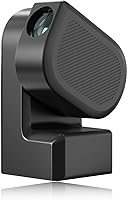
  • Form Factor: The all-in-one design integrates telescope optics, camera, mount, and focuser into a single compact housing.

Related Reviews
Kasa Smart KC420WS Outdoor Security Camera
81%
88%
Image Clarity
91%
Night Vision Performance
79%
Motion & Person Detection
86%
Weather & Build Durability
84%
Setup & App Experience
More
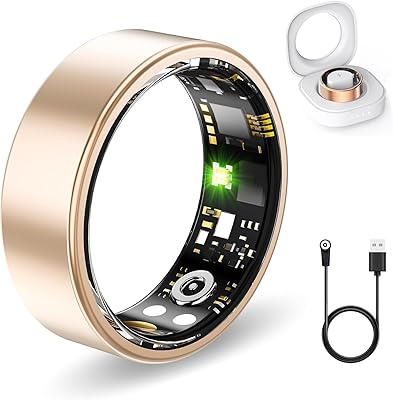
aaboRing Smart Ring
aaboRing Smart Ring
85%
88%
Heart Rate Monitoring
91%
Sleep Tracking Accuracy
92%
Build Quality (Titanium)
85%
Battery Life
90%
Waterproof Performance
More
Kasa Smart KC400 Indoor Security Camera
79%
88%
Image Quality
71%
Night Vision Performance
84%
Motion & Person Detection
82%
Sound Detection & Baby Monitoring
81%
App Experience
More
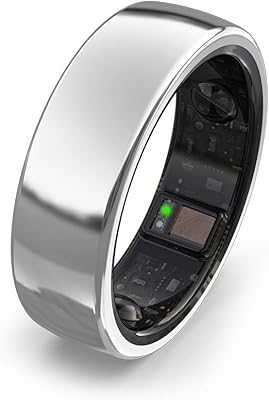
TIAZUUX Smart Ring Health Activity Tracker
74%
91%
Value for Money
87%
Sleep Tracking
88%
Comfort & Wearability
83%
Build Quality
79%
Battery Life
More
FKGZJF Smart Ring
FKGZJF Smart Ring
86%
91%
Value for Money
89%
Battery Life
85%
Health Monitoring Accuracy
92%
Design & Comfort
82%
App Experience
More
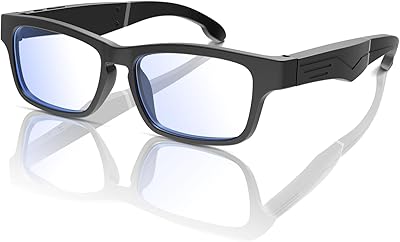
Emerhome E13 Bluetooth Smart Glasses
70%
83%
Ease of Pairing
79%
Call Clarity
58%
Audio Volume & Quality
54%
Battery Life
71%
Touch Control Accuracy
More
MERNEUO Smart Ring
MERNEUO Smart Ring
84%
88%
Health Tracking Accuracy
90%
App Integration & Ease of Use
72%
Battery Life
93%
Waterproof & Durability
85%
Comfort & Fit
More
MorePro Smart Watch
MorePro Smart Watch
84%
88%
Value for Money
90%
Health Monitoring Accuracy
84%
Battery Life
85%
Display Quality
87%
Usability/Interface
More
TnoxHD Smart Glasses
85%
85%
Audio Quality
90%
Battery Life
80%
Comfort and Fit
78%
Sound Clarity for Calls
88%
Ease of Use
More
Celestron PowerSeeker 114EQ Reflector Telescope
73%
83%
Optical Performance
61%
Mount Quality
57%
Ease of Setup
74%
Included Accessories
81%
Value for Money
More

FAQ

Setup is genuinely straightforward. You place the unit on a flat surface, download the Seestar app, connect your phone to the device over Wi-Fi, and follow the on-screen alignment steps. Most users are imaging their first target within 10 to 15 minutes of unboxing.

No — and this is the single most important thing to know before buying. The device is not designed for planetary viewing, and the 50mm aperture cannot deliver the kind of planetary detail most buyers expect. If planets are your primary interest, a different telescope would serve you much better.

The results are impressive given the aperture size, but you need to keep expectations realistic. A 50mm lens is modest, and while the in-app stacking does a solid job pulling detail from nebulae and star clusters, you will not be matching the output of larger dedicated astrophotography rigs. For casual sharing and personal enjoyment, the images are genuinely rewarding.

No, the unit runs entirely on its internal battery, which is one of its genuine strengths for field use. You can take it to a dark-sky site far from any power source and it will operate independently. Carrying a portable power bank is still a smart idea for longer sessions.

Battery life is one of the more commonly raised complaints from owners. Under typical use, expect roughly two to three hours of continuous imaging before needing a recharge. For longer nights, connecting a USB power bank to extend runtime is a practical workaround many users rely on.

None at all. The entire experience is designed around the assumption that you are new to astronomy. The app guides you through alignment, selects targets, and handles focus automatically. You do not need to know how to read a star chart or understand equatorial coordinates.

It can be used under moderately light-polluted skies, but results will be noticeably better under darker conditions. In heavily lit urban areas, fainter deep-sky targets like distant galaxies may look washed out. Brighter targets like the Moon, star clusters, and prominent nebulae still perform well in suburban settings.

The app has a solid reputation for stability, and ZWO has been consistent about releasing firmware and software updates since launch. Earlier versions had a few rough edges, but most have been addressed over time. Checking for updates before a session is a good habit to stay on the most stable version.

Yes, the device includes a built-in solar filter for safe daytime solar observation, making it suitable for family use. Because everything is viewed on a phone screen rather than through a direct eyepiece, the risk of accidental eye exposure to unfiltered sunlight is also significantly reduced compared to traditional telescopes.

Long-term owners generally report that the unit feels solid and well-constructed for its weight. The compact housing does not feel flimsy, though it is not rated as weatherproof, so using it in rain or heavy moisture is not advised. Treating it with the same care you would give any precision optical instrument is the right approach.

Where to Buy