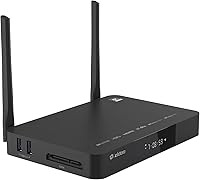
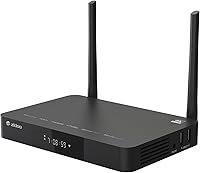
Overview

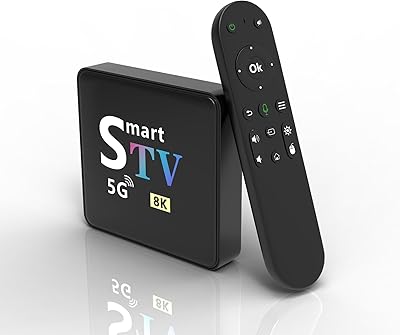
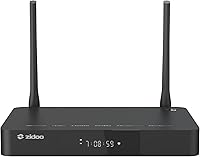
The Zidoo Z9X 8K arrived in mid-2024 as a serious contender for enthusiasts who want one box to handle everything their home theater demands. Built around the Amlogic S928X-K quad-core processor with 6GB DDR4 RAM and 64GB of onboard storage, this media player is clearly aimed above the casual streaming crowd. Android 11 brings app flexibility, though it sits inside a chassis barely over an inch tall — unobtrusive enough to disappear into any AV rack. The 8K label is real, but honest buyers will spend most of their time in 4K UHD territory, where this box genuinely delivers.

Features & Benefits

What sets the Z9X 8K apart from most Android boxes is how seriously it handles both video and audio. The VS10 image engine processes Dolby Vision with low-latency output, producing tone mapping that holds up against dedicated disc players. Blu-ray collectors will appreciate native BDMV and ISO playback without extra software. On the audio side, support for DSD512, SACD ISO, and PCM up to 192kHz makes this a genuine Hi-Fi source component — not a checkbox feature. Three USB 3.0 ports, a SATA connection, Wi-Fi 6, and full SMB/NFS protocol support round out a connectivity package that rarely forces a compromise.

Best For

This media player makes the most sense for people with real libraries to manage. If you have hundreds of Blu-ray ISOs sitting on a NAS, native SMB and NFS support means browsing and playing them feels genuinely effortless. Audiophiles who resent running a separate DAC for high-res music files will find the audio codec support here unusually thorough. It also suits anyone moving on from an older Zidoo or a Dune HD unit who wants a meaningful hardware upgrade. Casual streamers who mostly use Netflix or Disney+ can find cheaper options; this box rewards buyers who will actually push its capabilities.

User Feedback

Owners consistently praise the Dolby Vision accuracy and the image quality that the VS10 engine produces, calling it noticeably better than what older chipsets managed. The controller app draws positive comments for its tablet landscape layout, though a handful of users report occasional lag on initial connection. The bigger recurring concern is Google Play certification — some streaming apps require sideloading or workarounds, which frustrates less technical buyers. NAS streaming over a wired Gigabit connection draws near-universal approval; Wi-Fi performance gets more mixed reactions depending on router distance. Firmware updates arrive regularly, and most users describe Zidoo’s support team as responsive when issues escalate.

Pros

  • Native BDMV and ISO playback handles full Blu-ray disc images including BD-J menus without extra software.
  • Dolby Vision processing via the VS10 engine produces noticeably accurate tone mapping on HDR content.
  • DSD512 and SACD ISO support makes this a legitimate Hi-Fi audio source, not just a video box.
  • Three USB 3.0 ports plus a SATA connection give real flexibility for attaching local storage.
  • Wired Gigabit NAS streaming over SMB and NFS is fast, stable, and requires no third-party server.
  • Wi-Fi 6 dual-band support keeps wireless performance competitive for buyers who cannot run an Ethernet cable.
  • The controller app’s tablet landscape mode makes browsing large libraries noticeably more comfortable.
  • 64GB of onboard eMMC storage leaves meaningful room for apps and cached metadata alongside the OS.
  • Firmware updates arrive regularly and have a track record of addressing real playback compatibility issues.
  • Compact 1.1-inch height fits into tight AV rack spaces where most media players would not clear the shelf.

Cons

  • Google Play certification gaps mean some streaming apps require sideloading workarounds that non-technical buyers will find frustrating.
  • Wi-Fi performance at longer distances or through walls is inconsistent and draws recurring complaints in user reviews.
  • Audio output settings and HDR configuration menus have a steep learning curve for first-time users in this product category.
  • Customer support relies entirely on email and forum channels, with no live assistance available for urgent issues.
  • Occasional tone mapping inconsistencies on specific Dolby Vision Profile 7 encodes require manual profile switching to resolve.
  • The physical remote lacks backlit keys, which is a genuine annoyance in a darkened home theater environment.
  • Metadata matching for non-English or obscure titles in the media library often requires manual correction.
  • USB 2.0 ports feel outdated on a device at this price point, limiting transfer speeds for attached peripherals.
  • Firmware update gaps can stretch several weeks, leaving some content compatibility bugs unresolved for longer than buyers expect.
  • Buyers who rarely use ISO playback or high-res audio will struggle to justify the cost against cheaper certified alternatives.

Ratings

The Zidoo Z9X 8K scores here reflect an AI-driven analysis of verified buyer reviews collected globally, with spam, bot activity, and incentivized feedback actively filtered out before scoring. This media player earns strong marks in several areas enthusiasts care about most, but the results also surface real friction points that prospective buyers deserve to know upfront. Both the highs and the frustrations are represented honestly across every category below.

Video Processing Quality
91%
The VS10 image engine and Dolby Vision tone mapping draw consistent praise from buyers who have compared it directly against older Zidoo models and competing players. Reviewers note that HDR-to-SDR conversion on non-HDR displays looks noticeably more natural than what they experienced previously.
A small segment of users reports occasional tone mapping inconsistencies on certain DV Profile 7 content, requiring manual profile switching. These cases appear tied to specific disc encodes rather than a hardware ceiling, but they do require some user intervention to resolve.
Blu-ray & ISO Playback
93%
For collectors with large BDMV and ISO libraries, this box handles disc images with a reliability that reviewers describe as close to a dedicated physical player. Menu navigation within ISO files, including BD-J menus and bonus features, works smoothly in the vast majority of reported cases.
A handful of buyers encountered compatibility hiccups with older or poorly authored ISO files, requiring firmware updates to resolve. UHD ISO playback from USB-attached drives occasionally stutters if the drive is underpowered, so a powered hub or SATA connection is strongly recommended.
Hi-Fi Audio Performance
88%
Audiophiles consistently call out the DSD512 and PCM 192kHz support as genuinely functional rather than a spec-sheet checkbox. Buyers using it as a primary SACD ISO and high-res FLAC source report that it replaced a dedicated network streamer in their setup without any quality compromise.
Atmos and DTS:X pass-through works well over HDMI, but a few users note that bitstream output to older AV receivers occasionally requires toggling audio settings after a firmware update. The learning curve for configuring audio output modes is steeper than expected for non-technical buyers.
Android App Ecosystem
62%
38%
Android 11 gives access to a wide range of media apps, and sideloading works reliably for buyers comfortable with it. Users who primarily use the box for local playback and treat streaming apps as a secondary feature report that the Android layer causes them no meaningful problems.
Google Play certification gaps mean that some major streaming services either refuse to install or run in lower quality tiers than a certified device would deliver. This is a known trade-off in the enthusiast media player category, but it genuinely disappoints buyers who expected a full streaming experience out of the box.
NAS & Network Streaming
84%
Wired Gigabit Ethernet performance over SMB and NFS draws near-universal approval, with buyers describing 4K UHD streaming from a NAS as fluid even with large bitrate files. The built-in SMB server is a practical touch that lets phones and tablets browse content stored on an attached drive.
Wi-Fi performance is more polarizing, with buyers in larger homes or with obstructions reporting occasional buffering on high-bitrate content. SMB v1 compatibility is appreciated for older NAS units, but connecting over Wi-Fi at distance remains the most common network complaint in user reviews.
Build Quality & Design
78%
22%
The all-black aluminum-accented chassis feels appropriately solid for the price tier and sits unobtrusively in a rack without drawing attention. At under 1.1 inches tall, it slots into tight AV cabinet spaces where bulkier boxes simply would not fit.
A few buyers describe the plastic sections of the chassis as feeling slightly cheaper than expected given the overall price positioning. The unit runs warm during extended 4K HDR sessions, and while no thermal shutdowns have been widely reported, ventilation clearance is something to plan for.
Remote Control & Controller App
74%
26%
The dedicated iOS and Android controller app is a genuine convenience, especially the tablet landscape mode that gives a more visual browsing experience for large libraries. Most users find the physical remote adequate for daily navigation once they adjust to the button layout.
Some buyers report intermittent Bluetooth lag with the controller app on initial connection, requiring a reconnect before it responds reliably. The physical remote lacks backlit keys, which is a minor but recurring complaint from users who operate their home theater in a darkened room.
Setup & Initial Configuration
71%
29%
Buyers with prior experience on Android media players or previous Zidoo devices report a fairly painless setup process, with the interface feeling familiar and logically organized. The Zidoo media center app auto-scrapes metadata for local libraries in a way that most users describe as working well without much manual correction.
First-time users without prior experience in this category often find the audio and video output configuration menus overwhelming. Several reviewers recommend budgeting extra time for initial setup and suggest consulting the Zidoo community forum before changing advanced HDR or audio passthrough settings.
Connectivity & Port Selection
89%
Three USB 3.0 ports and a SATA 3.0 connection give buyers genuine flexibility for attaching hard drives, and the ability to handle drives up to 24TB means future-proofing is not a concern. Bluetooth 5.2 adds wireless peripheral support without consuming a USB port.
The two USB 2.0 ports feel like a carry-over from a previous generation when every other port on the device runs at USB 3.0 speeds. Some buyers also note the absence of a USB-C port as a missed opportunity, given how common USB-C storage has become.
Firmware Update Frequency
76%
24%
Zidoo has a reasonable track record of releasing firmware updates that address reported playback bugs, and the OTA update process is straightforward enough that most users complete it without issue. Several reviewers specifically credit firmware patches for fixing DV and audio sync issues they encountered at launch.
The gap between a reported bug and a firmware fix can stretch to several weeks, which frustrates buyers who encounter problems with specific content types. A small number of users report that a firmware update introduced new audio output behavior, requiring them to revisit settings they had already configured.
Customer Support Responsiveness
69%
31%
Buyers who reached out via email generally describe Zidoo support as responsive and willing to engage with technical issues rather than offering scripted replies. The official forum is an active resource, with community members and occasionally Zidoo staff providing detailed troubleshooting guidance.
Support response times stretch noticeably during peak periods, and a few international buyers note language barrier friction in written exchanges. The reliance on email and forum-based support, without a live chat option, leaves some buyers feeling underserved when they encounter an urgent playback issue.
Value for Money
81%
19%
For buyers who will genuinely use the ISO playback, high-res audio, and NAS integration features, the value case is strong relative to what comparable enthusiast players cost. Replacing a separate Hi-Fi network streamer and a media player with one box is a concrete saving that several reviewers explicitly mention.
Buyers who primarily want a streaming box and only occasionally dabble in local media will find the price hard to justify against a certified Android TV device that handles streaming apps more reliably. The value equation is real, but only for the specific use case this player is built around.
8K Readiness
58%
42%
The hardware is technically capable of 8K at 60Hz 12-bit output, and for buyers future-proofing a high-end display purchase, having that headroom built in is a genuine differentiator at this price point. The AV1 and H.265 codec support also ensures the box handles next-generation streaming compression formats.
Practical 8K content remains scarce, and the majority of buyers will never engage this capability in real use. Paying a premium for 8K hardware today means betting on a content ecosystem that has not materialized at the consumer level, and several buyers in reviews openly question whether it was worth the added cost.
Media Library Management
83%
The built-in movie and TV library manager does a solid job of pulling posters, metadata, and ratings for large collections with minimal manual intervention. Buyers migrating from Kodi or Plex as a primary interface appreciate having a native solution that does not require a separate server to run.
Metadata matching occasionally fails on non-English titles or less common releases, requiring manual corrections. The library interface, while functional, is described by some long-time Kodi users as less customizable than they would prefer, particularly around display layout and sorting options.

Suitable for:

The Zidoo Z9X 8K is built for a specific kind of buyer, and if you fit the profile, it is hard to argue against it. If you have spent years accumulating a Blu-ray collection and have ripped those discs into ISO or BDMV files stored on a NAS, this media player handles that library with a reliability that most general-purpose Android boxes simply cannot match. Audiophiles who want one device to serve as both a video source and a high-res audio player will find the DSD512, SACD ISO, and PCM 192kHz support genuinely useful rather than decorative. NAS users benefit from native SMB and NFS protocol support that works without installing third-party apps or running a separate server. Home theater enthusiasts upgrading from an older Zidoo or a competitor like Dune HD will notice a meaningful step forward in Dolby Vision processing and overall image quality. If you are the kind of person who already knows what VS10 tone mapping means and why it matters, this box was made for you.

Not suitable for:

The Zidoo Z9X 8K is a poor fit for buyers whose primary goal is reliable access to major streaming services. Android 11 without full Google Play certification means that some streaming apps will not install cleanly, and others may run at reduced video quality compared to a certified device — that is a real and recurring frustration reported by users who did not anticipate it. If your home theater diet is mostly Netflix, Disney+, and YouTube with occasional local files on the side, a certified Android TV stick or a dedicated streaming box will serve you far better at a fraction of the cost. Casual users who are not comfortable navigating audio output settings, sideloading apps, or consulting a community forum when something behaves unexpectedly will find the learning curve genuinely discouraging. The 8K capability, while technically present, is not a practical reason to buy this device today given how little 8K content exists for home consumption. Buyers on a tight budget who want a bit of everything should look elsewhere; the value here is real, but only if you are fully committed to the use case it is designed around.

Specifications

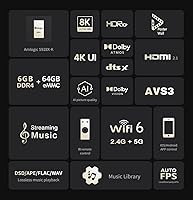
  • Processor: Powered by the Amlogic S928X-K with ARM Cortex-A76 and Cortex-A55 quad-core cores for high-performance media decoding.
  • RAM: 6GB of DDR4 memory provides headroom for smooth multitasking between the media library, Android apps, and background processes.
  • Storage: 64GB of onboard eMMC storage handles the operating system, apps, and metadata caching without eating into attached drive space.
  • Operating System: Runs Android 11 with OTA update support and multi-language interface options out of the box.
  • Video Output: Supports 8K at 60Hz with 12-bit color depth over HDMI, covering the full range from standard HD up to 8K resolutions.
  • HDR Support: Compatible with HDR10, HLG, HDR10+, and Dolby Vision, with the VS10 image engine handling tone mapping and low-latency DV output.
  • Audio Passthrough: Supports Dolby Atmos and DTS:X bitstream passthrough over HDMI and SPDIF for lossless surround sound delivery to compatible AV receivers.
  • Hi-Res Audio: Plays DSD512, SACD ISO, DFF, DSF, WAV, APE, and FLAC files natively, with PCM support up to 192kHz sampling rate.
  • Disc Formats: Handles BDMV, ISO, UHD Blu-ray disc images, MKV, and TS containers without requiring additional software or a separate media server.
  • USB Ports: Includes three USB 3.0 ports and two USB 2.0 ports, all supporting attached hard drives up to 24TB in capacity.
  • SATA: One SATA 3.0 port allows direct connection of a 2.5-inch or 3.5-inch internal hard drive for high-speed local storage.
  • Network: Equipped with Gigabit Ethernet, dual-band Wi-Fi 6 (2.4GHz and 5GHz), and Bluetooth 5.2 for wired and wireless connectivity.
  • Streaming Protocols: Natively supports NFS, SMB v1/v2/v3, UPnP, and WebDAV for direct streaming from NAS devices, PCs, and network shares.
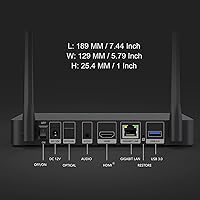
  • Dimensions: Measures 7.45 x 5.8 x 1.04 inches, making it compact enough to fit in tight AV rack shelves without blocking adjacent components.
  • Weight: Weighs 2.59 pounds, which is light enough for easy repositioning but substantial enough to feel well-built in hand.
  • Controller App: A dedicated Zidoo controller app is available for iOS and Android devices, with landscape mode optimized for iPads and Android tablets.
  • Bluetooth: Bluetooth 5.2 supports wireless peripherals including keyboards, mice, and game controllers without occupying a USB port.
  • Color: Available in Black, with a low-profile design intended to blend into dark AV cabinet environments.

Related Reviews
Zidoo Z9X PRO 4K HDR Media Player
82%
91%
4K Video Quality
89%
Audio Performance (Lossless Support)
88%
Connectivity Options
72%
User Interface/Navigation
85%
Customization (Android 11 OS)
More
Tupsio RDC-8K
Tupsio RDC-8K
68%
74%
Waterproofing & Ruggedness
63%
Image Quality (Daylight)
51%
Video Quality
44%
Low-Light Performance
83%
Dual-Screen Design & Usability
More
WIKICO 8K Camcorder A06
80%
92%
Value for Money
85%
Video Quality
88%
Ease of Use
87%
Zoom Functionality
80%
Night Vision Performance
More
SPUNALP UHD 8K Underwater Camera
85%
93%
Image Quality
89%
Build Durability
85%
Waterproof Performance
80%
Battery Life
67%
Wi-Fi Performance
More
LOENTIR DV111 8K Video Camera
85%
91%
Video Quality
88%
Night Vision Performance
85%
Zoom Clarity
90%
Ease of Use
80%
Build Quality
More
XNSIAKXA DC226 8K Digital Camera
85%
88%
Image Quality
85%
Video Quality (8K)
90%
Ease of Use
92%
Autofocus Performance
87%
Portability
More
VETEK HDV01-8K Video Camera
83%
83%
Video Quality
89%
Ease of Use
86%
Audio Quality
88%
Wi-Fi Connectivity
72%
Build Quality
More
RUPA 8K Android TV Box PRO13
86%
94%
Picture Quality
84%
Performance
91%
WiFi and Connectivity
89%
Setup and Installation
92%
Value for Money
More
DXchip 8K Dual Monitor KVM Switch
85%
88%
Performance
91%
Ease of Use
94%
Visual Quality (Resolution & Clarity)
87%
USB Transfer Speed
83%
Build Quality
More
UIKICON WD05 8K Digital Camera 64MP
83%
88%
Image Quality
85%
Video Performance
92%
Ease of Use
60%
Battery Life
83%
Build Quality
More

FAQ

Yes, the Z9X 8K handles BDMV and ISO files natively through its built-in media center, including BD-J menu navigation and bonus feature access. You do not need to install Kodi, Plex, or any third-party player to get full disc image playback up and running.

This is where you need to set realistic expectations. The Zidoo Z9X 8K runs Android 11 but is not Google Play certified, which means some streaming apps may not appear in the Play Store or may stream at lower quality tiers than a certified Android TV device would deliver. Apps like YouTube work fine, but for Netflix in HD or 4K you may need to sideload a specific APK version. If streaming services are your primary use case, a certified streaming stick will serve you better.

The media player supports SMB v1, v2, and v3 as well as NFS natively, so you just add your NAS as a network share in the Zidoo media center settings. Wired Gigabit Ethernet gives the most stable results for large 4K UHD files, though Wi-Fi 6 handles most content reliably if your router is reasonably close.

It genuinely plays them. DSD512, DFF, DSF, and SACD ISO files all play back natively without transcoding, and the audio output over HDMI or SPDIF carries the signal cleanly to a capable AV receiver or DAC. Buyers who have used dedicated network streamers report that the audio quality holds up well in a critical listening context.

The USB 3.0 ports and the SATA 3.0 port all support drives up to 24TB, which covers every consumer hard drive size currently on the market. For best performance with large drives, use the SATA port or a powered USB hub rather than drawing bus power from the USB ports directly.

Zidoo releases firmware updates fairly regularly, typically in response to reported playback compatibility issues or new codec support. OTA updates are pushed directly through the device settings menu and install without needing a PC or USB drive in most cases. The gap between a reported bug and a fix can be a few weeks, so checking the Zidoo community forum for workarounds in the meantime is worth doing.

The VS10 image engine provides genuine Dolby Vision processing with low-latency output, covering most DV profiles including the commonly used Profile 7 and Profile 8 formats. It is not a conversion hack — the hardware is purpose-built for DV decoding and tone mapping. A small number of edge-case disc encodes may require a manual profile tweak, but standard commercial UHD releases work without any user intervention.

Yes, the SATA 3.0 port lets you connect a 2.5-inch or 3.5-inch drive directly inside or alongside the unit depending on your enclosure setup. This is the fastest and most reliable local storage option available on this media player, and it avoids the USB overhead entirely.

Most users keep both around. The app shines when browsing large libraries on a tablet in landscape mode, where the visual grid layout makes scrolling through hundreds of titles much easier than using a physical remote. For quick daily playback control, the included remote is faster. The app occasionally has a brief reconnect delay over Bluetooth, so it works best as a complement rather than a full replacement.

For most users coming from a previous-generation Zidoo or a comparable Dune HD device, the upgrade is meaningful rather than marginal. The Amlogic S928X-K chipset is a significant step forward in Dolby Vision processing accuracy and overall decoding performance. If your current box handles your library well and you mostly stream, the case for upgrading is weaker. But if Dolby Vision quality or high-res audio support is a priority, the improvement is tangible enough to notice in regular use.