Overview

The ZHENGXI 1000W Step-Up Voltage Transformer exists to solve a very specific, very common problem: you've moved to the US from Asia or Europe, and your rice cooker, electric kettle, or espresso machine runs on 220V — not the 110V that American outlets provide. Before buying, it's worth understanding the conversion direction. Step-up means it takes US household current and boosts it to 220–240V. Step-down does the reverse. Confusing the two is an expensive mistake. The ZHENGXI converter sits in the mid-range price tier, which generally signals better component quality than the cheapest options, without crossing into industrial-grade territory.
Features & Benefits

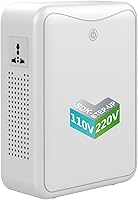
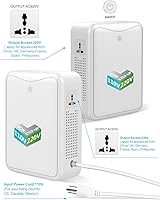
What immediately stands out about this step-up transformer is how much slimmer it is compared to traditional toroidal converters. Those older units are heavy, generate a persistent hum, and sometimes emit a faint electrical odor — none of which you want on a kitchen countertop. The ZHENGXI converter uses a fanless design that runs quietly under normal load, with suction-cup feet that keep it stable on smooth surfaces. It offers two multifunction output sockets accepting plugs from the EU, UK, China, Korea, Hong Kong, the Philippines, and more. The 50/60 Hz compatibility and CE certification add a layer of reassurance, even if CE alone isn't a guarantee of premium components.

Best For

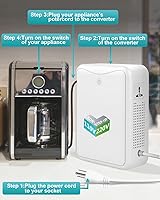
This voltage converter is best suited to expats, international students, or anyone who brought a cherished kitchen appliance from abroad and needs to run it reliably in the US. Think Asian rice cookers, European coffee machines, or Korean electric kettles in the 600–800W range — that's where this unit performs most comfortably. It's designed to live on a countertop permanently, not to be packed in a suitcase. One important note: this is a single-appliance solution. Running multiple devices simultaneously is not recommended. If you own a high-draw appliance like a microwave or induction cooktop, you'll need a significantly higher-capacity transformer — this one simply isn't rated for that load.

User Feedback

Buyers who rate this voltage converter positively tend to focus on two things: quiet operation and how little space it takes up on a countertop. Those upgrading from older, noisier units often notice the difference right away. That said, the 4.2-star rating across several hundred reviews tells a balanced story. A recurring frustration involves wattage labeling — the 1000W headline confuses buyers into thinking they can push appliances close to that figure continuously, when the safer practical ceiling is around 800W. Occasional reports mention compatibility concerns with frequency-sensitive devices. On the positive side, the plug versatility earns consistent praise, with the broad international socket support standing out for multi-appliance households.

Pros

  • Runs completely silently — no fan, no hum, no electrical odor during normal operation.
  • Slim, upright form factor takes up far less counter space than older toroidal-style converters.
  • Suction-cup feet keep the unit firmly planted on smooth kitchen surfaces without sliding.
  • Two multifunction output sockets cover a wide range of international plug types in one unit.
  • 50/60 Hz compatibility means it works with both North American and most imported appliance frequencies.
  • CE certification provides a basic layer of compliance assurance for safety-conscious buyers.
  • Mid-range build quality is a meaningful step up from the cheapest no-name converters on the market.
  • Well-suited to long-term, stationary use — built to sit on a counter and run regularly, not occasionally.

Cons

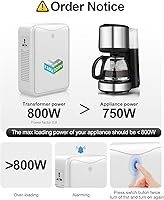
  • The 1000W rating is misleading for everyday use; safe continuous load is realistically capped at around 800W.
  • At nearly 12 pounds, moving or repositioning the unit requires real effort — it is not lightweight.
  • No built-in digital display or indicator beyond basic power-on confirmation.
  • Buyers with high-draw appliances like microwaves or induction cooktops will need a much higher-capacity unit.
  • Limited brand recognition and customer support infrastructure compared to established electronics names.
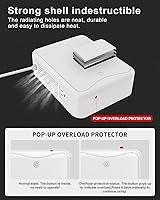
  • No surge protection or automatic overload cut-off is explicitly documented, which may concern cautious buyers.
  • Single-appliance design means households with multiple 220V devices cannot run them simultaneously through this converter.

Ratings

The scores below reflect an AI-driven analysis of verified global buyer reviews for the ZHENGXI 1000W Step-Up Voltage Transformer, with spam, incentivized, and bot-flagged submissions actively filtered out before scoring. Each category captures both what users genuinely praised and the friction points that surfaced repeatedly across different household setups and appliance types. The result is a transparent, balanced picture of where this voltage converter earns its place — and where it falls short.

Noise & Vibration
91%
The fanless design is one of the most consistently praised aspects across reviews, with buyers upgrading from older toroidal converters describing the silence as a genuine revelation. Running a rice cooker or kettle on the counter all morning without any transformer hum in the background makes a real quality-of-life difference in open-plan kitchens.
A small number of users report a faint electrical buzz at loads approaching the upper limit, suggesting the silent operation is best maintained when the connected appliance stays well within the recommended 800W ceiling. Those pushing the unit hard may notice more than they bargained for.
Wattage Clarity
54%
46%
The 1.25x safety margin concept — once understood — is genuinely sensible engineering, and buyers who read the documentation carefully appreciate that the manufacturer is upfront about the practical operating ceiling rather than hiding it in fine print.
The gap between the 1000W headline rating and the 800W practical ceiling creates real confusion at the point of purchase. A recurring complaint in reviews involves buyers connecting appliances rated close to 1000W and experiencing unexpected shutdowns or overheating, having assumed the rated figure was the usable figure.
Form Factor & Footprint
88%
Compared to the heavy, barrel-shaped toroidal transformers that dominated this category for years, the slim upright profile of this voltage converter fits naturally on a kitchen counter alongside normal appliances without dominating the space. Buyers in smaller apartments specifically call this out as a deciding factor.
At nearly 12 pounds, it is far from lightweight — repositioning it regularly is genuinely inconvenient, and anyone hoping to move it between rooms or take it when traveling will find that impractical. The suction-cup feet, while effective on smooth surfaces, do not grip textured or uneven countertops reliably.
Plug Versatility
87%
The dual multifunction output sockets cover an impressively broad range of international plug formats — EU Schuko, UK three-pin, Chinese flat-pin, Korean, Hong Kong, and Philippine styles all fit without a separate adapter. For multi-national households with appliances from different regions, this is a meaningful convenience.
A handful of buyers note that certain plug configurations fit more snugly than others, with looser connections reported for some two-pin plug types. This is not universal, but it does suggest the socket tolerance varies slightly depending on the specific plug format being used.
Thermal Management
73%
27%
Under normal operating conditions with a single appliance well within the 800W threshold, the unit stays cool to the touch and passive heat dissipation works without drama. Users running rice cookers or kettles for typical daily cooking sessions report no heat buildup concerns.
When loads approach or exceed the recommended ceiling, surface warmth increases noticeably and a small number of reviewers describe the unit becoming uncomfortably hot during extended use. The absence of any active cooling means there is no safety buffer if the passive system is stressed.
Build Quality
71%
29%
The chassis feels solid for a mid-range product, and the overall construction is a meaningful step above the thinnest budget converters in this category. The suction-cup feet are a practical detail that suggests some real thought went into countertop use cases.
The exterior casing has a plasticky finish that a few buyers describe as feeling less premium than the price suggests, and the output socket area shows visible tolerance variation on some units. It does not feel like a product built to last a decade of daily use.
Value for Money
68%
32%
For buyers who genuinely need a quiet, compact step-up transformer for a single medium-wattage kitchen appliance, the price represents fair value compared to louder, bulkier alternatives at similar or higher price points. It solves the problem it is designed for without unnecessary complexity.
At its price point, buyers have a right to expect clearer wattage guidance out of the box and more robust build materials than what some reviewers describe. The value proposition weakens considerably for anyone who realizes after purchase that their appliance falls outside the safe operating range.
Setup & Ease of Use
84%
There is essentially no setup process — plug it into the wall, connect your appliance, and it works. Buyers with no technical background in electrical systems find the experience entirely intuitive, which is appropriate for a product aimed at everyday household users rather than electricians.
The lack of any LED indicator showing load level or output status means users have no way to tell whether their appliance is drawing close to the safety ceiling. A simple load indicator would meaningfully reduce the risk of accidental overloading, especially for less technical buyers.
Socket Stability
76%
24%
For most standard plug types the connection feels secure, and buyers using regularly shaped EU or Chinese plugs report no looseness or intermittent contact issues during normal cooking sessions. The dual-socket layout is a practical advantage over single-output competitors.
UK three-pin plugs in particular have drawn some comments about a less-than-firm fit, and repeated plug-and-unplug cycles over months of use appear to loosen the socket tolerance on some units. This is worth monitoring for appliances that are connected and disconnected daily.
Frequency Compatibility
82%
18%
The 50/60 Hz dual-frequency support means buyers do not have to investigate their appliance's frequency sensitivity before purchasing, which simplifies the decision considerably for non-technical users. Most household kitchen appliances function correctly regardless of which frequency the output lands on.
Certain sensitive electronics — particularly older Japanese appliances designed specifically for 50 Hz — can exhibit minor performance differences even with compatible voltage, and the listing does not address this nuance. For the majority of kitchen appliances, though, it is a non-issue.
Countertop Stability
79%
21%
The suction-cup feet are a genuine design improvement over rubber pads or bare plastic bases, keeping the unit fixed in place on tile, glass, or polished stone countertops during appliance operation. Buyers with active kitchens appreciate not having to reposition it constantly.
The suction effect works well on smooth, clean surfaces but underperforms on matte, textured, or slightly damp countertops where suction cannot form properly. A few buyers on wooden or rough-finished countertops report the unit shifting more than expected.
Certification & Safety Signaling
66%
34%
The CE certification provides a recognizable compliance marker that gives cautious buyers a baseline level of confidence, particularly those purchasing for a household with children or elderly family members who may interact with the unit regularly.
CE is a manufacturer self-declaration in most cases rather than third-party lab verification, so the certification alone should not be taken as a guarantee of rigorous safety testing. No UL or ETL listing is mentioned, which some US-based buyers specifically look for when purchasing electrical devices.
Long-Term Durability
62%
38%
Buyers who have used this voltage converter for six months to a year under moderate daily loads report consistent performance without degradation, which suggests the components are adequate for regular kitchen appliance use within the specified limits.
There is limited review data from buyers who have used the unit for multiple years, making long-term reliability harder to assess confidently. A subset of reviews mentions performance changes after extended heavy use, which aligns with the thermal stress concerns noted in other categories.

Suitable for:

The ZHENGXI 1000W Step-Up Voltage Transformer is purpose-built for a very specific buyer: someone living in the US who owns a 220V appliance from Asia, Europe, or another region that runs on higher voltage. This includes expats, international students, and immigrants who brought a beloved rice cooker, electric kettle, espresso machine, or similar kitchen appliance from home and simply want it to work safely on American power. If your appliance draws somewhere in the 400–800W range and you need a converter that can live permanently on a kitchen counter without creating noise or taking up excessive space, this unit is a genuinely strong fit. The two multifunction output sockets mean households with appliances using different international plug formats — Korean, Chinese, European, UK — can accommodate them without hunting for additional adapters. For anyone upgrading from an older, bulky, buzzing transformer, the difference in day-to-day comfort will be noticeable.
Not suitable for:

The ZHENGXI 1000W Step-Up Voltage Transformer is not the right tool for buyers who need to power high-wattage appliances like microwave ovens, induction cooktops, air fryers, or space heaters — devices that routinely draw 1200W or more and would exceed this unit's safe operating range almost immediately. It is also not designed for simultaneous multi-device use; if you plan to run two appliances at once through the same converter, you will need something rated significantly higher. Buyers who need a portable, travel-friendly solution should look elsewhere, as the nearly 12-pound weight makes this a countertop fixture, not a suitcase companion. If your appliance is already dual-voltage — meaning it can accept both 110V and 220V on its own — you do not need a transformer at all, so check your appliance's label before purchasing. Finally, those who expect a 1000W headline rating to mean a 1000W practical ceiling will be disappointed; responsible continuous use tops out closer to 800W.
Specifications

  • Brand: Manufactured and sold under the ZHENGXI brand, a company focused on voltage conversion products for household use.
  • Model Number: The unit carries model designation SDK-UP-1000W, which identifies it as a 1000W step-up converter in the ZHENGXI lineup.
  • Input Voltage: Accepts standard North American household current at 110V–120V AC, compatible with US and Canadian wall outlets.
  • Output Voltage: Delivers a stable 220V–240V AC output suitable for appliances designed for European or Asian power standards.
  • Rated Power: The transformer is rated at 1000W continuous, though the manufacturer recommends keeping connected appliance loads at or below 800W for safe operation.
  • Frequency: Supports both 50 Hz and 60 Hz input frequencies, making it compatible with standard North American power and most internationally sourced appliances.
  • Output Sockets: Equipped with two multifunction 220V output sockets that accept plug formats from the EU, UK, China, Korea, Hong Kong, the Philippines, and the US.
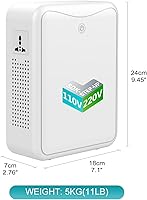
  • Dimensions: The unit measures 7.48 × 3 × 9.53 inches, giving it a slim, upright profile that fits comfortably on a kitchen countertop.
  • Weight: Weighs 11.53 pounds, making it a stationary countertop device rather than a portable travel solution.
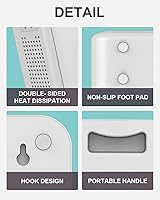
  • Mounting: Four suction-cup feet on the base provide stable, slip-resistant placement on smooth countertop surfaces without requiring permanent installation.
  • Noise Level: Uses a fanless conversion design that produces no audible hum or mechanical noise during normal operation within the recommended load range.
  • Certification: Carries CE certification, indicating the product meets baseline European safety, health, and environmental standards for electrical equipment.
  • Power Source: Operates via a standard corded electric connection, plugging directly into a grounded 110V–120V North American wall outlet.
  • Odor Output: The fanless design dissipates heat passively, and no persistent electrical odor has been reported during normal use within safe load limits.
  • Recommended Use: Intended for single-appliance, continuous countertop use with medium-wattage 220V kitchen devices such as rice cookers, kettles, and coffee machines.

Related Reviews
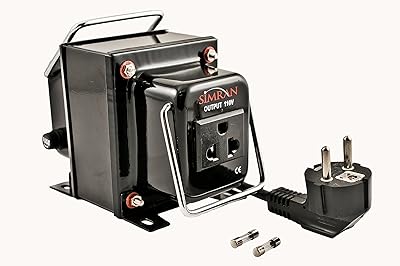
Simran THG-5000 5000W Step-Down Voltage Transformer
73%
88%
Build Quality
91%
Voltage Stability
86%
Overload Protection
83%
Ease of Setup
47%
Portability
More
YaeCCC 2000W Voltage Transformer
83%
88%
Build Quality
85%
Performance
82%
Usability
90%
Safety Features
87%
Value for Money
More
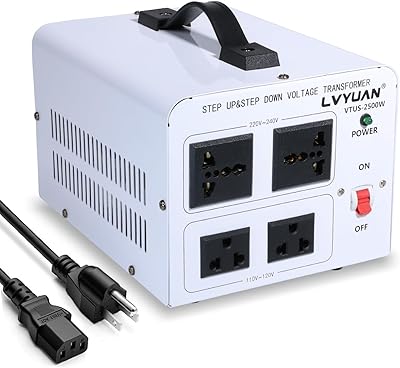
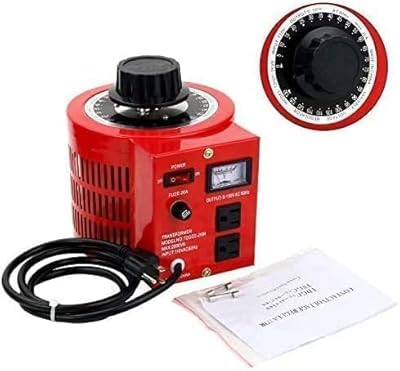
LVYUAN VTUS-2500 2500W Voltage Transformer
76%
88%
Voltage Conversion Accuracy
83%
Build Quality
91%
Noise & Vibration
86%
Overload Protection
41%
Portability & Weight
More
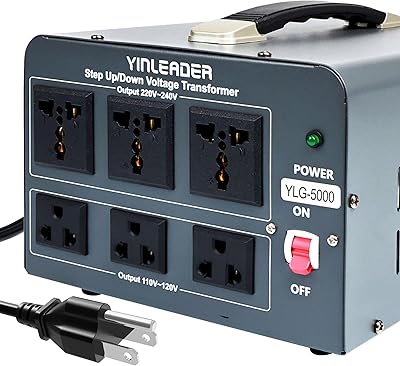
Yinleader YLG-5000 5000W Step Up/Down Transformer
79%
91%
Voltage Conversion Accuracy
88%
Build Quality & Durability
86%
Noise & Heat Management
89%
Safety Features
83%
Outlet Configuration & Usability
More
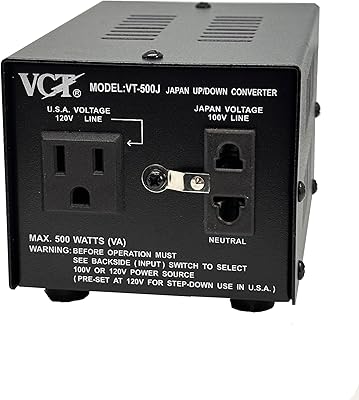
VCT VT-500J 500W Japan/USA Voltage Transformer
74%
91%
Voltage Conversion Accuracy
84%
Continuous Use Reliability
67%
Wattage Capacity
82%
Build Quality
78%
Safety Features
More
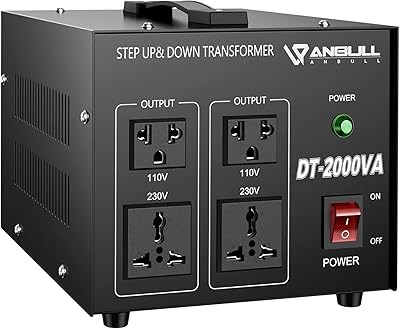
ANBULL DT-2000W 2000W Voltage Transformer
68%
88%
Build Quality
91%
Overload Protection
54%
Wattage Accuracy
67%
Ease of Setup
86%
Voltage Conversion Accuracy
More
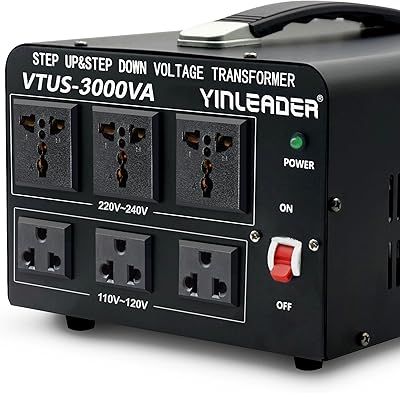
Yinleader VTUS-3000 3000W Voltage Converter Transformer
76%
91%
Voltage Conversion Accuracy
86%
Build Quality
83%
Heat Management
88%
Output Socket Versatility
89%
Safety & Protection
More
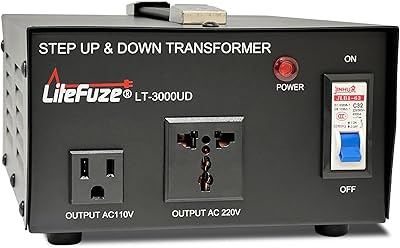
LiteFuze LT-3000UD Voltage Converter Transformer
86%
95%
Power Capacity (3000W)
90%
Build Quality & Durability
87%
Ease of Use
68%
Portability & Weight
93%
Safety Features (Circuit Breaker)
More
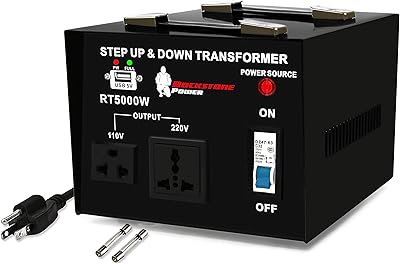
Rockstone Power 5000W Step Up/Down Voltage Converter
78%
91%
Build Quality
88%
Voltage Stability
71%
Heat Management
83%
Ease of Setup
86%
Safety Features
More
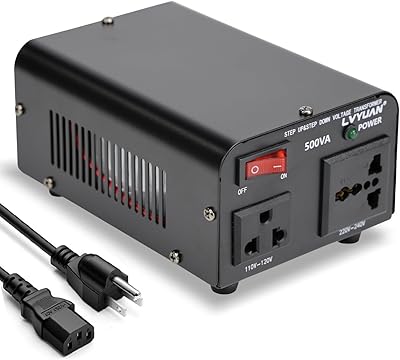
LVYUAN VTUS-500 500W Voltage Transformer Converter
71%
88%
Value for Money
83%
Build Quality
91%
Ease of Use
62%
Wattage Ceiling
71%
Thermal Performance
More

FAQ

Step-up means the converter takes the lower 110–120V current from a US wall outlet and raises it to 220–240V — which is exactly what you need for a Korean, Chinese, or European appliance that was built to run on higher voltage. If your rice cooker is rated for 220V and you are living in the US, this voltage converter is designed precisely for that situation. Just make sure its wattage is within the safe range before plugging in.

Trust the 800W figure for everyday use. The way transformers work, the surge of power drawn the moment an appliance switches on is almost always higher than its steady running draw. Manufacturers recommend choosing a transformer rated at least 1.25 times your appliance's wattage to account for that spike — so a 1000W transformer comfortably handles appliances up to 800W. Running a full 1000W load continuously would stress the unit and could shorten its lifespan or trigger heat buildup.

Technically you can use both sockets, but the combined wattage of both appliances must stay below 800W total, not per socket. If each device draws 500W, running them simultaneously would overload the converter. It is safer to treat this as a single-appliance unit and only connect one device at a time.

Yes — the multifunction output sockets on this voltage converter are designed to accept a wide range of international plug formats, including the European Schuko style, UK three-pin, Chinese two-pin, Korean plugs, and several others. You generally will not need an additional plug adapter for most Asian or European appliances.

For regular daily use with an appliance within the recommended wattage range, it is designed for stationary countertop operation. The suction-cup feet and fanless design support longer sessions. That said, as a general best practice with any electrical converter, avoid leaving it running unattended for extended periods and make sure it has adequate airflow around it and is not blocked by towels or other items.

Most likely not safely. Induction cooktops and microwaves typically draw 1200W or more at startup, which would immediately exceed what this converter can handle reliably. For those appliances you would need a transformer rated at 2000W or higher. This step-up transformer is really intended for lighter kitchen appliances like rice cookers, kettles, and coffee machines.

No — if your appliance is dual-voltage, meaning its label shows something like 100–240V, it can run directly from a US outlet with nothing more than a plug adapter if needed. A voltage converter is only necessary when your appliance is rated for a single voltage, such as 220V only, and you are in a country with a different standard.

This is actually one of the unit's stronger points. The fanless design means there is no mechanical buzzing or hum during operation, which is a real improvement over older transformer styles. Users who have upgraded from noisier budget converters consistently mention how much quieter the experience is. On a kitchen counter next to a coffee machine, you are unlikely to notice it at all.

Check the label on the bottom or back of your appliance — it should list wattage (W) or amps (A). If it shows amps, multiply by 220 to get approximate wattage. As a rule of thumb, if your appliance draws 800W or less at its maximum setting, you are within the safe operating zone for this converter. If the label shows a wattage range, always go by the higher number.

CE marking means the manufacturer has declared that the product meets certain European Union directives covering electrical safety and electromagnetic compatibility. It is a self-declared certification rather than an independent lab test in most cases, so it offers a baseline level of assurance rather than a guarantee of premium build quality. It is still a meaningful signal — products without any certification at this price point tend to carry more risk.