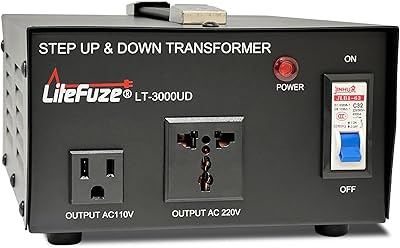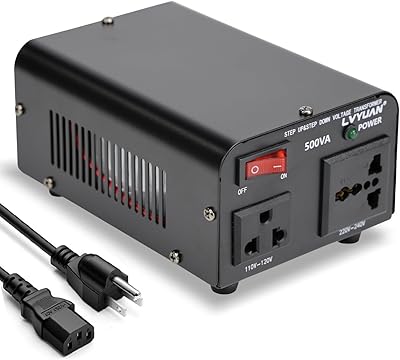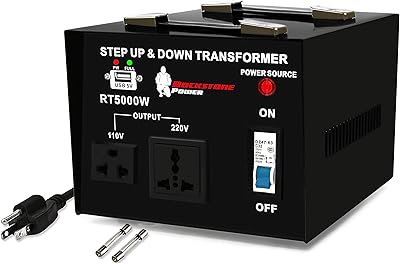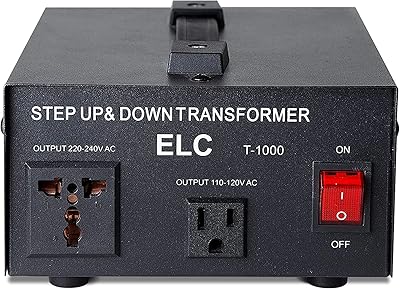
Overview

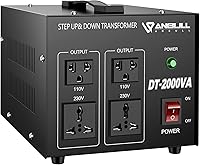
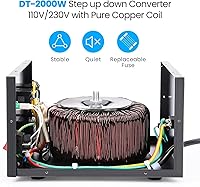
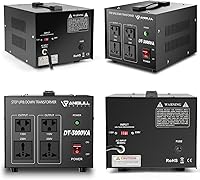
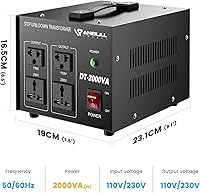
The ANBULL DT-2000W 2000W Voltage Transformer is a bidirectional step-up/step-down converter built to handle both 110V-to-220V and 220V-to-110V conversion without breaking a sweat. It sits in a mid-range tier — substantial enough for real household and workshop use, yet not the industrial-grade unit you'd need for a full machine shop. At over 14 pounds, this is clearly a stationary bench unit, not something you throw in a carry-on. The copper-core construction accounts for that weight and contributes to its durability. A built-in Miniature Circuit Breaker handles overload protection, and dual output sockets — one 110V, one 230V — give it genuine versatility right out of the box.

Features & Benefits

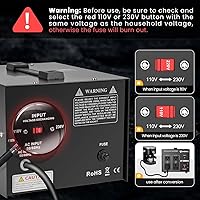
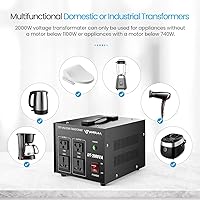
The most practical feature here is the MCB reset button — when the circuit trips on overload, you just press it to restore power rather than hunting for a replacement fuse. Before anything else, though, check the manual voltage selector on the back and make sure it matches your wall outlet voltage; skipping this step can cause real damage. The headline 2000W figure is the transformer's maximum output, but for motor-driven appliances the safe load drops to around 740W. Non-motor devices can safely run up to roughly 1100W. The unit does not convert frequency, so motor-sensitive appliances tuned to a specific Hz may behave differently depending on your grid.

Best For

This step-up/step-down converter is a natural fit for expats and immigrants running European or Asian kitchen appliances in North America, or the reverse. It works equally well in small workshops or home offices where imported equipment — a specialty power tool, a foreign-bought oscilloscope, or professional audio gear — needs a reliable voltage bridge. Users with non-motor loads will get the most out of it. What it is less suited for: anyone expecting to run a hair dryer, coffee maker, or microwave without carefully verifying the appliance's wattage stays within the safe range. At over 14 pounds, permanent desk placement makes far more sense than hauling it around.

User Feedback

Buyer sentiment around this voltage transformer skews positive overall, with a 4.3-out-of-5 rating. The most consistent praise focuses on build quality and the confidence that comes from the MCB button — people appreciate not having to source a replacement fuse after a trip. The dual-socket layout also gets solid mentions from workshop users running two different-voltage devices from one unit. On the critical side, a fair share of negative reviews trace back to misuse: buyers who pushed motor appliances past the 740W threshold. A few users also note the unit gets noticeably warm under sustained load, which is normal for a transformer of this type but can surprise anyone encountering one for the first time.

Pros

  • Bidirectional design handles both step-up and step-down conversion from a single unit.
  • The MCB circuit breaker resets with a button press, eliminating the hassle of sourcing replacement fuses.
  • Dual output sockets let you serve a 110V and a 230V device from one transformer.
  • Copper-core construction contributes to stable output and long-term durability.
  • Non-motor devices can run safely up to roughly 1100W, covering a wide range of electronics and tools.
  • Build quality consistently earns praise from buyers who have used it for months or years.
  • Straightforward operation once the rear voltage selector is correctly configured.
  • Solid overload protection means a mistake does not necessarily fry the unit or your appliance.

Cons

  • The 2000W label overstates real-world usable capacity, especially for motor-driven devices capped near 740W.
  • No frequency conversion means it cannot help devices that require a specific Hz to run correctly.
  • The manual rear voltage switch is easy to overlook and can cause damage if set wrong.
  • At over 14 pounds, repositioning or storing the unit between uses is genuinely inconvenient.
  • The unit runs noticeably warm under sustained load, which can be unsettling in enclosed spaces.
  • Wattage headroom calculations are left entirely to the buyer, with limited guidance in the packaging.
  • The size and weight make it impractical for anyone who needs a converter in more than one location.

Ratings

Our AI rating system analyzed verified global buyer reviews for the ANBULL DT-2000W 2000W Voltage Transformer, actively filtering out incentivized, bot-generated, and spam submissions to surface what real users actually experience. The scores below reflect both the genuine strengths that keep buyers satisfied and the recurring pain points that have frustrated others — nothing is glossed over. Whether this converter fits your specific situation depends heavily on how you intend to use it, and these ratings are designed to make that call easier.

Build Quality
88%
The copper-core construction gives this step-up/step-down converter a reassuringly solid feel that users notice the moment they lift it out of the box. Workshop users running it daily over months consistently report no rattling, no housing cracks, and no degradation in output quality over time.
The sheer weight — over 14 lbs — is itself a byproduct of that robust build, which means repositioning the unit even slightly requires real effort. A handful of buyers noted the outer housing finish scuffs easily during initial setup.
Overload Protection
91%
The built-in MCB circuit breaker is one of the most praised features across user reviews. Unlike fuse-based designs that require sourcing a replacement part, this one resets with a single button press, making recovery from an accidental overload fast and stress-free.
Some users report the MCB trips at wattage levels slightly below the rated threshold, which can be frustrating when running borderline loads. A clearer indicator light to signal a tripped state would reduce confusion for first-time users.
Wattage Accuracy
54%
46%
For non-motor electronic loads, the transformer genuinely delivers stable output up to around 1100W, and users running audio equipment, soldering stations, or LED rigs within that range report consistent, clean power with no noticeable fluctuation.
The 2000W headline figure is the single biggest source of negative reviews and returns. Buyers who plugged in motor-driven appliances expecting 2000W of usable capacity quickly discovered the real motor-safe limit is closer to 740W, which is less than 40% of the advertised number — a gap that feels misleading to many.
Ease of Setup
67%
33%
Once you understand the rear voltage selector switch, the setup process is logical and the dual-socket layout makes it easy to identify which outlet serves which voltage. Experienced users appreciate the no-frills, functional design.
The rear voltage selector is not prominently flagged in the packaging, and multiple reviewers damaged equipment because they missed this step entirely. The manual could do a much better job of making this the very first instruction before anything else.
Voltage Conversion Accuracy
86%
Users running imported European appliances — particularly kitchen equipment and home electronics — consistently report that the output voltage stays stable and within acceptable tolerance under normal operating conditions. The copper-core design contributes to clean, steady conversion.
A small number of users with sensitive electronics noted minor voltage fluctuations under sustained near-maximum load. These cases are rare but worth knowing if you are powering precision instruments.
Frequency Compatibility
49%
51%
The transformer handles the 50–60Hz input range without issue, and for the majority of modern electronics that are dual-frequency tolerant, this limitation is irrelevant and causes no problems in day-to-day use.
The unit performs no frequency conversion whatsoever, which is a genuine limitation for motor-driven or frequency-sensitive devices. Turntables, certain vintage kitchen appliances, and precision motors can run at the wrong speed or wear prematurely, and this caveat is not clearly communicated at the point of purchase.
Thermal Management
63%
37%
Running warm during sustained operation is completely normal for a transformer of this class, and the unit handles moderate continuous loads without any concerning heat buildup when given adequate ventilation around the housing.
Under sustained high loads, the casing gets noticeably hot to the touch, which worries buyers who are not familiar with how transformers behave. There is no built-in cooling fan, and placing the unit in an enclosed cabinet restricts airflow enough to accelerate heat accumulation.
Dual-Socket Design
83%
Having both a 110V and a 230V output socket on the same unit is genuinely useful for workshop and home office setups where users need to serve two differently-rated devices without switching cables or buying a second converter.
The sockets cannot be used simultaneously at full power without pushing dangerously close to the combined wattage limits. The physical socket design also does not accommodate all international plug types natively, which may require an additional adapter.
Portability
31%
69%
The compact footprint relative to its wattage class makes it easier to place on a shelf or workbench without consuming excessive surface area, which workshop users appreciate when desk space is tight.
At over 14 lbs, this is not a unit you carry between rooms regularly, let alone pack into luggage. Buyers who purchased it expecting a travel-friendly solution were uniformly disappointed, and the product description does not do enough to set realistic expectations about its stationary nature.
Value for Money
77%
23%
For buyers who use this step-up/step-down converter within its actual operating limits — non-motor loads under 1100W — the price-to-performance ratio is competitive, and the MCB protection adds genuine long-term value by preventing costly appliance damage.
Buyers who purchased based on the 2000W label and discovered the motor-load ceiling of 740W feel the pricing is misaligned with real-world capability. If the headline wattage were accurately contextualized, fewer buyers would feel let down by the value proposition.
Instruction Clarity
42%
58%
The core operating concept — flip the rear switch to match your input voltage, plug in, use — is simple enough that technically confident buyers can get up and running without reading anything closely.
The documentation consistently draws criticism for failing to prominently warn users about the motor wattage limits and the mandatory rear selector switch step. These two omissions are directly responsible for the majority of negative reviews and damaged equipment complaints.
Long-Term Reliability
81%
19%
Users who have operated the ANBULL transformer within spec for a year or more frequently report that output quality and MCB response remain unchanged, suggesting the build is genuinely durable under correct usage conditions.
Reliability scores drop sharply among users who regularly pushed the unit close to or beyond its motor-load limit, with some reporting MCB degradation or output instability after several months of borderline use.
Socket Compatibility
71%
29%
The standard US-style and Euro-style output sockets cover the most common plug types that users in North America and Europe will encounter, making the unit practical for the core expat and workshop use cases it targets.
Users with appliances from regions using non-standard plug formats — certain Asian or South American configurations — will need plug adapters that are not included. This adds a minor but real friction point for a product positioned as a universal voltage solution.

Suitable for:

The ANBULL DT-2000W 2000W Voltage Transformer is a strong match for expats and immigrants who have brought appliances from abroad and need a dependable way to run them on a different grid — think a German espresso machine sitting in a North American kitchen, or a Japanese rice cooker that needs stable 110V in a 220V country. It also works well for small workshops or home offices where imported equipment like precision soldering stations, foreign-bought audio gear, or specialty lab instruments need a reliable voltage bridge day in and day out. Users whose devices are purely resistive or electronic — meaning no motors and no heating coils — will get the most headroom out of the unit, since non-motor loads can run continuously up to around 1100W. The dual-socket design adds real convenience for anyone managing two devices at different voltages from a single unit on a bench or shelf.

Not suitable for:

Buyers who plan to run high-draw motor appliances — hair dryers, coffee makers, rice cookers, microwave ovens — should approach this step-up/step-down converter with caution and do the math before plugging anything in, because the safe motor load tops out near 740W despite the 2000W headline rating. Anyone who needs frequency conversion should look elsewhere entirely, since this transformer does not alter Hz at all; devices that are sensitive to 50Hz versus 60Hz — certain turntables, some older kitchen appliances, or precision motors — may run incorrectly or wear faster on the wrong frequency. At over 14 pounds, this is not a unit you carry in luggage or move between locations regularly; it is a stationary installation, and buyers expecting a compact travel adapter will be disappointed. Those who want a truly plug-and-forget solution should also be aware that the manual voltage selector on the back requires deliberate setup — getting it wrong can cause immediate and costly damage to connected equipment.

Specifications

  • Brand: This transformer is manufactured and sold under the ANBULL brand.
  • Model Number: The unit is designated model DT-2000VA by the manufacturer.
  • Max Output: The transformer is rated for a maximum output of 2000W under optimal conditions.
  • Motor Load Limit: Appliances with motors or heating elements should not exceed approximately 740W on this unit.
  • Non-Motor Load: Purely resistive or electronic devices without motors can be run safely up to roughly 1100W continuously.
  • Input Voltage: The unit accepts input from either a 110V–120V or a 220V–240V supply, selectable via a rear switch.
  • Output Sockets: Two output sockets are provided: one rated for 110V devices and one rated for 230V devices.
  • Frequency Range: The transformer operates across a 50–60Hz range but does not perform any frequency conversion between those values.
  • Circuit Protection: A built-in Miniature Circuit Breaker (MCB) trips automatically on overload or short circuit and resets with a button press.
  • Voltage Selector: A manual voltage selector switch is located on the rear panel and must be set to match the input supply before use.
  • Dimensions: The unit measures 11.42″ deep by 9.45″ tall by 7.32″ wide.
  • Weight: The transformer weighs 14.13 lbs (6.41 kg), consistent with a copper-core stationary design.
  • Conversion Direction: Conversion is fully bidirectional, supporting both step-up (110V to 220V) and step-down (220V to 110V) operation.
  • Core Construction: The internal winding uses a copper-core transformer design, which contributes to output stability and longevity.
  • Availability: This product was first made available for purchase in December 2020.

Related Reviews
YaeCCC 2000W Voltage Transformer
83%
88%
Build Quality
85%
Performance
82%
Usability
90%
Safety Features
87%
Value for Money
More
LVYUAN VTUS-2500 2500W Voltage Transformer
76%
88%
Voltage Conversion Accuracy
83%
Build Quality
91%
Noise & Vibration
86%
Overload Protection
41%
Portability & Weight
More
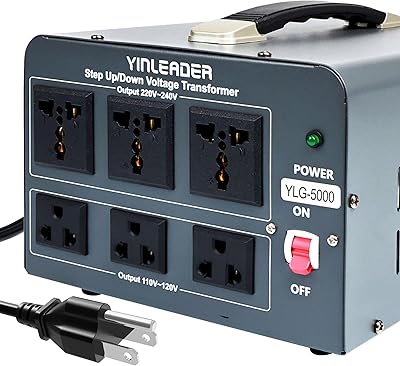
Yinleader YLG-5000 5000W Step Up/Down Transformer
79%
91%
Voltage Conversion Accuracy
88%
Build Quality & Durability
86%
Noise & Heat Management
89%
Safety Features
83%
Outlet Configuration & Usability
More
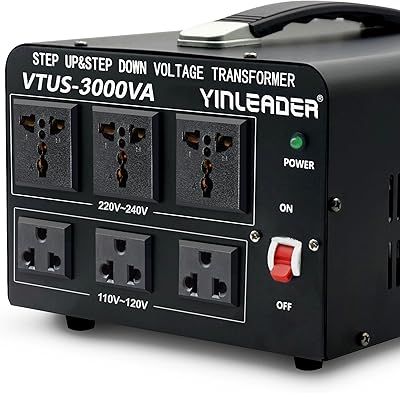
Yinleader VTUS-3000 Voltage Converter Transformer
85%
87%
Overall Performance
92%
Safety Features
90%
Ease of Use
85%
Portability
88%
Build Quality
More
LiteFuze LT-3000UD Voltage Converter Transformer
86%
95%
Power Capacity (3000W)
90%
Build Quality & Durability
87%
Ease of Use
68%
Portability & Weight
93%
Safety Features (Circuit Breaker)
More
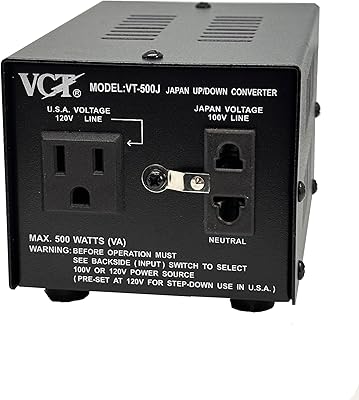
VCT VT-500J 500W Japan/USA Voltage Transformer
74%
91%
Voltage Conversion Accuracy
84%
Continuous Use Reliability
67%
Wattage Capacity
82%
Build Quality
78%
Safety Features
More
LVYUAN VTUS-500 Voltage Transformer Converter 500W
83%
92%
Value for Money
88%
Ease of Use
85%
Build Quality
90%
Compactness/Portability
86%
Performance (Voltage Conversion)
More
Rockstone Power 5000W Step Up/Down Voltage Converter
78%
91%
Build Quality
88%
Voltage Stability
71%
Heat Management
83%
Ease of Setup
86%
Safety Features
More
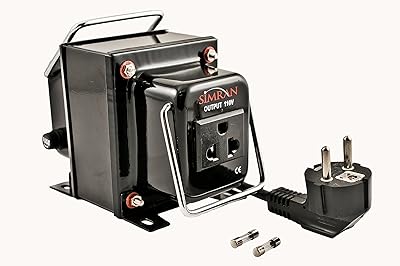
Simran THG-5000 Step Down Voltage Transformer 5000W
85%
91%
Build Quality & Durability
88%
Performance & Power Handling
85%
Ease of Use
68%
Portability
87%
Compatibility with Different Plug Types
More
ELC T-1000 1000W Voltage Converter Transformer
81%
93%
Noise Level
88%
Voltage Conversion Accuracy
84%
Build Quality
86%
Overload Protection
91%
Ease of Use
More

FAQ

Yes, and this is the most important step people skip. Before connecting any device, flip to the back of the unit and check the voltage selector switch. Make sure it is set to match the voltage coming out of your wall outlet — either 110V or 220V. Getting this wrong can damage both the transformer and your appliance instantly.

It depends on whether the appliance uses a motor. For devices with motors or heating elements — think coffee makers, rice cookers, or hair dryers — the safe working limit on this unit is around 740W, not 2000W. For purely electronic or resistive devices with no motor, the ceiling is roughly 1100W. The 2000W figure on the box is the transformer's maximum rated output, not a blanket guarantee for every type of load.

Technically possible, but you need to check the wattage. Most travel hair dryers run between 800W and 2000W. If your dryer pulls more than 740W, you are already past the safe motor-load limit for this step-up/step-down converter. You would need a transformer rated at 2–4 times the dryer's wattage to run it safely, which means a unit in the 3000W–8000W range for a typical full-power dryer.

The built-in MCB circuit breaker will trip before serious damage occurs, cutting power to the circuit. You will notice the unit goes dead, and you simply press the reset button to restore operation after removing or reducing the load. It is a much safer and more convenient system than older fuse-based designs.

No, it does not. This is a voltage transformer only — it has no ability to alter the frequency of the power it outputs. If you are in a 60Hz country and your appliance was designed for 50Hz, the voltage will be correctly converted but the frequency will remain at 60Hz. For many modern electronics this is fine, but motors, turntables, and some older kitchen appliances can run at the wrong speed or wear faster if they are frequency-sensitive.

The unit does have two output sockets — one for 110V devices and one for 230V devices — so yes, physically you can use both. That said, the combined wattage of both appliances still has to stay within the safe limits of the transformer. Running two devices simultaneously at high wattage is a quick way to trip the breaker or stress the unit.

The unit is designed for sustained operation, and many users run it for hours without issue. It will get noticeably warm during extended use, which is completely normal for a transformer of this type and size. Make sure it has adequate ventilation around it and is not enclosed in a tight cabinet. Do not leave high-wattage motor loads running on it unattended for extended periods.

For many appliances, yes. Non-motor devices like a European espresso machine with a heating element, a lamp, or a phone charger will generally work well within the wattage limits. Keep in mind the frequency caveat — some European appliances are designed specifically for 50Hz, and this converter will deliver 60Hz in North America. For most kitchen appliances, this is not a practical problem, but it is worth checking your appliance's documentation.

The two output sockets are clearly labeled — one for 110V output and one for 230V output. Match the socket to the voltage your appliance requires, not to the voltage coming from your wall. For example, if your wall is 110V and your appliance needs 220V, you set the input selector to 110V and plug the appliance into the 230V output socket.

Not really, and it is worth being direct about that. This step-up/step-down converter weighs over 14 lbs and is roughly the size of a small toolbox. It is built for a fixed location — a home workshop, a kitchen counter, or a desk — not for packing into luggage. If you need something for hotel rooms or short trips, look for a compact travel voltage converter instead; this unit is overkill and far too heavy for that use case.