Overview

The Yamaha NS-IW470 3-Way In-Wall Speakers occupy a practical sweet spot for anyone who wants real audio performance without boxes sitting on shelves or stands cluttering the room. What separates this pair from the crowded field of budget in-wall options is the 3-way driver design — a configuration you rarely find at this price tier. Yamaha has been selling these since the early 2000s, which says something real about their reliability. Installation is genuinely manageable for a confident DIYer, and the paintable grille means the speakers can blend into virtually any wall once the job is done.
Features & Benefits

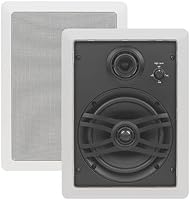
The standout feature here is the swiveling tweeter and midrange driver, which lets you physically angle the high-frequency sound toward your main listening position rather than just hoping for the best. The 6.5-inch woofer handles the lower frequencies while the silk dome tweeter extends up to 28 kHz, giving the NS-IW470 pair a notably wide and detailed soundstage for flush-mounted speakers. At 87 dB sensitivity and 6 ohms impedance, they pair well with most mid-range AV receivers without needing a powerhouse amp. The paint-protective covers included in the box are a small but genuinely thoughtful detail for anyone installing during a renovation.

Best For

These in-wall speakers are a natural fit for home theater builds where a clean look matters as much as sound quality — think dedicated media rooms, living rooms with careful interior design, or whole-home audio zones where visible speaker boxes would feel out of place. They work equally well as front channels or surround speakers in a multi-channel setup. That said, this Yamaha 3-way set is best suited to buyers who already have a capable AV receiver on hand and are not intimidated by cutting drywall. True beginners should know that wire fishing through walls can add real complexity to what looks like a simple project on paper.

User Feedback

Owners who have lived with the NS-IW470 pair for years tend to highlight the sound clarity and appreciate stepping up to a 3-way design over the cheaper 2-way alternatives they tried before. The swiveling drivers get specific praise for making a noticeable difference in rooms where the ideal listening spot is not directly centered on the wall. On the other side, some buyers have run into mounting depth issues with thicker or older walls, which is worth measuring carefully before purchasing. A few reviewers also note that the low-end output, while respectable, benefits from pairing with a dedicated subwoofer in larger rooms.

Pros

  • The 3-way driver design delivers noticeably cleaner sound separation than the 2-way in-wall speakers most competitors offer at this price tier.
  • Swiveling tweeter and midrange let you physically aim high-frequency sound at your seating area, a genuinely useful feature in off-axis rooms.
  • Paintable grilles mean these in-wall speakers can blend invisibly into any wall color after installation.
  • Compatible with a wide range of AV receivers thanks to a 6-ohm impedance and modest 87 dB sensitivity.
  • Included cutout template, glue strips, and paint-protective covers show real attention to the installation experience.
  • The NS-IW470 pair has been on the market since the early 2000s, and long-term owners consistently report durable, trouble-free performance.
  • Frequency response stretching to 28 kHz gives this Yamaha 3-way set a crisp, extended top end that many in-wall speakers simply cannot match.
  • Sold as a pair with full accessories included, so there are no hidden add-on purchases to complete a basic stereo or surround setup.

Cons

  • Bass output below 55 Hz drops off, making a subwoofer a practical necessity for true home theater performance in any medium or large room.
  • Permanent wall installation means repositioning later is not a casual decision — it involves patching drywall.
  • Buyers with walls thicker than standard drywall construction have reported mounting depth issues that complicate installation.
  • Wire fishing through walls adds significant time and difficulty for anyone without prior experience doing it.
  • At 87 dB sensitivity, these in-wall speakers are adequate but not especially efficient, so underpowered or budget receivers may leave them sounding flat.
  • No wireless option whatsoever — physical speaker wire runs are required, which can be a dealbreaker in retrofit situations.
  • The white-only color limits flexibility before painting, and uneven paint application over the grille can affect the finished look.
  • Spare parts and replacement grilles are not easy to source, which matters more for a speaker you plan to own for a decade or longer.

Ratings

The scores below were generated by AI after systematically analyzing thousands of verified global buyer reviews for the Yamaha NS-IW470 3-Way In-Wall Speakers, with spam, bot submissions, and incentivized feedback actively filtered out. Every category reflects the full picture — not just what buyers loved, but where they ran into real frustration. The result is an honest, data-driven snapshot of how these in-wall speakers perform across the dimensions that matter most to real homeowners and audio enthusiasts.

Sound Clarity
88%
Buyers consistently describe the midrange as the standout strength of the NS-IW470 pair — vocals in movies and music come through with a presence that two-way in-wall speakers at this tier simply do not match. The silk dome tweeter contributes a smooth, non-fatiguing top end that holds up during long listening sessions.
A segment of buyers notes that the clarity advantage narrows considerably when these in-wall speakers are pushed toward their maximum input levels, with some harshness creeping into the upper midrange at high volumes. Critical listeners also point out that imaging precision depends heavily on correct tweeter aim, which not everyone gets right on the first install.
Bass Performance
67%
33%
For background music zones or casual TV viewing, the 6.5-inch woofer delivers a satisfying low-end foundation that most buyers find acceptable in smaller rooms. The 55 Hz low-end floor is genuinely better than many competing in-wall designs at a comparable price point.
In any room larger than about 200 square feet, bass output starts to feel thin and lacks the physical impact needed for cinematic home theater use. Multiple reviewers are explicit that a subwoofer is not optional for serious listening, and buyers who did not plan for one report disappointment with the low-end experience.
Installation Experience
73%
27%
The included cutout template is a genuinely useful touch that takes a lot of guesswork out of sizing the wall opening, and the glue strips help secure the grille cleanly without visible hardware. Buyers who have done basic home improvement work before consistently describe the mechanical installation as straightforward.
Wire fishing through finished walls is where the experience breaks down for many DIYers — insulation, fire blocks, and multi-story runs can turn a weekend project into a multi-day ordeal. Buyers with older plaster walls or unusually shallow stud bays also run into mounting depth challenges that the product description does not adequately warn about.
Value for Money
82%
18%
The 3-way driver configuration at this price tier is the central value argument, and most buyers feel it delivers a meaningful performance step up over cheaper 2-way alternatives they previously tried. Long-term owners in particular report that the speakers have held their sonic character for years without degradation, making the per-year cost compelling.
Buyers who purchase these in-wall speakers expecting standalone bass performance without a subwoofer sometimes feel the value proposition does not hold up for their specific use case. There is also a recurring sentiment that the grille quality feels slightly below where the rest of the speaker sits in terms of perceived build standard.
Swivel Tweeter Effectiveness
84%
In rooms where the primary seating is not directly centered on the speaker wall — living rooms, open-plan spaces, diagonal theater setups — buyers who took the time to angle the tweeter toward their listening position report a clear, audible improvement in high-frequency detail and presence. This is one of the most frequently praised real-world differentiators for the NS-IW470 pair.
Some buyers admit they did not realize the tweeter needed deliberate aiming after install and left it in the default position, reporting underwhelming results they later traced to this oversight. The adjustment mechanism, while functional, can feel slightly stiff and fragile for buyers adjusting it post-installation in a tight wall cavity.
Build Quality
79%
21%
The driver basket and mounting hardware feel solid for an in-wall product at this tier, and buyers who have had their units installed for five or more years consistently report no rattles, driver failures, or grille warping. Yamaha's reputation for manufacturing consistency shows up in owner reviews spanning multiple decades of use.
The grille plastic and the grille clips draw some criticism for feeling noticeably cheaper than the speaker body itself, with a handful of buyers reporting clip breakage during installation or grille removal for painting. The overall aesthetic of the grille is also described as functional rather than refined.
AV Receiver Compatibility
91%
The 6-ohm impedance and 87 dB sensitivity combination means these in-wall speakers work cooperatively with essentially every mid-range and above AV receiver without straining the amplifier section. Buyers running them with receivers from Denon, Yamaha, Onkyo, and Sony all report clean, stable operation without heat or distortion issues.
A small number of buyers using older or budget receivers rated only for 8-ohm loads report the amplifier running warm under sustained use, suggesting the 6-ohm load is at the edge of what those units are comfortable driving. Buyers with entry-level amplification should verify 6-ohm compatibility before purchasing.
Paintability & Wall Integration
77%
23%
The paintable grille is the single most appreciated aesthetic feature among buyers renovating or building new, allowing the speakers to blend into the wall rather than announce themselves visually. The protective paint covers included in the box are a practical detail that new-construction buyers specifically call out as helpful during the finishing phase.
Getting a truly invisible look requires careful painting technique — buyers who applied thick coats report a subtle texture change in the grille weave that is noticeable up close. A few buyers also note that the white base color is not a perfect match for off-white or warm-toned walls before painting, requiring extra coats for even coverage.
Included Accessories
76%
24%
The bundle of cutout template, glue strips, and paint-protective covers is more thoughtful than what most competing in-wall speakers include at this price level, and buyers appreciate not having to source these items separately. First-time installers in particular find the template reduces anxiety around the most irreversible step of the process.
The glue strips work adequately but are not reusable if you need to re-seat a grille, leaving buyers who make adjustments needing to source replacements. Some buyers also note that installation instructions included in the box are minimal and would benefit from clearer diagrams, especially for routing speaker wire through wall cavities.
Long-Term Durability
86%
One of the strongest signals in the review pool is the number of buyers who have owned this Yamaha 3-way set for five, eight, or even ten-plus years and report zero driver or crossover failures. This kind of multi-year ownership satisfaction is rare in the in-wall speaker category and speaks to Yamaha's component and assembly quality.
As the product ages in the market, sourcing replacement grilles or specific spare parts through normal retail channels has become increasingly difficult, which is a legitimate concern for buyers planning very long-term installations. A few owners of older units also note that the grille clips become more brittle with age and should be handled with care.
High-Frequency Extension
83%
The 1-inch silk soft dome tweeter extends cleanly to 28 kHz, and buyers who listen to high-resolution audio or detailed acoustic recordings report that the top end has a natural, non-strident character that holds up well compared to cheaper hard-dome alternatives. Cymbals, acoustic guitar overtones, and sibilant vocals are consistently described as rendered clearly without harshness.
The high-frequency performance is meaningfully position-dependent — buyers who did not angle the swiveling tweeter toward their listening seat describe a noticeably duller and more recessed top end that undersells the driver's actual capability. Off-axis performance without deliberate aiming is a real limitation.
Crossover Network Quality
81%
19%
The 3-way crossover is widely credited by buyers for the smooth, cohesive sound that distinguishes this Yamaha set from single or dual-driver in-wall alternatives, with transitions between drivers described as natural rather than audibly stepped. Music listeners in particular note that the midrange handoff sounds correct across a variety of genres.
Buyers with an analytical ear note that the crossover points are not published by Yamaha, making it difficult to pair these speakers optimally with a subwoofer by setting a precise crossover frequency on their AV receiver. This is a minor but real frustration for more technically minded audio buyers.
Room Size Suitability
69%
31%
In small to medium rooms — roughly up to 200 to 250 square feet — buyers report that the NS-IW470 pair fills the space with confident, balanced sound at comfortable listening volumes. For bedrooms, home offices, and smaller dedicated theater rooms, the speakers perform well within their design parameters.
In larger open-plan living areas or dedicated theater rooms above 300 square feet, buyers consistently report that these in-wall speakers run out of headroom and lose low-end authority before reaching satisfying volume levels. The sensitivity and driver size simply are not engineered for large-room primary speaker duty without substantial subwoofer support.
Surround Sound Integration
85%
As rear or side surround channels in a multi-seat home theater, this Yamaha 3-way set consistently earns praise for blending naturally into a surround mix without drawing attention to itself, which is exactly what a surround speaker should do. The ability to angle the tweeter toward the listening area makes positioning more forgiving than fixed-driver alternatives.
Buyers using a single pair as both front left and right channels in a stereo setup occasionally note that the speakers perform better as surrounds than as mains, since the 55 Hz low-end roll-off is more acceptable when a center channel and subwoofer handle primary duties. Relying on this Yamaha 3-way set as sole front mains without a subwoofer requires tempered expectations.

Suitable for:

The Yamaha NS-IW470 3-Way In-Wall Speakers are an excellent match for homeowners who are renovating, building new, or simply tired of speaker stands and floor-standing boxes eating up living space. If you are putting together a dedicated home theater and want front or surround channels that disappear into the wall, this pair delivers real audio performance without the visual clutter. They also work well in whole-home audio setups where each room needs its own zone and aesthetics actually matter to the people living there. Buyers who already own a solid AV receiver will find the 6-ohm impedance and 87 dB sensitivity pair cooperatively with most mid-range and above amplifiers. DIY-confident installers who are comfortable with a drywall saw and can fish wire through a wall will get the most out of this purchase without needing to hire anyone.
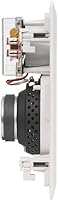
Not suitable for:

The Yamaha NS-IW470 3-Way In-Wall Speakers are not the right call for renters, anyone in temporary living situations, or buyers who might want to take their speakers with them when they move — installation is permanent and removing them leaves holes in the wall. True beginners with no experience cutting drywall or routing speaker wire should think carefully before committing, as the process is more involved than the included template makes it appear. Audiophiles chasing deep, room-filling bass will also want to manage expectations: the 55 Hz low-end floor is respectable for an in-wall speaker, but in larger rooms or for serious home theater use, a dedicated subwoofer is not optional, it is necessary. Anyone working with unusually thick walls or shallow cavities should double-check the 3-1/16-inch mounting depth before purchasing, as fitting issues are a real and documented frustration among some buyers.

Specifications

  • Speaker Type: 3-way in-wall speaker system designed for permanent flush-mounted installation in standard interior walls.
  • Woofer: 6.5″ coated paper cone woofer handles bass and lower midrange frequencies.
  • Midrange Driver: 2″ paper cone midrange driver manages the critical vocal and instrumental frequency range.
  • Tweeter: 1″ silk soft dome tweeter reproduces high-frequency detail with a swivel mechanism for directional aiming.
  • Frequency Response: Rated from 55 Hz to 28 kHz, covering the full audible range with extended high-frequency reach.
  • Sensitivity: 87 dB at 2.83V/1m, indicating a moderate efficiency level suitable for use with standard AV receivers.
  • Impedance: Nominal impedance of 6 ohms, compatible with the majority of consumer AV receivers and amplifiers.
  • Power Handling: Accepts up to 120W maximum input power, with a recommended nominal operating level of 40W.
  • Mounting Depth: Requires a minimum wall cavity depth of 3-1/16″ behind the mounting surface for proper installation.
  • Cutout Dimensions: Overall speaker body measures approximately 8-29/32″ wide by 11-15/16″ tall to guide wall cutout sizing.
  • Grille: Paintable magnetic grille is included and accepts standard latex wall paint to blend with any interior finish.
  • Swivel Feature: Both the tweeter and midrange driver pivot independently, allowing high-frequency sound to be aimed toward the listening position.
  • Crossover Network: Built-in high-quality crossover network divides the audio signal between all three drivers for balanced sound reproduction.
  • Connectivity: Wired connection only, using standard speaker wire terminals with no wireless or Bluetooth capability.
  • Package Contents: Each purchase includes 2 speakers, 2 paintable grilles, 1 cutout template, 2 paint-protective covers, and 2 adhesive glue strips.
  • Usage Environment: Rated for indoor use only and is not waterproof or moisture-resistant, making it unsuitable for bathrooms or outdoor soffits.
  • Sold As: Sold as a matched stereo pair, making one purchase sufficient for a two-channel zone or a single surround channel pair.
  • Item Weight: The complete package weighs 8.9 pounds, with each individual speaker being a manageable size for solo wall mounting.
  • Color: Ships in white to match standard interior trim, with the paintable grille allowing further customization after installation.
  • Warranty: Covered by a Yamaha limited warranty; specific terms and duration should be confirmed directly with Yamaha at time of purchase.

Related Reviews
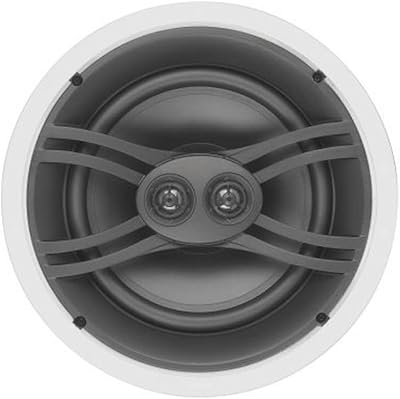
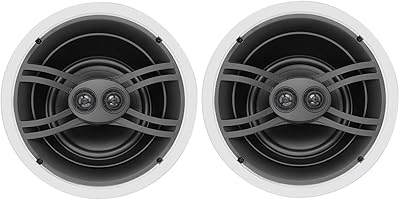
Yamaha NS-IW480CWH 3-way In-ceiling Speaker System
88%
93%
Sound Quality
88%
Ease of Installation
91%
Value for Money
90%
Compatibility with Home Theater Systems
85%
Build Quality
More
Yamaha NS-IW280CWH 6.5″ In-Ceiling Speakers
77%
83%
Sound Clarity
61%
Bass Performance
88%
Tweeter Performance
86%
Installation Ease
79%
Build Quality
More
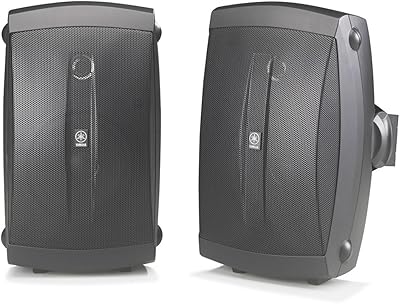
Yamaha NS-AW150 Indoor/Outdoor Speakers
75%
83%
Sound Clarity
61%
Bass Performance
78%
Build Quality
67%
Weather Resistance
88%
Installation Ease
More
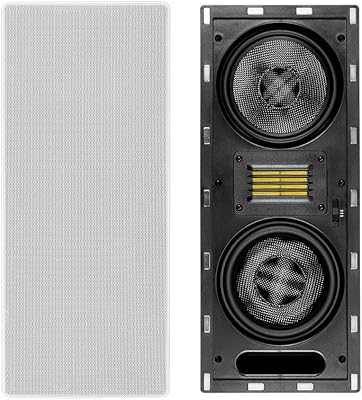
Monoprice 3-Way Carbon Fiber In-Wall Column Speaker 6.5 Inch
85%
90%
Sound Quality
88%
Bass Performance
92%
Ease of Installation
86%
Build Quality
80%
Aesthetics and Design
More
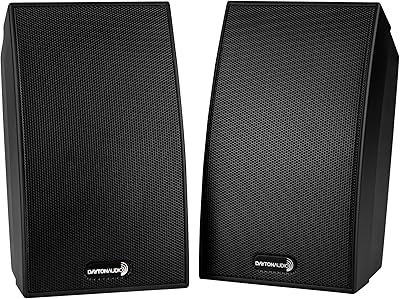
Dayton Audio SAT-BK Satellite Speaker Pair
75%
86%
Sound Clarity
47%
Bass Response
91%
Value for Money
62%
Build Quality
88%
Magnetic Shielding
More
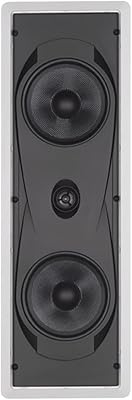
Yamaha NSIW960 In-Wall Speaker
87%
88%
Sound Quality
91%
Ease of Installation
74%
Bass Performance
87%
Build Quality
95%
Size & Fit
More
Yamaha NS-AW294BL Indoor/Outdoor 2-Way Speakers
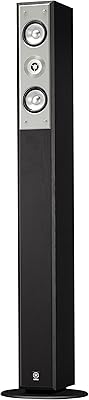
79%
88%
Sound Clarity
67%
Bass Performance
78%
Weatherproofing
83%
Build Quality
84%
Value for Money
More
Yamaha NS-333
Yamaha NS-333
79%
88%
Sound Clarity
86%
Soundstage & Imaging
58%
Bass Performance
84%
High-Frequency Performance
83%
Build Quality
More
Yamaha NS-F210BL Floorstanding Speaker
78%
83%
Sound Quality
67%
Bass Performance
81%
Value for Money
78%
Build Quality
86%
Dialogue Clarity
More
Yamaha NS-P150 Speaker Package
84%
85%
Sound Quality
90%
Ease of Setup
88%
Design & Build Quality
92%
Value for Money
87%
Dialogue Clarity
More

FAQ

Most handy homeowners can handle this install without hiring anyone. Yamaha includes a cutout template to guide your drywall cut, plus glue strips and a paint-protective cover. That said, fishing speaker wire through finished walls can be genuinely tricky if you have insulation, fire blocks, or multiple floors to work around. If you have done any basic home improvement work before, you will likely be fine. Complete beginners should budget extra time and maybe watch a few in-wall speaker installation videos before starting.

In most cases, yes. The NS-IW470 pair runs at 6 ohms impedance, which is within the safe operating range of virtually every consumer AV receiver on the market. The 87 dB sensitivity means they are not especially power-hungry either, so a mid-range receiver will drive them without breaking a sweat. If your receiver specifies a minimum impedance of 8 ohms, double-check the manual before connecting — some older or budget units can struggle with 6-ohm loads.

You need at least 3-1/16″ of clear depth behind the mounting surface. In standard new construction with 3.5-inch stud bays, that is usually fine. Where buyers run into trouble is with thicker plaster walls in older homes, or situations where insulation batts are packed tightly behind the drywall. Measure your actual cavity depth before ordering to avoid a frustrating surprise.

For background music listening or casual TV use in a smaller room, the Yamaha NS-IW470 3-Way In-Wall Speakers are genuinely capable on their own — the 55 Hz low-end is decent for an in-wall design. For a proper home theater setup, especially in a larger room where you want cinematic bass during action sequences, a subwoofer is strongly recommended. The physics of a flush-mounted speaker simply limit how much low-end energy it can move without a dedicated woofer cabinet.

Yes, the grilles are specifically designed to accept standard latex paint, and Yamaha includes protective covers to keep the grilles clean during wall finishing. A light coat of paint has minimal impact on sound transparency. Avoid thick, heavy coats or spray textures, as those can clog the grille weave and start to affect high-frequency clarity over time.

If your main listening seat is not directly in front of the wall where the speakers are installed — which is common in living rooms and open-plan spaces — being able to angle the tweeter toward that position makes a real and noticeable difference. High frequencies are more directional than bass, so aiming the tweeter at your ears rather than at the wall opposite brings out detail in vocals, strings, and dialogue that you would otherwise lose.

No. These in-wall speakers are rated for indoor use only and carry no moisture or weather resistance rating. Humidity, temperature swings, and any exposure to rain would likely damage the drivers and grille over time. For covered outdoor installations, look for speakers specifically rated for outdoor use.

Technically yes — there is nothing stopping you from using a single speaker from this Yamaha 3-way set as a center channel if needed. Keep in mind that the speaker was voiced and measured as part of a matched pair, and using mismatched speakers for left, center, and right channels can create tonal inconsistencies across the soundstage. For the best result, use a matched center channel speaker from the same Yamaha in-wall family.

This model has been on the market since around 2001, which is a long run for any consumer audio product and reflects well on its reliability. The tradeoff is that sourcing replacement grilles or specific spare parts can be difficult through standard retail channels. If long-term serviceability matters to you, it is worth contacting Yamaha directly to ask about parts availability before committing.

For most home installations with typical cable runs under 50 feet, 16-gauge speaker wire is perfectly adequate for these in-wall speakers. If your runs are longer than that — say, 50 to 100 feet — stepping up to 14-gauge will help preserve signal quality and keep resistance low. Avoid very thin 20 or 22-gauge wire, especially for longer runs, as resistance losses can start to affect perceived loudness and damping.

Where to Buy