Overview

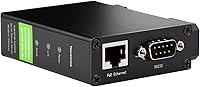
The Waveshare RS232/485/422 to Ethernet Serial Server is one of those practical, no-frills industrial modules that quietly fills a real gap — bridging aging serial equipment to modern TCP/IP networks without demanding a large capital outlay. It mounts neatly on a DIN rail inside a control cabinet, which matters more than it sounds when panel space is tight. Waveshare has built a solid reputation in the maker and industrial IoT community for producing accessible hardware that punches above its price class. Sitting at #7 in Amazon's Serial Port Cards category with 75 ratings, this serial-to-Ethernet gateway has clearly found a legitimate audience among working engineers and integrators.
Features & Benefits

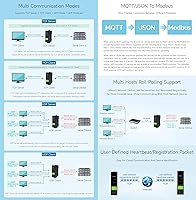
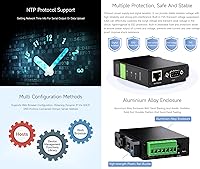
What sets this industrial converter module apart from simpler RS485-to-USB dongles is the breadth of what it handles inside a single enclosure. RS232, RS485, and RS422 are all supported together, paired with a full suite of network modes — TCP server, TCP client, UDP, MQTT, and Modbus gateway conversion, among others. The PoE support is genuinely practical: if your switch already delivers Power over Ethernet, you skip running a dedicated power line to the device entirely. It also accepts DC input from 6 to 36 volts via screw terminals or a barrel jack, covering most industrial power situations. NTP time-syncing and configurable heartbeat packets round out a surprisingly complete feature set at this price point.

Best For

The Waveshare serial server hits its stride in two main scenarios. The first is the classic Modbus RTU retrofit — you have a pressure transmitter, flow meter, or controller with an RS485 port, and you need it communicating with an Ethernet-based SCADA or HMI system without replacing the instrument. The second is MQTT bridging for IoT integrators who would rather configure a gateway than write firmware from scratch. Panel builders watching their budget will appreciate the PoE option compared to Moxa or Advantech equivalents at several times the cost. Home-lab enthusiasts running Node-RED or Home Assistant have found it workable too, though industrial retrofit work is clearly where this module earns its keep.

User Feedback

Across 75 Amazon reviews, the Waveshare serial server holds a 4.1 out of 5 — respectable, though not exceptional. Recurring praise focuses on reliable transparent transmission and a configuration interface that buyers describe as approachable once the initial setup clicks. Value relative to pricier industrial brands comes up frequently among satisfied reviewers. That said, the complaints are worth knowing upfront: English documentation is thin and occasionally confusing, and some users encountered firmware quirks requiring resets or workarounds. A noticeable setup learning curve gets flagged by several reviewers, especially around multi-host polling configuration. Those who pushed through the early friction generally consider the capability-to-cost tradeoff a reasonable compromise for non-critical or budget-conscious deployments.

Pros

  • Handles RS232, RS485, and RS422 in one unit — no need to buy separate converters for each interface type.
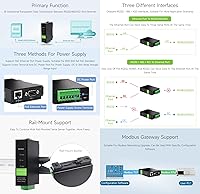
  • PoE support means one Ethernet cable can deliver both data and power, simplifying installation significantly.
  • Wide DC input range of 6 to 36 volts covers an unusually broad range of industrial power scenarios.
  • MQTT, Modbus gateway, TCP, and UDP support make this serial-to-Ethernet gateway genuinely versatile for protocol bridging.
  • DIN rail mounting keeps installation tidy inside standard control cabinets without any extra hardware.
  • Configurable heartbeat packets help maintain stable cloud connections and simplify remote device monitoring.
  • NTP time-sync support allows connected instruments to log time-stamped data without a separate time source.
  • Priced well below comparable Moxa or Advantech units while covering most of the same core use cases.
  • Buyers report reliable transparent transmission once the device is properly configured.
  • Multi-host polling with per-host isolation prevents crosstalk when multiple network clients share the same serial bus.

Cons

  • English documentation is thin and can leave users piecing together setup steps from forums and community posts.
  • Occasional firmware quirks have been reported, with some users needing resets or workarounds to restore stable operation.
  • The initial configuration process has a real learning curve that can slow down first-time deployments noticeably.
  • No formal vendor support channel means you are largely on your own when troubleshooting edge cases.
  • Multi-host polling configuration, in particular, trips up many users and is not well explained in the included materials.
  • Not suitable for environments requiring industrial certifications or rigorous compliance documentation.
  • Long-term supply and firmware update continuity from Waveshare is less predictable than from established industrial vendors.
  • Users who only need a single serial interface type may be paying for capability they will never use.

Ratings

The scores below reflect an AI-driven analysis of verified buyer reviews for the Waveshare RS232/485/422 to Ethernet Serial Server, drawn from global feedback and actively filtered to exclude incentivized, bot-generated, or duplicate submissions. Each category is scored to transparently capture both what users genuinely appreciate and where real frustrations emerged — no cherry-picking, no spin.

Value for Money
88%
Buyers consistently flag the price-to-capability ratio as one of the strongest arguments for choosing this serial-to-Ethernet gateway over pricier alternatives. Engineers who compared it against Moxa or Advantech equivalents noted they got roughly 80% of the functionality at a fraction of the cost, which for non-critical monitoring deployments felt like a genuinely smart trade.
A handful of reviewers noted that once you factor in time spent troubleshooting documentation gaps and firmware quirks, the true cost of ownership climbs beyond the sticker price. For buyers without prior experience in serial networking, the hidden labor cost of setup can erode the value proposition fairly quickly.
Protocol Versatility
91%
The breadth of supported protocols is the single most praised technical attribute across user feedback. Having TCP server, TCP client, UDP, MQTT, Modbus gateway, and RS485-to-JSON conversion available in one compact device means buyers rarely find themselves needing a second unit for a different part of their network stack.
While the protocol list is impressively long, some users found that advanced features like MQTT with TLS authentication or complex UDP multicast configurations required undocumented workarounds. The gap between what is listed and what is smoothly supported out of the box is noticeable in edge cases.
Ease of Setup
58%
42%
Users who had prior experience with serial networking or similar gateways generally found the web-based configuration interface logical and reasonably well organized. Once the initial IP assignment hurdle is cleared, basic TCP and Modbus configurations are achievable within a reasonable session for anyone with a technical background.
This is where the Waveshare serial server loses the most ground in user reviews. First-timers frequently describe a frustrating onboarding experience — unclear factory reset procedures, an initial IP discovery process that is not well explained, and a web UI that assumes prior familiarity with serial networking concepts that many buyers simply do not have.
Documentation Quality
44%
56%
Waveshare does provide a downloadable user manual and some example configuration diagrams, which at least give buyers a starting framework. Users familiar with similar products from the industrial IoT space noted the documentation is on par with what you might expect from a Chinese electronics manufacturer at this price tier.
The English documentation is the most consistently cited frustration across all negative reviews, and it is not a minor complaint. Critical setup steps are ambiguous, parameter descriptions are often machine-translated into confusing phrasing, and advanced features like multi-host polling configuration are barely documented at all, leaving users to reverse-engineer behavior through trial and error.
Transmission Reliability
83%
Once properly configured, the transparent data transmission between serial and Ethernet is described as stable and consistent by the majority of buyers who stuck through the setup process. Engineers running continuous Modbus polling cycles over extended periods reported clean, reliable data flows without packet loss under normal load conditions.
A subset of users reported intermittent disconnections or data corruption events, particularly in electrically noisy industrial environments. Some attributed these to grounding issues or cable quality, but others experienced instability that persisted despite correct wiring, suggesting occasional firmware-level instability under specific network conditions.
PoE Implementation
86%
The IEEE 802.3af PoE support is praised by panel builders and integrators who work in environments where Ethernet is already run but dedicated power points are limited. Being able to drop the converter into a cabinet and power it purely from a PoE switch port simplifies installation noticeably and reduces wiring overhead.
A few users noted that the PoE behavior was not well documented — specifically, whether the device prioritizes PoE or DC input when both are connected simultaneously. In practice this caused some confusion during initial bench testing, and Waveshare's support material does not address the priority logic clearly.
Build Quality
74%
26%
The metal enclosure feels appropriately solid for a device intended for cabinet or DIN rail installation, and the DIN rail clip engages cleanly without play or wobble. For the price bracket, the physical construction is better than several competing modules reviewers referenced from other budget-tier brands.
The screw terminals, while functional, feel slightly undersized for heavier gauge industrial wiring, and a few users noted that the terminal block labels are small enough to be difficult to read without magnification in a busy panel environment. The overall finish is competent but clearly budget-tier rather than industrial-grade.
Multi-Host Polling
69%
31%
The per-host isolation design works as advertised when correctly configured — users running three or four simultaneous network clients polling the same RS485 bus reported clean separation of responses with no crosstalk between hosts. This is a genuinely useful capability for applications where multiple SCADA clients share a single serial device.
Getting multi-host polling to behave correctly is one of the steeper configuration challenges this industrial converter module presents. The documentation for this feature is particularly sparse, and several reviewers spent hours troubleshooting polling timeouts and response collisions before finding workarounds through community forums.
MQTT & Cloud Integration
77%
23%
Buyers who needed to push serial instrument data toward cloud MQTT brokers — Mosquitto, HiveMQ, or AWS IoT — found the built-in MQTT client a genuine time-saver compared to building a custom middleware layer. Node-RED users in particular reported clean integration once the broker address and topic structure were configured correctly.
Advanced MQTT features like TLS-encrypted connections and certificate-based authentication are not robustly supported or documented, which limits suitability for production cloud deployments with strict security requirements. Basic MQTT over port 1883 is workable; anything more hardened requires patience and possibly firmware-level experimentation.
Power Flexibility
89%
The 6 to 36V DC input range is unusually wide for a device at this price and covers virtually every standard industrial power supply scenario — 12V, 24V, and 48V-derived supplies all work without adaptation. Having both a barrel jack and screw terminals means installers can choose whichever suits their panel wiring approach.
The barrel jack diameter (5.5mm outer, 2.1mm inner) is a common size but was flagged by a couple of buyers as slightly inconsistent with their available adapters, suggesting minor dimensional tolerance variation between units. No official power consumption specification is provided, which complicates power budget calculations for larger panel designs.
Firmware Stability
63%
37%
For the majority of buyers running straightforward TCP or Modbus configurations, the firmware behaves predictably over extended periods. Users in stable, low-noise Ethernet environments rarely reported spontaneous reboots or behavioral changes after initial setup was complete.
A meaningful minority of reviewers encountered firmware-level issues ranging from lockups requiring hard resets to configuration settings that did not persist correctly across reboots. Waveshare does release occasional firmware updates, but the update process itself is not well documented and carries some risk for less experienced users.
NTP Time Sync
81%
19%
The NTP implementation is appreciated by buyers who need time-stamped data logging from connected instruments — it eliminates the need for a separate time source and works reliably in network environments with access to public or local NTP servers. Data historians and audit-log users found it accurate and consistent.
NTP functionality is dependent on network connectivity to a reachable time server, which in isolated industrial LAN environments without internet access requires an internal NTP server to be present. This dependency is not prominently called out in the product documentation, catching some buyers off-guard during deployment.
Community & Support
52%
48%
Waveshare has an active presence on GitHub and maintains a wiki with some product-specific pages, which more technically capable buyers have used to fill gaps left by the official documentation. A modest but helpful community of Waveshare serial server users has emerged on forums like the Home Assistant community and Reddit's r/homeautomation.
Official support from Waveshare is slow and inconsistent by most accounts — email responses are described as delayed and sometimes unhelpful, and there is no live support channel. Buyers who hit unusual configuration or firmware issues often find themselves relying entirely on community goodwill rather than any structured support resource.

Suitable for:

The Waveshare RS232/485/422 to Ethernet Serial Server is a strong fit for engineers and technicians who need to bring older serial instruments — meters, PLCs, sensors — onto a modern Ethernet network without replacing the underlying hardware. If you are retrofitting a Modbus RTU device into a SCADA or HMI environment, this serial-to-Ethernet gateway handles that conversion cleanly and supports the protocol depth to make it practical rather than just possible. Panel builders and small facility managers working with constrained budgets will find the PoE support particularly useful — if your network switch already delivers power over the Ethernet cable, you skip running a separate power line to the converter entirely. IoT integrators who need MQTT bridging to push serial data toward cloud platforms will appreciate that it handles the protocol translation in firmware, without requiring custom code. Home-lab enthusiasts running Node-RED or Home Assistant have also put this industrial converter module to work successfully, particularly for automation projects that touch industrial sensors or instruments.
Not suitable for:

Buyers expecting plug-and-play simplicity should approach this device with realistic expectations — the initial configuration has a learning curve, and the English documentation, while functional, is thin enough that it will frustrate anyone who is not comfortable troubleshooting through trial and error or community forums. The Waveshare RS232/485/422 to Ethernet Serial Server is not the right choice for mission-critical infrastructure where firmware stability and vendor-backed support contracts are non-negotiable; in those contexts, the additional cost of a Moxa or Advantech unit is genuinely justified. Buyers who only need a single interface type — say, RS485 only — may find simpler, cheaper dedicated converters more cost-effective for their use case. If your environment requires formal industrial certifications, rigorous EMC compliance documentation, or guaranteed long-term supply continuity, this gateway does not clearly meet that bar. It is also not a fit for users who expect immediate, responsive technical support from the manufacturer when things go sideways during setup.
Specifications

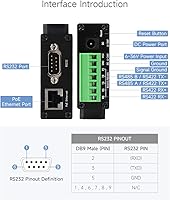
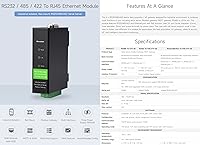
  • Serial Interfaces: Supports RS232, RS485, and RS422 serial communication standards within a single unit.
  • Network Port: Equipped with one RJ45 Ethernet port for standard TCP/IP network connectivity.
  • PoE Standard: Compliant with IEEE 802.3af Power over Ethernet, allowing the device to draw power directly from a compatible network switch.
  • DC Input Range: Accepts a wide DC voltage input of 6 to 36 volts, accommodating diverse industrial power supplies.
  • Power Connectors: Provides both a screw terminal block and a DC barrel jack (5.5mm outer diameter, 2.1mm inner diameter) for power input flexibility.
  • Supported Protocols: Handles TCP server, TCP client, UDP, UDP multicast, MQTT, Modbus gateway, and RS485-to-JSON protocol conversion.
  • Mounting Type: Features a DIN rail-compatible enclosure for straightforward installation inside standard industrial control cabinets.
  • Time Sync: Supports NTP protocol to synchronize network time, enabling accurate time-stamping of serial data outputs and uploads.
  • Heartbeat Packet: User-configurable heartbeat and registration packets allow cloud platforms to reliably identify and monitor connected devices.
  • Multi-Host Polling: Supports simultaneous polling from multiple network hosts with per-host isolation to prevent data crosstalk between clients.
  • Firmware OS: Runs on an embedded Linux-based firmware that manages protocol conversion and network communication functions.
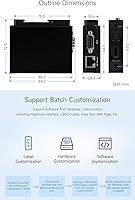
  • Device Weight: Weighs 5.3 oz (approximately 150g), keeping the overall assembly light for panel and cabinet installations.
  • Package Dimensions: Ships in packaging measuring 4.21 x 3.15 x 1.1 inches, reflecting the compact footprint of the enclosure itself.
  • Manufacturer: Designed and produced by Waveshare, a brand recognized in the industrial IoT and maker hardware community.
  • Amazon Ranking: Holds a #7 Best Sellers Rank in the Serial Port Cards category on Amazon as of the time of this review.

Related Reviews
CHEECENT CR102 2-Port Ethernet USB Print Server
77%
62%
Setup Experience
89%
Connection Stability
71%
Printer Compatibility
84%
Dual-Port Utility
81%
Build Quality
More
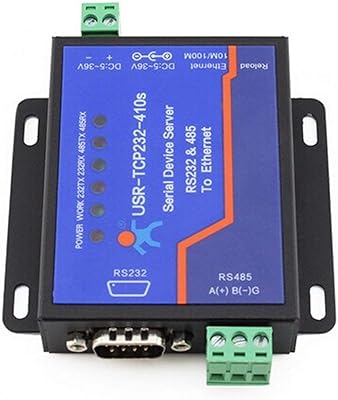
PUSR USR-TCP232-410S Serial to Ethernet Converter
75%
91%
Protocol Coverage
88%
Modbus Gateway Performance
86%
Dual Serial Port Design
61%
Setup & Configuration
38%
Documentation Quality
More
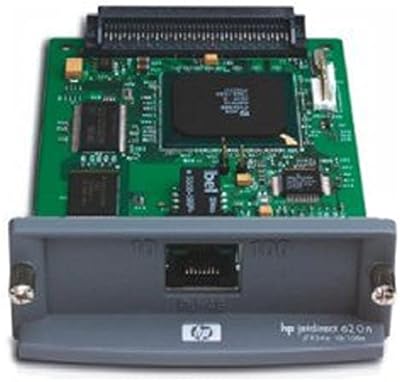
HP JetDirect 620N Fast Ethernet Print Server
84%
88%
Performance
94%
Ease of Setup
85%
Build Quality
90%
Connectivity
80%
Compatibility
More
X-MEDIA XM-PS110P 1-Port Ethernet Print Server
83%
91%
Ease of Setup
87%
Compatibility with Printers
92%
Value for Money
85%
Reliability
82%
Network Performance
More
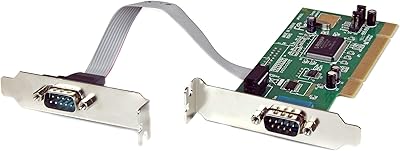
StarTech 2-Port PCI Low Profile RS232 Serial Adapter Card
85%
88%
Ease of Installation
90%
Data Transfer Speed
91%
Compatibility with Operating Systems
85%
Build Quality
87%
Performance in Professional Use
More
Vivlly 10U Open Frame Server Rack
71%
74%
Build Quality
86%
Value for Money
83%
Ease of Assembly
89%
Airflow & Cooling
91%
Load Capacity (Floor Standing)
More
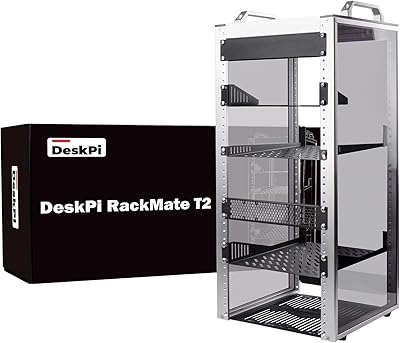
GeeekPi DeskPi RackMate T2 12U Server Rack
74%
83%
Build Quality
78%
Value for Money
71%
Ease of Assembly
62%
Included Hardware & Accessories
74%
Stability & Rigidity
More
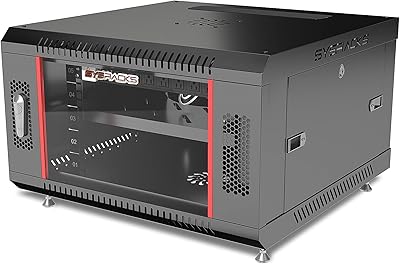
Sysracks SRW 6.600B 6U Wall Mount Server Rack
72%
83%
Build Quality
61%
Assembly Experience
86%
Value for Money
67%
Cooling Performance
58%
Fan Noise Level
More
JARNHNG Cat6 1000ft Ethernet Cable
85%
92%
Outdoor Durability
88%
Signal Quality and Performance
85%
Ease of Installation
81%
Flexibility for DIY Installations
89%
UV and Weather Resistance
More
VEVOR 2-Pack 1U 10″ Server Rack Shelf
79%
91%
Value for Money
88%
Ease of Installation
76%
Build Quality
83%
Weight Capacity
58%
Shelf Depth Adequacy
More

FAQ

No, the device provides a shared serial port that can be configured for one interface mode at a time — RS232, RS485, or RS422. You select the active interface through the configuration interface, and it stays in that mode until you change it. It is not designed to run all three simultaneously.

Several buyers have reported using the Waveshare serial server successfully with both Node-RED and Home Assistant, typically over TCP client mode or MQTT. That said, the setup requires some familiarity with network configuration — it is not a guided integration. If you are comfortable with those platforms at a moderate level, it is manageable.

Honestly, it is not a beginner device. The web-based configuration interface is fairly organized once you get to it, but getting there — assigning an IP, navigating the initial settings — takes some patience. The English documentation is functional but sparse, so be prepared to spend time in community forums or watching third-party setup guides if you hit a wall.

PoE stands for Power over Ethernet — it means the device can receive electrical power through the same Ethernet cable that carries data, so you do not need a separate power adapter or wiring run. To use this feature, your network switch needs to support the IEEE 802.3af PoE standard. Standard home routers typically do not support PoE; you need a PoE-capable managed or unmanaged switch.

Yes, that is one of its core use cases. The device can act as a Modbus gateway, translating Modbus TCP commands from your SCADA or HMI software into Modbus RTU over RS485 to the field device. This is well-documented in the product description and confirmed by users who have deployed it in exactly that configuration.

For non-critical monitoring or data acquisition applications, most users find it stable enough for continuous operation once it is correctly configured. However, a minority of reviewers have reported occasional firmware hiccups that required a reboot or reset. For truly mission-critical infrastructure where unplanned downtime is unacceptable, you would want a device with a stronger reliability track record and vendor support, such as units from Moxa or Advantech.

Yes, the device supports multi-host polling, meaning several network clients can query the connected serial device. It handles each host separately to prevent data from one client bleeding into another's responses. Keep in mind that the serial bus itself is still shared, so polling frequency and timing across clients need to be managed to avoid collisions.

You can power it through the DC barrel jack or the screw terminal block using any DC supply between 6 and 36 volts. A standard 12V or 24V industrial DIN rail power supply works well. The 5.5mm outer / 2.1mm inner barrel jack is a common size, so finding a compatible adapter is straightforward.

Yes, it has built-in MQTT client support, which means it can publish serial data to an MQTT broker without any intermediate server or custom code on your part. You configure the broker address, port, topic, and credentials through the web interface. Users have connected it to both local Mosquitto brokers and cloud-based brokers, though the depth of TLS certificate management support may require some additional testing for your specific broker setup.

The device supports NTP, which lets it sync its internal clock with a network time server. Once synchronized, it can append accurate timestamps to serial data before forwarding it over the network. This is particularly useful for data logging and audit trails where the exact time of a reading matters. You configure the NTP server address through the device's settings page.