Overview

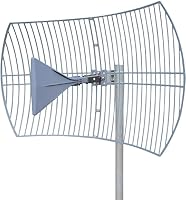
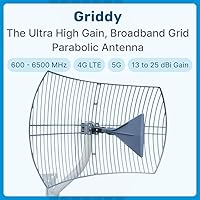
The Waveform Griddy Parabolic Grid Antenna is built for one specific mission: pulling in a usable cellular or WiFi signal when you're far from the nearest tower and standard antennas have given up. Unlike flat panel or omnidirectional antennas that spread energy in broad patterns, the parabolic grid design focuses signal into a tight beam, which is how it achieves such high gain. It covers a wide frequency span — 600 MHz all the way to 6500 MHz — so it works across modern 4G LTE, 5G NR, and WiFi bands. This is a premium, purpose-built tool, not a casual upgrade. If trees, hills, or buildings sit between you and the tower, you'll want to factor that in before buying.
Features & Benefits

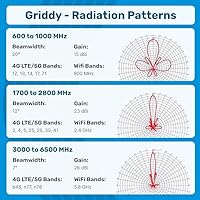
The gain numbers here deserve some plain-English translation. At lower frequencies (600–960 MHz), this grid antenna delivers 12–17 dBi — solid for long-range low-band LTE. Move into mid-band territory (1700–2700 MHz) and you're at 20–23 dBi, and at upper bands the gain peaks at 26 dBi. More dBi simply means a more focused, stronger signal pull over distance — theoretically up to 40 km, though real-world results depend heavily on terrain and tower output. The antenna ships with N-Type 50 Ohm connectors, so most users will need a device-specific adapter not included in the box. For routers that support MIMO, running two or four units unlocks meaningful multi-stream throughput improvements worth considering.

Best For

The Griddy is a strong fit for rural and remote users who've already done their homework — meaning they know which direction their nearest cell tower sits and have a reasonably clear path to it. Fixed LTE or 5G home internet users with a compatible router or gateway that has external antenna ports will get the most from this parabolic antenna. Off-grid cabins, working farms, and remote job sites are natural use cases. It also suits RV parks or semi-permanent setups where you can take time to mount and properly aim the dish. If you're upgrading from a flat panel or omni antenna and already seeing some signal, this is a logical next step.

User Feedback

With a 4.1-star average across 76 ratings, buyer sentiment leans positive but with nuance worth unpacking. Owners who took the time to aim it carefully toward a known tower consistently report real speed improvements and a noticeably more stable connection day to day. The build quality draws quiet appreciation — this is not a flimsy piece of kit. On the other side, a recurring frustration involves the connector setup: buyers who didn't realize they'd need additional adapters for their modem or router felt caught off guard. A handful of disappointed reviews trace back to installations where line of sight simply wasn't achievable — those aren't product failures, but expectation mismatches that a little pre-purchase research would have prevented.

Pros

  • Pulls in cell signal at distances that flat panel and omni antennas simply cannot reach.
  • Covers 600 MHz to 6500 MHz, staying relevant across 4G LTE, 5G NR, and WiFi bands.
  • Peak gain of 26 dBi at upper bands delivers measurably faster data speeds when properly aimed.
  • Parabolic grid design is naturally wind-resistant, making it practical for exposed outdoor mounts.
  • Scales into a full MIMO array by adding additional units alongside a compatible router.
  • Sturdy construction holds up through weather and temperature swings over extended outdoor use.
  • Wide frequency span means the hardware does not go obsolete as carriers shift to new spectrum.
  • Works well as a high-gain donor antenna feeding into a cellular signal booster setup.

Cons

  • No adapters are included, and most consumer routers and modems will need one to connect.
  • Aiming precisely enough to unlock full gain is genuinely difficult without a signal meter or help.
  • At over 7 pounds and 25 inches tall, mounting requires real planning and a stable support structure.
  • Performance drops sharply if even moderate obstruction exists between the antenna and the tower.
  • Building out a dual or quad MIMO array multiplies cost and alignment complexity considerably.
  • Connector type and adapter requirements are not clearly communicated in the in-box documentation.
  • Heavy directional focus means it cannot serve multiple towers or directions simultaneously.
  • Buyers without prior RF or networking experience face a steeper learning curve than expected.

Ratings

The Waveform Griddy Parabolic Grid Antenna earns its place as one of the more capable high-gain outdoor antennas in its class, and the scores below reflect exactly that — no more, no less. Our AI has analyzed verified global buyer reviews, actively filtering out incentivized, bot-generated, and duplicate submissions, to surface an honest picture of real-world performance. Both the standout strengths and the genuine frustrations are represented here transparently.
Signal Gain Performance
91%
When aimed correctly at a tower with a clean line of sight, users report dramatic jumps in signal strength — in many cases moving from barely usable LTE to consistent, fast data. The tiered gain across low, mid, and upper bands means the antenna performs meaningfully across a wide range of real-world frequencies, not just on paper.
That impressive gain is highly directional, so even a few degrees of misalignment noticeably degrades performance. Users in areas with multiple towers in different directions found it frustrating to commit to a single aim point and stick with it.
Build Quality
83%
The parabolic grid frame feels sturdy out of the box — not lightweight or cheap in the way some imported antennas can feel. Several buyers in exposed outdoor environments noted the hardware held up well through wind, rain, and temperature swings over months of use.
A small number of buyers noted minor finishing inconsistencies on mounting hardware, and the overall footprint is significant enough that installation requires planning. At 7-plus pounds, it is not something you casually reposition once mounted.
Ease of Installation
58%
42%
For users who came prepared — knowing their tower direction, having the right adapters on hand, and owning a compatible mounting pole — the physical installation itself is fairly intuitive. Waveform's documentation gives enough technical grounding to get started confidently.
Buyers who underestimated the setup complexity ran into real friction. Aiming the dish precisely enough to unlock its potential is genuinely tricky without signal-measuring tools, and the adapter situation catches many people off guard when they realize their router or modem connection type does not match the included N-Type connector.
Connector & Adapter Compatibility
54%
46%
The N-Type 50 Ohm connector is an industry-standard choice that works well with professional-grade LTE routers and gateways like those from Peplink, Cradlepoint, and similar brands. Users already familiar with RF hardware find the connector reliable and low-loss.
For the average buyer connecting to a consumer hotspot or a common LTE modem, finding the right adapter is a separate research project entirely. Multiple reviewers expressed frustration that this was not clearly communicated upfront, and the cost of adapters adds to an already significant total investment.
Range & Coverage
87%
In flat, open terrain — farms, open plains, coastal areas — users have reported pulling in towers at distances that other antennas simply could not reach. For fixed rural internet setups where the tower is known and the path is clean, the real-world range performance aligns well with the 40 km headline figure.
In hilly, wooded, or suburban environments, the effective range drops considerably. Users who assumed the range spec would translate to their specific terrain were often disappointed, as the parabolic design has no tolerance for signal scatter or obstruction.
MIMO & Multi-Unit Performance
79%
21%
Users who invested in dual or quad Griddy setups alongside a MIMO-capable router saw tangible throughput improvements over single-antenna configurations. For serious fixed wireless installations, this scalability is a genuine advantage that few competing antennas in the category can match.
The cost of building out a full MIMO array with multiple units adds up quickly, and the alignment complexity multiplies with each additional antenna. Casual buyers rarely budget for or anticipate this requirement when making the initial purchase.
Frequency Versatility
88%
The ability to span from 600 MHz all the way through 6500 MHz is genuinely uncommon at this gain level. In practice, this means the antenna does not become obsolete as carriers shift spectrum, and it handles mid-band 5G NR alongside legacy LTE without any hardware change.
The gain figures vary quite a bit across that frequency span, and buyers connecting to lower-band networks will not see the same headline performance as those on upper-band frequencies. Understanding which band your local tower is broadcasting on requires a bit of homework before purchase.
Value for Money
67%
33%
For the right buyer — someone with confirmed line of sight, the correct adapter, and a compatible router — the performance return justifies the price. Rural professionals or remote businesses where reliable internet is a genuine operational need tend to find the investment reasonable over time.
For buyers who hit obstacles during setup or discovered their situation did not meet the line-of-sight requirement, the price point feels steep relative to the outcome they experienced. The additional cost of adapters, mounts, and potentially a second unit compounds that frustration.
Weather & Outdoor Durability
81%
19%
The open grid design is inherently wind-resistant compared to solid panel antennas, which is a practical advantage in exposed locations. Buyers in coastal and high-wind environments specifically noted that the antenna stayed firmly mounted and maintained consistent performance through poor weather.
Long-term weatherproofing of connectors and mounting hardware is a concern some buyers raised after extended outdoor use. Without proper weatherproofing tape on the connections, moisture ingress at the N-Type port can degrade signal quality gradually.
Aiming & Alignment Precision
52%
48%
Once dialed in, users describe the aiming process as genuinely rewarding — small adjustments produce measurable signal changes that confirm you are on the right track. Having a second person help during initial mounting makes the process significantly smoother.
Without a dedicated signal meter or at least a real-time signal app on a connected device, aiming this antenna by feel alone is hit-or-miss. It is one of the more common sources of disappointment in negative reviews, particularly for solo installers.
Compatibility with Cell Boosters
73%
27%
Users pairing the Griddy with a cellular signal booster reported meaningful improvements in boosted output quality, particularly at long distances from the tower where the donor signal is typically weak. The high gain feeding into a booster's external port is a logical and effective combination.
Not all boosters expose a standard external antenna port, and gain matching between a very high-gain antenna and a booster's input can cause overload issues if the tower is unexpectedly close. A small number of users reported needing an attenuator to stabilize the connection.
Documentation & Setup Guidance
63%
37%
Waveform provides more technical documentation than most antenna brands at this level, and their online resources help buyers understand gain, frequency bands, and aiming basics. Users who spent time with the documentation before installation had a noticeably smoother experience.
The included in-box documentation is limited, and buyers who skipped the online resources often found themselves confused at key steps. More explicit guidance on adapter selection and a simple aiming workflow in the physical packaging would prevent a large share of the frustrating first experiences.
Physical Footprint & Mounting
71%
29%
The grid form factor is easier to manage during installation than a solid dish of equivalent gain, and standard pole mounts work well with the included hardware. Users who planned their mounting point in advance found the process workable even without professional help.
At roughly 25 inches tall and weighing over 7 pounds, this is not a discreet or lightweight install. Buyers in HOA communities or rental properties flagged the visibility and mounting restrictions as real practical barriers, regardless of technical performance.

Suitable for:

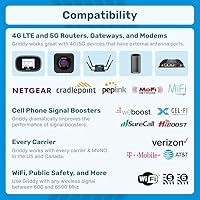
The Waveform Griddy Parabolic Grid Antenna is purpose-built for rural homeowners, remote workers, and off-grid property owners who have already identified a nearby cell tower and have a reasonably clear path to it. If you're running a fixed LTE or 5G home internet setup on a router or gateway that has external antenna ports — think Peplink, Netgear, or similar professional-grade hardware — this grid antenna is exactly the kind of upgrade that can turn a frustratingly slow connection into something genuinely workable. Farmers, cabin owners, and remote job site managers who need reliable data at long distances will find the gain performance hard to match at this form factor. It also makes strong sense for anyone who has already tried a flat panel or omnidirectional antenna and maxed it out — the Griddy picks up where those leave off. For MIMO-capable setups, running two units in parallel can unlock meaningful throughput improvements that a single panel simply cannot deliver.
Not suitable for:

The Waveform Griddy Parabolic Grid Antenna is not the right tool for buyers who expect plug-and-play simplicity or who have not confirmed their tower direction and line-of-sight situation beforehand. If your signal problem stems from being surrounded by dense trees, hills, or buildings rather than sheer distance from a tower, this parabolic antenna will likely disappoint — the high-gain directional design has little tolerance for signal scatter or obstruction. Renters, apartment dwellers, and HOA residents will face real practical barriers around mounting a 25-inch, 7-pound outdoor antenna. Buyers connecting to standard consumer hotspots or entry-level modems also need to be aware that additional adapters will almost certainly be required, adding both cost and complexity that is not immediately obvious at purchase. And if your budget is already stretched, the prospect of needing two or more units for a proper MIMO setup makes this a harder financial case to justify.
Specifications

  • Manufacturer: This antenna is designed and sold by Waveform, a US-based company specializing in cellular and wireless signal hardware.
  • Antenna Type: Parabolic grid directional antenna, engineered to focus signal into a narrow high-gain beam rather than broadcasting in all directions.
  • Frequency Range: Covers 600 MHz through 6500 MHz, spanning low-band, mid-band, and upper-band frequencies used by 4G LTE, 5G NR, and WiFi.
  • Low-Band Gain: Delivers 12–17 dBi of gain across the 600–960 MHz frequency range, supporting long-range low-band LTE connectivity.
  • Mid-Band Gain: Provides 20–23 dBi of gain across the 1700–2700 MHz range, covering the most common LTE and early 5G mid-band frequencies.
  • Upper-Band Gain: Achieves peak gain of 23–26 dBi across the 3000–6500 MHz range, optimized for upper mid-band 5G NR and WiFi applications.
  • Max Range: Rated for a maximum theoretical range of 40 km (approximately 25 miles) under ideal line-of-sight conditions.
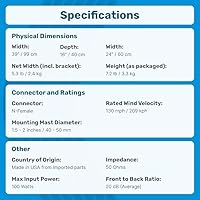
  • Connector Type: Equipped with N-Type 50 Ohm connectors, an industry-standard RF connector type used with professional-grade routers, modems, and boosters.
  • Impedance: Operates at 50 Ohm impedance, matching the input specifications of most LTE routers, gateways, and cellular signal boosters.
  • MIMO Support: MIMO configurations are supported by purchasing two or four units and connecting each to a separate antenna port on a compatible device.
  • Supported Standards: Compatible with 4G LTE, 5G NR, and WiFi wireless standards across the covered frequency bands.
  • Dimensions: Measures 25″ in height by 5.39″ in width by 21.69″ in length, making it a substantial outdoor installation.
  • Weight: Weighs 7.19 pounds, requiring a sturdy pole or mounting bracket capable of supporting the load in outdoor conditions.
  • Form Factor: Open parabolic grid construction reduces wind load compared to solid dish antennas while maintaining high directional gain.
  • Compatibility: Designed to connect to the external antenna ports found on LTE routers, 5G gateways, hotspot modems, WiFi access points, and cell signal boosters.
  • ASIN: The Amazon product identifier for this item is B08Z671T9P, listed under the Computer Networking Antennas category.
  • Availability: First made available for purchase in March 2021, with ongoing availability through Waveform and authorized resellers.
  • Channels: Operates as a single-channel antenna per unit; multi-channel MIMO performance requires multiple units installed in parallel.

Related Reviews
Waveform QuadPro 4x4 MIMO Panel Antenna
80%
83%
Signal Performance
88%
Build Quality
79%
Installation Experience
91%
Compatibility
67%
Value for Money
More
Antennas Direct ClearStream 4MAX TV Antenna
86%
88%
Performance in Rural Areas
93%
Ease of Installation
85%
Signal Strength
91%
Build Quality
89%
Indoor/Outdoor Versatility
More
Antennas Direct ClearStream 2V TV Antenna
83%
88%
Signal Reception
91%
VHF Channel Coverage
84%
Build Quality
82%
Ease of Installation
79%
Value for Money
More
Antennas Direct ClearStream 2MAX TV Antenna
76%
83%
Signal Reception Quality
67%
Range Accuracy
88%
Ease of Installation
84%
Build Quality
79%
Multi-Directional Performance
More
Antennas Direct ClearStream 4V TV Antenna
74%
88%
Signal Reception
84%
Build Quality
81%
Multi-Directional Performance
67%
Ease of Installation
74%
Value for Money
More
Antennas Direct ClearStream MAX-V TV Antenna
76%
78%
Signal Reception
61%
Range Accuracy
84%
Installation Ease
82%
Build Quality
79%
Value for Money
More
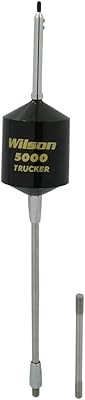
Wilson T5000 Center Loaded Mobile CB Antenna
82%
92%
Signal Performance
89%
Build Quality
94%
Power Handling
71%
Ease of Installation
76%
Mounting Flexibility
More
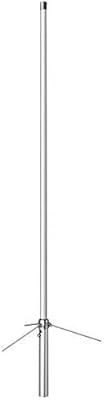
Diamond Antenna X30A Dual-Band Base Antenna
80%
91%
Signal Performance
88%
Build Quality
86%
Weatherproofing
84%
Ease of Installation
89%
SWR Consistency
More
Antennas Direct ClearStream Eclipse Indoor TV Antenna
77%
74%
Signal Reception
67%
Amplifier Performance
93%
Design & Profile
91%
Ease of Setup
62%
Cable Length
More
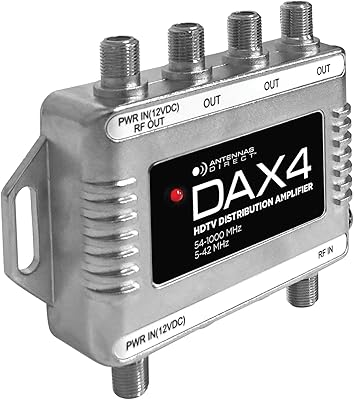
Antennas Direct DAX4 4-Output TV Antenna Distribution Amplifier
86%
87%
Signal Quality & Performance
91%
Ease of Installation
85%
Build Quality & Durability
92%
Value for Money
78%
Weather Resistance
More

FAQ

It depends on whether your hotspot has external antenna ports, which are usually labeled TS-9 or SMA on consumer devices. The Griddy uses N-Type connectors, so you would need an adapter — for example, an N-Type female to TS-9 male — to bridge the two. Most consumer hotspots do support external antennas, but check your specific model before purchasing.

Honestly, yes — and it is worth spending a few minutes on this before committing. Apps like OpenSignal or CellMapper can show you tower locations relative to your address. The Griddy is a highly directional antenna, so knowing which direction to aim it is not optional; it is the single most important factor in whether you get great results or mediocre ones.

The antenna ships with its own mounting bracket, designed to attach to a standard pole. You will need to supply your own pole or mast — a typical 1.5-inch to 2-inch diameter outdoor pole works well. Most buyers use a rooftop, fence post, or side-of-building mount depending on their situation.

Yes, and this is actually one of the ideal pairings. Professional-grade routers from brands like Peplink and Cradlepoint typically use N-Type or SMA antenna ports, which means the connection is straightforward with minimal or no adapter needed. These routers also tend to support MIMO, so running two units in parallel is a natural fit.

A rough check is to look at the terrain between your location and the tower on a tool like Google Earth in elevation profile view. Dense tree canopy, hills, and large buildings all count as obstructions. A completely open field or a rooftop position with nothing between you and the tower is the ideal scenario for this parabolic antenna to shine.

One unit will deliver a meaningful signal improvement on its own, and for many users that is plenty. A second unit only becomes worth it if your router or gateway has two antenna ports and supports MIMO — in that case, the throughput gains from the second unit can be significant. If your device only has one external port, stick with one.

The most reliable method is to connect it to your device, pull up a signal strength reading in your router's admin interface or a cell signal app, and then slowly rotate the antenna in small increments while watching the signal level change. Having a second person read the signal values while you adjust the mount makes this process much less frustrating than doing it solo.

Not always, but they will reduce performance noticeably — and the denser the foliage, the worse the impact. A few scattered trees may only cost you a few dBi of effective gain, while a thick forest between you and the tower can make the antenna nearly ineffective. If your path is partially obstructed, you may still see improvement, but temper expectations accordingly.

That depends entirely on your device. N-Type to SMA is probably the most common adapter needed for mid-range LTE routers. If you are connecting to a consumer hotspot, you may need N-Type to TS-9. It is worth looking up your router or modem model and its antenna port type before purchasing, so you can order the adapter at the same time and avoid delays.

A flat panel antenna is easier to install, more forgiving with aiming, and works reasonably well at shorter distances. This grid antenna requires more precision but rewards that effort with substantially higher gain — particularly at longer ranges or on upper-band frequencies. If you have already maxed out a flat panel and still need more signal, this parabolic antenna is the logical next step up.

Where to Buy