Overview

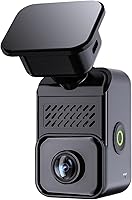
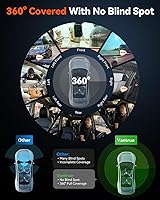
The Vantrue E360 360-Degree Dual Fisheye Dash Cam entered the market in late 2024 as a genuinely novel take on in-car recording — using two fisheye lenses to cover the road ahead and the cabin interior at the same time, with no second unit required. That dual-angle approach makes it particularly compelling for rideshare and fleet drivers who need a single device to document everything happening inside and outside the vehicle simultaneously. Sitting at a premium price point, it is not aimed at bargain hunters. With only 135 ratings so far, the current 3.5-star average reflects a product still finding its audience — worth examining honestly rather than dismissing outright.

Features & Benefits

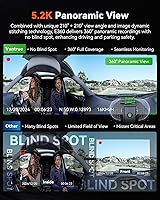
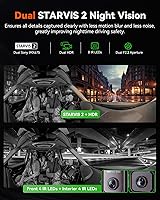
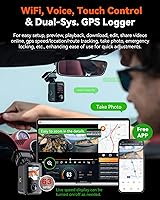
The headline spec is a 5.2K stitched resolution pulled from two Sony IMX675 STARVIS 2 sensors — one pointing forward, one into the cabin. In practice, stitched panoramic footage differs from a standard wide-angle shot: you gain full 360-degree coverage but may notice a visible seam where the two images are joined, especially on straight lines near the center of the frame. Low-light performance is a genuine strength; eight IR LEDs keep both views clear even in total darkness. The built-in 5GHz Wi-Fi transfers clips to the Vantrue app noticeably faster than older 2.4GHz dash cams, and the dual GPS system logs routes and speeds in formats that hold up well for insurance documentation.

Best For

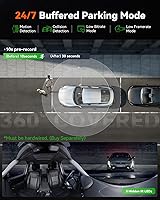
This dual fisheye camera was clearly designed with Uber and Lyft drivers in mind, and that focus shows. Anyone who spends hours ferrying passengers needs simultaneous proof of what happened on the road and inside the car — and the E360 handles both without mounting two separate units. Drivers who park overnight in unfamiliar areas will appreciate the 24-hour buffered parking mode, though they should budget for the hardwire kit sold separately, since the parking mode does not work on battery power alone. Tech-oriented buyers drawn to GPS trip logs, app-based video management, and optional add-ons like a rear camera will find plenty to work with here.

User Feedback

Early buyers of the E360 are divided, and the 3.5-star rating reflects that split fairly accurately. Those who praise it most tend to highlight the interior night vision, calling it noticeably clearer than competing cabin cameras, and appreciate how quickly footage reaches their phone over Wi-Fi. The friction points are harder to ignore: several reviewers flag stitching artifacts along the seam between the two fisheye views, and a portion of buyers were caught off guard by the additional cost of the hardwire kit needed for parking mode. App reliability also draws criticism. With just over 130 ratings, the score is still settling — individual reviews are worth reading closely before committing.

Pros

  • Captures front road and passenger cabin footage simultaneously with a single mounted unit.
  • Eight IR LEDs deliver clear interior video even in complete darkness — genuinely useful for late-night rideshare shifts.
  • 5.2K stitched resolution provides strong overall detail across the panoramic field of view.
  • Dual Sony IMX675 STARVIS 2 sensors handle HDR and low-light conditions better than most competitors in this category.
  • Built-in 5GHz Wi-Fi transfers footage to your phone noticeably faster than older dash cam Wi-Fi standards.
  • Dual-system GPS logs accurate routes, speeds, and mileage — ready to use as evidence in insurance disputes.
  • Ten-second pre-recording buffer means parking incidents are captured from before the trigger event, not just after.
  • Supports up to 1TB of local storage, reducing how often drivers need to manage or offload footage.
  • Multi-language voice control lets drivers save clips or take photos without touching the screen.
  • Magnetic ball-joint mount makes repositioning or removing the camera quick and clean.

Cons

  • Hardwire kit required for parking mode is sold separately, adding unexpected cost and installation work.
  • Stitching artifacts are visible at the seam between the two fisheye lenses, which can affect footage usability in some scenarios.
  • The Vantrue app has drawn criticism for instability and inconsistent performance from early buyers.
  • Only 135 ratings as of early 2025 — not enough user data to fully trust the current star average.
  • Fisheye distortion on both lenses means straight lines near the frame edges appear curved, which some viewers find disorienting.
  • Optional rear camera coverage costs extra, leaving the back of the vehicle unmonitored in the base configuration.
  • Setup and configuration have a steeper learning curve than simpler plug-and-play alternatives.
  • Total cost of ownership rises significantly once parking kit, rear camera, and optional mounts are included.
  • Supercapacitor power design, while durable, means no internal battery backup if the car power cuts instantly.
  • At a premium price tier, buyers take on more risk given the product is still relatively new and reviews are limited.

Ratings

The scores below are generated by AI after analyzing verified buyer reviews of the Vantrue E360 360-Degree Dual Fisheye Dash Cam from across global markets, with spam, bot-generated, and incentivized feedback actively filtered out. With a still-forming review base from a late 2024 launch, we have weighted patterns carefully to surface what real drivers consistently praise and where genuine frustration arises. Both the standout strengths and the recurring pain points are reflected honestly in every category score.

Panoramic Coverage
88%
Rideshare drivers and fleet operators consistently describe the dual-angle coverage as the single biggest reason they chose this camera over a two-unit setup. Being able to review a passenger incident and the road context in the same clip — without syncing two separate files — is a meaningful practical advantage that users return to in their reviews.
The stitching seam where the two fisheye lenses meet is a recurring complaint, particularly when reviewing footage of horizontal lines like lane markings or building edges. A handful of users found the distortion at the outer edges of each fisheye more distracting than expected, especially on their first playback sessions.
Night Vision Quality
91%
Interior night vision draws some of the most enthusiastic feedback in the entire review pool, with late-night rideshare drivers specifically noting that passenger faces and behavior are clearly visible even without any cabin lighting. The eight IR LEDs — split evenly between the front and interior lenses — provide noticeably more even illumination than cameras with a single shared IR array.
A small subset of reviewers noted that in certain parking configurations, IR reflections off tinted windows can wash out portions of the interior frame. Front-facing night vision, while good, occasionally shows more noise in extreme low-light highway scenarios than the interior view, which benefits from the closer IR range.
Video Resolution & Detail
83%
At 5.2K stitched output, the E360 captures enough detail to read license plates at reasonable distances in daylight, and the dual STARVIS 2 sensors handle HDR scenes — like driving out of a tunnel into bright sunlight — better than most single-sensor competitors at this price tier. Reviewers who use the Vantrue desktop player to zoom into panoramic footage report being impressed by how much usable detail survives the fisheye processing.
The 5.2K figure represents the combined stitched output, not the native resolution of each individual lens, which some buyers found misleading after purchase. Per-lens effective detail is lower than a dedicated 4K front-facing cam, so those upgrading from a high-end single-lens unit may notice a step back in sharpness on the road-facing view specifically.
Parking Mode
62%
38%
When properly hardwired, the buffered parking mode performs reliably — the 10-second pre-recording window is genuinely useful for capturing the moment before a hit-and-run, not just the aftermath. Drivers who invested in the installation report feeling meaningfully more secure leaving their vehicle overnight in urban areas.
The hardwire kit not being included in the box is the single most cited source of frustration across all reviews, with buyers feeling misled by the feature being marketed prominently without a clear upfront caveat about the extra cost and installation effort. Those who attempted DIY hardwiring without prior experience reported mixed results and some gave up, leaving the parking mode unused.
App & Connectivity
67%
33%
The 5GHz Wi-Fi connection is a real differentiator for drivers who pull footage regularly — transferring a several-minute clip to a phone takes a fraction of the time compared to older 2.4GHz dash cams. When the app works smoothly, reviewers appreciate being able to preview, trim, and share clips directly without needing a computer.
App stability is a consistent weak point, with users reporting crashes, dropped Wi-Fi connections mid-transfer, and occasional failure to detect the camera after the first pairing. The app appears to still be maturing alongside the hardware, and several reviewers noted that updates have helped but have not fully resolved the reliability issues.
GPS Accuracy
79%
21%
The dual-system GPS locks on quickly relative to single-module competitors and maintains location accuracy well on highway routes. Several users specifically cited the mileage reports as useful for reimbursement documentation and fleet tracking, noting the data exports in a readable format.
In dense urban environments with tall buildings, a few reviewers noticed occasional speed and position drift, though this is a known limitation of consumer GPS modules rather than a specific flaw in the E360. The trip data interface within the app is functional but not particularly polished compared to dedicated fleet GPS solutions.
Build Quality & Design
76%
24%
The compact footprint — just over three inches tall — means the unit tucks neatly behind the rearview mirror without blocking meaningful sightlines, which drivers commend. The magnetic ball-joint bracket feels secure during daily use, and the adhesive base holds firmly even in vehicles that experience significant vibration.
A few reviewers described the plastic housing as feeling slightly less premium than the price point suggests, particularly around the lens bezels. The touchscreen, while responsive, is small enough that precise menu navigation while parked can require a few taps to land on the right option.
Installation Experience
58%
42%
For standard plug-in use without parking mode, most reviewers found the physical installation straightforward — the magnetic mount clicks into place cleanly, and cable routing tools are included in the box. The adhesive base provides good first-contact grip and does not require curing time before use.
The overall setup experience — including app pairing, GPS mount configuration, and initial settings — has a steeper learning curve than plug-and-play alternatives, which frustrated less tech-savvy buyers. Instructions in the manual are described by some reviewers as sparse on troubleshooting detail, particularly for the Wi-Fi setup on certain Android versions.
Voice Control
74%
26%
Multi-language voice control is a thoughtful inclusion for an internationally marketed product, and English-speaking reviewers generally find the recognition accurate enough for the most common commands — saving clips, toggling Wi-Fi, and taking photos — without needing to repeat themselves under normal cabin noise levels.
At highway speeds with windows cracked or music playing, voice command recognition becomes noticeably less reliable, and a few users abandoned the feature in favor of touchscreen controls. The command vocabulary is limited to basic functions, so users expecting natural language flexibility will find it narrow.
Touchscreen Usability
71%
29%
The 1.54-inch IPS panel is bright enough to remain legible in direct sunlight, which is not a given for all dash cam screens at this size. Swipe-based camera switching is intuitive for most users and adds a level of quick access that button-only interfaces lack.
At 1.54 inches, the screen is small enough that menu items feel cramped, and a few reviewers with larger fingers found accurate tapping difficult without zooming in via the pinch gesture. The auto screen-off feature, while useful for reducing distraction, was described as triggering too quickly by some users who prefer a persistent display.
Storage Flexibility
86%
Support for up to 1TB microSD cards is a standout spec in this category and gives high-mileage drivers the option to store days of footage before loop recording overwrites older files. Reviewers using the camera for fleet applications particularly valued this headroom, as it reduces how often cards need to be manually managed.
No memory card is included in the box, and high-endurance 1TB microSD cards suitable for continuous recording remain relatively expensive. A small number of reviewers experienced card read errors with certain off-brand cards, suggesting the camera benefits from using higher-quality media to avoid recording interruptions.
Heat Resilience
82%
18%
The supercapacitor design earns consistent positive mentions from drivers in hot climates who have dealt with lithium battery failures in previous dash cams. Users in the US Southwest and parts of Southeast Asia specifically noted the E360 resuming normally after the vehicle had been parked in direct summer sun for hours.
The trade-off is that a supercapacitor holds only a few seconds of power once the vehicle cuts off, meaning it cannot support a brief standalone recording mode the way a battery-equipped camera could. This is a deliberate design choice, but buyers who assumed the camera could store a final clip after engine shutoff were occasionally surprised.
Value for Money
63%
37%
For rideshare drivers who need simultaneous interior and road documentation, the E360 replaces what would otherwise require two separate cameras plus a way to sync their footage — making the all-in-one value proposition genuinely compelling for that specific use case. The GPS, 5GHz Wi-Fi, and IR night vision together represent a feature density that justifies the premium positioning for buyers who will actively use all three.
For casual commuters who just want reliable front-facing footage, the price feels steep relative to simpler alternatives that outperform it on pure road-facing video quality. The additional costs of a hardwire kit, a quality high-endurance SD card, and optional accessories like the rear camera can push the total investment well above what buyers initially budget for.

Suitable for:

The Vantrue E360 360-Degree Dual Fisheye Dash Cam is purpose-built for rideshare and gig economy drivers who need a single device to simultaneously document the road ahead and the passenger cabin — think Uber, Lyft, or any driver who regularly has strangers in their vehicle. If a dispute arises over an incident that happened inside or outside the car, having timestamped, GPS-tagged footage from both angles in one file is a meaningful legal and practical advantage. Fleet managers overseeing multiple vehicles will also find the mileage reports and route logging genuinely useful for tracking driver behavior and supporting insurance claims. Drivers who park in high-risk areas overnight and are willing to invest in a proper hardwire installation will benefit from the round-the-clock parking surveillance. Tech-forward buyers who want app-connected footage management and expandable functionality through optional rear camera or handheld mount add-ons will get the most out of what the E360 platform offers.

Not suitable for:

Buyers looking for a straightforward, no-fuss dash cam to record the road ahead will likely find the Vantrue E360 360-Degree Dual Fisheye Dash Cam more complex and costly than their situation warrants. The stitched fisheye format, while impressively wide, introduces visible seam artifacts where the two lenses meet — something a standard wide-angle camera simply does not have to deal with, and a real concern if footage clarity on a single plane is the priority. Anyone expecting full 24-hour parking protection out of the box will be disappointed to learn the hardwire kit is sold separately, adding both cost and installation effort. Drivers who are not comfortable with app-based setup or who prefer a plug-and-play experience may find the configuration process frustrating, particularly given the app stability issues some early users have reported. Finally, those on a tight budget should look elsewhere — the total cost of ownership, once accessories are factored in, climbs well beyond the base price.

Specifications

  • Resolution: Records 5.2K stitched panoramic video at 5184x1944P by combining the output of two fisheye lenses into a single continuous frame.
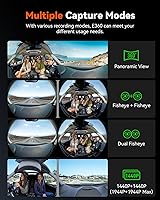
  • Lens Type: Dual fisheye configuration covers the front road view and the vehicle interior simultaneously from a single windshield-mounted unit.
  • Image Sensors: Equipped with two Sony IMX675 STARVIS 2 sensors, each delivering improved low-light sensitivity and dynamic range compared to previous STARVIS generations.
  • Night Vision: Eight built-in IR LEDs — four aimed forward, four toward the cabin — enable clear recording in environments with little to no ambient light.
  • HDR: High Dynamic Range processing is active on both lenses to balance exposure in high-contrast scenes such as tunnels, bright headlights, or direct sunlight.
  • Wi-Fi: Built-in 5GHz Wi-Fi connects to the Vantrue mobile app for configuration, live preview, and footage download at roughly four times the speed of standard 2.4GHz dash cam Wi-Fi.
  • GPS: A dual-system GPS module logs location, speed in km/h or mph, and driving routes, with mileage analysis reports exportable for insurance or fleet purposes.
  • Screen: A 1.54-inch IPS touchscreen provides a live camera view and access to settings menus, with swipe gestures to switch between camera angles.
  • Parking Mode: Buffered motion-detection parking mode records continuously around the clock and retains a 10-second pre-event clip before each triggered recording; hardwiring to the vehicle is required and the kit is sold separately.
  • Storage: Supports microSD cards up to 1TB in capacity, allowing extended recording periods before footage is overwritten by loop recording.
  • Power Source: A built-in supercapacitor replaces a conventional lithium battery, making the unit more resilient to high cabin temperatures common in parked vehicles.
  • Voice Control: Responds to spoken commands in English, Russian, Chinese, French, and Japanese for hands-free control of recording, photos, Wi-Fi, audio, and the screen.
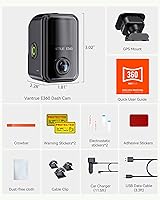
  • Dimensions: The unit measures 1.77 x 1.83 x 3.02 inches, making it compact enough to sit near the rearview mirror without significantly obstructing the driver's sightline.
  • Weight: The camera body weighs 6.1 ounces, which is within the typical range for dual-sensor dash cams of this capability level.
  • Mount Type: Attaches to the windshield via an adhesive base with a magnetic ball-joint bracket, allowing angle adjustments and tool-free camera removal without disturbing the mounted base.
  • Connectivity: Connects to computers and power sources via USB and to smartphones via the 5GHz Wi-Fi network hosted directly by the camera.
  • In-Box Contents: Package includes the dash cam unit, car charger, GPS mount, USB data cable, adhesive and electrostatic stickers, installation tool, dust-free cloth, warning stickers, warranty card, and user manual.
  • Optional Accessories: A hardwire kit for parking mode, a rear camera for 2592x1944P rear coverage, and a handheld mount for off-vehicle use are each available separately from Vantrue.

Related Reviews
Vantrue S1 Pro Dual Dash Cam
77%
88%
Night Vision & Low-Light Performance
84%
Video Clarity & Resolution
67%
App & Wi-Fi Connectivity
71%
Parking Mode Reliability
82%
GPS Accuracy & Usefulness
More
Vantrue N2X
Vantrue N2X
79%
91%
Video Quality (Daytime)
87%
Night Vision & Low-Light Performance
88%
Interior Camera Usefulness
83%
GPS Accuracy & Logging
74%
WiFi Connectivity & App Experience
More
Vantrue S1 Pro Max 4K+2.5K Dual Dash Cam
87%
93%
Video Quality
88%
AI Safety Features (ADAS/BSD)
90%
Night Vision Performance
85%
Installation Ease
91%
Parking Mode Reliability
More
Ecomoment S70 Dual Dash Cam
83%
88%
Video Quality (Front & Rear)
91%
Night Vision Performance
85%
Ease of Installation
89%
Field of View (Wide Angle)
82%
Durability & Build Quality
More
ORSKEY S800 Dual Dash Cam
73%
88%
Value for Money
82%
Front Camera Video Quality
53%
Rear Camera Video Quality
61%
Night Vision Performance
91%
Ease of Installation
More
Thinkware Q200 2-Channel Dash Cam
76%
84%
Front Camera Clarity
67%
Rear Camera Clarity
72%
Night Vision Performance
76%
Parking Mode
63%
GPS Alert Accuracy
More
70mai A410 Dual Dash Camera
78%
88%
Daytime Video Clarity
71%
Night Vision Performance
74%
Rear Camera Quality
67%
App & Wi-Fi Experience
84%
GPS Accuracy & Data Logging
More
YEECORE D22 4K Dual Dash Cam
85%
91%
4K Video Quality
88%
Night Vision Performance
85%
Ease of Installation
80%
App Control & Wi-Fi Connectivity
87%
Camera Field of View
More
70mai 4K Omni X800 Dual Dash Cam
80%
91%
Night Vision Quality
93%
Video Clarity (Daytime)
88%
Rotating Camera Design
79%
4G LTE Remote Monitoring
67%
Parking Mode Usability
More
DDPAI N5 Dual Front and Rear Dash Cam
77%
88%
Video Quality (Front)
71%
Video Quality (Rear)
74%
Parking Mode & Surveillance
82%
Wi-Fi Speed & App Experience
83%
GPS Accuracy & Logging
More

FAQ

You will need to purchase a hardwire kit separately — it is not included in the box. The parking mode requires a constant low-level power supply from your vehicle's fuse box to function while the engine is off, which the standard car charger cannot provide. Vantrue sells a compatible hardwire kit under ASIN B083XB8T7T if you want to keep it within the same brand.

It depends on the recording mode and how you play it back. The camera can display the two fisheye views side by side or stitched into a single panoramic frame. In panoramic mode, you get one wide continuous image, but there is a visible seam where the two lenses meet — most noticeable on straight horizontal lines near the center of the frame. The free Vantrue desktop player lets you pan around the panoramic footage and zoom into specific areas, which is useful for reviewing incidents in detail.

The interior IR night vision is one of the stronger aspects of the Vantrue E360 360-Degree Dual Fisheye Dash Cam, and it is genuinely suited to late-night rideshare use. The four cabin-facing IR LEDs illuminate the interior without visible white light, so passengers are not disturbed. Footage quality in total darkness is considerably cleaner than budget dash cams with a single low-power IR emitter.

Yes, audio recording can be disabled through the settings menu or via a voice command. If you operate in a jurisdiction where passenger consent for audio recording is required, this is worth doing — and it is straightforward enough that you can toggle it on or off between rides if needed.

The 5GHz Wi-Fi connection transfers footage faster than most dash cam apps, which is a real practical improvement for drivers who pull clips regularly. That said, some early reviewers have reported occasional app crashes or connection drops, so it is worth keeping the app updated and giving it a trial run before relying on it in a time-sensitive situation.

The dual-system GPS module is designed with exactly that use case in mind. It logs your speed, location, and route in formats that can be exported and presented alongside video footage. While no dash cam GPS replaces official documentation, having timestamped speed and location data to corroborate what the video shows does strengthen your position in a dispute.

The built-in supercapacitor replaces the lithium battery found in most dash cams, and that matters here — lithium batteries degrade or swell in high cabin temperatures, sometimes causing failures or even safety concerns. A supercapacitor handles heat far better, making the E360 a more sensible choice if you park in direct sunlight regularly. The camera itself may shut down temporarily if the cabin gets extremely hot, but this is a protective behavior rather than a fault.

The camera supports microSD cards up to 1TB, which is one of the highest limits available in this product category. No SD card is included in the box, so you will need to buy one separately. High-endurance cards designed for continuous recording — rather than standard photo or phone cards — are strongly recommended for dash cam use.

Yes, Vantrue offers an optional rear camera (ASIN B0DL5WDDN2) that connects to the E360 and records at 2592x1944P. If you want coverage of the area directly behind your vehicle — particularly useful for rear-end collision evidence — this is the add-on to look at. Just keep in mind it is an additional purchase on top of the base camera price.

The camera itself detaches from the mount magnetically, so moving it between cars is quick and does not require tools. The adhesive windshield base stays in place on the glass, so if you want to use the camera in a second vehicle, you would either need an additional mount base or remove and reapply the existing one — which works but risks reducing the adhesive's holding strength over time. For parking mode users, the hardwire kit is vehicle-specific and would need to be installed separately in each car.

Where to Buy