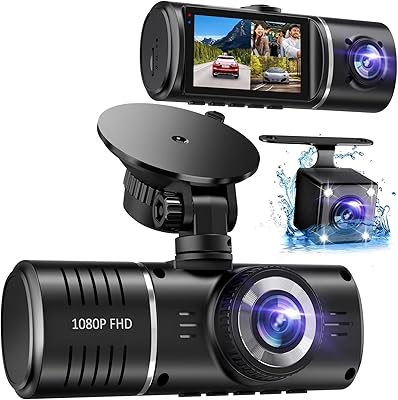
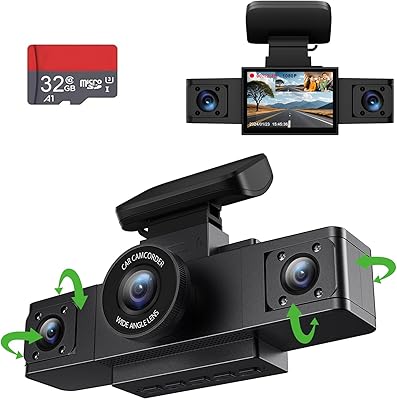
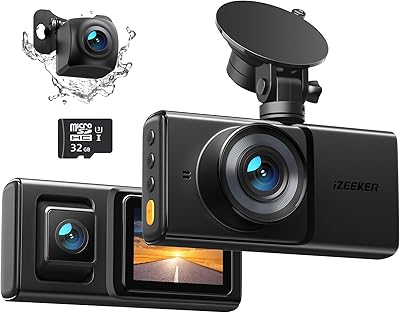
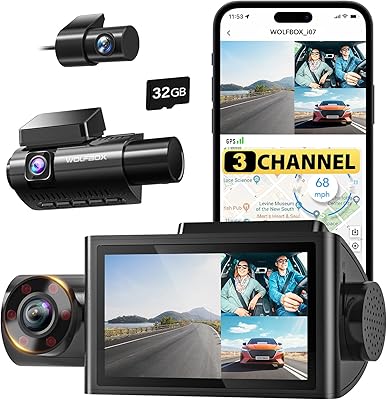
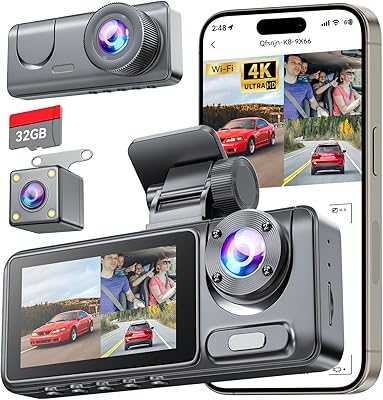
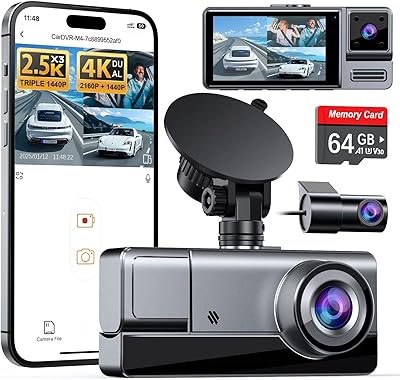
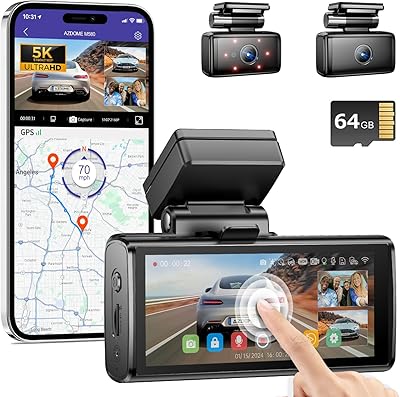
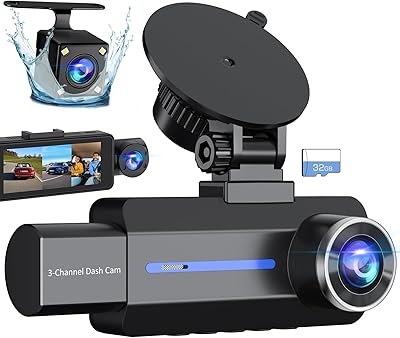
Overview

The Tuisau J10 3-Channel Dash Cam is one of the few budget options that genuinely covers all three angles — front, cabin interior, and rear — without asking you to spend significantly more for the privilege. Tuisau isn't a name most drivers will recognize, but the sales trajectory since its mid-2024 launch suggests it's earning attention fast. One detail worth flagging early: the device ships with a 64GB SD card included, removing a common hidden cost. There's also a clever modular twist — disconnect the rear camera and the front automatically steps up to true 4K resolution. It's a thoughtful design choice at this price point.
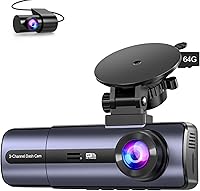
Features & Benefits

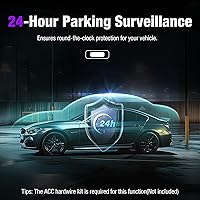
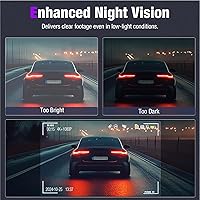
In full three-channel mode, the J10 records front footage at 2.5K while each of the other two lenses captures 1080p — solid clarity for reading license plates or documenting lane-change disputes. The 170-degree front lens is notably wide, covering multiple lanes without distortion becoming a serious problem. When you park, motion and vibration detection kicks in automatically. Fair warning though: sustained overnight surveillance requires a hardwire kit sold separately, so factor that in. Managing clips is straightforward via the Viidure app on your phone — no card-pulling required. Night recording performs reasonably well in urban environments with ambient streetlight, though purely dark rural roads will reveal its limits.

Best For

This cabin-and-road recorder makes a particularly strong case for rideshare and delivery drivers who need documented proof of what happens inside the vehicle just as much as outside it. Parents handing a car to a teenager will appreciate that same interior view. Budget-minded commuters who've resisted dash cams because of setup hassle should also take note — the windshield mount is straightforward and tutorial videos are available for those who need a walkthrough. The modular design adds flexibility too; skip the rear camera on a given vehicle and you instantly get a sharper single-front 4K setup without buying anything extra.

User Feedback

Buyers consistently praise daytime video clarity and the ease of getting up and running out of the box — the included SD card in particular earns repeated appreciation. Build quality draws more mixed reactions; most find the housing acceptable for the price, though a handful note the mount could feel sturdier over long-term daily use. The hardwire kit omission is the most recurring frustration, catching buyers off guard when they discover full parking mode needs an additional purchase. App feedback is split — some find Viidure perfectly functional for reviewing and sharing clips, while others report WiFi pairing inconsistencies. Night footage satisfaction sits at moderate, which is about expected for this tier.

Pros

  • Three-channel coverage — front, cabin, and rear — is genuinely rare at this price point.
  • A 64GB SD card is included, so you can start recording right out of the box.
  • The 170-degree front lens captures wide lane coverage without severe edge distortion.
  • Disconnecting the rear camera automatically upgrades front recording to full 4K.
  • The Viidure app lets you preview and share clips wirelessly from your phone.
  • G-sensor automatically protects collision footage from being overwritten during loop recording.
  • Daytime video clarity earns consistent praise from verified buyers for license plate legibility.
  • The modular design gives you flexibility to run it as a single, dual, or three-channel setup.
  • Setup is straightforward, with tutorial videos available to walk you through the install.

Cons

  • Full 4K front resolution is only available when the rear camera is disconnected — not in standard three-channel mode.
  • 24/7 parking surveillance requires a hardwire kit sold separately, which adds cost and installation effort.
  • Night vision performance drops noticeably in low-ambient-light environments like unlit rural roads.
  • The Viidure app has reported WiFi pairing inconsistencies that can frustrate wireless clip access.
  • Tuisau has a limited brand history, making long-term reliability harder to assess with confidence.
  • The mount and housing feel adequate but not premium — some users note concerns about durability over time.
  • No built-in screen on the unit itself, so initial setup and clip review depend entirely on the app.
  • The interior cabin camera angle may need careful adjustment to avoid capturing the headliner rather than passengers.

Ratings

The scores below for the Tuisau J10 3-Channel Dash Cam were generated by our AI after analyzing verified buyer reviews from multiple global markets, with spam, bot-submitted, and incentivized feedback actively filtered out. The ratings reflect a honest synthesis of what real drivers experienced day-to-day — not just what the spec sheet promises — and both the genuine strengths and the recurring frustrations are weighted transparently into each score.
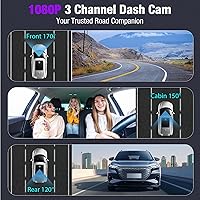
Daytime Video Clarity
83%
During normal daylight driving, the front camera produces footage clear enough to comfortably read license plates several car lengths ahead, even at highway speeds. Buyers consistently single this out as the strongest aspect of the J10, with many noting it exceeded expectations for a device at this price tier.
In full three-channel mode the front drops to 2.5K, which is noticeably softer than the solo 4K output — a difference that becomes apparent when zooming in on frozen frames. Users who upgraded expecting flagship-grade sharpness across all channels report some disappointment.
Night Vision Performance
61%
39%
On well-lit urban streets and suburban roads with streetlamps, the night footage is usable and generally good enough for incident documentation. Several rideshare drivers noted they could identify other vehicles and read plates at moderate distances under typical city lighting conditions.
On unlit rural highways or in dark parking structures, the image softens significantly and fine details become difficult to discern. This is a recurring complaint in reviews from drivers outside urban cores, and it represents a genuine limitation that buyers in low-light environments should weigh carefully before purchasing.
Three-Channel Coverage
88%
Having simultaneous front, cabin, and rear recording in a single device at this price is something buyers repeatedly describe as the main reason they chose the J10 over competing two-channel options. Rideshare drivers in particular highlight how reassuring it is to have interior footage as a separate layer of protection during passenger disputes.
The cable routing for three cameras — especially running the rear camera line along the headliner to the back window — is the most involved part of the setup and can take well over an hour for first-timers. A small number of buyers found the included cable length just barely adequate for larger SUVs and trucks.
App & WiFi Experience
58%
42%
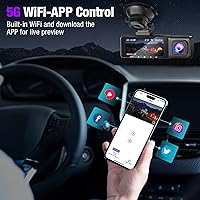
When the Viidure app connects cleanly, wireless clip browsing and downloading works as intended and is genuinely more convenient than pulling the SD card after every incident. iOS users tend to report a smoother experience overall, with pairing completing in under a minute in most cases.
WiFi pairing inconsistency is the single most common complaint in user reviews — particularly on Android devices where reconnecting after the app is closed can require multiple attempts. A handful of buyers report that the connection drops mid-transfer for larger video files, which undermines the core convenience the wireless feature is supposed to deliver.
Parking Mode
54%
46%
The vibration- and impact-triggered parking mode does activate reliably when the car is bumped or knocked, and the G-sensor integration means any detected collision locks the corresponding clip automatically. For occasional parking lot protection, this provides a functional safety net without any extra hardware.
The absence of a hardwire kit in the box means the camera relies on the 12V outlet for power, and most vehicles cut power to that outlet when the ignition is off — effectively disabling extended parking monitoring entirely. This is the most frequently cited disappointment in verified reviews, as buyers assume parking mode means all-night coverage and discover otherwise after purchase.
Value for Money
86%
Three-channel recording plus a 64GB SD card in the box makes this one of the more complete starter packages available at this price bracket, and buyers evaluating total cost of ownership consistently rate it as strong value. The modular rear camera design adds further perceived value, since it effectively gives you multiple recording configurations in one purchase.
Once you factor in the cost of a separately purchased hardwire kit for proper parking mode functionality, the effective price rises and the value proposition becomes less clear-cut compared to pricier competitors that bundle it. Buyers who need full parking coverage should budget for that additional accessory from the outset.
Ease of Installation
79%
21%
The windshield suction mount goes up quickly and the main unit is straightforward to position and power. Tuisau's availability of tutorial videos is appreciated by first-time dash cam buyers, with multiple reviewers specifically mentioning that the setup guidance reduced their installation time considerably.
Running the rear camera cable neatly from front to back — especially in sedans with a long cabin or vehicles with tight rubber door seals — is where the installation becomes more involved and time-consuming. Buyers without a trim pry tool may find the cable routing messy if they can't tuck it cleanly behind panels.
Build Quality
67%
33%
The housing feels solid enough for everyday use and the suction mount holds firmly on clean glass under normal driving and temperature conditions. Most buyers describe the physical construction as appropriate for the price, with nothing feeling obviously flimsy during typical daily use.
Long-term durability remains an open question given the brand's limited track record, and some users in hotter climates report the suction cup losing grip during peak summer temperatures. A minority of reviewers noted that the plastic housing feels noticeably lightweight compared to more established dash cam brands.
Interior Camera Quality
72%
28%
During daytime rides with adequate natural light entering the cabin, the interior camera captures clear footage of the passenger area — more than sufficient for rideshare documentation or monitoring a teen driver during daylight hours. Rideshare drivers report the cabin angle covers the rear seat area well when positioned correctly.
At night with no interior lighting, the cabin camera struggles to produce footage detailed enough for facial identification, limiting its usefulness for late-night rideshare protection specifically. The camera's fixed angle also requires careful mounting to avoid capturing the headliner rather than passengers, which a few buyers only discovered after their first review of the footage.
G-Sensor Reliability
77%
23%
In real-world testing scenarios and buyer reports, the G-sensor correctly triggers and locks footage during hard braking events and minor collisions without requiring any manual intervention. This automatic protection is particularly reassuring for buyers who wouldn't otherwise think to immediately pull the card after an incident.
A small number of users on rough roads or driving vehicles with stiff suspensions report occasional false-trigger events — where the sensor locks clips during heavy potholes or speed bumps rather than actual collisions. While not a widespread issue, it can gradually fill protected storage with unnecessary locked files if sensitivity cannot be adjusted in the app.
Loop Recording
84%
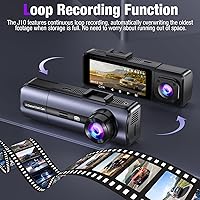
Loop recording operates silently in the background and buyers report it works exactly as expected — old footage rolls over without any prompts or interruptions, keeping the device genuinely hands-free for daily commuting. The 64GB included card provides a meaningful recording window before older footage begins cycling.
There is no granular control reported over loop segment length in user reviews, which can be a minor frustration for buyers who want shorter or longer clip intervals for easier post-incident searching. Some users also note that identifying the exact relevant clip after an incident requires scrolling through a larger number of files than they expected.
Included Accessories
81%
19%
Shipping with a 64GB SD card already in the box is a meaningful differentiator — it removes a common friction point where buyers order a dash cam and then realize they need to wait for a separate card delivery before they can use it. The inclusion signals that Tuisau has thought about the out-of-box experience for first-time buyers.
Beyond the SD card, the accessory bundle is minimal: no hardwire kit, no CPL filter, and no carrying case for storing the extra cables. Buyers expecting a more complete package comparable to higher-priced competitors will find the remaining contents lean, particularly the absence of the hardwire kit given the advertised parking mode.
4K Resolution Flexibility
69%
31%
The automatic resolution upgrade when the rear camera is detached is a genuinely clever design feature — it means buyers can run a sharper single-channel setup on a second vehicle or swap configurations depending on their needs without buying a separate device. Buyers who primarily need a front-facing 4K recorder appreciate having that option built in.
The conditional nature of the 4K claim creates confusion among buyers who expect true 4K front recording in standard three-channel operation — and that expectation gap generates visible frustration in verified reviews. Clearer in-box communication about this trade-off would prevent a meaningful portion of the disappointment currently showing in lower-rated reviews.
Brand Confidence
63%
37%
Tuisau's customer support team is noted positively in several reviews, with buyers reporting responsive replies to setup questions and technical issues — a reassuring signal for an emerging brand. The fast-rising sales rank since launch suggests a growing base of satisfied users building organic credibility around the product.
With a launch date of mid-2024, there is simply not enough long-term ownership data to assess reliability beyond the first six to twelve months, and that uncertainty is reflected in how cautiously some buyers write about recommending it. Buyers who prioritize the peace of mind that comes with an established brand and proven service network will find that assurance harder to find here.

Suitable for:

The Tuisau J10 3-Channel Dash Cam is purpose-built for drivers who need full-vehicle documentation without a significant financial commitment. Rideshare and delivery drivers stand to benefit most — having simultaneous front, cabin, and rear recording means passenger disputes and road incidents are both covered in a single device. Parents monitoring a newly licensed teen driver will find the interior camera equally valuable, offering a quiet layer of accountability without feeling intrusive. Commuters who want a straightforward install and app-based clip access, rather than fumbling with SD cards after every incident, will also appreciate how the J10 is set up. The included 64GB card and modular rear camera design make this a genuinely low-friction starting point for anyone new to dash cams.
Not suitable for:

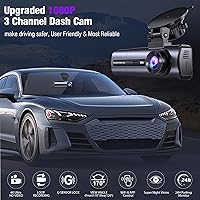
Drivers who rely heavily on overnight or 24/7 parking surveillance should know upfront that the Tuisau J10 3-Channel Dash Cam does not deliver that capability out of the box — a separate hardwire kit is required, adding cost and installation complexity that undercuts its plug-and-play appeal. Buyers who prioritize brand reputation and long-term after-sales support may also hesitate, since Tuisau is a relatively new name with a limited track record compared to established players like Vantrue or Garmin. If pristine low-light or nighttime footage is a top requirement — for rural driving or poorly lit parking structures — this cabin-and-road recorder will likely disappoint; its night vision is functional in urban conditions but not exceptional. Tech-averse users who struggle with app-based setups may also find the Viidure pairing process more frustrating than expected, particularly if WiFi connectivity proves inconsistent on their device.
Specifications

  • Brand & Model: Manufactured by Tuisau under the model designation J10, released to market in August 2024.
  • Recording Channels: Records simultaneously across three channels: front windshield, interior cabin, and rear window.
  • Front Resolution: The front camera records at 2.5K in full three-channel mode and automatically upgrades to 4K when the rear camera is disconnected.
  • Rear & Cabin Res.: Both the interior cabin and rear cameras each record at 1080p full HD resolution.
  • Front Field of View: The front lens covers a 170-degree wide-angle field of view to capture multiple lanes simultaneously.
  • Rear Field of View: The rear camera provides a 120-degree angle of coverage behind the vehicle.
  • Night Vision: Built-in night vision capability supports low-light recording, performing most reliably in urban environments with ambient lighting.
  • Connectivity: Built-in WiFi allows wireless connection to the Viidure app, available for both Android and iOS devices.
  • Parking Mode: Vibration- and impact-triggered parking mode activates recording automatically; continuous 24/7 parking monitoring requires a separately purchased hardwire kit.
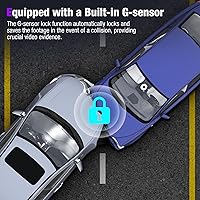
  • G-Sensor: An integrated G-sensor detects sudden impacts and immediately locks the relevant footage to prevent it from being overwritten by loop recording.
  • Loop Recording: Loop recording continuously overwrites the oldest footage once the SD card is full, ensuring uninterrupted coverage without manual file management.
  • Included Storage: A 64GB SD card is included in the box, providing immediate recording capacity without an additional purchase.
  • Mount Type: Attaches to the windshield via a suction cup mount for straightforward installation and repositioning.
  • Dimensions: The main unit measures 5.8 x 2.55 x 5.1 inches, making it a moderately sized unit for a three-channel system.
  • Weight: The device weighs 15.1 ounces, which is typical for a multi-camera dash cam system of this configuration.
  • Power Source: Powered via the vehicle's 12V outlet or USB port through a supplied cable; a hardwire kit for direct wiring is not included.
  • App Compatibility: The Viidure companion app supports clip preview, download, and social sharing on both Android and iOS smartphones.
  • Modular Design: The rear camera is detachable, allowing the unit to operate as a single-channel 4K cam or a dual-channel front-and-cabin setup as needed.

Related Reviews
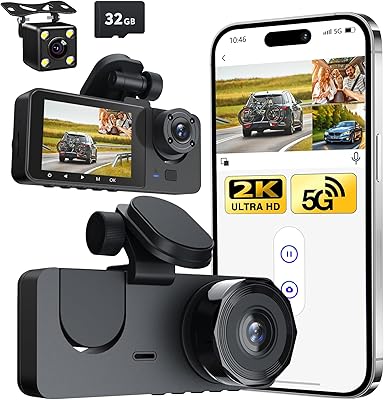
Zengest 3 Channel Dash Cam
86%
88%
Video Quality
85%
Ease of Installation
92%
Night Vision Performance
72%
App Control Experience
90%
Parking Mode Reliability
More
AZDOME M580 3-Channel Dash Cam
85%
93%
Video Quality
88%
Ease of Setup
85%
GPS Tracking Accuracy
90%
Night Vision Performance
82%
Build Quality
More
iZEEKER iD230 3-Channel Dash Cam
83%
89%
Camera Performance
91%
Ease of Installation
85%
Night Vision
78%
Parking Mode Functionality
82%
Build Quality
More
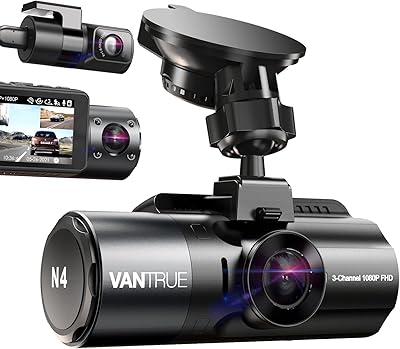
Vantrue N4 3 Channel Dash Cam
83%
94%
Video Quality
62%
Ease of Installation
89%
Night Vision Performance
91%
Parking Mode Reliability
85%
Build Quality
More
Kussla X30 3-Channel Dash Cam
84%
88%
Video Quality
92%
Night Vision Performance
90%
Ease of Setup
75%
Parking Mode Functionality
84%
Build Quality
More
SUVCON J06 3-Channel Dash Cam
76%
89%
Value for Money
91%
Ease of Installation
74%
Video Quality (Daytime)
86%
Night Vision (Cabin Camera)
67%
Night Vision (Front & Rear Cameras)
More
Rexing M3 3-Channel Mirror Dash Cam
75%
83%
Video Clarity (Daytime)
61%
Night Vision Performance
88%
Screen Quality
58%
GPS Accuracy
86%
Cabin Camera Utility
More
Vantrue N4S 3-Channel Dash Cam
77%
88%
Front Camera Video Quality
91%
Night Vision Performance
86%
Cabin IR Recording
83%
Rear Camera Quality & Weatherproofing
71%
Parking Mode Reliability
More
Icesky M4 3-Channel Dash Cam
85%
91%
Video Quality
87%
Ease of Use
83%
App Control
88%
Parking Mode Performance
75%
Wi-Fi Connectivity
More
ZKCAMSPY 3-Channel 1080P Dash Cam
81%
88%
Video Quality
92%
Value for Money
91%
Ease of Installation
74%
Night Vision Performance
80%
Durability
More

FAQ

It depends on how you have it configured. When all three cameras are active, the front records at 2.5K — true 4K only kicks in when you disconnect the rear camera. It's a real trade-off to be aware of: full three-channel coverage versus maximum front resolution.

A 64GB card is included right out of the box, so you can start recording immediately after installation. For most daily commuters that capacity is plenty, though rideshare drivers logging many hours per day may want to upgrade to a larger card eventually.

It has a parking mode that triggers on vibration or impact, but sustained overnight monitoring is a different story. For continuous 24/7 parked surveillance, you'll need a hardwire kit — which taps directly into your car's fuse box — and that kit is sold separately. If parking protection is a priority, factor that extra cost and installation into your decision.

Once your phone connects to the J10 via its built-in WiFi, the Viidure app lets you browse recorded clips, download footage, and share directly to social platforms. Most users find it functional for basic clip review, though some have reported occasional hiccups with the WiFi pairing on certain Android devices. It's worth trying a reconnect if the initial pairing doesn't take on the first attempt.

In normal daytime cabin lighting, the 1080p interior camera produces clear, usable footage. Low-light cabin performance — say, nighttime driving with no interior light — is more limited, so don't expect it to capture fine facial details in the dark. For rideshare documentation purposes during typical driving hours, it does the job reliably.

The built-in G-sensor detects the sudden force of a collision and immediately locks the relevant video file, preventing loop recording from overwriting it. That locked clip stays protected until you deliberately delete it, so you don't need to rush to pull the card after an incident.

Not really. The windshield suction mount goes up in seconds, and routing the power cable along your headliner and A-pillar takes maybe 20 to 30 minutes with a trim tool. Tuisau also has tutorial videos available online, which helps if you've never installed a dash cam before. The rear camera cable run is the most involved part, but nothing that requires professional help.

Absolutely — the rear camera is detachable, and the device automatically adjusts when you remove it. Disconnect the rear and you get a front-plus-cabin setup; remove both secondary cameras and you have a clean single-channel 4K front recorder. It's a genuinely useful bit of flexibility built into the hardware.

On urban roads with streetlights and ambient glow, the night footage is clear enough to read plates and identify vehicles. On unlit rural highways or dark parking lots, it does struggle — the sensor isn't large enough to compensate for very low light without some softness in the image. If you drive frequently in pitch-dark conditions, it's worth knowing this limitation before buying.

The suction cup mount holds firmly on most windshields under normal driving conditions, and everyday road vibrations shouldn't cause problems. A small number of users on particularly rough roads or older vehicles have mentioned the mount shifting after extended use, so it's worth checking the seal periodically and reseating it if needed. Cleaning the windshield surface before attaching it makes a noticeable difference in how well the suction holds.

Where to Buy