Overview

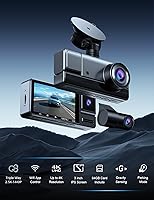
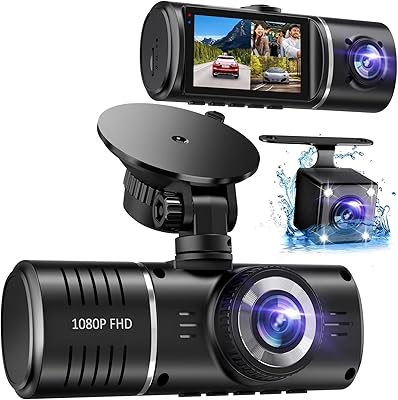
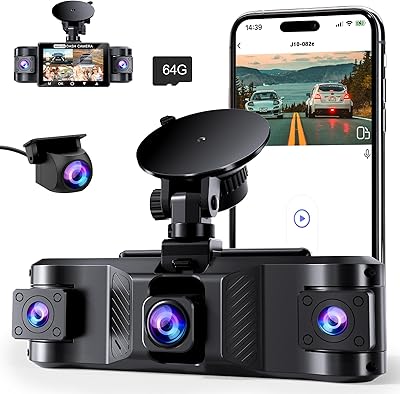
The Icesky M4 Three-Channel Dash Cam arrived in April 2024 and became notably more competitive after a February 2025 upgrade that pushed all three lenses to 2.5K resolution and brought in WiFi 6 connectivity. In the crowded mid-range dash cam market, that kind of hardware refresh mid-product-life is genuinely uncommon, and it changes the value equation considerably. The included 64GB card means you can mount it and drive the same day without a separate shopping trip. That said, this triple-lens camera is not without trade-offs — parking mode requires a separately purchased hardwire kit, and Icesky, as a newer brand, is still earning its long-term reputation.
Features & Benefits

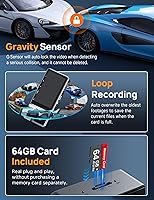
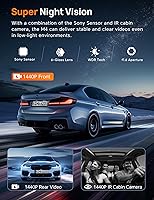
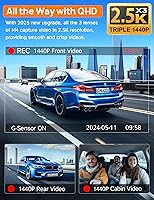
All three channels record simultaneously at 2.5K, using a Sony image sensor and Novatek chipset — a combination that holds up reasonably well in low-light situations like early morning commutes or dimly lit parking structures. The dual-mode option is a smart design choice: disable the rear or interior feed and the front lens automatically steps up to 4K, useful for capturing license plates clearly. The companion app runs on both iOS and Android and benefits from WiFi 6 speeds, making pulling clips to your phone considerably faster than older cameras. Loop recording manages storage hands-free, and the G-sensor auto-lock protects collision footage from being overwritten before you can review it.

Best For

The Icesky M4 is a particularly practical pick for rideshare drivers — Uber and Lyft operators who need documented interior coverage for every trip will find the cabin lens genuinely useful in dispute situations. Parents supervising a new driver get front, rear, and interior feeds from one device, which is a meaningful consolidation. Small fleet managers on modest budgets will also find the price-to-coverage ratio compelling. Beyond those groups, this three-channel dash cam suits anyone stepping up from a basic single or dual-lens setup who wants broader protection without a major cost jump. Drivers who prefer managing clips remotely via phone rather than pulling a card will especially appreciate the app workflow.

User Feedback

Buyers generally speak well of daytime video clarity and describe installation as manageable, though not always as quick as the listing implies. Night performance draws more divided opinions — low-light footage is usable but buyers coming from premium brands may notice the gap. A common sticking point is the app pairing experience; some users go through multiple attempts before the connection stabilizes. Mount sturdiness holds up fine for most, though a few report the suction base shifting in hot weather. The 24-month warranty earns positive mentions, and the support team responds reasonably well by most accounts — though with a young brand, the full picture of long-term durability is still being written.

Pros

  • All three lenses record in 2.5K simultaneously, giving solid daytime clarity across every angle.
  • The 2025 hardware refresh to WiFi 6 makes pulling clips to your phone noticeably faster than older dash cams.
  • A 64GB card comes in the box, so you can start recording the day it arrives.
  • Disabling one lens automatically bumps the front camera to 4K, which is useful for reading license plates.
  • The G-sensor locks collision footage automatically — no fumbling with buttons after an accident.
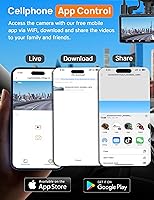
  • The companion app works on both iOS and Android and supports live streaming from all three feeds.
  • An extra USB port on the included car charger means you are not sacrificing phone charging to power the camera.
  • The 24-month warranty offers reasonable peace of mind for a mid-range device.
  • The 155-degree field of view on the front lens captures a wide road perspective with minimal blind spots.
  • Rideshare and gig drivers get interior documentation that most single or dual-channel cameras simply cannot provide.

Cons

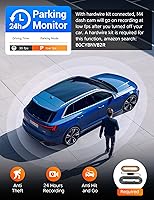
  • Parking mode requires a separately purchased hardwire kit that is easy to miss when ordering.
  • App pairing can take multiple attempts before the connection stabilizes, especially on first setup.
  • Low-light and nighttime footage quality trails behind established premium brands at a higher price point.
  • The suction mount has been reported to shift or lose grip in vehicles exposed to high interior heat.
  • Icesky is a newer brand, so long-term durability data from real-world use is still limited.
  • The included 64GB card is functional but may not be the highest-endurance option for heavy daily recording.
  • Three simultaneous feeds generate significant file volume, and managing storage without the app can feel cumbersome.
  • Installation, while described as simplified, can still take meaningful time for drivers with no prior dash cam experience.

Ratings

The scores below for the Icesky M4 Three-Channel Dash Cam were generated by our AI system after processing verified buyer reviews from multiple global markets, with spam, bot activity, and incentivized feedback actively filtered out. Both genuine strengths and recurring frustrations are reflected in every score — nothing is glossed over. The result is an honest, data-driven snapshot of how real drivers experience this triple-lens camera day to day.
Daytime Video Clarity
83%
Front and rear footage in daytime conditions draws consistent praise from buyers who have used the clips to contest parking tickets or document minor collisions. The Sony sensor reproduces colors and contrast well enough that license plates and road signs are legible at highway speeds, which is the practical test most drivers care about.
A handful of users note that direct sunlight can cause mild overexposure on the front lens, washing out bright areas like white lane markings. It is not a deal-breaker, but drivers in consistently sunny climates may notice it more than those in overcast regions.
Night and Low-Light Performance
67%
33%
For a camera at this price tier with three active lenses, low-light front footage is serviceable — urban streetlit environments produce usable, identifiable footage that holds up reasonably well for insurance purposes. Buyers commuting through well-lit cities tend to be more satisfied than those driving rural roads.
Night performance is where the gap between this camera and premium single-lens competitors becomes most apparent. The interior lens in particular struggles in dark cabins, which matters for rideshare drivers whose most critical recordings often happen at night in low-ambient-light situations.
App Experience
61%
39%
When the app connection works, the WiFi 6 speed advantage is real — clip downloads that took minutes on older cameras happen in seconds, and live streaming from all three feeds is genuinely useful for checking on a parked vehicle remotely. Android and iOS users both have access to the full feature set.
Initial pairing is the most complained-about aspect of this camera in user reviews. Multiple connection attempts are common, and some users report the app dropping the camera connection mid-session. It works reliably once the setup quirks are understood, but the first-time experience is rougher than competitors in this price range.
Installation Process
69%
31%
Most buyers with basic DIY confidence manage to get the camera mounted and running within 30 to 45 minutes. The included installation tools and pre-routed cable guides help, and the dual-channel charger means there is one fewer cable to manage compared to cameras requiring a dedicated power block.
The listing implies a simplified, near-effortless setup, which slightly oversells the reality. Routing the rear and interior camera cables neatly through a headliner or door trim takes patience, and buyers with no prior dash cam experience occasionally report spending well over an hour on the initial run.
Build Quality
72%
28%
The housing feels solid for a mid-range device — buttons have a satisfying click, and the overall assembly does not feel hollow or cheap when handled. Several buyers who have owned budget dash cams before note that the M4 feels a tier above what they expected at this price point.
Some long-term users report minor cosmetic wear around the lens bezels after several months of daily exposure to heat cycles inside a car. The mount mechanism, while adequate, does not feel as precision-engineered as mounts from more established brands, which can introduce subtle wobble on rough roads.
Mount Stability
66%
34%
Under normal driving conditions — city streets, highways, and light off-road — the mount keeps the camera firmly positioned and vibration-free. Buyers in temperate climates rarely report issues, and the adhesive option provides more permanent stability than the suction cup for those who prefer a fixed install.
The suction cup mount loses grip in vehicles that reach high interior temperatures, which is a documented pattern in hot-weather markets. Drivers who park in direct sun regularly should budget for the adhesive mount option or consider an aftermarket solution, as reseating the suction cup becomes a recurring annoyance.
Parking Mode
54%
46%
When properly set up with the hardwire kit, the time-lapse parking mode does what it promises — it has helped users catch hit-and-run incidents and document unauthorized vehicle entry. The footage quality in parking mode is adequate for identifying vehicle types and general activity around the car.
The core frustration here is not the feature itself but the discovery that parking mode requires a separately purchased hardwire kit that is not in the box. Many buyers only realize this after installation, and the added cost and complexity of hardwiring leaves a sour impression that is reflected heavily in one-star reviews for this specific aspect.
Value for Money
81%
19%
Considered purely as a triple-channel 2.5K system with a 64GB card included, the Icesky M4 represents strong value — you would pay noticeably more for comparable three-channel resolution coverage from an established brand. The February 2025 upgrade made the value proposition significantly stronger without a price increase.
The value calculation shifts slightly if you add a hardwire kit for parking mode and a higher-endurance memory card for daily use, which are near-essential purchases for serious users. Once those are factored in, the total cost edges closer to competing systems that include them standard.
G-Sensor and Incident Detection
78%
22%
The automatic collision lock works reliably in real-world tests — buyers consistently report that footage from minor accidents was preserved and available to share with insurers without any manual intervention required. The 3-axis sensitivity picks up meaningful impacts without constantly false-triggering on speed bumps.
A small number of users in regions with rougher road surfaces report occasional false locks triggered by potholes or railroad crossings, which fills the locked file storage faster than expected. Sensitivity adjustment is available through the app, but finding the right threshold takes some trial and error.
Loop Recording Reliability
84%
Continuous loop recording runs quietly in the background without interrupting normal use, and the overwrite logic is smooth — there is no noticeable lag or camera freeze when the system cycles to a new file. Most daily drivers go weeks without thinking about storage management, which is exactly what you want from this feature.
A few users report isolated instances where loop recording appeared to skip short segments during high-heat conditions, though this is not a widespread complaint. Using a high-endurance memory card rather than the included one may reduce the likelihood of such anomalies over extended daily use.
Interior Camera Usefulness
73%
27%
For rideshare drivers specifically, having a dedicated interior lens that records continuously without requiring manual activation is genuinely useful. The wide cabin coverage captures both front and rear passenger areas in a single frame during daytime and well-lit nighttime conditions.
The interior camera is the weakest of the three lenses in low-light scenarios, and its fixed position means some vehicles with unusual interior layouts will have coverage gaps. Buyers expecting it to perform like a dedicated interior security camera will find its limitations more pronounced than those using it purely as a supplemental evidence feed.
Memory Card Performance
63%
37%
The included 64GB card is a genuine convenience that removes a barrier to entry — for casual drivers or those just getting started with dash cams, it provides enough capacity to cover several days of commuting before the loop cycle begins overwriting older footage.
Heavy daily users and rideshare drivers logging six or more hours per day will likely outpace the included card within a year of regular use. Several buyers report switching to a higher-endurance card after experiencing read-write errors or corrupted files, suggesting the included card is more of a starter option than a long-term solution.
Warranty and Support
70%
30%
The 24-month warranty is longer than many competitors offer at this price point, and buyers who have contacted Icesky support generally describe the response time as reasonable, with replacement parts or units dispatched without excessive bureaucracy in most documented cases.
Icesky is a relatively young brand, and there is an unavoidable element of uncertainty when it comes to long-term support availability. A few buyers report difficulty reaching a resolution on more complex hardware issues, and the lack of a well-established global service network means international buyers have fewer fallback options.
WiFi Connectivity Speed
76%
24%
The WiFi 6 upgrade over the previous 2.4GHz module is a tangible improvement for app users — file transfers and live preview loading are measurably faster, and the connection range within a typical parking lot or driveway is adequate for most remote monitoring needs.
WiFi 6 performance is only as good as the device connecting to it, and users on older smartphones may not see the full speed benefit. The connection can also be finicky when the phone is simultaneously connected to a home or office network, requiring a manual switch that some users find irritating on a daily basis.

Suitable for:

The Icesky M4 Three-Channel Dash Cam is purpose-built for drivers who need coverage from multiple angles without spending a lot. Rideshare drivers working for Uber or Lyft will find the interior lens particularly valuable — having a timestamped cabin recording can resolve a passenger dispute far faster than any verbal argument. Families with teenage drivers get front, rear, and interior monitoring from a single device, which is a meaningful safety net for parents who want visibility without installing multiple cameras. Safety-conscious commuters who want documented proof in the event of a fender-bender or hit-and-run will appreciate the automatic collision lock feature that protects footage without requiring any action from the driver. Small fleet operators or business owners running a few company vehicles can also get solid multi-angle coverage at a price point that makes sense when multiplied across several cars.
Not suitable for:

Buyers expecting plug-in parking mode protection should know upfront that the Icesky M4 Three-Channel Dash Cam does not include the hardwire kit needed for that feature — it is sold separately, and skipping that detail leads to frustration after installation. Drivers who prioritize night recording quality above all else may find the low-light performance a step behind dedicated premium brands that invest more heavily in sensor size and aperture. Tech-averse users who prefer a simple SD card pull over app-based management might find the WiFi pairing process more finicky than expected, particularly on the initial setup. Anyone with brand loyalty expectations or who wants years of proven reliability data should also weigh the fact that Icesky is a relatively young company, and its long-term track record is still developing. Finally, if you need a ruggedized or professionally installed fleet system with cloud storage and remote monitoring, this triple-lens camera operates in a different category entirely.

Specifications

  • Model: This unit carries the model designation M4, released under the Icesky brand.
  • Resolution: In three-channel mode, all lenses record simultaneously at 2.5K (1440P) resolution; switching to dual-lens mode raises the front camera to 4K while the second active lens remains at 2.5K.
  • Image Sensor: The front camera uses a Sony image sensor, which contributes to improved color accuracy and low-light performance compared to generic sensors common at this price tier.
  • Chipset: Video processing is handled by a Novatek chipset, a widely used and reliable processor in the consumer dash cam segment.
  • Field of View: The front lens covers a 155-degree field of view, capturing a wide road perspective including adjacent lanes.
  • Connectivity: WiFi 6 is built in, enabling faster wireless video transfers and app connectivity compared to standard 2.4GHz WiFi modules.
  • App Support: The companion dash cam app is compatible with both iOS and Android smartphones and supports live streaming, clip download, and camera settings adjustment.
  • Included Storage: A 64GB memory card is included in the package, allowing the camera to be used immediately after installation without a separate purchase.
  • Parking Mode: Time-lapse parking mode is supported but requires a Type-C hardwire kit sold separately; the camera does not support parking mode via the standard cigarette lighter connection alone.
  • G-Sensor: A built-in 3-axis gravity sensor detects sudden impacts and automatically locks the relevant video file to prevent it from being overwritten by loop recording.
  • Loop Recording: The camera continuously overwrites the oldest footage once the memory card fills, keeping storage managed without manual deletion.
  • Mounting Type: Installation uses a dashboard mount compatible with both suction cup and adhesive attachment methods.
  • Power Supply: The included dual-port car charger powers the camera via one port and provides an additional USB-A port to charge a phone or other device simultaneously.
  • Dimensions: The main camera unit measures 5 x 4 x 2 inches, making it a moderately sized unit relative to compact single-lens alternatives.
  • Weight: The device weighs 1.04 pounds including its housing, which is typical for a triple-channel unit with a built-in display.
  • Battery: A lithium polymer battery is included for short-term power buffering, though continuous operation relies on the car charger connection.
  • Warranty: Icesky provides a 24-month manufacturer warranty covering defects, backed by a dedicated after-sales support team.
  • Color: The unit is available in a Silver Black finish designed to blend with most vehicle interiors.
  • In the Box: The package includes the main camera unit, rear camera, interior camera, car charger, car mount, installation tools, user manual, warranty card, and a 64GB memory card.
  • Availability: The product first became available in April 2024 and received a hardware upgrade in February 2025 that improved resolution across all lenses and updated the WiFi module.

Related Reviews
Zengest 3 Channel Dash Cam
86%
88%
Video Quality
85%
Ease of Installation
92%
Night Vision Performance
72%
App Control Experience
90%
Parking Mode Reliability
More
ZKCAMSPY Triple Channel 1080P Dash Cam
72%
86%
Value for Money
88%
Multi-Channel Coverage
79%
Night Vision Performance
61%
Build Quality
57%
Parking Monitor
More
ZMOPO C4 4-Channel Dash Cam
75%
88%
Value for Money
91%
Coverage & Angles
76%
Daytime Video Quality
58%
Exterior Night Vision
79%
Interior Night Vision
More
RexingUSA R4 4-Channel Dash Cam
72%
93%
Coverage & Channel Count
76%
Video Quality
69%
Night Vision
78%
Wi-Fi & App Experience
82%
GPS Accuracy
More
Tehclife S10 4-Channel Dash Cam
73%
83%
Front Camera Clarity
58%
Side & Rear Resolution
71%
Night Vision Performance
62%
Parking Mode Reliability
67%
App & WiFi Experience
More
WOLFBOX i07 3-Channel Dash Cam
75%
84%
Front Video Quality
71%
Interior Camera Quality
73%
Rear Camera Quality
66%
Night Vision Performance
88%
GPS Accuracy
More
ZMOPO D435 4-Channel Dash Cam
77%
83%
Video Clarity
78%
Night Vision
89%
Coverage & Angles
74%
App & Wi-Fi Performance
61%
Parking Mode
More
Kussla X30 3-Channel Dash Camera
67%
83%
Night Vision
81%
Front Camera Quality
62%
Rear & Interior Quality
74%
Ease of Installation
86%
Value for Money
More
Rexing M3 3-Channel Mirror Dash Cam
75%
83%
Video Clarity (Daytime)
61%
Night Vision Performance
88%
Screen Quality
58%
GPS Accuracy
86%
Cabin Camera Utility
More
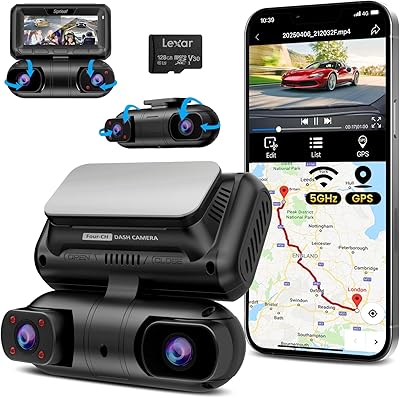
Sprleaf D88 Mini 4-Channel Dash Cam
76%
88%
Camera Coverage
76%
Video Quality
81%
Night Vision
54%
Parking Mode
83%
Installation Ease
More

FAQ

You will need to purchase a separate Type-C hardwire kit to use parking mode — it is not included in the package. Without it, the camera simply shuts off when your car loses power. This is one of the most commonly misunderstood aspects of this camera, so factor that additional cost into your decision if parking surveillance matters to you.

Yes, you can disable the interior lens through the camera settings. When you do, the front camera automatically increases its recording resolution to 4K, which is actually a nice bonus. You can also unplug the rear camera entirely if you only want front and interior coverage, and the same resolution upgrade applies.

The app connection uses WiFi 6, which is fast once it is working, but some users report that the initial pairing takes a few tries to get right. If you follow the in-app instructions carefully and make sure your phone is not also trying to connect to your home network, the process usually resolves within a few minutes. It is not the most plug-and-play WiFi pairing experience, but most people get there.

The included card is sufficient to get started and works fine for typical daily use. For heavy daily drivers or rideshare operators logging long hours, upgrading to a higher-endurance card rated for dash cam use is worth considering over time, since standard cards can wear out faster under continuous loop recording conditions.

Daytime and well-lit interior footage is generally clear enough to be useful for documentation purposes. Low-light interior performance is more limited, as the cabin camera relies on ambient light. If your vehicle has decent interior lighting or you drive mostly in lit urban areas, it should serve its purpose. Expecting crystal-clear night footage in a pitch-dark cabin may lead to some disappointment.

It holds its own in the segment, particularly after the 2025 upgrade to 2.5K across all three lenses. Most competing cameras at a similar price still use 1080P on the rear and interior feeds. The WiFi 6 module is also a step above what many rivals offer, making the app experience faster. The main area where established competitors have an edge is long-term brand trust and proven durability data.

Most users find the mount holds well under normal driving conditions. A recurring complaint involves the suction mount losing grip in vehicles that get very hot inside — think cars parked in direct sun in summer months. If heat is a concern in your area, the adhesive mount option tends to be more reliable.

You can download and share clips wirelessly through the companion app without touching the SD card. The app even supports direct sharing to social media platforms. The WiFi 6 connection makes this faster than older cameras, though very long clips will still take a moment to transfer depending on your phone.

No — the 3-axis G-sensor detects the impact and immediately locks that video file so loop recording cannot overwrite it. You still have access to it after the fact via the app or by reading the SD card on a computer. It is one of the more reliable features on this camera.

It is a reasonable safety net, and the Icesky support team has generally received decent marks for responsiveness. That said, Icesky is a younger brand without decades of consumer trust behind it, so the warranty is only as strong as the company honoring it over time. Keeping your purchase receipt and registering the product if the option is available is always a smart move with newer brands.