Overview

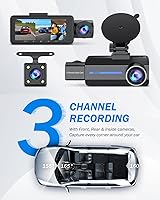
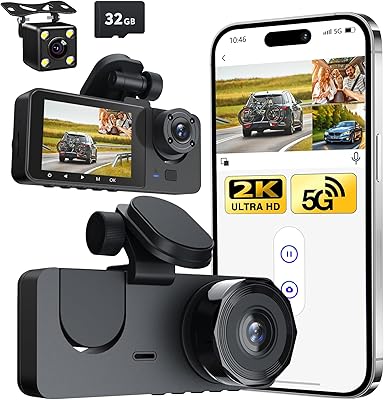
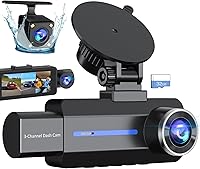
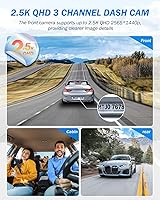
The BAEASU J07 3-Channel Dash Cam entered the market in early 2024 as a budget option that covers three angles simultaneously — front windshield, cabin interior, and rear. The front camera records at a genuine 2.5K resolution, while both the interior and rear cameras each capture at 1440P. Worth knowing upfront: there is no Wi-Fi sync on this device, so all playback and settings are handled on-screen. It ships with a 32GB card already inserted and supports up to 128GB. For a relatively unknown brand, landing in the top 100 car cameras on Amazon suggests it has earned genuine interest from real buyers.
Features & Benefits

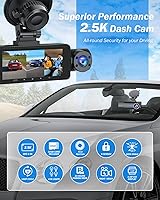
The J07's 3.16-inch IPS screen is a practical touch — you can review footage directly on the unit without pulling out a phone or laptop. The front lens spans 170 degrees and uses a 6-element glass design that handles low-light driving reasonably well; just don't expect the same crispness you'd get from a flagship brand at triple the price. Inside the cabin, four infrared lights illuminate passengers in complete darkness, which is genuinely useful for rideshare drivers. A built-in G-sensor locks clips recorded during a sudden impact so they won't get erased by loop recording. The small internal battery also lets you review saved footage briefly without keeping the car running.

Best For

This cabin camera system is a natural fit for rideshare drivers — Uber, Lyft, and taxi operators who need documented proof of what happened inside the vehicle during a trip. It is equally appealing to parents of new drivers who want front and rear road coverage without installing two separate devices. The included 20-foot rear cable makes it practical for trucks and SUVs where a shorter cable simply would not reach. First-time dash cam buyers will appreciate the bundled installation tools and illustrated manual, which make mounting straightforward even without prior experience. If your budget is limited but you still want coverage from all three directions, the J07 punches above its weight.

User Feedback

With roughly 1,900 ratings averaging 4.2 stars, this triple-channel dash cam has built a credible track record in a crowded category. Buyers frequently praise the night vision performance and how quickly the unit installs — two things that matter most on day one. On the other side, the absence of a phone app is a recurring complaint among users who expected wireless access to their footage. Rear camera cable routing also comes up as a friction point in larger vehicles. The biggest gotcha is parking mode: the feature exists but requires a separate hardwire kit that is not included, which catches some buyers off guard. Read the fine print if parking surveillance is a priority.

Pros

  • Three-channel coverage — front, cabin, and rear — recording simultaneously is rare at this price point.
  • Four IR cabin lights deliver clear interior footage even in total darkness, a real asset for rideshare drivers.
  • The 20-foot rear camera cable reaches comfortably in trucks, SUVs, and larger vehicles.
  • A pre-installed 32GB card means the J07 is ready to record the moment it is mounted.
  • The built-in IPS screen lets you review footage on the spot without a phone or laptop.
  • G-sensor automatically locks collision clips so important footage survives the loop recording cycle.
  • Mounting hardware, cable clips, and installation tools are all included, making setup accessible for beginners.
  • Nearly 1,900 verified ratings averaging 4.2 stars suggests consistent real-world satisfaction across diverse buyers.
  • The 170-degree front field of view captures multiple lanes and wide intersections in a single frame.
  • Expandable storage up to 128GB gives drivers the flexibility to retain several days of footage before overwriting.

Cons

  • No companion app or wireless connectivity means footage retrieval always requires a physical cable or SD card swap.
  • The hardwire kit needed for full parking mode functionality is sold separately, adding hidden cost and installation effort.
  • Rear camera cable routing through door seals or headliner trim on sedans is fiddly and time-consuming.
  • Night vision on the rear camera noticeably underperforms compared to the front lens in low-light conditions.
  • The G-sensor default sensitivity triggers false locks on rough roads or speed bumps until manually adjusted.
  • The single-port car charger leaves no outlet available for charging a phone simultaneously.
  • Brand support quality is inconsistent — response times and resolution outcomes vary widely between buyers.
  • The 230mAh internal battery provides only 15 to 20 minutes of cordless operation, less in cold weather.
  • Plastic housing scuffs easily and the overall construction does not inspire confidence for long-term daily use.
  • Footage scrubbing via physical buttons on the small screen is slow compared to reviewing clips on a computer.

Ratings

The BAEASU J07 3-Channel Dash Cam has been scored by our AI system after analyzing thousands of verified global reviews, with spam, bot-submitted, and incentivized feedback actively filtered out. Scores reflect both where the J07 genuinely delivers and where real buyers have run into friction — nothing is glossed over. The result is an honest, data-driven profile of what this cabin camera system actually gets right and where it asks for compromise.
Video Clarity (Front Camera)
83%
Most buyers are satisfied with how the front camera handles daytime highway driving — license plates at moderate distances are legible, and lane markings stay sharp during bright conditions. For the price tier, the 2.5K output holds up well in direct comparisons users share online.
In heavy overcast or late-afternoon backlighting, some washed-out frames appear in the footage. A handful of reviewers note that fine details at the far edges of the 170-degree frame show minor distortion, which is typical for wide-angle lenses at this price point.
Night Vision Performance
71%
29%
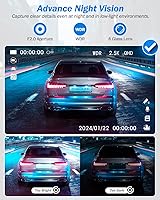
The wide-aperture lens and 6-glass design give the J07 a noticeable edge over similarly priced single-lens dash cams in low-light conditions. Streetlit roads and parking lot exits are captured with enough clarity to identify vehicles and road markings most of the time.
On completely unlit rural roads, the front camera struggles to maintain detail in the deeper shadows — images become grainy rather than crisp. It is a capable night performer for its category but should not be compared to premium brands that cost significantly more.
Interior Cabin Recording
88%
The four IR cabin lights are the standout feature for rideshare drivers. Even when the car interior is completely dark, passengers and driver faces are captured clearly enough to serve as meaningful documentation during a dispute. Several Uber and Lyft drivers specifically called this out as the reason they chose the J07.
The IR illumination has a fairly narrow effective range — it covers front and mid-cabin well but can leave rear-seat passengers in the outer corners partially underlit. In very large vehicles like full-size vans, the coverage gap is more noticeable.
Rear Camera Quality
74%
26%
The rear camera's 1440P resolution is above average for a third lens bundled at this price, and the included 20-foot cable means it actually reaches on trucks and SUVs without needing an extension. Daytime rear footage is solid for documenting tailgaters or rear-end incidents.
Night performance on the rear camera is weaker than the front, and the waterproof housing, while a genuine plus, adds some bulk that makes routing the cable through a tight door seal tricky. A few truck owners reported the mount adhesive needing reinforcement over time.
Ease of Installation
86%
Installation is one of the most praised aspects across reviews. The included cable clips, mounting hardware, and illustrated manual genuinely reduce the learning curve for first-timers. Most users report having the front unit mounted and recording within 20 to 30 minutes.
Routing the 20-foot rear cable cleanly along headliner trim in sedans or coupes requires patience and takes considerably longer than the front setup. A few buyers mention the cable clips feel flimsy and that they sourced better ones separately to get a cleaner install.
Parking Mode
58%
42%
When properly set up with a hardwire kit, the collision-triggered parking guard does activate reliably and the G-sensor sensitivity is adjustable to avoid false triggers from nearby traffic vibrations. Buyers who invested in the full setup report it working as described.
The hardwire kit is not included, and the listing does not make this obvious enough — it is the single most common source of post-purchase frustration. Buyers expecting out-of-the-box 24-hour parking protection will need to budget extra and either handle the wiring themselves or pay for installation.
Loop Recording & G-Sensor
84%
The automatic loop recording works reliably in day-to-day use — the oldest footage cycles out quietly in the background without any manual management required. The G-sensor correctly identifies hard braking and collisions, locking those clips so they survive the overwrite cycle.
Some users find the G-sensor slightly too sensitive at its default setting, triggering locked clips on rough roads or speed bumps. Adjusting the sensitivity resolves this, but the default could be better calibrated out of the box.
Screen & On-Device Playback
79%
21%
Having a 3.16-inch IPS screen built in means you can pull over and review footage immediately without needing a phone, cable, or laptop. The display is bright enough to use in daylight, and the menu navigation is simple enough that most users figure it out without reading the manual.
The screen size is adequate but not generous — scrubbing through footage to find a specific incident is slower and less precise than using dedicated software on a computer. There is no touchscreen, so all navigation goes through physical buttons.
App & Connectivity
44%
56%
For buyers who specifically do not want a companion app — perhaps due to privacy concerns or phone storage constraints — the fully offline, standalone design is actually a deliberate fit. There are no accounts to create, no cloud subscriptions, and no pairing headaches.
The lack of Wi-Fi or Bluetooth sync is a genuine limitation for most modern buyers. Transferring footage requires physically removing the SD card or connecting via USB cable, which is inconvenient on a daily commute. This is the most consistently mentioned disappointment across tech-savvy reviewers.
Internal Battery
62%
38%
The small built-in battery serves a useful practical purpose: you can pop out the power cable and review saved clips in the car without running the engine. It also provides a brief buffer during engine restart so the unit does not lose its timestamp or settings.
At 230mAh, this is strictly a convenience battery, not a standalone power source. Buyers expecting it to support extended cordless recording will be disappointed — 15 to 20 minutes is the ceiling, and that drops in cold weather.
Build Quality & Durability
69%
31%
The main unit feels reasonably solid for its price, and the rear camera's waterproof housing is a practical inclusion that holds up well through car washes and wet weather. The windshield mount adheres firmly under normal conditions.
The plastic housing on the main unit shows fingerprints and minor scuffs quickly, and the overall construction does not feel premium. A small number of buyers reported the power connector becoming intermittent after several months of daily use.
Included Accessories
81%
19%
The package comes unusually well-stocked for a budget device — a 32GB card, car charger, mounting hardware, cable management clips, and installation tools are all in the box. The 20-foot rear cable is long enough to handle most passenger vehicles, SUVs, and light trucks without a separate purchase.
The car charger only provides a single port, which means no spare outlet for a phone while the dash cam is running. The hardwire kit for parking mode is the glaring omission that prevents an otherwise complete package from feeling truly ready out of the box.
Value for Money
82%
18%
Three-channel coverage at this price point is genuinely difficult to match with reputable alternatives. Buyers who understand what they are getting — a capable, no-frills system with solid core features — consistently rate it highly for what they paid. The pre-installed SD card adds immediate practical value.
The value calculus changes if parking mode is important to you, since the additional hardwire kit adds meaningful cost. Factor that in and the all-in price is noticeably higher than the sticker suggests, which shifts the value equation for some buyers.
Brand Support & Warranty
66%
34%
BAEASU offers a one-year warranty and claims 24-hour response times through Amazon messaging. Several reviewers mention receiving replacement units or troubleshooting help without significant hassle, which is reassuring for a brand with limited retail presence.
Support quality appears inconsistent — some buyers report prompt, helpful responses while others describe follow-up messages going unanswered for days. As a newer brand without a broad service network, long-term support beyond the warranty period remains an open question.

Suitable for:

The BAEASU J07 3-Channel Dash Cam is built for buyers who need three-angle vehicle coverage without paying premium brand prices, and it earns its keep most visibly in rideshare contexts. Uber, Lyft, and taxi drivers get something genuinely useful here: four infrared cabin lights that capture the interior clearly even in complete darkness, providing documented evidence if a passenger dispute arises. Parents of teenage drivers will also find the simultaneous front and rear recording reassuring — you get the full picture of what happened on the road without installing two separate devices. Truck and SUV owners who have struggled with short rear cables on other budget models will appreciate the 20-foot extension that actually reaches without improvised splicing. First-time dash cam buyers benefit from the included mounting tools, cable clips, and illustrated instructions that make the initial setup far less intimidating than wiring a device from scratch.
Not suitable for:

The BAEASU J07 3-Channel Dash Cam is a poor fit for buyers who expect a smartphone companion app or wireless footage access — there is no Wi-Fi, no Bluetooth, and no cloud sync of any kind, so every clip review involves either pulling the SD card or connecting a USB cable. If seamless 24-hour parking surveillance is a core requirement, budget accordingly: the parking mode requires a separate hardwire kit that does not come in the box, and installation adds both cost and complexity that the base price does not reflect. Buyers who regularly drive on unlit rural roads at night should also temper expectations — the front camera handles city and suburban lighting well for its price, but it cannot match the low-light output of purpose-built night vision systems from established dash cam brands. Anyone who transfers footage daily and expects quick wireless review will find the SD-card-only workflow genuinely frustrating over time. Finally, buyers seeking a long-term investment from a brand with a deep service history may want to look at more established manufacturers, since BAEASU's support track record is still relatively short.

Specifications

  • Brand & Model: Manufactured by BAEASU under the model designation J07, released to market in early 2024.
  • Channels: Three-channel system recording simultaneously from front windshield, cabin interior, and rear-facing cameras.
  • Front Resolution: Front camera captures video at 2560x1440P (2.5K QHD) for detailed daytime and low-light road footage.
  • Rear & Interior Resolution: Both the interior and rear cameras record at 1440P resolution independently of the front channel.
  • Front Field of View: Front lens covers a 170-degree horizontal field of view using a 6-element glass optical assembly.
  • Interior & Rear FOV: Interior and rear cameras each cover a 150-degree field of view for broad cabin and behind-vehicle coverage.
  • Screen: Built-in 3.16″ IPS display supports on-device playback and menu navigation without requiring a connected device.
  • IR Cabin Lights: Four dedicated infrared lights illuminate the vehicle interior for clear passenger footage in low-light or fully dark conditions.
  • Internal Battery: A 230mAh lithium battery supports approximately 15 to 20 minutes of cordless operation after the power cable is disconnected.
  • Included Storage: Ships with a 32GB SD card pre-inserted and ready to record; supports cards up to a maximum of 128GB.
  • Rear Cable Length: The rear camera connects via a 20-foot extension cable, compatible with cars, SUVs, trucks, and larger vehicles.
  • Mounting Type: Attaches to the windshield via an adhesive suction mount included in the package.
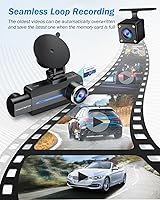
  • Loop Recording: Continuous loop recording automatically overwrites the oldest footage once storage capacity is reached.
  • G-Sensor: Built-in gravity sensor detects sudden impacts or hard braking and locks the corresponding clip to prevent it from being overwritten.
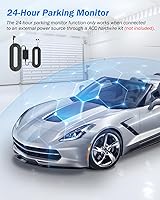
  • Parking Mode: Collision-triggered parking guard is supported but requires a separately purchased ACC hardwire kit not included in the box.
  • Connectivity: USB connection only; no Wi-Fi, Bluetooth, or companion app is available for wireless footage transfer or remote access.
  • Dimensions: Main unit measures 7.5 x 5.1 x 2.5 inches and weighs 13.7 ounces including the mount assembly.
  • Warranty: BAEASU provides a one-year manufacturer warranty with technical support accessible via Amazon messaging within 24 hours.

Related Reviews

Zengest 3 Channel Dash Cam
86%
88%
Video Quality
85%
Ease of Installation
92%
Night Vision Performance
72%
App Control Experience
90%
Parking Mode Reliability
More
SUVCON J06 3-Channel Dash Cam
76%
89%
Value for Money
91%
Ease of Installation
74%
Video Quality (Daytime)
86%
Night Vision (Cabin Camera)
67%
Night Vision (Front & Rear Cameras)
More
Vantrue N4 3 Channel Dash Cam
83%
94%
Video Quality
62%
Ease of Installation
89%
Night Vision Performance
91%
Parking Mode Reliability
85%
Build Quality
More
iZEEKER iD230 3-Channel Dash Cam
83%
89%
Camera Performance
91%
Ease of Installation
85%
Night Vision
78%
Parking Mode Functionality
82%
Build Quality
More
WOLFBOX i07 3 Channel Dash Cam
85%
89%
Video Quality
92%
Night Vision Performance
65%
Ease of Installation
88%
GPS Functionality
90%
WiFi Connectivity
More
AZDOME M580 3-Channel Dash Cam
85%
93%
Video Quality
88%
Ease of Setup
85%
GPS Tracking Accuracy
90%
Night Vision Performance
82%
Build Quality
More
RexingUSA M3 3-Channel Dash Cam
83%
91%
Video Quality
88%
Night Vision Performance
85%
GPS Accuracy
82%
Screen Responsiveness
79%
Installation Ease
More
Icesky M4 3-Channel Dash Cam
85%
91%
Video Quality
87%
Ease of Use
83%
App Control
88%
Parking Mode Performance
75%
Wi-Fi Connectivity
More
Veqotya S16 3-Channel Dash Cam
82%
91%
Video Quality (Resolution)
89%
Field of View
88%
Night Vision Performance
85%
Ease of Use (App Connectivity)
80%
Installation Process
More
ZKCAMSPY 3-Channel 1080P Dash Cam
81%
88%
Video Quality
92%
Value for Money
91%
Ease of Installation
74%
Night Vision Performance
80%
Durability
More

FAQ

No app is required or available. The BAEASU J07 3-Channel Dash Cam is entirely self-contained — you navigate settings and review footage using the physical buttons and the built-in 3.16″ screen. If you want to watch clips on a larger screen, you will need to remove the SD card and insert it into a computer or card reader.
Not quite. The parking surveillance feature is built into the firmware, but activating it requires a hardwire kit that connects the unit directly to your vehicle's fuse box for constant low-draw power. That kit is sold separately and is not included in the standard package, so factor in that additional purchase if 24-hour parking protection is important to you.

You have two options: either remove the SD card from the unit and use a card reader, or connect the dash cam directly to your computer via a USB cable. There is no wireless transfer method, so one of these two steps will always be part of your workflow when reviewing footage.

Yes, the included cable is 20 feet long, which is long enough for most trucks, SUVs, and even some minivans. That said, routing it neatly along the headliner and door seals does take patience, and a few owners of very large vehicles have used additional cable clips to keep it tidy.

Yes, the IR cabin lights can be toggled off through the on-screen settings menu. That said, disabling them will significantly reduce interior recording quality at night, so most rideshare drivers leave them on and let passengers know the cabin is being recorded as a matter of practice.

At its default setting, the G-sensor can be a bit trigger-happy on rough pavement, pothole-heavy roads, or aggressive speed bumps — it may lock clips you did not intend to save. The good news is that sensitivity is adjustable through the settings menu, and most users find a medium setting handles daily driving without generating excessive locked files.

The included 32GB card will hold a few hours of three-channel footage before loop recording kicks in. If you want to retain a full day or more of driving history, upgrading to a 64GB or 128GB card is worth it — the J07 supports up to 128GB. Use a Class 10 or U3-rated card for the best recording stability.

The rear camera housing is rated as waterproof, which means it can handle rain, car washes, and general outdoor exposure without issue. The front and interior cameras are housed inside the cabin and do not need weather resistance. Just make sure the rear camera is mounted securely and the cable entry point is sealed to avoid moisture getting inside the vehicle.

Most first-timers get the front unit mounted and recording within 20 to 30 minutes. The rear camera adds time depending on your vehicle — expect another 30 to 60 minutes for routing and securing that cable cleanly. The box includes all the tools and clips you need, and the illustrated manual is clear enough that most people do not need to watch a tutorial video.

The small internal battery provides a short buffer — around 15 to 20 minutes — that gives the unit time to save and close any open recording files cleanly before shutting down. This protects against file corruption from sudden power loss, which is a common cause of corrupted footage on dash cams without an internal battery. Locked G-sensor clips are saved separately and are not affected by a normal shutdown.