Overview

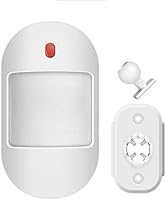
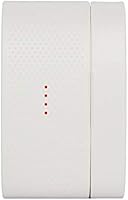
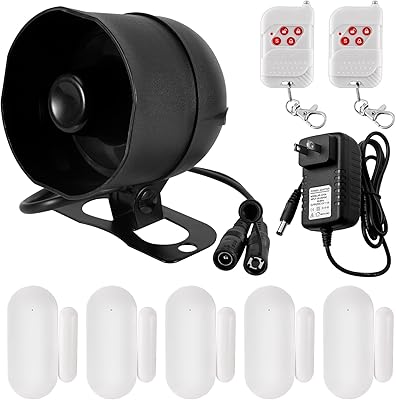
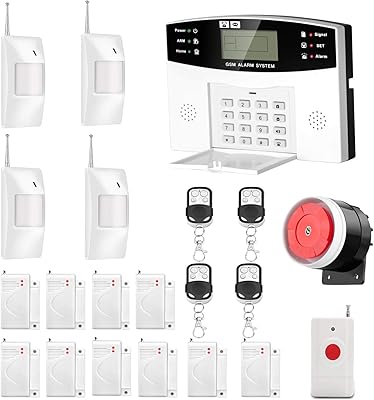
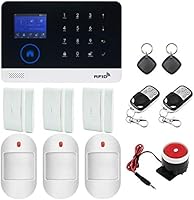
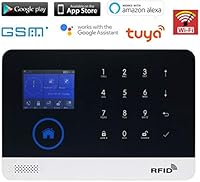
The KEEPWORD WiFi GSM Wireless Home Security System is a mid-range, no-contract DIY kit that has been quietly building a following since early 2021. You get 13 pieces out of the box — main panel, three PIR detectors, three door/window sensors, two key fobs, two RFID tags, and a wired siren — a solid starting bundle for most apartments or small homes. One thing worth flagging early: the hardware often arrives branded LAOSEP, despite the KEEPWORD listing name, which catches some buyers off guard. It supports Alexa and Google Home for basic voice commands, and connectivity runs across both 2.4GHz WiFi and a 2G GSM SIM slot for redundant alerting.
Features & Benefits

Where this alarm kit stands out is its ability to operate without any paid subscription. The free mobile app handles push notifications, remote arming and disarming, and scheduled arming — all without handing money to a monitoring company each month. If your internet goes down, the GSM auto-dialer kicks in, calling or texting pre-saved numbers when triggered. The PIR sensors cover a 120-degree arc up to 12 meters, and temperature compensation helps keep false triggers in check. You can expand the system up to 99 wireless accessories on 433MHz — glass-break sensors, water leak detectors, even cameras. The included RFID tags add a convenient touchless arm/disarm option alongside the standard PIN code.

Best For

This wireless security system makes the most sense for renters and small homeowners who want real protection without signing a monitoring contract. If you already use Alexa or Google Home, the voice arm/disarm integration slots in without much friction — though it is limited to those two actions, not full sensor management. Small shops, studios, or offices needing basic intrusion detection on a tight budget will also find this a reasonable fit. One use case that gets overlooked: if your area has spotty broadband, having a GSM backup channel is genuinely useful, provided your region still supports 2G networks. For anyone wanting to expand gradually, the 433MHz ecosystem gives plenty of room to grow over time.

User Feedback

Owners of the KEEPWORD alarm system generally praise how straightforward the initial setup is — most sensors pair within minutes, and the app connects without a steep learning curve. The no-subscription model earns consistent appreciation from buyers who have been burned by recurring fees elsewhere. That said, the complaints are worth taking seriously. The 2.4GHz-only WiFi requirement is a real friction point for anyone running a modern mesh network exclusively on 5GHz. The GSM backup also draws concern, as 2G networks are being phased out across parts of North America and Europe, potentially rendering that fallback useless. A handful of users report shorter indoor range than the open-area spec suggests. Overall, buyers rate the value favorably but with realistic expectations about its limitations.

Pros

  • No monthly fees or monitoring contracts — you own the system outright with no recurring costs.
  • Comes with a generous 13-piece starter bundle that covers doors, windows, and motion zones immediately.
  • Dual WiFi and GSM alerting means you still get notified even if your internet goes down.
  • The auto-dialer calls or texts your phone directly when the alarm triggers via GSM — no middleman needed.
  • Expandable up to 99 wireless accessories on 433MHz, so the system can grow as your needs do.
  • RFID tags provide a quick, touchless arm and disarm option that most budget systems do not include.
  • Temperature-compensated PIR sensors help reduce false alarms from heat fluctuations.
  • Compatible with both Amazon Alexa and Google Home for basic voice-based arm and disarm commands.
  • Free mobile app works on both iOS and Android with real-time push notifications.
  • Easy wireless installation — most sensors pair within minutes and require no professional setup.

Cons

  • Only supports 2.4GHz WiFi — households running 5GHz-only networks cannot use this system.
  • The GSM backup depends on 2G network availability, which is already obsolete in several countries.
  • Real-world indoor range falls well short of the 250–500ft open-area figure stated in the specs.
  • Brand labeling inconsistency between KEEPWORD and LAOSEP on the hardware can confuse buyers upon delivery.
  • Voice assistant integration is extremely limited — only arm and disarm commands are supported, nothing more.
  • The SIM card required for GSM functionality is not included and must be purchased separately.
  • Some users report occasional app instability and connectivity drops, particularly on older Android versions.
  • The built-in panel siren at 70dB is modest — audible but unlikely to deter in noisy environments.
  • No professional monitoring option exists if you want that layer of protection added later.
  • Sensor pairing can occasionally require multiple attempts, especially when adding third-party 433MHz accessories.

Ratings

The scores below for the KEEPWORD WiFi GSM Wireless Home Security System were generated by our AI engine after analyzing thousands of verified buyer reviews from global markets, with spam, bot-submitted, and incentivized feedback actively filtered out. Each category reflects the honest distribution of real user experiences — not a curated highlight reel — so both the standout strengths and the recurring frustrations are weighted into every number you see here.
Value for Money
83%
Most buyers feel they are getting considerably more hardware than the price suggests, especially when they compare the 13-piece bundle to bare-bones kits from other brands at similar price points. The absence of any subscription fee is consistently cited as the single biggest reason people feel good about their purchase long-term.
A vocal minority feels the value proposition erodes if the GSM backup becomes unusable due to 2G network deprecation in their region, effectively reducing a dual-channel system to a single-channel one without any price adjustment. A few international buyers also flagged that sourcing a compatible 2G SIM adds a hidden cost that was not factored into initial expectations.
Ease of Installation
88%
Renters in particular rave about how quickly the system can be up and running — most users report pairing all sensors and getting the app connected within under an hour, with no tools required beyond adhesive mounting tape. The wireless design means nothing is permanent, which makes it genuinely practical for people who move frequently.
Some users encountered friction during the initial WiFi pairing step, especially when routers have dual-band networks broadcasting the same SSID name for both 2.4GHz and 5GHz. The English user manual, while included, has been described as sparse and occasionally unclear on advanced configuration steps like scheduling and home arm mode.
App Performance
71%
29%
When the app works well, buyers appreciate that push notifications arrive quickly and that remote arming from across town is responsive and reliable. The interface is straightforward enough that non-technical users can navigate arming schedules and sensor status without much of a learning curve.
App stability is a recurring complaint, with a notable subset of Android users reporting disconnections, delayed notifications, and occasional failures to sync after a phone OS update. iOS users tend to report a smoother experience, but even some iPhone owners noted the app feels dated compared to what dedicated smart home platforms offer.
Sensor Reliability
74%
26%
The door and window sensors are widely praised for consistent triggering and low false-alarm rates under normal household conditions. The PIR detectors' temperature compensation feature earns specific mention from users in warmer climates who had previously dealt with heat-triggered false alarms on cheaper systems.
False alarms are not eliminated entirely — a few users in households with larger pets or drafty windows report occasional spurious triggers. Pairing replacement or third-party 433MHz sensors can also be hit or miss, with some accessories requiring multiple attempts before the panel recognizes them reliably.
WiFi Connectivity
58%
42%
For users on older or single-band 2.4GHz routers, the WiFi connection is described as stable and low-maintenance once set up correctly. Buyers in apartments with standard ISP-provided routers rarely encounter any connectivity issues during day-to-day use.
The 2.4GHz-only restriction is the most commonly mentioned technical frustration across all reviews, and it is not a minor inconvenience for a growing number of households that have migrated entirely to modern mesh or 5GHz-prioritized setups. There is no firmware update path or hardware workaround to address this limitation, making it a firm dealbreaker for a meaningful segment of buyers.
GSM Backup Reliability
61%
39%
In regions where 2G networks remain active, the auto-dialer backup is genuinely appreciated — several users describe real-world scenarios where their broadband went down during a storm and the SIM-based call alert still reached them. The concept of redundant alerting at this price point is considered a differentiating feature by buyers who understand what it does.
The dependency on 2G is a significant liability that the product does not disclose prominently enough, and a number of buyers in the US, Australia, and parts of Europe discovered post-purchase that their carrier had already retired 2G service. Without an active 2G signal, this entire alerting channel is inert, and there is no upgrade path to support 3G, 4G, or LTE.
Smart Home Integration
62%
38%
Users already running Alexa or Google Home devices appreciate that basic voice arming and disarming works without complicated setup, adding a hands-free convenience layer that is absent from many competitors at this tier. The integration holds up reliably for its intended scope.
The integration depth is shallow — it begins and ends with arm and disarm commands, with no ability to create routines based on sensor events, check system status by voice, or incorporate this alarm kit into broader home automation flows. Buyers expecting a more connected experience similar to premium platforms like Ring or SimpliSafe will find this integration underwhelming.
Siren Volume & Deterrence
76%
24%
The included wired siren at 110dB is considered genuinely loud by most buyers, and several users specifically mention it as a credible deterrent when placed near entry points. Having two siren layers — the built-in panel unit and the external wired one — gives some flexibility in how coverage is arranged.
The built-in panel siren at 70dB draws some criticism for being underwhelming on its own, particularly in larger homes where the panel is installed in a back room or utility space. A handful of users would have preferred a wireless siren option for more flexible placement rather than being constrained by the wired connection.
Build Quality & Hardware
67%
33%
For a system in this price range, the physical construction of the main panel and sensors is generally considered acceptable — nothing feels premium, but most buyers report no cracked housings, sticky buttons, or immediate hardware failures out of the box. The slim 13mm panel profile makes wall mounting unobtrusive.
The plastic construction of the sensors and remotes feels noticeably budget-grade to buyers who handle them up close, and the key fob remotes in particular receive comments about feeling hollow. A small number of users also reported door sensor magnetic strips losing adhesion within a few months of installation.
Range Performance
63%
37%
In open-plan apartments or small single-story homes, the wireless range is sufficient for covering all entry points without signal drop issues. Buyers in compact living spaces rarely report any range-related problems under normal use conditions.
The gap between the advertised 250–500ft open-area range and real-world performance inside multi-room or multi-story homes is a recurring theme in critical reviews. Buyers in larger houses or those trying to cover detached garages report sensor drop-outs, and there is no signal repeater or range extender available within the ecosystem to compensate.
Brand Transparency
54%
46%
The core product information — sensor count, frequency specs, connectivity options — is accurate and consistent with what buyers receive in the box, which earns a baseline level of trust from technically informed shoppers who researched before buying.
The KEEPWORD versus LAOSEP naming inconsistency genuinely confuses a portion of buyers, some of whom initially worried they had received a counterfeit or incorrect item. This kind of brand presentation issue signals a lack of polish that makes it harder for buyers to find support resources, replacement parts, or community troubleshooting information online.
Expandability
81%
19%
The ability to grow the system to 99 accessories on a widely supported 433MHz frequency is considered a meaningful advantage, and several users have successfully added third-party water leak sensors, smoke detectors, and cameras over time. The open frequency standard means buyers are not locked into a proprietary accessory ecosystem.
Compatibility with specific third-party 433MHz devices can be inconsistent, and there is no official verified compatibility list available to guide purchasing decisions. Users sometimes need to trial-and-error their way through pairing non-bundled accessories, which is a frustrating experience for less technically confident buyers.
Notification Speed
77%
23%
When the system is running cleanly, app push notifications arrive within a few seconds of a sensor trigger, which is fast enough for most practical security use cases. Several users specifically note that night-time alerts woke them promptly, suggesting the notification pipeline is reasonably dependable during low-traffic app conditions.
Notification delays become more common for users experiencing app sync issues or those running the system on older smartphones with aggressive battery optimization settings. A small number of buyers have reported gaps of several minutes before an alert arrives, which undermines confidence in time-sensitive security scenarios.
Setup Documentation
55%
45%
The box includes a printed English manual that covers the fundamentals well enough for straightforward installations, and buyers with some prior experience setting up similar systems generally find it adequate for getting started without outside help.
Advanced features like scheduled arming, home arm mode, and RFID tag programming are either poorly explained or absent from the manual entirely, leaving users to rely on trial and error or third-party video tutorials. Non-native English speakers report additional difficulty, as the translation quality is inconsistent throughout the documentation.

Suitable for:

The KEEPWORD WiFi GSM Wireless Home Security System is a strong fit for renters and small homeowners who want meaningful protection without locking themselves into a monthly monitoring contract. If you live in an apartment, a small house, or run a compact retail space or office, the 13-piece bundle covers the basics right out of the box without requiring an electrician or any drilling expertise. Tech-comfortable users who already own Alexa or Google Home devices will appreciate being able to arm and disarm by voice, even if that integration stays fairly limited in scope. The dual WiFi and GSM connectivity is a genuine advantage for anyone whose internet drops occasionally — having an auto-dialer that calls your phone directly is a practical fallback that most systems at this price skip entirely. People who want to start small and expand over time will also appreciate that the 433MHz ecosystem supports up to 99 accessories, giving room to add sensors, cameras, or detectors as needs grow.

Not suitable for:

The KEEPWORD WiFi GSM Wireless Home Security System is not the right choice for buyers who rely solely on a 5GHz or modern tri-band mesh router, since the panel only connects over 2.4GHz and there is no workaround for that. Anyone expecting deep smart home integration will also be disappointed — voice control is strictly limited to arming and disarming, with no ability to trigger automations or monitor individual sensors through Alexa or Google Home routines. The GSM backup channel, while useful in principle, is becoming a liability in regions where 2G networks have already been shut down or are being wound down, which strips out a core selling point for those users. Buyers expecting enterprise-level reliability, professional-grade hardware, or a polished app experience on par with premium security brands will find this system falls short of those expectations. Large properties are also a poor match — the real-world indoor signal range falls noticeably short of the open-area specification, meaning coverage gaps are likely in bigger homes or multi-story buildings.

Specifications

  • Panel Dimensions: The main control panel measures 184 × 144 × 13mm, making it compact enough to mount discreetly on most interior walls.
  • WiFi Standard: Connects via 2.4GHz WiFi only, using IEEE 802.11b/g protocol — 5GHz networks are not supported.
  • GSM Connectivity: Includes a 2G SIM card slot for cellular backup alerting; SIM card is not included and must be purchased separately.
  • Wireless Frequency: All sensors and accessories communicate over the 433MHz frequency band, with a maximum of 99 paired wireless devices.
  • PIR Detection: Passive infrared motion sensors cover a 120-degree field of view with a detection range of up to 12 meters.
  • Control Range: Wireless sensor control range is rated at 250–500ft in open areas; real-world indoor range will be considerably shorter due to walls and interference.
  • Built-in Siren: The main panel houses a built-in siren rated at 70dB, suitable for close-range alert notification inside a room.
  • External Siren: The included wired external siren delivers 110dB of output, providing a significantly louder deterrent for larger spaces or outdoor use.
  • Power Input: The panel accepts AC 100–240V input and operates on a DC 12V, 1A power supply via the included AC adapter.
  • CPU Architecture: The system runs on a 32-bit Cortex-M3 core processor, handling alarm logic, scheduling, and wireless communication.
  • Operating Temperature: Designed to function reliably between -15°C and 55°C (5°F to 130°F), suitable for most indoor and some outdoor-adjacent installations.
  • Humidity Tolerance: The system is rated for environments with relative humidity below 90%, though it is not waterproof and should not be exposed to direct moisture.
  • RFID Access: Supports RFID-based arm and disarm access; two RFID tags are included in the box alongside two key fob remotes.
  • Voice Assistants: Compatible with Amazon Alexa and Google Home for voice-triggered arm and disarm commands only — sensor-level control through voice assistants is not supported.
  • Mobile App: A free companion app is available for both iOS and Android, enabling remote control, push notifications, and system configuration at no ongoing cost.
  • Box Contents: The package includes 1 main panel, 3 PIR detectors, 3 door/window sensors, 2 key fob remotes, 2 RFID tags, 1 wired siren, 1 AC adapter, and a printed English user manual.
  • Item Weight: The complete package weighs approximately 1.76 pounds, keeping the overall system lightweight and easy to handle during installation.
  • Monthly Fees: There are no mandatory subscription fees or monitoring contracts — the app and all core functions operate entirely free of charge after purchase.

Related Reviews

KERUI WiFi Home Security Alarm System DLB01
83%
88%
Ease of Installation
85%
App Experience
91%
Siren Volume & Effectiveness
83%
Expandability
88%
Voice Control Compatibility
More
AGSHOME 99-Zone GSM Wireless Security Alarm System
67%
83%
Ease of Installation
79%
Alert Reliability
88%
Zone Coverage
62%
Sensor Range & Accuracy
84%
Value for Money
More
YoLink Uno Indoor Wi-Fi Security Camera
73%
88%
Ease of Setup
83%
App Experience
76%
Video Quality
67%
Night Vision Performance
81%
Pan and Tilt Control
More
Maysly May-NVR4 8CH 1080P Wireless Security Camera System
72%
83%
Ease of Setup
88%
Daytime Image Quality
76%
Night Vision Performance
71%
Wireless Reliability
67%
App & Remote Viewing
More
OHWOAI CSOH-05SW3MP05 Wireless Security Camera System
74%
83%
Image Clarity
71%
Night Vision
86%
Ease of Setup
54%
Video Smoothness
78%
App Experience
More
Arlo SS1201 Home Security System
76%
91%
Ease of Installation
88%
Sensor Versatility
74%
App Experience
57%
Subscription & Value Transparency
82%
Build Quality & Hardware Design
More
JOOAN 3MP 10CH Wireless Security Camera System
74%
83%
Image Clarity
67%
Night Vision Performance
79%
Ease of Setup
76%
Value for Money
62%
App Experience
More
KERUI Home Security System KR-H01
82%
92%
Value for Money
88%
Ease of Installation
90%
Siren Loudness & Effectiveness
85%
System Expandability
75%
Remote Control Usability
More
ANNKE 8CH 5MP Security Camera System
73%
88%
Image Quality
84%
Night Vision
76%
AI Detection Accuracy
41%
Installation Experience
58%
Remote Access & App
More
SOVMIKU SFWK-4HD313-1T 1TB Wireless Security Camera System
74%
83%
Image Quality
79%
Night Vision
86%
PTZ Coverage
71%
Auto-Tracking
58%
Wi-Fi Reliability
More

FAQ

Unfortunately, no. The KEEPWORD WiFi GSM Wireless Home Security System only supports 2.4GHz WiFi networks using the 802.11b/g standard. If your router broadcasts both 2.4GHz and 5GHz bands, you can connect it to the 2.4GHz band specifically. If your router is 5GHz only, WiFi connectivity will not work, and you would need to rely solely on the GSM cellular channel.
No, there are no monthly fees at all. The companion app is free on both iOS and Android, and push notification alerts are included at no cost. There is no monitoring contract or subscription required to use any of the core features.

Yes, this is a known branding inconsistency with this product. The listing uses the KEEPWORD name, but the physical hardware and some packaging materials are labeled LAOSEP. These refer to the same product, so you have received the correct item.

You need a standard 2G GSM SIM card — the system does not support 3G, 4G, or LTE SIM cards. The SIM is not included in the box, so you will need to purchase one separately. Keep in mind that 2G networks have been shut down in some parts of North America and Europe, so check whether 2G service is still active in your area before relying on this feature.

The system supports up to 99 wireless accessories total, all operating on the 433MHz frequency band. This can include additional motion detectors, door and window sensors, glass-break detectors, water leak sensors, and even compatible wireless cameras. You are not limited to the sensors that come in the box.

For the most part, yes. The sensors and detectors are wireless and battery-operated, so they can be mounted with adhesive tape rather than screws. The main panel does need to be plugged into a power outlet, but it does not have to be wall-mounted. The overall setup is designed with renters in mind.

Voice control is limited to arming and disarming the system. You can say something like asking Alexa to arm the alarm, and it will respond. You cannot use voice commands to check individual sensor status, view motion history, or trigger automations based on sensor events — those actions require the mobile app.

There are actually two sirens included. The built-in siren inside the main panel puts out 70dB, which is audible in a room but not particularly piercing. The separate wired siren included in the box reaches 110dB, which is genuinely loud and much more effective as a deterrent. For best results, install the wired siren in a prominent location.

The PIR sensors include temperature compensation, which helps reduce false triggers caused by heat sources like radiators or sunlight. However, they are not explicitly rated as pet-immune, so small animals moving within the detection zone — especially close to the sensor — could still trigger an alert. Mounting height matters: the recommended installation height of 1.8m to 2.2m helps minimize ground-level interference.

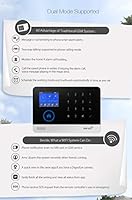
Yes, as long as you have a working 2G SIM card inserted, the system will fall back to GSM cellular and either call or send a text message to your saved phone numbers when an alarm is triggered. This makes the dual-connectivity setup genuinely useful for areas with unstable broadband. Without a SIM card installed, a WiFi outage would mean no remote notifications until the connection is restored.