Overview

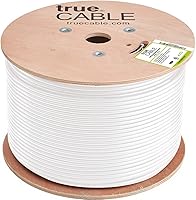
The TrueCable RG6 Dual Shield 1000ft Coaxial Cable is a bulk direct-burial solution built for installers and serious DIYers who need more than a short patch run. A full 1000 feet means you can wire an entire property — multiple rooms, outbuildings, or a long underground run to a detached garage — without splicing. At its price tier, buyers expect more than commodity-grade materials, and this bulk coax cable delivers with dual-shield construction that standard single-shield RG6 simply cannot match. Whether you are running satellite, cable TV, an antenna feed, or a broadband modem line, it covers the practical bases most residential and light commercial jobs will throw at you.
Features & Benefits

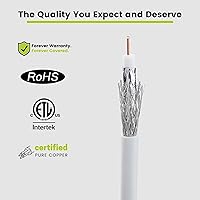
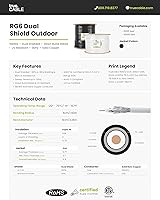
What separates this direct burial RG6 from cheaper options comes down to three things: conductor material, shielding quality, and certifications that actually mean something. The solid bare copper conductor — rather than the copper-clad steel found in budget cables — carries voltage cleanly to a satellite LNB, which matters when resistance in the line is quietly degrading your signal. The dual-layer shielding, combining a full aluminum foil wrap with a 60% aluminum braid, keeps interference out on long runs. The cable is sweep-tested to 3GHz and holds cETLus and ANSI/TIA certifications — verified performance, not a marketing claim. The CMX-rated jacket handles UV, moisture, and freeze-thaw cycles without cracking over time.

Best For

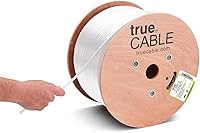
The TrueCable 1000ft reel is a strong fit for homeowners running coax to a satellite dish or an outdoor antenna, particularly where the cable needs to go underground without conduit. CMX is a direct-burial rating — it is not the same as the CL2 or CL3 ratings on indoor cable, which are not designed for prolonged ground moisture or UV exposure. Contractors doing multi-room installs will appreciate the EZ Pull Reel and the footage markers that help track remaining cable mid-job. That said, if you are only pulling 25 feet through an interior wall, this is overkill. It also makes a natural upgrade for anyone replacing copper-clad steel on a satellite system that has been showing signal loss.

User Feedback

Buyers consistently rate this bulk coax cable around 4.5 stars, with most praise landing on signal quality and build — particularly from those who switched from lower-grade cable and noticed an immediate improvement. The reel format gets frequent positive mentions; people appreciate not wrestling with tangled cable on a long pull. On the critical side, a recurring theme is that the jacket gets noticeably stiff in cold weather, making routing trickier during winter installs. A handful of buyers flag that the cable requires proper compression tools and quality F-connectors to terminate correctly — neither of which is included. Those expecting a plug-and-play experience may be caught off guard. Long-term burial durability reports are mostly positive so far.

Pros

  • Solid bare copper conductor handles LNB voltage delivery reliably, unlike copper-clad steel alternatives.
  • Dual-layer shielding keeps interference out on long runs where single-shield cable often falls short.
  • CMX jacket is genuinely built for direct burial — no conduit required in most standard soil conditions.
  • 3GHz sweep-tested performance gives headroom for HD-SDI and other high-bandwidth applications.
  • The EZ Pull Reel dispenses smoothly with no tangling, which makes solo installs noticeably faster.
  • Sequential footage markers every 2 feet help track remaining cable and reduce costly over-cutting.
  • cETLus and ANSI/TIA certifications back up the performance claims with third-party verified testing.
  • 1000 feet in one reel eliminates mid-run splices, which are a common source of signal degradation.
  • UV-resistant polyethylene jacket holds up well to prolonged sun exposure above ground too.
  • Buyers switching from budget bulk coax consistently report a noticeable improvement in signal consistency.

Cons

  • No F-connectors or compression fittings included — termination tools are a separate, necessary purchase.
  • The polyethylene jacket stiffens significantly in cold weather, making routing and bending harder in winter.
  • A 1000-foot reel at roughly 25 pounds is bulky and impractical for small or one-time jobs.
  • CMX rating is outdoor-only — this cable cannot legally substitute for CL2/CL3 in finished indoor walls.
  • Compression termination requires skill and the right tool; improper ends cause signal problems that are hard to diagnose.
  • The white jacket color may stand out visibly on darker exterior surfaces where aesthetics matter.
  • Long-term burial performance data beyond a few years is still limited in publicly available user reports.
  • Overkill for anyone who only needs a short outdoor drop or a simple patch between two nearby devices.

Ratings

Our AI rating engine analyzed thousands of verified global purchases of the TrueCable RG6 Dual Shield 1000ft Coaxial Cable, actively filtering out incentivized reviews, duplicate submissions, and bot-generated feedback to surface what real installers and homeowners actually experienced. Scores reflect both the genuine strengths that drove strong repeat purchases and the friction points that caused frustration — nothing is glossed over.

Signal Performance
93%
Buyers running this direct burial RG6 to satellite dishes and OTA antennas consistently reported clean, stable signals even on runs exceeding 150 feet. Those upgrading from single-shield or copper-clad steel cable noted measurable improvements, including fewer dropouts during heavy weather and sharper picture quality on HDTV channels.
A small number of users on very long runs — approaching the 200-foot range without amplification — reported marginal signal degradation, which is expected physics rather than a product defect. A few buyers also attributed signal issues to their own termination quality rather than the cable itself, which muddied some negative reviews.
Build Quality
91%
The jacket feels noticeably more substantial than bargain-bin bulk coax, and the dual-shield construction holds its shape well during routing and bending. Buyers who cut cross-sections described clean, well-centered conductors with consistent dielectric thickness — a good sign of reliable manufacturing tolerances throughout the 1000-foot run.
A recurring complaint involves the jacket stiffening considerably in temperatures below freezing, making sharp bends and tight routing noticeably harder during winter installs. A handful of users on outdoor aerial runs also noticed the white finish showing surface discoloration after extended UV exposure, though no structural degradation was reported.
Direct Burial Durability
88%
Most buyers who buried this bulk coax cable without conduit reported zero issues with moisture ingress or jacket degradation after one to two years in the ground. The CMX-rated polyethylene jacket held up well in a range of climates, including humid southern US conditions and freeze-thaw cycles in northern regions.
Long-term burial data beyond two to three years is still limited in the user review pool, so lifetime durability in harsh alkaline or highly acidic soils remains somewhat unproven. A few users in very wet climates recommended conduit anyway as added insurance, particularly at entry and exit points where the cable transitions from buried to exposed.
Ease of Installation
86%
The EZ Pull Reel drew consistent praise from both professional installers and first-time DIYers — cable feeds smoothly without tangling, which is a real time-saver on long pulls. The footage markers every 2 feet were frequently called out as genuinely useful, helping installers cut accurately and avoid the frustration of running a few feet short.
The reel itself is heavy at roughly 25 pounds, and staging it for solo above-ceiling or attic pulls requires some planning. A few buyers noted the reel frame is not the most robust and can wobble or tip on uneven ground without a proper stand, occasionally causing the spool to unseat mid-pull.
Termination Experience
61%
39%
Buyers who owned quality compression tooling and RG6 compression F-connectors found termination straightforward, with the cable stripping cleanly and the braid trimming neatly. Experienced installers described it as one of the easier bulk cables to prep, largely due to the consistent jacket and dielectric dimensions.
No connectors or tools are included, and this caught a meaningful number of buyers off guard — particularly first-timers who assumed the cable would be ready to use out of the box. Negative reviews citing signal problems were often traced back to poorly seated or corroded connectors rather than cable defects, suggesting the termination learning curve is a real friction point for novices.
Value for Money
84%
At its price point, buyers purchasing this direct burial RG6 for whole-home or multi-structure wiring projects found the per-foot cost competitive with quality alternatives, especially factoring in the certified performance and solid copper conductor. Contractors noted that buying 1000 feet in a single reel reduced per-run material costs compared to buying shorter spools.
For buyers who only needed 50 to 100 feet, the cost and volume represent poor value — cheaper pre-cut options or smaller reels would serve them better. Some users also felt the price premium was harder to justify without included connectors, expecting at least a small connector kit at this tier.
Weatherproofing
87%
Above-ground outdoor sections held up well against rain, UV exposure, and temperature swings in user reports spanning multiple seasons. The polyethylene jacket does not absorb moisture the way PVC jackets can, which translates to more consistent impedance on long outdoor aerial runs over time.
The jacket color, while clean looking at installation, showed visible weathering and surface chalking after prolonged southern-facing sun exposure — purely cosmetic but noticeable. Connector weatherproofing is entirely the installer's responsibility, and users who did not seal outdoor F-connectors with self-amalgamating tape reported corrosion issues within one to two seasons.
Reel & Packaging Design
79%
21%
The tangle-free reel design is a meaningful upgrade over the loose coils that cheaper bulk cable sometimes ships in, and most buyers appreciated being able to pull directly from the box without re-spooling. Sequential footage markings printed clearly on the jacket added practical on-site utility that users of competing brands noted was absent.
The cardboard reel frame is functional but not particularly durable — some buyers reported the hub cracking or bending under the weight of the full spool during shipping or rough handling. A sturdier plastic or reinforced reel at this price tier would better match buyer expectations.
Conductor Quality
92%
Buyers who specifically sought solid bare copper for satellite LNB voltage delivery reported consistent results, with dishes locking faster and polarization switching reliably compared to their previous copper-clad steel installations. Cross-section checks described by technically inclined buyers confirmed the conductor appeared consistently sized and free of voids.
There is limited independent verification from end users on conductor purity beyond visual inspection, and a small number of skeptical buyers questioned whether the bare copper labeling was fully accurate without lab testing. This is a minor concern given the certification backing, but it reflects a broader trust issue some buyers have with bulk cable claims generally.
Shielding Effectiveness
89%
Users running cable near electrical panels, HVAC equipment, and fluorescent lighting reported noticeably less interference compared to single-shield RG6 they had used previously. The foil-plus-braid combination provided real-world rejection of common household RF noise sources, which translated to fewer pixelation artifacts on satellite and cable TV feeds.
The aluminum braid rather than tinned copper braid means this cable is slightly less effective at rejecting low-frequency interference, though in typical residential environments this distinction rarely matters. A few users in environments with unusually dense RF noise — near commercial broadcast towers or industrial equipment — found that even dual-shield RG6 was insufficient and required quad-shield cable instead.
Certification & Compliance
91%
The cETLus listing and ANSI/TIA 568.4-D CATV certification gave professional installers and technically informed buyers meaningful confidence that the cable had been third-party tested rather than self-certified. RoHS-3 compliance also mattered to environmentally conscious buyers and those working on projects with materials restrictions.
Average consumers unfamiliar with certification bodies found these credentials hard to evaluate independently, and a small number of buyers expressed frustration that the certifications were not more plainly explained on the packaging. Some users also noted that the certification covers 150-foot test segments, not necessarily a full 1000-foot continuous run.
Cold Weather Flexibility
57%
43%
In moderate cold — down to around 20°F — most buyers managed to complete installs without significant issues, particularly when pulling cable through conduit or along relatively straight runs. Pre-staging cable indoors before routing in cold conditions was a tip that experienced installers shared to mitigate stiffness.
Below freezing temperatures caused the polyethylene jacket to stiffen noticeably, making tight bends at entry points and around corners genuinely difficult. Several users doing winter installs reported micro-cracks in the jacket at sharp bend points when forcing the cable in cold conditions, which is a real concern for buried sections that may see repeated freeze-thaw cycles.
Compatibility Range
88%
The cable worked reliably across all expected residential applications — satellite, OTA antenna, cable modem, and HDTV — and users attempting HD-SDI video distribution in small studio or surveillance setups reported it handled those signals cleanly within reasonable run lengths. The 3GHz headroom means it will not become obsolete as signal standards evolve.
A few users trying to use this bulk coax cable for two-way RF applications or specific professional broadcast environments found the aluminum braid construction did not fully meet their specs for return loss or structural return loss. These are edge cases well outside standard residential use, but worth noting for anyone considering it for semi-professional video work.

Suitable for:

The TrueCable RG6 Dual Shield 1000ft Coaxial Cable is purpose-built for homeowners, contractors, and serious DIYers who need to run long coax lines outdoors — particularly where the cable has to go underground without conduit. If you are wiring a satellite dish, an over-the-air antenna, or a broadband modem connection across a large property, the full 1000-foot reel gives you enough material to handle most whole-home or multi-structure jobs in a single purchase. The solid bare copper conductor is a genuine advantage for satellite installations where the cable also needs to deliver DC voltage to the LNB — copper-clad steel alternatives struggle here and can cause intermittent signal loss or dish pointing failures over time. Anyone upgrading aging coax infrastructure or replacing a failed buried cable will also find the CMX-rated jacket well-suited to ground moisture, UV exposure, and seasonal temperature swings. Professionals doing recurring installs will appreciate the reel format and footage markers, which cut down on waste and guesswork on the job.
Not suitable for:

The TrueCable RG6 Dual Shield 1000ft Coaxial Cable is not the right choice if your project is limited to short indoor cable runs — buying 1000 feet of CMX-rated direct-burial coax for a 20-foot wall drop is wasteful and unnecessary. CMX is an outdoor jacket rating, not an indoor one; it does not carry the CL2 or CL3 fire ratings required for in-wall residential wiring in most building codes, so it should not be routed inside finished walls. The cable also does not come with F-connectors or any termination hardware, and it genuinely requires a quality compression tool to terminate properly — buyers who expect to crimp ends with basic pliers will likely end up with leaky connections and frustrated troubleshooting. At roughly 25 pounds on the reel, this is not a grab-and-go option for a casual single-room fix. If you only need a short outdoor drop or a pre-made patch cable, a far cheaper and simpler solution exists.
Specifications

  • Cable Type: RG6 coaxial cable rated for broadband, satellite, antenna, and CATV signal distribution.
  • Total Length: 1000 feet of cable supplied on a single continuous reel with no mid-spool splices.
  • Conductor: 18 AWG solid bare copper core, which carries both RF signal and DC voltage more efficiently than copper-clad steel.
  • Impedance: 75 ohm impedance, the standard for all residential and commercial coaxial video and broadband applications.
  • Shielding: Dual-layer shielding consisting of 100% aluminum foil bonded to the dielectric plus a 60% aluminum braid over the foil.
  • Jacket Material: UV-resistant polyethylene (PE) outer jacket rated for prolonged exposure to sunlight, soil moisture, and freeze-thaw temperature cycling.
  • Burial Rating: CMX-rated for direct burial in ground without conduit under normal soil conditions, per NEC outdoor cable standards.
  • Frequency Range: Sweep-tested and verified for signal integrity from below 5 MHz up to 3 GHz, covering satellite, HDTV, and HD-SDI applications.
  • Certifications: Holds cETLus listing, RoHS-3 compliance, and ANSI/TIA 568.4-D CATV certification verified with a Fluke DSX-8000 CableAnalyzer.
  • Connector Type: Terminated with standard F-type compression connectors (sold separately), compatible with all RG6 F-connector tooling.
  • Reel Format: Pre-spooled on a tangle-free EZ Pull Reel designed for smooth single-person pulls on long runs without kinking.
  • Footage Markers: Sequential length markings printed on the jacket every 2 feet allow accurate tracking of remaining cable during installation.
  • Jacket Color: White exterior jacket, typical for residential aerial and surface-mount applications where a neutral finish is preferred.
  • Reel Weight: Fully spooled reel weighs approximately 25 lbs, which requires planning for transport and positioning on the job site.
  • Compatible Uses: Supports cable TV, HDTV, satellite dish, over-the-air antenna, broadband modem, SD-SDI, HD-SDI, and 3G-SDI signal runs.
  • Indoor Rating: CMX jacket does not carry CL2 or CL3 fire ratings, so this cable is not code-compliant for routing inside finished interior walls.
  • RoHS Status: RoHS-3 compliant, meaning the cable materials meet current European Union restrictions on hazardous substances in electrical equipment.
  • Dielectric Type: Foam polyethylene dielectric insulates the conductor and maintains consistent impedance across the full cable length.

Related Reviews
trueCABLE Cat5e Outdoor Shielded 1000ft Ethernet Cable
87%
93%
Cable Build Quality
88%
Shielding Effectiveness
91%
Direct Burial Performance
89%
PoE Reliability
86%
Installation Experience
More
trueCABLE Cat6A Shielded Riser 1000ft Ethernet Cable
86%
93%
Conductor Quality
88%
Shielding Effectiveness
91%
Jacket & Build Quality
67%
Termination Experience
92%
PoE Reliability
More
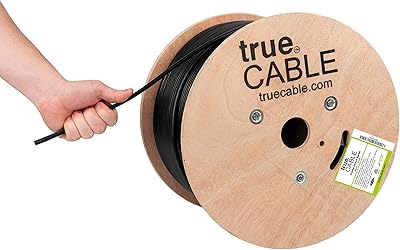
Monk Cables CAT6 Plenum Cable 1000ft
78%
83%
Signal Performance
88%
Plenum Jacket Quality
61%
CCA Conductor Transparency
67%
Termination Behavior
91%
Pull Box Design
More
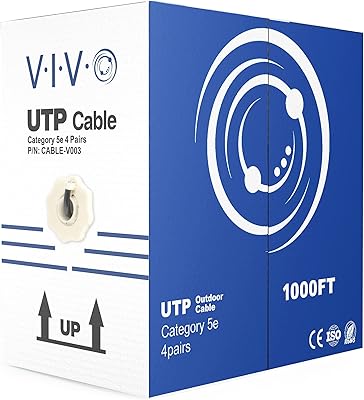
VIVO CABLE-V003 Waterproof Cat5e Ethernet Cable 1000ft
84%
88%
Performance in Outdoor Conditions
91%
Ease of Installation
85%
Waterproofing Effectiveness
87%
Build Quality & Durability
92%
Value for Money
More
trueCABLE Cat6A Direct Burial Ethernet Cable 1000ft
85%
94%
Conductor Quality
92%
Outdoor Weatherproofing
91%
Signal & Data Performance
89%
PoE Reliability
86%
Reel & Usability
More
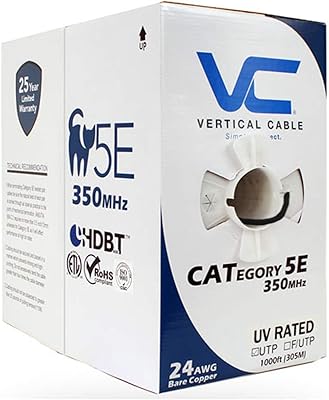
Vertical Cable Cat5e 1000ft Outdoor Ethernet Cable
77%
91%
Jacket Durability
88%
Signal Performance
93%
UV & Weather Resistance
79%
Value for Money
74%
Ease of Installation
More
JARNHNG Cat6 1000ft Ethernet Cable
85%
92%
Outdoor Durability
88%
Signal Quality and Performance
85%
Ease of Installation
81%
Flexibility for DIY Installations
89%
UV and Weather Resistance
More
FiveStarCable 1000Ft Cat5e FTP Ethernet Cable
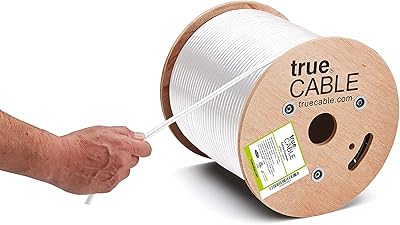
85%
92%
Performance at Gigabit Speeds
88%
Ease of Installation
90%
Durability for Outdoor Use
87%
Value for Money
89%
Compatibility with High-Speed Networks
More
trueCABLE Cat5e Outdoor Ethernet Cable 500ft
89%
93%
Outdoor Durability
88%
Ease of Installation
91%
Signal Integrity
92%
Value for Money
95%
UV Resistance
More
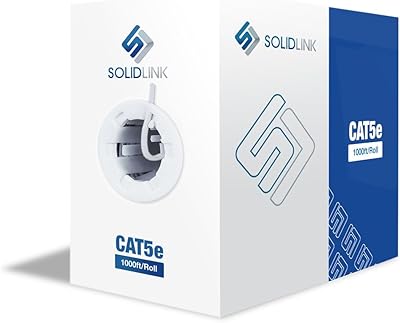
SolidLink CAT5e 1000ft Ethernet Cable
78%
89%
Value for Money
82%
Signal Performance
84%
Installation Experience
86%
Packaging & Dispensing
77%
Build Quality
More

FAQ

Yes, that is exactly what the CMX rating is designed for. The polyethylene jacket is formulated to resist ground moisture, soil contact, and temperature swings over time. For most standard residential soil conditions — no conduit needed. That said, running it through conduit is still a good idea in areas with heavy foot traffic, rocky soil, or where you might need to replace the cable later without digging.

No connectors are included — you will need to source RG6 F-type compression connectors separately. Crimp-style connectors technically work, but compression connectors create a much more weather-tight, reliable termination, especially for outdoor and buried ends. You will also need a proper coax compression tool; trying to seat compression connectors without one leads to loose, leaky fittings that cause signal problems down the line.

A satellite dish LNB — the component at the end of the dish arm — actually receives DC power through the coax cable itself, not a separate wire. Bare copper conducts that voltage more efficiently and with less resistance than copper-clad steel, which has a thin copper layer over a steel core. Over a long run, the resistance difference is real, and a poorly powered LNB can cause intermittent signal drops or prevent the dish from switching polarization correctly.

It is not recommended for finished interior wall routing. The CMX outdoor jacket does not carry the CL2 or CL3 fire ratings that most building codes require for in-wall cables. Those ratings mean the cable jacket will not propagate a fire through your wall cavity. If you need coax inside finished walls, look for a cable specifically rated CL2 or CL3.

Single-shield RG6 typically uses only a braid layer, which leaves small gaps in coverage — usually around 60 to 85% physical coverage. This bulk coax cable adds a full aluminum foil layer beneath the braid, bringing shielding to near 100% coverage. The practical result is better rejection of RF interference from nearby electrical lines, cellular signals, and other noise sources. For short indoor runs it may not matter much, but on long outdoor runs the difference in signal cleanliness is measurable.

It depends on the signal frequency and how much loss you can tolerate before using an amplifier. At typical satellite frequencies around 1–2 GHz, RG6 loses roughly 6 to 8 dB per 100 feet. Most satellite and antenna systems can handle runs up to about 150 to 200 feet without amplification before signal degradation becomes noticeable. Beyond that, an inline amplifier or distribution amp is worth adding. This direct burial RG6 is well-suited for those longer runs where cheaper cable would underperform.

Yes, it works well for this. Cable modems and DOCSIS broadband signals operate well within the cable's rated 3 GHz range. The solid copper conductor also helps maintain consistent signal levels across longer runs, which matters for upstream data performance in DOCSIS systems. Just make sure you use good-quality compression F-connectors at both ends, since a loose or corroded connection is often the real culprit when modem speeds disappoint.

It is manageable, but you will want to plan your staging ahead of time. Most solo installers set the reel on a flat surface or a simple reel stand and pull from it as they route the cable, rather than carrying it around. The EZ Pull Reel design is specifically intended to dispense smoothly without tangling, which makes single-person pulls much more practical. For underground runs, marking your trench route and pulling the cable in sections before backfilling saves a lot of effort.

Yes — the UV-resistant polyethylene jacket is rated for prolonged outdoor exposure, not just buried applications. Sections running along exterior walls, across rooflines, or through aerial spans should hold up well under normal sunlight and weather. That said, any outdoor cable will eventually degrade with enough UV exposure over many years, so securing it in conduit or cable clips and keeping it away from sustained pooling water at the connectors will extend its service life.

The sequential markings every 2 feet are printed consistently and run the full length of the reel, so you can read exactly how much cable you have pulled or how much remains. In practice, this is genuinely useful — experienced installers say it removes the guesswork when cutting to length on long runs and helps avoid the frustration of running short by a few feet. It is a small detail, but one that saves real time on jobs where you are managing multiple pulls.