Overview

The Monk Cables CAT6 Plenum Cable 1000ft enters a competitive bulk-cable market with a specific angle: DSX-8000 certifier testing on every reel, which is not something every budget-tier plenum cable can claim. It sits in the mid-market range — not the cheapest option available, but priced to appeal to installers who want documented compliance without paying for an enterprise brand name. The conductor is CCA construction, meaning copper-clad aluminum rather than solid pure copper, and that distinction genuinely matters depending on your application. Buyers who already know what they need will find this bulk ethernet cable worth a serious look; those who are less familiar should read further before committing.

Features & Benefits

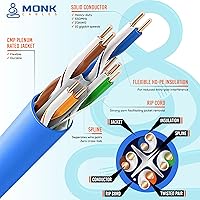
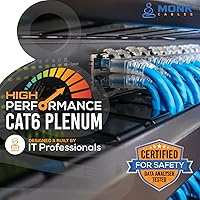
The plenum-rated CMP jacket is the headline specification here — it satisfies the fire codes that apply when cable runs through air-handling spaces like above drop ceilings or below raised floors, which is a hard requirement on most commercial jobs. Running at 23AWG in an unshielded twisted-pair configuration, this plenum Cat6 cable handles 10 Gigabit Ethernet at standard distances and is rated to 550MHz. The pull box is genuinely practical: footage markers printed on the jacket every foot make measuring during a solo run considerably less frustrating. RoHS, REACH, and ISO 9001:2015 documentation is available for projects where compliance paperwork is part of the job.

Best For

This bulk ethernet cable is a natural fit for IT contractors and facilities managers who need plenum compliance on a budget that does not stretch to top-tier brands. Home lab builders running structured wiring through air-return spaces in drop-ceiling rooms will also find the 1000ft reel a practical buy. Small business network builds that want 10GbE headroom without the cost of pure-copper bulk spools are a solid match as well. The easy-pull box design and printed footage markings make it especially useful for solo installers working without a helper to track and measure cable mid-run, and certification records are on hand if a building inspector asks.

User Feedback

Feedback on the Monk Cables reel skews positive overall, with the pull-box design and jacket flexibility drawing consistent praise from installers pulling runs through tight ceiling spaces. The DSX-8000 testing claim resonates well with commercial buyers who need something to present during an inspection. Where opinions divide is the CCA conductor — experienced installers note that copper-clad aluminum demands more care during punchdowns and crimps, since it is less forgiving than solid copper if you rush terminations. A small number of buyers flagged box damage on arrival. Most complaints cluster around shipping handling or expectations about conductor material, not around actual in-wall signal performance once installed.

Pros

  • Genuine CMP plenum rating satisfies fire code requirements for air-handling space installations without ambiguity.
  • DSX-8000 per-reel testing provides documentation that holds up during building inspections and client audits.
  • Pull-box packaging with jacket footage markers saves real time on solo installs and multi-drop commercial runs.
  • Supports 10 Gigabit Ethernet, giving small business networks meaningful headroom for future upgrades.
  • Priced competitively for a certified plenum cable, making it viable for budget-conscious project bids.
  • Jacket flexibility holds up well through conduit bends and over cable trays during long ceiling pulls.
  • RoHS and REACH certifications are available for projects with environmental compliance requirements.
  • Reel footage is accurate for the vast majority of buyers, reducing the risk of running short mid-project.
  • 24/7 support and a straightforward return policy back up the purchase if issues arise on delivery.

Cons

  • CCA conductors require more careful termination technique — rushed punchdowns and crimps fail more often than with pure copper.
  • Some buyers received the pull box damaged from shipping, causing the cable to unspool and tangle inside.
  • CCA construction does not meet pure-copper specs required by certain enterprise contracts or government project standards.
  • Jacket print markings can fade or become hard to read on sections handled heavily during long pulls.
  • Slightly stiffer than some competing plenum cables when pulled fresh from cold storage or unheated spaces.
  • Obtaining specific compliance documents in particular formats sometimes requires follow-up with customer support rather than being immediately available.
  • Marginally higher resistance over very long runs compared to solid copper, relevant for pulls approaching the Cat6 distance limit.

Ratings

The scores below for Monk Cables CAT6 Plenum Cable 1000ft were generated by our AI engine after analyzing verified purchaser reviews from multiple global markets, with spam, bot-submitted, and incentivized feedback actively filtered out. Ratings reflect the honest distribution of real installer and contractor experiences — strengths and recurring frustrations alike are represented without smoothing over the rough edges.

Signal Performance
83%
Most installers report clean link-light results on 10GbE switches after completing runs, with no unusual packet loss or speed degradation at typical horizontal distances under 295 feet. The 550MHz rating holds up in practice for the majority of commercial deployments reviewers describe.
A small number of buyers running very long pulls close to the Cat6 distance ceiling noted marginal performance compared to pure-copper alternatives. For high-density or latency-sensitive environments, the CCA construction introduces a variable that pure-copper eliminates.
Plenum Jacket Quality
88%
Contractors working above drop ceilings consistently praise the jacket for holding up during pulls through tight conduit and over cable trays without cracking or splitting. The CMP rating is legitimate, which matters on jobs where a fire marshal or building inspector will check compliance documentation.
A handful of users noted the jacket feels slightly stiffer than some competing plenum cables in cold storage environments, which can make the first few feet off a new reel a bit resistant before it warms to room temperature.
CCA Conductor Transparency
61%
39%
Buyers who researched CCA before purchasing report feeling the pricing makes sense given the conductor material, and several network techs noted that for fixed horizontal runs behind walls, the real-world performance difference from pure copper is minimal in typical office wiring scenarios.
This is the most polarizing aspect of the product. Installers who expected pure copper based on vague listing language felt misled, and the CCA construction genuinely does require more deliberate technique at punchdowns and RJ45 crimps to avoid cold joints or broken strands.
Termination Behavior
67%
33%
Experienced installers who know CCA requires a lighter touch report clean terminations with standard keystone jacks and patch panel punchdowns. The 23AWG gauge seats consistently in tool-guided punchdown blades when the installer takes care not to over-flex the wire end.
Less experienced technicians and those accustomed to solid-copper cable report a higher-than-expected rate of failed terminations, particularly with cheaper crimp tools. CCA is more brittle at the termination point and snaps if bent sharply while being seated.
Pull Box Design
91%
The easy-pull box format drew some of the most consistently positive comments across all reviewer segments. Solo installers especially appreciated being able to feed cable without a second person holding the reel, and the box held its structure well through most of a 1000ft spool.
A minority of buyers received boxes that had been partially crushed in shipping, which caused the cable to tangle inside rather than feed cleanly. The box is functional but not reinforced enough to survive rough freight handling intact every time.
Footage Markings
86%
Foot-count markers printed directly on the jacket are a practical feature that experienced installers know saves real time on a job. Being able to glance at the cable itself rather than measuring separately keeps the workflow moving, particularly on multi-drop runs.
A few buyers noted the printing fades or becomes harder to read on sections of cable that have been handled heavily during a long pull. The ink is functional but not deeply embossed, so under low-light ceiling conditions it can be difficult to read quickly.
Value for Money
79%
21%
For a plenum-rated Cat6 cable with verifiable certification documentation, the price point undercuts several name-brand alternatives by a meaningful margin. Contractors buying for small to mid-size jobs find the cost-per-foot arithmetic compelling compared to distributor pricing on premium brands.
Buyers who later discover the CCA conductor composition sometimes feel the value calculation changes, particularly if they compare it to pure-copper plenum options that cost only modestly more per foot at bulk pricing. The value is real but context-dependent.
DSX-8000 Certification Value
82%
18%
Commercial installers note that having per-reel DSX-8000 test documentation available is a credible differentiator and genuinely useful when a client or inspector asks for performance verification. Several reviewers specifically cited this as the reason they chose this cable over an uncertified alternative at a similar price.
Some technically experienced buyers point out that a certification on the batch or reel does not guarantee every terminated run in the field will pass a field certifier test, especially if termination quality varies. The cert is meaningful but should not replace end-to-end field testing on critical installations.
Shipping & Packaging Integrity
64%
36%
The majority of orders arrive with the reel intact and the pull box undamaged, and most buyers in warmer months or with ground shipping report no issues with the condition of the cable itself upon arrival.
A recurring thread in negative reviews involves the outer box arriving dented or partially open, which in several cases caused the cable to unspool inside and arrive tangled. This is not universal, but it is frequent enough to be a genuine pattern rather than isolated incidents.
Compliance Documentation
78%
22%
RoHS, REACH, and ISO 9001:2015 paperwork is available for projects where compliance documentation is a contractual or regulatory requirement. Facilities managers working on commercial buildouts report that having this documentation on hand simplified project closeout paperwork.
A few buyers working on government or healthcare projects noted that the documentation provided, while present, required some back-and-forth with Monk Cables support to obtain in the exact format required by their compliance teams. It is not always immediately ready to hand off.
Jacket Flexibility During Runs
81%
19%
Installers pulling through conduit bends and over wire management trays report the jacket flexes adequately for typical commercial ceiling work. It does not fight back the way some stiffer plenum jackets do, which reduces fatigue on long pull days.
The flexibility is good but not exceptional compared to premium plenum cables. On very tight 90-degree conduit bends, a couple of reviewers noted slight resistance and preferred to use a pull lubricant to avoid stressing the jacket.
Customer Support
74%
26%
Multiple buyers who contacted support for replacement or documentation reported that the team responded promptly and honored the stated return and replacement policy without requiring excessive back-and-forth. The 30-day policy appears to be enforced in practice.
Some buyers noted that response times varied and that resolving more technical questions — like obtaining specific certification documents — took longer than expected. Support quality seems consistent for logistics issues but less specialized for technical inquiries.
Reel Length Accuracy
84%
The vast majority of buyers who measured the reel found the footage accurate to within a few feet of the stated 1000ft, which matters when budgeting cable for a project with tight margins. Accurate footage reduces the risk of coming up short on a job.
A small number of buyers reported being slightly short of 1000ft after measuring, though this appears to be an outlier rather than a systemic issue. Still, for any job where the full length is required, buying a small buffer spool is a reasonable precaution.

Suitable for:

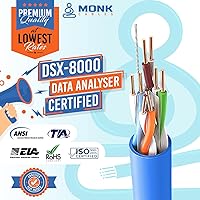
The Monk Cables CAT6 Plenum Cable 1000ft is a practical choice for IT contractors, network technicians, and facilities managers who need a code-compliant plenum cable for commercial office builds without stretching the budget to enterprise-brand pricing. If your job requires running cable through air-handling spaces — the kind above drop ceilings or below raised floors where building codes mandate a fire-rated CMP jacket — this bulk ethernet cable checks that compliance box at a price point that makes sense for small to mid-size projects. Home lab enthusiasts who have converted a basement or spare room with a drop ceiling into a proper rack environment will also find the 1000ft reel appropriately sized for a serious structured wiring project. Solo installers and small crews benefit noticeably from the pull-box format and the footage markers on the jacket, which reduce the friction of measuring and managing cable without a second person on site. Buyers who need certification paperwork — RoHS, REACH, or ISO documentation — for building inspections or client-facing project closeouts will find that material available, which is not always guaranteed at this price tier.
Not suitable for:

Buyers who require solid bare-copper conductors for mission-critical, high-density, or longevity-sensitive installations should look elsewhere before committing to the Monk Cables CAT6 Plenum Cable 1000ft. The CCA (copper-clad aluminum) construction is a legitimate cost-reduction choice, but it carries real trade-offs: aluminum is more brittle than copper at termination points, has slightly higher resistance over long runs, and does not meet the TIA-568 pure-copper standard that some enterprise clients or government contracts explicitly require. If your technicians are less experienced with CCA termination technique, expect a higher rate of failed punchdowns and crimps until they adjust their approach — this is not a cable that forgives rushed or careless terminations the way solid copper does. Data centers, high-availability server rooms, or any environment where every run will be field-certified with a cable tester should factor in that CCA cables are more likely to show marginal results on strict certification thresholds. Anyone whose project specs call out pure copper by name — and many commercial contracts do — should verify conductor requirements before ordering a full reel.

Specifications

  • Cable Category: Rated Cat6, supporting network infrastructure up to 10 Gigabit Ethernet at standard horizontal run distances.
  • Jacket Rating: CMP (plenum-rated) jacket meets fire code requirements for installation in air-handling spaces such as above drop ceilings and below raised floors.
  • Conductor Type: 23AWG copper-clad aluminum (CCA), which combines an aluminum core with a copper outer layer to reduce material cost compared to solid bare copper.
  • Configuration: Unshielded Twisted Pair (UTP) with four twisted pairs, suitable for standard structured wiring environments without heavy electromagnetic interference.
  • Frequency Rating: Rated to 550MHz, providing headroom above the Cat6 minimum 250MHz threshold for signal integrity across the run.
  • Cable Length: 1000ft per reel, packaged in a single pull box intended for bulk structured wiring installations.
  • Speed Support: Supports 10 Gigabit Ethernet (10GBASE-T) at distances up to 55 meters, and 1 Gigabit Ethernet at the full 100-meter horizontal run distance.
  • Standard Compliance: Manufactured to TIA/EIA 568.2C standards governing Cat6 performance, conductor geometry, and crosstalk limits.
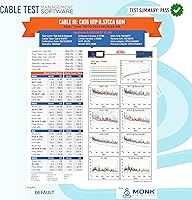
  • Testing Certification: Each reel is tested using a DSX-8000 cable certifier to verify signal compliance before leaving the facility.
  • Environmental Certs: RoHS and REACH certified, confirming the cable meets restrictions on hazardous substances relevant to commercial building projects.
  • Quality Standard: Manufactured under an ISO 9001:2015 certified quality management system, relevant for commercial project documentation requirements.
  • Connector Compatibility: Terminates with standard RJ45 connectors and is compatible with Cat6 keystone jacks and patch panel punchdown blocks.
  • Jacket Color: Blue jacket color for easy visual identification and cable management in structured wiring installations.
  • Reel Dimensions: Pull box measures 16 x 16 x 10 inches, sized to sit on a work surface or floor and feed cable without a reel stand.
  • Reel Weight: Full 1000ft reel weighs approximately 22 pounds, consistent with standard bulk Cat6 plenum spool weight for transport and handling.
  • Footage Marking: Running foot-count markers are printed on the jacket at every foot of cable, allowing length measurement without a separate tape measure during installation.
  • Application: Designed exclusively for indoor plenum air spaces; not rated or intended for outdoor, direct burial, or riser-only applications.
  • Fire Resistance: The CMP-rated plenum jacket is formulated to resist flame spread and limit smoke production in compliance with NFPA 70 (National Electrical Code) plenum space requirements.

Related Reviews
JARNHNG Cat6 1000ft Ethernet Cable
85%
92%
Outdoor Durability
88%
Signal Quality and Performance
85%
Ease of Installation
81%
Flexibility for DIY Installations
89%
UV and Weather Resistance
More
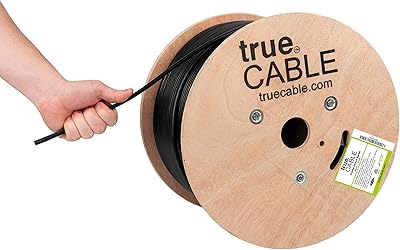
TRUE CABLE Cat6A Shielded Riser Ethernet Cable 1000ft
88%
93%
Performance for High-Speed Data Transfer
89%
Build Quality and Durability
85%
Ease of Installation
90%
Shielding and Interference Resistance
91%
Value for Money
More
VIVO CABLE-V003 Waterproof Cat5e Ethernet Cable 1000ft
84%
88%
Performance in Outdoor Conditions
91%
Ease of Installation
85%
Waterproofing Effectiveness
87%
Build Quality & Durability
92%
Value for Money
More
trueCABLE Cat6A Direct Burial Ethernet Cable 1000ft
85%
94%
Conductor Quality
92%
Outdoor Weatherproofing
91%
Signal & Data Performance
89%
PoE Reliability
86%
Reel & Usability
More
Vertical Cable Cat5e 350 MHz UTP Ethernet Cable 1000ft
87%
88%
Performance
92%
Build Quality/Durability
85%
Ease of Installation
90%
Value for Money
93%
Outdoor Durability
More
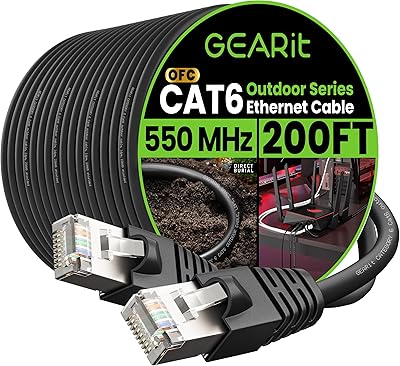
GEARit Cat6 Outdoor Ethernet Cable 200ft
80%
88%
Weatherproofing & Burial Rating
84%
Signal Integrity & Performance
86%
Connector Build Quality
91%
Installation Ease
67%
Cold Weather Flexibility
More
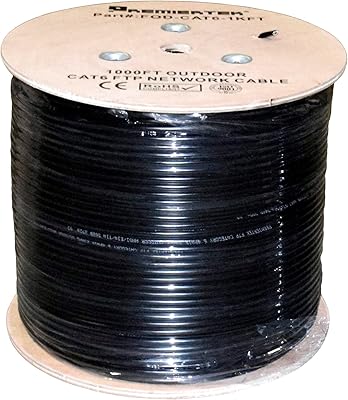
Premiertek FOD-CAT6-1KFT Outdoor Cat6 FTP Cable 1000ft
73%
83%
Outdoor Durability
81%
Shielding Effectiveness
57%
Conductor Quality (CCA vs Copper)
44%
PoE Compatibility
88%
Spool & Packaging
More
FiveStarCable 1000Ft Cat5e FTP Ethernet Cable
85%
92%
Performance at Gigabit Speeds
88%
Ease of Installation
90%
Durability for Outdoor Use
87%
Value for Money
89%
Compatibility with High-Speed Networks
More
GEARit Cat6 Outdoor Ethernet Cable 150ft
86%
92%
Value for Money
88%
Durability in Outdoor Conditions
85%
Ease of Installation
90%
Performance at High Speeds
86%
Build Quality
More
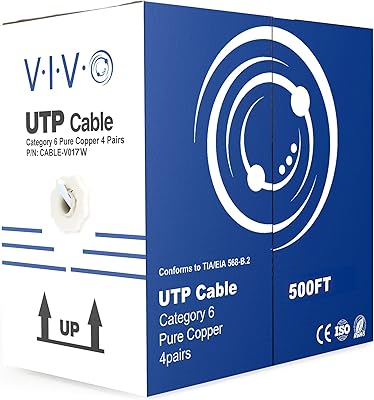
VIVO 500ft Bulk Cat6 Ethernet Cable
86%
93%
Performance for High-Speed Networking
88%
Ease of Installation
85%
Cable Durability
89%
Signal Integrity and Interference Resistance
82%
Build Quality
More

FAQ

It is a genuine CMP-rated plenum cable, which means the jacket compound meets the fire and smoke requirements that building codes mandate for air-handling spaces. If you are running cable above a drop ceiling in a commercial building, this is the correct jacket type. Riser-rated (CMR) cable is not an acceptable substitute in those spaces under most building codes.

CCA stands for copper-clad aluminum — the conductor has an aluminum core with a thin copper coating rather than being solid bare copper all the way through. For fixed horizontal runs inside walls and ceilings, the performance difference is minimal in typical office and small business environments. Where it matters is at terminations: CCA is more brittle than pure copper, so punchdowns and RJ45 crimps require a more deliberate, careful technique to avoid broken strands or cold joints. If your project specs explicitly call for solid bare copper, this cable does not meet that requirement.

Most runs terminate cleanly and pass Cat6 field certification when the cable is installed properly and terminated with care. CCA conductors do have slightly higher resistance than pure copper, so runs pushing close to the 100-meter Cat6 distance limit have a higher chance of showing marginal results on a strict certifier. For mission-critical or fully certified network buildouts, factor that in and test every run rather than assuming a pass.

The DSX-8000 is a professional-grade cable certifier used by network contractors to verify that a cable meets performance standards before it goes into a wall. Monk Cables claims each reel is tested on this equipment before shipping, which is a stronger quality control claim than brands that only batch-test or self-certify on paper. It does not replace field testing after installation, but it does mean the raw cable leaving the factory has been checked against real performance thresholds.

No — this is strictly an indoor plenum cable. It is not rated for direct burial, outdoor UV exposure, or wet locations. For riser applications (vertical runs inside walls between floors), a CMR-rated cable is the minimum requirement, though a CMP cable is technically permitted in riser spaces since plenum is the higher rating. Do not use it outdoors under any circumstances.

Possibly, but check the cable carefully before pulling it. A dented or crushed pull box can cause the cable to tangle or kink inside, which may create tight bends that stress the jacket. If the cable feeds smoothly from the box without tangling and there are no visible kinks or jacket damage, it is generally fine to use. Contact the seller if the cable itself appears damaged — the return and replacement policy is straightforward.

The primary trade-off is conductor material versus price. Pure-copper plenum cables cost more per foot but offer better flex life, easier terminations, and compliance with contracts that mandate bare copper. This cable is a competitive choice for projects where CCA is acceptable, the budget is a real constraint, and the installer has the technique to terminate CCA cleanly. For high-density data centers or enterprise clients with strict specifications, pure copper is the safer choice.

For a small office, 1000ft is often sufficient for a complete structured wiring install, but it depends on run distances and drop count. A rough rule of thumb is to budget 20 to 25 feet of cable per drop for overhead and routing allowance on top of the actual measured distance. Count your drops, estimate your longest runs, add a 10 to 15 percent buffer, and compare that to 1000ft before ordering just one reel.

For most installations, yes — the printed markers are readable across the reel and useful for measuring runs without a separate tape. On sections that get handled heavily or dragged through rough conduit, the ink can wear and become harder to read, particularly in low-light ceiling spaces. It is a practical feature that works well under normal conditions, but it is not a replacement for a proper cable length tester if you need precise documentation.

Standard Cat6 punchdown tools and RJ45 crimp tools work fine, but technique matters more with CCA than with pure copper. Use a 110-blade punchdown tool set to the correct impact depth, avoid over-bending the wire ends before seating them, and double-check seating before punching down. For RJ45 pass-through connectors, a ratcheting crimper gives more consistent results than a basic squeeze crimper. Experienced installers who have terminated CCA before generally have no issues; those new to it should practice on a short test piece first.