Overview

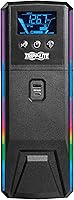
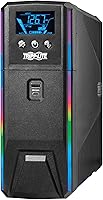
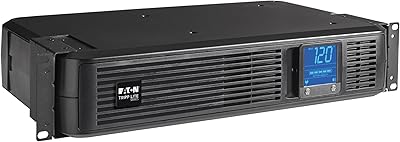
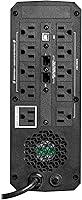
You're deep into a ranked match when the lights flicker — that half-second of panic is exactly what the Tripp Lite SMART1500PSGLCD 1500VA Gaming UPS was built to prevent. This gaming UPS sits at the premium end of the power protection market, delivering 1500VA/900W of pure sine wave output alongside automatic voltage regulation to keep things stable even when the grid isn't cooperating. The hot-swappable battery is a genuinely useful differentiator — you can replace it without powering down your system entirely. Backed by a 3-year warranty and $250,000 in connected equipment insurance, Tripp Lite is clearly making a statement about how seriously they stand behind this unit.
Features & Benefits

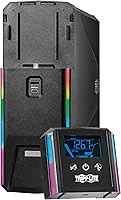
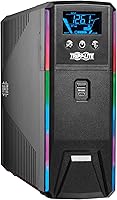
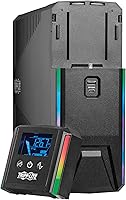
The core advantage of this pure sine wave backup over cheaper alternatives is the quality of power it actually delivers. Simulated sine wave units output a stepped approximation that can stress sensitive electronics over time — pure sine wave is smooth, predictable, and what your hardware genuinely expects from the wall. The detachable wireless LCD peels off the front panel and operates up to 20 feet away for up to 12 hours, which is surprisingly handy when the unit lives tucked behind a desk. Automatic Voltage Regulation handles minor grid fluctuations without touching the battery at all, which directly supports long-term battery health. USB-C and USB-A charging ports are included without consuming any of the eight protected or surge-only outlets.

Best For

This gaming UPS makes the most sense for PC gamers running systems in the 400–700W range who need real power protection, not just a surge strip with a battery attached. Streamers and content creators will find it especially valuable — an unplanned shutdown mid-stream or mid-render costs more than just a few minutes of progress. If your area experiences frequent brownouts or unstable voltage, the AVR functionality alone builds a strong case. Home office users running a full PC and monitor setup will appreciate having eight outlets and enough battery capacity to cover both simultaneously. The RGB lighting is a nice extra for aesthetics-focused builders, but it should not be the deciding factor.

User Feedback

Buyers consistently call out the wireless LCD panel as one of the standout features — being able to check load and battery levels from across the room proves genuinely useful day-to-day. The RGB lighting gets a mixed reception; some owners appreciate how it ties into their existing setup aesthetic, while others simply switch it off and forget about it. The most common complaint involves real-world runtime: at loads above 400W, backup time falls noticeably short of the advertised 17-minute figure, which catches higher-wattage system owners off guard. Fan noise during AVR correction cycles comes up occasionally too. On the positive side, the hot-swap process is widely described as straightforward, and long-term owners generally speak well of the unit's durability over time.

Pros

  • Pure sine wave output genuinely protects sensitive electronics in ways that cheaper simulated sine wave units cannot match.
  • The detachable wireless LCD is a standout convenience feature — checking power stats from across the room is more useful than it sounds.
  • Hot-swappable battery means you can replace aging cells without shutting down your entire system.
  • Automatic Voltage Regulation handles grid fluctuations silently, reducing unnecessary wear on the battery over time.
  • Eight total outlets, split between battery-backed and surge-only, cover a full desktop setup without requiring a separate power strip.
  • USB-C and USB-A charging ports are included without eating into the protected outlet count.
  • The $250,000 connected equipment insurance provides meaningful financial reassurance for users with expensive hardware.
  • RGB lighting integrates cleanly into gaming setups without being intrusive — and it can simply be turned off if you prefer.
  • The 3-year warranty is above average for the UPS category and reflects confidence in long-term durability.
  • RJ45 surge protection for network lines is a frequently overlooked feature that adds real value for wired setups.

Cons

  • Real-world battery runtime at loads above 400W falls noticeably short of the spec sheet estimate.
  • The unit weighs nearly 30 pounds, making placement and repositioning more of a physical task than expected.
  • Fan noise during battery mode or active AVR correction can be disruptive in quieter environments.
  • Replacement batteries, while swappable, require sourcing compatible sealed lead acid cells which adds to long-term ownership cost.
  • The 5-foot power cord limits placement flexibility, especially in setups where the UPS needs to sit away from the wall outlet.
  • RGB lighting and the wireless LCD add cost that buyers focused purely on power protection may not want to pay for.
  • Software control for lighting customization requires a separate download and is not essential, but its absence limits programmability from the front panel alone.
  • At higher load levels, the transition to battery mode can produce a brief audible click that some users find startling.

Ratings

The scores below reflect an AI-driven analysis of verified global buyer reviews for the Tripp Lite SMART1500PSGLCD 1500VA Gaming UPS, with automated filtering applied to remove incentivized, bot-generated, and duplicate submissions. Both the genuine strengths and the recurring frustrations buyers encounter in real-world use are transparently captured in each category — nothing has been softened to favor the manufacturer.

Power Protection Quality
93%
Buyers consistently report that the pure sine wave output makes a tangible difference for high-end gaming PCs and audio interfaces, with several noting that their equipment runs noticeably cleaner and quieter compared to previous simulated sine wave units. The AVR function earns particular praise from users in areas with unstable grid power, where it silently handles brownouts and voltage sags without ever touching the battery.
A small number of users in regions with severely degraded power infrastructure report that AVR correction cycles occur so frequently that the fan becomes a persistent presence, which can be distracting during quiet gaming or recording sessions.
Battery Runtime
61%
39%
For users running systems at or below 250W — lighter gaming rigs, older consoles, or workstations with modest GPUs — the runtime is genuinely sufficient to save progress, complete a shutdown sequence, and avoid any data loss during unexpected outages.
This is the category where real-world results diverge most sharply from the spec sheet. Users running systems at 400W or above frequently report actual runtimes well below 10 minutes, and high-wattage builds pulling 600W or more can see backup times closer to 5 minutes, which feels short given the price tier.
Build Quality
86%
The chassis feels substantial and well-engineered, which most buyers attribute in part to the sealed lead acid battery adding heft and structural solidity. Long-term owners report that the unit holds up well physically after two or more years of continuous use, with no reports of cracking panels or failing connectors.
At nearly 30 pounds, the weight that contributes to the solid feel also makes repositioning genuinely awkward, and the 5-foot power cord limits placement flexibility more than some buyers anticipated before purchase.
Wireless LCD Display
91%
The detachable LCD panel is one of the most praised features in verified reviews, with users describing it as a genuinely clever and useful addition rather than a gimmick. Being able to monitor real-time load, battery level, input voltage, and operating mode from a desk or across the room fundamentally changes how users interact with their power setup.
A handful of users report that the LCD panel battery life degrades after 12 to 18 months of heavy use, requiring more frequent charging, and the panel connection mechanism can feel slightly loose over time with repeated detachment cycles.
Automatic Voltage Regulation
89%
Users in areas prone to frequent voltage fluctuations single out AVR as a standout feature, noting that it actively extends battery longevity by handling minor grid instability without depleting the battery unnecessarily. Several buyers who previously lost equipment to power events report that AVR gives them a meaningful sense of confidence.
The audible click and brief fan ramp-up that accompanies AVR correction events catches some users off guard initially, and in very quiet rooms the corrective cycling can become a minor but persistent background noise.
Hot-Swap Battery
84%
The ability to swap the internal battery without powering down connected equipment is a feature buyers in this category genuinely value, and most describe the physical process as manageable even without technical expertise. Knowing that the unit has a clear upgrade path rather than a disposal date adds to the long-term value perception.
Sourcing the correct replacement battery requires some research — not all third-party sealed lead acid batteries are plug-and-play compatible, and buyers who do not purchase through Tripp Lite directly sometimes report compatibility issues or shipping delays.
Noise Level
67%
33%
During normal operation with stable grid power and no active AVR correction, the unit runs quietly enough that most users in typical gaming environments with headphones on are completely unaware of it. This is the expected baseline performance and it meets reasonable expectations for a UPS of this size.
The fan behavior under load or during battery operation draws consistent criticism in reviews from users with quiet setups — streamers, bedroom gamers, and home studio owners in particular flag the fan noise as noticeably louder than they expected from a premium product at this price point.
Outlet Configuration
82%
18%
Eight total outlets split across four battery-backed and four surge-only positions is a practical configuration that covers a complete desktop gaming or workstation setup, and buyers appreciate that USB charging ports are additive rather than replacing any outlet slots.
The 5-foot input power cord limits where the unit can realistically be placed relative to the wall outlet, and some buyers with deeper desk configurations find this a frustrating constraint that an extension cord technically voids the warranty to solve.
RGB Lighting
73%
27%
For buyers who care about system aesthetics, the seven preset lighting modes and programmable effects integrate nicely with existing RGB ecosystems, and the power-consumption-reactive mode draws genuine appreciation from enthusiast builders who enjoy the visual feedback during intensive sessions.
A significant portion of buyers find the RGB feature entirely unnecessary and feel it adds cost without adding value to the core UPS function — several reviewers explicitly state they turned it off immediately and have never touched the setting since.
Setup & Installation
88%
The out-of-box experience is described as straightforward by the vast majority of buyers — plug in, allow the battery to charge for a few hours, and the unit is operational. The LCD panel provides clear status feedback that removes most guesswork during initial setup and configuration.
Some users find the initial software download for advanced RGB and monitoring customization mildly tedious, and the manual — while functional — could do a better job explaining AVR correction behavior so new users are not alarmed by the first audible click.
Value for Money
71%
29%
For buyers who genuinely need pure sine wave output, AVR, and the hot-swap battery feature together in a single unit, the overall package represents fair value relative to alternatives in this capability tier, especially when the 3-year warranty and equipment insurance are factored in.
Buyers who primarily need basic power backup without gaming-specific features like the RGB lighting and wireless LCD often feel they are subsidizing features they will never use, and more utilitarian UPS units from competitors offer comparable protection at a lower price point.
Long-Term Durability
79%
21%
Multi-year owners report that the unit itself — the chassis, electronics, and outlets — holds up reliably over time, and Tripp Lite's Chicago-based support team receives generally positive marks for responsiveness when warranty issues do arise.
Battery capacity degradation within 18 to 24 months is the most commonly reported long-term concern, with some users noting that effective runtime shrinks noticeably even before the unit signals a replacement warning, which can create a false sense of security.
Software & App Experience
62%
38%
The free Tripp Lite management utility provides useful monitoring data including runtime estimates, load percentages, and historical power event logs, which power users find genuinely helpful for understanding their system's actual power consumption patterns over time.
The software feels dated in its interface design and has not been updated as frequently as buyers would expect from a premium product, with several users on modern operating systems reporting minor compatibility quirks that required workarounds to resolve.
Warranty & Support
87%
The combination of a 3-year limited warranty and $250,000 in connected equipment insurance is among the strongest coverage packages in the gaming UPS category, and verified buyers who have filed warranty claims generally report a straightforward and fair resolution process.
The equipment insurance claim process requires documentation that some buyers find burdensome to gather after the fact, and coverage terms include conditions that not all buyers read carefully before assuming full protection for their hardware.

Suitable for:

The Tripp Lite SMART1500PSGLCD 1500VA Gaming UPS is a strong fit for PC gamers and content creators who treat their hardware as a serious investment and cannot afford unexpected power disruptions. If you live in an area where brownouts, voltage sags, or brief outages are a regular occurrence, the automatic voltage regulation here does real work — stabilizing power without burning through battery cycles unnecessarily. Streamers and video editors who run long sessions will particularly appreciate the peace of mind that comes from having a clean, battery-backed outlet available when the grid gets unpredictable. Home office users running a full desktop setup alongside monitors and peripherals will find eight outlets and 900W of protected capacity genuinely sufficient for a complete workstation. The hot-swappable battery design also makes this a practical long-term purchase rather than a disposable one.
Not suitable for:

Buyers running high-end gaming rigs with power draws above 500W should go in with realistic expectations — the advertised 17-minute runtime is calculated at a 250W load, and real-world backup time shrinks considerably under heavier systems. The Tripp Lite SMART1500PSGLCD 1500VA Gaming UPS is also not the right choice if your primary concern is whisper-quiet operation; the cooling fan becomes audible during AVR correction events and more so when running on battery, which can be noticeable in a quiet room. At its price point, this unit is hard to justify if all you need is basic surge protection — a surge strip costs a fraction of the price and serves that narrower need just fine. Budget-conscious buyers who simply want to avoid losing work during an occasional outage may find that a more basic, lower-capacity UPS covers their actual needs without the added cost of gaming-specific features like RGB lighting and the wireless LCD.
Specifications

  • Capacity: This unit provides 1500VA and 900W of total power capacity, suitable for protecting mid-to-high-wattage gaming and workstation setups.
  • Output Type: Power is delivered as pure sine wave in both AC and battery backup modes, ensuring clean, stable electricity for sensitive electronics.
  • Battery Type: An internal sealed lead acid battery is used, and it is hot-swappable, meaning it can be replaced without fully powering down connected equipment.
  • Estimated Runtime: At a 250W load, the unit provides approximately 17 minutes of battery backup; runtime decreases significantly at higher load levels.
  • Input Voltage: The unit accepts 120V AC input at 50/60 Hz via a NEMA 5-15P plug on a 5-foot (1.5 m) power cord.
  • Outlets: Eight total NEMA 5-15R outlets are provided: four are battery-backed with surge protection, and four offer surge protection only.
  • USB Ports: One USB-C and one USB-A charging port are included, sharing a combined 5V, 3A output for device charging.
  • LCD Display: The front-panel LCD is detachable and operates wirelessly up to 20 feet (6 m) from the unit for up to 12 hours on its internal charge.
  • RGB Lighting: Seven preset LED lighting modes are built in, with programmable color and motion effects controllable via the LCD panel or optional free software.
  • AVR: Automatic Voltage Regulation corrects input voltage fluctuations without switching to battery mode, protecting connected equipment during brownouts and surges.
  • Data Protection: An RJ45 Tel/Network line port provides surge protection for wired ethernet or telephone connections.
  • Dimensions: The unit measures 16.93″ deep, 4.13″ wide, and 11.02″ tall, designed for a tower-style footprint beside or under a desk.
  • Weight: The unit weighs 29.3 pounds due to its internal sealed lead acid battery, which should be considered when planning placement.
  • Warranty: A 3-year limited manufacturer warranty is included, covering defects in materials and workmanship under normal use conditions.
  • Equipment Insurance: Tripp Lite includes $250,000 in connected equipment insurance to cover damage caused by power events while using this unit.
  • Model Number: The official model number is SMART1500PSGLCD, which is useful when sourcing compatible replacement batteries or contacting support.
  • BSR Ranking: This unit holds a Best Sellers Rank of #219 in the Computer Uninterruptible Power Supply Units category on Amazon.
  • Manufacturer: Tripp Lite, the manufacturer, is a Chicago-based power protection company that provides phone and email technical support for this product.

Related Reviews
Tripp Lite SMX1500XLRT2U 1500VA 230V UPS
85%
91%
Battery Backup Performance
89%
Energy Efficiency (ECO Mode)
93%
Surge Protection Reliability
87%
Ease of Setup and Integration
84%
Build Quality / Durability
More
Tripp Lite SMART1500LCD 1500VA Rackmount UPS
77%
91%
Voltage Regulation (AVR)
93%
Battery Replaceability
54%
Waveform Compatibility
62%
Runtime Under Load
88%
Rack Installation
More
Tripp Lite SMART500RT1U 500VA UPS
83%
88%
Performance
91%
Surge Protection
85%
Build Quality
87%
Usability/Installation
62%
Runtime at Full Load
More
Tripp Lite AVR700U 700VA UPS Battery Backup
76%
91%
Voltage Protection
93%
Ease of Setup
54%
Battery Runtime
74%
Build Quality
61%
Battery Longevity
More
Tripp Lite OMNI1500LCDT UPS Battery Backup
83%
88%
Performance
91%
Reliability during Power Outages
85%
Surge Protection Effectiveness
90%
Ease of Use (LCD Display)
80%
Setup and Installation
More
Tripp Lite OMNIVS1200LCD 1200VA UPS Battery Backup
77%
91%
Voltage Regulation (AVR)
93%
Noise Level
58%
Battery Runtime
89%
Ease of Setup
84%
Build Quality
More
Tripp Lite SMART1500LCDT UPS Battery Backup
86%
88%
Value for Money
94%
Ease of Setup
86%
Surge Protection Performance
83%
Battery Backup Duration
90%
Voltage Regulation Reliability
More
Tripp Lite SU1000RTXLCD2U 1000VA Rackmount UPS
79%
94%
Power Protection Quality
92%
Output Waveform Purity
58%
Battery Runtime
89%
Display & Monitoring
61%
Network Management Readiness
More
Tripp Lite SU750RTXLCD2U 750VA Rack UPS
79%
94%
Power Protection Reliability
91%
Output Waveform Quality
88%
Build Quality
86%
LCD Interface & Monitoring
89%
Battery Serviceability
More
Tripp Lite AVR750U UPS Battery Backup
85%
89%
Overall Performance
92%
Value for Money
85%
Ease of Installation
70%
Noise Level
90%
Reliability During Power Outages
More

FAQ

Quite a bit less than the advertised 17 minutes, unfortunately. That figure is based on a 250W load, so at 450W you are realistically looking at somewhere in the 7 to 10 minute range depending on battery age and condition. That is still enough time to save your game and shut down cleanly, but do not expect to keep playing through a prolonged outage.

Yes, and this is actually where a pure sine wave UPS earns its place. High-efficiency power supplies with active power factor correction respond much better to pure sine wave output than to the stepped approximation you get from simulated sine wave units. Using a simulated sine wave UPS with certain PSUs can cause overheating or even damage over time.

The hot-swap battery process is genuinely user-friendly — most owners describe it as straightforward even without technical experience. Compatible sealed lead acid replacement batteries are available through Tripp Lite directly and from third-party suppliers; searching by the model number SMART1500PSGLCD or the battery specs will surface the right options. Expect to replace the battery every 3 to 5 years under normal use.

It is not silent. During AVR correction events the fan becomes noticeably audible, and during full battery mode it ramps up further. If your setup is in a quiet bedroom or recording space, this is worth factoring in. Most users in typical gaming environments with headphones on report it as a non-issue, but it is something to be aware of.

It sounds like a novelty but turns out to be genuinely practical. If your UPS is tucked behind a desk or inside a cabinet, being able to glance at battery level, current load, and input voltage from across the room is a real convenience. Some users also mount it on a wall or place it on their desk like a small monitor for their power conditions.

It provides surge protection and some degree of spike suppression, but no UPS is a guaranteed shield against a direct or nearby lightning strike — those events can overwhelm any surge protection device. The $250,000 connected equipment insurance does offer a financial safety net if a covered power event damages your hardware while it is plugged in.

You should not. High-wattage devices like laser printers and heaters can draw enormous amounts of power during startup or operation, easily exceeding the 900W limit and potentially damaging the unit. Stick to the battery-backed outlets for your PC and critical peripherals, and use the surge-only outlets for lower-priority items like monitors or network switches.

Yes — the front-panel LCD lets you cycle through the seven preset lighting modes without touching a computer. The free Tripp Lite software unlocks more granular customization like custom colors and power-reactive effects, but it is entirely optional. If RGB is not your thing, you can turn the lights off from the panel entirely.

This is a short-duration backup device, not a generator replacement. If your outages routinely last more than 20 to 30 minutes, this gaming UPS will give you time to shut down gracefully, but it will not keep your system running through extended blackouts. For frequent long outages, you would want a generator or a much larger battery backup system in addition to a UPS.

AVR is quietly one of the most useful features for everyday use. If your voltage regularly dips below or spikes above the normal 120V range — which happens more often than most people realize, especially during high-demand periods — AVR corrects those fluctuations without ever switching to battery. This protects your hardware from the long-term stress of dirty power and also preserves your battery life for when a real outage actually hits.

Where to Buy