Overview

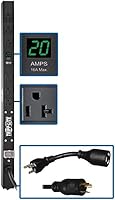
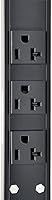
The Tripp Lite PDUMV20-24 Metered PDU sits in an interesting middle ground — it is not a bare-bones power strip, but it does not pretend to be a fully managed unit either. Tripp Lite has been building data center power gear long enough to get the basics right, and this vertical PDU reflects that experience. It runs on 120V single-phase power at 20A, de-rated to 16A continuous, ships with a 15-foot cord and an L5-20P input plug, and includes a 5-20P adapter so you are not hunting for parts on day one. The 0U vertical form factor means it mounts inside rack rails without consuming a single rack unit.

Features & Benefits

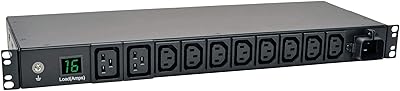
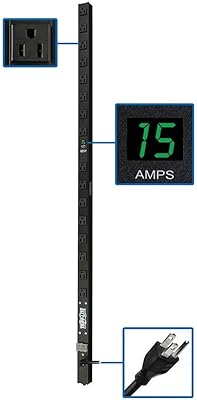
The two-digit amp meter on the face panel is the standout feature here, and its value is easy to underestimate until you have watched a breaker trip because a rack was quietly pulling too much current. A live readout lets you catch that creeping load before it becomes a real problem. The six NEMA 5-15/20R outlets handle both standard 15A plugs and higher-draw 20A devices without any adapter swap, which is genuinely handy in mixed-hardware environments. The 24-inch chassis fits cleanly into most two-post and four-post enclosures. Critically, this is a metered, not managed unit — there is no network card, no SNMP, just a meter that works the moment it is plugged in.

Best For

This metered PDU makes the most sense for small to mid-sized server rooms where someone needs load visibility without investing in SNMP-capable units and the software overhead they bring. IT teams running dense racks will value the 0U mounting — every rack unit counts when hardware keeps accumulating. Homelab builders often find it a practical step up from plain unmetered strips, particularly when running multiple servers or a UPS that makes total draw awareness important. It also fits colocation tenants and edge deployments well, where simplicity and long-term reliability matter far more than remote monitoring dashboards or per-outlet switching controls.

User Feedback

Across roughly 128 ratings, the Tripp Lite rack PDU holds a 4.5-star average — a solid result for niche infrastructure hardware. Buyers consistently call out out-of-box usability as a highlight: the cord length is generous and the included adapter saves an extra trip. Build quality draws repeated praise, with reviewers describing it as gear that feels built to stay in a rack for years. The recurring criticism is that six outlets can feel limiting in a fully populated build, and the meter displays combined load only rather than per-outlet draw, which reduces its diagnostic usefulness for anyone troubleshooting individual device consumption.

Pros

  • The two-digit amp meter gives you a live total load reading without any software, drivers, or network configuration required.
  • 0U vertical mounting keeps the full cabinet available for actual compute and networking hardware.
  • Six NEMA 5-15/20R outlets handle both 15A and 20A plugs, reducing adapter clutter in mixed-device racks.
  • The 15-foot cord is generous enough to reach a dedicated PDU circuit without extension workarounds.
  • Tripp Lite includes a 5-20P adapter in the box, so installation does not require a same-day parts run.
  • Build quality is consistently described by buyers as solid and rack-worthy for long-term deployment.
  • At its price point, this metered PDU undercuts managed alternatives substantially for buyers who do not need remote features.
  • The 2-year limited warranty is a reasonable assurance for a component that typically lives inside a rack for years.
  • The 24-inch chassis fits standard two-post and four-post enclosures without modification or custom hardware.

Cons

  • The amp meter shows combined total draw only — you cannot identify which individual device is pulling excess current.
  • Six outlets is a hard ceiling that may leave you short in racks with more than a few active devices.
  • No network connectivity means there is zero support for remote monitoring, alerting, or automation of any kind.
  • The L5-20P input plug requires a dedicated 20A twist-lock circuit, which not every facility or homelab has pre-wired.
  • There is no surge protection built in, so upstream conditioning relies entirely on whatever is feeding this unit.
  • The chassis is vertical-only, ruling it out for anyone who needs a horizontal 1U or 2U rack-mount layout.
  • With only 128 ratings, the long-term reliability sample is narrower than more widely adopted competitors.
  • No per-outlet indicators mean you cannot tell at a glance which outlets are live versus inactive.

Ratings

Our AI-generated scores for the Tripp Lite PDUMV20-24 Metered PDU were produced by analyzing verified buyer reviews from multiple global sources, with spam, incentivized, and bot-generated feedback actively filtered out before scoring. The ratings reflect a balanced read of what real users genuinely praised and where they ran into friction — nothing is glossed over. Both the strengths that make this vertical power strip worth recommending and the trade-offs that may give certain buyers pause are represented transparently in each category below.

Build Quality
88%
Buyers across a wide range of environments — from professional server rooms to home labs — consistently describe the chassis as solid and rack-worthy. The unit does not feel like a consumer-grade strip that wandered into a data center; the housing and outlet construction hold up to the kind of long-term installation where gear rarely gets touched after day one.
A small number of reviewers noted that the outlet bezels show minor cosmetic wear over time, and the meter display housing feels slightly less robust than the main chassis. Nothing reported as a functional failure, but it is not quite the tank-like feel of higher-end enterprise PDUs.
Metering Accuracy
84%
The two-digit amp display earns consistent praise for being a reliable, no-nonsense way to catch a rack that is creeping toward its circuit limit. In practice, users report the readings are accurate enough to make real decisions — knowing the rack is pulling 13A versus 15A is exactly the kind of information that prevents a nuisance breaker trip at 2 a.m.
The meter reads combined total load only, which limits its diagnostic value when you need to isolate a specific device drawing excess current. A few technically inclined buyers found themselves using a separate inline meter anyway when troubleshooting individual device consumption.
Outlet Count & Layout
61%
39%
For a light rack build — a couple of servers, a switch, and maybe a NAS — six outlets covers the basics without requiring a second PDU. The NEMA 5-15/20R combination format means you are not hunting for adapters when mixing 15A and 20A devices in the same cabinet.
Six outlets is the most frequently cited limitation in user feedback, and the frustration is legitimate. Once a rack starts filling up with 1U servers, patch panels, KVMs, and storage, six positions disappear fast. Buyers planning dense builds often end up needing a second unit, which somewhat undermines the value proposition.
Installation & Setup
91%
The out-of-box experience draws repeated positive comments — the 15-foot cord is long enough to reach a dedicated circuit without an extension, and the included 5-20P adapter means most buyers can complete the install without an extra parts order. Mounting hardware is included and the vertical format slots into standard rail channels without fuss.
The L5-20P twist-lock input requirement catches some buyers off guard, particularly homelab builders who assumed any 20A outlet would work. If your facility has only straight-blade 5-20R receptacles, the adapter handles it, but buyers with older or non-standard wiring occasionally hit compatibility surprises.
Value for Money
77%
23%
Positioned between cheap unmetered strips and significantly more expensive managed PDUs, this metered PDU occupies a price point that makes sense for buyers who genuinely need load visibility but cannot justify SNMP overhead. For a homelab or a small server room, the functional value per dollar is solid.
Buyers who later realize they need per-outlet monitoring or remote access feel the price sting more acutely, since a managed unit was not that much further up the budget ladder in hindsight. The six-outlet limitation also affects perceived value for anyone who ends up buying a second unit.
Form Factor & Space Efficiency
93%
The 0U vertical mounting is genuinely useful in real rack environments where horizontal PDUs eat up precious 1U or 2U slots. Users managing tightly packed cabinets appreciate being able to reclaim those rack units for hardware, and the 24-inch chassis fits cleanly inside most standard full-height enclosures without modifications.
The vertical-only format is a hard limitation for anyone who needs a horizontal rack-mount layout — there is no mounting flexibility here. Buyers with half-height or open-frame racks that lack dedicated vertical side channels have reported the installation becoming more improvised than intended.
Cord Quality & Length
86%
The 15-foot cord length gets frequent positive mentions because it is long enough to handle real-world cabinet-to-circuit distances without requiring an extension. The cord itself feels durable and appropriately gauge for a 20A load, and it does not add unnecessary bulk inside the cabinet.
A very small number of users mentioned the cord is not removable or replaceable, which is typical for this product category but still a consideration if the cord is ever damaged in a fixed installation. No widespread complaints about cord quality were identified.
Compatibility
82%
18%
The combination outlet format supporting both 15A and 20A NEMA plugs covers the vast majority of rack hardware without any adapters. The included 5-20P adapter further broadens compatibility with common 20A wall circuits, and the unit works with standard UPS output connections as a downstream load PDU.
Compatibility is limited to 120V North American environments, making this unit irrelevant for international deployments or facilities running 208V. Buyers in mixed-voltage environments or those planning international expansion need to account for this from the outset.
Monitoring Capability
53%
47%
For users who only need a basic sanity check on total rack draw, the local amp display does the job without any configuration or ongoing maintenance. In low-complexity environments, that simplicity is genuinely preferred over the overhead of managing a network-connected device.
The absence of any remote monitoring, SNMP, alerting, or per-outlet data is a significant functional gap compared to what managed PDUs at a modest price premium can offer. Buyers who discover mid-deployment that they need more granular data have no upgrade path on this hardware.
Warranty & Support
74%
26%
A 2-year limited warranty is a reasonable baseline for rack infrastructure hardware, and Tripp Lite has an established RMA and support process that buyers generally describe as functional. For gear that typically lives in a rack untouched for years, the coverage period aligns with reasonable expectations.
Two years is shorter than the warranty periods offered by some competing brands on comparable hardware, and the limited coverage terms mean physical damage or misuse scenarios are not covered. A handful of buyers noted that reaching Tripp Lite support for warranty claims required patience.
Labeling & Readability
69%
31%
The illuminated two-digit meter is readable at a glance from a reasonable distance, which matters when you are scanning a rack row quickly during a site walk. Outlet positions are adequately spaced to avoid blocking adjacent ports with larger plug bodies.
The unit lacks individual outlet labeling or numbering, which makes cable tracing and load documentation more manual than it needs to be. In a tidy, well-documented rack this is minor, but in a busier environment it adds friction during troubleshooting.
Brand Reliability
87%
Tripp Lite has a long enough track record in data center power equipment that buyers treat the brand name as a signal of baseline reliability. Reviewers frequently cite previous positive experiences with other Tripp Lite products as a reason they chose this unit over lesser-known alternatives.
A few buyers noted that Tripp Lite's product line can feel dated in terms of feature evolution compared to newer competitors pushing smarter metered options at similar prices. The brand reputation is strong, but it does not exempt individual models from scrutiny on their own merits.

Suitable for:

The Tripp Lite PDUMV20-24 Metered PDU is the right call for IT professionals and technically minded homelab builders who need basic load awareness in a rack environment without the cost and complexity of a fully managed unit. If you are running a small to mid-sized server room where breaker discipline matters but per-outlet SNMP monitoring feels like overkill, this metered PDU hits the practical middle ground well. The 0U vertical format is a genuine asset for anyone managing a dense cabinet where every rack unit is already spoken for. Colocation tenants who want a dependable, low-maintenance power distribution solution will also find it fits the brief cleanly. Organizations already standardized on Tripp Lite hardware will appreciate the consistent build quality and the straightforward warranty support that comes with staying in one ecosystem.

Not suitable for:

Buyers who need per-outlet current monitoring, remote access, or network-level power control should look elsewhere — the Tripp Lite PDUMV20-24 Metered PDU is a local, manual monitoring device, not a managed one, and no firmware update will change that. If your environment requires SNMP traps, outlet-level switching, or integration with a data center infrastructure management platform, you need a step up to a managed PDU. The six-outlet count will also frustrate anyone populating a high-density rack with more than a handful of 1U servers, storage units, and networking gear. Buyers who need a horizontal rack-mount format rather than a vertical one will find the chassis geometry incompatible with their setup. Finally, if your facility runs on 208V or requires a higher-amperage feed, the 20A 120V input spec simply does not fit.

Specifications

  • Brand: Manufactured by Tripp Lite, a long-established name in data center power management and protection equipment.
  • Model Number: The exact model designation is PDUMV20-24, used for cross-referencing parts, documentation, and warranty claims.
  • Input Plug: Uses a NEMA L5-20P twist-lock input plug, requiring a dedicated 20A 120V circuit at the wall or PDU panel.
  • Input Voltage: Rated for 120V single-phase AC power, standard for North American rack environments.
  • Amperage: Supports up to 20A input, with a continuous load rating of 16A per agency de-rating guidelines.
  • Outlets: Provides six NEMA 5-15/20R combination outlets, compatible with both standard 15A and higher-draw 20A plugs.
  • Cord Length: Ships with a 15ft (4.6m) power cord, providing enough reach for most rack-to-circuit distances.
  • Included Adapter: A NEMA 5-20P adapter is included in the box, allowing connection to standard 20A straight-blade receptacles without additional purchases.
  • Form Factor: 0U vertical rack-mount design installs along the interior rail of a rack enclosure, consuming no standard rack unit space.
  • Chassis Length: The unit measures 24 inches (61cm) in length, fitting most standard 2-post and 4-post rack cabinets.
  • Dimensions: Full physical dimensions are 6.78 x 26.91 x 2.6 inches, relevant for checking clearance inside the rack side channel.
  • Weight: The unit weighs 3.2 pounds, light enough for single-person installation without additional support hardware.
  • Metering Type: Features a two-digit illuminated LED display showing combined total output current in real time, measured in amps.
  • Monitoring Method: Metering is local and manual only — there is no network port, SNMP support, or remote monitoring capability.
  • Warranty: Covered by a 2-year limited manufacturer warranty from Tripp Lite.
  • ASIN: The Amazon product identifier for this unit is B00VKNNZ44, useful for locating the correct listing when reordering.
  • Availability: This product has not been discontinued by the manufacturer as of the most recent listing data available.

Related Reviews

Tripp Lite PDUMV15 Metered PDU
86%
88%
Performance Under Load
93%
Ease of Installation
90%
Reliability and Durability
91%
Outlets and Flexibility
85%
Safety Features
More
Tripp Lite PDUMH15 Metered Rack PDU
75%
91%
Build Quality
86%
Outlet Count & Layout
68%
Load Metering
93%
Switch-Free Safety Design
82%
Mounting Flexibility
More
Tripp Lite PDUMH16HV Metered PDU
88%
92%
Power Distribution Performance
90%
Build Quality
88%
Ease of Integration
85%
Digital Current Meter Accuracy
89%
Rack-Mounting Compatibility
More
Tripp Lite PDUMH30HV 30A Metered Rack PDU

78%
91%
Build Quality
93%
Reliability
88%
Metering Accuracy
62%
Display Readability
89%
Outlet Layout
More
Tripp Lite PDU2430 24-Outlet Rack PDU

73%
88%
Build Quality
91%
Outlet Capacity
83%
Circuit Protection
22%
Power Monitoring
18%
Outlet Switching
More
Tripp Lite PDUH20HVL6 14-Outlet Basic PDU, 208/240V
83%
91%
Value for Money
88%
Build Quality
84%
Ease of Installation
93%
Cord Length and Flexibility
89%
Mounting Versatility
More
Tripp Lite RS1215-RA
83%
93%
Build Quality
91%
Outlet Layout & Accessibility
88%
Cable Management & Cord Design
84%
Power Capacity & Circuit Protection
41%
Surge & Spike Protection
More
CyberPower PDU15M2F12R Metered PDU
69%
88%
Build Quality
91%
Outlet Count & Layout
79%
Load Monitoring (Digital Meter)
84%
Cable Management
93%
Power Cord Length
More
Tripp Lite LCR2400 Line Conditioner 2400W
72%
91%
Voltage Regulation
86%
Surge Protection
88%
Build Quality
83%
Outlet Count & Layout
89%
Rack Compatibility
More
Tripp Lite LC2400 Power Conditioner
83%
93%
Voltage Regulation
88%
EMI/RFI Noise Filtering
86%
Surge Protection
91%
Build Quality
79%
Outlet Configuration
More

FAQ

A metered PDU simply shows you how much current is being drawn — locally, on the unit itself — with no ability to control or monitor it remotely. A managed PDU adds a network connection, allowing per-outlet switching, SNMP alerts, and remote access via a web interface. The Tripp Lite PDUMV20-24 Metered PDU is firmly in the metered camp: it gives you a real-time amp readout on the front panel, nothing more. If you need remote visibility or outlet-level control, you will need to budget for a managed unit instead.

No, none at all. The meter is a simple hardwired display that activates the moment the unit is plugged in and drawing power. There is nothing to configure, no app to install, and no network connection required. That simplicity is actually one of the reasons buyers tend to like it.

It needs a dedicated 20A 120V circuit with either a NEMA L5-20R twist-lock receptacle or a NEMA 5-20R straight-blade outlet — the included 5-20P adapter covers the straight-blade scenario. Standard 15A household outlets will not work. If your facility only has 15A circuits available, this is not the right unit for your setup.

You can use standard 15A equipment without any adapters. The NEMA 5-15/20R combination outlets accept both 15A and 20A plugs, so a typical mix of servers, switches, and patch panels with standard C13 or NEMA 5-15P cords will plug right in.

Yes, that is the whole point of the 0U vertical design. It mounts along the interior side rail of the cabinet using the rack's own vertical channels, leaving every rack unit free for actual hardware. The 24-inch chassis length fits most standard full-height two-post and four-post enclosures, but it is worth measuring your interior rail depth before ordering if you are working with a shorter or non-standard cabinet.

For a light to moderate rack build — a couple of servers, a switch, maybe a NAS or KVM — six outlets is workable. Once you start filling a rack with dense 1U hardware, it gets tight fast. Several buyers have flagged this as a real limitation for fully populated cabinets, so if you are planning a high-density build, either factor in a second PDU or look at a model with eight or more outlets from the start.

No, it cannot. The display shows the combined total current across all six outlets as a single number. If you need to know which specific device is pulling the most power, you would need either a managed PDU with per-outlet metering or a separate inline power meter on individual cords.

Tripp Lite includes mounting hardware for standard vertical installation inside the rack side rail. The exact bracket and screw configuration is designed for 0U mounting in common two-post and four-post enclosures. If you have a less common or proprietary rack, it is worth checking compatibility with Tripp Lite support before purchasing.

It is a solid fit for a homelab that has outgrown basic power strips and where you want to keep an eye on total rack draw without paying for enterprise-grade managed features. The amp meter alone is genuinely useful for avoiding nuisance breaker trips as you add hardware over time. The price point and straightforward setup make it accessible without being unnecessarily complex for a home environment.

Tripp Lite's 2-year limited warranty covers defects in materials and workmanship under normal use conditions. For a rack-mounted infrastructure component that typically stays installed for years, two years is a reasonable baseline. Claims are handled directly through Tripp Lite, and the brand has a functioning support and RMA process, which is worth more than it sounds for gear that sits in a production rack.

Where to Buy