Overview

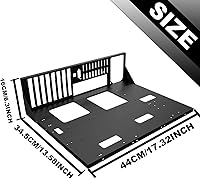
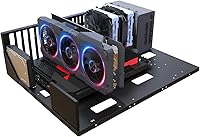
The TGDGAMER E-ATX-Open Open Frame Test Bench is exactly what it claims to be: a bare-bones, open-air platform for builders who need a practical workspace, not a polished enclosure. At its entry-level price, you shouldn't expect thick steel panels or premium finishing — and that's fine. This is a utility-first tool built from lightweight plastic, weighing just 1.4 kg, and it ships flat enough to slide under a workbench when not in use. The open chassis design is genuinely useful for anyone who regularly swaps components, because there are no panels to remove, no cable routing to undo, and no airflow constraints getting in the way.
Features & Benefits

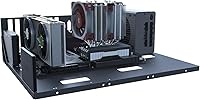
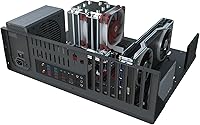
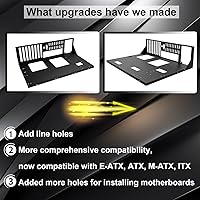
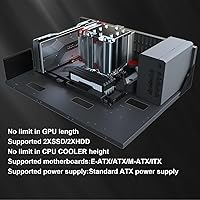
One of the strongest practical arguments for this DIY bench case is universal form factor support — E-ATX, ATX, M-ATX, and ITX motherboards all mount without needing adapters or workarounds. Even more useful for real-world testing: there are no restrictions on GPU length or CPU cooler height, which means you can run oversized graphics cards and large tower coolers without compromise. Storage-wise, it handles up to two SSDs and two HDDs alongside a standard ATX power supply, so you can replicate a full working system rather than a stripped-down test configuration. The open layout also keeps temperatures honest during longer stress runs, since heat can escape freely instead of building up inside a closed panel.

Best For

This open-air test bench makes most sense for people who build, repair, or tinker with PC hardware on a regular basis. If you're a technician diagnosing a client's system, a hobbyist testing a new CPU before boxing up a build, or an overclocker who needs easy access to hardware during a stress testing session, it fits the workflow naturally. It's also a practical choice for anyone juggling multiple form factors — rather than owning separate cases for different board sizes, one bench handles them all. That said, this is not the right pick for a permanent display setup or someone who needs a sturdy carry-around rig. It's a workbench tool, and it works best when treated like one.

User Feedback

With a 4.4-star average across more than 100 ratings and a spot at #172 in Computer Cases, the TGDGAMER open frame has clearly found an audience. Buyers most often praise the simple assembly process and how reliably it handles frequent component swapping without anything loosening over time. The criticism that surfaces most is about the plastic construction — users who've handled metal benches notice the difference in rigidity immediately, and that gap is real. Moving it with a full system installed is also risky; things do shift. For a stationary workbench setup, though, most buyers find it reliable enough for consistent daily use.

Pros

  • Fits E-ATX, ATX, M-ATX, and ITX motherboards without adapters or modifications.
  • No GPU length or CPU cooler height restrictions make it genuinely flexible for testing large hardware.
  • Open-air layout keeps thermals honest during stress tests without closed-panel heat buildup.
  • Supports up to two SSDs and two HDDs, covering realistic multi-drive test configurations.
  • Any standard ATX power supply works — no proprietary or hard-to-source PSU required.
  • Assembly is straightforward, with most buyers getting up and running quickly out of the box.
  • At under 1.5 kg, this DIY bench case is light enough to tuck away when not in use.
  • Flat packaging makes storage simple — it slides onto a shelf without taking up much space.
  • A 4.4-star average across more than 100 ratings reflects consistent buyer satisfaction at this price tier.

Cons

  • The plastic frame feels noticeably less rigid than metal test benches, especially under heavier components.
  • Components can shift if the bench is moved with hardware installed — there is no retention system.
  • No dust protection whatsoever; components collect debris quickly in workshop or garage environments.
  • Cable management is entirely the user's responsibility — expect a tangle of wires with no routing channels.
  • Not practical as a permanent daily-driver enclosure for a finished build.
  • Plastic standoffs and mounting points may show wear over time with very frequent board swaps.
  • Fan noise and coil whine are fully exposed to the room with no panels to dampen them.
  • Accidental bumps in a shared workspace can knock components loose with no protective cover to absorb impact.

Ratings

The TGDGAMER E-ATX-Open Open Frame Test Bench has been scored across 14 performance and usability categories by our AI analysis system, which processed verified buyer reviews from multiple global markets while actively filtering out bot-generated, incentivized, and spam submissions. Each score reflects the honest consensus of real-world usage — the categories where this bench excels reach as high as 94, and the areas where it falls short are scored accordingly. Both the practical strengths and the recurring frustrations reported by actual users are fully represented below.
Build Quality
61%
39%
For a bench in this price range, the plastic construction holds together adequately during stationary use, and most buyers found it more solid than expected straight out of the box. Components sit in place without wobbling when the bench is on a stable surface, which covers the majority of real test bench scenarios.
The plastic frame is noticeably less rigid than metal alternatives, and users who have handled aluminum benches at higher price points are the first to call out the difference. Under heavier GPU loads or after repeated board swaps, some buyers reported mounting points showing early signs of wear.
Value for Money
89%
For builders who just need a functional platform to test components before a real build, the price-to-utility ratio is hard to argue with. It does the core job competently — universal form factor support, no clearance restrictions, and enough storage bays for a realistic test configuration — all for the cost of a budget peripheral.
The value equation only holds if you understand what you are buying. Users who expected metal construction or premium finishing came away disappointed, and a few noted that the cost of a halfway-decent metal bench is not dramatically higher, which complicates the decision for frequent, heavy-use scenarios.
Compatibility
93%
Supporting every mainstream motherboard form factor from E-ATX down to Mini-ITX without a single adapter is a genuine advantage that makes this bench useful across wildly different build configurations. Repair techs and multi-platform builders in particular called this out as a primary reason they chose this open frame over more restrictive alternatives.
The platform is limited to standard ATX power supplies, so users with SFX or TFX PSUs would need to source a different unit before getting started. There are also no dedicated mounting provisions for custom loop hardware like radiators or reservoirs, which limits its usefulness for more advanced cooling test scenarios.
Ease of Assembly
84%
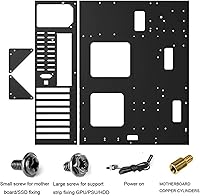
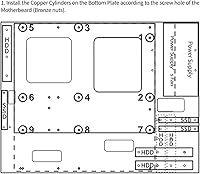
Assembly is one of the most consistently praised aspects across buyer reviews, with most people reporting a clean, frustration-free setup in well under an hour. The component layout is intuitive for anyone with basic PC building experience, and nothing requires specialized tools or unusual hardware.
The included instruction materials are minimal, which can leave first-time builders momentarily uncertain about standoff placement or drive mounting orientation. A few users noted that some plastic clips and fasteners required more care than expected to avoid cracking them during the initial setup process.
Airflow & Thermals
91%
An open-air design eliminates the thermal bottlenecks that enclosed cases can create during long stress test sessions, and multiple buyers confirmed that temperatures stayed noticeably lower compared to running the same hardware inside a closed panel case. For overclocking tests and extended burn-in runs, the natural convection is a real practical benefit.
The open layout offers zero dust filtering, so components accumulate debris significantly faster than they would inside a case — a genuine concern in workshop or garage environments. There is also no way to direct airflow strategically, meaning users in warmer ambient conditions may still see elevated temps during sustained peak loads.
GPU & Cooler Clearance
94%
Having zero restrictions on both GPU length and CPU cooler height is uncommon at this price point, and buyers with large triple-fan graphics cards or tower coolers like the NH-D15 consistently cited this as the main reason they chose this DIY bench case. It removes one of the most common hardware testing frustrations entirely.
With no physical constraints on GPU size, very heavy graphics cards rely entirely on the PCIe slot for support, putting strain on both the slot and the plastic frame over time. Users running large triple-slot cards noted some visible flex in the board mounting area during extended use, which is worth monitoring.
Storage Flexibility
78%
22%
Support for two SSDs and two HDDs simultaneously is more than many bare-bones test benches offer at this price, giving builders the ability to run realistic multi-drive configurations during testing rather than a stripped-down single-drive setup. Technicians diagnosing drive-related issues particularly appreciated having all four bays readily available.
The drive mounting system is functional but basic — there are no tool-less mechanisms, and cable routing around the drives tends to become messy quickly. A number of buyers noted that the drive trays felt less secure than expected, occasionally requiring re-seating after the bench was jostled or bumped.
Component Stability
82%
18%
During stationary use on a flat workbench, components stay seated reliably and the platform handles normal usage without anything shifting unexpectedly. Most buyers running diagnostics or stress tests at a fixed bench station found the stability more than adequate for extended sessions.
Stability drops off significantly the moment the bench is moved, even slightly, while loaded. Several users reported GPUs shifting in their slots and cables disconnecting after picking up the frame to reposition it, making this a bench-stays-put solution rather than anything resembling a portable test rig.
Portability & Storage
74%
26%
At 1.4 kg and shipping in a flat package under 2 inches thick, this DIY bench case is easy to store on a shelf or slide under a desk between builds — a practical advantage over bulky enclosed cases that take up permanent floor or desk space when not in active use.
Moving the bench between workstations with components installed is consistently flagged as risky by buyers. Without any retention mechanisms for GPUs, drives, or cables, even a short carry across a room can result in disconnected parts, meaning you effectively need to partially strip and rebuild each time you relocate it.
PSU Compatibility
83%
Standard ATX PSU support means virtually any power supply in most builders' existing collections will work without sourcing anything new. Technicians running multiple test stations particularly appreciated not having to maintain separate PSU inventories or adapters for different bench formats.
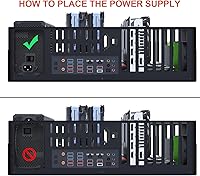
The rear-mount orientation means PSU cable lengths need to be factored in — shorter modular cables can fall just short of front-mounted components on larger E-ATX boards. A small number of buyers also noted that PSU installation required more effort than expected due to the angle of the mounting bracket.
Durability Over Time
67%
33%
For occasional bench use — testing a build a few times a month — the plastic construction holds up well enough that buyers reported no meaningful degradation over the first several months of ownership. The platform is durable enough for its intended intermittent-use scenario when handled with reasonable care.
Users who use this open-air test bench daily as a repair station reported that plastic standoffs and snap-fit components show wear faster than expected, with some mounts becoming slightly looser after repeated motherboard installations. Long-term structural integrity is a genuine concern for high-frequency, professional-use environments.
Cable Management
53%
47%
The fully open layout means cables are always accessible and nothing is ever hidden behind panels or routed through tight channels, so identifying and swapping individual connections during diagnostics is fast and unobstructed. For pure component testing purposes, that raw accessibility does have practical value.
There is no cable management infrastructure whatsoever — no routing channels, no velcro anchor points, no tie-down provisions — which means full-system builds quickly become a tangle of loose cables draped across the platform. Several buyers noted that cable clutter made it harder to work safely around exposed components and connectors.
Workbench Practicality
87%
As a day-to-day diagnostic and testing tool, this open frame delivers well above its price class. Builders who cycle through multiple boards each week consistently rated it as one of the most time-saving tools in their setup, eliminating the need to disassemble and reassemble enclosed cases every time a component swap is needed.
The platform's practicality is tightly tied to having a dedicated, stable workbench surface — it is not something you can comfortably use on a lap, a couch, or an uneven table. Without a proper bench setup, much of the convenience advantage disappears and the open layout quickly becomes a liability rather than an asset.
Aesthetics & Finish
69%
31%
The all-black colorway is neutral enough to not look out of place on most workbenches, and the flat, utilitarian design does not attempt to be anything it is not. For a bench that lives inside a lab or repair shop, a clean and uncluttered appearance is more than adequate.
The finish is basic matte black plastic that shows fingerprints, dust, and scuffs easily — especially under bright workbench lighting. Buyers who care about workbench aesthetics noted that the plastic construction lacks the visual substance of aluminum alternatives, though most acknowledged that looks are a lower priority for a utility test tool.

Suitable for:

The TGDGAMER E-ATX-Open Open Frame Test Bench is purpose-built for the kind of person who treats hardware testing as part of a regular workflow rather than a rare event. PC builders who cycle through multiple motherboards, CPUs, or GPUs before finalizing a system will appreciate having a dedicated bench that accommodates every common form factor — E-ATX down to ITX — without fussing with adapters or tight clearances. Repair technicians and IT professionals benefit too, since a permanent test station means you can quickly diagnose a suspect board or verify a repaired system without dismantling a working machine each time. Overclockers and stress-testers get real value from the open-air layout, which lets heat dissipate naturally during long benchmark runs where enclosed cases can mask thermal problems. Budget-conscious hobbyists who want a dedicated bench rather than balancing components on a cardboard box will find this hits a practical sweet spot. If you work across multiple form factors regularly, consolidating to one flexible platform also makes more sense than buying several cases for different board sizes.
Not suitable for:

The TGDGAMER E-ATX-Open Open Frame Test Bench is not a good fit for anyone who wants their setup to double as a display piece or a permanent desktop build. The plastic construction is functional for stationary bench use, but it does not deliver the rigidity of machined aluminum alternatives at higher price points — if structural sturdiness is a priority, that gap will be immediately noticeable. Anyone who plans to move the bench frequently with components installed should reconsider: open platforms provide zero protection against vibration or shifting hardware, and unsecured cards and cables are a real hazard during transport. If your workspace requires a clean, contained look — or if you need integrated cable management for an always-on system — this open format will frustrate you quickly. It is also the wrong choice for anyone expecting the case to serve as a long-term home for a daily-driver PC, since there is no dust protection, no side panel shielding, and no mechanism to lock components in place.
Specifications

  • Brand: Made by TGDGAMER under the model designation E-ATX-OPEN.
  • Case Type: Open-frame test bench designed for exposed, workbench-style component installation rather than enclosed desktop use.
  • Mobo Compatibility: Supports E-ATX, ATX, Micro-ATX, and Mini-ITX motherboard form factors without requiring adapters or modifications.
  • GPU Clearance: No restrictions on graphics card length, accommodating even the longest multi-slot GPU designs currently available.
  • Cooler Clearance: No CPU cooler height ceiling, making large tower air coolers and tall custom cooling hardware fully compatible.
  • Storage Support: Accommodates up to two SSDs and two HDDs simultaneously, enabling full multi-drive system testing configurations.
  • PSU Type: Compatible with any standard ATX power supply; no proprietary or non-standard PSU format is required.
  • PSU Mount: The power supply mounts at the rear of the chassis using a standard rear-mount orientation.
  • Cooling Method: Relies entirely on open-air passive airflow with no integrated fans or active cooling components included.
  • Material: Constructed entirely from plastic, which keeps weight low but offers less structural rigidity than metal-framed alternatives.
  • Weight: The unit weighs 1.4 kg (3.08 lbs), making it easy to reposition on a workbench when unloaded.
  • Package Size: Ships flat in a package measuring approximately 17.76 x 13.86 x 1.14 inches, compact enough for shelf storage between uses.
  • Color: Available in black only; no additional color variants are listed by the manufacturer.
  • User Rating: Holds a 4.4 out of 5 average rating based on over 100 verified customer reviews on Amazon.
  • Market Rank: Ranked #172 in the Computer Cases category on Amazon based on recent sales performance data.

Related Reviews

ALAMENGDA Open Air Mini ATX Test Bench
65%
78%
Build Quality
83%
Value for Money
49%
Compatibility Range
71%
Motherboard Fitment
44%
GPU Clearance
More
egowz ITX ATX MATX/EATX Open Aluminum Frame Chassis (ATX)
85%
88%
Cooling Performance
85%
Build Quality
92%
Ease of Assembly
80%
Graphics Card Compatibility
90%
Flexibility for Custom Builds
More
RackPath 25U Open Frame Server Rack
80%
87%
Build Quality
83%
Value for Money
74%
Assembly Experience
88%
Depth Adjustability
71%
Caster and Mobility
More
Eastrexon 15U Open Frame Server Rack
75%
76%
Build Quality
68%
Assembly Experience
82%
Rack Compatibility
71%
Caster & Mobility
88%
Value for Money
More
Tecmojo 20U Open Frame Network Rack
84%
91%
Durability
88%
Weight Capacity
87%
Ease of Setup
89%
Build Quality
90%
Versatility (Mounting Options)
More
VEVOR 9U Open Frame Server Rack
72%
88%
Value for Money
71%
Build Quality
74%
Ease of Assembly
69%
Depth Adjustability
62%
Caster Quality
More
ASUS ProArt PA602 Full Tower PC Case
83%
93%
Airflow Performance
91%
Build Quality & Materials
89%
Thermal Engineering Design
92%
Radiator & Liquid Cooling Support
88%
GPU Mounting & Clearance
More
RIVECO 18U Open Frame Server Rack
81%
83%
Build Quality
88%
Value for Money
61%
Assembly Experience
78%
Caster & Mobility
81%
Stability & Rigidity
More
StarTech RK4OD 4U 2-Post Desktop Server Rack
79%
83%
Build Quality
91%
Ease of Assembly
61%
Capacity & Scalability
88%
Value for Money
86%
Footprint & Space Efficiency
More
SilverStone Tek TJ08B-E Micro-ATX Case
86%
88%
Build Quality
91%
Airflow & Cooling
85%
Ease of Setup
80%
Storage Flexibility
83%
Cable Management
More

FAQ

It does require some assembly, but nothing complicated. Most buyers report getting fully set up within 30 minutes, and the process is intuitive enough that no instruction manual deep-dive is usually needed. No specialized tools are required beyond what you would already have at a typical build station.

Any standard ATX PSU works fine here. The rear-mount design is sized for full-length units, so there is no reason to source a compact SFX supply. Just make sure your cable lengths are sufficient to reach all your components comfortably, since cable routing is completely free-form on an open bench.

Yes, and this is where the TGDGAMER E-ATX-Open Open Frame Test Bench genuinely earns its keep. There are no restrictions on GPU length whatsoever, so even the longest triple-slot or multi-fan designs mount and run without any clearance issues. This makes it a particularly smart choice for testing high-end graphics cards that cause headaches in enclosed builds.
It can stay set up as a stationary bench indefinitely, but it is not designed to be a permanent desktop enclosure. The plastic frame holds components securely when nothing is disturbing it, but it offers no dust protection and no cable containment, which can become frustrating in a busy or shared workspace over time. Think of it as a dedicated work tool rather than a housing solution.

Absolutely. There is no CPU cooler height limit on this open frame, so tall air coolers like the NH-D15 or similarly large towers are completely unrestricted. This is one of the more practical advantages over any enclosed case, where clearance quickly becomes a real constraint with oversized cooling hardware.

To be straightforward: this is an all-plastic frame, and it feels like one. It is not so flimsy that components fall off or that anything feels dangerously unstable during stationary use, but if you have handled a machined aluminum test bench before, the difference in rigidity is immediately noticeable. The quality is reasonable for the price tier, but it is a trade-off you should go in aware of.

That is one of the most practical real-world uses for this type of platform. You can quickly drop in a known-good CPU and RAM set, connect a PSU, and test for POST without spending time fitting components into an enclosed case. The open layout also makes it fast to probe connections and swap suspect parts in a systematic way, which is exactly what diagnostic work calls for.

That is a real risk worth taking seriously. Open benches have no mechanism to retain components — a GPU sitting in a PCIe slot, unsecured cables, and loose drives can all shift or disconnect if you pick up the frame and carry it. Before moving it any meaningful distance, remove at least the heavier components, or secure cables and cards carefully with zip ties first.

Mini-ITX boards are officially supported and mount correctly. The platform is physically larger than a Mini-ITX build requires, so there will be unused space on the frame, but that does not cause any functional issues. The standoff layout accommodates the smaller form factor without any modification or adapter needed.

You can mount up to two SSDs and two HDDs at the same time, which covers the vast majority of configurations you would actually want to test. This is a meaningful practical advantage over stripped-down benches that skip drive mounting entirely — you can boot a full operating system and run storage-dependent workloads rather than being limited to a bare POST check.