Overview

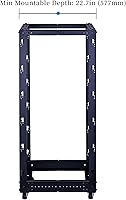
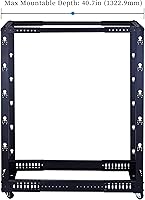
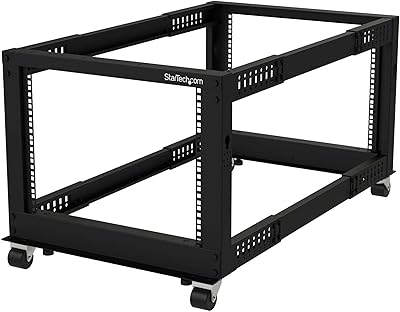
The RackPath 25U Open Frame Server Rack sits in a practical middle ground that many IT buyers overlook — roomy enough to house a serious networking stack, but not the hulking 42U cabinet that dominates a small room. At 25U, you get meaningful capacity without the commitment of a full data-center-style enclosure. The adjustable mounting depth — stretching from 22.7 to 40.7 inches — is genuinely useful when your gear doesn't all share the same chassis length. It holds a #138 spot in Computer Racks & Cabinets on Amazon, which, in a crowded category, suggests real buyers are choosing it repeatedly. This is a workhorse, not a showpiece; open-frame means you trade aesthetics for hands-on accessibility.

Features & Benefits

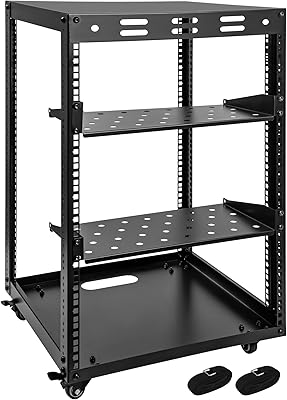
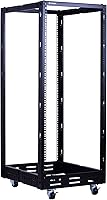
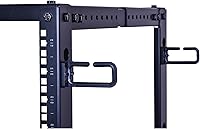
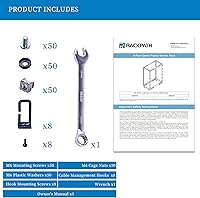
The frame is built from cold-rolled steel with an electrostatic powder-coat finish — a combination that holds up well in environments with humidity swings or airborne dust, which any active server room accumulates over time. The load rating clears 1,300 pounds, which means even a densely packed stack of switches and servers won't push this 4-post rack anywhere near its limits. All four posts are EIA/ECA-310 compliant, so standard 19-inch rack-mount gear mounts without adapter hassles. The four locking casters let you roll the whole unit across a room without touching a single cable — a real advantage when you're reconfiguring a lab layout. Fifty M6 screws, cage nuts, and eight cable management hooks come included, reducing the need for an immediate hardware run.

Best For

If you're setting up your first serious home lab and want room to expand without jumping straight into an enclosed cabinet, this open-frame rack is worth a close look. The open design works especially well for IT teams who regularly need physical access to rear ports, cables, or hot-swap drives — no panels to remove, no doors in the way. AV integrators will appreciate the adjustable post depth, which handles both a shallow patch panel and a deep server chassis in the same unit. That said, open-frame isn't for everyone: if you're in a dusty or unsecured environment, a sealed cabinet may be the smarter call, regardless of how capable this 4-post server rack is. Airflow management is your responsibility here.

User Feedback

With a 4.5-star average from 72 reviewers, the RackPath 25U draws consistent praise — though 72 ratings is still a relatively modest sample, so treat the consensus as encouraging rather than definitive. Buyers in home-lab setups tend to highlight solid build quality and a straightforward assembly process as the standout positives. On the critical side, some users have flagged questions around caster durability under sustained load and whether the posts stay aligned tightly after the depth is adjusted. A few professional IT buyers noted that the open design collects dust faster than they expected — something worth factoring in if your space isn't climate-controlled. Overall, the feedback suggests good value for the price tier, with most concerns falling into the manageable category.

Pros

  • Adjustable depth range handles both shallow patch panels and deep server chassis without needing separate racks.
  • Cold-rolled steel frame with powder-coat finish holds up well against the wear typical server environments dish out.
  • Locking casters let you reposition a fully loaded rack across a room without touching a single cable.
  • 25U capacity gives a growing home lab or small business real room to expand without an immediate upgrade.
  • Comes with 50 M6 screws, cage nuts, and eight cable hooks — enough to get started without a separate hardware run.
  • EIA/ECA-310 compliance means standard 19-inch rack-mount gear drops straight in without adapters or guesswork.
  • The load rating far exceeds what most home-lab or small-business builds will realistically push it to.
  • Build quality consistently earns positive feedback from real buyers, which is meaningful at this price tier.

Cons

  • No side panels or doors mean dust settles directly onto exposed equipment over time.
  • Seventy-two reviews is a modest sample — long-term reliability data is still limited compared to established brands.
  • Anyone nearby can physically access the gear, which is a genuine concern in shared or semi-public spaces.
  • Post alignment during the initial depth adjustment can require extra patience to get consistently square.
  • Some users have raised concerns about caster durability under sustained heavy loads over the long term.
  • Larger or growing deployments will outgrow this 4-post server rack sooner than a full-height 42U cabinet.
  • The industrial open-frame look does not blend well into finished office spaces or client-facing environments.
  • RackPath has a shorter track record than legacy rack manufacturers, which matters to buyers prioritizing brand trust.

Ratings

The ratings below for the RackPath 25U Open Frame Server Rack were generated by our AI system after analyzing verified buyer reviews from global marketplaces, with bot-driven, incentivized, and duplicate submissions actively filtered out to protect the integrity of the scores. Both the genuine strengths and the recurring pain points are reflected — no category has been softened to produce a more flattering overall picture. Scores are benchmarked against comparable open-frame server racks in the same market tier, giving you a realistic read rather than an inflated summary.

Build Quality
87%
The cold-rolled steel frame holds up well in active server room use — buyers stacking a dense mix of switches and patch panels report no flex or structural creaking even under substantial equipment loads. The electrostatic powder coat finish resists everyday contact wear better than the spray-painted frames common in cheaper alternatives at this price tier.
A portion of buyers received units with minor surface imperfections in the powder coat upon delivery, pointing to some batch-level inconsistency in the manufacturing finish. For buyers with higher fit-and-finish expectations, the overall execution reads as functional rather than refined compared to more expensive enclosed alternatives.
Value for Money
83%
For a rack built from cold-rolled steel with a load tolerance well above what most small labs will ever realistically push, the asking price is competitive relative to enclosed cabinets that trade away all of that physical access. Buyers consistently flag the included hardware kit as a meaningful part of the value equation, cutting down the initial shopping list on day one.
Buyers expecting enterprise-grade execution at this price point will find the overall product functional rather than polished. RackPath is a newer brand with a limited track record, which introduces some uncertainty for buyers who factor long-term warranty support and brand stability heavily into their decision.
Assembly Experience
74%
26%
Most home-lab builders report getting the rack into a usable state within a couple of hours using standard hand tools — no specialized equipment required. The included hardware covers most mounting needs right away, which shortens the setup process considerably compared to racks that arrive with minimal contents.
Getting the rear posts perfectly square at the chosen depth is where patience runs thin — even a small misalignment during initial setup can create mounting bracket headaches once gear starts going in. Several buyers noted the assembly instructions could be meaningfully clearer, particularly for first-time rack builders unfamiliar with 4-post configurations.
Depth Adjustability
88%
The wide depth range is a genuinely practical differentiator — AV integrators and IT teams managing mixed equipment sets regularly cite it as the feature that eliminated the need to buy separate racks for shallow networking gear and deep server chassis. Setting the posts before loading is a one-time process that pays off across a broad range of equipment configurations.
The adjustment works best as a set-it-once decision before any gear is installed — changing the depth mid-build with equipment in place effectively means clearing the entire rack, which is a time-consuming inconvenience. A small number of buyers have also raised questions about whether posts can shift slightly under uneven load distribution over time, though this has not emerged as a widespread complaint.
Caster and Mobility
71%
29%
The locking casters consistently earn appreciation from home-lab users who reconfigure their setups periodically — rolling a fully loaded rack across a room without disconnecting anything saves a meaningful chunk of time. The per-caster locking mechanism gives some flexibility for securing the rack on surfaces that are not perfectly level.
Some buyers have flagged uncertainty about how the casters hold up under sustained heavy loads or with frequent repositioning over time, noting that the wheels feel less substantial than the frame itself. For a rack carrying a dense build close to its practical limit, the casters are the component most worth monitoring for long-term wear.
Cable Management
69%
31%
The eight included hooks attach directly to the frame posts and give home-lab builders a basic but functional starting point for keeping patch cable runs organized along the sides of the rack. For a moderate-sized build with a handful of switches and patch panels, the hooks handle the fundamentals without requiring an immediate supplementary purchase.
Eight hooks is a starting point, not a complete system — anyone running a densely cabled build with multiple switches and servers will need to add 1U cable management panels or lacing bars fairly quickly. The hooks are utilitarian in design and offer limited flexibility for more complex or structured cable routing approaches.
Hardware Inclusion
78%
22%
Shipping with 50 M6 screws and cage nuts removes the initial hardware store trip and means a first rack build can start immediately after the frame is assembled. Combined with the cable hooks, the included kit reflects a practical approach to out-of-the-box readiness that buyers in this category clearly notice and appreciate.
Buyers filling all 25U with gear that uses four screws per unit will eventually exhaust the included hardware and need a supplementary order. The cage nuts are the standard press-in variety, which experienced rack builders sometimes find fiddlier than the tool-less alternatives available on higher-end frames.
Equipment Compatibility
93%
EIA/ECA-310 compliance is the shared language of rack-mount equipment across virtually every major manufacturer, and this 4-post server rack speaks it without exception — Cisco, APC, Ubiquiti, Dell, Juniper, and comparable brands all mount without adapters or modifications. Buyers across diverse networking and AV deployments consistently confirm that compatibility surprises are essentially nonexistent.
Non-standard or proprietary chassis — older servers with unusual rail systems or custom-built gear with oversized dimensions — may require adapter rails that are not included and need to be sourced separately. The open-frame layout also provides no native support for the tool-less slide rail systems that some newer server lines depend on for a clean installation experience.
Weight Capacity
91%
A load tolerance well above what most home labs or small-business deployments will realistically approach gives buyers genuine peace of mind when stacking a full mix of switches, patch panels, a UPS, and servers. This is not a rack that requires careful weight rationing across units — a heavily populated build raises no structural concerns for typical use cases.
The rated capacity is largely theoretical for the target audience, since most home-lab and small-business builds will not come close to the structural limit under normal conditions. For buyers who genuinely need to push a frame toward its ceiling — dense blade server deployments, for instance — the modest review sample means limited real-world validation data exists at that extreme.
Rack Stability
76%
24%
Buyers operating the rack on smooth concrete or hard flooring report solid stability once the casters are locked — the frame does not wobble or shift when reaching behind a loaded rack in a confined server space. The 4-post configuration distributes equipment weight more evenly than 2-post open frames or wall-mount alternatives.
On uneven flooring, achieving a consistently level stance requires attention during setup, as the casters lack height-adjustable leveling feet for fine corrections. A small number of buyers also noted that running equipment vibration can slowly drift the rack on smooth surfaces if the casters are not fully and firmly engaged.
Finish and Durability
82%
18%
The electrostatic powder coat holds up noticeably better than spray-finished frames in the same price segment — regular contact from mounting operations and cable work leaves less visible surface damage than comparable budget options. Most buyers report the finish arrives looking clean and uniform, without the thin or uneven coating quality that plagues lower-tier competitors.
A portion of buyers have received units with minor cosmetic flaws — small nicks or uneven coating patches — pointing to some inconsistency in the finishing process across production batches. While none of these issues affect structural integrity, they are noticeable in a tidy server environment and mark a clear step below the finish quality of premium-tier alternatives.
Open-Frame Access
86%
For IT teams that regularly service equipment — pulling drives, reseating cables, swapping modules — the open design removes the most persistent friction of enclosed cabinets: door and panel removal before every interaction. Buyers who access the rear of their gear on a recurring basis specifically name the open-frame layout as the deciding factor over a comparable enclosed unit.
The same design that makes servicing easy also leaves equipment fully exposed to dust and to anyone with physical proximity — in a shared or semi-public environment, that is a genuine and ongoing security and maintenance liability. Buyers who underestimated how quickly dust settles in their space have reported cleaning equipment more frequently than they expected with an enclosed cabinet alternative.
Brand Reputation
63%
37%
Within the context of its review base, the RackPath 25U draws consistent positive buyer sentiment — those who purchased it describe genuine satisfaction with the decision and the product has earned a credible standing in a competitive Amazon category. Performing reliably within its market positioning is a meaningful signal for a brand still establishing its presence.
RackPath is a relatively new market entrant with a limited product catalog and a modest review volume — buyers accustomed to the established warranty programs and support infrastructure of brands like StarTech or Tripp Lite will find less certainty here. The relatively small review pool also means less accumulated buyer knowledge to draw from when assessing long-term reliability before committing to a purchase.

Suitable for:

The RackPath 25U Open Frame Server Rack is well-suited to home lab builders and small IT teams who need a serious, expandable rack without committing to a sealed cabinet that limits physical access. At 25U, there is enough vertical space to house a meaningful mix of switches, patch panels, a UPS, and a server or two — with room left as a setup grows over time. The adjustable mounting depth is a genuine advantage here: whether you are mounting a shallow networking shelf or a deep server chassis, you are not forced to pick one geometry or buy two separate units. Budget-conscious buyers will appreciate that the included cage nuts, M6 screws, and cable management hooks trim down the usual first-build shopping list considerably. If you work in an environment where you regularly swap gear, pull cables, or reconfigure layouts, the open-frame design and locking casters make that hands-on access routine rather than a chore.

Not suitable for:

The RackPath 25U Open Frame Server Rack is not the right call for environments where dust accumulation, physical security, or professional aesthetics are non-negotiable. Open-frame means no side panels, no locking doors, and nothing standing between your equipment and an unfiltered room — in a dusty workshop or a semi-public office space, that is a real and ongoing liability. The 25U capacity also will not satisfy data-center-scale buildouts; anyone managing a dense enterprise environment will likely need a full 42U enclosed cabinet with integrated airflow management. If you are mounting gear in a finished space where appearance matters to clients or management, the exposed cabling and industrial look of this open-frame rack may be a hard sell. Buyers expecting a fully plug-and-play experience should also know that aligning the posts and dialing in the depth adjustment requires some patience during initial setup.

Specifications

  • Rack Height: Provides 25U of usable vertical mounting space, enough for a substantial mix of servers, switches, patch panels, and UPS units in a single frame.
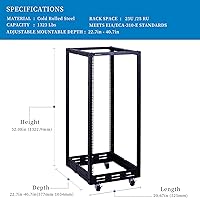
  • Mounting Depth: The four posts are adjustable from 22.7 in to 40.7 in depth, allowing the rack to accommodate both shallow networking gear and deep server chassis without modification.
  • Dimensions: Overall unit measures 20.67 in wide, 40.71 in deep, and 52.08 in tall, accounting for the installed casters in the height figure.
  • Weight Capacity: The frame is rated to support up to 1,323 lbs of distributed load, providing substantial overhead for even densely packed switch and server buildouts.
  • Unit Weight: The rack itself weighs 51.2 lbs unloaded, which is manageable for a two-person team during initial positioning and installation.
  • Frame Material: Built from cold-rolled alloy steel, which delivers a favorable strength-to-weight ratio and resists deformation under sustained, heavy vertical loads.
  • Finish: The frame is coated with a black electrostatic powder coat finish that bonds tightly to the steel surface, offering durability against chips, scratches, and surface corrosion.
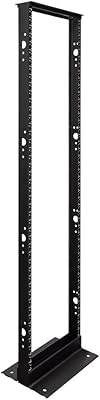
  • Post Config: Uses a 4-post open-frame layout with no side panels, enclosed top, or doors, leaving all sides of mounted equipment freely accessible at all times.
  • Rack Standard: Fully compliant with EIA/ECA-310, the universal standard that governs 19-inch rack-mount equipment across virtually all major networking and server manufacturers.
  • Compatibility: Designed to accept standard 19″ rack-mount gear including network switches, patch panels, UPS units, servers, and AV components from any EIA/ECA-310-compliant manufacturer.
  • Included Hardware: Ships with 50 M6 screws and cage nuts, covering the mounting hardware needs for most partial-to-full rack buildouts right out of the box.
  • Cable Management: Eight cable management hooks are included and mount directly to the frame posts, providing basic cable routing and organization along the sides of the rack.
  • Mobility: Four heavy-duty locking casters are pre-included and allow the loaded rack to be rolled across smooth flooring and then individually locked into a fixed position.
  • Caster Locking: Each caster features an independent locking mechanism, so the rack can be secured in place on any reasonably level surface without additional anchoring hardware.
  • Rack Form Factor: The open-frame construction provides unobstructed front, rear, and side access to all installed equipment, eliminating the need to remove panels or doors for routine servicing.

Related Reviews
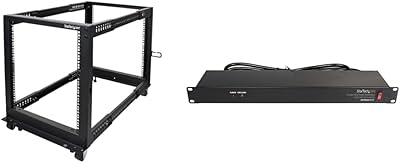
StarTech.com 12U Open Frame Server Rack & 8 Outlet Rack Mount PDU
86%
92%
Build Quality
89%
Ease of Assembly
88%
Power Distribution
90%
Surge Protection
84%
Adjustable Depth
More
Eastrexon 15U Open Frame Server Rack
75%
76%
Build Quality
68%
Assembly Experience
82%
Rack Compatibility
71%
Caster & Mobility
88%
Value for Money
More
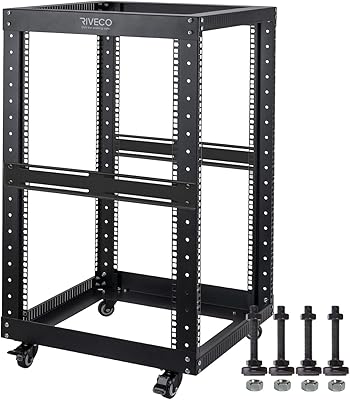
RIVECO 18U Open Frame Server Rack
81%
83%
Build Quality
88%
Value for Money
61%
Assembly Experience
78%
Caster & Mobility
81%
Stability & Rigidity
More
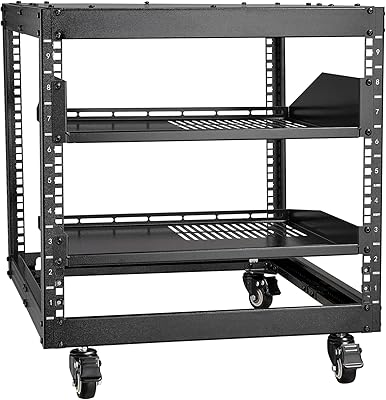
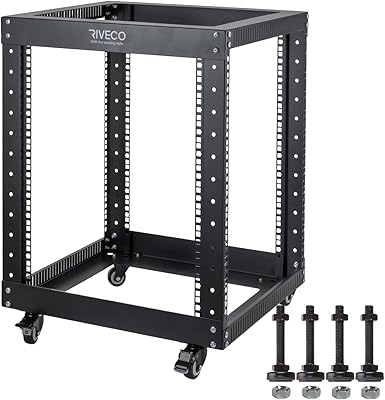
VEVOR 9U Open Frame Server Rack
72%
88%
Value for Money
71%
Build Quality
74%
Ease of Assembly
69%
Depth Adjustability
62%
Caster Quality
More
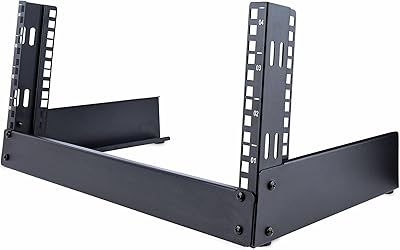
RIVECO 12U Open Frame Server Rack
80%
83%
Build Quality
88%
Value for Money
74%
Assembly Experience
76%
Caster Performance
86%
Rail Compatibility
More
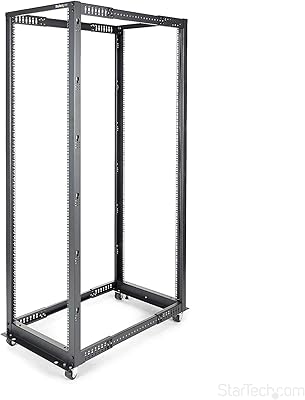
StarTech RK4OD 4U 2-Post Desktop Server Rack
79%
83%
Build Quality
91%
Ease of Assembly
61%
Capacity & Scalability
88%
Value for Money
86%
Footprint & Space Efficiency
More
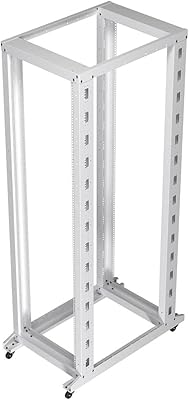
NavePoint 45U 2-Post Open Frame Server Rack
75%
83%
Build Quality
88%
Assembly Experience
91%
Airflow & Thermal Performance
74%
Weight Capacity & Load Handling
89%
Footprint & Space Efficiency
More
NavePoint 42U 4-Post Open Frame Server Rack
86%
90%
Build Quality
85%
Ease of Setup
93%
Weight Capacity
88%
Durability
91%
Adjustability
More
StarTech 4POSTRACK42 42U Mobile Open Frame Server Rack
87%
92%
Build Quality
85%
Ease of Assembly
91%
Weight Capacity
89%
Mobility & Flexibility
88%
Durability
More
Rosewill RSR-4P12U001 12U Open Frame Server Rack
67%
83%
Depth Adjustability
44%
Assembly Experience
57%
Structural Stability
71%
Value for Money
53%
Cable Management
More

FAQ

It arrives partially disassembled — you will need to attach the casters and set the post depth before mounting any gear. Most buyers report the process is straightforward with basic hand tools, though dialing in the post alignment squarely can take a bit of extra time and patience.

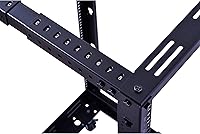
Depth adjustment is done by repositioning the rear posts along the top and bottom crossbars before you load the rack. It is technically possible to re-adjust after loading, but with gear and cables in place, the process becomes significantly more involved — so it is worth setting the depth carefully during initial assembly.

Yes. This open-frame rack is EIA/ECA-310 compliant, which is the same standard those brands engineer their equipment to. Cisco switches, APC UPS units, Ubiquiti racks, and similar gear should drop straight in using the included M6 hardware.

For a typical home lab or small-office buildout, the casters perform well within the rack's overall load rating. Some buyers have raised questions about long-term caster wear when the rack is kept heavily loaded and moved frequently, so if your setup involves regular repositioning of a dense build, that is something worth factoring into the decision.

The RackPath 25U Open Frame Server Rack sits in a practical middle ground between serious home-lab use and entry-level professional deployment. The cold-rolled steel frame and load ratings are legitimately heavy-duty, but the open design lacks the enclosed cabinet features — dust filtration, locking doors, and airflow management — that many professional environments require. It can work in a controlled server room; it is less suitable for shared or unsecured spaces.

That depends almost entirely on your environment. Without side panels or doors, dust settles directly on exposed equipment over time. A dedicated, climate-controlled room with low foot traffic is manageable; a workshop, basement, or busy office is a different situation. If dust is a genuine concern, an enclosed cabinet with filtered airflow is the more practical choice.

There are no manufacturer-listed enclosure accessories for this unit, and aftermarket panel compatibility is not guaranteed. If you think you will need an enclosed setup at some point, it is generally more cost-effective to start with an enclosed cabinet rather than try to retrofit an open-frame rack later.

In theory, 25 individual 1U devices — but real-world builds rarely look that clean. A typical mixed setup including a UPS (often 2U or more), a couple of patch panels, a few switches, and some blanking panels for airflow can consume 15 to 20U quickly. The remaining space fills in as the lab or network grows.

For most builds, what is included is enough to get started comfortably. The 50 M6 screws and cage nuts cover a solid number of mounting points, and the eight cable hooks handle basic organization. If you are planning to fill all 25U with gear that uses four screws per unit, you may eventually need to top up the hardware, but most buyers will not hit that ceiling right away.

The 4.5-star average is a positive signal, though the review count is relatively modest — 72 ratings gives you a directional read, not the deep consensus you would see from a product with hundreds of reviews. Build quality and the assembly experience tend to come up most positively, while occasional mentions of caster performance and post alignment during setup represent the main areas to watch.