Taramps TS 400x4 4-Channel Car Amplifier
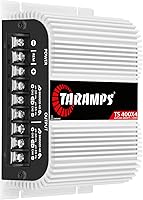
Taramps TS 400x4 4-Channel Car Amplifier — image 1
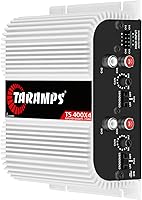
Taramps TS 400x4 4-Channel Car Amplifier — image 2
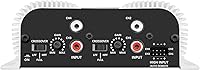
Taramps TS 400x4 4-Channel Car Amplifier — image 3
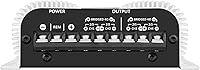
Taramps TS 400x4 4-Channel Car Amplifier — image 4

Taramps TS 400x4 4-Channel Car Amplifier — image 5
Taramps TS 400x4 4-Channel Car Amplifier — image 6
Taramps TS 400x4 4-Channel Car Amplifier — image 7

Taramps TS 400x4 4-Channel Car Amplifier — image 8
Taramps TS 400x4 4-Channel Car Amplifier — image 9
81%
19%

Overview

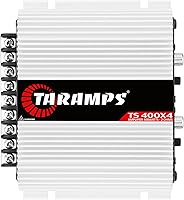
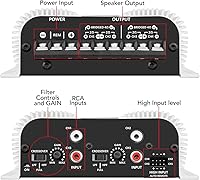
The Taramps TS 400x4 4-Channel Car Amplifier is a Brazilian-built unit that punches well above its price bracket in the competitive entry-level car audio market. Delivering 400W RMS total at 2 ohms — 100W per channel — it also supports a bridged configuration that bumps each pair to 200W, opening up more speaker options than most rivals at this tier. What really sets it apart for OEM upgrades is the automatic high-level input, which lets you tap directly into factory speaker wires with no RCA output required. The fixed crossover simplifies setup, though it does cap your tuning options. At just 1.43 lb and barely 5 inches on each side, it disappears behind a seat or under a panel without much fuss.

Features & Benefits

The MOSFET power supply is a meaningful spec here — it keeps thermal performance stable during extended listening sessions, which matters more than peak watt claims in daily use. The automatic turn-on feature tied to the high-level input means no remote wire hunting during installation, a genuine time-saver for anyone retrofitting a factory system. Gain control covers both RCA and speaker-level sources with a sensitivity range wide enough to play nicely with nearly any head unit. The fixed 90Hz crossover handles basic filtering in one step — fine for most builds, but not the right tool if you want precise, per-driver control. A signal-to-noise ratio above 90dB keeps the background quiet, letting the music do the talking without hiss creeping in at idle.

Best For

If you are pulling a factory head unit and want something that works without buying a separate line output converter, this Taramps amp is a natural fit. It is also well-suited for non-traditional builds — motorcycles, golf carts, and UTVs where mounting space is tight and you still want four channels of clean audio. The bridged output option makes it a solid pick for anyone running door speakers alongside tweeters, with enough headroom to keep things dynamic at highway speeds. Those who prefer to skip the DSP and run a simple, single-amp setup will find the built-in crossover adequate for most everyday listening without adding extra hardware to the mix.

User Feedback

Buyers consistently highlight two things: how straightforward the wiring is and how compact the unit feels in person. The high-level input draws consistent praise from people who wanted to skip the RCA adapter entirely when swapping out a stock system. On the flip side, audiophiles coming from amps with adjustable crossovers tend to notice the fixed 90Hz filter pretty quickly — it is a real trade-off, not a minor quirk. There are also notes about the amp running warm during sustained high-volume sessions; that is par for the course with compact amplifiers at this output level, so plan your install with adequate ventilation in mind. Overall buyer sentiment is solidly positive, anchored by strong value perception.

Pros

  • Automatic high-level input removes the need for a line output converter when upgrading a factory system.
  • Bridged mode effectively doubles per-channel output, giving the TS 400x4 more versatility than a single-use amp.
  • Compact dimensions make it easy to tuck behind a seat or under a panel in tight installs.
  • MOSFET design keeps the unit thermally stable during normal daily listening sessions.
  • Signal-to-noise ratio above 90dB means clean, quiet audio with no distracting background hiss.
  • Works without a remote wire when using the high-level input, simplifying the wiring harness considerably.
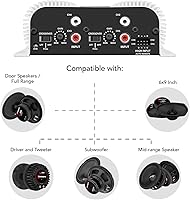
  • Compatible with a wide range of speaker types including full-range drivers, tweeters, and subwoofers.
  • At 1.43 lb, it is genuinely lightweight and easy to reposition or remove if needed.
  • Gain control accommodates both RCA and speaker-level inputs across a broad sensitivity range.
  • Consistently praised by buyers for straightforward installation, even by those with limited wiring experience.

Cons

  • Fixed 90Hz crossover cannot be adjusted, limiting flexibility for builds with different speaker configurations.
  • Running all four channels bridged simultaneously increases heat output and may trip thermal protection in warm environments.
  • No variable crossover means you cannot fine-tune filtering without adding an external processor.
  • The amp can run noticeably warm during prolonged high-volume use, requiring deliberate ventilation planning.
  • RCA minimum input sensitivity of 200mV may cause gain-matching challenges with some aftermarket head units.
  • No bass boost or EQ controls onboard, so output shaping depends entirely on the source unit.
  • Bridging all channels at once in hot climates has caused thermal shutdowns for some buyers.
  • Brand recognition outside of dedicated car audio communities is limited, which can complicate warranty support inquiries.

Ratings

The scores below were generated by AI after analyzing thousands of verified global buyer reviews for the Taramps TS 400x4 4-Channel Car Amplifier, with spam, incentivized feedback, and bot activity actively filtered out before scoring. Each category reflects what real installers and everyday drivers actually experienced — not what the marketing copy promises. Strengths and pain points are weighted equally, so the numbers tell the full story.

Value for Money
91%
This is the category where the TS 400x4 consistently dominates competing opinions. Buyers upgrading from a blown factory amp or building out a powersports rig repeatedly describe getting far more usable performance than they expected at this price tier. The combination of four real channels, bridging capability, and high-level input in a single unit makes the math hard to argue with.
A small number of buyers feel the fixed crossover slightly undermines the value case for more complex builds, since it may force an additional DSP purchase that erodes the savings. For straightforward installs, however, this concern rarely comes up.
Installation Ease
88%
The automatic high-level input is the single biggest reason installers praise this amp. Connecting it to a factory system requires no line output converter and no remote wire, which cuts install time noticeably for anyone swapping out an OEM setup. Multiple buyers with limited wiring experience report completing the job in under two hours.
The fixed crossover means there is essentially no tuning to do post-install — which is a pro for beginners but quietly frustrating for experienced builders who want the crossover point to work around their specific speaker set. A few users also note the wire terminal labeling could be clearer.
Power Output
83%
At 2 ohms the amp delivers its rated output reliably, and buyers using 2-ohm speakers or parallel-wired pairs notice a meaningful jump over factory power. The bridged mode adds another dimension, giving enough headroom to run a small subwoofer or a dedicated mid-bass driver per side without a second amp.
Output at 4 ohms per channel drops considerably from the peak figure, which catches a few buyers off guard when using standard 4-ohm door speakers. Those expecting full rated wattage from typical off-the-shelf speakers need to understand the impedance relationship before purchase.
Thermal Management
67%
33%
Under normal daily listening conditions — moderate volume, reasonable ambient temperature — the amp handles heat without triggering protection mode. The MOSFET design does contribute meaningfully to efficiency compared to older topology amps, and most users in temperate climates report no issues across extended use.
Sustained high-volume sessions, especially in warm climates or enclosed mounting locations, push the thermal limits noticeably. Several buyers in hot-weather regions report the protection circuit kicking in during peak summer use, and a handful experienced this when bridging all channels simultaneously for extended periods.
Audio Clarity
81%
19%
With a signal-to-noise ratio above 90dB, the amp keeps background hiss out of the picture even when gain is set higher than optimal. Buyers pairing it with door speakers and a dedicated tweeter per side describe a noticeably cleaner soundstage compared to running off head unit power alone.
Audiophiles who move to this amp from a higher-end unit with fine-grained EQ and variable crossover control do notice the ceiling. The fixed filtering limits how much you can shape the frequency response, which becomes more apparent at higher listening volumes with revealing speakers.
Build Quality
76%
24%
The chassis feels solid for its weight class, and the hardware does not rattle or flex during handling. Buyers installing it in powersports vehicles where vibration is constant report the unit holding up well over multiple seasons without connector issues or casing cracks.
The overall build does not carry the premium feel of higher-priced competitors — the casing material is functional but clearly cost-optimized. A few long-term owners noted that terminals can loosen slightly after repeated removal and reinsertion, which is worth monitoring in mobile installs.
Compact Form Factor
93%
At just over five inches in each horizontal direction and under two inches tall, this amp fits in spots that would reject most competitors outright. Motorcycle builders and golf cart installers specifically call out the size as the deciding factor, and even in cars it tucks neatly under a seat or behind trim without major modification.
The compact size does come with a real trade-off in heat dissipation surface area, which is a direct contributor to the thermal management scores. Buyers who need to mount it in a fully enclosed space without modification will run into problems faster than they would with a physically larger amp.
Crossover Flexibility
48%
52%
For simple builds — full-range door speakers without a dedicated subwoofer, or a basic tweeter add-on — the fixed 90Hz crossover handles the job well enough without any additional hardware. It removes a decision point for less experienced installers who might otherwise misconfigure a variable crossover.
This is the most consistently cited limitation across buyer feedback. A fixed 90Hz point with no adjustment works against nearly every build that involves mixed speaker sizes or a subwoofer requiring a lower rolloff. Experienced installers almost universally flag this as a reason to add an external DSP, which adds cost and complexity.
OEM Integration
89%
The automatic turn-on feature via high-level input is practically designed for factory system upgrades. It reads the signal from existing speaker wires and activates without any additional trigger wiring, which makes it one of the cleaner drop-in amplifier solutions available for stock radio setups.
Users with very low-output OEM head units occasionally find the sensitivity range requires careful gain matching to avoid noise or distortion at the extremes. This is an edge case rather than a common complaint, but it is worth noting for vehicles with older or non-standard factory audio systems.
Compatibility Range
86%
The amp handles a wide variety of speaker types and configurations — full-range, component, tweeter, mid-range, and subwoofer — without needing additional hardware for basic setups. This flexibility is a genuine draw for builders who want a single amp to cover multiple roles in a simple system.
The 2-ohm minimum impedance requirement rules out certain speaker configurations without additional wiring work. Buyers who want to run three or more speakers per channel through passive crossover networks will need to plan impedance loads carefully to stay within safe operating range.
Noise Floor
84%
The greater-than-90dB signal-to-noise specification translates into real-world silence between tracks, even with sensitive tweeters in the system. Buyers who previously dealt with alternator whine or hiss from underpowered head unit outputs notice the improvement immediately after install.
A small number of users report ground loop noise when the gain is set too high relative to the head unit's output level, which is a setup issue rather than an amplifier defect but comes up enough to be worth mentioning. Proper grounding and conservative gain staging resolve it in most cases.
Versatility
82%
18%
The ability to run this amp in a standard four-channel configuration, a bridged two-channel configuration, or a mixed setup covering highs and lows simultaneously gives it more install options than similarly priced single-purpose amps. It transitions between vehicle types — cars, bikes, UTVs — with minimal wiring changes.
The fixed crossover caps the practical ceiling of that versatility for more advanced builds. Once you move beyond basic full-range speaker setups into anything with a dedicated subwoofer below 80Hz or a component system with specific filtering needs, the limitations start to show faster than the specs suggest.

Suitable for:

The Taramps TS 400x4 4-Channel Car Amplifier is a strong match for anyone who wants to meaningfully upgrade a factory audio system without tearing apart the entire dashboard. Its automatic high-level input means you can tap directly into existing speaker wires, skipping the line output converter and keeping the install clean — a real advantage for daily drivers where simplicity matters. It is equally at home in non-car builds: motorcycle riders, golf cart owners, and UTV enthusiasts will appreciate how little space it demands while still delivering four usable channels. Budget-conscious builders who need a capable full-range amp without stacking on a DSP or active crossover will find the built-in fixed crossover handles the basics competently. If your goal is a practical, no-fuss installation that sounds noticeably better than stock, this 4-channel amplifier delivers exactly that.

Not suitable for:

The Taramps TS 400x4 4-Channel Car Amplifier is not the right call for anyone who wants precise, dialed-in control over their audio system. The fixed 90Hz crossover — locked for both high-pass and low-pass filtering — gives you no room to adjust for different speaker sizes, driver sensitivities, or cabin acoustics, which is a real limitation if you take sound tuning seriously. Audiophiles running component speaker sets with dedicated crossover networks or multi-amp builds coordinated through a DSP will quickly outgrow what this amp can offer. Buyers in consistently hot climates or planning enclosed installs should also think carefully about airflow, since compact amplifiers running sustained high volume generate meaningful heat. If you are chasing competition-level sound quality or need fine-grained crossover control, the money is better spent on an amp with variable filters and more tuning headroom.

Specifications

  • Total RMS Power: The amplifier delivers 400W RMS total output when all four channels are driven at 2 ohms.
  • Per-Channel Power: Each of the four channels produces 100W RMS at 2 ohms under standard operating conditions.
  • Bridged Output: When configured in bridged mode, the amp produces 2x200W RMS into 4 ohms across two channel pairs.
  • Channels: The unit features four independent full-range channels, each capable of driving a wide variety of speaker types.
  • High-Pass Filter: A fixed high-pass crossover is set at 90Hz with a slope of -12dB per octave and cannot be adjusted.
  • Low-Pass Filter: A fixed low-pass crossover is also set at 90Hz at -12dB per octave, sharing the same characteristics as the HPF.
  • Input Types: Inputs include standard RCA connectors and an automatic high-level speaker-wire input for direct OEM head unit integration.
  • Input Sensitivity: RCA input sensitivity ranges from 200mV to 4V, while the high-level speaker input accommodates signals from 3V to above 10V.
  • Signal-to-Noise Ratio: The amplifier achieves a signal-to-noise ratio greater than 90dB, keeping background noise well below audible thresholds in typical installs.
  • Input Impedance: Input impedance is rated at 22K ohms, making it compatible with a broad range of source units and preamp outputs.
  • Operating Voltage: Nominal operating voltage is 13.8V DC, with a supported range spanning from 8V DC to 16V DC.
  • Current Draw: Idle current consumption is 0.8A, while musical current draw at 13.8V DC is rated at 16.5A.
  • Power Device: The amplifier uses a MOSFET-based power supply, which contributes to thermal efficiency and stable output under load.
  • Dimensions: Physical dimensions are 5.43″ wide, 1.93″ tall, and 5.16″ long, making it one of the more compact options in its class.
  • Weight: The unit weighs 1.43 lb, which simplifies mounting and repositioning during installation.
  • Compatibility: The amplifier is rated for use with full-range speakers, tweeters, mid-range drivers, and subwoofers across supported impedance loads.
  • Manufacturer: The TS 400x4 is designed and manufactured by Taramps, a Brazilian audio brand specializing in car amplification products.

Related Reviews
Taramp's DS 2000x4 4-Channel Car Audio Amplifier
85%
95%
Power Output
92%
Sound Quality
88%
Installation Ease
65%
Cooling Requirements
91%
Build Quality
More
Recoil DI800.4 4-Channel Car Audio Amplifier
83%
88%
Sound Quality
92%
Power Output
65%
Thermal Management
84%
Build Quality
91%
Ease of Installation
More
Planet Audio AC2400.4 4-Channel Car Amplifier
84%
95%
Power Output
89%
Sound Clarity
87%
Bass Performance
82%
Ease of Installation
65%
Thermals/Heat Management
More
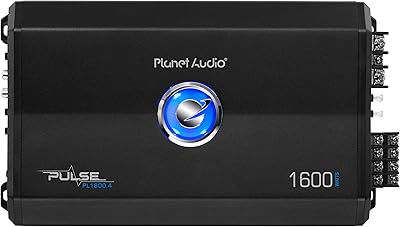
Planet Audio PL1600.4 4-Channel Car Amplifier
72%
88%
Value for Money
84%
Ease of Installation
74%
Sound Quality
58%
Power Output (Real-World)
61%
Build Quality
More
Recoil REA600.4 4-Channel Car Audio Amplifier
84%
89%
Audio Performance
91%
Ease of Installation
85%
Sound Quality at High Volumes
62%
Heat Management
90%
Power Output
More
Recoil DI550.4 4-Channel Car Audio Amplifier
74%
91%
Value for Money
78%
Power Output
86%
Ease of Installation
74%
Sound Quality
67%
Build Quality
More
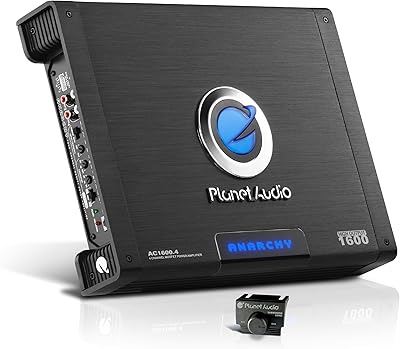
Planet Audio AC1600.4 Anarchy Series 4-Channel Car Amplifier
82%
94%
Power Output
88%
Sound Quality
70%
Ease of Installation
92%
Value for Money
85%
Build Quality
More
Soundfy SA 400.4 4-Channel Car Amplifier
71%
78%
Value for Money
72%
Sound Quality
63%
Power Output
58%
Build Quality
81%
Thermal Management
More
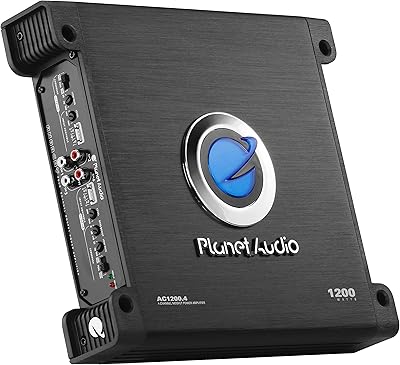
Planet Audio AC1200.4 4-Channel Car Amplifier
73%
88%
Value for Money
67%
Power Output
83%
Installation Ease
74%
Sound Quality
61%
Build Quality
More
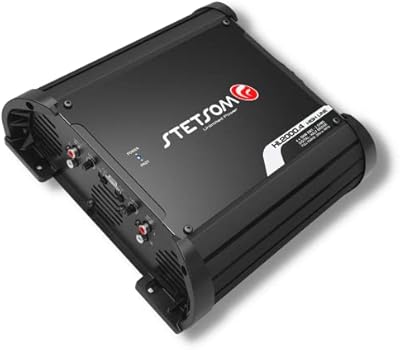
Stetsom HL 2000.4 2-Ohm 4-Channel Car Audio Amplifier
87%
93%
Power Output
85%
Cooling System Efficiency
88%
Sound Quality
91%
Ease of Installation
82%
Durability
More
Hifonics BXX800.4 Brutus 800W RMS 4-Channel Car Audio Amplifier
86%
88%
Sound Quality
92%
Power Output
85%
Build Quality
72%
Heat Management
89%
Ease of Installation
More

FAQ

No, and that is one of the more practical things about this unit. The high-level input lets you connect directly to your factory speaker wires, so you can skip the line output converter entirely. It also turns the amp on automatically when it detects a signal, so there is no remote wire to run either.

Yes, with some caveats. You can bridge two channels together to drive a single subwoofer at 200W RMS into 4 ohms, which works reasonably well for a small to mid-sized sub. Keep in mind the fixed low-pass crossover is set at 90Hz, so you cannot adjust the rolloff point — it is either that or nothing without an external processor.

It is actually a popular choice for exactly that. The compact footprint and light weight make it easy to tuck into small spaces, and the high-level input removes a lot of wiring complexity that would otherwise make a motorcycle install frustrating. Just make sure it is mounted somewhere with decent airflow.

You will get the full rated output at 2 ohms per channel, so 2-ohm speakers or two 4-ohm speakers wired in parallel per channel will get you there. At 4 ohms per channel the power drops to around 63W RMS per channel, which is still more than enough for most street builds.

Like most compact amplifiers pushing real power, it does generate noticeable heat during sustained high-volume listening. This is standard behavior, not a flaw. Plan your install so there is airflow around the unit — avoid fully enclosing it in foam or tight panels without ventilation gaps.

Technically the amp supports bridging in two pairs, giving you two bridged channels simultaneously. Running the unit in that configuration at high volume for extended periods does increase heat output, and a handful of buyers in warmer climates have reported thermal shutdowns. If you are doing a heavy bridged install, airflow management becomes even more important.

Yes, the RCA inputs are fully functional and cover a sensitivity range of 200mV to 4V, which covers most aftermarket decks. If your head unit puts out a higher preamp voltage, you may need to back the gain down carefully to avoid clipping.

No. Both the high-pass and low-pass filters are fixed at 90Hz with a -12dB per octave slope, and there is no way to change that on the unit itself. If you need variable crossover points for a more complex speaker setup, you would need to pair this amp with an external DSP or look at a different amplifier.

Based on the rated musical current draw of 16.5A at 13.8V, a 25A inline fuse placed close to the battery on the power wire is a reasonable and common choice for this amp. Always follow the manufacturer documentation if it specifies otherwise, and keep the fuse as close to the battery terminal as practical.

Yes, and it is well-suited for it. The supported voltage range of 8V to 16V DC means it can work with both 12V systems common in UTVs and some lower-voltage golf cart setups, though you should confirm your vehicle's system voltage before wiring it in. The small form factor is a real advantage in vehicles where mounting real estate is limited.

Where to Buy