SunFounder GalaxyRVR Mars Rover Kit

Overview
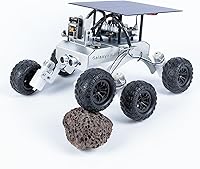
The SunFounder GalaxyRVR Mars Rover Kit is one of those rare STEM projects that actually delivers on its premise — building a miniature rover that behaves like the real machines NASA sends to Mars. It runs on an Arduino Uno R3, which means anyone already dabbling in hobbyist electronics will feel at home, and genuine beginners have a well-documented entry point. The rocker-bogie suspension isn't marketing fluff; it's a legitimate engineering mechanism that lets the rover flex over uneven ground. That said, expect to invest real time in assembly and some patience with coding. At its price tier, it sits competitively among serious Arduino robot kits.
Features & Benefits
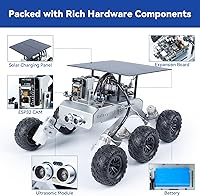
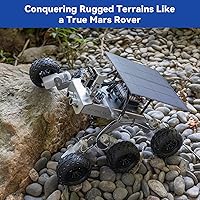
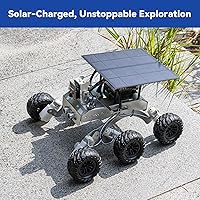
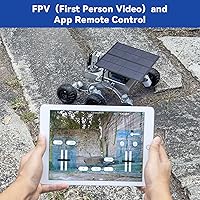
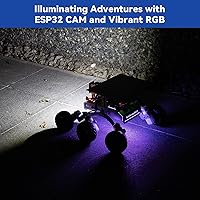
What makes the GalaxyRVR stand out in a crowded field of robot kits is how much practical hardware gets packed into a compact aluminum chassis. The rocker-bogie suspension handles gravel, grass, and loose dirt far better than wheeled robots with rigid frames. An ESP32 CAM module streams live video to your phone, giving you a genuine first-person view of wherever the rover wanders. Obstacle avoidance is handled by both ultrasonic and infrared sensors working in tandem, which reduces false stops on complex terrain. RGB lighting strips add flair and real low-light utility. A solar panel assists with charging — treat it as helpful supplemental power, not a replacement for the included lithium-ion batteries.
Best For
This Arduino robot kit is a strong match for teenagers and adults who want more than a remote-control toy — people who are genuinely curious about how things work and willing to build from the ground up. It makes an excellent gift for a teen with a budding interest in coding or robotics, though buyers should be clear that this isn't plug-and-play. Educators and hobbyists will appreciate the real-world engineering parallels to actual space rover design. It's also a surprisingly capable outdoor machine, holding up on dirt paths and patchy grass. If you've ever been curious about FPV piloting, this rover offers a low-stakes way to try it.
User Feedback
Buyers consistently praise the aluminum chassis construction — it feels substantial compared to plastic kits in the same range, and the FPV feed via the ESP32 app gets positive marks for responsiveness. Where opinions diverge is around setup. Getting the Arduino IDE configured and the ESP32 app connected to your network takes longer than newcomers expect, and a handful of users have flagged occasional app instability on Android. SunFounder's support team and community forum draw consistent compliments, which matters when you hit a wall mid-build. The solar charging draws some skepticism in real-world use — cloudy days or indoor testing make it largely irrelevant. Wi-Fi range for the live feed can also be limiting outdoors.
Pros
- Aluminum alloy chassis feels genuinely premium and survives rough outdoor testing without cracking.
- The rocker-bogie suspension tackles gravel, grass, and uneven dirt far better than rigid-frame robot kits.
- Batteries are included in the box — a small but appreciated detail many competitors skip.
- SunFounder's online tutorials and video lessons are well-produced and actually help beginners finish the build.
- An active community forum means most common setup problems already have documented solutions.
- The ESP32 CAM delivers a usable live FPV feed that makes solo navigation genuinely engaging.
- Dual obstacle sensors — ultrasonic and infrared — reduce false stops across varied terrain types.
- RGB lighting strips make low-light and nighttime operation both practical and visually impressive.
- At its price point, the hardware bundle represents strong value compared to similarly specced kits.
- Compact enough at under 10 inches to pack into a bag for classroom demos or outdoor testing.
Cons
- Arduino IDE and ESP32 Wi-Fi setup is steep enough to derail complete beginners without patience.
- The companion app has reported stability issues on Android, with crashes interrupting FPV sessions.
- Solar charging is nearly useless in cloudy conditions or indoors — do not factor it into your usage plans.
- FPV live feed drops or lags significantly beyond roughly 10 to 15 meters outdoors.
- Assembly can take four to eight hours; the printed guide alone is insufficient without the online resources.
- Some smaller plastic connector pieces and sensor mounts feel noticeably less durable than the main chassis.
- A single battery charge under heavy FPV and LED load can drain in under 45 minutes.
- The app has not kept pace with newer Android OS versions, causing compatibility friction for some users.
Ratings
The SunFounder GalaxyRVR Mars Rover Kit earns a nuanced scorecard built from AI analysis of verified buyer reviews worldwide — spam, bot-generated, and incentivized feedback were actively filtered out before scoring. Across categories ranging from build durability to app connectivity, the results reflect what real hobbyists, educators, and teen builders actually experienced. Both the standout strengths and the friction points are represented honestly here.
Build Quality
Terrain Performance
FPV Camera & Live Streaming
Obstacle Avoidance
Assembly Experience
Software & Coding Setup
App Stability & UX
Solar Charging
Battery Life
Documentation & Learning Resources
Community & Support
Value for Money
Lighting & Visual Features
Weight & Portability
Suitable for:
The SunFounder GalaxyRVR Mars Rover Kit is an excellent fit for teenagers and adults who are genuinely curious about how robotics and coding intersect — people who want to build something meaningful, not just unbox a finished toy. It works especially well as a structured STEM gift for a motivated 15-year-old or older teen who has shown interest in electronics, programming, or space exploration. Educators running after-school robotics clubs or makerspace sessions will find the real-world engineering concepts — particularly the rocker-bogie suspension — give students a tangible connection to actual NASA rover design. Hobbyists who already dabble in Arduino projects will feel at home with the hardware stack and will likely enjoy pushing the codebase beyond the default sketches. Outdoor enthusiasts looking for a robot that can handle a backyard obstacle course, a gravel path, or a patch of grass will get more practical terrain performance than most plastic-chassis alternatives in this price range.
Not suitable for:
The SunFounder GalaxyRVR Mars Rover Kit is not the right choice for buyers expecting a ready-to-run experience straight out of the box. If the recipient has no patience for multi-hour assembly, no interest in learning the Arduino IDE, and no tolerance for troubleshooting Wi-Fi connectivity or app configuration, frustration is almost guaranteed. Parents shopping for a young child or a casual hobbyist who just wants something fun to drive around will likely find the technical demands overwhelming and the payoff underwhelming. Anyone relying on the solar panel as a primary power source will be disappointed — in typical indoor or overcast conditions it contributes very little, and treating it as anything more than a supplemental trickle charger sets unrealistic expectations. Buyers who need reliable FPV performance at range — say, across a large yard or a park — should also know that the Wi-Fi-based live feed has meaningful distance limitations compared to dedicated RC systems with proper radio control.
Specifications
- Dimensions: The assembled rover measures 9.45 x 7.09 x 3.94 inches, making it compact enough for tabletop testing or easy transport in a backpack.
- Weight: The completed build weighs 3.1 pounds, reflecting the density of its aluminum alloy chassis and onboard hardware components.
- Chassis Material: The main frame is constructed from aluminum alloy, providing significantly greater impact resistance and longevity than the plastic frames common in comparable kits.
- Microcontroller: The kit is built around the Arduino Uno R3 board, which is included in the package and serves as the central processing unit for all rover functions.
- Camera Module: An ESP32 CAM module handles real-time video capture and streams live FPV footage to a paired smartphone via Wi-Fi.
- Suspension System: A rocker-bogie suspension mechanism — the same fundamental design used on NASA Mars rovers — allows all six wheels to maintain ground contact across uneven terrain.
- Obstacle Sensors: The rover uses both an ultrasonic distance sensor and infrared sensors in tandem, enabling dual-layer obstacle detection across a range of surface types and lighting conditions.
- Lighting: RGB LED light strips and an ESP32-driven LED array are integrated into the chassis, supporting customizable colors and providing functional illumination in low-light environments.
- Power Source: The rover is powered by two included lithium-ion rechargeable batteries and features a solar panel for supplemental trickle charging in direct sunlight.
- Batteries Included: Two lithium-ion battery cells are included in the kit, so the rover can be powered up as soon as assembly and software setup are complete.
- Control Method: Primary control is handled through a dedicated smartphone app over Wi-Fi, which also integrates the live FPV camera feed into a single interface.
- Terrain Capability: The rocker-bogie suspension and six-wheel drive allow the rover to navigate sand, gravel, grass, and moderate mud without becoming stuck under normal conditions.
- Recommended Age: SunFounder recommends this kit for builders aged 15 and up, reflecting the complexity of both the physical assembly and the software configuration involved.
- Skill Level: The kit is designed to be accessible to beginners, supported by detailed online tutorials, step-by-step video lessons, and an active community forum.
- Connectivity: The ESP32 module communicates over a 2.4 GHz Wi-Fi connection for both app control and FPV video streaming, with effective range typically between 10 and 15 meters outdoors.
- Solar Panel: A small onboard solar panel can trickle-charge the battery pack in direct sunlight, though it functions as a supplemental energy source rather than a primary charging method.
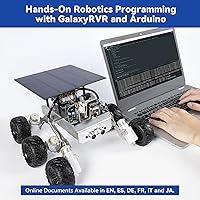
- Compatible IDE: Code is written and uploaded using the Arduino IDE, which is freely available for Windows, macOS, and Linux, along with the necessary ESP32 board definitions.
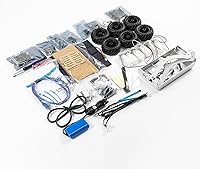
- Package Contents: The kit includes the aluminum chassis, all mechanical components, Arduino Uno R3 board, ESP32 CAM, sensors, LED strips, solar panel, two lithium-ion batteries, and access to online documentation.
Related Reviews
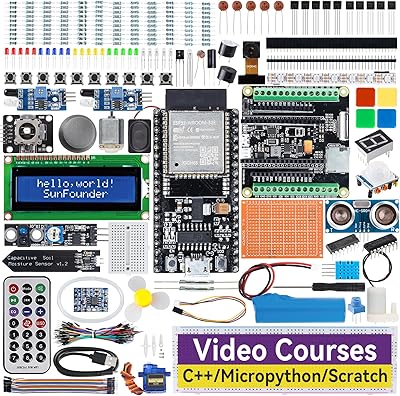
SunFounder ESP32 Ultimate Starter Kit
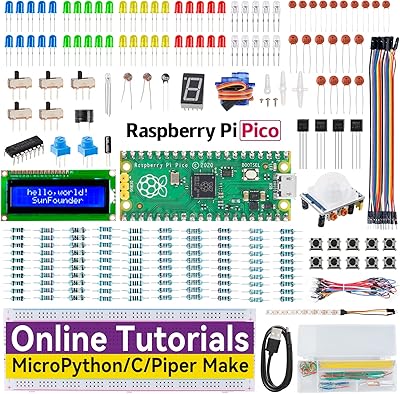
SunFounder Raspberry Pi Pico Starter Kit
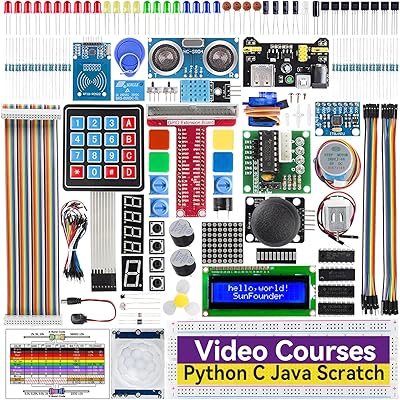
SunFounder Da Vinci Starter Kit for Raspberry Pi
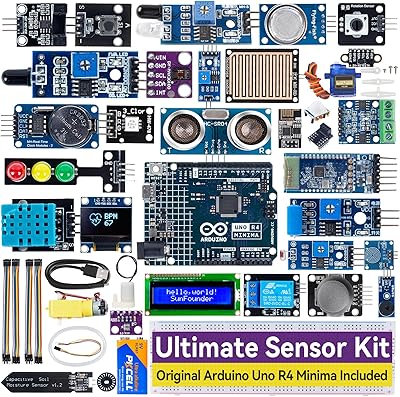
SunFounder Ultimate Sensor Kit Arduino R4 Minima
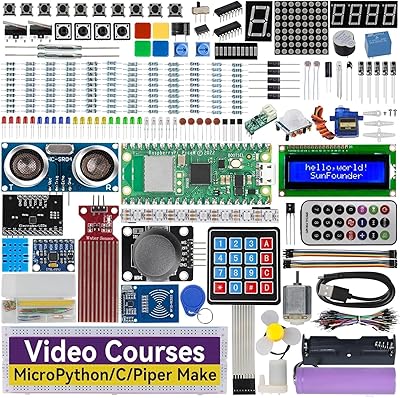
SunFounder Raspberry Pi Pico W Ultimate Starter Kit

Convenience Kits International Men & Women Travel Toiletry Kit 2-Pack

TUBeauty Lash Lift Kit Eyelash Perming Kit

DIY Gift Kits Bath Bomb Making Kit

Proactiv ProactivMD Adapalene Gel Acne Kit