Overview

The Surge Guard 34930 30A RV Surge Protector is one of the more serious pieces of gear you can plug into a campground pedestal — and that's exactly the point. Campground power is notoriously inconsistent. Voltage swings, wiring faults, and overloaded pedestals are real threats to your air conditioner, refrigerator, and anything else running off shore power. What separates this 30-amp surge protector from cheaper options is its built-in LCD display, which lets you actually see what's happening with your electrical connection in real time. It's built for RVers who want more than blind faith in their power supply.
Features & Benefits

Rated at 2,450 joules of surge protection and a full 3,600-watt load capacity, this portable RV protector handles everything a 30-amp rig can throw at it. The LCD display gives you live voltage and amp draw readings the moment you plug in — genuinely useful when you're unsure whether a pedestal is delivering clean power. There's a deliberate 10-second startup delay and a 128-second reset window after a fault clears, both designed to shield your A/C compressor from reconnection spikes. It also detects open ground and neutral faults, cuts off below 132V, and monitors for an overheating receptacle — all without requiring any hardwiring.

Best For

This 30-amp surge protector is an obvious fit for full-time RVers and anyone who camps regularly at public or state parks where pedestal quality varies wildly. If your rig runs a central air conditioner, a residential fridge, or a microwave, the stakes are high enough to justify serious protection. It's especially valuable at older campgrounds where aging wiring and voltage fluctuations are common. It also suits buyers who want real-time electrical data rather than a device that trips silently in the background. If you're an occasional weekend camper at a well-maintained resort, the price is a harder sell — but for heavy, frequent users, it earns its keep.

User Feedback

Owners of the Surge Guard 34930 consistently praise the confidence it provides at questionable campgrounds, and many cite the LCD accuracy as genuinely useful rather than just decorative. Long-term users report solid durability across multiple camping seasons. On the downside, the unit's bulk — over three pounds and more than 23 inches long — makes storage a real consideration, and it can be awkward to seat into crowded or recessed pedestals. A few buyers initially mistook the startup delay for a malfunction before understanding it was intentional. Some who later upgraded to a hardwired unit still keep this one as a portable backup, which says something about how much they trust it.

Pros

  • Detects open ground, open neutral, and low voltage faults before they can damage your appliances.
  • The LCD display shows live voltage and amp draw, giving you real information instead of guesswork.
  • 2,450 joules of surge protection handles serious power spikes that cheaper units simply cannot absorb.
  • The 128-second reset delay actively protects your A/C compressor from reconnection damage after a fault.
  • No hardwiring needed — plug it in, read the display, and you know within seconds whether shore power is safe.
  • Built by Southwire, a brand with a long track record in professional electrical products.
  • Covers the full 3,600-watt load of a 30-amp RV without any derating or compromise.
  • Many owners report years of reliable use across multiple camping seasons with no performance degradation.
  • Portable enough to share between rigs or use as a dependable backup alongside a hardwired unit.

Cons

  • At over three pounds and nearly two feet long, storing this portable RV protector inside a packed RV is a real challenge.
  • The physical bulk makes it awkward to connect at pedestals with recessed or tightly spaced outlets.
  • The startup delay confuses some first-time users who assume the unit is malfunctioning when it is working correctly.
  • Only compatible with 30-amp systems — useless for RVers with 50-amp service.
  • The premium price is hard to justify for campers who only plug into shore power a handful of times per year.
  • Leaves the pedestal connection exposed to weather and potential theft since it lacks a built-in locking mechanism.
  • No audible alert when a fault is detected — you have to notice the LCD has changed on your own.
  • Some users find the unit runs warm during extended use, which can be mildly concerning even if within normal range.

Ratings

The scores below reflect our AI-driven analysis of thousands of verified owner reviews for the Surge Guard 34930 30A RV Surge Protector, with spam, incentivized, and bot-generated feedback actively filtered out before any scoring was applied. We looked at real campers — full-timers, weekend warriors, and seasonal travelers — and weighted their experiences across every major category this type of device is judged on. Both the genuine strengths and the honest frustrations are reflected here without softening either side.

Surge Protection Effectiveness
93%
Owners report genuine confidence after the unit has intervened during power events at older campgrounds, with several users describing incidents where the protector cut power before appliances were affected. The 2,450-joule rating is well above the baseline for portable units, and real-world results back up that spec.
A small number of users note that no portable protector can catch every type of electrical fault, and a few reported appliance damage during events that exceeded what the unit was rated to handle. Managing expectations around absolute protection is important.
Fault Detection Accuracy
91%
The ability to detect open ground and open neutral conditions — not just surges — sets this unit apart from most competitors in the portable category. Campers at state parks and older private campgrounds frequently report the unit flagging wiring problems they had no other way of knowing about.
Some users find the unit occasionally trips at pedestals that other equipment handles without issue, raising questions about whether the detection thresholds are slightly aggressive. A handful of owners have had to switch to a different pedestal outlet to clear a false-positive reading.
LCD Display Usefulness
88%
The real-time voltage and amp draw readout is consistently one of the most praised features, especially for RVers who want to monitor how much load they are pulling relative to the 30-amp limit. Seeing actual numbers on the display gives a level of situational awareness that blind protectors simply cannot offer.
The display is not backlit brightly enough for easy reading in direct afternoon sunlight, which a surprising number of users flagged as a usability annoyance. A few also noted the text is small enough to require a closer look than they expected for a unit mounted at pedestal height.
Build Quality & Durability
86%
The housing feels solid and purpose-built, and multi-season owners frequently describe it holding up well through rain, heat, and repeated plug cycles at dozens of campgrounds. The Southwire brand name carries meaningful credibility for buyers who associate it with professional electrical products.
The plug prongs on a small number of units showed signs of discoloration or heat marking after extended use at high-draw campsites, which some owners flagged as a cosmetic concern worth monitoring. The unit is not rated waterproof, and exposure to heavy sustained rain without cover has caused issues for a few users.
A/C Compressor Protection
89%
The 128-second reset delay after a fault clears is specifically designed to prevent the compressor from restarting too quickly, and RVers who understand how air conditioner motors work tend to appreciate this feature more than those who just find it frustrating. Several long-term users credit the unit with keeping aging A/C units running longer.
On hot days at a campground, waiting over two minutes for power to restore after a brief grid hiccup is genuinely uncomfortable, and this is one of the most consistent frustrations in user reviews. The delay cannot be shortened or overridden, which some experienced users find overly rigid.
Ease of Setup & Use
84%
Plug-in setup requires no tools, no wiring knowledge, and no installation — it works the moment it connects to a 30-amp pedestal outlet. Most first-time users are up and running within a minute, and the LCD immediately confirms whether shore power is clean.
The unit's physical dimensions make it a tight fit at many pedestals, particularly those with recessed outlets or neighboring outlets that are already occupied. A few users report having to use an extension adapter just to get it to seat properly.
Portability & Storage
61%
39%
The lack of hardwiring means it travels with the owner rather than staying tied to one rig, which is a genuine advantage for people who switch between multiple vehicles or want to loan it out. It fits in a milk crate, tote bag, or storage bin alongside other hookup gear.
At 3.2 pounds and nearly two feet long, this is one of the bulkier portable protectors available, and finding a dedicated spot for it inside a packed RV storage bay is a recurring complaint. It does not come with a carrying case or storage bag, which feels like an oversight at this price point.
Low Voltage Protection
87%
The 132V cutoff threshold is aggressive enough to catch brown-out conditions that can silently overheat motors and shorten appliance life, and campers who have stayed at campgrounds with chronically weak power delivery particularly value this feature. It catches problems that many RVers would otherwise never notice until something failed.
At campgrounds with naturally lower but stable voltage delivery, the cutoff can trigger more often than owners expect, which some interpret as the unit being oversensitive rather than the campground having a real problem. Understanding the difference requires more electrical knowledge than the average first-time buyer has.
Value for Money
74%
26%
For full-timers and heavy seasonal campers, the math works out clearly — protecting thousands of dollars worth of appliances with a single purchase that lasts multiple years is a straightforward value proposition. Repeat buyers who have had cheaper protectors fail them tend to view this unit as the correct long-term investment.
Occasional campers who visit one or two well-maintained campgrounds per year find it genuinely difficult to justify the cost, especially when simpler protectors at a fraction of the price cover basic surge scenarios. The premium pricing draws polarized reactions depending almost entirely on how often and where the buyer camps.
Campground Compatibility
82%
18%
Works at any standard 30-amp TT-30 pedestal outlet across North American campgrounds without adapters or modifications, giving it broad compatibility across state parks, KOAs, private parks, and fairground hookups. Travelers who camp across different regions report no compatibility issues.
The unit's bulk means it physically blocks access to adjacent outlet slots on shared pedestals, which can create friction with neighboring campers. A small number of users have also reported difficulty seating it properly in pedestals with protective weatherproof covers.
Theft Resistance
38%
62%
The unit's weight and size make it slightly less convenient to grab quickly than a smaller protector, which provides a minor passive deterrent at busy campgrounds. Its distinctive appearance also makes it relatively easy to identify if recovered.
There is no built-in locking mechanism or cable port, so the unit sits completely unsecured at the pedestal whenever the owner leaves the campsite. Theft is a documented real-world concern flagged by multiple reviewers, and buyers need to source a separate locking solution independently.
Weather Resistance
66%
34%
The housing handles light rain and morning dew without issue in normal outdoor conditions, which is the baseline expectation for a product designed to live at a campground pedestal. Most users in typical camping climates report no weather-related problems across multiple seasons.
The unit is not rated waterproof or weatherproof, and sustained heavy rain exposure has caused problems for a subset of users who did not cover or shelter it during storms. The LCD area in particular seems to be a vulnerability point when the unit faces prolonged moisture exposure.
Reset Delay Logic
77%
23%
Experienced RVers and those who understand electrical system behavior consistently describe the timed reset logic as a smart design decision that protects compressor motors from damaging restart conditions. Once a user understands why the delay exists, it tends to shift from an annoyance to a reassurance.
New RV owners and first-time buyers frequently interpret the startup and reset delays as the unit being broken, which generates a meaningful volume of negative early impressions before they read the manual. Better in-box explanation of why these delays exist would prevent a lot of unnecessary frustration.
Long-Term Reliability
83%
A notable portion of reviewers who have owned the unit for three or more seasons report that it continues performing as expected without any degradation in display accuracy or protection behavior. The Southwire manufacturing pedigree appears to translate into above-average longevity for a portable electrical device.
A small but consistent minority of users report unit failures within the first year, typically citing heat or moisture as contributing factors. Whether those failures represent a manufacturing variance or user error is difficult to determine from review data alone, but the pattern is present enough to mention.

Suitable for:

The Surge Guard 34930 30A RV Surge Protector is built for RVers who take electrical protection seriously — particularly those who camp frequently at public campgrounds, state parks, or older private parks where pedestal wiring quality is a genuine unknown. If your rig runs a 30-amp service and you depend on an air conditioner, a residential-style refrigerator, or other high-draw appliances, the cost of replacing that equipment after a power event dwarfs what this device costs. Full-timers and seasonal travelers will get the most value here, since their exposure to unpredictable shore power is simply much higher than someone who camps a few weekends a year at a well-maintained resort. The real-time LCD display also makes this a strong fit for technically curious buyers who want to understand what their power connection actually looks like, not just assume it's fine. If you've ever plugged into a pedestal and wondered whether the voltage was safe or the wiring was correct, this 30-amp surge protector gives you actual answers.

Not suitable for:

The Surge Guard 34930 30A RV Surge Protector is a harder sell for casual campers who visit the same well-managed campground a few times a year and rarely worry about power quality. At its price point, occasional users may find it difficult to justify when cheaper, simpler protectors exist for lower-stakes situations. The unit's physical size and weight are also worth considering — at over three pounds and nearly two feet long, it does not tuck away easily, and it can be genuinely awkward to connect at pedestals with tight or recessed outlets. Buyers hoping to permanently install a hardwired solution should look at dedicated hardwired units instead, since this portable RV protector is designed for flexibility rather than a fixed setup. It also does not cover 50-amp systems, so owners of larger Class A coaches or fifth wheels with 50-amp service will need a different product entirely.

Specifications

  • Amperage: Rated at 30 amps, matching the standard shore power service found on most travel trailers, smaller motorhomes, and pop-up campers.
  • Voltage: Operates on a 120V AC system, which is the standard campground shore power voltage across North America.
  • Surge Rating: Provides 2,450 joules of surge energy absorption, placing it well above entry-level portable protectors in its category.
  • Max Load: Supports a continuous load of up to 3,600 watts, covering the combined draw of typical 30-amp RV appliances without derating.
  • Display: Features an English-language LCD screen that continuously shows real-time voltage (RMS) and amp draw readings while connected.
  • Startup Delay: Enforces a 10-second delay after connection before allowing power to flow, giving the system time to assess shore power stability.
  • Reset Delay: After a fault clears, the unit holds off for 128 seconds before restoring power, protecting the A/C compressor from damaging reconnection spikes.
  • Low Voltage Cutoff: Automatically disconnects power if incoming voltage drops below 132V, preventing the brown-out conditions that can overheat motors and compressors.
  • Fault Detection: Monitors for and protects against power surges, open ground, open neutral, low voltage, and overheating at the plug or receptacle.
  • Weight: The unit weighs 3.2 pounds, which is substantial for a portable protector and worth factoring into storage planning inside a packed RV.
  • Dimensions: Measures 23.25 x 5.5 x 4.25 inches, making it one of the larger portable surge protectors on the market in its amperage class.
  • Connection Type: Plugs directly into a 30-amp campground pedestal with no hardwiring or installation required, making it immediately portable between rigs.
  • Brand: Manufactured by Southwire under the Surge Guard product line, a company with deep roots in professional-grade electrical wire and equipment.
  • Model Number: The official model designation is 34930, which should be used when searching for replacement parts, warranty support, or compatible accessories.
  • Market Debut: This model was first made available in March 2018 and remains an active, non-discontinued product in the Surge Guard lineup.

Related Reviews
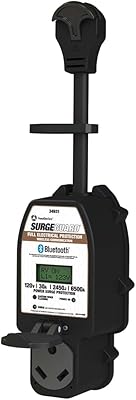
Southwire Surge Guard 34931 30A Surge Protector
81%
93%
Surge Protection Effectiveness
89%
Build Quality
88%
LCD Display Clarity
91%
A/C Compressor Protection
86%
Ease of Setup
More
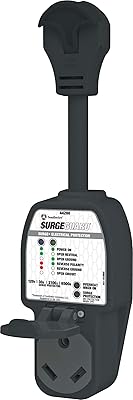
Southwire Surge Guard 50A Portable RV Surge Protector
85%
91%
Surge Protection Performance
88%
Ease of Use
87%
Build Quality and Durability
84%
Diagnostic Features
70%
Portability
More
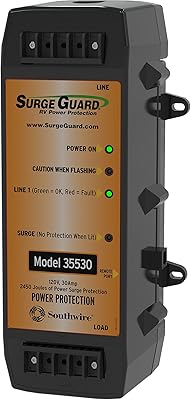
Southwire Surge Guard 30 Amp RV Protector
74%
91%
Diagnostic Accuracy
93%
Ease of Use
78%
Surge Protection
74%
Build Quality
43%
Weatherproofing
More
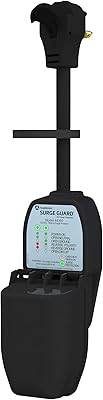
Southwire Surge Guard 35530 30 Amp Protector
79%
91%
Protection Reliability
82%
Installation Experience
67%
Value for Money
84%
Build Quality
89%
Compressor Protection
More
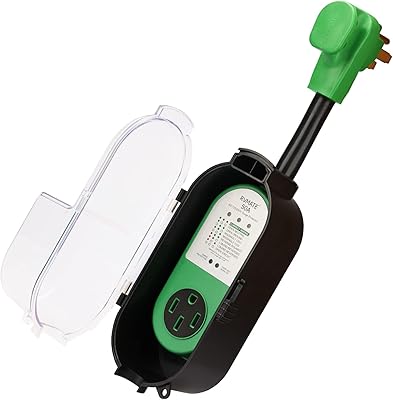
Southwire 44380 30A Portable Surge Guard
79%
92%
Fault Detection Accuracy
88%
Surge Protection
91%
Ease of Use
83%
Build Quality
86%
Handle & Ergonomics
More
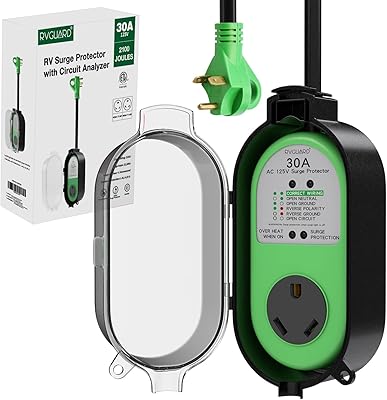
RVGUARD 30 Amp RV Surge Protector
83%
74%
Surge Protection
88%
Circuit Fault Detection
93%
Ease of Use
71%
Build Quality
76%
Weather Resistance
More
RVMATE RMSG-F 50 Amp RV Surge Protector
80%
91%
Value for Money
86%
Surge Protection Performance
83%
Circuit Analyzer Accuracy
79%
Waterproof Protection
94%
Ease of Setup
More
POWSAF 50 Amp RV Surge Protector
80%
83%
Surge Protection Performance
78%
Voltage Monitoring Accuracy
88%
Diagnostic LED Usefulness
74%
Weather Resistance
91%
Ease of Use
More
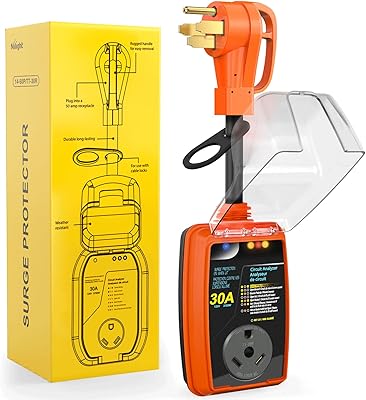
Nilight 50340RV 50-30 Amp RV Surge Protector
74%
83%
Surge Protection Performance
81%
Circuit Analyzer Usability
77%
Build Quality
61%
Weatherproof Cover Durability
86%
Value for Money
More
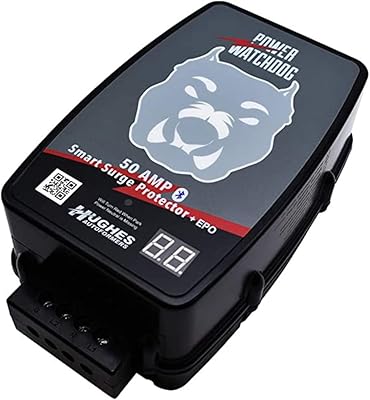
Power Watchdog PWD50EPOH 50A RV Surge Protector
80%
93%
Surge Protection Reliability
89%
Build Quality
74%
Ease of Installation
71%
Bluetooth App Experience
91%
Emergency Power Off Function
More

FAQ

It works with any RV that uses a standard 30-amp, 120V shore power connection — which covers the vast majority of travel trailers, fifth wheels on 30A service, and smaller Class C motorhomes. As long as your rig uses a standard TT-30 plug, you are good to go. It is not compatible with 50-amp systems.

The screen gives you a continuous readout of the incoming voltage and your current amp draw. That means you can see at a glance whether the pedestal is delivering stable power and how much of your 30-amp capacity you are actually using. It is genuinely useful information, especially at older campgrounds where the wiring may be questionable.

That delay is intentional and actually one of the smarter design choices on this unit. It gives the protector time to analyze the incoming shore power before allowing anything to flow to your RV. Skipping that assessment window could mean connecting your appliances to a bad circuit before the unit has had a chance to detect the fault.

When a fault clears — say, a voltage drop corrects itself — the unit waits over two minutes before restoring power rather than reconnecting immediately. This protects your air conditioner compressor, which can be seriously damaged if it restarts too quickly after a power interruption. It feels like a long wait, but it is the right call for your equipment.

Yes, detecting open ground and open neutral conditions is one of its core functions. Both of those faults are relatively common at older campgrounds and can be genuinely dangerous. The Surge Guard 34930 30A RV Surge Protector will identify those conditions and refuse to pass power to your rig until the problem is resolved.

That is a real concern and one that comes up often. The unit itself does not include a built-in locking mechanism, so it sits at the pedestal without any physical security when you are away from your site. Some RVers use a separate cable lock threaded through the unit and around the pedestal post as a basic deterrent, though it is not a perfect solution.

It is designed as a portable unit, not a hardwired one. You plug it in at the pedestal each time you set up camp and unplug when you leave. If you want a permanent solution installed inside your RV's electrical compartment, you would need a dedicated hardwired surge protector instead. Some owners actually use both — a hardwired unit for everyday use and this portable protector as a backup.

The LCD display will show the fault condition it detected, and power to your RV will cut off. There is no audible alarm, so you do need to notice the display has changed. If you are away from your site during a power event, you may come back to find power disconnected without knowing exactly what happened — which is worth keeping in mind.

The unit is designed for outdoor use at campground pedestals, but it is not submersible or fully waterproof. Light rain exposure during normal use is generally fine. That said, leaving it sitting in standing water or during a heavy storm without any cover is not a great idea, and most experienced RVers try to give it some basic protection when severe weather moves in.

The main trade-off is convenience versus security. This portable RV protector is easy to move, share, and replace if something goes wrong, but it sits exposed at the pedestal and requires you to plug and unplug it every time. A hardwired unit lives inside your RV's electrical bay, is always protected, and cannot be forgotten at a campsite — but it costs more to install and is rig-specific. Many full-timers eventually go hardwired but keep a portable unit like this one as a backup.