Overview

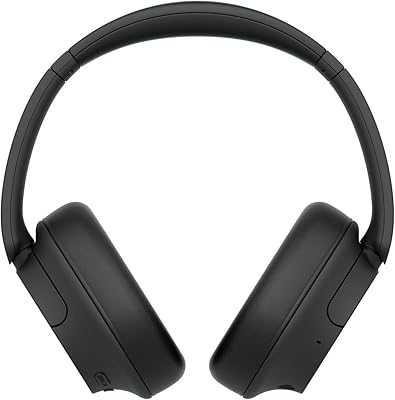
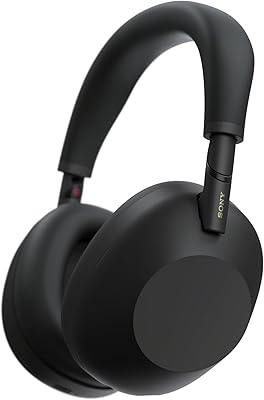
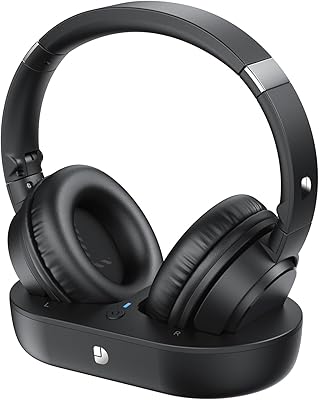
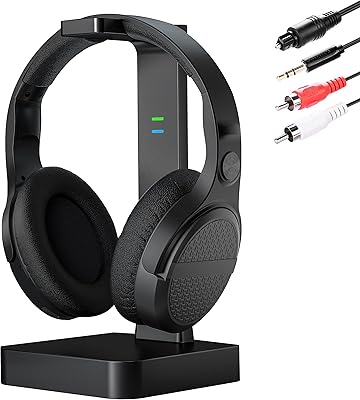
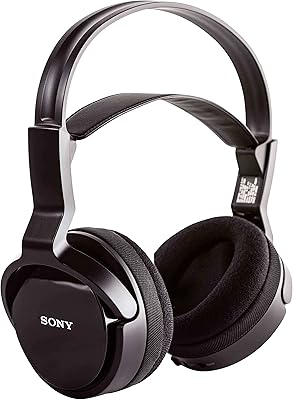
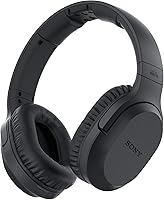
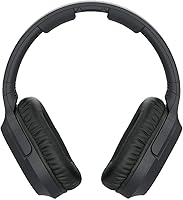
The Sony WH-RF400 Wireless TV Headphones take a refreshingly straightforward approach to home audio — no app, no pairing screen, no Bluetooth fumbling. You plug the transmitter dock into your TV's RCA output or headphone jack, set the headphones on the dock, and they're ready to go. Sony's standing in consumer audio gives these RF TV headphones a reasonable foundation of trust, and the closed-back over-ear design signals that comfort during long viewing sessions was a genuine priority. At a mid-range price, this wireless listening set sits in a practical sweet spot for households where shared TV time can get a little complicated.
Features & Benefits

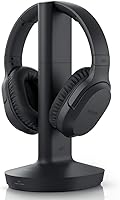
The headline spec is the 150-foot RF range — which, in practice, means you can walk to the kitchen during a commercial and still hear the show clearly. The 20-hour battery is equally generous; most people won't need to charge these daily. Sony's built-in noise reduction does a solid job clarifying dialogue, particularly useful if your TV's speakers tend to muddy things. The 40mm dynamic drivers hit 100dB sensitivity, which is more than loud enough for hard-of-hearing viewers. One genuinely practical detail: the transmitter dock doubles as a charging stand, so the headphones always have a home on your entertainment unit rather than disappearing into a couch cushion.

Best For

This wireless listening set was clearly built with a specific kind of viewer in mind. If you're hard of hearing and tired of cranking the TV volume while everyone else winces, these RF TV headphones solve that problem cleanly. They're also a genuine relief for night-owl viewers — a partner sleeping nearby won't hear a thing. They work with virtually any TV that has RCA outputs or a headphone jack, so older televisions aren't excluded. What they're not is a Bluetooth device, so anyone expecting to pair them with a phone or tablet will be disappointed. Think of them as a single-purpose tool — and that's not a criticism.

User Feedback

Owners consistently praise how quickly the Sony RF400 gets up and running — out-of-box setup takes minutes, with no technical knowledge required. The RF connection earns strong marks for reliability; unlike Bluetooth, dropout is minimal once the dock is correctly positioned. On the downside, some buyers feel the audio quality doesn't fully justify the price when compared to Bluetooth alternatives in a similar range — the sound is clear but not particularly rich or detailed. A few longer-term owners have flagged concerns about headband durability over time, and some note the fit can feel snug after two or more hours of continuous wear.

Pros

  • Zero pairing steps — plug the dock in, place the headset on it, and audio works instantly.
  • The RF connection stays solid through walls and across rooms during normal household movement.
  • Twenty hours of battery life means most users charge this wireless listening set only a few times per week.
  • Dialogue clarity is noticeably better than typical TV speakers, a real advantage for hard-of-hearing viewers.
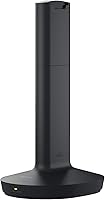
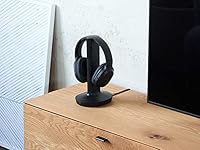
  • The charging dock doubles as a storage stand, keeping the headset organized and always ready.
  • Volume can be adjusted directly on the headset without touching the TV remote.
  • Works with virtually any TV that has RCA outputs or a 3.5mm headphone jack, including older models.
  • The closed-back design provides adequate passive isolation from background household noise.
  • Sony brand reliability gives buyers more confidence than comparable off-brand RF alternatives.
  • Setup requires no smartphone, no app, and no technical knowledge whatsoever.

Cons

  • At 2.9 lbs, the Sony RF400 is noticeably heavier than most competing wireless headsets.
  • Clamping pressure becomes uncomfortable for many users after two or more hours of continuous wear.
  • Audio quality is functional but flat — bass is weak and the sound lacks depth at this price point.
  • The 150-foot range claim is optimistic; thick walls and RF interference reduce real-world distance significantly.
  • Newer TVs without RCA or headphone outputs require a separate adapter that is not included.
  • No equalizer or sound customization of any kind, which is a real gap for users with hearing loss profiles.
  • The headband and ear cup housing show durability concerns after 12 to 18 months of regular daily use.
  • Recharging from flat takes around 7 hours, which is a long wait if the dock is forgotten overnight.
  • There is no charge indicator visible from a distance, so a dead battery can catch users off guard.
  • Buyers who later discover their TV supports Bluetooth often feel the RF-only limitation was not clear enough upfront.

Ratings

The scores below for the Sony WH-RF400 Wireless TV Headphones were generated by our AI system after analyzing thousands of verified global buyer reviews, with spam, bot activity, and incentivized feedback actively filtered out. The result is an honest, balanced snapshot of what real owners love about this wireless listening set — and where it genuinely falls short. Both the strengths and the frustrations are reflected transparently in every category.

Ease of Setup
93%
Owners repeatedly describe unboxing and getting audio through these RF TV headphones in under five minutes — plug the dock into the RCA port, place the headset on the dock, and it just works. For older adults or anyone not comfortable with tech, this kind of zero-configuration experience is a real relief.
A small number of users with older televisions report that finding the correct RCA output took some trial and error, and the included cable length occasionally felt short for certain TV cabinet configurations.
RF Connection Reliability
88%
The RF signal earns consistent praise for staying rock-solid through walls and across rooms. Users who previously struggled with Bluetooth dropouts find the stability of this wireless listening set notably refreshing during long evening viewing sessions.
A handful of owners in apartments with dense RF interference — near other wireless devices or in multi-unit buildings — reported occasional static bursts. Positioning the dock away from routers and cordless phones largely resolved it, but it required some experimentation.
Wireless Range
79%
21%
For most living rooms and open-plan spaces, the real-world range performs well — kitchen trips during commercials and bathroom breaks mid-episode are genuinely uninterrupted. Users in single-story homes report the range feels as advertised.
The 150-foot claim is optimistic in practice. Multi-story use or movement behind thick concrete walls significantly reduces effective range, and several buyers in larger homes found audio cutting out well before that distance.
Battery Life
91%
Twenty hours of continuous playback is a genuine strength. Retired users and binge-watchers consistently note they go days between charges, and the dock-as-charger setup means the headset is always topped up when it's not in use.
The 7-hour recharge time is on the longer side. If someone forgets to dock the headset and runs it flat, there is a frustrating wait before it is usable again — a faster charging circuit would make a meaningful difference.
Sound Clarity for Dialogue
82%
18%
Dialogue intelligibility is where these RF TV headphones genuinely shine. Users who previously struggled to follow conversation in TV dramas — particularly those with hearing loss — report a clear, immediate improvement over built-in TV speakers at any volume.
The noise reduction processing can occasionally make voices sound slightly thin or artificial, and some users notice a faint background hiss at higher volume levels that becomes distracting during quieter scenes.
Audio Quality Overall
63%
37%
For casual TV watching — news, sitcoms, reality shows — the sound is clear and pleasant enough. The 40mm drivers produce sufficient volume and the frequency range handles most broadcast content competently without obvious distortion at normal listening levels.
Audiophiles and users who also stream music will find the sound noticeably flat. Bass lacks punch, and the overall sonic character feels functional rather than enjoyable. At this price point, Bluetooth alternatives offer richer, more dynamic audio reproduction.
Comfort During Extended Use
71%
29%
For the first hour or two, most users find the ear pads and headband adequately comfortable. The over-ear closed design does a reasonable job of distributing weight, and the adjustable band accommodates a wide range of head sizes.
After two or more hours, a recurring pattern emerges in user feedback: the clamping force becomes noticeable, particularly for users with larger heads or those who wear glasses. The ear pads also trap heat during warmer months, which adds to discomfort.
Build Quality
67%
33%
The Sony RF400 feels solid in hand initially — the plastic construction is reasonably smooth and the hinge points have a reassuring click to them. Most users report no issues in the first several months of daily use.
Longer-term owners flag durability concerns, particularly around the headband and the plastic housing near the ear cups. Several reviewers mention cracking or loosening joints after 12 to 18 months of regular use, which is a concern given the price tier.
Volume & Audio Controls
74%
26%
Having volume control directly on the headset is a practical touch — no need to reach for a remote or look away from the screen. The control is intuitive and responsive, and users appreciate being able to fine-tune levels independently of the TV.
There is no EQ control, balance adjustment, or tone setting of any kind. Users with specific hearing profiles — common in the core demographic of older or hard-of-hearing buyers — cannot customize the sound beyond basic volume.
Compatibility with TVs
72%
28%
For TVs manufactured in the last decade that retain RCA outputs or a 3.5mm headphone jack, setup is completely straightforward. The included cable covers both connection types, which reduces the chance of needing an additional adapter.
Newer televisions increasingly omit both RCA and headphone outputs in favor of HDMI ARC or optical audio. Buyers with modern slim TVs may find they cannot connect this wireless listening set at all without purchasing a separate optical-to-RCA converter.
Charging & Dock Design
84%
The dock-as-stand concept is genuinely well thought out. It keeps the headset organized on the entertainment unit, charges passively whenever it's not in use, and eliminates the need for a separate charging cable hunt at the end of the night.
The dock has no charge indicator light that is easy to read from a distance, so users occasionally sit down to watch TV only to discover the headset needs more time on the dock. A visible LED or audio tone when charging completes would help.
Value for Money
61%
39%
For buyers with older TVs who specifically need RF wireless without Bluetooth, the Sony RF400 fills a genuine gap in the market and the Sony brand name provides some assurance of reliability that off-brand alternatives cannot match.
At this price, the competition from Bluetooth-capable alternatives is significant. Buyers who discover they could have used Bluetooth often feel the premium is hard to justify, and the audio quality relative to cost leaves a number of owners feeling underserved.
Weight & Portability
58%
42%
The headset sits acceptably on the head during stationary TV watching, and the dock keeps it neatly housed between sessions without taking up much shelf space.
At 2.9 pounds, these RF TV headphones are noticeably heavier than most competitors. Users who move around the house while wearing them — or those with neck or shoulder sensitivity — find the weight becomes a real issue within an hour.
Noise Isolation
69%
31%
The closed-back over-ear design provides a reasonable passive seal that muffles ambient household noise — dishwashers, fans, background conversation — adequately for focused TV viewing without needing active noise cancellation.
The isolation is inconsistent depending on head shape and fit. Users who cannot achieve a proper ear-cup seal find significant ambient sound bleeds in, which defeats much of the purpose for the core use case of watching TV in a noisy household.

Suitable for:

The Sony WH-RF400 Wireless TV Headphones were built for a very specific kind of viewer, and for that viewer, they genuinely deliver. If you or someone in your household is hard of hearing and needs to watch TV at a volume that would wake the neighbors, this wireless listening set solves the problem without requiring anyone to compromise. Night-shift workers who unwind with late-night TV while a partner sleeps nearby will find the RF connection reliable and the setup completely painless. Older adults who are uncomfortable with app-based pairing or Bluetooth menus will appreciate that these RF TV headphones require nothing more than plugging in a dock — no smartphone, no settings, no frustration. They also suit households with older televisions that have RCA outputs but no Bluetooth capability, filling a gap that surprisingly few products address well. Anyone who simply wants a dedicated, fuss-free TV audio solution that charges itself when not in use will find the dock-based design genuinely convenient.
Not suitable for:

The Sony WH-RF400 Wireless TV Headphones are a poor fit for buyers expecting versatile, high-fidelity wireless audio. If your television is a recent slim-panel model that has dropped RCA outputs and headphone jacks in favor of optical or HDMI ARC only, this wireless listening set will not connect without an additional converter — something Sony does not include or prominently disclose. Buyers hoping to also use their headphones with a phone, tablet, laptop, or streaming device will be flatly out of luck, since there is no Bluetooth and no auxiliary input mode. Those who prioritize sound quality — particularly bass response, stereo imaging, or overall richness — will likely feel let down when comparing the Sony RF400 to Bluetooth alternatives available at a similar price. Users who wear these RF TV headphones for more than two hours at a stretch may find the clamping force and heat buildup increasingly uncomfortable, especially if they wear glasses. And anyone expecting long-term durability from the plastic construction should factor in reports of headband wear after a year or more of daily use.
Specifications

  • Connectivity: Uses RF (radio frequency) wireless technology exclusively — there is no Bluetooth, NFC, or Wi-Fi pairing of any kind.
  • Wireless Range: The transmitter provides a rated wireless range of up to 150 ft (approximately 45.7 m) in open-air conditions.
  • Battery Life: The rechargeable headset delivers up to 20 hours of continuous playback on a full charge.
  • Charging Time: A fully depleted battery requires approximately 7 hours to reach a full charge via the transmitter dock.
  • Driver Size: Each ear cup houses a 40mm dynamic audio driver for sound reproduction.
  • Sensitivity: The headphones are rated at 100 dB sensitivity, allowing for high volume output suitable for hard-of-hearing users.
  • Impedance: Headphone impedance is rated at 32 Ohm, standard for consumer-grade over-ear headphones.
  • TV Connection: The transmitter dock connects to a television using the included RCA cable or an optional 3.5mm headphone jack cable.
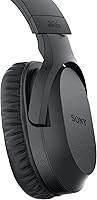
  • Ear Style: Closed-back, over-ear (circumaural) design with padded ear cups that fully enclose the ears.
  • Weight: The headset weighs 2.9 lbs (approximately 1.3 kg), which is on the heavier side for consumer wireless headphones.
  • Power Source: The headset is powered by one AA battery (included in the box); the transmitter dock is mains-powered via AC adapter.
  • Noise Control: Passive noise reduction is achieved through the closed-back ear cup design; there is no active noise cancellation (ANC).
  • Volume Control: An analog volume control wheel is located directly on the headset ear cup for independent level adjustment.
  • Included Items: The box includes the RF headset, transmitter dock, RCA audio cable, and one AA battery.
  • Compatible Devices: Designed exclusively for use with televisions; not compatible with phones, tablets, computers, or streaming devices.
  • Model Number: The official model designation is WH-RF400, also referenced in retail listings as WHRF400.
  • Dimensions: The overall packaged product measures approximately 9.81 x 7.25 x 13.5 inches.
  • Audio Technology: Dynamic driver technology is used for audio reproduction; no balanced armature or planar magnetic components.
  • Frequency Response: The 40mm driver is rated to cover a wide frequency range suitable for broadcast television audio content.
  • Manufacturer: Designed and manufactured by Sony Corporation; product has not been discontinued as of the original listing date.

Related Reviews
Sony WH-CH510 Wireless Bluetooth Headphones
81%
75%
Sound Quality
92%
Battery Life
80%
Comfort & Fit
88%
Portability
78%
Build Quality
More
Sony WH-1000XM3 Wireless Noise Cancelling Headphones
86%
96%
Noise Cancellation
94%
Sound Quality
90%
Battery Life
88%
Comfort for Long Sessions
92%
Build Quality
More
Sony WH-CH720N Wireless Noise Cancelling Headphones
84%
88%
Sound Quality
91%
Noise Cancellation
87%
Comfort and Fit
95%
Battery Life
83%
Build Quality
More
Sony WH-CH520
Sony WH-CH520
75%
93%
Battery Life
81%
Comfort & Fit
67%
Sound Quality
62%
Build Quality
88%
Value for Money
More
Sony WH-1000XM6 Wireless Noise Cancelling Headphones
88%
95%
Noise Cancellation Performance
91%
Sound Quality
88%
Battery Life
89%
Comfort and Wearability
90%
Build Quality
More
Sony WH-1000XM4 Wireless Noise Canceling Headphones
87%
95%
Noise Cancellation
92%
Battery Life
75%
Comfort & Fit
91%
Sound Quality
88%
Build Quality
More
Sony MDR-RF811RK Wireless Headphones
83%
88%
Sound Quality
92%
Wireless Range
75%
Comfort
85%
Battery Life
82%
Build Quality
More
ROSIDA TH11 Wireless Headphones for TV
85%
88%
Audio Quality
92%
Comfort and Fit
91%
Battery Life
94%
Ease of Setup
85%
Connectivity
More
TUINYO WH-960 Wireless Headphones
82%
85%
Sound Quality
90%
Comfort for Long Sessions
78%
Noise Cancellation Effectiveness
93%
Battery Life
65%
Build Quality
More
Dytole TV001 Wireless Headphones for TV
86%
88%
Sound Quality
90%
Comfort & Fit
94%
Battery Life
85%
Ease of Setup
76%
Bluetooth Range
More
ANSTEN AS60 Wireless TV Headphones

80%
93%
Ease of Setup
88%
Wireless Range & Stability
91%
Audio Latency
84%
Comfort & Wearability
71%
Sound Quality
More

FAQ

Unfortunately, if your TV has no RCA outputs and no 3.5mm headphone jack, these RF TV headphones will not connect directly. Many modern slim TVs have dropped those legacy ports entirely. You would need a separate optical-to-RCA converter or a headphone amplifier with an optical input to bridge the gap — neither of which is included.

No — this wireless listening set is designed strictly for televisions and has no Bluetooth or auxiliary input mode on the headset itself. It only receives audio from its paired RF transmitter dock, so there is no way to connect it to a phone, tablet, or computer.

It is genuinely one of the easiest setups in this category. You plug the transmitter dock into your TV's RCA output using the included cable, power it on, and place the headset on the dock for an initial sync. Most users are up and running in under five minutes with no instructions needed.

No, the standard kit includes one transmitter and one headset, and the dock is not designed to pair with multiple headsets simultaneously. If two people want to listen wirelessly at the same time, they would need two complete units.

In a wide-open space, the RF signal does carry well. In a typical home with walls, furniture, and other wireless devices nearby, you should expect reliable audio within one room and into adjacent ones. Multi-story use or movement through several concrete walls will reduce that range noticeably, and some users report dropouts well before the 150-foot maximum.

Very little, if anything. The closed-back over-ear design seals the audio in fairly well, so sound leakage at normal listening volumes is minimal. This is one of the main reasons people buy this wireless listening set specifically for late-night TV watching.

The transmitter dock charges the headset whenever it is seated in place, but there is no prominent charge-complete indicator that is easy to read from a distance. It is best practice to leave the Sony RF400 on the dock whenever you are not using it, which keeps it topped up passively without needing to monitor a charge level.

Sony does not officially sell replacement ear pads for this model through standard retail channels, so sourcing them can require searching third-party accessory suppliers. Some compatible generic pads do exist, but fit and comfort can vary. It is worth factoring in that the ear pads may degrade over time, particularly with daily use.

RF technology generally introduces less latency than Bluetooth, so lip-sync issues are minimal for most broadcast TV content. A small number of users watching content on streaming apps through a smart TV have noticed a slight delay, but it is rarely described as a dealbreaker, and it varies by TV model and source.

At 2.9 lbs, this wireless listening set is heavier than most competing headsets, and that weight does become noticeable after about an hour or two for some users. People with neck sensitivity or those who move around a lot while watching may find it more tiring than lighter alternatives. For stationary couch viewing, most users adapt to it reasonably well.