
Overview
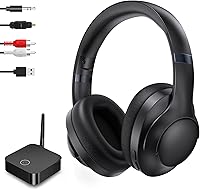
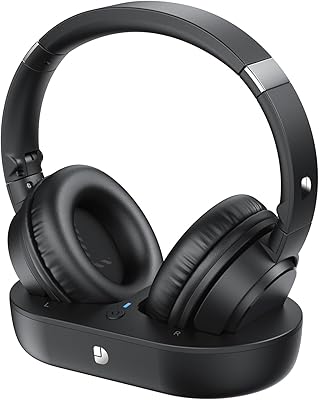
The ROSIDA TH11 Wireless TV Headphones take a fundamentally different approach from most TV headphones on the market — instead of relying on standard Bluetooth, they use a dedicated 2.4GHz transmitter that ships in the box. That distinction matters more than it sounds. Bluetooth was never designed with TV audio sync in mind, whereas 2.4GHz transmission keeps latency low enough that dialogue and lip movement actually match. This TV headset also doubles as a standalone Bluetooth 5.3 device for phones or laptops when the transmitter isn't in use. Four input options — Optical, AUX, RCA, and USB — mean it connects to practically any TV made in the last three decades. Setup is fully automatic: power both units on and they pair themselves, no menus required.
Features & Benefits
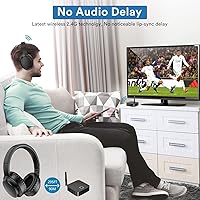
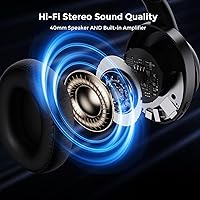
The headline technical spec here is latency: this TV headset keeps audio delay down to roughly 28 milliseconds in 2.4GHz mode. Standard Bluetooth typically runs around 220ms, which is enough lag to make mouths visibly out of sync with speech. The 40mm dynamic drivers are amplified, so viewers who struggle with standard TV volumes will actually hear what they need to hear. Battery runtime is a genuine 30 hours on a charge, with the transmitter handling power independently. The over-ear cushions use memory foam beneath a protein leather cover, which helps distribute weight evenly across a long session rather than concentrating pressure on any one spot. Wireless range is rated at 196 feet in open air, though through interior walls you should expect something more modest.
Best For
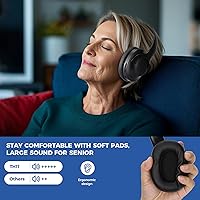
These over-ear TV headphones are a natural fit for anyone who watches TV at volumes that bother others in the household — whether that's late-night viewing while a partner sleeps, or simply needing audio louder than the room allows. They're particularly practical for people with mild to moderate hearing loss who want independent volume control without a complicated tech setup. The multi-input transmitter makes the Rosida wireless set a sensible pick for households with older televisions lacking optical output, since RCA and AUX connections fill that gap reliably. Anyone who has wrestled with Bluetooth pairing screens on prior headsets will appreciate that this one just connects automatically when you power it on.
User Feedback
With over 600 ratings and a 4.2-star average, the Rosida wireless set earns its place honestly. Reviewers most often praise the near-instant setup — many note that a family member who rarely deals with tech got it working without help. Sound clarity comes up repeatedly as a genuine improvement over TV speakers. On the critical side, some buyers report that the headband applies noticeable clamping pressure after an hour or more, particularly for those with wider heads. A handful of users note that real-world range through interior walls is closer to 50–60 feet than the rated figure. Controls are simple enough, though a few users mention the small button labels made the volume dial harder to distinguish at first glance.
Pros
- Auto-pairing transmitter connects instantly on power-up — no Bluetooth menus or re-pairing required.
- The 2.4GHz wireless mode keeps audio latency low enough to eliminate visible lip-sync delay.
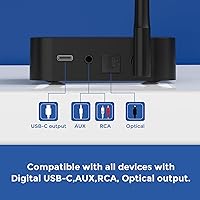
- Supports four TV input types — Optical, AUX, RCA, and USB — covering virtually any TV you own.
- Thirty hours of battery life means a full week of nightly viewing before needing a recharge.
- Built-in amplifier pushes volume well above standard TV output, genuinely useful for hard-of-hearing viewers.
- Memory foam ear cushions distribute pressure evenly, keeping long viewing sessions comfortable for most users.
- Doubles as a Bluetooth 5.3 headset for phones and laptops when the transmitter is not in use.
- Passive sound isolation reduces ambient room noise without requiring any active noise-cancellation hardware.
- Recharges fully in roughly 2.5 hours — fast enough to top up during the day for evening use.
Cons
- Real-world wireless range through interior walls falls noticeably short of the advertised open-air figure.
- Headband clamping force can cause discomfort during sessions longer than an hour, especially for wider heads.
- The Rosida wireless set is dialogue-focused — it is not designed for music or immersive cinematic audio.
- Button labels are small and hard to distinguish by touch alone, particularly in a dark room.
- The transmitter requires its own power connection and adds a permanent cable to your TV area.
- At just over 1.4 pounds, extended wear may cause some neck fatigue for sensitive users.
- The included RCA cable may not be long enough to reach all TV placements without an extension.
- No carrying case or storage solution is included, which makes tidying away the headset less convenient.
Ratings
Our AI rating system analyzed thousands of verified global reviews for the ROSIDA TH11 Wireless TV Headphones, actively filtering out incentivized, duplicate, and bot-generated submissions to surface what real owners genuinely think. The scores below reflect a balanced picture: where this TV headset genuinely outperforms similarly priced rivals, and where real-world performance falls short of the marketing claims. Both the standout strengths and the recurring frustrations are transparently represented in every category.
Latency & Lip-sync
Setup & Ease of Use
TV Compatibility
Volume & Amplification
Comfort & Fit
Audio Clarity
Battery Life
Wireless Range
Build Quality
Value for Money
Bluetooth Mode
Controls & Usability
Passive Noise Isolation
Suitable for:
The ROSIDA TH11 Wireless TV Headphones are a well-matched solution for viewers who need to raise the volume significantly without affecting anyone else in the room — a genuinely common challenge for people with partial hearing loss or age-related audio sensitivity. The 2.4GHz transmitter handles sync reliably enough that dialogue-heavy shows, news, and sports commentary come through cleanly without the mouth-movement mismatch that plagues cheaper Bluetooth alternatives. Because the transmitter supports Optical, AUX, RCA, and USB inputs, it connects to an unusually wide range of televisions, including older sets that many competing products simply cannot accommodate. The auto-pairing design means you power it on and it is ready — no passkey to enter, no menu to navigate, and no need to re-pair after the battery runs out. This TV headset is also a practical choice for late-night viewers in shared homes or apartments where sound carries easily and wearing headphones is simply the most considerate option for everyone else.
Not suitable for:
Buyers expecting high-fidelity, music-grade audio should know upfront that the ROSIDA TH11 Wireless TV Headphones are engineered for TV dialogue clarity and elevated volume, not for nuanced music listening or cinematic surround detail. The 40mm dynamic drivers handle spoken content well but will not satisfy anyone expecting rich bass extension or a layered soundstage. The advertised 196-foot range is an open-air figure — through the typical walls and furniture of a real home, practical range is likely closer to 50–70 feet, which makes this headset a poor fit for anyone hoping to wander freely across multiple rooms. Some users with wider heads or those who wear glasses have found that clamping pressure grows uncomfortable after long sessions, so buyers sensitive to headband fit should factor that in before purchasing. Finally, anyone whose TV already delivers reliable Bluetooth audio without sync issues may find that adding a dedicated 2.4GHz transmitter introduces more setup complexity than it resolves.
Specifications
- Primary Wireless: The headset transmits audio via a dedicated 2.4GHz wireless connection, separate from standard Bluetooth, for reduced latency.
- Secondary Wireless: A standalone Bluetooth 5.3 mode allows direct pairing with phones, tablets, and laptops without using the transmitter.
- Audio Latency: In 2.4GHz mode, audio latency is approximately 28ms, which is below the threshold most viewers can detect as lip-sync delay.
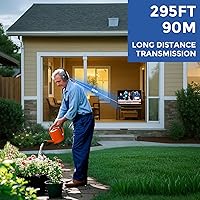
- Wireless Range: The transmitter is rated for up to 196ft of range in open-air conditions; real-world performance through interior walls is typically 50–70ft.
- Battery Life: The headset provides up to 30 hours of continuous playback on a single full charge.
- Charging Time: A full recharge takes approximately 2.5 hours via the included USB-C cable.
- Driver Size: Each ear cup is fitted with a 40mm dynamic audio driver, supplemented by a built-in audio amplifier for higher output volume.
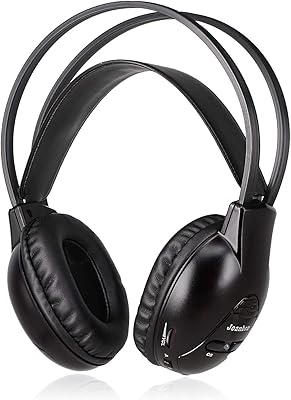
- Ear Pad Material: Ear cushions consist of a protein leather outer surface backed by a memory foam inner layer designed to reduce pressure during extended wear.
- TV Inputs: The transmitter accepts four audio input types: Optical (TOSLINK), AUX 3.5mm, RCA (stereo), and USB digital output.
- Form Factor: Full-size over-ear design with an adjustable headband to accommodate a range of head sizes.
- Noise Control: Passive sound isolation is achieved through the physical seal of the over-ear cups; no active noise-cancellation electronics are included.
- Weight: The headset weighs 1.41 pounds without cable attached.
- Dimensions: Overall product dimensions are 8.84 x 3.73 x 8.5 inches when folded.
- Water Resistance: The headset carries a water-resistant rating suitable for light incidental moisture but is not intended for submersion or heavy exposure.
- Included Accessories: The package contains one 2.4GHz transmitter, one RCA stereo adapter cable, and two USB-C charging cables.
Related Reviews
Dytole TV001 Wireless TV Headphones
ANSTEN AS60 Wireless TV Headphones
Earpanda Pro Wireless TV Headphones for Seniors
SIMOLIO 737D Plus Dual Wireless TV Headphones
Daysnew DB100 Wireless TV Headphones
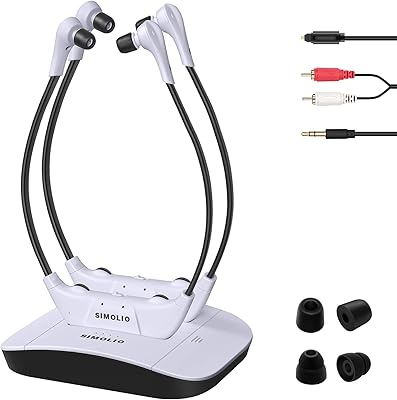
SIMOLIO SM-824D2 Dual Wireless TV Headphones
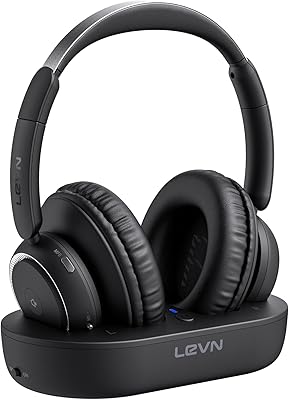
LEVN LE-HS018 Wireless TV Headphones
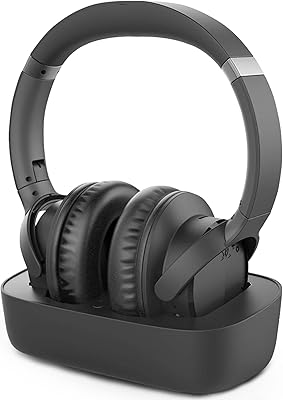
Avantree Ensemble Wireless TV Headphones
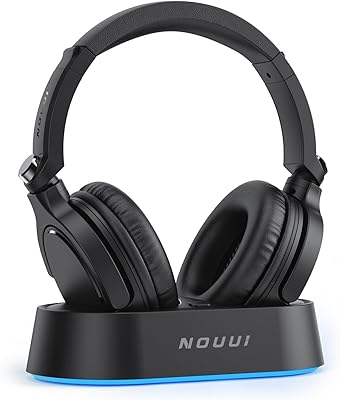
NOUUI NU-TV002 V2 Wireless TV Headphones