Overview

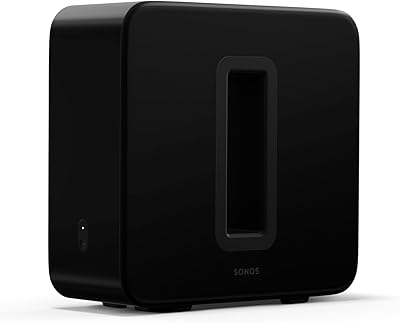
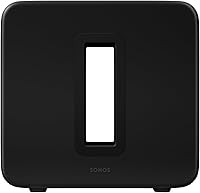
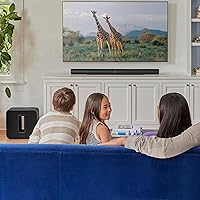
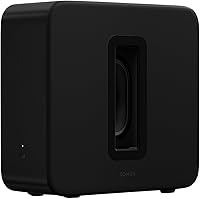
The Sonos Sub 4 is Sonos's fourth-generation wireless subwoofer, arriving in late 2024 as a serious home theater addition — not the kind of purchase you make casually at this price point. Built exclusively to pair with Sonos soundbars like the Arc Ultra, Arc, and Beam, this subwoofer occupies a very specific lane. It won't function as a standalone unit, and Sonos is upfront about that. What makes it stand out is a refined sculptural design with an updated matte finish that sits quietly in a living room without demanding attention, plus a fully wireless connection over WiFi that eliminates cables running across the floor entirely.

Features & Benefits

The engineering inside this wireless sub is where things get interesting. Sonos uses a force-canceling driver layout — two opposing drivers working against each other to kill the vibration that makes cheaper subs buzz and rattle on hard floors. Paired with a ported enclosure, the result is bass that reaches lower and sounds cleaner than a sealed cabinet would deliver. Setup takes minutes: one power cable, the Sonos app, and you're done. The shift to a matte surface is a genuine quality-of-life improvement over the older glossy shell. Dolby support and multi-room audio integration round out a capable package.

Best For

This subwoofer is a natural fit for anyone already running a Sonos Arc, Arc Ultra, or Beam who finds the low-end lacking. Dedicated home theater rooms benefit most — the Sub 4 can be tucked beside a cabinet or under a TV stand with only a single power cable in sight. It's also well-suited to buyers who care about design consistency; the matte black rectangular form looks deliberate in a well-furnished space rather than like an afterthought. That said, if you don't own a compatible Sonos soundbar, this isn't your starting point. Its value is entirely tied to the Sonos ecosystem.

User Feedback

Reception for the Sub 4 has been largely positive, with buyers frequently praising the noticeable bass improvement over the previous Sub 3 — especially on action movies and bass-heavy music. The matte finish gets consistent approval from those who found the older glossy surface a fingerprint magnet. Setup receives near-universal praise for being exactly as simple as advertised. The friction points tend to cluster around two areas: the price is steep, and a subset of users in WiFi-heavy homes reports occasional dropouts. The most persistent criticism, though, centers on the compatibility wall — buyers who don't realize it only works with specific Sonos soundbars often feel misled.

Pros

  • Deep, controlled bass output that improves cinematic and music listening without sounding bloated or aggressive.
  • Force-canceling driver design keeps the sub whisper-quiet on hard floors — no buzz, rattle, or cabinet vibration.
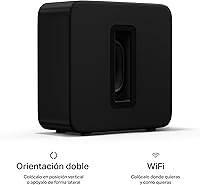
  • WiFi connectivity means truly flexible placement; no speaker cables required anywhere in the room.
  • Setup takes under ten minutes — one power cable, the Sonos app, and Trueplay handles room calibration automatically.
  • The updated matte finish resists fingerprints and looks far more refined than the older glossy surface.
  • Pairs tightly with Arc and Arc Ultra for a cohesive full-range sound with no audible frequency handoff gaps.
  • App-based control lets you adjust bass levels in real time without touching the unit.
  • The Sub 4 holds its own aesthetically — it looks deliberate in a living room, not like an afterthought.
  • Dolby support and multi-room audio integration work reliably within the Sonos platform.
  • Ported enclosure design extends low-frequency reach noticeably compared to sealed alternatives at similar sizes.

Cons

  • Strictly limited to Sonos Arc, Arc Ultra, and Beam — incompatible with any non-Sonos soundbar or receiver.
  • No wired connection option leaves users vulnerable to WiFi instability in crowded wireless environments.
  • The price is steep, and the performance delta over the Sub 3 is real but not dramatic enough for everyone.
  • At over 26 pounds, repositioning the sub for room rearrangements is a two-handed job every time.
  • Manual EQ options through the Sonos app are limited compared to dedicated AV receiver configurations.
  • Power outlet proximity still constrains placement despite the wireless audio connection.
  • No color options beyond black, which limits compatibility with lighter or warmer home decor palettes.
  • Some Sub 3 owners report the upgrade cost is hard to justify given the incremental improvement.
  • Buyers in small rooms pairing with the Beam may find the bass output needs significant calibration to avoid overpowering the space.

Ratings

The Sonos Sub 4 earns strong marks overall, but the scores below reflect where it genuinely excels and where real buyers have pushed back. These ratings were generated by AI after analyzing verified global user reviews, with spam, bot activity, and incentivized feedback actively filtered out — so both the highs and the frustrations are faithfully represented.

Bass Performance
93%
Users consistently describe the low-end output as deep, tight, and controlled rather than boomy or loose. Movie explosions and bass-heavy music tracks come through with real physical presence, and the force-canceling architecture keeps things clean even at high volume levels in larger rooms.
A small group of audiophiles feel the sub prioritizes controlled accuracy over raw, room-shaking output — which may disappoint buyers expecting a more aggressive, concert-like rumble. In very large open-plan spaces, some users wanted more headroom.
Setup & Installation
91%
The single-cable, app-driven setup is one of the most praised aspects across user reviews. Most buyers report being fully up and running in under ten minutes, with the Sonos app walking through pairing intuitively and Trueplay tuning handling room calibration automatically.
A handful of users on older routers or congested 2.4GHz networks hit snags during the initial pairing process. The setup is smooth when your WiFi cooperates, but troubleshooting network issues without a wired fallback option adds friction.
Wireless Connectivity Reliability
74%
26%
For most users in typical home environments, the WiFi connection stays stable and drop-free across extended listening sessions. Placement flexibility is a genuine benefit — tucking the sub beside a cabinet or behind furniture works without signal issues in average setups.
In WiFi-dense urban apartments or homes with many competing devices, intermittent dropouts surface as a recurring complaint. Unlike some competing systems, there is no option to hardwire the sub as a fallback, which leaves network-sensitive users without a workaround.
Value for Money
62%
38%
Buyers who fully commit to the Sonos ecosystem generally feel the Sub 4 delivers performance that justifies its positioning. Paired with an Arc Ultra, the audio upgrade is described as transformative for home theater use, making the investment feel purposeful rather than frivolous.
At this price point, the exclusivity to Sonos soundbars is a hard pill for many to swallow. Buyers who later discover the compatibility wall — or who were hoping to use it with non-Sonos sources — feel the value proposition collapses entirely for their use case.
Build Quality & Design
88%
The sculptural rectangular form and updated matte finish are widely appreciated as a step up from the glossy Sub 3. Users note that it looks genuinely considered in a living room setting — more like furniture than a speaker box — and the metal-and-plastic construction feels solid underhand.
At over 26 pounds, moving or repositioning the sub is more of an event than a quick adjustment. A few buyers also noted that the matte surface, while fingerprint-resistant, can show scuffs over time if placed in high-traffic areas.
Compatibility & Ecosystem Integration
71%
29%
Within the Sonos ecosystem, integration is tight and polished. The sub communicates flawlessly with Arc, Arc Ultra, and Beam soundbars, and switching between stereo music and Dolby home theater modes is handled automatically without any manual reconfiguration.
The compatibility wall is the single most polarizing aspect of this product. It does not work with non-Sonos soundbars, third-party receivers, or as a standalone sub — a limitation that catches some buyers off guard and significantly narrows its addressable audience.
App Control & User Interface
86%
The Sonos app provides clean, accessible controls for bass level adjustment and EQ tweaks. Users appreciate that changes apply in real time and that Trueplay room correction does the heavy lifting automatically, reducing the need for manual tinkering.
Sonos has faced criticism historically for app redesigns that disrupted established workflows, and some long-term users carry that skepticism into their Sub 4 reviews. A minority also find the level of manual EQ control limited compared to dedicated AV receivers.
Low-Frequency Extension
89%
The ported enclosure design pays off noticeably on cinematic content — helicopter flyovers, thunder, and deep synthesizer rumble all register with a physicality that sealed subwoofers at this size rarely match. Users specifically call this out when comparing against the Sub 3.
Pure bass extension numbers are not publicly specified by Sonos, which frustrates technically-minded buyers who want to compare specs head-to-head. A small segment of users report that below a certain threshold, the sub rolls off faster than expected in acoustically challenging rooms.
Noise & Distortion Control
92%
The force-canceling driver architecture earns strong marks in reviews specifically because the sub stays quiet when it should. No buzz, no cabinet rattle, no sympathetic vibrations on hardwood floors — users on hardwood and tile surfaces highlight this as a meaningful real-world benefit.
Isolated reports mention a faint mechanical noise during very low-frequency passages at maximum volume settings, though this appears to be an exception rather than a pattern. It is not a widespread complaint but worth noting for buyers running the sub in critical listening environments.
Room Placement Flexibility
83%
WiFi connectivity and the absence of speaker cables give buyers genuine freedom in positioning. Most users find the sub works well tucked beside a TV unit, inside a cabinet opening, or placed across the room from the soundbar without any signal penalty.
While wireless placement is flexible, the sub still requires proximity to a power outlet, and its 26-pound weight makes trial-and-error positioning less casual than it sounds. Users in rooms with limited outlet placement may find the flexibility somewhat overstated.
Upgrade Value vs. Sub 3
67%
33%
Buyers coming from the Sub 3 who wanted noticeably better low-frequency extension do report a tangible improvement, particularly on the deepest frequencies. The matte finish upgrade alone is a quality-of-life win that previous-generation owners notice immediately.
The performance delta between Sub 3 and Sub 4 is real but not dramatic enough for everyone to justify the cost of upgrading. Several Sub 3 owners conclude that the improvement, while genuine, does not warrant spending a significant amount on top of what they already paid.
Soundbar Pairing Performance
91%
When matched with the Arc Ultra in particular, the Sub 4 rounds out a cohesive, full-range audio picture that users describe as a meaningful step toward proper home cinema. The handoff between soundbar and sub is smooth and free of the audible frequency gaps common in mismatched systems.
Pairing with the Beam — Sonos's more compact soundbar — occasionally draws feedback that the sub can feel slightly overpowered for smaller rooms. Proper Trueplay calibration helps, but room size and acoustics play a larger role in the balance than some buyers anticipate.
Aesthetics & Finish
87%
The move to a matte finish is almost universally well-received. Users who place the sub in open, visible parts of their living room appreciate that it doesn't collect fingerprints or reflect glare from ambient lighting, making it noticeably easier to keep looking clean.
Design is inherently subjective, and a small number of buyers find the large rectangular form factor too visually dominant for compact rooms. Color options are currently limited, which frustrates buyers whose home decor leans lighter or warmer in tone.
Packaging & Unboxing Experience
78%
22%
Most users describe the unboxing as appropriately premium for the price — protective foam inserts, tidy cable management, and a clear quick-start guide that doesn't overwhelm. The presentation aligns with expectations for a high-end audio brand.
A few buyers flagged that the power cable length felt restrictive for placements farther from wall outlets, requiring an extension cord that slightly undercuts the clean single-cable promise. The included documentation is minimal beyond the quick-start guide.

Suitable for:

The Sonos Sub 4 is purpose-built for a specific kind of buyer, and when it lands in the right hands, it genuinely delivers. If you already own a Sonos Arc, Arc Ultra, or Beam soundbar and have been living with a nagging sense that something is missing in the low end — especially during movies or bass-heavy music — this subwoofer closes that gap in a meaningful way. Home theater enthusiasts who care about clean, controlled bass rather than raw, indiscriminate volume will find the force-canceling architecture pays real dividends in everyday listening. The wireless setup and single-cable installation also make it ideal for anyone who has spent years dreading the speaker wire run across a living room floor. Buyers who care about how their gear looks in a furnished space will appreciate that the Sub 4 was clearly designed with interior aesthetics in mind — it sits comfortably in a modern room without looking out of place. If you are deeply invested in the Sonos ecosystem and want everything managed through one app, this sub fits that lifestyle without any friction.

Not suitable for:

The Sonos Sub 4 is a hard sell for anyone who isn't already inside the Sonos ecosystem — and that's worth stating plainly before a single dollar changes hands. It does not work with non-Sonos soundbars, AV receivers, or any third-party audio source; it is not a standalone subwoofer, and treating it like one will result in a very expensive paperweight. Budget-conscious buyers or those coming from the Sub 3 who expect a dramatic generational leap may find the performance improvement real but not dramatic enough to justify the premium outlay. Anyone living in a densely networked apartment building with chronic WiFi congestion should be aware that occasional dropouts are a documented issue with no wired fallback option available. If you prefer granular manual EQ control or want to integrate the sub into a more complex, mixed-brand audio system, the locked-down Sonos app environment will feel limiting. Finally, buyers with smaller rooms who pair this with a Beam soundbar may find the bass presence slightly overpowering without careful Trueplay calibration.

Specifications

  • Brand: Manufactured by Sonos, a US-based premium audio company known for its wireless ecosystem products.
  • Model: Sub 4, fourth-generation subwoofer, model number SUBG4US1BLK.
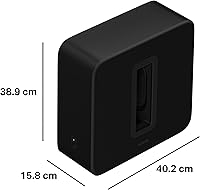
  • Dimensions: The unit measures 6.22″ deep, 15.31″ wide, and 15.83″ tall in its floor-standing orientation.
  • Weight: The sub weighs 26.46 pounds, making it a substantial floor-standing unit requiring deliberate placement.
  • Driver Configuration: Dual custom-engineered dynamic drivers arranged in a force-canceling layout to minimize vibration and distortion.
  • Enclosure Type: Ported enclosure design tuned to extend low-frequency output deeper than a comparable sealed cabinet.
  • Connectivity: Connects wirelessly to compatible Sonos soundbars over a dedicated WiFi network with no audio cables required.
  • Compatibility: Works exclusively with Sonos Arc Ultra, Arc, and Beam soundbars; not compatible with non-Sonos devices or third-party receivers.
  • Control Method: Managed entirely through the Sonos app on iOS or Android, including bass level adjustment and Trueplay room calibration.
  • Audio Formats: Dolby-enabled, supporting Dolby Atmos pass-through as part of a compatible Sonos soundbar system.
  • Multi-Room Audio: Fully integrated into the Sonos multi-room audio ecosystem, allowing synchronized playback across connected Sonos devices.
  • Power Supply: Corded electric, powered via a single included power cable with no external amplifier or receiver required.
  • Finish: Matte black exterior finish applied to a metal and plastic composite construction.
  • Mounting Type: Designed for floor-standing placement only; no wall-mount bracket or stand accessory is included or officially supported.
  • Surround Config: Operates as a dedicated 1.0 subwoofer channel, adding low-frequency extension to the paired soundbar system.
  • In the Box: Includes the subwoofer unit, one power cable, and a quick-start guide; no additional accessories are bundled.
  • Warranty: Covered by a Sonos limited warranty; buyers should verify current warranty terms and duration on the Sonos website.
  • Release Date: The Sub 4 was first made available for purchase on October 15, 2024.

Related Reviews
Sonos Sub Mini
Sonos Sub Mini
88%
92%
Bass Performance
90%
Integration with Sonos Devices
88%
Size and Design
87%
Wi-Fi Connectivity
93%
Setup Process
More
Sonos Sub (Gen 3)
Sonos Sub (Gen 3)
85%
91%
Sound Quality
88%
Ease of Setup
93%
Build Quality
95%
Bass Performance
92%
Compatibility with Sonos Systems
More
Loma Dry Shampoo 4.4 oz
87%
90%
Effectiveness in Oil Absorption
88%
Scent Quality
83%
Volume and Texture Enhancement
94%
Suitability for Sensitive Skin
89%
Packaging and Ease of Use
More
SounDigital 400.4 EVO 4.0 Amplifier
86%
89%
Performance
85%
Build Quality
92%
Sound Clarity
88%
Power Output
83%
Durability
More
Number 4 Sugar Texturizing Spray 4.9oz
86%
88%
Effectiveness in Creating Beach Waves
92%
Gentleness on Hair
85%
Texture and Feel
80%
Volume and Body
90%
Suitability for Fine Hair
More
Planet Audio PL1600.4 4-Channel Car Amplifier
84%
89%
Power Output
85%
Sound Quality
72%
Ease of Installation
91%
Size & Compactness
93%
Value for Money
More
Asustor Drivestor 4 Pro AS3304T 4-Bay NAS
83%
91%
Network Performance
88%
Value for Money
94%
Ease of Setup
83%
Storage Expansion
85%
Build Quality
More
Recoil DI550.4 4-Channel Car Audio Amplifier
85%
88%
Sound Quality
91%
Power Output
72%
Ease of Installation
85%
Cooling Efficiency
90%
Customizability of Controls
More
Fair and White Original Glycerin 4.4 Fl oz
86%
91%
Hydration Effectiveness
87%
Skin Tone Evenness
89%
Gentleness on Sensitive Skin
84%
Absorption Speed
82%
Texture and Feel
More
Zoom ZHA-4 Compact 4-Channel Headphone Amplifier
87%
91%
Sound Quality
95%
Portability
75%
Battery Life
88%
Ease of Use
83%
Build Quality
More

FAQ

No, it does not. The Sub 4 is designed exclusively to pair with compatible Sonos soundbars — specifically the Arc, Arc Ultra, and Beam. It cannot connect to TVs, AV receivers, or any non-Sonos source directly. If you don't already own one of those soundbars, you'll need to factor that into your purchase plan.

Setup is straightforward for most users. You plug in the power cable, open the Sonos app on your phone, and it walks you through pairing the sub to your existing soundbar. The whole process typically takes under ten minutes. Once paired, Trueplay calibration — if you're on an iOS device — uses your phone's microphone to tune the bass output to your room automatically.

Not directly as a subwoofer role. The Sub 4 is designed to integrate as the bass layer in a soundbar-based home theater setup. While Sonos does allow pairing a sub with some speaker configurations, compatibility specifics depend on the current Sonos app and firmware — check the Sonos support site for the most current pairing options before purchasing.

It measures 15.31″ wide, 15.83″ tall, and 6.22″ deep, and weighs just over 26 pounds. It is designed for floor-standing placement rather than being tucked inside a cabinet shelf. Most buyers place it beside a TV unit or media console, where it sits flush and unobtrusive.

For most home environments with a decent router, the connection is stable. The issues surface mainly in apartments or homes with heavily congested WiFi networks running many devices simultaneously. There is no option to run a wired ethernet connection as a fallback, so if your network is notoriously unreliable, that is worth factoring in before you buy.

The honest answer is: it depends on your expectations. The Sub 4 offers improved low-frequency extension, a better matte finish, and refined acoustic engineering over the Sub 3. Most first-time sub buyers won't have a frame of reference and will simply enjoy the performance. Existing Sub 3 owners, however, are more divided — the improvement is real but not dramatic, and whether it justifies the upgrade cost is a genuinely personal call based on how critical low-end performance is to your listening habits.

Yes, when paired with a compatible Sonos soundbar like the Arc or Arc Ultra, the system is Dolby Atmos-capable. The sub handles the low-frequency effects channel in that setup. Just make sure your TV is passing Dolby Atmos via eARC or HDMI ARC to the soundbar, which is where the decoding happens.

You can adjust the bass level through the Sonos app, and the changes apply in real time. There is also a loudness setting and, on iOS, the Trueplay feature that analyzes your room acoustics and adjusts the sound profile automatically. Manual EQ is more limited than what you would get from a dedicated AV receiver, but it covers the basics well for most users.

The matte surface is noticeably more fingerprint-resistant than the glossy finish on earlier generations, which was a common complaint. Dust settles on any dark surface over time, but a quick wipe with a dry cloth handles it easily. A few users have noted that the matte finish can show light scuffs if placed in a high-traffic spot, so reasonable care applies.

Yes, because this wireless sub communicates with your soundbar over your home WiFi network, a complete network outage would interrupt the connection. In practice this is rarely an issue for most users, but it is a structural limitation of the wireless-only design worth understanding upfront, particularly if your internet or router is prone to dropping out.