Overview

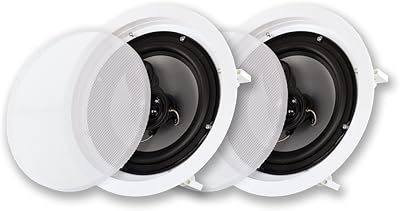
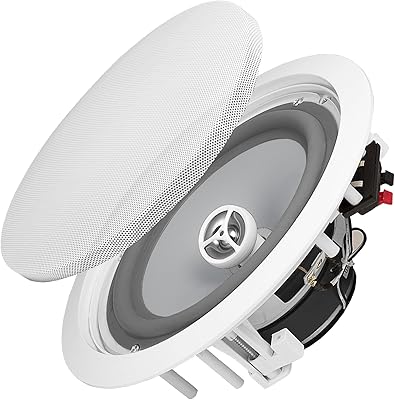
The Sonos In-Ceiling by Sonance Speaker is a purpose-built architectural audio solution developed through a collaboration between Sonos and Sonance, aimed at buyers who want music woven into their home rather than sitting on a shelf. Right away, one thing needs to be clear: these in-ceiling speakers are not wireless units you simply connect to Wi-Fi. They require a Sonos Amp to function — sold separately — and proper wired installation. The round grille is paintable to match your ceiling, so once installed, the speaker effectively disappears. Also worth flagging: each listing covers a single speaker, not a stereo pair. This is a permanent architectural investment, not an impulse buy.
Features & Benefits

What sets these in-ceiling speakers apart from generic alternatives is how tightly integrated the listening experience becomes once they're properly dialed in. The standout feature is Trueplay automatic calibration, which uses the Sonos app to analyze your room — its dimensions, furnishings, and surface materials — then adjusts the EQ accordingly. The result is noticeably more balanced sound than you'd get from a fixed-setting speaker. The 6.5-inch woofer handles low frequencies with real authority, while the 25mm tweeter keeps the highs crisp. A 90-degree coverage angle means sound spreads evenly rather than pooling beneath the speaker. One Sonos Amp can drive up to three pairs, making multi-room scaling considerably more practical.

Best For

This Sonance-built speaker makes the most sense for homeowners mid-build or renovation, where running speaker wire is still straightforward. If you're already in the Sonos ecosystem — using a soundbar, portable speaker, or Sonos Amp in another room — adding these to a new space fits naturally within that framework. They're also a smart pick for anyone building out a 5.1 surround system without wanting speaker stands or floor clutter. That said, they're not the right fit for renters, casual listeners, or anyone hoping to skip professional installation. The payoff is an audio setup that disappears into the ceiling and just stays there.

User Feedback

Buyers who've gone through a full install tend to be quite happy with how the Sonos architectural speaker performs day-to-day. Sound clarity comes up repeatedly as a highlight, with many noting that Trueplay made an audible difference compared to what they heard before calibration. On the downside, two points of friction surface consistently. First, quite a few buyers were caught off guard realizing the listing is per unit, not per pair — a frustration that's really a labeling issue, not a product flaw. Second, the cost of the required Sonos Amp adds significantly to the total outlay, which some found wasn't made obvious at checkout. Installation depth requirements — 120mm — also drew occasional complaints from those with shallow ceiling cavities.

Pros

  • Trueplay calibration noticeably improves sound balance in ways you can actually hear, not just read about on a spec sheet.
  • Once painted and installed, these in-ceiling speakers are genuinely invisible — guests consistently fail to notice them.
  • The 90-degree coverage angle distributes sound evenly across a room, so there's no obvious sweet spot you have to stand in.
  • One Sonos Amp powering up to three speaker pairs makes multi-room builds more affordable at scale.
  • Multi-room synchronization through the Sonos app works reliably and without meaningful lag in real-world daily use.
  • The frequency range — 36Hz to 20kHz with DSP — gives the Sonos architectural speaker a broader sound envelope than most in-ceiling competitors.
  • Build quality holds up well over years of continuous use, with no common hardware failure patterns reported by long-term owners.
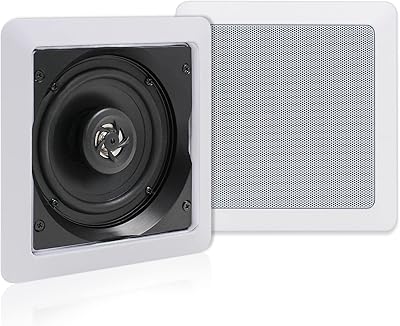
  • Optional square grilles offer a useful aesthetic alternative for rooms where a round speaker would look out of place.

Cons

  • Each listing covers a single speaker unit — buyers expecting a stereo pair in one box are frequently caught off guard.
  • A Sonos Amp is required and sold separately, adding substantially to the true cost of getting started.
  • The 120mm installation depth causes clearance problems in older homes and some modern builds with shallow ceiling cavities.
  • Trueplay calibration requires an iOS device, locking Android-only households out of the system's most important feature.
  • These in-ceiling speakers are fully locked into the Sonos platform — there is no Bluetooth fallback or third-party amplifier compatibility.
  • Bass performance in large open-plan rooms can feel thin without adding a dedicated subwoofer to the setup.
  • The grille material feels noticeably plasticky during installation, which is a jarring first impression at this price tier.
  • Long-term performance depends on Sonos continuing to support the platform through software and firmware updates.
  • Recalibrating Trueplay after significant furniture changes requires repeating the full setup process from scratch.

Ratings

The Sonos In-Ceiling by Sonance Speaker has been scored below by our AI system after analyzing verified global buyer reviews, with spam, bot-generated feedback, and incentivized posts actively filtered out. These scores reflect the full spectrum of real-world experience — from dedicated home theater builders to everyday Sonos users expanding their whole-home setup. Both the genuine strengths and the recurring frustrations are transparently baked into every number you see here.

Sound Quality
91%
Across hundreds of verified reviews, the clarity and balance of these in-ceiling speakers earn consistent praise. Buyers upgrading from budget in-ceiling alternatives describe the difference as immediately obvious — vocals are articulate, and the low end has real weight without muddying the midrange.
A small but vocal group found that bass extension in larger open-plan rooms felt slightly thin without a dedicated subwoofer. The speakers genuinely shine in small to medium rooms; sprawling spaces expose the limits of the 6.5-inch woofer working alone.
Trueplay Calibration
88%
Trueplay is frequently cited as a standout feature that buyers didn't expect to matter as much as it does. Users describe running the calibration in a tiled bathroom versus a carpeted bedroom and hearing the system compensate in ways that feel genuinely intelligent rather than gimmicky.
Trueplay requires an iOS device to run, which frustrated Android-only households. A handful of reviewers also noted that recalibrating after furniture changes requires repeating the full process, which some found tedious after the novelty wore off.
Installation Experience
62%
38%
Buyers with prior electrical or AV installation experience found the physical mounting process clean and well-documented. The 120mm installation depth fits most standard ceiling cavities, and the included hardware is described as solid for the price tier.
For first-time installers, the process is far from straightforward. Several reviewers with shallow ceiling joists — particularly in older homes — hit clearance problems at the 120mm depth requirement. The near-universal advice in reviews is to budget for a professional installer rather than attempting a DIY run without experience.
Ecosystem Integration
93%
For households already running Sonos, adding these in-ceiling speakers to an existing system is described as genuinely smooth. Multi-room grouping, volume control through the Sonos app, and synchronization with other Sonos devices all work reliably in day-to-day use.
The ecosystem lock-in is real and worth understanding upfront. These speakers are entirely dependent on the Sonos platform — there is no standalone mode, no Bluetooth fallback, and no compatibility with competing smart home audio systems.
Value for Money
67%
33%
Buyers who treated this as a long-term architectural investment — comparable to choosing quality fixtures during a renovation — felt the price was justified by the build quality and sound performance. The ability to power three pairs from a single Amp adds some cost efficiency at scale.
The total cost of ownership catches many buyers off guard. The speakers themselves sit at a premium price point, and then a Sonos Amp must be purchased separately to make them function at all. For buyers who didn't factor in the Amp, the overall spend felt significantly steeper than anticipated.
Aesthetic & Grille Design
84%
The paintable white grille is a genuinely useful design choice for buyers who want speakers to disappear into the ceiling. Multiple reviewers shared that after painting, guests had no idea speakers were even present — which is precisely the point for an architectural product like this.
The round grille is the default, and while an optional square grille exists, it requires a separate purchase. A few reviewers noted that the grille feels slightly plasticky up close, which matters less once it's painted but may bother detail-oriented buyers during installation.
App & Control Experience
82%
18%
The Sonos app handles day-to-day control well for most users — volume adjustments, room grouping, and source switching all work without lag. Buyers managing multiple rooms consistently rate the app as intuitive once the initial setup is complete.
The app has gone through updates that a segment of long-term Sonos users feel introduced unnecessary complexity. A minority of reviewers flagged occasional connectivity hiccups requiring an app restart, though these were not described as chronic issues.
Build Quality & Materials
79%
21%
The speaker basket and hardware feel sturdy and are built to stay in a ceiling for years without issue. Buyers who have had them installed for two or more years report no degradation in driver performance or grille fit, which matters for a permanent fixture.
The grille material is plastic, and while the overall construction is solid, it doesn't quite feel as premium as the price suggests when handled during installation. This is largely a non-issue post-install, but it's the first impression buyers get of the physical product.
Multi-Room Scalability
86%
The ability to run up to three speaker pairs from a single Sonos Amp is a practical advantage for buyers outfitting multiple rooms. Reviewers building whole-home audio setups found that the per-room cost became more manageable when the Amp cost was spread across several pairs.
Scaling beyond three pairs requires additional Amp units, and each Amp adds to the overall system cost. A few buyers who didn't map this out in advance found their whole-home audio budget expanding faster than expected as room count grew.
Frequency Range & Coverage
83%
The 36Hz to 20kHz frequency range — enabled by DSP — gives these in-ceiling speakers a broader sound envelope than most competitors in the category. The 90-degree coverage angle means that sound feels consistent whether you're standing directly below the speaker or across the room.
The frequency response figures are measured with DSP active, so buyers disconnected from the Amp processing chain would see different results. In practice, performance in the very low frequencies depends heavily on room characteristics and the calibration Trueplay applies.
Pricing Transparency
41%
59%
The hardware itself is a known premium brand with a clear product identity — buyers who did their research before purchasing understood what they were paying for and felt the product delivered on its promises without hidden compromises in sound quality.
The single-unit listing structure is a persistent source of frustration. A significant number of reviewers left negative feedback specifically because they expected a stereo pair and received one speaker. The need for a separately purchased Sonos Amp is also not prominently communicated at the point of sale.
Compatibility & Setup Requirements
58%
42%
For committed Sonos users, the setup requirements are well understood and the product slots into an existing system without friction. Buyers who already own a Sonos Amp found the speaker integration predictable and reliable.
For new buyers outside the Sonos world, the dependency on proprietary hardware creates a steep and often unexpected entry requirement. The need for a compatible Sonos Amp, wired installation, and iOS for Trueplay combines into a setup checklist that catches a meaningful number of buyers unprepared.
Long-Term Reliability
77%
23%
Reviews from buyers who have had these installed for multiple years are largely positive in terms of ongoing reliability. No common hardware failure patterns appear across the verified review pool, which is encouraging for a product meant to be a permanent ceiling fixture.
Long-term reliability is tied to the broader Sonos software ecosystem, which has historically changed through firmware and app updates. Buyers are placing trust not just in the physical speaker but in Sonos continuing to support the platform for years to come.
Room Size Suitability
72%
28%
For small to medium rooms — bedrooms, home offices, dining rooms, or bathrooms — the Sonos architectural speaker performs confidently. The coverage angle and output ceiling are well-matched to these environments, and buyers in these contexts consistently report satisfaction.
In larger open spaces like great rooms or combined kitchen-living areas, a single pair tends to struggle. Reviewers in these environments either needed additional pairs or found themselves wishing for more low-end reinforcement than the speakers alone could provide.

Suitable for:

The Sonos In-Ceiling by Sonance Speaker is built for a specific kind of buyer, and when it lands in the right hands, it genuinely delivers. Homeowners in the middle of a build or renovation are the sweet spot — if the walls are already open and wire runs are easy, adding these to the plan is a natural decision that pays off for years. Existing Sonos households get the most frictionless experience, since the speakers slot directly into a familiar app environment alongside whatever else is already running in the home. Home theater enthusiasts who want clean surround sound without speaker stands cluttering the room will also find these compelling, particularly for rear or overhead channels in a 5.1 layout. Anyone who values a permanent, polished audio install over flexibility — and is prepared to bring in a professional to do it right — will likely be very satisfied with the long-term result.
Not suitable for:

The Sonos In-Ceiling by Sonance Speaker is simply the wrong tool for a large portion of shoppers browsing the in-ceiling speaker category. Renters cannot seriously consider these — installation is permanent, invasive, and not reversible without ceiling repairs. Buyers outside the Sonos ecosystem face an immediate barrier: a Sonos Amp is required to make these function at all, and that is a significant additional investment on top of the speakers themselves. Anyone hoping for a quick DIY weekend project should also reconsider; ceiling depth requirements, wiring, and proper calibration all push this toward professional installation territory. If your goal is flexible, portable audio you can take with you when you move, this Sonance-built speaker is simply not designed with you in mind. Android-only households will also hit a specific friction point, since Trueplay — the calibration feature that meaningfully improves sound — requires an iOS device to run.
Specifications

  • Speaker Type: In-ceiling architectural speaker designed for permanent flush-mount installation in residential ceilings.
  • Woofer Size: 6.5-inch dynamic driver woofer handles mid and low-frequency reproduction.
  • Tweeter Size: 25mm tweeter handles high-frequency detail and contributes to the speaker's wide dispersion pattern.
  • Frequency Response: 36Hz to 20kHz at ±3dB, measured with DSP active via a connected Sonos Amp.
  • Max Output: Maximum sound pressure level of 110dB measured at 1 meter under optimal conditions.
  • Coverage Angle: 90-degree nominal coverage angle ensures even sound distribution across the full room rather than a narrow listening zone.
  • Installation Depth: Requires a minimum ceiling cavity depth of 120mm for proper flush-mount installation.
  • Dimensions: Each unit measures 9.27″ in diameter by 4.76″ in depth, accommodating standard ceiling cutout templates.
  • Item Weight: Each speaker unit weighs approximately 5 pounds, requiring secure ceiling joist or bracket support during installation.
  • Power Source: Corded electric only — powered exclusively through a separately purchased Sonos Amp via speaker wire.
  • Amplifier Compatibility: Designed and optimized specifically for use with the Sonos Amp; no other amplifier is officially supported.
  • Grille Options: Ships with a round paintable white grille; an optional square grille is available separately for alternative ceiling aesthetics.
  • Grille Material: Grille is constructed from plastic and is factory-finished in white, suitable for painting with standard ceiling paint.
  • Cabinet Material: Speaker basket and housing are constructed from a combination of metal and plastic components.
  • Multi-Room Audio: Fully integrated into the Sonos ecosystem, supporting synchronized multi-room audio grouping via the Sonos app.
  • Control Method: Controlled exclusively through the Sonos app on iOS or Android; no physical controls are present on the unit.
  • Amp Pairing Capacity: A single Sonos Amp can power up to three pairs of Sonos by Sonance architectural speakers simultaneously.
  • Surround Support: Compatible with 5.1 surround sound configurations when used within a broader Sonos home theater setup.
  • Unit Count: Each listing contains one speaker unit; two units must be purchased separately to create a stereo pair.
  • Warranty: Covered by a limited manufacturer warranty provided by Sonos; specific terms are outlined in the product documentation.

Related Reviews
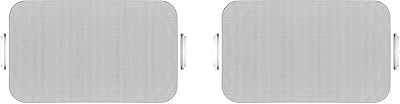
Sonos Outdoor by Sonance Speakers
81%
88%
Sound Quality
93%
Build Quality
96%
Weatherproofing
58%
Value for Money
54%
Ease of Installation
More
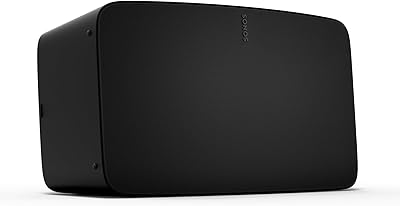
Sonos Five
Sonos Five
82%
93%
Sound Quality
91%
Bass Performance
88%
Soundstage & Stereo Imaging
89%
Multi-Room Integration
84%
Connectivity & Input Options
More
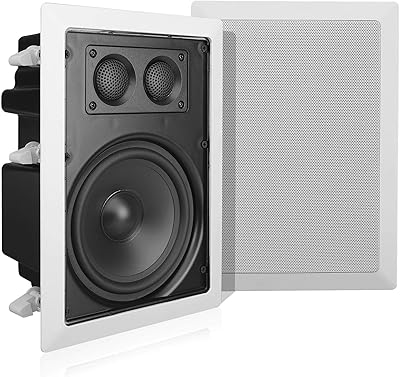
Acoustic Audio CSic83 In-Ceiling Speakers Pair
82%
88%
Sound Quality
92%
Value for Money
85%
Ease of Installation
70%
Bass Performance
80%
Build Quality
More
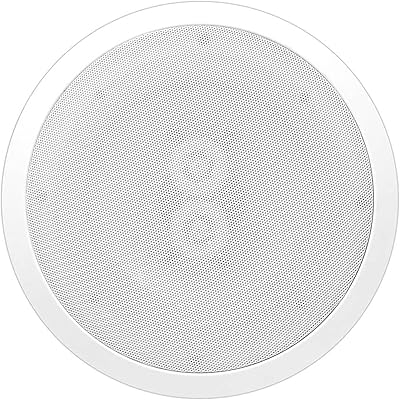
Pyle PDIW87 6.5-inch In-Ceiling Wall Speakers
73%
74%
Sound Quality
61%
Bass Performance
86%
Installation Ease
67%
Build Quality
83%
Value for Money
More
Micca R-8C 8-Inch In-Ceiling Speaker
81%
83%
Sound Quality
71%
Bass Performance
86%
Tweeter Clarity
89%
Installation Experience
78%
Build Quality
More
Yamaha NS-IC800 8-Inch In-Ceiling Speakers
85%
88%
Sound Quality
91%
Installation Ease
85%
Build Quality
75%
Bass Response
89%
Frequency Range
More
Klipsch CDT-5650-C II In-Ceiling Speaker
81%
93%
Sound Clarity
61%
Bass Performance
91%
Driver Aimability
54%
Installation Experience
89%
Sound Dispersion
More
Herdio 5.25-inch Passive Ceiling Speakers Pair
71%
83%
Value for Money
71%
Sound Quality
47%
Bass Performance
88%
Ease of Installation
62%
Build Quality
More
Polk Audio MC60 6.5-inch In-Ceiling Speaker
80%
88%
Sound Clarity
91%
Installation Ease
83%
Moisture Resistance
72%
Value for Money
79%
Tweeter Performance
More
OSD Audio ICE800WRS 8-inch In-Ceiling Speaker Pair
79%
83%
Sound Quality
88%
Weather & Moisture Resistance
81%
Ease of Installation
86%
Value for Money
79%
Build Quality
More

FAQ

You need to buy two. Each listing contains a single speaker unit, which catches a lot of buyers off guard. If you want a stereo pair for one room, add two to your cart. It's a frustrating quirk of how the product is listed, but the speakers themselves are identical, so pairing them works perfectly fine.

You need a Sonos Amp specifically — these in-ceiling speakers are engineered and tuned exclusively for it. You cannot connect them to a standard AV receiver or third-party amplifier and expect them to work properly, and Sonos does not support that configuration. The Amp is sold separately, so factor that into your total budget before purchasing.

Technically, a confident DIYer can handle the physical installation, but there are real challenges involved. The 120mm ceiling cavity depth requirement rules out some homes, and running speaker wire through walls and ceilings properly is not trivial. Most experienced reviewers recommend budgeting for a professional AV installer, especially if this is your first in-ceiling speaker project.

Trueplay is Sonos's automatic room calibration system. After installation, you use the Sonos app to run a calibration sweep, and the system adjusts the EQ based on your room's specific size, shape, and furnishings. In practice, reviewers consistently say it makes a noticeable and meaningful difference — particularly in rooms with a lot of hard surfaces or unusual dimensions. It is not a gimmick.

This is a known limitation worth knowing about upfront. Trueplay calibration currently requires an iOS device to run the room measurement process. You can control the speakers day-to-day from Android using the Sonos app, but you will need to borrow an iPhone or iPad at least once to complete the calibration. If no iOS device is available to you, Trueplay will not be accessible.

Yes, and this is one of the more practical design features of the Sonos In-Ceiling by Sonance Speaker. The grille ships in white and is designed to accept standard ceiling paint without affecting sound quality. Many buyers paint it before installation, and the result is a speaker that effectively disappears into the ceiling once the paint dries.

One Sonos Amp can drive up to three pairs — so six individual speaker units. This makes multi-room or multi-zone installations meaningfully more cost-efficient, since you are not buying an Amp for every single room. Just keep in mind that all speakers connected to a single Amp will share the same audio source and volume level.

No — these in-ceiling speakers carry no waterproof or moisture-resistant rating. They are designed for dry indoor environments only. For bathrooms with high humidity, or any outdoor application, you would need to look at speakers specifically rated for those conditions. Using these in wet or damp spaces would void any warranty coverage.

Yes, they integrate fully into the Sonos ecosystem. Once connected through a Sonos Amp, these in-ceiling speakers appear in the Sonos app just like any other room and can be grouped, synced, or run independently alongside your existing devices. The experience is consistent with how all Sonos products communicate with each other.

This is a legitimate concern and one that thoughtful buyers do raise. The speakers are entirely dependent on the Sonos platform for operation — there is no standalone or third-party fallback mode. Sonos has faced criticism in the past for handling legacy product support, so buyers making a permanent ceiling installation are placing long-term trust in the company's continued platform stewardship. It is worth factoring that ecosystem dependency into your decision.

Where to Buy