Overview

The Micca R-8C 8-Inch In-Ceiling Speaker is a flush-mount, rimless option built for homeowners who want real audio performance without visible hardware cluttering their walls or shelves. Micca has carved out a reputation for delivering genuinely capable speakers at prices that don’t require a second mortgage, and this ceiling speaker fits squarely in that tradition. The 8-inch woofer is a meaningful step up over the more common 6.5-inch units — you get noticeably fuller low-end and a warmer overall presentation. One important detail before ordering: sold as a single unit, so plan your quantities carefully. This is a wired, permanent installation speaker, not something you swap in and out on a whim.
Features & Benefits

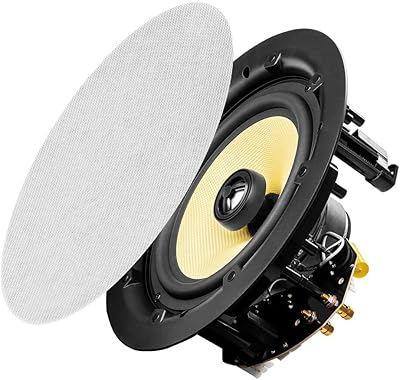
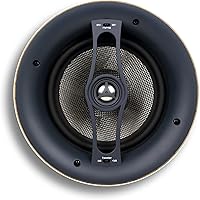
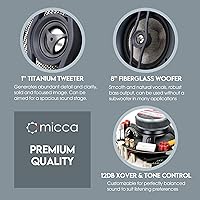
The carbon/glass fiber woofer is the standout component here. That material combination keeps the cone stiff enough to stay accurate under pressure while staying light enough to respond quickly — the practical result is tighter bass and cleaner midrange compared to cheaper paper-cone alternatives. The 1-inch aluminum dome tweeter sits on a swivel bridge, so you can angle it toward the listening position rather than firing straight down, which makes a real difference in perceived clarity. Two tone switches let you nudge woofer and tweeter response by 3dB in either direction — genuinely useful when a room’s furnishings are absorbing your highs. At 90dB sensitivity, it performs well without demanding a high-powered amplifier.

Best For

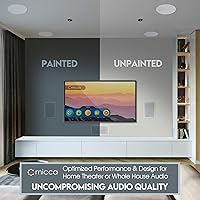
This in-ceiling speaker makes the most sense for whole-home audio projects where a clean look matters as much as the sound itself. The rimless grille blends into painted drywall well enough that most guests won’t notice the speakers at all. It also slots naturally into home theater builds — surround channels in a 5.1 layout, front-height positions for Atmos, or even a dedicated listening room. Kitchens, living rooms, and covered patios are all fair game. Pair it with a mid-range AV receiver and you’ll get a balanced, room-filling result. Just keep expectations grounded on bass depth — no 8-inch ceiling driver replaces a proper subwoofer on its own.

User Feedback

Buyers consistently highlight easy installation as a genuine strength — the 9.5-inch cutout fits standard retrofit openings, the included template is actually useful, and the mounting clamps seat cleanly in most drywall without extra hardware. Sound quality earns strong marks too, particularly from buyers who expected less at this price. Bass response tends to surprise people positively for an in-ceiling unit, though it clearly rewards pairing with a subwoofer. The most repeated frustration is straightforward: the single-unit packaging catches buyers off guard who assumed they were ordering a pair. A handful of reviews flag mounting hardware quality as feeling light, though the majority report solid, lasting installs.

Pros

  • The 8-inch woofer delivers noticeably fuller sound than standard 6.5-inch in-ceiling alternatives in the same category.
  • Pivoting aluminum dome tweeter can be angled toward the seating area, improving clarity without repositioning the speaker.
  • Dual tone controls let you fine-tune bass and treble response directly on the driver before sealing it into the ceiling.
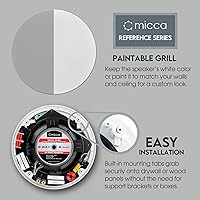
  • The rimless micro-fine mesh grille blends into painted drywall cleanly — most visitors simply do not notice the speakers.
  • Standard 9.5-inch cutout diameter fits the vast majority of retrofit ceiling openings without extra drywall modification.
  • At 90dB sensitivity, this ceiling speaker performs well with mid-range AV receivers without needing a high-wattage amplifier.
  • Sound quality consistently earns favorable comparisons to pricier competing models from buyers who have tested both.
  • Installation is genuinely approachable for a confident DIYer, with a useful paper template included in the box.
  • The carbon/glass fiber cone handles midrange and vocals with a composure that cheaper paper-cone alternatives rarely match.
  • Robust enough for kitchens, covered patios, and family rooms — not limited to dedicated listening spaces.

Cons

  • Sold as a single unit only — easy to overlook, but it significantly affects total cost for multi-room or surround builds.
  • Bass output below around 60Hz is modest in real-world use; a subwoofer is effectively required for home theater duty.
  • Mounting clamp hardware feels noticeably plasticky relative to the quality of the driver components inside.
  • Tone switch adjustments must be made before ceiling installation — correcting them later means partially removing the speaker.
  • White-only grille finish limits compatibility with colored or dark-toned ceiling surfaces.
  • Not rated for wet or outdoor environments, making bathrooms and uncovered patios risky long-term placements.
  • Wiring terminal placement can be awkward to reach in shallow ceiling cavities or when working overhead alone.
  • No wireless connectivity whatsoever — permanent wired runs are required, adding planning and labor time to every install.
  • The grille’s fine mesh attracts dust visibly over time and is not the easiest to remove for cleaning without a tool.

Ratings

The Micca R-8C 8-Inch In-Ceiling Speaker has been evaluated using AI analysis of verified global buyer reviews, with spam, bot-submitted, and incentivized feedback actively filtered out before scoring. Ratings reflect the real-world experiences of homeowners, installers, and home theater enthusiasts who have lived with this ceiling speaker across a wide range of install scenarios. Both the standout strengths and the friction points buyers actually encounter are transparently represented in every score below.
Sound Quality
83%
For a permanently mounted ceiling speaker, the audio output consistently impresses buyers coming from budget alternatives. The carbon/glass fiber cone delivers a composed midrange that handles vocals and dialogue cleanly, and the overall tonal balance works well for background listening and casual home theater use alike.
Listeners expecting deep, authoritative bass will run into the inherent limits of any in-ceiling driver — this ceiling speaker needs a subwoofer partner to fill out the low end in larger rooms. Critical listeners occasionally note a slight brightness in the upper midrange at higher volumes.
Bass Performance
71%
29%
The 8-inch woofer provides noticeably more low-frequency presence than smaller 6.5-inch in-ceiling alternatives, which buyers upgrading from those units consistently remark on. For background music in kitchens or living rooms, the bass feels satisfying and natural without sounding bloated.
Extended low-bass reproduction is not this speaker’s strength, and buyers using it for movie soundtracks without a dedicated subwoofer often feel the impact is missing. The 40Hz lower boundary looks good on paper, but real-world output below 60Hz is modest at realistic listening distances.
Tweeter Clarity
86%
The pivoting aluminum dome tweeter earns consistent praise for its crispness on high-frequency content like acoustic guitar, cymbal work, and high-resolution dialogue. The swivel mechanism lets installers aim the tweeter toward the primary seating position, which genuinely improves perceived detail and stereo imaging.
A small number of buyers find the aluminum dome tweeter slightly forward-sounding in untreated rooms with hard surfaces. Without using the tone switch to dial the tweeter back a notch, reflective environments like tile kitchens can push the highs toward edgy rather than airy.
Installation Experience
89%
The 9.5-inch cutout is a standard size that fits the vast majority of retrofit ceiling situations without requiring extra drywall work, and the included paper template makes marking the opening straightforward. Most buyers report completing a single-speaker install in under 30 minutes with basic tools.
The mounting clamp mechanism, while functional, feels plasticky compared to the speaker’s overall build, and a handful of installers working in older homes with thicker drywall report a less confident grip. The wiring connections are secure but require a bit of dexterity in tight ceiling cavities.
Build Quality
78%
22%
The driver components feel solid and purposefully engineered — the woofer surround, cone, and tweeter assembly all give the impression of materials selected for audio performance rather than cost-cutting. The speaker sits flush and stable once mounted, with no rattle or resonance reported during normal use.
The plastic mounting hardware and grille frame are the clearest areas where build quality steps down relative to the driver quality. Buyers comparing this ceiling speaker to premium-tier brands at higher price points notice the gap in chassis finishing, though it has no audible consequence in practice.
Grille & Aesthetics
87%
The rimless, micro-fine mesh grille is one of the most consistently praised design elements among buyers who prioritize clean interior aesthetics. Painted white, it disappears into standard drywall ceilings convincingly, and most guests in installed rooms simply do not notice the speakers are there.
The grille is white only, which works for the majority of homes but limits flexibility in spaces with colored or textured ceilings. A few buyers note that the mesh can collect dust visibly over time, and the grille’s attachment mechanism, while secure, is not the easiest to remove without a small tool.
Tone Control Usefulness
81%
19%
The dual tone switches — covering both woofer and tweeter independently — are a feature that buyers with installation experience genuinely appreciate. Being able to nudge response by 3dB in a kitchen with tile walls versus a carpeted living room makes a real, audible difference without any external EQ.
The switches are set before the speaker goes into the ceiling, which means adjusting them after installation requires partially removing the unit — not a dealbreaker, but worth planning for. Buyers with no audio background occasionally find the adjustment options confusing without guidance from the manual.
Value for Money
91%
At its price point, the Micca R-8C delivers a combination of driver quality, acoustic tuning options, and clean aesthetics that buyers routinely describe as punching well above its category. Reviewers who have compared it directly against more expensive options from established brands frequently conclude the price gap is not justified by any meaningful performance difference.
The single-unit packaging means the per-speaker price is visible, and buyers equipping a full surround system need to budget carefully for multiple units. A small segment of buyers feel the mounting hardware quality should be better given the overall asking price.
Sensitivity & Amplifier Compatibility
84%
A 90dB sensitivity rating means this in-ceiling speaker performs well without requiring a high-wattage amplifier — a standard mid-range AV receiver in the 50 to 80 watts per channel range drives it to satisfying volume levels without strain. This makes it a practical fit for buyers who already own modest receivers.
Buyers pairing this ceiling speaker with entry-level receivers operating at lower volumes in larger open-plan rooms may find the output falls short of room-filling. Sensitivity is solid but not exceptional, so very large spaces with high ceilings benefit from a more powerful amplifier to get the most out of it.
Packaging & Out-of-Box Experience
69%
31%
The included installation template is a practical touch that saves time during marking, and the user manual covers the tone switch settings clearly enough for buyers without a deep audio background. The speaker itself arrives well-protected for the price category.
The single-unit-per-box issue is the dominant complaint here — buyers expecting a stereo pair based on the listing price point are consistently disappointed at checkout or on delivery. Accessory hardware in the box is minimal, and buyers tackling multi-room installs wish for a more complete kit.
Frequency Response Range
77%
23%
The 40Hz to 22kHz rated range is competitive for the category and translates to a speaker that handles the full spectrum of music and movie content without sounding truncated or thin at either end. Midrange and upper-bass frequencies in particular feel full and present in typical room installations.
Real-world low-frequency extension below around 60Hz is modest in practice, and the 22kHz upper limit, while technically impressive, is only relevant for listeners using high-resolution audio sources. Buyers running this ceiling speaker without a subwoofer in a dedicated home theater will notice the absence of deep bass during action content.
Durability Over Time
76%
24%
Buyers who have had this in-ceiling speaker installed for several years report consistent performance with no driver degradation, grille discoloration problems, or mounting failures under normal indoor conditions. The materials hold up well in climate-controlled rooms.
Long-term feedback from installs in high-humidity environments like bathrooms or partially enclosed patios is more mixed, with a subset of buyers noting grille discoloration or occasional oxidation on metal components. The speaker is not rated as waterproof, and that limitation shows in demanding environments.
Surround Sound Integration
82%
18%
For 5.1 and 7.1 home theater layouts, this ceiling speaker performs convincingly as a surround or overhead channel — the pivoting tweeter helps place effects accurately, and the tonal character blends well with most front-channel speaker systems without obvious frequency mismatches.
Buyers using it as a front left/right channel in a purely ceiling-based setup note that it lacks the directional precision and soundstage width of dedicated wall-mounted or bookshelf alternatives. It works best as a surround or height channel rather than the primary stereo driver in a serious listening room.
Ease of Wiring
80%
20%
The spring-loaded terminal connections are straightforward and accept both bare wire and spade connectors without fuss, which experienced installers and first-timers alike appreciate. Getting the polarity right is simple given the clear labeling on the terminal block.
The terminals are positioned in a way that can make connections awkward in shallow ceiling cavities or when working above your head in a tight space. Buyers running thicker gauge speaker wire occasionally find the terminals less accommodating than those on competing models.

Suitable for:

The Micca R-8C 8-Inch In-Ceiling Speaker is an excellent fit for homeowners who want clean, unobtrusive audio without speakers cluttering shelves or walls. If you are wiring a whole-home audio system and need something that disappears into the ceiling while still delivering genuinely good sound, this ceiling speaker belongs on your shortlist. Home theater enthusiasts building out a 5.1 or 7.1 surround layout will find it performs convincingly as a surround or overhead height channel, especially when paired with a capable AV receiver. It also works well in practical everyday spaces — kitchens, living rooms, open-plan dining areas, and covered patios — where background music quality matters but a visible speaker setup would feel out of place. Buyers who appreciate having some control over their sound will value the built-in tone switches, which let you tailor the frequency response to your specific room without buying external equipment.
Not suitable for:

The Micca R-8C 8-Inch In-Ceiling Speaker is not the right tool for listeners who want deep, room-shaking bass without a separate subwoofer — no 8-inch in-ceiling driver will fully substitute for a dedicated low-frequency unit in a serious home theater. Renters or anyone who wants a flexible, relocatable speaker setup should look elsewhere entirely, since this is a permanent installation that requires cutting into drywall and running speaker wire through walls. Audiophiles who prioritize precise stereo imaging and wide soundstage from a primary two-channel listening setup will find ceiling-mounted speakers a poor match regardless of driver quality. If you are outfitting a high-humidity wet room like an active bathroom or an uncovered outdoor area, the lack of waterproofing is a real concern that could shorten the speaker’s lifespan. Finally, buyers assuming the standard price covers a stereo pair will be caught off guard — this ceiling speaker ships as a single unit, and overlooking that detail can derail a project budget quickly.
Specifications

  • Woofer Driver: The woofer is an 8-inch carbon/glass fiber cone with a concave dust cap, chosen for its combination of stiffness and low mass that supports accurate bass and midrange reproduction.
  • Tweeter Driver: A 1-inch aluminum dome tweeter is mounted on a swivel bridge, allowing the installer to pivot it toward the primary listening position for improved high-frequency directionality.
  • Frequency Response: The speaker is rated to reproduce audio across a range of 40Hz to 22kHz, covering the full spectrum of music and home theater content under typical installation conditions.
  • Impedance: Nominal impedance is 8 ohms, making this ceiling speaker broadly compatible with standard AV receivers and amplifiers without requiring special matching or bridging.
  • Sensitivity: Sensitivity is rated at 90dB measured at 1 watt/1 meter, meaning the speaker reaches useful listening volumes without demanding high output power from the amplifier.
  • Power Handling: Each speaker handles up to 120 watts, providing adequate headroom for both quiet background listening and more dynamic home theater playback.
  • Crossover: An internal 12dB-per-octave crossover network divides the signal between the woofer and tweeter at the appropriate frequency for a smooth and coherent combined response.
  • Tone Controls: Independent toggle switches on the driver allow the woofer and tweeter levels to each be adjusted by plus or minus 3dB relative to the flat setting, enabling basic room compensation without external EQ.
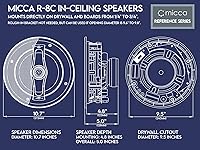
  • Cutout Diameter: The required ceiling cutout is 9.5 inches in diameter, which aligns with the most common retrofit opening size used in residential ceiling speaker installations.
  • Outer Diameter: The overall outer diameter of the speaker, including the grille frame, measures 10.75 inches.
  • Depth: The speaker protrudes 4.75 inches behind the ceiling surface, so a minimum of 5 inches of clear space above the drywall is recommended to ensure proper fit.
  • Weight: Each unit weighs 5 pounds, which is a manageable load for standard drywall ceiling installations using the included mounting hardware.
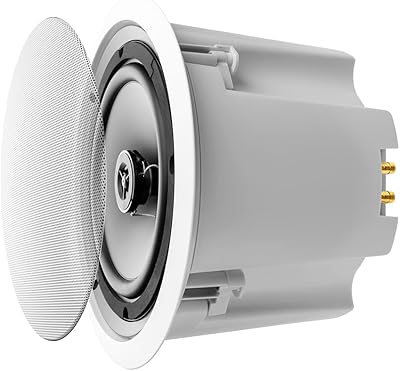
  • Grille Design: The grille uses a rimless, micro-fine mesh construction that sits flush with the ceiling surface, minimizing the visual footprint of the installed speaker.
  • Connectivity: Connection is wired only via spring-loaded binding post terminals on the rear of the driver basket; there is no wireless or Bluetooth functionality.
  • Color & Finish: The grille and basket are finished in white, suitable for painting over to match standard ceiling colors after installation.
  • Package Contents: Each box contains one speaker unit, a paper installation template for marking the ceiling cutout, and a printed user manual.
  • Sold As: This speaker is sold as a single unit per package; buyers who need a stereo pair or a multi-speaker surround layout must order the appropriate quantity separately.
  • Mounting Type: The speaker mounts via a ceiling-cut installation method with dog-leg mounting clamps that expand behind the drywall to secure the unit in place without requiring access above the ceiling.

Related Reviews

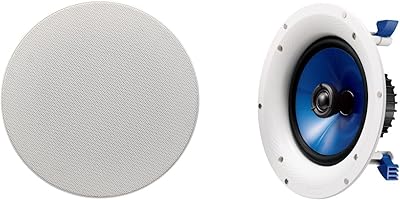
Yamaha NS-IC800 8-Inch In-Ceiling Speakers
85%
88%
Sound Quality
91%
Installation Ease
85%
Build Quality
75%
Bass Response
89%
Frequency Range
More
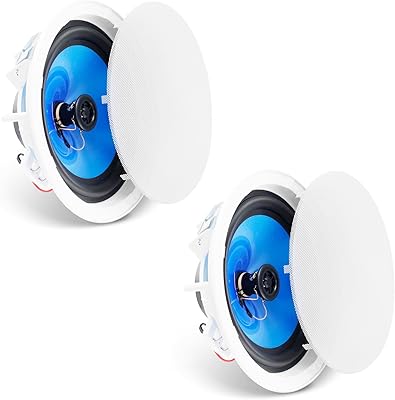
VEVOR 8-Inch 2-Pack Ceiling Speakers
73%
91%
Value for Money
78%
Sound Clarity
61%
Bass Performance
93%
Ease of Installation
66%
Build Quality
More
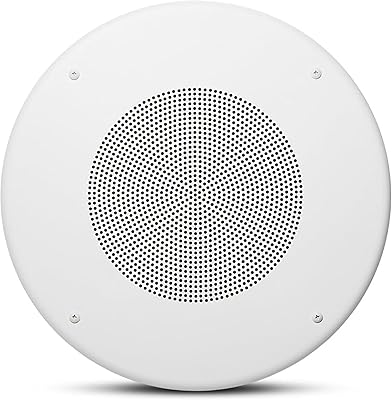
JBL Professional CSS8018 8-Inch Ceiling Speaker
86%
88%
Sound Quality
91%
Ease of Installation
89%
Background Music Performance
84%
Volume Output
85%
Build Quality
More
OSD Audio ACE850 8″ In-Ceiling Speakers
79%
83%
Sound Quality
91%
Aesthetic Design
74%
Ease of Installation
82%
Value for Money
78%
Build Quality
More
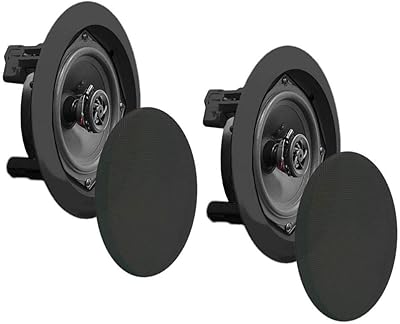
Pyle PDIC81RDBK 8-Inch Ceiling In-Wall Speakers
72%
88%
Ease of Installation
74%
Sound Clarity
58%
Bass Response
67%
Build Quality
83%
Value for Money
More
OSD Audio ICE830ST 8-Inch 70V Ceiling Speaker
82%
86%
Audio Clarity
79%
Bass Performance
91%
70V System Compatibility
88%
Ease of Installation
83%
Build Quality
More
Jensen C8R 8-Inch Guitar Speaker
83%
88%
Sound Quality
92%
Value for Money
85%
Ease of Installation
90%
Portability & Size
80%
Build Quality
More
Pyle PWRC82 8-Inch Ceiling Speaker
66%
61%
Sound Quality
48%
Bass Response
74%
Weatherproofing & Durability
83%
Ease of Installation
57%
Build Quality & Fit/Finish
More
Pyle PDIC16106 10-inch In-Ceiling/In-Wall Speakers
84%
88%
Sound Quality
91%
Ease of Installation
85%
Build Quality
84%
Design & Aesthetics
90%
Value for Money
More
Herdio 5.25-inch Passive Ceiling Speakers Pair
71%
83%
Value for Money
71%
Sound Quality
47%
Bass Performance
88%
Ease of Installation
62%
Build Quality
More

FAQ

Each package contains just one speaker, so if you need a stereo pair you will need to order two units. This catches a lot of buyers off guard, so double-check your cart quantity before checking out — especially if you are wiring multiple rooms.

You need a 9.5-inch diameter cutout. The box includes a paper template that you can tape to the ceiling and trace around, which takes most of the guesswork out of marking the opening accurately.

Plan for at least 5 inches of clear space above the drywall surface. The speaker body extends about 4.75 inches behind the ceiling, and you need a little extra room to maneuver the driver into position during installation.

Almost certainly yes. The Micca R-8C 8-Inch In-Ceiling Speaker has an 8-ohm impedance rating, which is the standard load that virtually every home AV receiver and amplifier is designed to drive. Even mid-range receivers in the 50 to 80 watts per channel range will push this ceiling speaker to more than adequate volume levels.
Not recommended. This speaker has no waterproofing or moisture resistance rating, so humid bathrooms or uncovered outdoor areas put it at real risk of premature driver failure or grille corrosion. Covered patios with good weather protection are borderline acceptable, but a fully exposed outdoor environment will shorten its lifespan significantly.

Each switch lets you raise or lower either the woofer or tweeter output by 3dB from the flat default setting. In practical terms, if your room has a lot of hard reflective surfaces like tile or glass, pulling the tweeter down a notch can tame harshness. If the space is heavily carpeted and furnished, bumping it up slightly helps restore some air. It is worth taking a few minutes to decide your setting before you close up the ceiling, since changing them afterward requires partially removing the speaker.

They will handle everyday bass just fine for music and casual TV watching, but if you are building a home theater and want real low-end impact from movie soundtracks, a subwoofer is strongly recommended. The 8-inch driver does go lower than smaller alternatives, but no ceiling speaker fully replaces a dedicated sub for serious home theater use.

Yes, and many buyers do exactly that. The white mesh grille accepts standard latex ceiling paint without clogging or affecting sound quality noticeably when a light coat is applied. This is one of the better ways to make this ceiling speaker truly invisible after installation.

It is manageable for a confident DIYer who is comfortable working overhead and running speaker wire. The included template simplifies cutting the opening, and the spring-clamp mounting system does not require access above the ceiling. The trickiest part is usually routing the wire through the wall cavity before the speaker goes in — the speaker itself seats quickly once the wire is in place.

You technically can, but it is not the ideal application. Ceiling-mounted speakers fire downward rather than toward the listening position, which compromises the stereo imaging and soundstage that a proper front stereo pair delivers. The pivoting tweeter helps somewhat, but if dedicated stereo listening is your primary goal, bookshelf or floor-standing speakers will serve you much better. These shine as surrounds, height channels, or whole-home background audio rather than as a primary listening pair.

Where to Buy