Overview

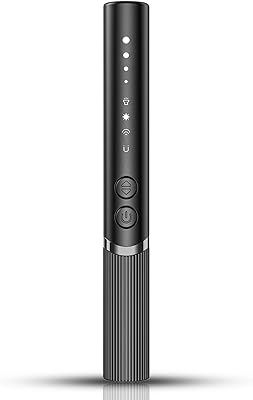
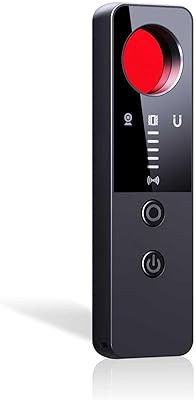
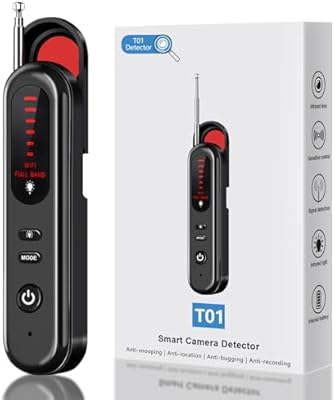
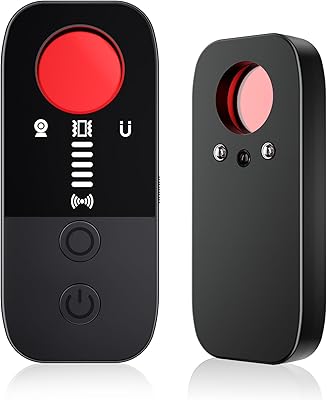
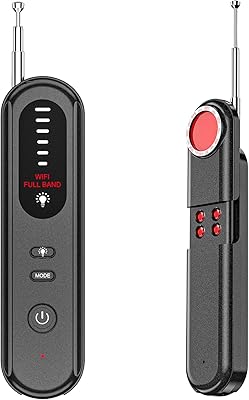
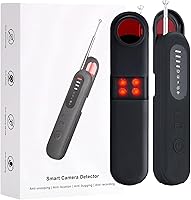
The SKXCASPA HWX-007 Hidden Camera & Bug Detector is a compact, pen-shaped scanner that arrived in early 2025 targeting a very specific kind of traveler — the type who checks under smoke detectors before unpacking. It covers a 1–6.5 GHz RF range and adds a passive infrared layer, giving it a theoretical detection reach of 5 to 15 meters. At just 30 grams and roughly the size of a marker, it slips into a jacket pocket without a second thought. USB-C charging and a claimed 25-hour battery life round out a package that sits comfortably in the budget tier of personal counter-surveillance gear.
Features & Benefits

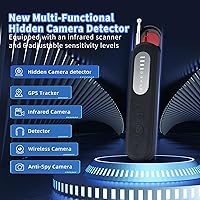
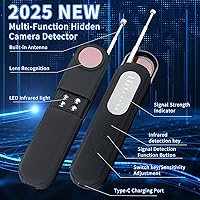
The HWX-007 detector handles detection through two complementary methods. Its RF scanning sweeps a wide band that covers most commercial wireless cameras and trackers transmitting in that space. The passive infrared channel adds coverage for devices that broadcast little or no RF signal — useful, though real-world effectiveness varies by environment. What genuinely stands out is the battery: a single charge supports up to 25 hours of active scanning, so you are not hunting for a charger mid-trip. The polycarbonate body keeps weight negligible, and the app-free operation means no account creation, no Bluetooth pairing — just switch it on and sweep the room.

Best For

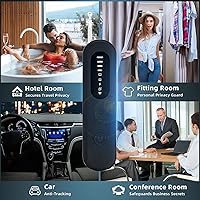
This bug detector makes the most sense for people who travel frequently and stay in unfamiliar accommodations — short-term rentals, budget hotels, or shared spaces where you simply cannot verify who set up the room. It is also a reasonable fit for remote workers and renters who suspect they may not have full privacy in a space. People who want a dedicated physical tool rather than relying on a phone app will appreciate the standalone approach. That said, this is an entry-level device — anyone expecting professional-grade capability should budget for something considerably more advanced. Think of it as a first-line privacy check, not a forensic sweep.

User Feedback

With 69 ratings and a 4.0-star average, this RF and camera scanner has a modest but reasonably positive reception so far. Buyers consistently praise the compact size and simplicity — most report it working straight out of the box with minimal confusion. The friction tends to come from sensitivity expectations: users accustomed to more capable equipment often find the real-world detection range feels shorter than spec, particularly in furnished rooms. False positives near active Wi-Fi routers are also a recurring mention. The brand advertises 24-hour customer support, though independent confirmation in reviews is sparse. A promising start, but 69 ratings is too small a sample to draw firm conclusions.

Pros

  • Genuinely pocketable at 30 grams — lighter than most pens and far easier to carry than bulkier detectors.
  • Dual-layer detection combining RF scanning and passive infrared gives broader coverage than single-method budget devices.
  • No app, no account, no pairing required — switch it on and start sweeping immediately.
  • USB-C charging and a claimed 25-hour battery mean one charge comfortably covers a multi-day trip.
  • The wide 1–6.5 GHz frequency sweep covers most commercially available wireless spy cameras and GPS trackers.
  • Minimal controls make it accessible to first-time users without any technical background.
  • Compact polycarbonate build holds up to daily carry without adding noticeable weight to a bag.
  • At its price tier, it delivers a reasonable first-line privacy check for casual travelers and renters.
  • No external display or app dependency means fewer points of failure during actual use.

Cons

  • Real-world detection range in furnished rooms often falls well short of the 5–15 meter specification.
  • False positives near Wi-Fi routers, smart TVs, and Bluetooth speakers can make results difficult to trust.
  • No signal-strength display means users cannot gauge distance or confirm whether an alert is genuine.
  • Wired cameras and non-transmitting recording devices are completely outside what this RF and camera scanner can catch.
  • GPS trackers in sleep or low-ping mode will not trigger a detection during a sweep.
  • The built-in battery is non-replaceable, which limits the device lifespan as cells degrade over time.
  • Only 69 ratings exist so far, making it hard to assess long-term reliability with confidence.
  • The instruction manual does not explain how to distinguish environmental RF noise from actual device alerts.
  • Customer support quality beyond initial response time is largely unverified by independent buyer accounts.

Ratings

The SKXCASPA HWX-007 Hidden Camera & Bug Detector earns a mixed-but-promising reception among buyers who actually put it to use in hotel rooms, rental apartments, and co-working spaces. The scores below are AI-generated by analyzing verified global user reviews, with spam, bot activity, and incentivized feedback actively filtered out. Both the genuine strengths and the friction points that real buyers ran into are reflected transparently in every category.
Detection Accuracy
63%
37%
Buyers who used this RF and camera scanner in typical short-term rental rooms generally reported it picking up active wireless transmitters without much fuss. For catching standard Wi-Fi-enabled pinhole cameras at close to mid range, it performs adequately for a budget device.
The gap between spec-sheet range and real-world performance in furnished rooms is a consistent complaint. Thicker walls, interference-heavy environments, and wired or optically isolated cameras can all cause the detector to miss devices it should theoretically catch.
False Positive Rate
58%
42%
In low-density wireless environments — a rural Airbnb or a sparsely connected hotel room — the HWX-007 detector tends to behave reasonably, giving alerts that correspond to actual devices rather than background noise.
In urban apartments or rooms packed with smart devices, the unit can alert repeatedly near Wi-Fi routers, Bluetooth speakers, and even smart TVs. Several buyers found this frustrating enough to question the scanner's reliability as a trustworthy tool.
Portability & Form Factor
89%
At 30 grams and roughly pen-sized, this bug detector genuinely disappears into a jacket pocket or toiletry bag. Travelers in particular appreciate not having to dedicate any real packing space to it, and the polycarbonate build feels solid enough for daily carry.
The slim profile is a double-edged situation — the small body leaves limited room for a larger antenna or more sensitive internal components, which is part of why detection performance has a ceiling. A few buyers also noted the build feels slightly hollow when tapped.
Ease of Use
86%
The minimal control interface is a genuine strength here. Most buyers reported getting the device operational within minutes of opening the box, with no app download, account setup, or pairing process standing in the way. That frictionless experience matters when you arrive tired at a hotel.
The lack of a display or detailed signal readout means users have no way to gauge signal strength or distance — just a basic alert. For anyone who wants context beyond a beep or flash, this RF and camera scanner offers little nuance.
Battery Life
84%
The claimed 25-hour active use figure holds up reasonably well according to buyers who ran extended tests. For a weekend trip or a week of intermittent scanning, a single USB-C charge is generally sufficient, which removes one recurring travel headache.
Standby figures are harder to verify independently, and a small number of buyers reported battery drain faster than expected when the device was left on passively. The built-in battery also means no user replacement down the line.
RF Coverage Range
67%
33%
The 1–6.5 GHz sweep covers a wide enough band to catch most commercially available wireless spy cameras and GPS tracking modules on the market today. In open-space tests, buyers found the coverage serviceable for standard hotel room sweeps.
The 5–15 meter detection range is a spec-sheet best case, and real-world performance in furnished, signal-noisy environments skews toward the lower end of that window. Buyers expecting to sweep large spaces from a single position will likely be disappointed.
Infrared Detection
61%
39%
The passive infrared layer adds a meaningful second method of detection, particularly for cameras that are not actively transmitting RF. In theory, this makes the HWX-007 detector more thorough than pure RF-only devices at the same price point.
Passive IR detection is inherently limited in range and can be confused by warm objects, light sources, or reflective surfaces. Buyers who placed particular importance on this feature reported mixed and sometimes unreliable results in real-world conditions.
Build Quality & Durability
74%
26%
The polycarbonate shell holds up well to casual daily use, and buyers who carried the device regularly over several weeks reported no cracking, button failures, or charging port issues. The weight distribution feels intentional rather than cheap.
It does not feel like a precision instrument. The casing has visible seam lines, and the overall construction communicates budget origins clearly. It is unlikely to survive a hard drop onto pavement without cosmetic or functional damage.
Value for Money
78%
22%
At its price point, this bug detector fills a niche that used to require spending significantly more. For a traveler who wants basic privacy reassurance rather than professional surveillance countermeasures, the cost-to-utility ratio is genuinely reasonable.
The value proposition breaks down if buyers expect performance comparable to mid-range or professional detectors. A handful of reviewers felt misled by the broad detection claims and concluded the money was wasted once they encountered false positives or missed devices.
Setup & Out-of-Box Experience
82%
18%
The included instruction manual is clear enough for a complete first-timer, and the USB-C cable in the box is a thoughtful inclusion. Most buyers describe a smooth first-use experience that does not require any troubleshooting.
The manual is minimal and does not explain how to interpret signal strength variations or distinguish between environmental RF noise and actual device hits. New users are largely left to figure out calibration thresholds through trial and error.
GPS Tracker Detection
59%
41%
For buyers specifically concerned about GPS trackers placed on vehicles or in luggage, the RF scanner component covers the frequency bands used by most consumer-grade trackers. A few buyers specifically tested this use case and found it functional.
Detection reliability drops considerably for trackers that ping intermittently rather than continuously transmitting. If a GPS device is in sleep mode during the sweep, this RF and camera scanner will not catch it — a significant practical limitation.
Customer Support
66%
34%
SKXCASPA advertises a 24-hour response window, and a portion of buyers who reached out reported getting timely replies. For a newer brand with a limited footprint, that responsiveness is a modest positive signal.
Verified independent accounts of support quality are sparse given the small review sample. Buyers needing technical guidance — such as how to reduce false positives — may find the responses generic rather than genuinely helpful.
Size of Review Base & Trust
55%
45%
The product launched in early 2025 and has accumulated 69 ratings, which is enough to establish a directional signal. The 4.0-star average is consistent across the rating distribution and does not show obvious signs of manipulation.
Sixty-nine ratings is a thin sample for drawing confident conclusions, especially for a safety-oriented device. The absence of a large, diverse reviewer base makes it harder to separate category-specific performance from individual unit variance.

Suitable for:

The SKXCASPA HWX-007 Hidden Camera & Bug Detector is a practical fit for people whose privacy concerns are real but not extreme — travelers who regularly book short-term rentals or unfamiliar hotel rooms and want a quick sanity check before settling in. Remote workers who rotate between co-working spaces, client offices, or temporary furnished apartments will find it useful as a lightweight addition to their carry bag. Parents concerned about undisclosed nanny cams in a rented property, or renters who simply want confirmation that their space has not been tampered with, are also well-served by this type of device. It suits beginners who want a standalone, app-free tool without having to learn complex software or invest in professional-grade equipment. If your goal is basic, first-line privacy reassurance rather than a forensic sweep, this bug detector fits the bill at a price point that does not require much justification.
Not suitable for:

The SKXCASPA HWX-007 Hidden Camera & Bug Detector is the wrong choice for anyone who needs verified, reliable detection in high-stakes or professional environments. Security consultants, investigators, or individuals with a serious, documented privacy threat should invest in purpose-built equipment with calibrated sensitivity, proper signal-strength readouts, and lab-tested detection thresholds — none of which this RF and camera scanner can offer. Buyers who plan to use it in densely connected smart-home environments or urban apartments packed with Bluetooth devices and routers should expect a frustrating number of false alerts that make the results hard to interpret. It also cannot detect wired cameras, optically isolated recording devices, or GPS trackers that ping intermittently rather than transmitting continuously — a meaningful gap if those are specific concerns. Anyone expecting performance comparable to mid-range professional detectors costing several times more will almost certainly walk away disappointed.

Specifications

  • Brand: Manufactured and sold by SKXCASPA under model designation HWX-007 (item model number HWX-007-01).
  • Dimensions: The unit measures 4.5″ x 1.2″ x 0.7″, giving it a slim, pen-like profile that fits easily in a pocket or small pouch.
  • Weight: Weighs approximately 30g (1.12 oz), making it one of the lightest handheld RF detectors in its category.
  • Material: Housing is constructed from polycarbonate (PC), a lightweight thermoplastic that resists everyday impacts and surface scratches.
  • RF Frequency Range: Scans radio frequency signals across a 1–6.5 GHz band, covering most commercially available wireless cameras, GPS trackers, and listening devices.
  • Detection Range: Manufacturer-rated detection range is 5–15 meters depending on signal strength, environment, and the type of device being scanned for.
  • Detection Methods: Combines active RF signal scanning with passive infrared scanning to cover both transmitting and low-emission hidden devices.
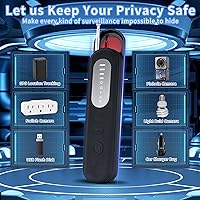
  • Detection Targets: Designed to identify wireless pinhole cameras, GPS location trackers, RF eavesdropping devices, and telephone listening bugs.
  • Battery Type: Features a built-in rechargeable battery; no removable or replaceable cells are included or supported.
  • Charging: Charges via USB-C connector; a USB-C to USB-A cable is included in the box.
  • Battery Life: Rated for up to 25 hours of continuous active use per charge, with a standby duration of up to 25 days.
  • App Requirement: No companion app, Bluetooth pairing, or Wi-Fi connection is required to operate the device — it functions entirely as a standalone unit.
  • Alert System: Uses a built-in indicator system combining light and vibration alerts to notify the user of detected signals.
  • In-Box Contents: Package includes one HWX-007 detector unit, one USB-C to USB cable, and one printed instruction manual.
  • Availability: First listed for sale in February 2025, positioning it as a new-generation entry in the personal counter-surveillance category.
  • Best Sellers Rank: Ranked #172 in the Hidden Cameras category on Amazon at the time of listing, reflecting early traction in a competitive segment.
  • User Rating: Holds a 4.0 out of 5-star aggregate rating based on 69 verified ratings as of the review date.
  • Indoor Use: Listed by the manufacturer for indoor use scenarios including hotels, home environments, and office spaces.

Related Reviews

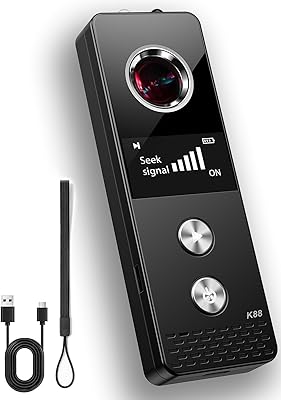
HUYNL K88 Hidden Camera and Bug Detector
75%
91%
Ease of Use
67%
Detection Performance
88%
Battery Life
93%
Portability
58%
False Positive Rate
More
HUYNL KT3 Hidden Camera Bug Detector
77%
67%
Detection Accuracy
91%
Ease of Use
88%
Battery Life
86%
Portability & Design
53%
False Positive Rate
More
JMDHKK M8000 Hidden Camera Detector
83%
88%
Ease of Use
93%
Portability
84%
Detection Performance
80%
Build Quality
75%
Battery Life
More
POLESNOW P18 Hidden Camera Detector
86%
88%
Detection Accuracy
93%
Battery Life
90%
Portability
80%
Sensitivity Adjustment
91%
Ease of Use
More
Aleanu T01 Hidden Camera Detector
74%
71%
Detection Accuracy
58%
False Positive Rate
84%
Ease of Use
93%
Portability
63%
Build Quality
More
CountureMode G007 Hidden Camera Detector
73%
67%
Detection Accuracy
83%
Ease of Use
91%
Portability & Form Factor
71%
Build Quality & Durability
78%
Battery Life & Charging
More
SEVENPARK T01 Hidden Camera Detector
73%
94%
Portability
91%
Ease of Use
72%
RF Signal Detection
53%
False Positive Rate
61%
Build Quality
More
Abyliee Hidden Camera Detector Pro
74%
91%
Ease of Use
62%
Detection Accuracy
93%
Portability & Form Factor
61%
Build Quality
78%
Battery Life
More
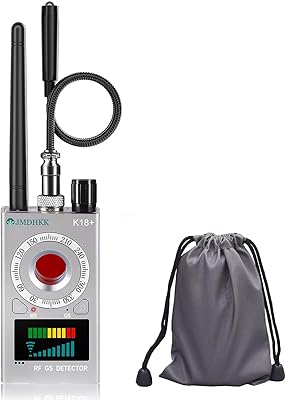
JMDHKK K18+ Hidden Camera and Bug Detector
73%
88%
Ease of Use
61%
RF Detection Accuracy
93%
Portability
67%
Magnetic Probe Performance
59%
Hidden Camera Detection
More
camgyeum A007 Hidden Camera Detector
71%
67%
Detection Accuracy
78%
Ease of Use
91%
Portability & Form Factor
61%
Build Quality
72%
Battery Life
More

FAQ

It works within defined limits. The SKXCASPA HWX-007 Hidden Camera & Bug Detector can reliably detect active wireless transmitters — cameras, GPS trackers, and listening devices broadcasting in the 1–6.5 GHz range — in reasonably quiet RF environments. What it cannot do is match the sensitivity or precision of professional-grade equipment. Think of it as a first-line sweep tool, not a forensic instrument.

Potentially, yes — especially in environments with multiple active Wi-Fi routers, Bluetooth devices, or smart speakers. This is a known limitation of budget RF detectors, not a defect unique to this unit. If you are sweeping a tech-heavy space, expect some false alerts and use proximity testing to narrow down genuine hits.

No. If a camera or GPS tracker is powered down or in sleep mode and not emitting any RF signal, this scanner will not detect it. The infrared layer adds some coverage for devices that emit heat or reflect IR light, but a fully dormant device is effectively invisible to this type of detector.

Setup is minimal. Charge the unit via the included USB-C cable, power it on, and slowly sweep it around the room at varying distances from walls, vents, clocks, and other objects. When the alert light or vibration activates, move closer to triangulate the source. The included manual walks through the basics, though it does not go deep on interpreting signal strength.

No, and this is an important limitation to understand before buying. Wired cameras do not transmit RF signals, so the scanner has nothing to pick up. If you are specifically concerned about hardwired surveillance devices, you would need a lens-detection tool that uses optical methods rather than RF scanning.

Most buyers find a single charge covers a long weekend without issue. The 25-hour active use rating is a reasonable estimate for intermittent scanning — a few sweeps per day rather than continuous operation. If you are using it heavily every day across a long trip, plan to charge every two to three nights.

Not precisely. This bug detector uses a simple light and vibration alert system with no numeric display or signal-strength meter. You can get a rough sense of proximity by how rapidly the alerts trigger as you move closer to a source, but there is no readout to give you exact figures.

The 1–6.5 GHz sweep range covers the primary frequencies used by wireless cameras and GPS trackers across most markets globally, so it should function usefully in most countries. Regulatory differences in how certain bands are used could affect performance at the margins, but for the most common consumer spy devices, the coverage is broadly applicable internationally.

The brand advertises a 24-hour response window for customer inquiries. Based on available feedback, initial responses do tend to come through, though the depth of technical support can be limited. If you have a nuanced question about detection calibration or specific false-positive issues, responses may be more general than you would hope.

Yes — at 30 grams and pen-sized, the device itself raises no particular concerns for carry-on screening. It is a passive detection tool with no transmitter of its own. That said, you may want to keep it in an accessible part of your bag in case a security agent wants to examine it, as the form factor is unusual enough to prompt a second look occasionally.