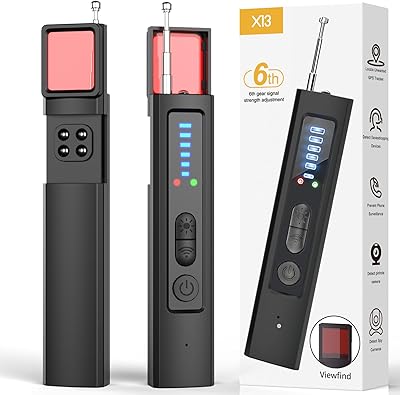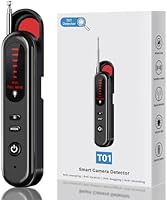
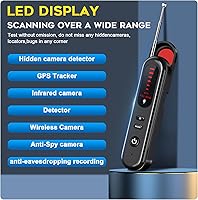
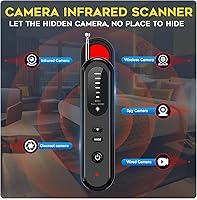

Overview

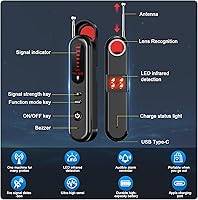
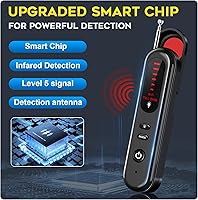
The SEVENPARK T01 Hidden Camera Detector entered the market in late 2024 as a compact, budget-friendly option for travelers, remote workers, and anyone who wants a basic layer of privacy protection in unfamiliar spaces. Weighing just 8 grams, this camera finder slips into a jacket pocket without any noticeable bulk. It covers hidden cameras, GPS trackers, wireless bugs, and RF signals — a reasonably broad scope for a device this small. A built-in rechargeable battery is included out of the box, so there's no scrambling for disposable cells before a hotel room sweep. It won't replace professional-grade counter-surveillance gear, but as a practical starting point, it earns its place.

Features & Benefits

What stands out about this pocket-sized detector is its five sensitivity levels, which let you dial back the noise when you're in a space crowded with wireless signals — think airport lounges or shared offices. At lower settings it filters out most ambient interference; bump it up and it gets more aggressive about flagging nearby transmissions. The push-button controls keep things intuitive, and the LED alert system provides a clear physical cue without requiring any technical interpretation. Measuring 5.09 x 3.13 x 0.95 inches, it fits in a pants pocket. Plastic construction keeps the weight down, and the included charging cable means no hunting for proprietary accessories before you travel.

Best For

This camera finder makes the most sense for frequent travelers — people who routinely check into Airbnbs or hotels and want a quick sanity scan before unpacking. It also works for remote workers rotating through co-working spaces or unfamiliar conference rooms. Drivers who lent out a vehicle or purchased a used car and worry about a lingering GPS tracker will find the scanning range covers that scenario too. That said, this is an entry-level tool, and anyone dealing with a genuine stalking or corporate espionage concern should invest in professional-grade equipment. For casual personal use, though, the privacy scanner delivers reasonable value.

User Feedback

Across 130 ratings, the privacy scanner sits at 4.0 out of 5 — broadly positive but with clear reservations. Buyers consistently highlight ease of use and portability as standout qualities, the kind of praise that suggests non-technical users can pick it up without any learning curve. The most common criticism, though, is false positives. In a modern room packed with Wi-Fi routers, smart TVs, and Bluetooth peripherals, the scanner tends to trigger even at moderate sensitivity — a known limitation of budget RF detectors across the board, not something unique here. A handful of reviewers also flagged battery endurance as a concern during longer sweeps. Against professional sweepers, the capability gap is real, but within its price tier, most buyers feel their expectations were reasonably met.

Pros

  • Weighs just 8 grams, making it one of the lightest detectors you can buy in this category.
  • Five sensitivity levels give you real control over false positives in signal-heavy environments.
  • Simple push-button operation means anyone can start scanning within minutes of unboxing.
  • Covers multiple threat types — cameras, GPS trackers, bugs, and RF signals — in one compact unit.
  • Rechargeable battery is included, so you're ready to use it straight out of the box.
  • Small enough to slip into a jacket pocket or toiletry bag without taking up noticeable space.
  • LED alert system provides an intuitive physical cue that doesn't require technical knowledge to read.
  • At its price point, this camera finder offers a broad detection scope that would cost significantly more with specialist tools.
  • Suitable for both indoor and outdoor use, covering everything from hotel rooms to parking lot GPS sweeps.

Cons

  • False positives are common in modern rooms packed with Wi-Fi routers, smart TVs, and Bluetooth devices.
  • Does not include an optical lens detector, so visually shielded cameras may go undetected.
  • Battery life under sustained, high-sensitivity scanning sessions has drawn complaints from some buyers.
  • As a newcomer brand launched in late 2024, there is limited long-term reliability data available.
  • Plastic build feels light in a way that can read as fragile rather than portable.
  • Sensitivity calibration can feel trial-and-error for first-time users in unfamiliar environments.
  • Detection range and frequency accuracy are not independently verified or published by the manufacturer.
  • Not a substitute for professional sweeping equipment when the stakes are genuinely high.

Ratings

The scores below for the SEVENPARK T01 Hidden Camera Detector were generated by our AI review engine after analyzing verified global buyer feedback, actively filtering out incentivized, bot-generated, and outlier reviews to surface what real users actually experienced. Each category reflects both the genuine strengths buyers praised and the pain points that showed up consistently across markets. Nothing has been softened or inflated — this camera finder earns its marks where it delivers and loses them where it falls short.

Portability
94%
At just 8 grams and roughly the size of a TV remote, this pocket-sized detector disappears into a jacket pocket or travel bag without any rearranging. Travelers specifically praise how little space it takes up compared to bulkier detection tools they have tried.
The ultra-light plastic build that makes it so portable also makes it feel insubstantial in hand, and a few buyers noted it felt fragile enough to worry about in a packed bag without a case.
Ease of Use
91%
Push-button operation genuinely lives up to the claim — most buyers reported being ready to run their first hotel room sweep within minutes of opening the box, with no apps, pairing, or configuration involved. Non-technical users frequently highlighted this as the deciding factor in their purchase.
The five sensitivity levels, while useful, take some trial and error to calibrate correctly in an unfamiliar environment, and the manual provides only basic guidance on how to interpret alert patterns in signal-heavy spaces.
RF Signal Detection
72%
28%
For an entry-level device, the privacy scanner covers a reasonably broad range of RF transmissions including Wi-Fi and cellular signals, making it capable of flagging actively transmitting GPS trackers and wireless cameras in real-world sweeps. Several buyers reported locating suspicious devices in rental cars and short-term accommodations.
Detection is limited to actively transmitting devices, meaning anything in sleep mode or recording locally without broadcasting will go completely unnoticed. The lack of published frequency range specifications also makes it impossible to verify exactly what the scanner is and is not capable of catching.
False Positive Rate
53%
47%
At lower sensitivity settings, the scanner does a reasonable job of staying quiet in moderately connected environments, and buyers who took the time to calibrate it carefully reported more useful results. Dropping to sensitivity level one or two in a busy space filters out most ambient noise.
In a typical hotel room or modern home with multiple Wi-Fi networks, smart TVs, and Bluetooth devices, the detector fires constantly at mid-to-high sensitivity settings — a frustration cited by a notable portion of reviewers. This is a category-wide issue for budget RF scanners, but it still undermines confidence in the results.
Build Quality
61%
39%
The all-plastic construction is intentional and keeps the unit light enough to carry everywhere, which matters more to most buyers than a premium feel. The button mechanism feels responsive and has not been a source of complaints in early reviews.
The overall finish feels budget-tier, and several buyers expressed concern about long-term durability after noticing flex in the housing. For a device that gets tossed into bags repeatedly, the material choice raises reasonable questions about how it holds up after a year of regular use.
Battery Performance
58%
42%
The built-in rechargeable battery handles quick sweeps — a hotel room check or a vehicle scan taking ten to fifteen minutes — without any issue, and the included charging cable means you are never hunting for an adapter.
Extended or back-to-back scanning sessions drain the battery faster than many buyers expected, and SEVENPARK provides no rated battery life figure to set expectations. A handful of reviewers noted needing a recharge mid-trip, which is inconvenient when traveling without easy access to power.
Value for Money
79%
21%
For casual travelers who want basic peace of mind without investing in professional-grade equipment, this camera finder lands in a sweet spot — it covers multiple detection scenarios in a device that costs less than a dinner for two. Buyers who treat it as a first-line screen rather than a definitive sweep tend to rate the value highly.
Buyers who expected professional detection accuracy for the price were disappointed, and the relatively high false positive rate means you are partly paying for the anxiety of constant alerts rather than actionable intelligence. A few reviewers felt similarly priced competitors offered better signal discrimination.
Sensitivity Control
67%
33%
Having five distinct sensitivity levels is genuinely more useful than a single fixed setting, particularly when moving between a quiet rental cabin and a busy city hotel where background RF noise is dramatically different. The ability to tune down in noisy environments saves the experience from being completely unreliable.
The step increments between levels feel inconsistent — the jump from level two to three is noticeably more aggressive than the others — and there is no display or numeric indicator, so users have to count button presses to track their current setting. Better labeling or an indicator light would meaningfully improve usability.
Detection Range
63%
37%
In open spaces like a car interior or a small hotel room, the scanner picks up nearby transmitting devices at a distance that feels practical for a sweep — buyers have reported alerts triggering a couple of meters from the source device in uncluttered environments.
Effective detection range drops significantly in environments with heavy RF interference, and the device provides no indication of signal strength or directionality, making it hard to locate the source of an alert even when one legitimately fires. Professional units in higher price tiers solve this with graduated signal meters.
GPS Tracker Detection
69%
31%
For drivers wanting to check a used or borrowed vehicle, this pocket-sized detector handles the most common scenario — a tracker pinging actively via cellular — with enough sensitivity to register a hit during a slow walk around the car. This is one of the more practical and consistently praised real-world applications.
Passive or interval-transmitting trackers that only broadcast location data every few minutes are easy to miss entirely, and there is no way to tell from the device alone whether a detected signal is a tracker or just a nearby phone. The sweep requires patience and multiple passes to be at all meaningful.
Camera-Specific Detection
55%
45%
Wireless cameras that stream or transmit in real time can be flagged by the RF scanner, which is genuinely useful in Airbnb bathrooms or bedrooms where a wireless spy camera is the most common threat. Buyers in short-term rental scenarios specifically found this use case valuable.
The device has no optical lens detection mode, which is a significant gap — wired or offline-recording cameras are completely invisible to the scanner. Competing products at similar price points increasingly include a basic lens detection function, making this absence feel like a meaningful omission rather than an expected trade-off.
Setup & Onboarding
88%
Unboxing to first scan takes under five minutes with no technical knowledge required — the manual is brief but sufficient, and the single-button interface removes any ambiguity about how to get started. This simplicity is one of the device's clearest and most consistent advantages in user feedback.
The manual does not explain how to interpret different alert patterns or what constitutes a concerning signal versus ambient noise, leaving first-time users to figure out calibration by trial and error in the exact high-stakes situations where confident guidance would matter most.
Packaged Contents
82%
18%
Including a charging cable and user manual alongside the unit is a small but appreciated detail — buyers do not have to make a separate trip to find a compatible cable, and the kit feels complete enough for immediate use straight from the box.
There is no carrying case or protective pouch included, which feels like a missed opportunity for a device marketed at travelers. At this price tier, even a basic soft sleeve would meaningfully improve the out-of-box experience and protect the plastic housing during transport.
Discreetness
86%
The all-black design and compact footprint mean this privacy scanner draws very little attention when used in shared spaces — it looks more like a TV remote or a small power bank than a surveillance detection tool, which matters when sweeping a hotel room without drawing curious looks.
The LED alert, while useful, can be visible to others in a quiet or dark room if the user is trying to sweep discreetly, and there is no vibration or audio jack option for a more private alert mode. A silent notification option would suit the use case better.

Suitable for:

The SEVENPARK T01 Hidden Camera Detector is a solid fit for casual, everyday privacy concerns — particularly for people who travel frequently and want a quick, low-effort way to check hotel rooms, Airbnb rentals, or vacation homes before settling in. Remote workers who rotate through co-working spaces, client offices, or conference rooms they don't control will also find this camera finder a useful addition to their bag. Parents worried about nanny cams or hidden devices in spaces their children occupy can use this pocket-sized detector as a first-pass screening tool. Drivers who want to sweep a used or shared vehicle for GPS trackers will find it covers that scenario too. If you have no prior experience with RF detection gear and just want something straightforward that doesn't demand a manual to operate, this device delivers a reasonable starting point without a steep learning curve.

Not suitable for:

The SEVENPARK T01 Hidden Camera Detector is not the right tool for anyone with serious, high-stakes surveillance concerns — think corporate espionage, legal investigations, or genuine stalking situations where missing a well-shielded device could have real consequences. At this price tier, the privacy scanner lacks the detection depth and precision of professional counter-surveillance equipment, and its tendency to generate false positives in Wi-Fi-heavy environments means the results require interpretation rather than blind trust. Security professionals or IT staff running formal sweeps of sensitive facilities should look at purpose-built, higher-grade detection systems with verified frequency ranges and documented accuracy. Anyone expecting pinpoint camera locating via optical lens detection will also be disappointed — this is primarily an RF signal scanner, not a dedicated lens finder. And if you need extended scanning sessions, battery endurance may be a limiting factor on longer jobs.

Specifications

  • Brand: Manufactured by SEVENPARK under the model designation T01.
  • Dimensions: The device measures 5.09 x 3.13 x 0.95 inches, keeping it compact enough for a pocket or small travel pouch.
  • Weight: At just 8 grams (0.282 ounces), it is one of the lightest detectors available in its category.
  • Material: The outer housing is constructed from plastic, prioritizing low weight over premium tactile feel.
  • Battery: Powered by a built-in rechargeable lithium polymer battery that comes included and ready to use.
  • Charging: A USB charging cable is included in the box, eliminating the need to source a separate accessory.
  • Power Source: The unit is entirely battery-powered and requires no disposable cells at any point during its use.
  • Sensitivity: Features five manually adjustable sensitivity levels to help reduce false positives in signal-dense environments.
  • Detection Types: Capable of scanning for hidden cameras, GPS trackers, wireless bugs, and a broad range of RF signals.
  • Signal Coverage: Designed to detect Wi-Fi and cellular-based transmissions in addition to general RF wireless signals.
  • Controls: Operates via a straightforward push-button interface that requires no technical setup or configuration.
  • Alert System: Uses an LED-based alert mechanism to notify the user when a signal or device is detected nearby.
  • Color: Available in black only as of its current product listing.
  • Usage Environment: Rated for both indoor and outdoor use, covering scenarios from hotel rooms to open parking areas.
  • In the Box: Package includes the detector unit, one charging cable, and a printed user manual.
  • Launch Date: First made available for purchase in December 2024, making it a relatively new entrant in the category.
  • Market Rank: Ranked #119 in the Hidden Cameras category on Amazon at the time of review.
  • Ratings: Holds a 4.0 out of 5 star average based on 130 customer ratings on Amazon.

Related Reviews
Aleanu T01 Hidden Camera Detector
74%
71%
Detection Accuracy
58%
False Positive Rate
84%
Ease of Use
93%
Portability
63%
Build Quality
More
HUYNL K88 Hidden Camera and Bug Detector
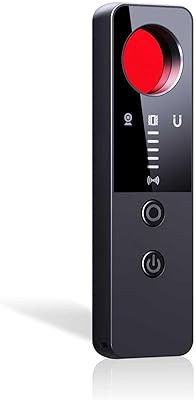
75%
91%
Ease of Use
67%
Detection Performance
88%
Battery Life
93%
Portability
58%
False Positive Rate
More
JMDHKK K18+ Hidden Camera and Bug Detector
73%
88%
Ease of Use
61%
RF Detection Accuracy
93%
Portability
67%
Magnetic Probe Performance
59%
Hidden Camera Detection
More
CountureMode G007 Hidden Camera Detector
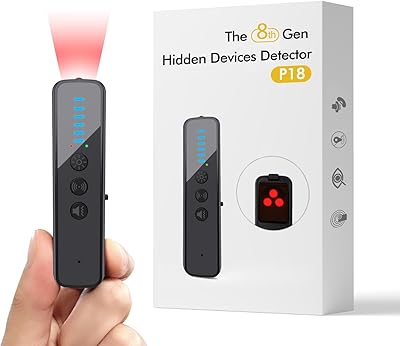
73%
67%
Detection Accuracy
83%
Ease of Use
91%
Portability & Form Factor
71%
Build Quality & Durability
78%
Battery Life & Charging
More
Abyliee Hidden Camera Detector Pro
74%
91%
Ease of Use
62%
Detection Accuracy
93%
Portability & Form Factor
61%
Build Quality
78%
Battery Life
More
camgyeum A007 Hidden Camera Detector
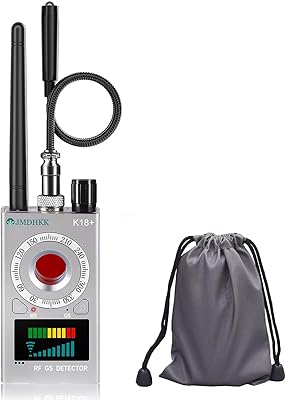
71%
67%
Detection Accuracy
78%
Ease of Use
91%
Portability & Form Factor
61%
Build Quality
72%
Battery Life
More
JMDHKK M8000 Hidden Camera Detector
83%
88%
Ease of Use
93%
Portability
84%
Detection Performance
80%
Build Quality
75%
Battery Life
More
POLESNOW P18 Hidden Camera Detector
86%
88%
Detection Accuracy
93%
Battery Life
90%
Portability
80%
Sensitivity Adjustment
91%
Ease of Use
More
Mgmcm X13 Pro Hidden Camera Detector
74%
91%
Ease of Use
68%
Detection Performance
57%
False Positive Rate
94%
Portability & Form Factor
72%
Sensitivity Adjustment
More
HUYNL KT3 Hidden Camera Bug Detector
77%
67%
Detection Accuracy
91%
Ease of Use
88%
Battery Life
86%
Portability & Design
53%
False Positive Rate
More

FAQ

It primarily works as an RF signal scanner, which means it can flag devices that are actively transmitting wirelessly — including many wireless hidden cameras. However, it will not visually locate a camera lens the way a dedicated optical finder would. If a hidden camera is recording locally without transmitting any signal, this pocket-sized detector will likely miss it.

That is probably the most common complaint buyers raise. In a modern hotel room with multiple Wi-Fi networks, smart TVs, and Bluetooth devices nearby, the scanner can trigger frequently at higher sensitivity settings. The trick is to start at a lower sensitivity level and only raise it once you have moved away from known signal sources like the room router. It takes a bit of trial and error to get a useful read.

SEVENPARK does not publish a specific battery life figure for the T01, and some buyers have noted the charge drains faster than expected during extended, high-sensitivity sweeps. For a quick hotel room check taking five to fifteen minutes, battery life is generally not an issue. Longer or repeated scanning sessions in a single day may require a recharge.

Yes, that is one of the intended use cases. GPS trackers that actively transmit their location using a cellular or RF signal should register on this camera finder. Keep in mind that trackers in a passive or sleep mode — where they only transmit periodically — can be harder to catch, and the window for detection may be brief.

Genuinely, yes. Push the button, select your sensitivity level, and start moving slowly around the space. The LED alert tells you when something registers. There is no software to install, no pairing required, and the included manual covers the basics clearly. Most buyers report being up and running within a few minutes.

Professional-grade detectors typically cover wider frequency ranges, offer greater detection sensitivity, provide clearer signal differentiation, and sometimes include dedicated lens-detection modes. This privacy scanner sits firmly in the entry-level tier, which means it trades depth of detection for affordability and simplicity. If your concern is casual peace of mind while traveling, it holds its own. If you need forensic-level certainty, the gap with professional equipment is real.

No. Since this is an RF and wireless signal scanner, it can only detect devices that are actively transmitting a wireless signal. A wired camera connected directly to a recording device without any wireless component will not trigger the detector at all.

It is a small, passive consumer electronics device with no transmitting capability of its own, so it should not raise flags at airport security. That said, it is always a good idea to keep it in your carry-on rather than checked luggage, and be prepared to remove it for inspection if asked, just as you would with any small electronic device.

Yes, and this is one of the more practical real-world uses for this camera finder. Walk around the vehicle slowly — paying attention to wheel wells, the undercarriage if accessible, and areas under the dash — and watch for the LED alert. Just be aware that a tracker in sleep or low-transmit mode may not register every time you scan.

This is where some patience and context are required. Start by turning down the sensitivity and noting which alerts disappear — those were almost certainly from benign sources like routers or phones. What remains at lower sensitivity in areas without obvious wireless devices is worth investigating further. The scanner cannot tell you what type of device triggered it, only that a signal is present, so treat strong, localized alerts as a prompt to visually inspect the area rather than as a definitive finding.